
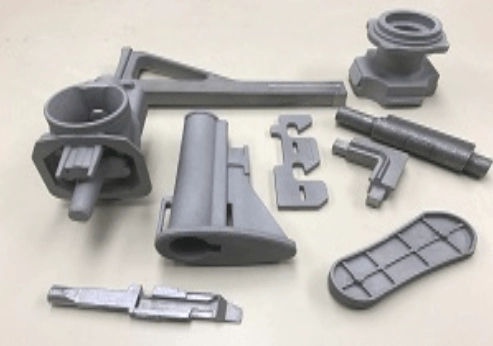
What is Aluminum Investment Casting?
Aluminum investment casting, often referred to as the lost-wax casting process, is our specialized method for producing complex, high-precision components. By utilizing this technique, we achieve intricate geometries and fine details that are often impossible with other manufacturing methods. Our process supports both low and high-volume production, ensuring that every part—from a simple bracket to a complex electronic sensor assembly—meets rigorous industry standards.
Operating procedures:
1. Wax Pattern Creation
The process begins with the creation of a high-precision wax model. We utilize in-house tool design and building to create custom wax mold tooling. Using a wax injection machine, we produce a sacrificial pattern that is an exact replica of the final aluminum part. This stage is the critical foundation for achieving thin-walled sections down to 0.040” and exceptional surface finishes.
2. Assembly and Tree Building
Once the individual wax patterns are inspected, we attach them to a central wax runner system, known as a “tree.” This assembly allows us to cast multiple parts simultaneously, maximizing efficiency and ensuring consistent metal flow during the pouring stage.
3. Shell Building (Investment)
The wax tree is “invested” by being dipped into a high-grade ceramic slurry and coated with fine sand. We repeat this process multiple times to build a durable, multi-layered ceramic shell. This shell must be strong enough to withstand the pressure of the molten aluminum while maintaining precise linear and geometric tolerances.
4. Dewaxing and Burnout
Once the ceramic shell is dry, we place it in an autoclave or furnace to melt out the wax. This leaves a hollow cavity inside the ceramic mold. The shell is then fired at high temperatures (burnout) to remove any remaining residue and strengthen the ceramic structure for the upcoming heat of the metal.
5. Pouring the Aluminum
We utilize a 600-pound induction melt furnace to melt the selected alloy. Our facility can pour any “air melted” aluminum alloy, including the widely used A356 and 356 alloys. Before pouring, we ensure quality through raw material certification via our in-house spectrometer lab. The molten aluminum is then poured into the pre-heated ceramic shell, filling every fine detail and thin-wall section.
6. Knockout and Finishing
After the metal has solidified and cooled, we break away the ceramic shell (knockout) to reveal the aluminum castings. The parts are then removed from the tree and undergo various finishing processes, which may include:
- CNC Machining: For parts requiring tighter tolerances than as-cast dimensions.
- Heat Treatment: Utilizing T2, T4, T6, or T61 processes to reach specific mechanical properties.
- Surface Finishing: Achieving a standard 125 RMS or better.
- Final Inspection: Ensuring every component meets our ISO 9001 and ITAR registered quality standards.
Why Choose Aluminum for Investment Casting?
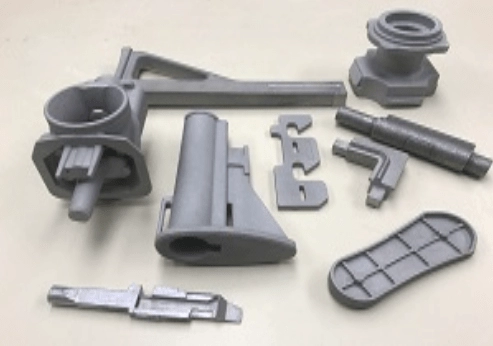
When manufacturing complex parts, material selection is critical. We rely on aluminum investment casting because it consistently delivers high-performance results for demanding industrial applications. Through the lost-wax casting process, aluminum allows us to produce intricate geometries with excellent surface finishes that require minimal secondary machining.
Here is exactly why aluminum stands out in our foundry:
Exceptional Strength-to-Weight Ratio
Aluminum provides the structural integrity of heavier metals at a fraction of the weight. This high strength-to-weight ratio makes it the go-to material for lightweight components in the aerospace, automotive, and defense sectors where every ounce matters.
Natural Corrosion Resistance
Parts cast from aluminum are inherently corrosion-resistant. They easily withstand harsh environmental conditions, ensuring long-term durability for valves, medical devices, and outdoor machinery without requiring heavy protective coatings.
Thin-Wall Capabilities (0.040″)
Precision is a major advantage. Our thin-wall aluminum casting capabilities allow us to pour intricate sections down to just 0.040 inches. This extreme level of detail reduces overall material usage, cuts costs, and keeps the final product as light as possible.
Thermal and Electrical Conductivity
Aluminum is highly conductive. It efficiently dissipates heat and conducts electricity, making it an ideal choice for electronic sensor assemblies, appliance housings, and heat-sensitive mechanical components.
Aluminum Casting Benefits Overview
| Feature | Advantage in Investment Casting |
|---|---|
| Weight | Extremely lightweight, reducing overall assembly mass. |
| Durability | High strength-to-weight ratio for structural reliability. |
| Protection | Naturally corrosion-resistant against harsh elements. |
| Precision | Supports thin walls down to 0.040″ for complex designs. |
| Conductivity | Excellent thermal and electrical transfer properties. |
Key Aluminum Alloys Used in Precision Casting
Selecting the right material is the most critical step in aluminum investment casting. Our foundry specializes in a wide range of “air melted” aluminum alloys, ensuring that every part meets specific mechanical and structural requirements. By utilizing an in-house spectrometer lab, we certify the chemical composition of every melt to guarantee aerospace-grade quality.
A356 and 356 Aluminum Properties
The A356 and 356 alloys are the workhorses of the investment casting industry. Known for their excellent castability and pressure tightness, these alloys are the go-to choice for complex geometries and high-stress applications.
- A356 Composition: This alloy consists of approximately 92.05% Aluminum, 7.00% Silicon, and 0.35% Magnesium, with trace amounts of Iron, Copper, Manganese, and Zinc.
- Performance: It offers a superior strength-to-weight ratio and is highly weldable, making it ideal for lost-wax casting aluminum projects that require durability without added bulk.
- Applications: Commonly used in airframe components, machine parts, and high-velocity blowers.
Other Notable Alloys and Air-Melted Options
While A356 is the industry standard, we provide versatility by pouring any air-melted aluminum alloy requested by our partners. This includes specialized options like C355, which is often selected for its higher strength at elevated temperatures.
Our resident metallurgist works directly with clients to determine which aluminum grade properties align with their specific engineering goals. Whether you need the corrosion resistance of the 300-series or the specific mechanical traits of custom blends, our induction melt furnace setup handles high-volume production with consistent metallurgical integrity.
Maximizing Mechanical Properties: Heat Treatment Options
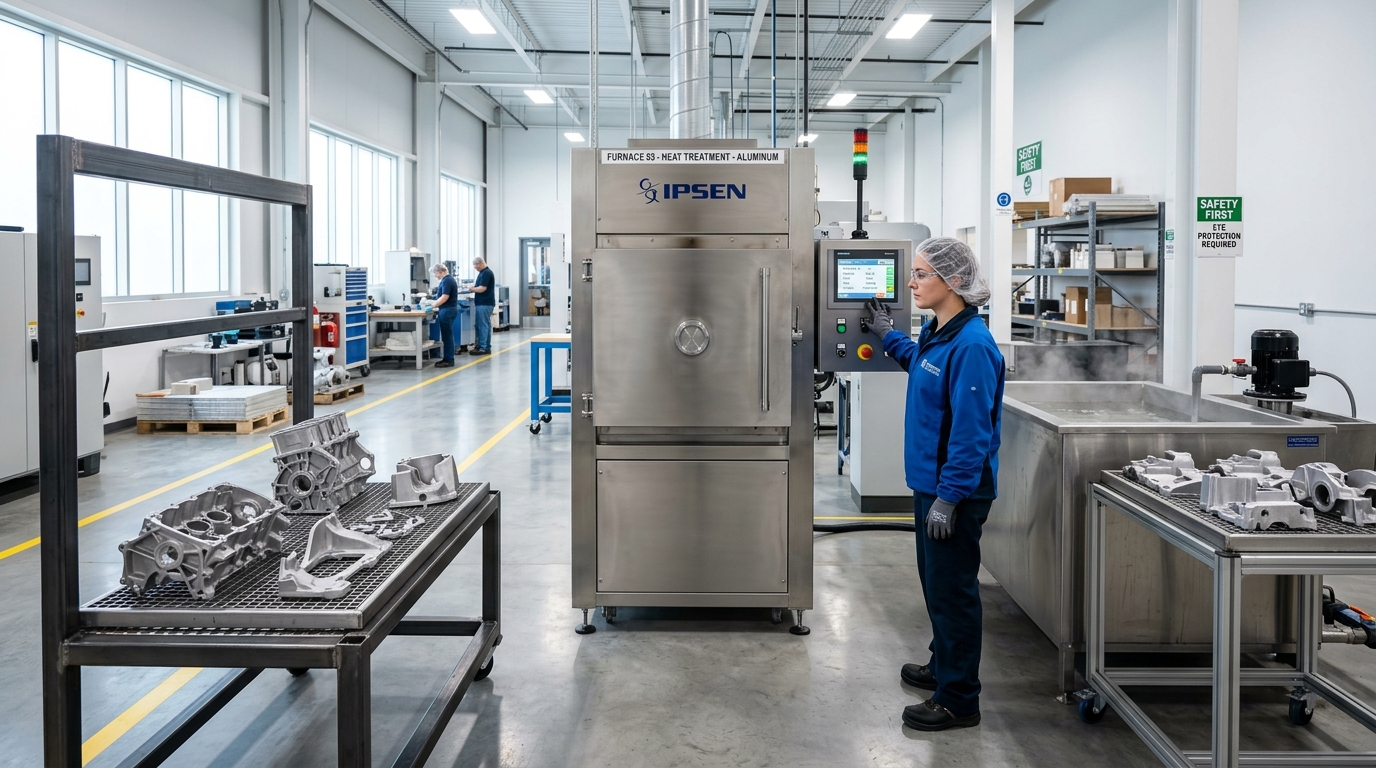
In aluminum investment casting, pouring the metal is only part of the job. To get the exact mechanical properties required for aerospace grade aluminum or heavy-duty industrial components, we rely on specific heat treatments. Before we even apply these thermal processes, the dimensional accuracy of the initial mold is critical. We utilize advanced wax injection machines and precision foundry equipment to ensure the baseline casting is flawless. Once cast, we use targeted thermal processing to lock in durability, strength, and stability.
Depending on your application, we apply different temper designations to alter the alloy’s microstructure.
Heat Treatment Capabilities
Here is a breakdown of the standard heat treatments we use to maximize the performance of your aluminum investment casting projects:
| Heat Treatment | Process Description | Key Benefit |
|---|---|---|
| T2 (Annealing) | Heated for up to three hours to recrystallize the alloy without additional processes. | Relieves internal casting stress and improves overall ductility. |
| T4 (Natural Aging) | Solution heat treated and then naturally aged at room temperature. | Creates a highly stable condition for parts that do not require cold working. |
| T6 (Artificial Aging) | Solution heat treated and artificially aged in a controlled oven. | Heat treatment T6 ensures mechanical properties remain completely unaffected by cold working. |
| T61 (Specialized Quench) | Solution heat treated, quenched in boiling water, and then aged. | Delivers maximum tensile strength, pushing the limits up to 40,000 PSI. |
By selecting the right heat treatment, we ensure your cast parts meet strict engineering thresholds. Whether you need the stress relief of a T2 anneal or the extreme 40,000 PSI tensile strength of a T61 quench, we control the entire thermal cycle in-house to guarantee certified quality.
Technical Specifications and Tolerances
Precision is the hallmark of our aluminum investment casting process. We specialize in producing complex geometries that maintain tight dimensional control, often eliminating the need for expensive secondary operations. By leveraging advanced wax injection technology and rigorous shell-building protocols, we deliver near-net shape components that adhere to strict aerospace and defense standards.
Linear and Geometric Tolerances
We achieve exceptional accuracy across all part dimensions. Our process is designed to handle intricate details and thin-walled sections that other casting methods simply cannot reach. For projects requiring the highest level of accuracy, our precision machining component guide explains how we integrate post-cast CNC services to meet ultra-tight tolerances.
| Feature | Standard Specification |
|---|---|
| Minimum Wall Thickness | 0.040″ (1.016 mm) |
| Linear Tolerances | High-precision near-net shape |
| Surface Finish | 125 RMS (Standard as-cast) |
| Material Verification | In-house spectrometer & raw material certification |
Surface Finish Standards (125 RMS)
One of the primary advantages of our investment casting is the superior surface quality. We consistently provide a 125 RMS surface finish, which is significantly smoother than sand or shell mold casting. This high-quality finish is critical for applications in the medical and electronic sensor industries where cleanliness and aesthetic appearance are paramount.
Our technical advantages in mold design and slurry consistency ensure that every part—from a simple bracket to a complex valve housing—exhibits uniform texture and professional-grade quality right out of the shell. We back these specifications with ISO 9001 and ITAR-registered quality management systems to ensure every shipment meets your internal benchmarks.
Industry Applications for Aluminum Investment Castings
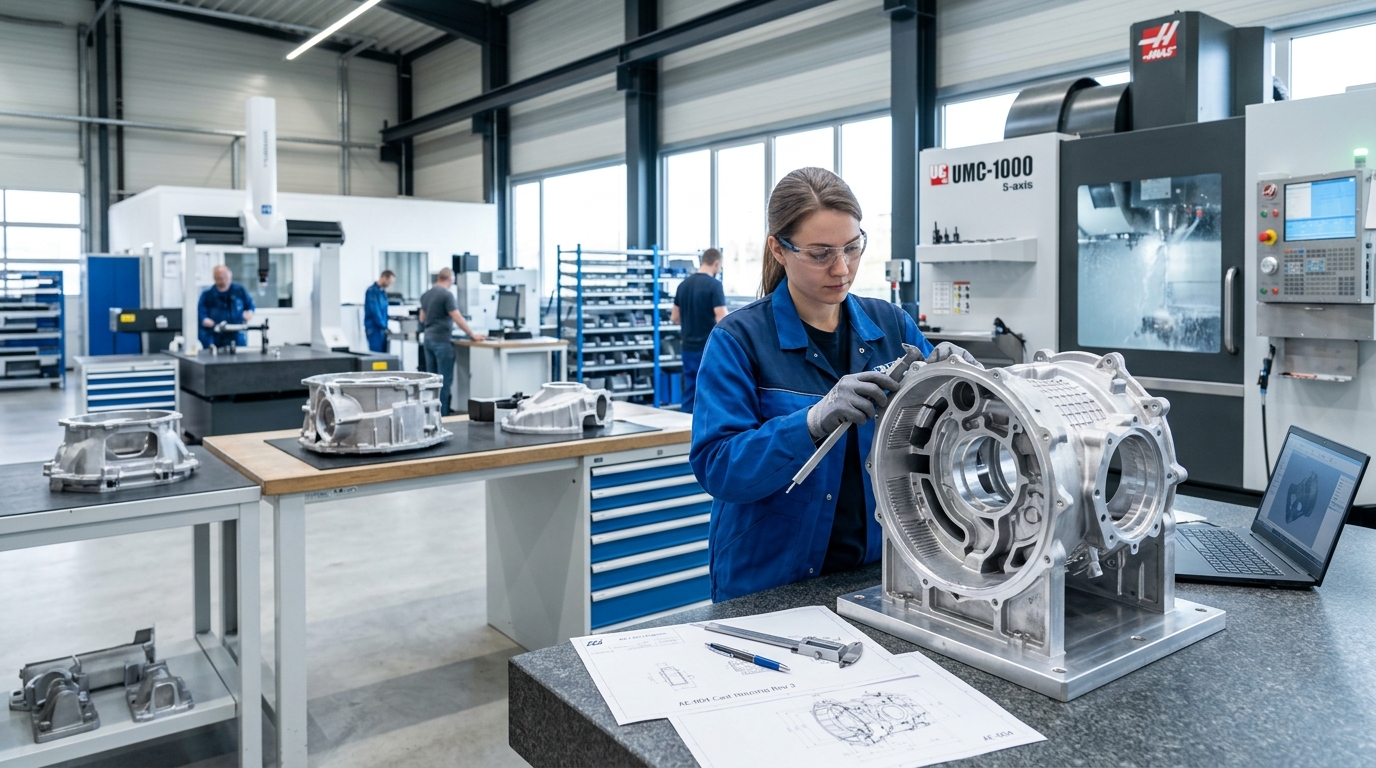
Our foundry leverages the aluminum investment casting process to deliver lightweight, corrosion-resistant components across highly demanding sectors. By focusing on near-net shape manufacturing, we help our clients reduce material waste and cut down on expensive secondary machining.
Aerospace and Defense
In aerospace and defense, every ounce matters. We pour aerospace grade aluminum to produce high-strength components that meet strict weight and performance requirements.
- Common Parts: Valves, electronic sensor assemblies, and structural brackets.
- Quality Standard: As an ITAR-registered facility, we enforce rigorous material certification before any metal is poured. Maintaining strict process control in investment casting ensures these critical parts perform flawlessly under extreme aviation and military conditions.
Automotive and EVs
The modern automotive industry relies heavily on weight reduction to improve fuel efficiency and extend electric vehicle (EV) battery range.
- The Advantage: We cast complex, durable automotive parts that are naturally resistant to harsh environmental elements.
- Efficiency: Producing these components to near-net shape eliminates the need for heavy CNC machining, speeding up production lines and lowering overall costs.
Medical Devices
Medical applications demand absolute precision, flawless surface finishes, and intricate internal geometries.
- Capabilities: We routinely cast prosthetic housings and specialized medical devices with incredibly thin walls, reaching down to 0.040”.
- Precision Tooling: Achieving this level of detail requires perfect wax models. Utilizing an advanced wax injection machine guarantees that the final aluminum cast matches the exact specifications of the original engineering design without compromise.
Aluminum Investment Casting vs. Alternative Methods
When choosing a manufacturing process, we look at the balance between complexity, cost, and precision. While other methods have their place, aluminum investment casting stands out for parts requiring intricate geometries and superior surface finishes.
vs. Die Casting
Die casting is often the go-to for massive production runs, but it comes with limitations. The high cost of steel dies makes it less flexible for design changes or lower volumes. In contrast, our investment casting process allows for:
- Greater Alloy Flexibility: We can pour any air-melted aluminum alloy, whereas die casting is limited to specific “die-cast” alloys.
- Complex Internal Geometries: We handle undercuts and intricate internal passages that are impossible to pull from a permanent metal die.
- Lower Tooling Entry Point: Ideal for specialized aerospace or medical components where die costs are prohibitive.
vs. Sand Casting
Sand casting is a traditional choice for large, heavy components, but it often falls short on detail. Comparing lost-wax casting vs. sand casting highlights the massive leap in quality we provide.
- Precision and Tolerances: We achieve much tighter linear and geometric tolerances than the rougher sand-mold process.
- Surface Finish: Our process delivers an exceptional as-cast finish, significantly reducing the need for secondary grinding or polishing.
- Thin-Wall Capability: We successfully cast sections down to 0.040”, a feat nearly impossible with standard sand casting.
By utilizing near-net shape manufacturing, we minimize material waste and reduce the time your parts spend in CNC machining. Whether you need the high strength-to-weight ratio of A356 or a specialized aerospace-grade alloy, our foundry delivers a level of detail and structural integrity that alternative methods simply cannot match.
Frequently Asked Questions
What is the minimum wall thickness for aluminum investment casting?
Our foundry specializes in producing complex geometries with exceptionally thin walls. We can achieve wall thicknesses down to 0.040”, allowing for significant weight reduction without compromising the structural integrity of the part. This capability is essential for aerospace and electronic sensor assemblies where space and weight are at a premium.
How does wax injection affect final part precision?
The precision of the final casting begins with the wax pattern. Using a high-quality wax injection machine ensures that the patterns are consistent, dimensionally accurate, and free of defects. Because the ceramic shell is built directly around these patterns, any detail or precision captured during the wax injection phase is directly transferred to the aluminum part.
What are the main benefits of A356 over other alloys?
A356 is our most utilized aluminum alloy because it offers a superior balance of mechanical properties.
- Castability: Excellent fluidity makes it ideal for intricate designs.
- Pressure Tightness: Highly resistant to leaks, perfect for valves and housings.
- Strength: When combined with T6 or T61 heat treatments, it achieves high tensile strength.
- Weldability: It is easily repaired or joined to other components.
Can investment casting replace CNC machining?
While investment casting is a near-net shape manufacturing process that significantly reduces the need for metal removal, it does not always eliminate CNC machining entirely. We provide in-house CNC machining to achieve extremely tight linear tolerances or specialized surface finishes that go beyond the standard 125 RMS as-cast finish. By combining precision casting and CNC machining, we deliver finished components that are ready for immediate assembly.
 English
  Russian
  German