
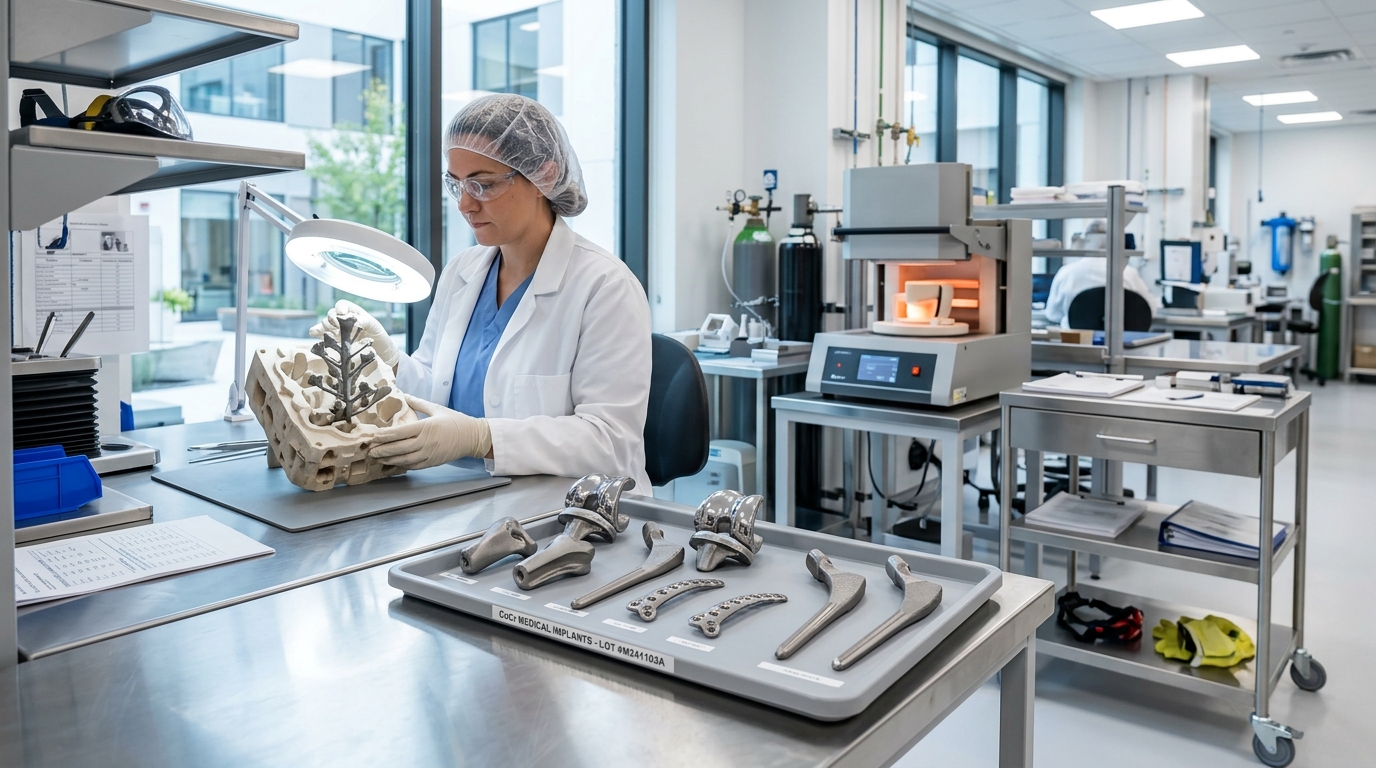
As an industry expert, I know that choosing the right manufacturing process is the difference between a delayed prototype and a successful, life-saving device. The right approach guarantees strict biocompatibility, superior surface finishes, and scalable production.
In this post, you're going to learn exactly how medical investment casting works, the best medical-grade materials to use, and how to navigate strict ISO 13485 compliance.
Whether you are developing titanium orthopedic implants or precision robotic surgery tools, this guide will show you how to choose the perfect manufacturing partner to bring your healthcare innovations to life.
Overview of Medical Investment Casting Services
Medical investment casting, often referred to as precision casting or the lost-wax process, is a specialized manufacturing method used to produce high-performance components for the healthcare industry. This process involves creating a wax pattern, coating it with a ceramic shell, and melting the wax away to leave a cavity that is filled with molten metal. For the medical sector, this technique is essential for creating parts that meet stringent biological and mechanical requirements.
What is Medical Grade Investment Casting?
Medical grade investment casting is a refined version of the traditional process, specifically tailored to produce surgical components and implants. It utilizes high-purity alloys and controlled environments to ensure that every part is free from contaminants. This method is preferred for its ability to create intricate geometries that mirror complex patient anatomy, which are often impossible to achieve through traditional machining.
The Importance of Precision in Medical Manufacturing
In the medical field, precision is not just a goal; it is a requirement for patient safety. Investment casting provides exceptional dimensional standards, ensuring that every component fits perfectly within a larger assembly or the human body.
- Tight Tolerances: Minimizes the need for secondary machining.
- Consistency: Ensures repeatable quality across large production runs.
- Reliability: Critical for life-saving devices and surgical tools.
How Investment Casting Supports Healthcare Innovation
As a leading provider in the casting industry, we utilize advanced wax injection machines to create the highly detailed patterns required for modern healthcare solutions. Investment casting facilitates the development of next-generation medical tools and robotic surgery components by allowing engineers to experiment with complex shapes and lightweight designs. By bridging the gap between digital design and physical production, this process accelerates the delivery of innovative treatments to the global market.
Key Benefits of Investment Casting for Medical Devices
When producing critical medical tools and surgical components, the manufacturing method must be flawless. Medical investment casting offers distinct advantages that traditional machining simply cannot match, ensuring both performance and patient safety.
High Dimensional Accuracy and Complex Geometries
Medical devices often require intricate geometries to perfectly match patient anatomy. Through the medical investment casting process, we achieve exceptional precision. Strict dimensional standards are easily met, reducing the need for extensive secondary machining. As a reliable wax injection machine Manufacturer and supplier, we know that the foundation of this high dimensional accuracy starts with creating a flawless wax pattern.
Superior Surface Finish and Near-Net Shape Production
Achieving a smooth surface is non-negotiable for medical implants and tools to prevent bacterial growth and ensure proper function. Investment casting consistently delivers a near-net shape right out of the mold.
- Minimal secondary machining: Saves valuable production time and reduces material waste.
- Exceptional smoothness: Significantly lowers the time required for final polishing and finishing.
- Consistent replication: Ensures every single part meets strict medical tolerances, whether producing ten or ten thousand units.
Material Flexibility and Biocompatibility for Patient Safety
Patient safety relies heavily on using the exact right materials. Medical investment casting supports a wide range of biocompatible alloys tailored to specific medical applications. Whether you need standard stainless steel for surgical instruments or specialized F75 material for long-term implants, the casting process adapts seamlessly.
| Material Type | Common Medical Application | Key Benefit |
|---|---|---|
| Stainless Steel | Surgical tools, forceps, scalpels | High strength and excellent corrosion resistance |
| F75 Material (Co-Cr) | Joint replacements, orthopedic implants | Superior biocompatibility and wear resistance |
| Titanium Alloys | Bone screws, trauma plates | Lightweight and naturally integrates with human bone |
Cost-Effective Scalability and Reduced Lead Times
Bringing medical devices to the global market quickly and affordably is a major priority. By utilizing advanced automatic wax machines for precision investment casting, we streamline the critical initial patterning phase. This automated efficiency translates directly to faster production cycles, drastically reduced material waste, and highly scalable manufacturing that easily transitions from early-stage prototyping to full-scale mass production.
Common Materials Used in Medical Casting Applications
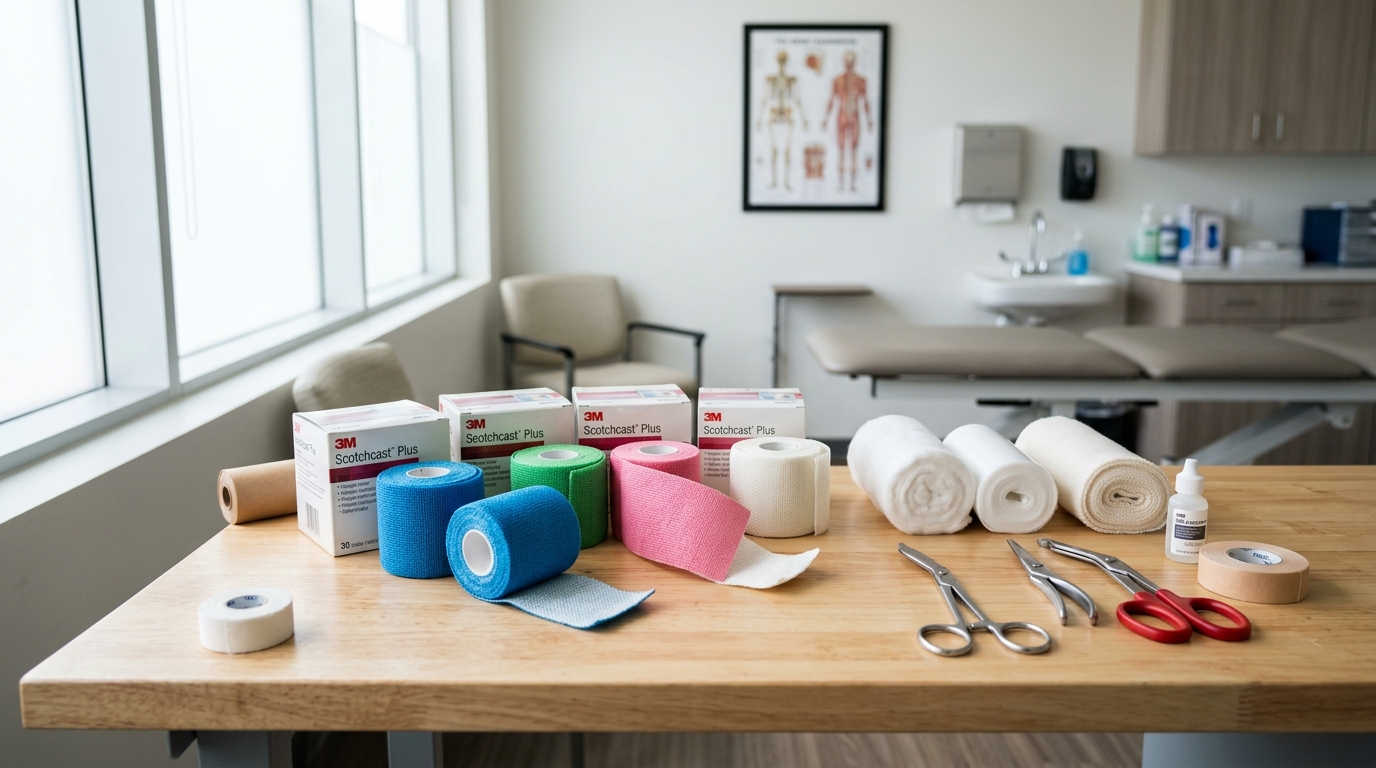
When it comes to medical investment casting, the choice of material is everything. We need metals that offer high biocompatibility, meet strict dimensional standards, and can handle rigorous sterilization. As a trusted partner in this field—we understand how crucial material selection is for producing flawless surgical components and medical tools. Here is a breakdown of the most common lost wax casting materials used in the healthcare industry.
Stainless Steel and Specialty Alloys
Stainless steel is a staple in medical manufacturing. It is highly resistant to corrosion, easy to sterilize, and incredibly durable.
- Common Grades: 304, 316L, and 17-4PH.
- Applications: Surgical instruments, scalpel handles, forceps, and dental tools.
- Advantage: These specialty alloys allow us to achieve the intricate geometries required for precise medical operations without compromising structural integrity.
Cobalt-Chrome (ASTM F75) for Implantable Devices
For permanent joint replacements, Cobalt-Chrome is the absolute gold standard.
- F75 Material: We utilize this specific non-magnetic alloy to cast critical orthopedic implants like artificial knee and hip joints.
- Patient Anatomy: It offers exceptional wear resistance and biocompatibility. By leveraging advanced investment casting techniques, we can shape these implants to perfectly match complex patient anatomy, ensuring long-term comfort and mobility.
Titanium and Lightweight Aluminum Alloys
Titanium and aluminum serve very different, but equally important, roles in modern medicine.
- Titanium: Renowned for its incredible strength-to-weight ratio and ability to integrate directly with human bone. It is the go-to choice for dental implants, bone screws, and pacemaker cases.
- Aluminum Alloys: Frequently used for non-implantable medical equipment, such as hospital bed frames and portable diagnostic housings, to reduce overall weight without sacrificing strength.
Medical-Grade Carbon Steels and Non-Ferrous Metals
While not typically used inside the body, these metals are essential for supporting medical infrastructure and equipment.
- Carbon Steel: We utilize carbon steel lost wax casting to produce robust, cost-effective components that require high tensile strength, such as structural equipment frames and specialized surgical fixtures.
- Non-Ferrous Metals: Metals like copper and brass are occasionally used for specific antimicrobial applications or electronic housings within complex medical diagnostic devices.
Advanced Manufacturing Capabilities and Technologies
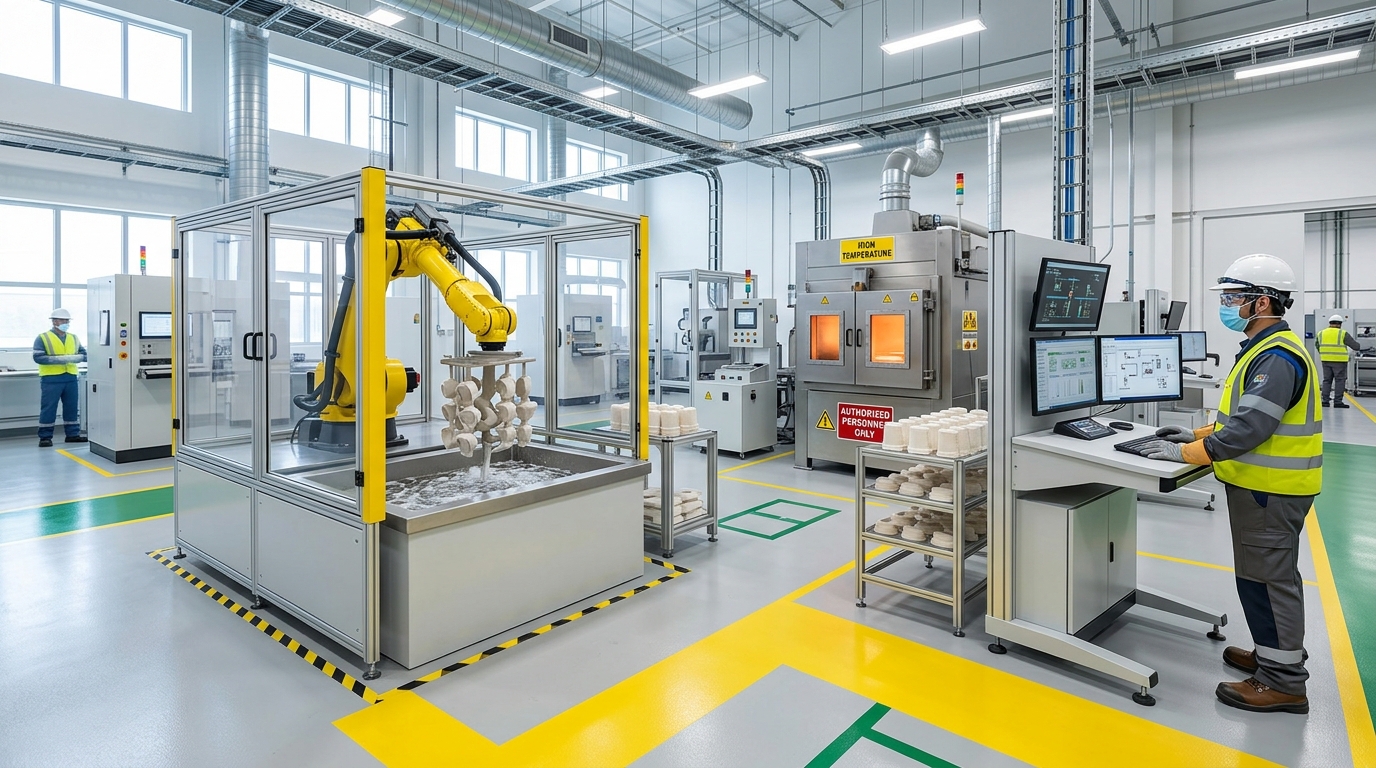
Modern medical investment casting relies heavily on advanced manufacturing technologies to meet the strict demands of the healthcare sector. We utilize cutting-edge equipment and engineering practices to deliver flawless medical tools and devices.
Rapid Prototyping for Faster Product Development
Speed to market is critical for new medical innovations. Rapid prototyping allows us to quickly translate digital designs into physical wax patterns.
Quick validation: Test the form, fit, and function of new surgical components before committing to expensive hard tooling.
Design flexibility: Easily adjust designs based on testing feedback without significant production delays.
Custom Patient-Specific Component Production
Healthcare is moving toward personalized medicine. Investment casting excels at producing custom components tailored to unique patient anatomy.
Complex designs: We easily cast intricate geometries that are impossible or too costly to achieve with traditional subtractive manufacturing.
Perfect fit: Custom implants and specialized tools lead to better surgical outcomes and faster patient recovery times.
Precision Tooling and Engineering Support
The quality of any cast part begins with the tooling. As a wax injection machine Manufacturer and supplier, we understand that precision at the wax pattern stage dictates the final outcome of the metal part.
High-quality patterns: Utilizing a reliable two-station wax injection machine for investment casting guarantees dimensional stability and smooth surface finishes right from the start.
Expert engineering: Our engineering team optimizes mold designs to prevent shrinkage defects and ensure consistent, repeatable production runs.
Secondary Operations: Machining, Polishing, and Coating
While medical investment casting provides near-net shapes, secondary operations are essential to meet exact dimensional standards and surface requirements.
CNC Machining: Used for adding tight-tolerance features like threads, holes, or precise mating surfaces.
Surface Finishing: Electropolishing and mechanical polishing ensure the ultra-smooth surfaces required for biocompatibility and easy sterilization.
Specialized Coatings: Applying wear-resistant or bone-integrating coatings to finished implants and surgical instruments to enhance their field performance.
Major Applications of Investment Casting in Medicine
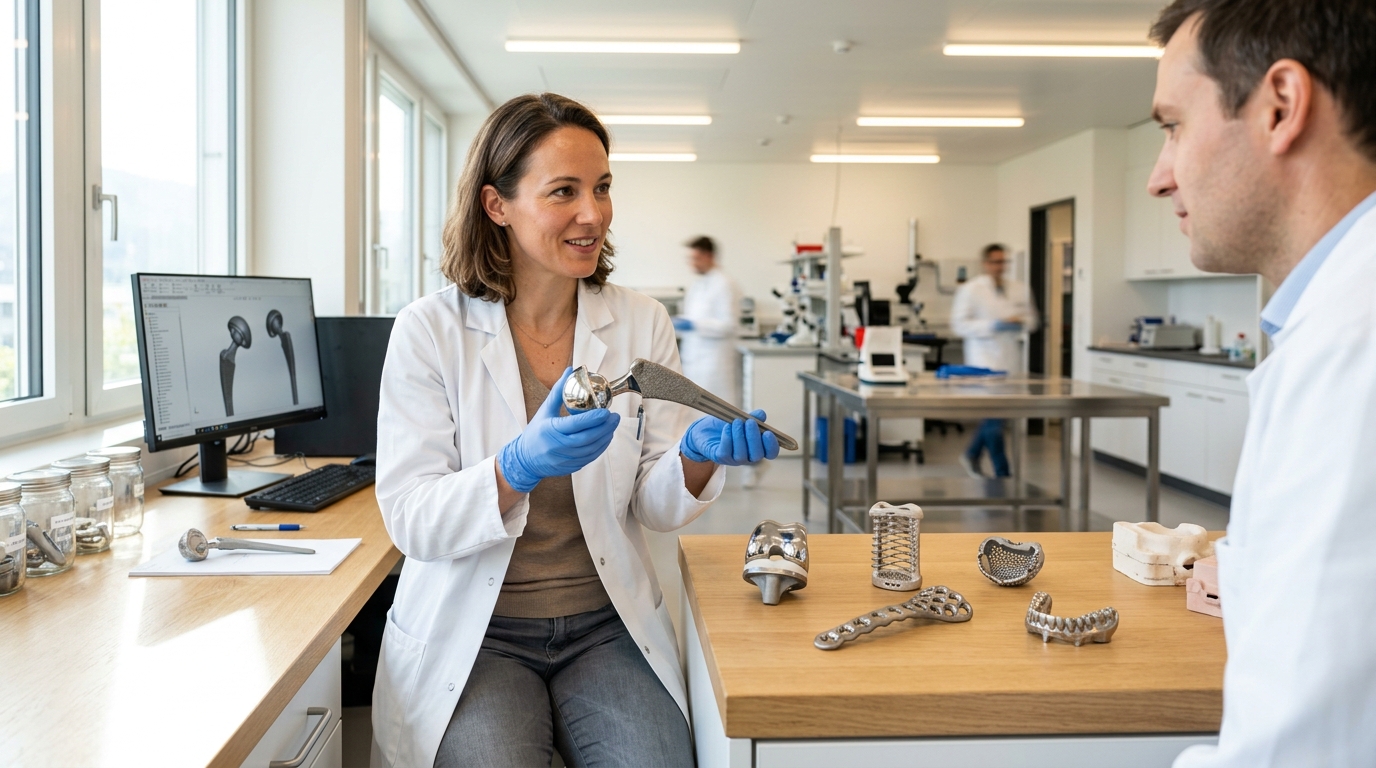
Medical investment casting is essential for producing reliable, high-precision components used across the global healthcare industry. The ability to create intricate geometries that match complex patient anatomy makes this manufacturing process indispensable for life-saving devices and advanced medical hardware.
Orthopedic Implants: Hip, Knee, and Spine Components
We rely on investment casting to manufacture durable orthopedic implants that integrate seamlessly with the human body.
Joint Replacements: Hip stems and knee joints are cast to exact dimensional standards.
Spinal Devices: Plates, screws, and fixation devices are produced with flawless structural integrity.
Material Focus: Using specialized alloys like F75 material ensures these implants deliver exceptional biocompatibility and long-term wear resistance.
Surgical Instruments and Robotic Surgery Tools
Precision is non-negotiable in the operating room. We produce a wide range of surgical components and medical tools designed for critical procedures.
Handheld Instruments: Forceps, scissors, and scalpel handles made from premium stainless steel to resist corrosion during repeated sterilization.
Robotic Systems: Complex, micro-cast parts for robotic surgery arms that require absolute precision and smooth articulation.
Diagnostic and Medical Imaging Equipment Components
Beyond direct patient contact, investment casting plays a huge role in diagnostic hardware. We cast heavy-duty, complex housings, heat sinks, and structural components for MRI machines, CT scanners, and X-ray equipment. Understanding the nuances of die casting vs investment casting allows us to select the optimal process for achieving the tight tolerances and structural stability required for these sensitive imaging devices.
Dental Implants and Prosthetic Devices
The dental sector heavily relies on the precision of the lost wax method to create custom solutions. We manufacture dental implants, crowns, and prosthetic frameworks that perfectly match individual patient anatomy.
Ensuring Quality Control and Regulatory Compliance
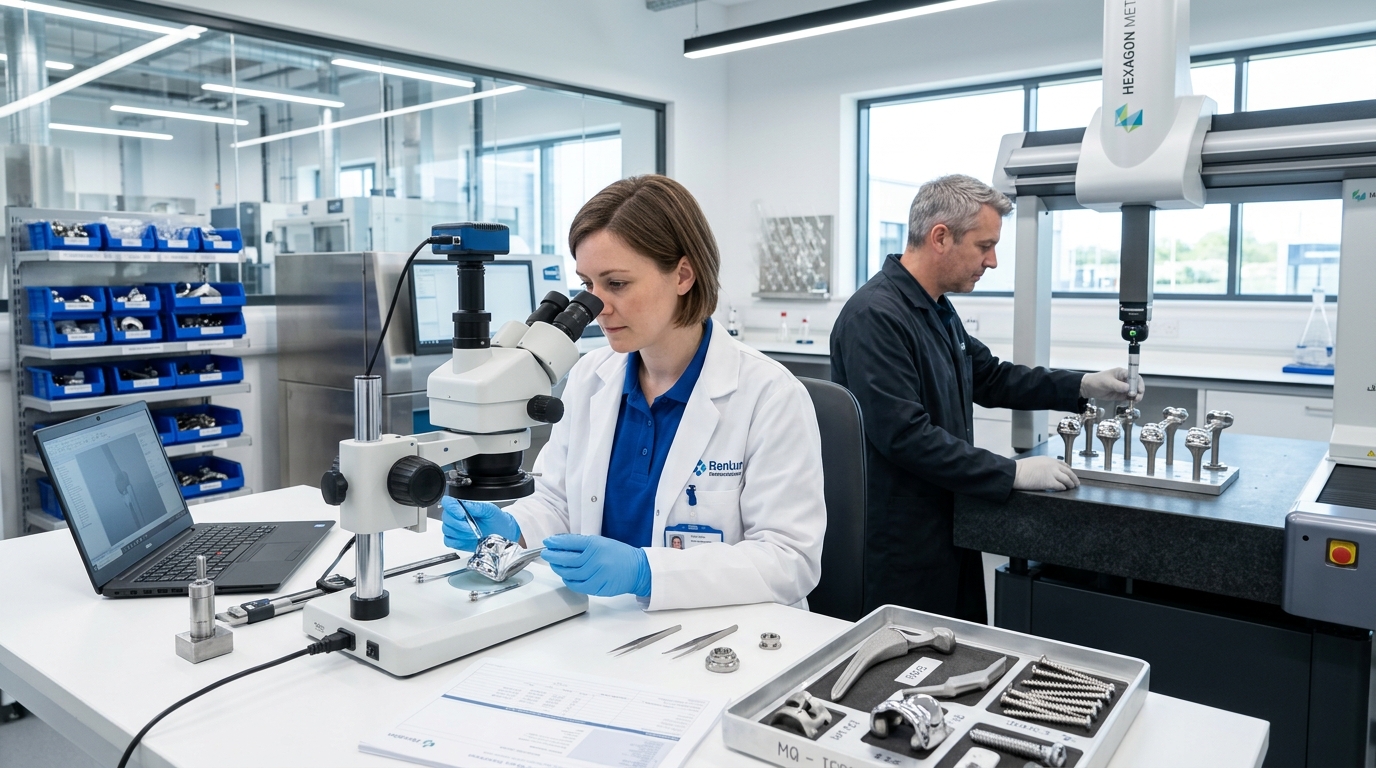
In the world of medical investment casting, there is absolutely no room for error. We don't just cast metal; we provide peace of mind through rigorous oversight and technical precision.
ISO 13485 and ISO 9001 Quality Management Systems
We operate under the strict guidelines of ISO 13485, the gold standard for medical device manufacturing. This ensures that every step of our process—from wax injection to final inspection—is documented and controlled. By integrating these systems with ISO 9001, we maintain a culture of continuous improvement that guarantees high-quality results for every batch.
Rigorous Testing: NDT, Chemical Analysis, and Validation
To ensure every part is structurally sound, we employ a suite of advanced testing methods. We prioritize process control in investment casting for defect-free precision to catch any potential issues before they leave our facility.
- Non-Destructive Testing (NDT): Including X-ray, ultrasonic, and dye penetrant inspections to find internal or surface flaws.
- Chemical Analysis: Spectrographic testing to verify that the alloy composition is exactly what the medical spec requires.
- Mechanical Testing: Checking tensile strength, hardness, and elongation to ensure the part can handle the physical demands of surgery or implantation.
Adherence to ASTM and AMS Material Standards
We strictly follow ASTM and AMS standards to ensure material integrity. Whether we are working with F75 Cobalt-Chrome or specialized stainless steels, our materials are sourced from certified suppliers and verified in-house. This adherence ensures that our medical investment casting products meet the necessary biocompatibility and corrosion resistance standards required for healthcare environments.
Traceability and Cleanroom Manufacturing Protocols
Traceability is non-negotiable. We provide full documentation that tracks a component back to its original melt lot. Our facility utilizes:
| Feature | Protocol Description |
|---|---|
| Full Traceability | Unique heat numbers and lot tracking for every single component. |
| Cleanroom Handling | Specialized protocols to prevent contamination during critical production stages. |
| Validation Reports | Comprehensive data packages including material certs and inspection results. |
By maintaining these high precision casting solutions with silica sol process and ISO 8062 accuracy, we ensure that every medical tool and implant is ready for the operating room.
Choosing a Medical Investment Casting Partner
Evaluating Technical Expertise and Industry Experience
When selecting a partner for medical investment casting, technical proficiency is non-negotiable. We prioritize facilities that demonstrate a deep understanding of the investment casting process and its application in the healthcare sector. Your partner must be capable of handling intricate geometries while maintaining strict dimensional standards.
| Feature | What to Look For |
|---|---|
| Material Mastery | Experience with F75 material, titanium, and 316L stainless steel. |
| Engineering Support | Ability to optimize designs for better manufacturability. |
| Quality Certifications | ISO 13485 compliance is a baseline requirement for medical tools. |
| Equipment | Use of high-precision wax injection machines for pattern consistency. |
Assessing Production Volume and Scalability
We understand that medical projects often start with small-batch prototypes before moving to mass production. A reliable partner must offer scalability without compromising quality. Whether we are producing custom implants tailored to specific patient anatomy or high-volume surgical components, the manufacturing workflow must remain stable. We utilize advanced automation and high-capacity equipment to ensure that lead times stay short even as order volumes grow.
Requesting a Quote for Custom Medical Components
Getting an accurate quote for your project requires clear communication of technical specs. To provide the most precise pricing, we look for:
- Detailed CAD Models: Essential for evaluating complex shapes.
- Material Specifications: Clear requirements for biocompatibility and strength.
- Testing Protocols: Any specific NDT or validation steps required.
- Surface Finish Needs: Requirements for polishing or specialized coatings.
By focusing on these core factors, we ensure that every medical component we cast meets the rigorous demands of the modern operating room.
 English
  Russian
  German