
2026年8月13日
Is stainless steel strong Learn about tensile and yield strength stainless grades and compare stainless steel vs carbon steel for your application
Quick Answer: How Strong Is Stainless Steel?
Yes, stainless steel is exceptionally strong, making it a baseline material for demanding engineering projects. However, declaring how strong stainless steel is depends on the specific mechanical metric required for your application:
- Ultimate Tensile Strength (UTS): Exceptional resistance against pulling forces before snapping.
- Yield Strength: High threshold before undergoing permanent plastic deformation under heavy structural loads.
- Impact Toughness: Superior capacity to absorb shock energy without shattering, even at cryogenic temperatures.
- Fatigue Performance: High endurance under constant cyclic stress and dynamic vibration.
At-a-Glance Strength Verdict
At VastPCC, we evaluate material selection based on operating environments. Stainless steel is the right choice when your components require high toughness, dynamic fatigue resistance, and total integrity in harsh conditions.
While high-yield carbon steel can offer higher initial yield stress at a lower material cost, carbon steel rapidly oxidizes and loses cross-sectional load capacity over time. Stainless steel maintains its full structural cross-section and mechanical strength over a long service life.
Key Strength Metrics (Typical Ranges)
The exact mechanical profile varies based on alloy family, processing method, and final product form (such as investment castings, forged bars, or cold-drawn stock).
| Mechanical Property | Typical Stainless Steel Range | Standard Carbon Steel Baseline |
|---|---|---|
| Ultimate Tensile Strength (UTS) | 500 – 1,000+ MPa (72 – 145+ ksi) | 400 – 550 MPa (58 – 80 ksi) |
| Yield Strength | 200 – 600+ MPa (29 – 87+ ksi) | 250 – 400 MPa (36 – 58 ksi) |
| Hardness Range | 140 – 450 HB (Up to 60 HRC) | 120 – 200 HB |
What Drives These Property Differences?
- Alloy Grade: Standard austenitic alloys (304, 316) offer great tensile strength and extreme toughness, while Duplex and Precipitation-Hardening (PH) alloys offer ultra-high yield strength.
- Heat Treatment: Thermal processing like quenching, tempering, and age hardening massively increases hardness and yield strength in martensitic and 17-4PH alloys.
- Cold Working: Cold rolling and cold drawing significantly boost tensile and yield values in non-heat-treatable austenitic grades through strain hardening.
What Is Stainless Steel and Why Is It Strong?
Basic Composition and Microstructure
At its core, stainless steel is an iron alloy containing at least 10.5% chromium. This specific chemistry creates an invisible, self-healing passive oxide film on the surface. While this passive layer provides exceptional corrosion resistance, the actual engine behind stainless steel strength lies in its atomic microstructure and alloying elements:
- Chromium: Delivers foundational hardness, wear resistance, and surface protection.
- Nickel: Stabilizes the austenite phase, dramatically boosting impact toughness and ductility.
- Molybdenum: Boosts high-temperature strength, creep resistance, and pitting protection.
- Nitrogen: Increases yield strength of stainless steel while maintaining high ductility.
We engineer these microstructures into high-performance custom stainless steel components built to handle heavy structural loads and extreme environments.
Main Stainless Steel Families and Their Strength Characteristics
Different alloy combinations yield distinct microstructures. Here is how the primary stainless steel families compare in mechanical performance:
- Austenitic (304, 316): Non-magnetic in the annealed condition. Offers high tensile strength of stainless steel (500–700 MPa), unmatched toughness, and high work-hardening capacity under cold working.
- Ferritic (430): Provides moderate yield strength, good ductility, and reliable corrosion resistance for lower-stress application needs.
- Martensitic (410, 420): Fully heat-treatable alloys engineered for high martensitic stainless steel hardness and wear resistance.
- Duplex & Super Duplex: Combines austenitic and ferritic structures, doubling the yield strength of standard austenitic grades while offering elite stress corrosion cracking resistance.
- Precipitation-Hardening (17-4 PH): Achieves ultra-high tensile and yield strengths exceeding 1,000 MPa after thermal aging, making 17-4 PH stainless steel strength ideal for demanding structural and aerospace uses.
Types of Strength: How Stainless Steel Performs
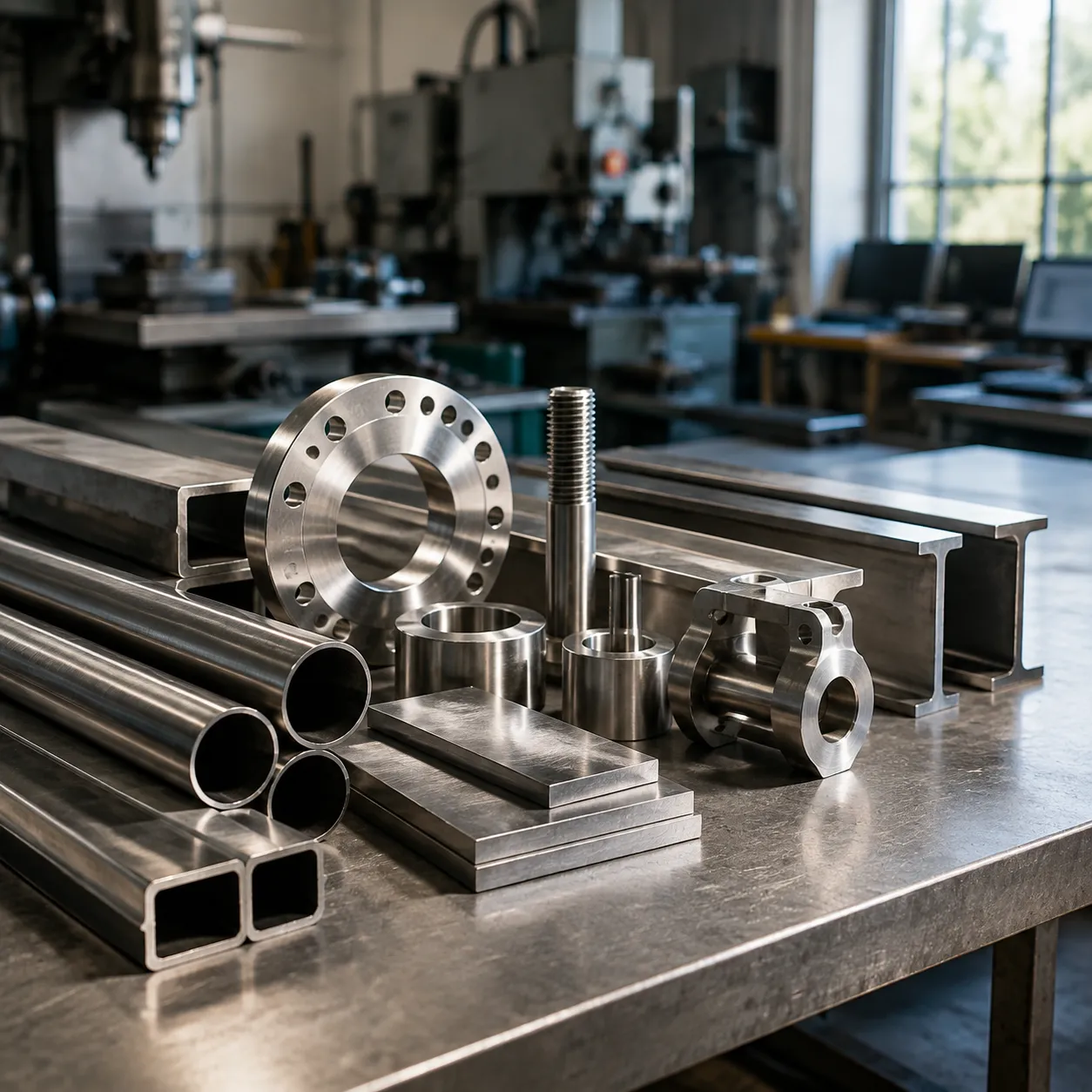
When we evaluate how strong stainless steel is for demanding engineering projects, we look at several distinct mechanical properties. Strength isn't just a single number—it depends entirely on how the material responds to pulling, bending, wear, cyclic loading, and extreme heat.
Tensile Strength of Stainless Steel
Ultimate tensile strength (UTS) measures the maximum stress a material can withstand while being stretched before breaking. Stainless steel delivers exceptional UTS ranges depending on the alloy family and processing method.
- Austenitic Grades (304, 316): Standard UTS ranges from 500 to 700 MPa. Cold working (cold rolling or drawing) significantly boosts these values through work hardening without heat treatment.
- Martensitic & PH Grades (410, 17-4PH): Heat-treated or aged condition UTS reaches 1,000 to 1,400+ MPa, providing extreme resistance to heavy pulling forces.
Yield Strength and Structural Performance
Yield strength defines the limit where metal permanently deforms under load. For load-bearing structures, yield strength is critical:
- Standard annealed 304/316 stainless steel yields around 200 to 300 MPa, slightly below standard structural carbon steel.
- Duplex and PH stainless steels shatter this barrier, reaching yield strengths from 450 to over 1,100 MPa. They allow engineers to design lighter, thinner, load-bearing parts without sacrificing safety.
| Stainless Steel Family | Typical Yield Strength (MPa) | Typical Tensile Strength (UTS) (MPa) | Primary Strength Mechanism |
|---|---|---|---|
| Austenitic (304/316) | 200 – 300 | 500 – 700 | Work hardening / Cold work |
| Ferritic (430) | 250 – 350 | 450 – 600 | Solid solution hardening |
| Martensitic (410/420) | 400 – 1,000+ | 650 – 1,200+ | Quenching and tempering |
| Duplex (2205) | 450 – 600 | 650 – 850 | Two-phase grain structure |
| Precipitation-Hardening (17-4PH) | 750 – 1,150 | 930 – 1,300 | Heat treatment (Aging) |
Hardness and Wear Resistance
Hardness correlates directly with surface wear resistance and scratch protection.
- Martensitic (410, 420) and 17-4PH grades reach 38 to 58+ HRC after heat treatment.
- These hardened alloys are ideal for high-wear parts like valve seats, pump shafts, turbine blades, and industrial tools.
- Higher hardness trades off some machinability, so we machine components in the annealed state before final hardening.
Fatigue Strength and Impact Toughness
Dynamic environments demand high fatigue resistance and impact toughness under mechanical shock.
- Fatigue Performance: Stainless steel performs exceptionally under repeated cyclic stress, provided surface finishes remain smooth and free of sharp notch stress concentrations.
- Low-Temperature Toughness: Austenitic stainless steels retain high impact toughness even at cryogenic temperatures below -100°C (-148°F), whereas standard carbon steel becomes dangerously brittle.
High-Temperature Strength and Creep Resistance
Under elevated temperatures, standard carbon steels quickly lose load capacity and oxidize. Stainless steel maintains structural integrity much longer:
- High chromium and nickel content prevents rapid oxidation and deformation under long-term thermal stress (creep resistance).
- Specialized stainless grades operate reliably at temperatures up to 870°C (1,600°F) and higher, making them essential for automotive exhaust manifolds, industrial furnaces, and power plant components.
Is Stainless Steel Stronger Than Carbon Steel?
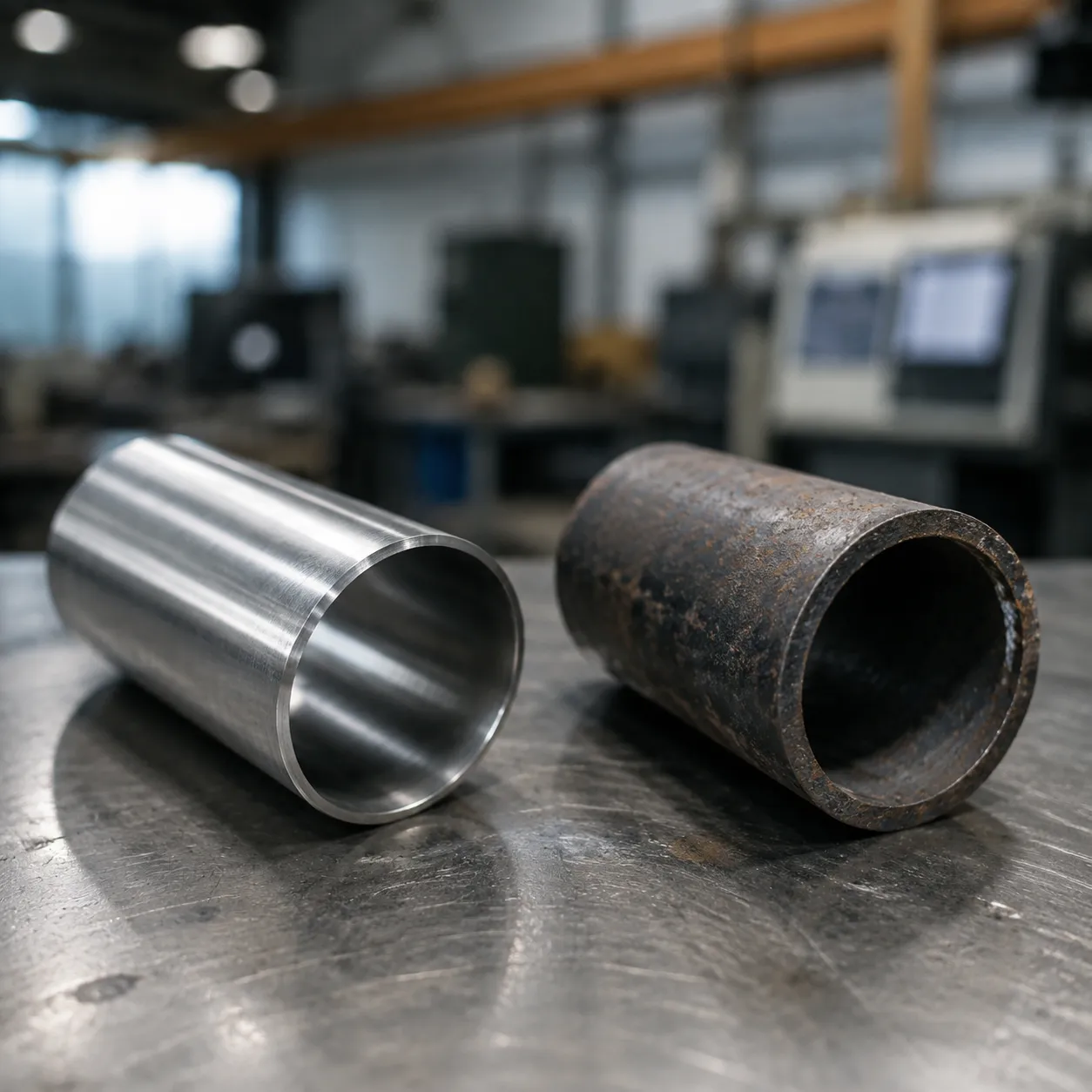
When comparing stainless steel vs carbon steel strength, the winner depends on the specific alloy grade, heat treatment, and operating environment. Standard carbon steel often exhibits a higher yield strength than basic annealed stainless steel, but high-strength duplex and precipitation-hardening (PH) stainless grades easily match or surpass structural carbon steel.
Stainless Steel vs. Carbon Steel: Strength Comparison
In standard annealed conditions, austenitic stainless steels offer higher ultimate tensile strength, superior work-hardening, and exceptional ductility compared to basic structural carbon steel. However, carbon steel usually provides higher initial yield strength before deformation begins, unless you utilize engineered high-strength stainless alloys.
| Material Category | Yield Strength | Ultimate Tensile Strength | Impact Toughness | Corrosion Resistance |
|---|---|---|---|---|
| Structural Carbon Steel (A36) | ~250 MPa (36 ksi) | ~400–550 MPa (58–80 ksi) | Moderate | Low (Requires Coating) |
| Austenitic Stainless (304/316) | ~200–300 MPa (29–44 ksi) | ~500–700 MPa (73–102 ksi) | Exceptional | High to Excellent |
| Duplex & PH Stainless (17-4PH) | ~450–1100 MPa (65–160 ksi) | ~700–1200 MPa (102–174 ksi) | Very High | Superior |
- High-Carbon Advantage: Heat-treated high-carbon steels achieve ultra-high yield strength and surface hardness at a lower initial material cost.
- Stainless Advantage: Stainless steel delivers high tensile energy absorption, remarkable work-hardening capability, and superior low-temperature impact toughness.
Strength vs. Corrosion Resistance Trade-Off
Yield strength metrics only represent short-term performance in controlled environments. The critical difference lies in long-term load-bearing capacity:
- Progressive Carbon Steel Loss: Unprotected carbon steel oxidizes and flakes away under ambient exposure. This continuous loss of cross-sectional area progressively lowers structural load capacity until catastrophic failure occurs.
- Sustained Stainless Integrity: Our stainless steel components maintain their structural integrity, cross-sectional thickness, and design safety margins over decades of exposure to moisture, chemicals, and chloride environments.
Weight, Fabrication, and Lifecycle Cost
Choosing between these metals requires evaluating density, fabrication complexity, and lifetime operational expenses.
- Density and Weight: Carbon steel (~7.85 g/cm³) and stainless steel (~7.9–8.0 g/cm³) have nearly identical densities. However, using high-yield duplex grades allows us to engineer thinner, lighter structural walls without sacrificing load capacity.
- Machinability and Weldability: Carbon steel is easier to machine and field-weld. Stainless steel requires rigid tool setups to manage rapid work-hardening, as well as precise heat controls during welding to maintain corrosion resistance.
- Lifecycle Economics: Carbon steel carries a lower upfront material cost but incurs ongoing expenses for protective coatings, maintenance, and replacement. Stainless steel eliminates routine painting and premature replacement, delivering a lower overall total lifecycle cost.
Stainless Steel Grade Comparison: Strength Differences
Selecting the right alloy depends on matching your mechanical load requirements with the operating environment. We break down the standard mechanical performance metrics across the primary grades we supply and process.
| Stainless Steel Grade | Yield Strength (MPa) | Tensile Strength (MPa) | Core Strength Advantage |
|---|---|---|---|
| 304 (Austenitic) | ~205–310 | ~515–620 | Excellent toughness, high work-hardening capacity |
| 316 (Austenitic) | ~220–310 | ~515–620 | Elevated high-temperature & marine creep strength |
| 410/420 (Martensitic) | ~290–1000+ | ~550–1400+ | Exceptional hardness & wear resistance via heat treatment |
| Duplex 2205 | ~450–550 | ~650–880 | Double the yield strength of 304/316 with high fatigue resistance |
| 17-4 PH (Precipitation Hardening) | ~750–1170 | ~930–1310 | Ultra-high yield and tensile strength after aging |
304 Stainless Steel Strength
304 stainless steel strength delivers an ideal balance of ductility and structural capacity for general engineering. While its annealed yield strength is moderate, it work-hardens rapidly during cold forming, significantly increasing localized surface strength for brackets, enclosures, and general structural hardware.
316 Stainless Steel Strength
316 stainless steel strength mirrors 304 in static loading, but offers superior mechanical performance under elevated temperatures and aggressive chemical exposure. The addition of molybdenum prevents chloride pitting and preserves structural integrity under thermal stress, making it our primary recommendation for marine components and process piping.
400-Series Hardness and Strength
The 400-series family trades a degree of corrosion resistance for extreme hardness and mechanical power: 410 & 420 Martensitic: Heat-treatable alloys achieving up to 50+ HRC. Ideal for pump shafts, valve components, fasteners, and tooling requiring high yield strength and wear resistance. 430 Ferritic: Offers moderate strength with high resistance to stress corrosion cracking, well-suited for light structural trim and appliance components.
Duplex & 17-4 PH High-Strength Options
When standard austenitic alloys fall short on load-bearing capacity, high strength stainless steel options deliver maximum performance: Duplex 2205: Features a dual-phase microstructure providing roughly double the yield strength of 304/316, making it ideal for offshore platforms, pressure vessels, and heavy marine hardware. 17-4 PH Stainless Steel: A precipitation-hardened alloy capable of reaching tensile strength over 1300 MPa post-aging. We process 17-4 PH components for aerospace actuators, high-load turbine blades, and heavy-duty pump shafts.
Choosing the Right Grade for Your Project
We recommend choosing your material grade using this quick engineering framework: Light-to-Moderate Load + High Formability: Choose 304. Corrosive/Marine Environment + Moderate Load: Choose 316. High Wear + High Hardness Required: Choose 410 or 420. Extreme Load + Corrosive Environment: Choose Duplex 2205. Maximum Tensile & Yield Strength + Precision Machining: Choose 17-4 PH.
How Manufacturing and Processing Affect Stainless Steel Strength
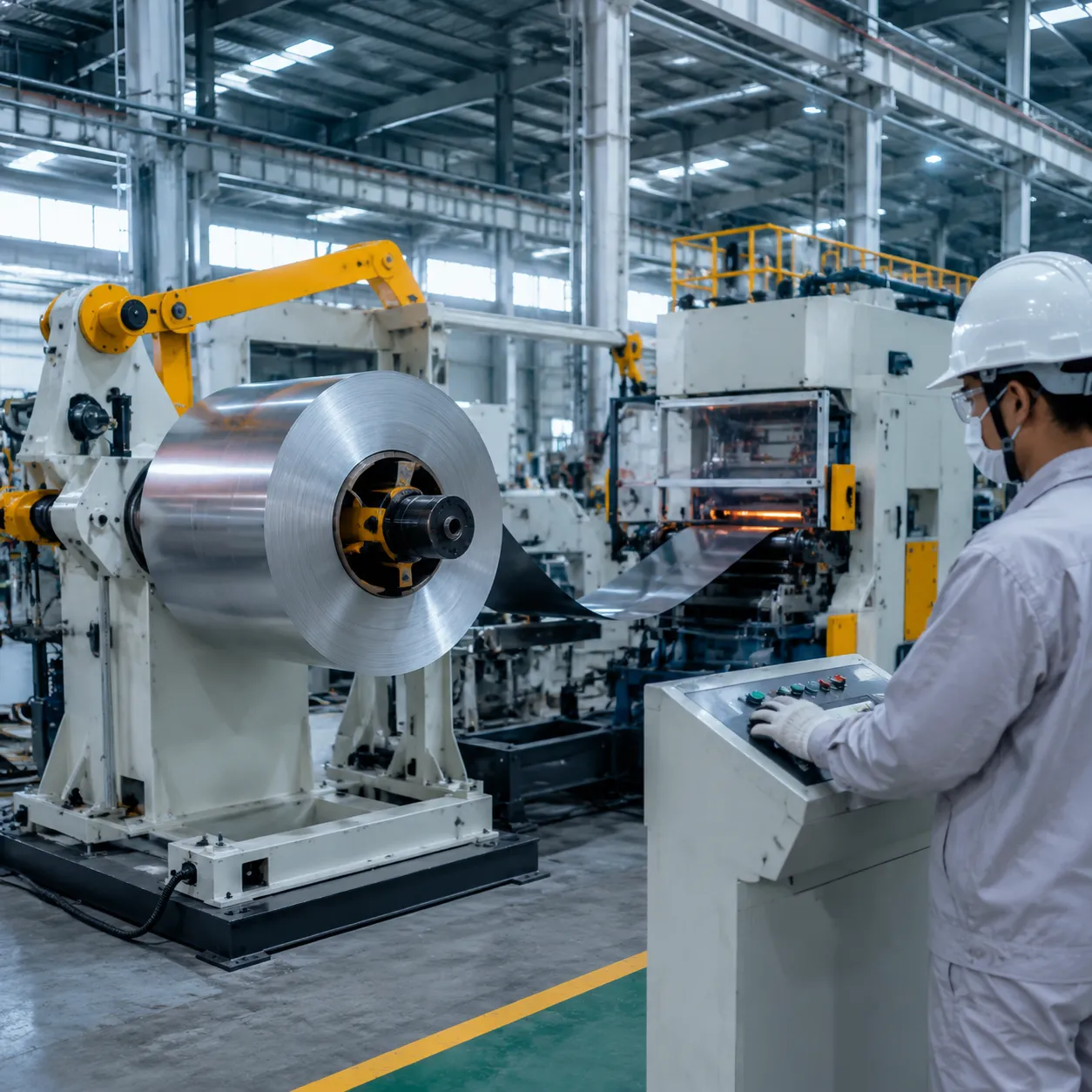
The raw chemical composition of an alloy is only half the equation. The way a component is formed, heat-treated, and finished directly dictates the final tensile strength of stainless steel parts in real-world service.
Casting vs. Forging vs. Machining
Manufacturing methods shape the internal grain structure, directly altering mechanical performance under load:
| Process | Grain Alignment | Impact on Stainless Steel Strength | Key Application |
|---|---|---|---|
| Forging | Directional, continuous grain flow | Highest impact toughness and fatigue resistance | High-stress structural bolts, load hooks |
| Investment Casting | Uniform, isotropic structure | Equal mechanical properties in all directions with high geometry freedom | Complex valves, pump impellers, brackets |
| Machining (Bar Stock) | Linear rolled grain | Leverages mill-certified raw bar yield strength | Precision shafts, custom threaded fittings |
At VastPCC, we utilize precision investment casting and CNC machining to deliver optimized mechanical properties tailored to your target load profile.
Heat Treatment and Aging
Thermal processing dramatically shifts the mechanical limits of specific alloy families:
- Precipitation Hardening (PH): Controlled aging treatments (such as H900 condition for 17-4 PH) precipitate intermetallic copper particles, boosting the yield strength of stainless steel beyond 1,100 MPa.
- Quenching and Tempering: Martensitic grades (410, 420) gain ultra-high surface hardness and wear resistance when rapidly cooled and tempered.
- Solution Annealing: Softens work-hardened austenitic grades (304, 316) to reset ductility and maximize corrosion resistance.
Work Hardening and Cold Forming
Austenitic grades cannot be hardened by heat treatment. Instead, cold working (cold rolling, wire drawing, cold heading) rearranges the crystal lattice to form strain-induced martensite. This mechanical processing significantly increases both yield and ultimate tensile strength without altering alloy composition.
Surface Finish and Fatigue Strength
Dynamic fatigue failure almost always initiates at surface defects:
- Stress Concentrations: Sharp internal corners, rough tool marks, and surface notches act as stress risers under cyclic loading.
- Surface Polish: Precision grinding and electro-polishing eliminate micro-cracks, raising the high-cycle fatigue limit.
- Radius Optimization: Blending generous fillet radii into high-stress transitions distributes operational stress evenly, preserving long-term structural integrity.
Stainless Steel Strength in Real Applications
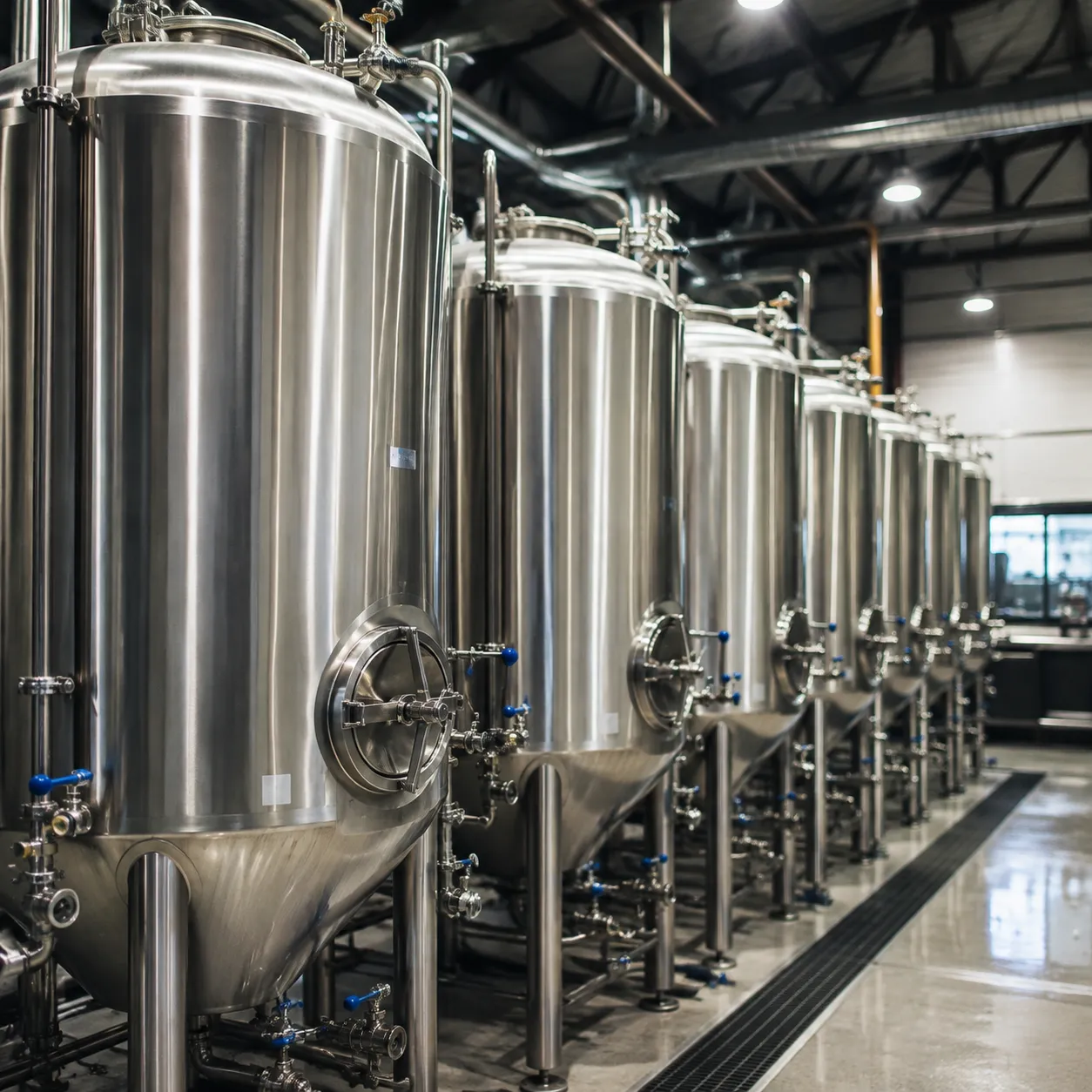
We supply engineered stainless steel components designed to withstand severe mechanical loads, extreme temperatures, and aggressive environments. Real-world performance depends on matching the right alloy to the specific operational stress.
Structural and Architectural Components
We utilize 304, 316, and duplex alloys for load-bearing glass façade supports, heavy-duty handrails, and structural framing.
- Load-Bearing Capacity: Duplex stainless steel mechanical properties provide double the yield strength of standard austenitic grades, enabling thinner, lighter structural profiles.
- Weathering Durability: Unlike carbon steel, stainless steel durability ensures structural cross-sections never lose thickness or load capacity from rust in exposed environments.
Fasteners, Bolts, and Hardware
Industrial joint hardware requires high shear resistance and thread integrity under continuous tension.
- High-Torque Performance: Martensitic and duplex fasteners deliver high tensile strength of stainless steel, holding critical assemblies tight under heavy loads.
- Galling & Wear Defense: Specialized alloys resist thread stripping, severe vibration, and mechanical fatigue.
Automotive and Transportation
Exhaust systems, brackets, and structural reinforcements face relentless vibration and thermal cycling.
- Thermal Fatigue Resistance: Ferritic and austenitic components maintain yield strength in exhaust manifolds, turbocharger housings, and mounting clamps.
- Crash Energy Absorption: High work-hardening rates in austenitic alloys allow structural frame elements to absorb massive energy during impact.
Marine and Offshore
Subsea hardware and deck machinery face aggressive chloride exposure, pitting, and stress corrosion cracking (SCC).
- 316 Stainless Steel Strength: Provides exceptional fatigue strength and pitting resistance for deck fittings and pump shafts.
- Duplex and Super Duplex: Deliver superior yield strength and SCC immunity for high-pressure offshore valving and subsea piping.
Medical, Food, and Chemical Equipment
Sanitary processing equipment requires high impact toughness alongside absolute surface purity.
- 304 Stainless Steel Strength: Offers optimal mechanical toughness for mixing tanks, sanitary valves, and high-pressure chemical transfer lines.
- Sterilization Resilience: Withstands high-pressure washdowns, aggressive cleaning agents, and thermal shock without degradation.
Aerospace, Energy, and High-Performance Industries
Critical flight systems and power generation components require ultra-high yield strength at extreme operating conditions.
- 17-4 PH Stainless Steel Strength: Delivers exceptional yield strength and hardness after aging treatments for aircraft actuators, pump shafts, and turbine blades.
- High-Temperature Stability: Maintains structural stiffness and creep resistance under elevated operating temperatures in energy sector turbines.
Stainless Steel Products and Solutions from VastPCC
Stainless Steel Components We Supply
At VastPCC, we manufacture high-performance stainless steel parts engineered to handle demanding structural loads and corrosive environments. We deliver precise, end-to-end manufacturing solutions tailored to your operational requirements:
- Investment-Cast Stainless Steel: High-precision components produced in austenitic (304/316), martensitic (410/420), duplex, super duplex, and 17-4PH precipitation-hardening alloys.
- Precision-Machined Parts: Tight-tolerance CNC components finished to maximize mechanical performance and fatigue strength.
- Custom Hardware & Assemblies: Fully integrated structural, mechanical, and flow-control assemblies built to exact application specs.
Designing for Strength with VastPCC
Achieving maximum stainless steel strength requires aligning material selection with real-world operating stresses. Our team provides direct engineering support to optimize your component performance before production begins:
- Grade Selection: We match tensile and yield strength requirements with the ideal alloy chemistry for your application.
- Load & Environment Matching: We evaluate operating conditions to prevent premature failure, stress corrosion cracking, and thermal fatigue.
- Structural & Fatigue Optimization: We refine part geometry, internal radii, and heat treatment schedules to minimize stress concentrations under dynamic loads.
Quality and Reliability
We enforce rigorous quality control at every stage of production to ensure your parts consistently meet critical strength tolerances:
- ISO 9001 Quality Systems: Standardized manufacturing processes that guarantee repeatable mechanical properties across production runs.
- Mechanical & NDT Testing: Comprehensive yield, tensile, hardness, and non-destructive testing (NDT)—including radiography and dye penetrant inspection.
- Full Material Traceability: Complete material test reports (MTRs), chemical analyses, and heat treatment certifications provided for every order.
How to Specify the Right Stainless Steel Strength for Your Project
Choosing the right grade comes down to matching specific load and environmental demands. To determine if a particular grade of stainless steel is strong enough for your application, you need to define key engineering metrics early in the design phase.
Key Mechanical Parameters to Define
When evaluating stainless steel strength for custom components, we recommend establishing clear thresholds for these core properties:
| Mechanical Property | What to Specify | Impact on Application |
|---|---|---|
| Yield Strength | Minimum MPa / ksi | Prevents permanent deformation under operational loads |
| Tensile Strength | Ultimate UTS requirement | Defines maximum load capacity before catastrophic failure |
| Hardness | Rockwell (HRC) or Brinell (HB) | Determines wear, abrasion resistance, and machinability |
| Fatigue Life | Cyclic load limits & stress cycles | Essential for components subjected to dynamic vibration |
| Operating Temp | Minimum and maximum range | Prevents thermal embrittlement or elevated-temperature creep |
| Standards | ASTM, ISO, SAE, or DIN | Ensures material quality, chemical limits, and consistency |
Essential Data to Prepare for VastPCC
To help our engineering team deliver components that meet your exact stainless steel mechanical properties, prepare the following technical data:
- Load Cases & Safety Factors: Define working static loads, impact loads, dynamic cycles, and required safety margins.
- Operating Media & Environment: Specify chemical exposure, chloride concentration, moisture levels, and pH levels.
- Thermal Cycles: Document normal operating temperatures and extreme thermal excursions.
- Target Service Life: Outline expected service longevity and maintenance intervals.
Partnering with the VastPCC Engineering Team
We partner with you to turn demanding mechanical requirements into cost-effective, high-performing components:
- Targeted Material Selection: We balance yield strength of stainless steel and corrosion resistance to select the precise austenitic, martensitic, duplex, or PH grade for your project.
- Design for Manufacturing (DFM): Our engineers refine investment casting radii, wall thicknesses, and machining tolerances to eliminate stress concentration points and improve fatigue life.
- Prototype-to-Production Scale-Up: We provide complete material traceability, NDT inspection, and mechanical testing to transition your designs seamlessly into full-scale production.
FAQs About Stainless Steel Strength
Is Stainless Steel Strong Enough for Structural Applications?
Yes, stainless steel is an exceptional choice for structural applications. Standard austenitic grades like 304 and 316 offer high tensile strength and toughness, while duplex stainless steels provide double the yield strength of standard structural carbon steel. This high strength-to-weight ratio, combined with immunity to structural rust, makes it ideal for bridges, building facades, and marine frameworks.
Which Stainless Steel Is the Strongest?
Precipitation-hardening (PH) grades and super duplex alloys represent the pinnacle of high strength stainless steel:
- 17-4 PH Stainless Steel: Reaches ultimate tensile strengths up to 1,300 MPa (190 ksi) and yield strengths above 1,100 MPa (160 ksi) after aging treatments.
- Super Duplex (e.g., 2507): Delivers yield strengths around 550 MPa (80 ksi) with extreme resistance to stress corrosion cracking.
Is 304 or 316 Stainless Steel Stronger?
In the standard annealed condition, 304 and 316 stainless steel strength profiles are virtually identical. Both yield roughly 205–290 MPa (30–42 ksi) with ultimate tensile strengths between 515–620 MPa (75–90 ksi). However, 316 provides higher mechanical creep strength at elevated temperatures and superior resistance to chemical pitting.
Does Stainless Steel Get Weaker Over Time or With Heat?
Stainless steel does not lose mechanical strength over time under normal conditions because it resists the progressive rusting that degrades carbon steel. At elevated temperatures above 800°F (425°C), austenitic grades gradually experience thermal softening and reduced yield strength. Special high-temperature alloys are designed to mitigate creep strength loss in thermal applications.
How Does Welding Affect Stainless Steel Strength?
Welding creates a Heat-Affected Zone (HAZ) that can alter the mechanical properties of the base metal:
- Austenitic (304/316): Retains base metal strength, though cold-worked strength increases are lost near the weld.
- Martensitic & PH Alloys: Require post-weld heat treatment to restore peak tensile strength and fracture toughness.
- Low-Carbon Variants (304L/316L): Prevent sensitization and carbide precipitation, ensuring full joint integrity and corrosion resistance.
Is Stainless Steel Stronger Than Aluminum?
Yes. Stainless steel is far stronger than aluminum in raw tensile strength, yield strength, and hardness. Standard 304 stainless steel offers double the tensile strength of common structural aluminum alloys (like 6061-T6). While aluminum is lighter, stainless steel handles significantly higher mechanical loads, impact fatigue, and wear without failure.
Can Stainless Steel Be Heat-Treated to Increase Strength?
It depends entirely on the alloy family:
- Heat-Treatable: Martensitic (410, 420, 440C) and Precipitation-Hardening (17-4 PH) alloys can be quenched, tempered, or aged to achieve ultra-high hardness and strength.
- Non-Heat-Treatable: Austenitic (304, 316) and ferritic (430) grades cannot be hardened by heat treatment. Austenitic grades must be cold-worked (rolled, drawn, or forged) to increase yield and tensile strength.
 English
  Russian
  German