
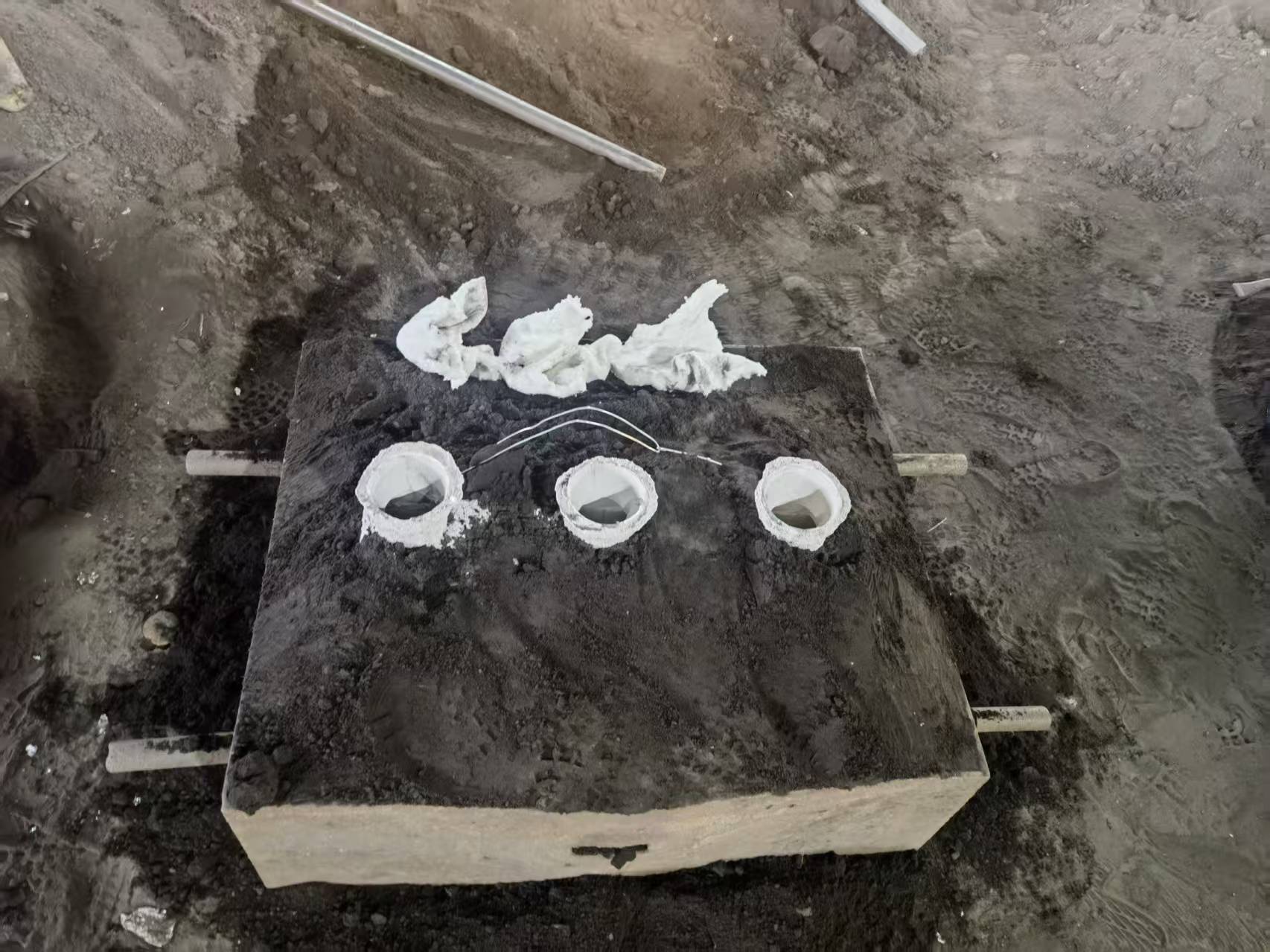
Discover how 3D printed sand molds cut tooling costs, speed rapid casting, and deliver complex geometries with precise additive manufacturing.
Are you still waiting weeks for expensive hard tooling just to cast a single prototype?
In the competitive foundry industry, speed to market is often the only metric that truly matters.
We know that traditional pattern-making is the biggest bottleneck in your production line. That is why 3D printed sand molds are rapidly replacing conventional methods for short-run and complex castings.
By leveraging Binder Jetting technology, you can eliminate draft angles, slash lead times from months to days, and achieve micron-level precision without a single piece of physical tooling.
In this guide, we break down exactly how patternless molding works and how to integrate it into a high-performance casting workflow.
Let’s get to work.
How 3D Printed Sand Casting Works: The Binder Jetting Process
If you have ever waited weeks for a wooden pattern to be machined, you know the bottleneck of traditional foundry tooling. That is where the 3D printed sand mold changes the game. We utilize Binder Jetting Technology to skip the hard tooling entirely, moving directly from a digital file to a physical mold ready for pouring. This patternless molding approach drastically reduces lead times and opens up new design possibilities.
CAD Design and Slicing: No Draft Angles Needed
Everything starts with a standard CAD model. One of the massive advantages here is the freedom from traditional constraints. In conventional casting, you have to design draft angles so you can physically pull a pattern out of the sand without breaking the mold.
With a 3d printed sand casting mold, those constraints disappear. Since we are building the mold layer by layer rather than packing sand around a tool, we can print:
- Complex geometries with undercuts.
- Designs with zero draft angles.
- Intricate internal channels as a single piece.
The software simply slices your digital model into thin cross-sections, preparing it for the additive manufacturing process.
The Printing Phase: Silica Sand and Binders
The actual printing process is fast and precise. A recoater spreads a micro-thin layer of industrial-grade silica sand across the build platform. Immediately after, a print head passes over the bed, selectively depositing a liquid chemical binder—typically a Furan resin system—onto the sand.
This binder glues the sand particles together exactly where the mold needs to be solid. The platform lowers, a new layer of sand is spread, and the process repeats. This cycle continues until the entire sand cast mold is fully constructed within the build box.
Curing, Desanding, and Metal Compatibility
Once the print is finished, the mold is encased in a block of loose, unprinted sand. This loose sand acts as a natural support structure during the build, which means we don’t need to add breakaway supports like in plastic 3D printing.
We extract the mold and clean off the excess sand (desanding). The chemical reaction creates a rigid, durable structure capable of withstanding the extreme heat and pressure of metal casting. These molds are compatible with the same industrial alloys used in traditional foundries, including:
- Aluminum
- Iron (Gray and Ductile)
- Steel
- Magnesium
By integrating this technology, we deliver a mold that offers the same refractory properties as traditional sand casting but with significantly higher dimensional accuracy and speed.
Key Advantages Over Traditional Sand Casting
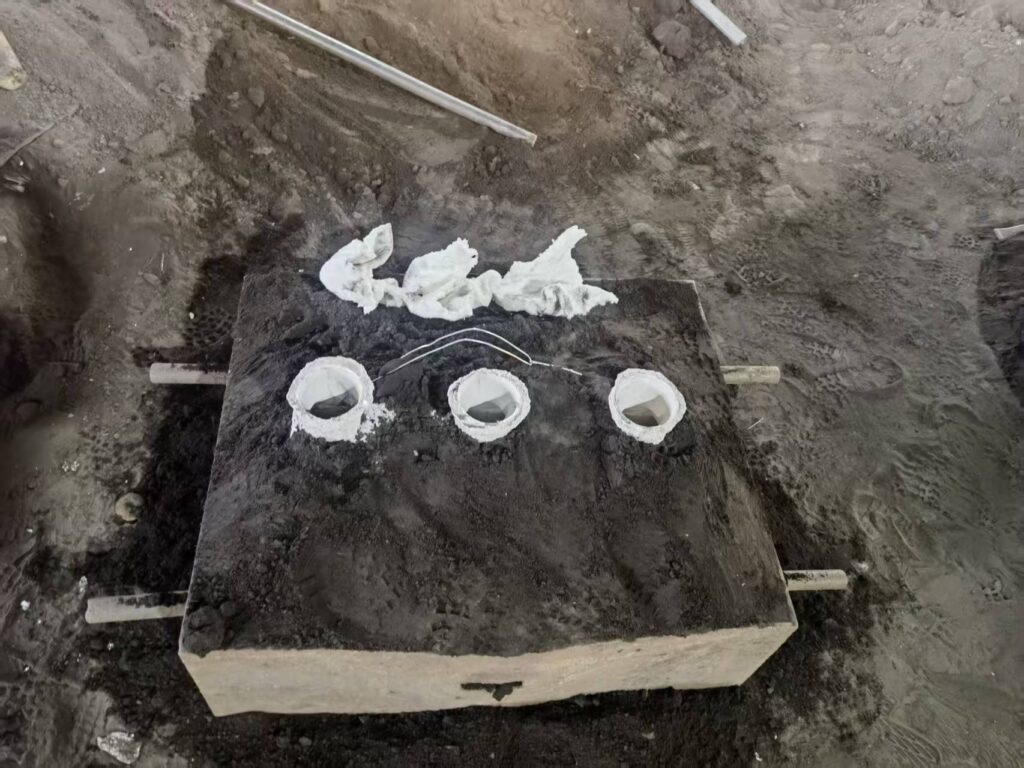
When we look at the foundry industry today, the shift toward additive manufacturing (AM) isn’t just a trend; it’s a necessary evolution for efficiency. While traditional methods have their place, a 3d printed sand mold offers specific benefits that solve the biggest headaches in metal casting: time, cost, and design limitations.
Speed to Market: Days vs. Weeks
In the US market, getting a product to launch first often dictates success. Traditional sand casting requires the machining of a physical pattern (match plate), which can take weeks or even months depending on the complexity. We bypass that entirely. By utilizing binder jetting technology, we move from a CAD file to a poured casting in just a few days. If you review a detailed manufacturing process comparison, the reduction in lead time with rapid casting is immediately apparent. We are printing the mold while others are still waiting for their tooling to be cut.
Geometric Complexity and Internal Cores
Designers are often handcuffed by the rules of traditional molding—specifically draft angles and parting lines. With a 3d printed sand casting mold, those constraints disappear.
- No Draft Angles: We can print 90-degree angles and undercuts without issues.
- Intricate Cores: We can consolidate multiple core assemblies into a single piece. Internal cores for things like hydraulic channels or engine cooling jackets can be printed with geometries that are physically impossible to mold using a traditional pattern.
Cost Efficiency for Short Runs
For mass production, hard tooling pays off. But for rapid prototyping or short-run production, the upfront cost of a pattern is a budget killer. Patternless molding eliminates the need for expensive foundry tooling. If you need one part or fifty, you only pay for the sand and binder used. This makes the sand cast mold process incredibly economical for low-volume projects where design changes are frequent.
Digital Inventory vs. Physical Warehousing
One of the most overlooked benefits is the shift to digital inventory. Instead of paying for warehouse space to store heavy, degrading wooden or metal patterns, we store your designs on a secure server. When you need a spare part five years from now, we simply load the file and print. This “print-on-demand” capability drastically reduces overhead and logistics costs.
Technical Specifications and Material Capabilities
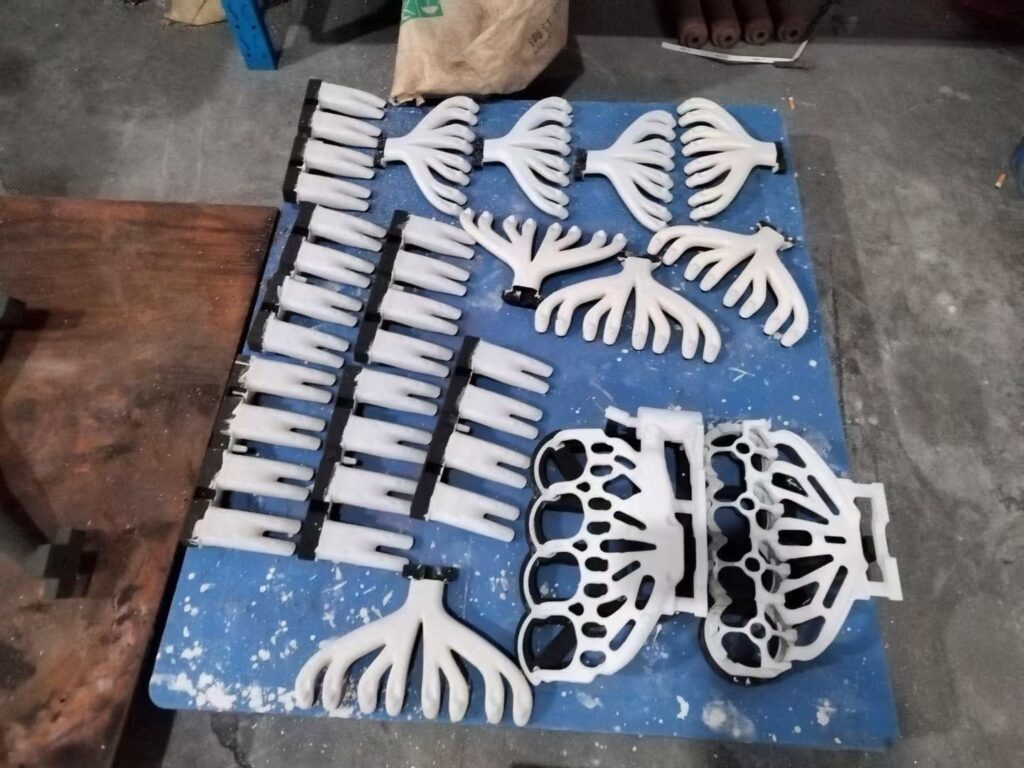
When we manufacture a 3d printed sand mold, we aren’t guessing on dimensions. The Binder Jetting Technology we utilize eliminates the variance you typically see with pattern wear in traditional foundries. We control the process digitally from start to finish, ensuring that the physical output matches the CAD file within strict limits.
Precision and Tolerances in Additive Manufacturing
In our workflow, Dimensional Accuracy is paramount. Because we are building layer by layer—usually between 280 to 300 microns thick—we achieve surface finishes and tolerances that often exceed standard sand casting capabilities.
For most industrial applications, we maintain tolerances around ±0.3 mm (±0.012 inches) for smaller parts and ±0.5 mm for larger geometries. This level of precision reduces the need for excessive machining allowances later on. If you are looking to understand how these specs compare to other methods, our guide on mold and cast materials breaks down the differences in detail.
Key Technical Specs:
- Layer Thickness: 0.28mm – 0.38mm
- Max Build Box Size: Up to 2200mm x 1200mm x 600mm (varies by machine)
- Gas Permeability: Adjustable based on sand grain size
- Surface Finish: Ra 12.5 – 25 µm (without coating)
Sand and Binder Types: Furan and Phenolic
The backbone of a strong 3d printed sand casting mold is the material pairing. We primarily use high-grade Silica Sand combined with specific chemical binders to create molds that can withstand the heat and pressure of molten metal.
The Furan Resin System is the industry standard for a reason. It cures at room temperature and offers exceptional strength, making it ideal for iron and steel casting. We also utilize Phenolic binders for specific applications where high-temperature stability and lower gas evolution are required.
| Binder System | Best For | Key Characteristics |
|---|---|---|
| Furan | Iron, Steel, Aluminum | High strength, room temp curing, easy shakeout. |
| Phenolic | Complex Aluminum, Non-ferrous | Excellent surface finish, reduced thermal expansion. |
| Inorganic | Automotive Aluminum | Odorless, zero emissions, prevents gas defects. |
Hybrid Approaches: Printed Cores in Traditional Molds
You don’t always need to print the entire mold package to get the benefits of Additive Manufacturing (AM). A highly effective strategy we use is the hybrid approach. We print complex Internal Cores—which would be impossible or too expensive to tool—and place them inside a standard green sand or chemically bonded sand cast mold.
This method gives you the best of both worlds:
- Cost Savings: Use cheap standard sand for the exterior mold.
- Geometric Freedom: Use 3D printing for intricate internal channels and undercuts.
- Speed: Eliminate the need for complex core boxes.
By integrating printed cores, we solve the problem of Complex Geometries without overhauling your entire production line. For those needing even tighter integration, our technical advantages overview explains how we merge these technologies seamlessly.
Industries Benefiting from Additive Sand Molding
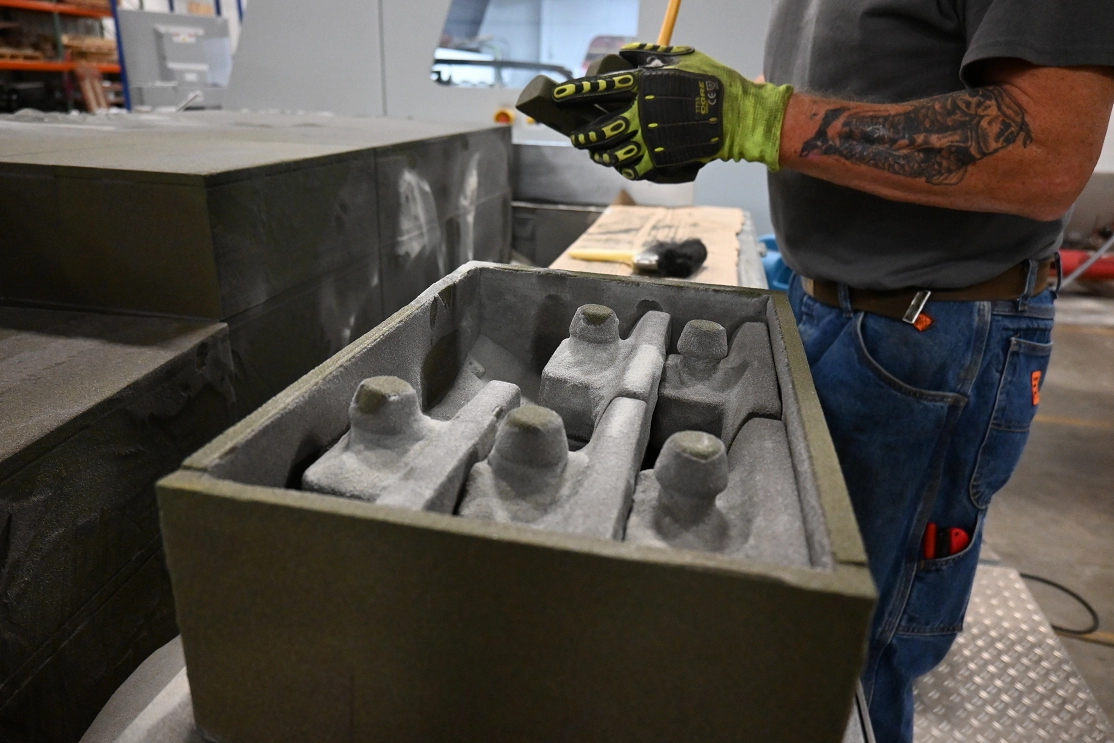
We are seeing a massive shift in how major sectors handle foundry tooling. By switching to a 3d printed sand mold, manufacturers bypass the limitations of traditional pattern making, allowing for innovation that was previously too expensive or technically impossible. Here is how specific industries are leveraging Binder Jetting Technology to stay ahead.
Automotive Prototyping
Speed is everything in automotive development. We use rapid casting to produce prototype engine blocks, cylinder heads, and transmission cases in days rather than the months required for traditional tooling. This allows engineers to test internal cores for complex water jackets and oil passages immediately. By eliminating the need for physical patterns, we can iterate designs on the fly, moving from a CAD file to a poured metal part in record time.
Aerospace Structural Components
In aerospace, weight is the enemy. Additive Manufacturing (AM) allows us to cast structural parts with optimized topologies and thin walls that standard molding simply cannot handle. We ensure high dimensional accuracy for these critical safety parts, utilizing silica sand and advanced binders to maintain mold integrity under high heat. This method is ideal for creating lightweight brackets and housing components that reduce overall aircraft mass without sacrificing strength.
Pump and Valve Impellers
Fluid dynamics require precise shapes. We produce impellers and valve bodies with complex curves and undercuts that are difficult or impossible to achieve with traditional methods due to draft angle requirements. Patternless molding allows us to print the mold exactly as the fluid engineers designed it, improving flow efficiency and performance.
Legacy Parts and Reverse Engineering
When the original tooling for a vintage part is lost or damaged, we don’t panic. We use reverse engineering to scan the old component and create a 3D model. From there, we print a new sand cast mold on demand. This supports a digital inventory strategy, where we store files instead of physical patterns, significantly reducing warehousing costs for spare parts.
Once the raw casting is complete, many of these complex industrial components require final finishing to meet assembly standards. We often transition directly to precision machining parts to ensure the final surfaces and tolerances match the rigorous specifications of the original design.
Integrating 3D Printing into a Precision Workflow
Making a 3d printed sand mold isn’t an isolated event; it is part of a tightly controlled manufacturing chain. We don’t just print parts; we engineer solutions that fit seamlessly into high-stakes supply chains. By combining Additive Manufacturing (AM) with traditional metallurgy, we ensure that the speed of printing never compromises the mechanical integrity of the final metal part.
The Vastpe Ecosystem and Infrastructure
Our facility operates on a digital-first mindset. We treat every sand cast mold design as a digital asset, allowing for instant retrieval and modification. This infrastructure supports a robust Digital Inventory, eliminating the need for vast warehouses filled with physical patterns. To guarantee the final output meets strict specifications, we align our printing capabilities with precision casting and CNC machining processes, ensuring that surface finishes and tolerances are spot-on every time.
Quality Control and ISO 9001 Standards
Speed means nothing without consistency. We adhere to rigorous ISO 9001 standards to validate every layer of the 3d printed sand casting mold. Our quality control involves:
- Raw Material Testing: Verifying silica sand and binder purity before printing.
- Dimensional Verification: Laser scanning molds to ensure Dimensional Accuracy matches the CAD file.
- Pour Analysis: Monitoring metal temperature and flow during the casting phase.
Transitioning from Prototype to Mass Production
The true power of this technology lies in scalability. We help clients move from Rapid Prototyping single units to Short-run Production without cutting expensive hard tooling. Since the 3d printed sand mold requires no physical pattern, design changes between the prototype phase and the production run are implemented instantly in the software. This flexibility allows us to ramp up volume for complex geometries or bridge production gaps while permanent tooling is being machined.
Frequently Asked Questions (FAQ)
Is 3D printed sand casting as strong as traditional methods?
Absolutely. There is a common misconception that “printed” means fragile, but that isn’t the case here. Using Binder Jetting Technology, we create molds that are chemically bonded with high-performance binders, typically a Furan Resin System. This process ensures that every grain of Silica Sand is adhered with precise consistency, often exceeding the uniformity of hand-packed molds.
A 3d printed sand mold offers excellent compressive strength and thermal stability. It can withstand the intense heat and metallostatic pressure of molten metal just as effectively as traditional green sand or chemically bonded systems. Because we control the curing process digitally, we eliminate the soft spots or density variations sometimes found in manual molding.
What metals can be poured into 3D printed molds?
The beauty of this technology is its material versatility. If a metal can be sand cast traditionally, it can be cast using a 3d printed sand casting mold. The printing process changes how we make the mold, not the physics of the pour. We regularly handle a wide spectrum of alloys for various industries:
- Aluminum Alloys: Ideal for automotive and aerospace components requiring complex internal channels.
- Iron (Gray and Ductile): Perfect for heavy machinery, pump housings, and engine blocks.
- Steel: The molds handle high pour temperatures without degrading prematurely.
- Non-Ferrous Alloys: Bronze, brass, and magnesium are also fully compatible.
Is it cost-effective for mass production?
It depends on your volume. Patternless Molding shines in Rapid Prototyping and Short-run Production because it completely eliminates the need for expensive hard tooling and physical patterns. You save weeks of time and thousands of dollars in upfront costs.
However, for true mass production (thousands of units), traditional methods are generally more economical per part once the initial tooling is paid for. Here is the general breakdown we see in the US market:
- Prototypes & Low Volume (1–500 parts): 3D printing is cheaper and faster. It allows for Digital Inventory where you print on demand rather than storing physical molds.
- High Volume (1,000+ parts): Traditional tooling offers a lower unit cost.
For many of our clients, the sand cast mold printing process is the bridge. They use it to validate designs and run pilot programs before committing to the heavy investment of permanent tooling.
 English
  Russian
  German