
The Step-by-Step Lost Wax Casting Process
Investment casting, widely known as lost wax casting, is a highly refined manufacturing method designed to produce intricate, high-quality metal parts with exceptional accuracy. Understanding this workflow is essential for maximizing efficiency and output quality.
Creating the Wax Model and Mold
The foundation of precision casting relies on creating a perfect replica of the desired part.
- Pattern Injection: The process begins by utilizing a high-performance wax injection machine to shoot molten wax into a dedicated metal die, forming a precise wax model.
- Tree Assembly: Multiple wax models are attached to a central wax sprue, creating a casting “tree” that allows for mass production in a single pour.
- Shell Building: The entire wax assembly is repeatedly dipped into a liquid ceramic slurry and coated with refractory sand. This builds a robust, heat-resistant ceramic shell around the wax patterns.
Wax Removal and Metal Pouring
Once the ceramic mold is fully cured, the production moves into the thermal processing stages.
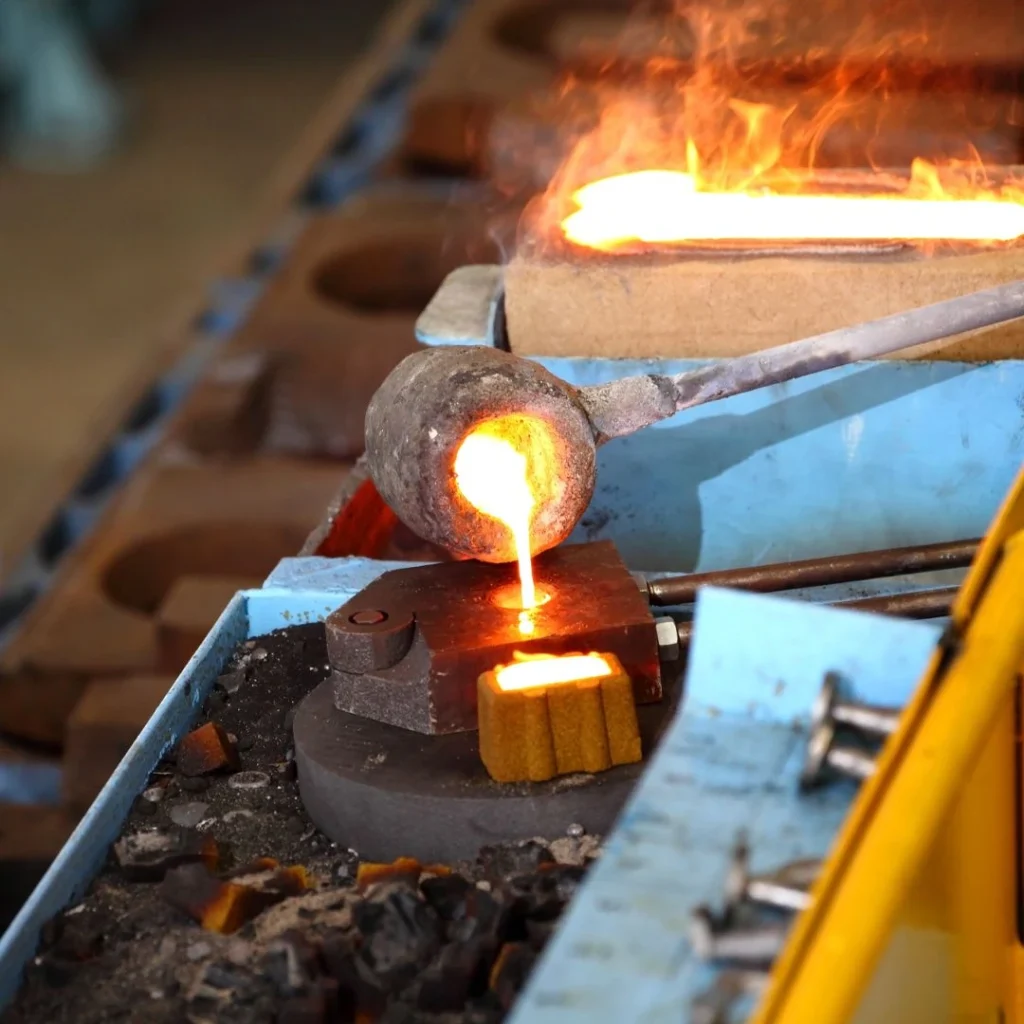
- Dewaxing: The ceramic shell is placed inside an autoclave or specialized furnace. The intense heat melts the wax, causing it to drain away (hence the term “lost wax”), leaving behind a perfectly hollow cavity.
- Mold Preheating: The empty ceramic shell is heated to extremely high temperatures to strengthen the mold and prevent thermal shock when the liquid metal is introduced.
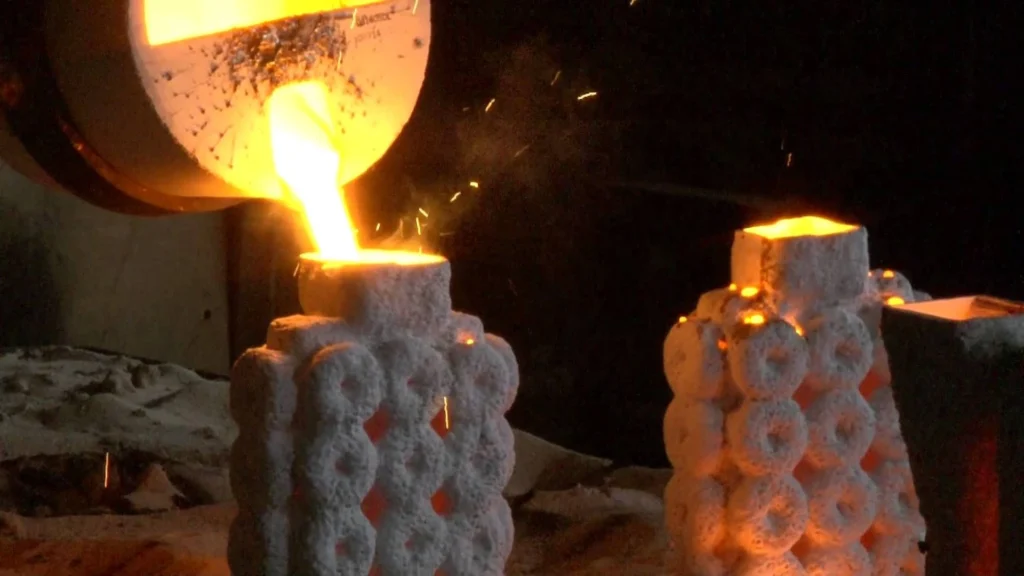
- Metal Pouring: Molten metal—ranging from steel to a lightweight aluminum alloy—is poured directly into the glowing hot mold, effortlessly filling every microscopic detail and complex geometry.
Finishing and Inspection
The final manufacturing stage transforms the raw cast into a ready-to-use industrial component, prioritizing strict dimensional control.
- Shell Knockout: After the metal completely cools and solidifies, the brittle ceramic shell is aggressively broken away using mechanical vibration or water jets.
- Part Separation: The individual metal components are cut away from the central sprue, and the remaining connection points (gates) are ground down to a smooth finish.
- Quality Assurance: Every part undergoes rigorous inspection to verify tight tolerances and optimal surface roughness. Advanced testing ensures the final product meets exact global market specifications without structural defects.
Top Advantages of Lost Wax Casting
When evaluating the overall advantages and disadvantages of lost wax casting, the benefits heavily outweigh the drawbacks for projects that demand high accuracy and zero compromises. As a casting processing machinery manufacturer and supplier, we see firsthand why global industries rely on this method to produce their most critical components.
High Precision and Complex Shapes
The standout benefit of precision casting is the ability to create incredibly intricate geometries that are impossible to achieve with standard machining or sand casting.
- Intricate Details: You can cast parts with thin walls, internal cavities, and complex undercuts all in a single piece.
- Dimensional Control: The process offers exceptional dimensional control, allowing parts to be cast to near-net shape.
- Tight Tolerances: By utilizing high-quality equipment like an automatic wax machine, you guarantee consistent, repeatable wax patterns that translate into exact metal parts with very tight tolerances.
This level of precision drastically cuts down on the need for secondary machining, saving both time and material costs on the factory floor.
Excellent Surface Finish
Another major win for investment casting is the superior surface quality it delivers right out of the mold. Because the ceramic shell is built tightly around a perfectly smooth wax pattern, the final metal part inherits that exact smoothness.
Key Surface Benefits:
- Significantly lowers the surface roughness of the final product.
- Eliminates or heavily reduces the need for post-cast grinding, polishing, or finishing.
- Ensures that aesthetic or mechanically sensitive surfaces perform well immediately after the ceramic shell is removed.
Wide Material Versatility
You are not locked into just a few metal options with this process. The flexibility in choosing lost wax casting materials is practically limitless.
Whether your project requires a lightweight aluminum alloy for aerospace components, durable stainless steel for marine environments, or specialized high-temperature superalloys, this method handles it all. You have the complete freedom to pour almost any ferrous or non-ferrous metal, ensuring you can perfectly match the chemical and mechanical properties required by your local or global customers.
Disadvantages and Limitations to Consider
Higher Production Costs
Precision casting naturally comes with a higher price tag compared to simpler methods.
- Initial Tooling: Creating the master dies for the wax patterns requires a significant upfront financial investment.
- Material Expenses: The high-grade wax, ceramic slurry, and specialized metals drive up the cost per unit.
- Labor Intensive: The manual steps involved require skilled labor to consistently achieve tight tolerances and the desired surface roughness.
Time-Consuming Process
The step-by-step nature of this method cannot be easily rushed.
- Extended Production Cycles: Building the ceramic shell, allowing for proper drying times, melting the wax, and pouring the metal takes considerably longer than die casting.
- Pacing: While the overall cycle time is long, integrating a reliable wax injection machine into your workflow can heavily accelerate the initial pattern creation and boost overall efficiency.
Part Size Limitations
There is a practical size limitation when utilizing this technique.
- Weight and Dimension Caps: This process is primarily designed for small to medium-sized components. Massive parts are difficult to produce because the ceramic shell can easily fracture under the extreme weight and thermal stress of large volumes of molten metal.
- Handling Issues: Oversized molds are notoriously difficult to maneuver. Maintaining strict dimensional control and preventing warping on massive parts often makes alternative methods like sand casting a more viable choice for heavy industrial components.
Common Materials in Investment Casting
Because this method is incredibly versatile, you can successfully pour nearly any alloy to meet global manufacturing standards.
Aluminum and Titanium Alloys
Lightweight metals are essential for modern aerospace, automotive, and tech hardware manufacturing.
- Aluminum Alloy: Outstanding for achieving precise dimensional control. It flows well into complex molds and delivers a superior surface roughness profile, drastically cutting down on post-machining work.
- Titanium: Highly sought after for its extreme strength-to-weight ratio. While it requires a highly controlled casting environment, it produces top-tier, stress-resistant components.
Stainless Steel and Carbon Steel
Steel remains the heavy-duty standard for precision casting across heavy industries.
- Stainless Steel: Naturally rust-resistant and highly durable. It is the perfect choice for sanitary medical devices, marine hardware, and fluid handling valves.
- Carbon Steel: A tough, cost-effective option for heavy industrial machinery and structural parts.
- Tolerances: Both steel types hold incredibly strict tolerances when cast properly.
To optimize these metals and prevent defects, you need reliable starting equipment. Upgrading to a modern wax injection machine for investment casting ensures your initial wax patterns are flawless, guaranteeing a better final metal part. You can explore more about how different alloys behave during the pouring phase in our comprehensive mold and cast materials guide.
Major Applications and Industries
From heavy industrial manufacturing to delicate artisan work, precision casting steps in and delivers high-quality results where standard machining simply cannot.
Aerospace and Automotive Parts
The aerospace and automotive industries demand extreme reliability and high performance. Safety and efficiency are non-negotiable here.
- Strict Accuracy: Critical engine components require strict dimensional control and incredibly tight tolerances.
- Lightweight Durability: Many performance parts utilize advanced materials like aluminum alloy to cut weight while maintaining structural strength.
- Manufacturing Consistency: To handle complex shapes at scale, modern foundries integrate automated shell coating applications to build highly consistent, flawless molds for turbine blades and specialized auto parts.
Medical and Dental Devices
The medical field relies heavily on investment casting for tools and internal devices that keep patients safe and healthy.
- Sanitary Finishes: Surgical instruments and joint replacements require exceptionally low surface roughness. A naturally smooth cast finish reduces the need for aggressive polishing and prevents bacterial buildup.
- Complex Miniaturization: While there is a general size limitation depending on the specific foundry equipment, the process is absolutely perfect for producing the small, highly complex geometries needed for custom dental implants and precision surgical gear.
Jewelry and Fine Arts
This is the traditional home of the lost wax method, now upgraded for modern production speeds.
- Flawless Detail: Jewelers rely on this process to capture microscopic textures, elaborate prongs, and flowing artistic designs.
- Rapid Replication: Today’s craftsmen pair this ancient technique with modern technology, using a highly accurate wax injection machine to quickly and perfectly replicate delicate wax models for rings, pendants, and bronze sculptures before the final metal pour.
Is Lost Wax Casting Right for Your Project?
Choosing the right manufacturing method comes down to matching your specific part requirements with the distinct strengths of the process.
Evaluating Design Complexity and Production Volume
Investment casting, also widely known as precision casting, shines when your design demands perfection.
- Complexity & Precision: It handles intricate internal cavities and thin walls effortlessly, offering outstanding dimensional control and tight tolerances.
- Finish: You achieve superior surface roughness right out of the mold, heavily reducing or eliminating secondary machining time.
- Production Volume: It is highly cost-effective for medium to high production runs where the initial tooling costs can be quickly absorbed.
- Constraints: You must keep size limitation in mind. This process is generally optimized for smaller, highly detailed parts rather than massive, heavy-duty structural components.
Comparing with Sand Casting and Die Casting
To make the most cost-effective choice, it helps to see exactly how lost wax stacks up against other traditional methods.
| Feature | Lost Wax Casting | Sand Casting | Die Casting |
|---|---|---|---|
| Surface Finish | Excellent | Rough | Very Good |
| Tooling Cost | Moderate | Low | High |
| Design Complexity | Very High | Low to Medium | Medium to High |
| Best For | Complex, precise parts | Large, low-volume parts | High-volume rapid production |
If your project involves pouring an aluminum alloy, reviewing the specific benefits of lost wax casting aluminum can clarify if it meets your mechanical and structural needs. Alternatively, if your focus is strictly on balancing high-speed volume against tooling costs, evaluating die casting vs sand casting will help you narrow down exactly where investment casting fits into your overall manufacturing strategy.
 English
  Russian
  German