
2026年8月13日
High performance cast stainless steel solutions with CF8 CF8M grades investment and sand casting tight tolerances and full machining services

Understanding Cast Stainless Steel and Its Manufacturing Process
Are you struggling to source metal components that withstand aggressive chemicals, extreme pressures, and scorching temperatures without failing? We manufacture cast stainless steel parts designed to solve those exact operational challenges.
What Is Cast Stainless Steel and How Is It Produced?
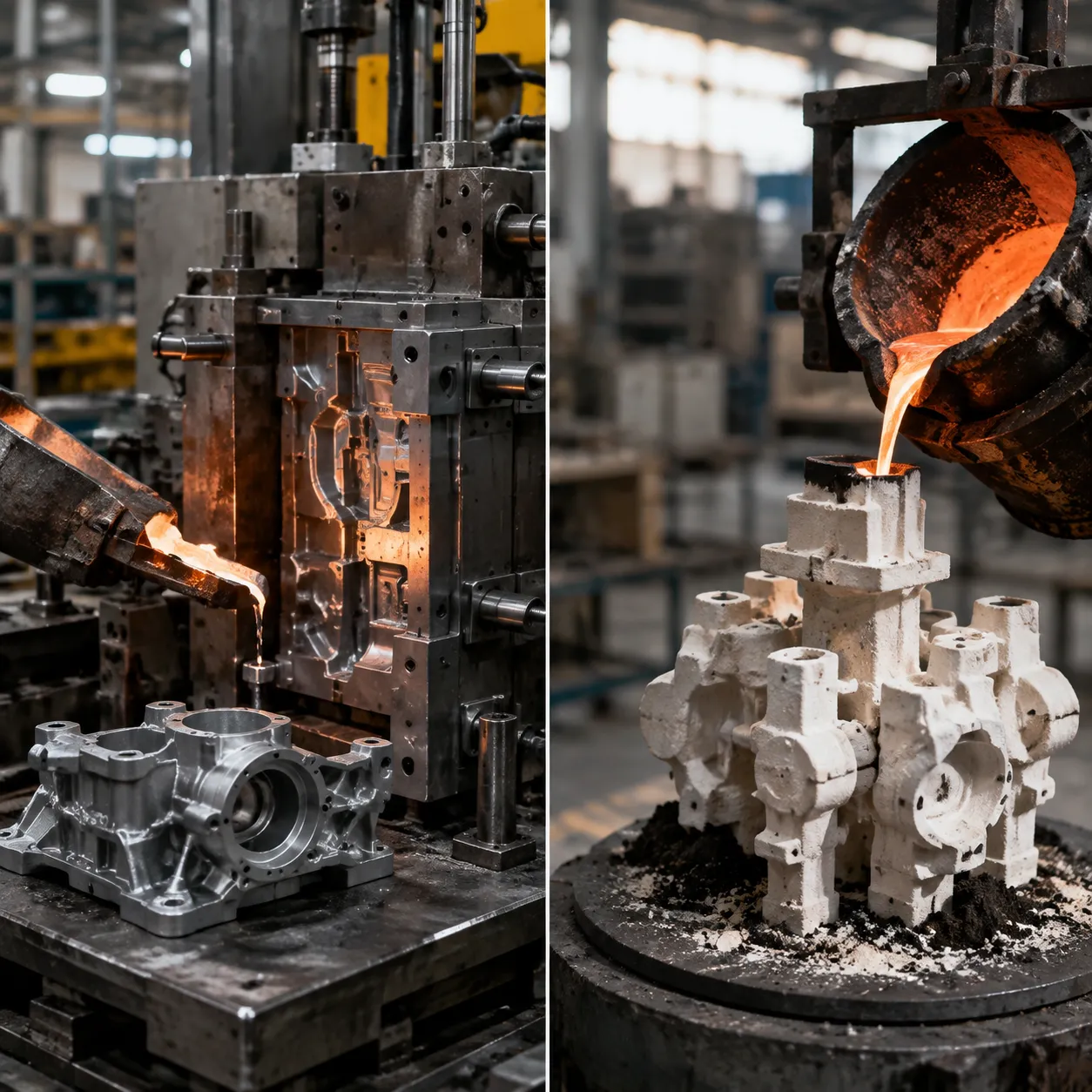
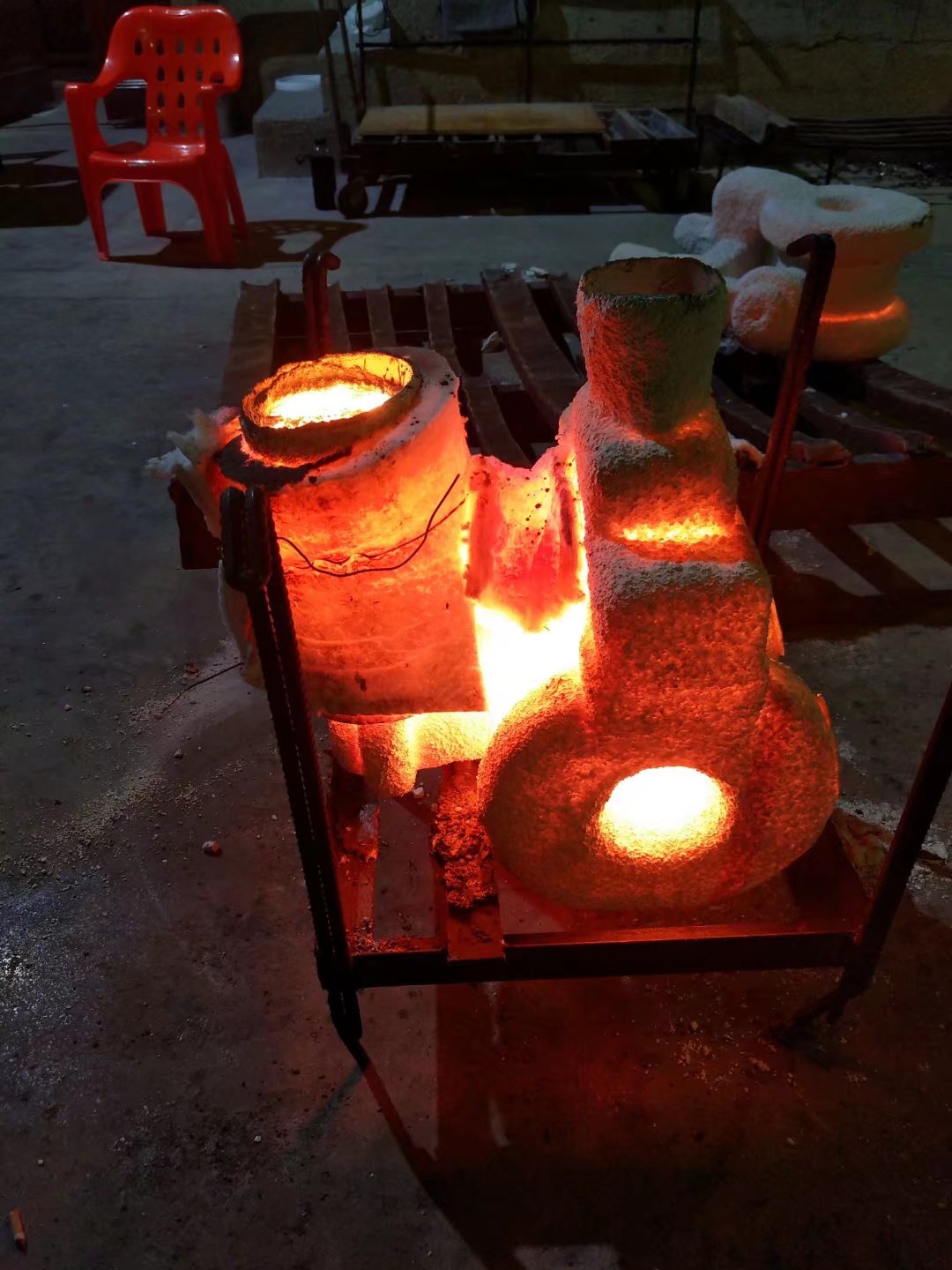
Cast stainless steel is produced by melting specialized stainless steel alloys at temperatures exceeding 2,800°F (1,538°C) and pouring the liquid metal into custom-engineered molds. Once cooled and solidified, the material forms near-net shape components that require minimal finishing.
We utilize this casting process to deliver complex, high-strength parts that are otherwise impossible or cost-prohibitive to machine from solid wrought stock.
Investment Casting vs. Sand Casting Methods
Selecting the proper casting technique comes down to your required dimensional tolerances, surface finish, and production volume.
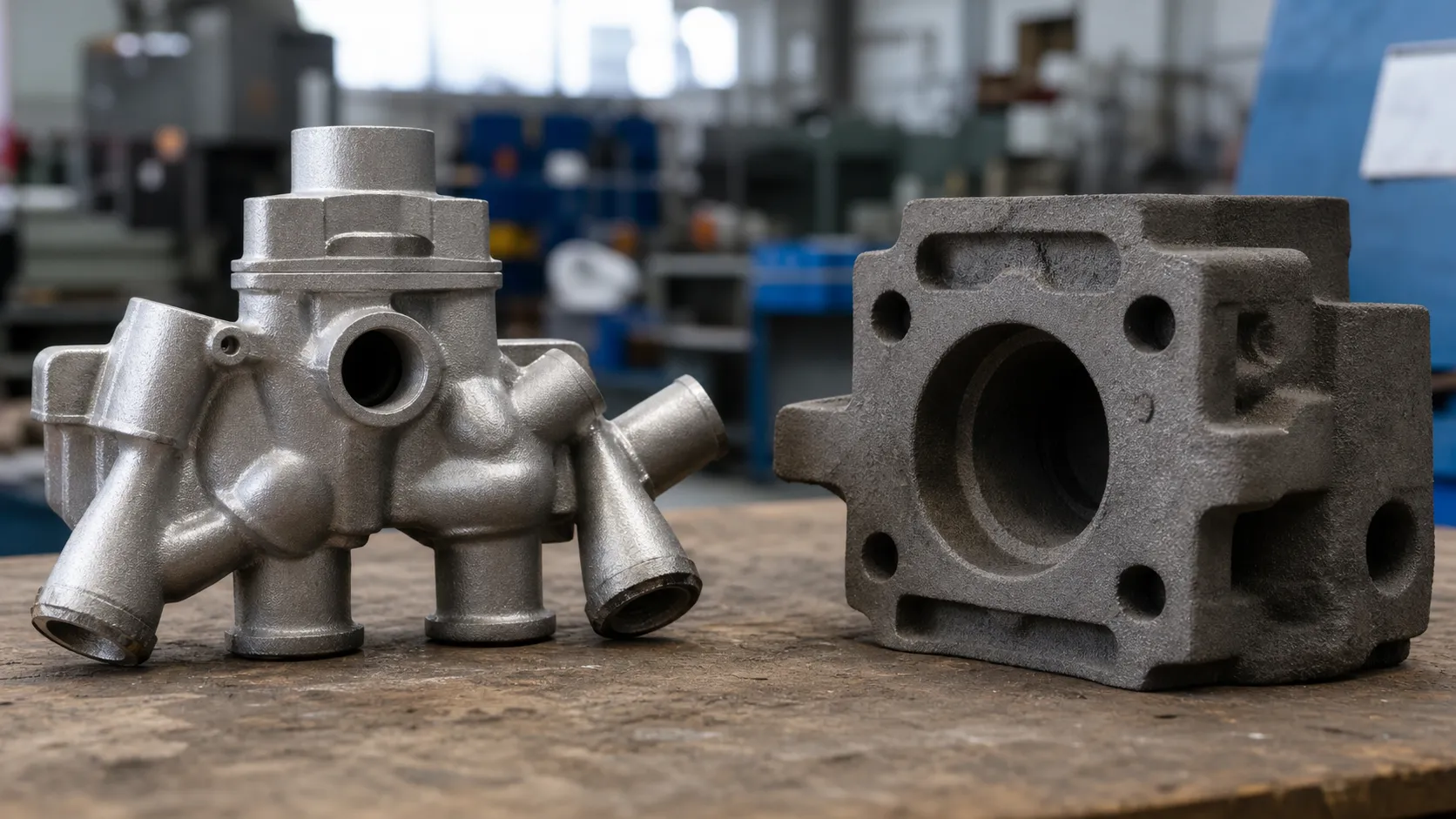
- Stainless Steel Investment Casting (Lost Wax): Ideal for intricate geometries and precision stainless steel casting. We build ceramic molds around wax patterns, melt the wax out, and fill the shell with steel. This delivers fine detail, exceptional surface smoothness, and tight tolerances.
- Stainless Steel Sand Casting: Best for large-scale, heavy-duty components. We pack sand around a reusable pattern to form the cavity. This method provides lower upfront tooling costs and handles massive components, though it requires wider tolerances and post-machining.
| Casting Feature | Investment Casting | Sand Casting |
|---|---|---|
| Surface Finish | Smooth (125 RMS or better) | Standard (300–500 RMS) |
| Dimensional Accuracy | High precision (±0.005 in/in) | Moderate (±0.030 in/in) |
| Part Weight Range | Ounces up to 100+ lbs | 10 lbs to over 1,000 lbs |
| Tooling Lead Time | Fast for complex shapes | Very fast and low cost |
Key Properties of Cast Stainless Steel Parts
Our investment cast stainless steel components offer physical and mechanical performance engineered for severe service environments:
- Corrosion Resistance: High alloy contents of chromium, nickel, and molybdenum form a self-healing passive oxide film that guards against rust, pitting, and chemical attack.
- High Tensile and Yield Strength: Exceptional mechanical properties allow parts to endure high pressure and heavy structural loads.
- Thermal Resistance: Maintains yield strength and prevents scaling at elevated operating temperatures.
- Design Freedom: Easily incorporates internal fluid channels, thin walls, and complex external contours into a single casting.
Common Cast Stainless Steel Grades and Alloy Designations
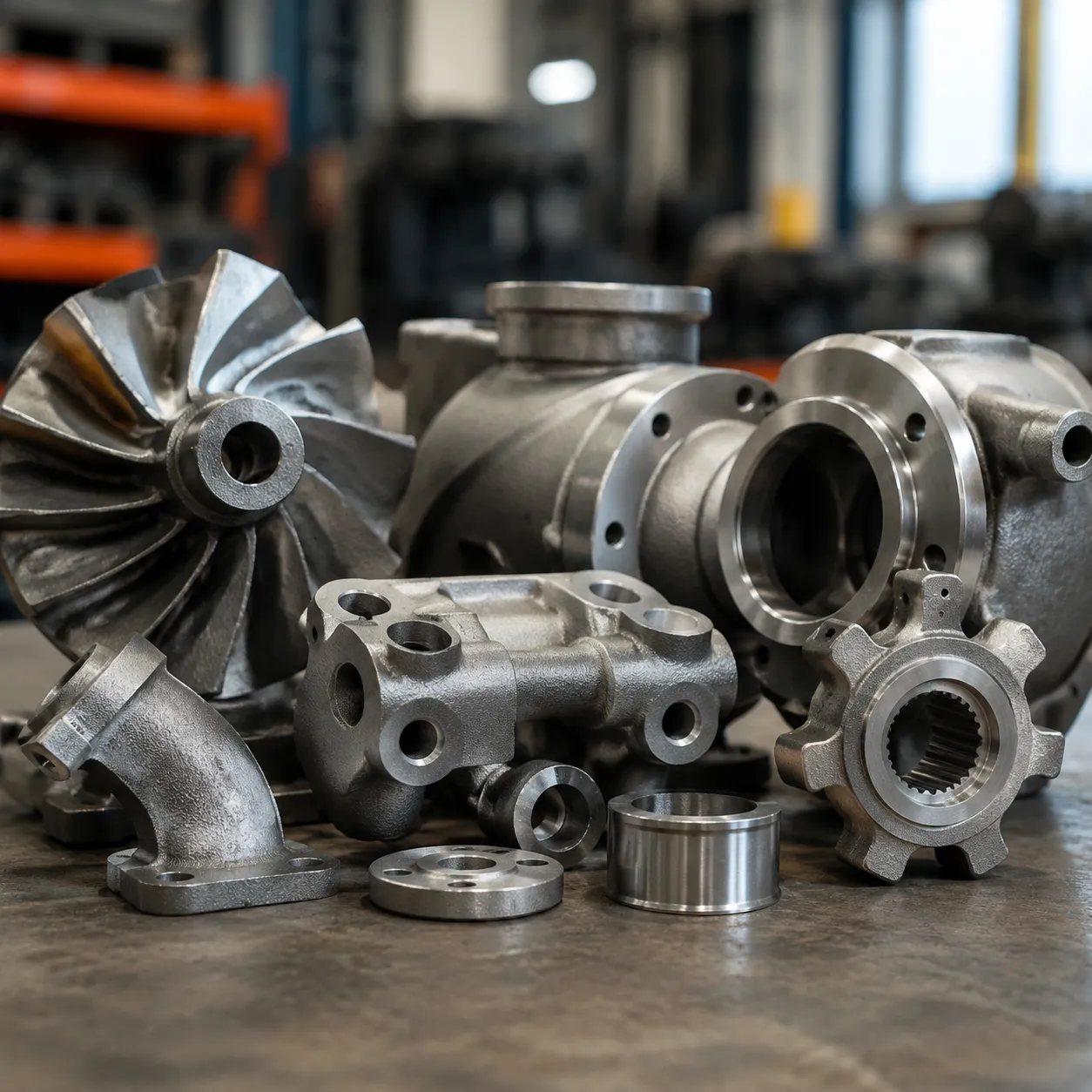
Choosing the right cast stainless steel alloy comes down to understanding standard ACI (Alloy Casting Institute) designations and how they perform in real-world applications. We break down the most common alloy families to help you select the exact material properties your project requires.
Austenitic Cast Stainless Steel Grades (CF8, CF8M, CF3, CF3M)
Austenitic alloys represent the most widely used corrosion resistant steel castings. They offer exceptional toughness and non-magnetic characteristics in annealed conditions.
- CF8 cast stainless steel: The cast equivalent of wrought 304. Provides excellent general corrosion resistance, perfect for pump housings and water handling hardware.
- CF8M cast stainless steel: The cast equivalent of wrought 316. Contains 2–3% molybdenum, significantly boosting resistance to chlorides, pitting, and harsh chemicals.
- CF3 and CF3M: Low-carbon versions of CF8 and CF8M (304L/316L equivalents). They eliminate carbide precipitation during welding, making them ideal for welded chemical pipeline assemblies.
Martensitic and Ferritic Stainless Steel Casting Alloys (CA15, CA40)
When high mechanical strength, hardness, and wear resistance take priority over extreme corrosion resistance, martensitic alloys excel.
| Alloy Grade | Wrought Equivalent | Key Characteristics | Best Used For |
|---|---|---|---|
| CA15 | Type 410 | High strength, magnetic, good machinability | Turbine blades, pump shafts, bushings |
| CA40 | Type 420 | Higher carbon content, exceptional hardness after heat treatment | Cutlery, wear rings, valve trim |
Duplex and Precipitation-Hardening Cast Stainless Steel (CD4MCu, 17-4 PH)
For specialized applications where standard grades fail, advanced alloys deliver superior mechanical performance and resistance to extreme environments. When sourcing high-performance custom industrial components, selecting these specialized materials ensures long service life under heavy load.
- CD4MCu (Duplex): Combining austenitic and ferritic structures, duplex stainless steel castings deliver roughly double the yield strength of CF8M alongside outstanding resistance to stress-corrosion cracking and erosion.
- 17-4 PH / CB7Cu-1: A 17-4 PH stainless steel casting utilizes precipitation hardening to achieve extreme tensile strength, fracture toughness, and solid corrosion resistance for high-stress aerospace and energy components.
Core Benefits of Custom Cast Stainless Steel
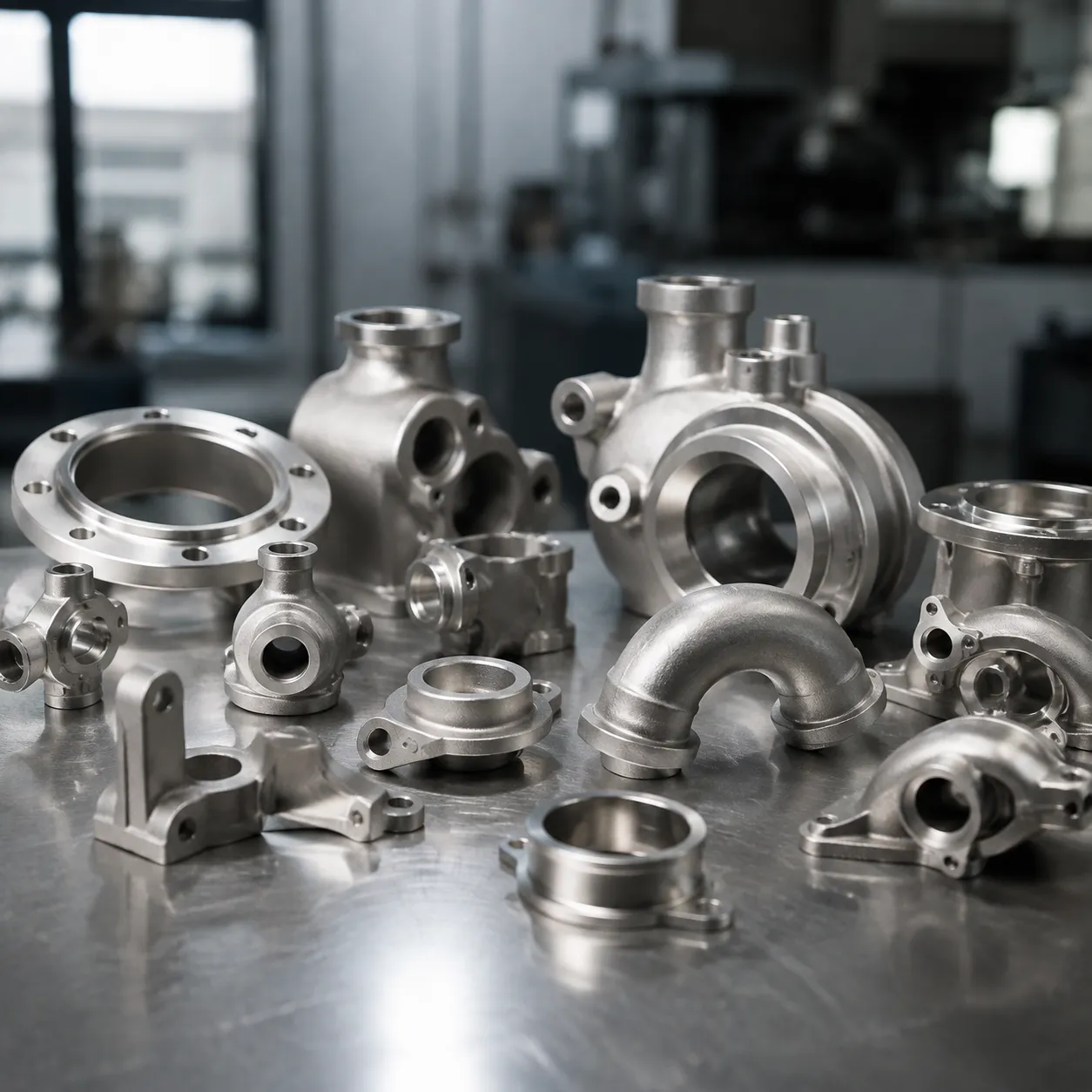
When we manufacture parts for extreme industrial environments, standard off-the-shelf metals fail prematurely. Custom cast stainless steel components provide the specific strength, chemical resistance, and complex shaping our clients rely on to eliminate downtime and lower long-term maintenance costs.
Superior Heat and Corrosion Resistant Steel Castings
Our corrosion resistant steel castings thrive in aggressive environments where lower-grade metals degrade within months.
- Chemical & Erosion Defense: Resists pitting, rust, and surface wear caused by acids, saltwater, and high-velocity abrasive fluids.
- Thermal Stability: Retains structural integrity in heat resistant alloy castings operating continuously under high-temperature conditions.
- Extended Durability: Prevents structural degradation, drastically extending component service life in tough operations.
Complex Geometry with Precision Stainless Steel Casting
Machining complex parts out of solid metal blocks wastes time and raw material. Utilizing precision stainless steel casting, we deliver near-net-shape components straight from the foundry.
- Design Freedom: Easily produces internal channels, thin walls, and intricate curved contours that traditional CNC mills cannot reach.
- Reduced Machining: Near-net shapes drastically cut down on labor-intensive secondary finishing and tooling setups.
- Material Savings: Reduces raw material scrap by pouring liquid alloy directly into the desired part geometry.
Cost Efficiency for High-Volume Production Runs
Scaling up production requires a balance between unit cost and component performance. Leveraging investment cast stainless steel process tooling gives us a major financial edge during medium to high-volume production runs.
| Benefit Factor | Standard Machined Parts | Custom Cast Stainless Steel |
|---|---|---|
| Material Scrap | High (carved from solid billet) | Minimal (poured to net-shape) |
| Design Complexity | Restricted by cutting angles | Virtually unlimited internal/external detail |
| Volume Cost Scaling | Remains high per unit | Drops significantly as production volume increases |
| Harsh Environment Life | Standard durability | Exceptional resistance to heat, erosion, and rust |
Key Industrial Applications for Cast Stainless Steel
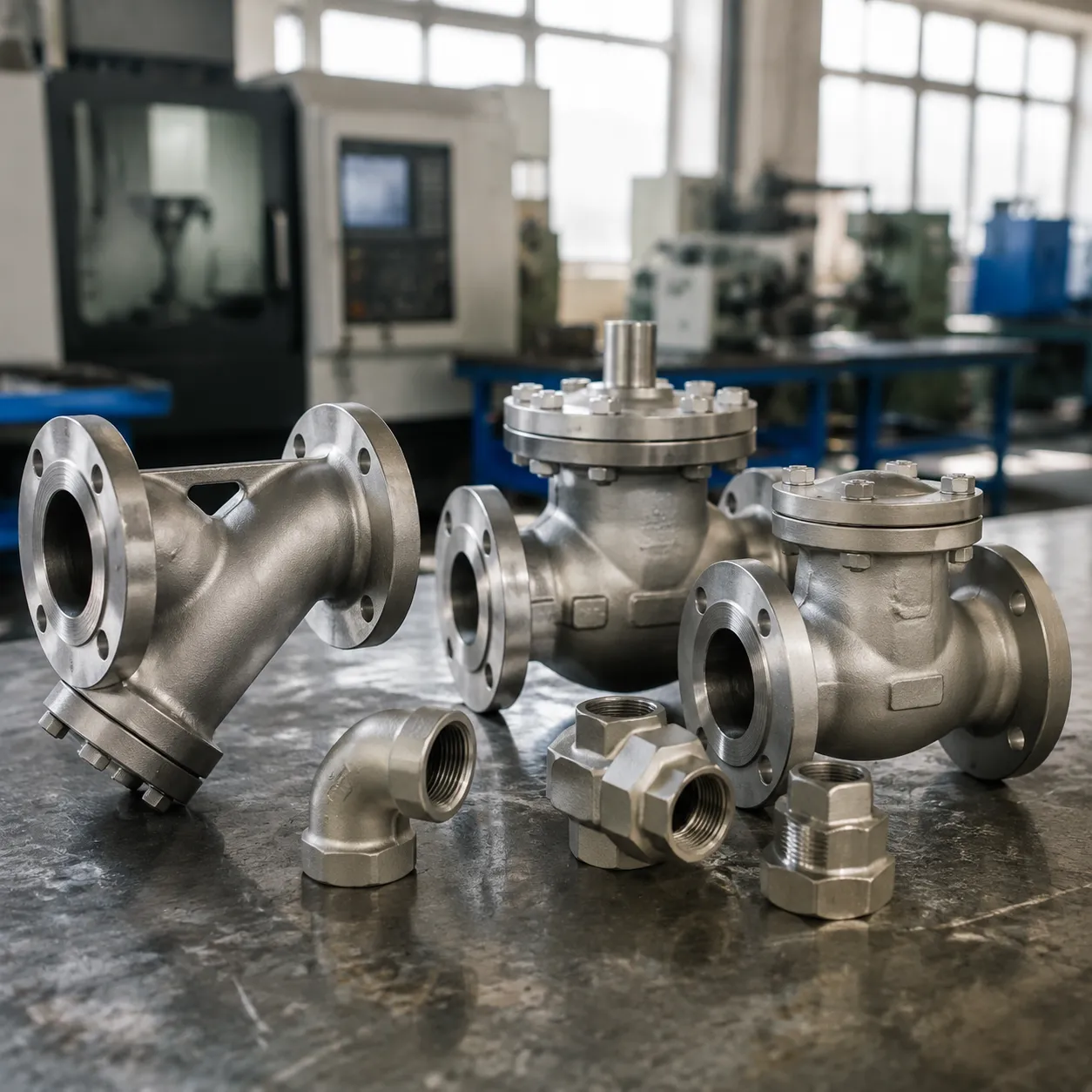
We manufacture custom cast stainless steel components engineered to perform under extreme pressure, aggressive chemical exposure, and severe thermal stress. Across major industrial sectors, our precision parts deliver the structural integrity required for critical operations.
Pump Housings and Impellers
Fluid handling systems rely on continuous pressure and high velocity. We produce durable pump housings and valve bodies designed to resist cavitation and slurry wear.
- Impellers and volutes: Optimized geometry for balanced fluid flow.
- Casing liners: High-durability protection against abrasive fluids.
- Suction covers and wear rings: Extended service life in harsh chemical applications.
Industrial Valve Bodies and Pipeline Hardware
Control valves and pressure fittings require zero-defect castings to prevent leaks in hazardous lines. Our corrosion resistant steel castings maintain tight seal tolerances under high pressures.
- Ball and gate valve bodies: Built for oil, gas, and petrochemical pipelines.
- Check valves and strainers: High-yield strength under continuous pressure cycling.
- Flanged pipe fittings: Precision dimensions for seamless system integration.
Food Processing and Sanitary Equipment
Sanitary processing requires non-porous materials that withstand daily chemical washdowns without corroding. We supply precision stainless steel casting components built to strict hygienic standards.
- Mixer blades and agitators: Smooth finishes that prevent material buildup.
- Sanitary valve bodies and tri-clamp fittings: Easy-to-clean designs for food and pharma lines.
- Pump components: Corrosion-proof hardware for high-purity fluid transfer.
Marine Hardware and Energy Equipment
Saltwater environments and power generation facilities demand heavy-duty alloys. We utilize duplex stainless steel castings and heat resistant alloy castings to fight chloride pitting and thermal oxidation.
- Marine fittings: Propellers, cleats, brackets, and thru-hull fittings built for saltwater survival.
- Offshore drilling hardware: High-strength manifolds and riser components for deep-sea platforms.
- Power generation parts: Turbine housings, burner nozzles, and heat exchanger components.
Cast Stainless Steel Application Guide
| Industry Sector | Key Components | Core Material Benefit |
|---|---|---|
| Fluid Handling | Pump housings, impellers, volutes | Erosion and cavitation resistance |
| Flow Control | Valve bodies, flanges, manifolds | Pressure-tight structural integrity |
| Sanitary & Food | Agitators, sanitary fittings, pump casings | Non-reactive, easy-to-sanitize surfaces |
| Marine & Energy | Propellers, offshore hardware, turbine components | Saltwater pitting and thermal resistance |
Cast Stainless Steel vs Wrought Stainless Steel
When choosing materials for industrial components, understanding the differences between cast vs wrought stainless steel is critical for balancing performance, design freedom, and budget. In our operations, we work directly with these materials to help clients select the ideal manufacturing route for their specific applications.
Manufacturing Processes and Microstructure
- Cast Stainless Steel: Produced by melting raw metal and pouring it directly into custom molds. This method creates an isotropic microstructure, meaning the material offers uniform physical and mechanical properties in every direction.
- Wrought Stainless Steel: Formed by mechanically rolling, forging, or extruding steel ingots into standard stock shapes (bars, sheets, or pipes). This process aligns the grain structure along the direction of working.
Corrosion, Weldability, and Tensile Strength
Both options deliver exceptional durability, but their structural differences affect performance under stress:
| Performance Metric | Cast Stainless Steel | Wrought Stainless Steel |
|---|---|---|
| Corrosion Resistance | Uniform multidirectional protection; ideal for complex corrosion resistant steel castings. | Superior along the grain flow; slightly lower across cut transverse sections. |
| Tensile & Yield Strength | Balanced, multidirectional strength ideal for fluid pressure containment. | Higher directional strength along the axis of mechanical rolling or forging. |
| Weldability | Excellent when using proper chemistry matching and post-weld heat treatment. | Excellent; highly predictable under standard industrial welding practices. |
Cost, Design Flexibility, and Lead Times
Choosing between cast and wrought stock usually comes down to part complexity and total production volume:
- Design Flexibility: Using precision stainless steel casting, we can manufacture intricate geometries, internal fluid channels, and variable wall thicknesses that are costly or impossible to machine from solid wrought stock.
- Tooling & Setup Fees: Wrought stock requires zero initial tooling fees, making it cost-effective for basic shapes or short runs. Casting requires upfront pattern tooling, but offsets this cost on larger production runs.
- Overall Part Cost: Cast stainless steel drastically reduces material waste and machining hours, offering a lower piece-price for complex, net-shape components.
- Lead Times: Wrought stock provides quicker initial delivery for simple fabrications. Custom casting requires initial pattern lead time, but streamlines mass production once molds are finalized in our stainless steel foundry.
Essential Quality and Procurement Factors for Cast Stainless Steel Parts
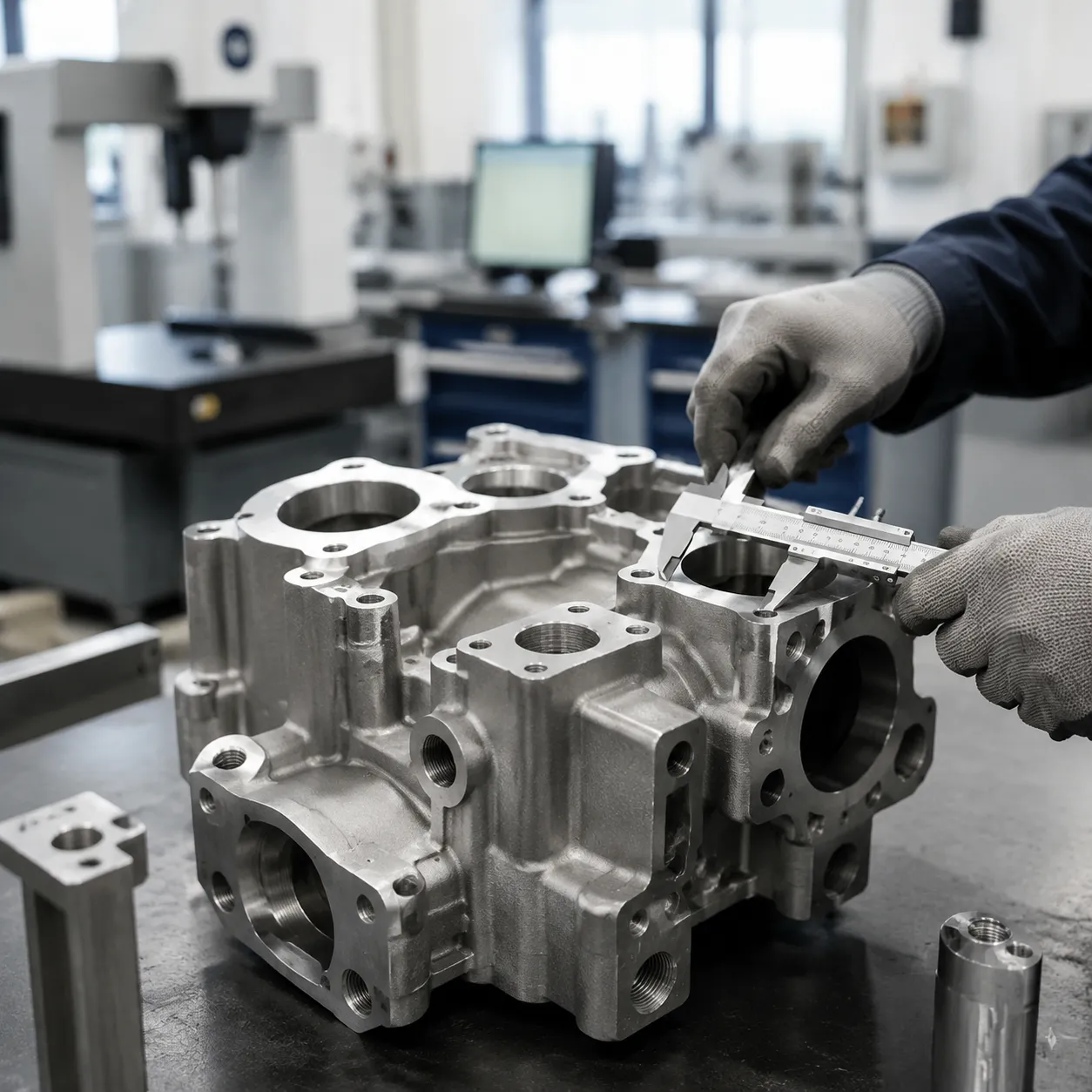
When sourcing cast stainless steel components, getting exact alloy chemistry and defect-free parts is non-negotiable. We focus on strict foundry standards, precise dimensional tolerances, and rigorous quality testing to ensure every part performs reliably in harsh environments.
Choosing a Stainless Steel Foundry and ASTM Certifications
Partnering with the right stainless steel foundry ensures your parts meet strict industry standards and chemical compositions. Always verify material certifications before production begins.
- ASTM A351 Casting Specifications: The primary industry standard for corrosion resistant steel castings used in high-pressure and high-temperature applications.
- ASTM A743 & A744: Covers general industrial and severe corrosive service requirements.
- Material Traceability: Always insist on full Mill Test Reports (MTRs) with heat numbers for complete chemical and mechanical traceability.
Stainless Steel Casting Tolerances and Surface Finish
Selecting precision stainless steel casting methods reduces or eliminates the need for expensive secondary machining. Choosing the right process directly impacts your final assembly costs and lead times.
| Process Factor | Investment Casting | Sand Casting | Post-Machining |
|---|---|---|---|
| Stainless Steel Casting Tolerances | Tight (CT4 – CT6) | Standard (CT8 – CT10) | Ultra-precise (down to ±0.0005 in) |
| Surface Finish (Ra) | 125 – 250 µin (Smooth) | 300 – 560 µin (Rough) | 16 – 32 µin |
| Machining Allowance | Minimal (1 – 2 mm) | Moderate (3 – 6 mm) | N/A |
We recommend post-machining critical sealing faces, threads, and tight-tolerance bore holes while keeping net-shape features as-cast.
Non-Destructive Testing (NDT) and Quality Control
To guarantee internal soundness and surface integrity for investment cast stainless steel components, we utilize comprehensive NDT inspection methods:
- Positive Material Identification (PMI): Rapid XRF analysis to confirm exact alloy chemistry before shipping.
- Liquid Penetrant Testing (PT): Detects surface cracks, pinholes, and microscopic porosity.
- Radiographic Testing (RT): X-ray inspection to identify internal shrink voids or gas entrapment.
- Hydrostatic Pressure Testing: Ensures fluid-handling components like pump housings and valve bodies withstand operating pressures without leakage.
Frequently Asked Questions About Cast Stainless Steel
We answer technical procurement and engineering questions every day to help our clients choose the right material for their components. Here are straight, direct answers to the most common questions we receive about cast stainless steel.
What is the cast equivalent of 304 and 316 stainless steel?
Cast designations follow the ACI/ASTM A351 naming system rather than wrought AISI numbers: 304 Equivalent: CF8 cast stainless steel is the standard cast equivalent of wrought 304. 316 Equivalent: CF8M cast stainless steel is the cast version of 316, alloyed with molybdenum for higher pitting resistance. 304L & 316L Equivalents: CF3 (low-carbon 304) and CF3M (low-carbon 316) prevent carbide precipitation during high-temperature exposure.
Is cast stainless steel magnetic?
Magnetism depends entirely on the microstructural phase of the alloy: Austenitic Grades (CF8, CF8M): Primarily non-magnetic. However, cast stainless steel typically contains 5% to 15% delta ferrite to prevent hot cracking during solidification, which can cause mild magnetic attraction. Martensitic & Ferritic Grades (CA15, CA40): Fully magnetic. Duplex & Precipitation-Hardening (CD4MCu, 17-4 PH): Strongly magnetic due to their mixed or hardened microstructures.
Can cast stainless steel parts be easily welded and heat treated?
Yes, most corrosion resistant steel castings respond extremely well to welding and thermal processing: Welding: Low-carbon grades (CF3, CF3M) offer superior weldability without requiring post-weld heat treatment. Standard grades like CF8M can be welded using matching filler metals, followed by solution annealing to maintain corrosion resistance. Heat Treatment: Solution annealing (heating above 1900°F and water quenching) dissolves chromium carbides back into matrix solution. High-strength alloys like a 17-4 PH stainless steel casting require precipitation hardening (aging) to hit target hardness levels.
Which casting process provides the best surface finish for stainless steel?
Stainless steel investment casting (lost wax casting) delivers the finest surface finish and tightest detail of any production method. Surface Roughness: Achieves a smooth finish of 125–250 RMS (Ra 3.2–6.3 µm) out of the mold. Tolerances: Holds strict stainless steel casting tolerances (ISO 8062 CT4–CT6), drastically cutting down secondary CNC machining costs compared to traditional sand casting.
 English
  Russian
  German