
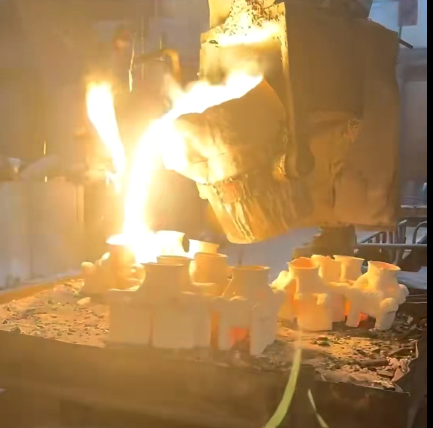
Learn how to make a sand cast mold with industrial precision plus when to choose vastpce for professional sand casting services.
Understanding the Gear: The Sand Mold Anatomy
Before we dive into the gritty details of how to make a sand cast mold, you need to understand the hardware. In our foundry at Vast Precision, we don’t just pack sand into a box; we engineer a system designed to withstand extreme heat and pressure. If you don’t get the anatomy right, the molten metal will find every weak point, leading to defects or total failure.
Breaking down the Flask: Cope and Drag explained
The flask is the rigid frame that holds the sand mold together. Without a sturdy flask, the hydrostatic pressure of the liquid metal would push the sand walls apart. This container is split into two distinct halves to allow for pattern removal:
- The Drag: This is the bottom half of the flask. It sits on the molding board and forms the base of your casting.
- The Cope: This is the top half. It is placed over the drag once the pattern is set and the bottom half is rammed.
- Alignment Pins: These are critical. They ensure the cope and drag lock together perfectly so your final part doesn’t have a mismatched “step” along the parting line.
The Pattern: The blueprint for your casting
The pattern is the physical object we use to create the negative cavity in the sand. Think of it as a stamp. In industrial settings, we make these from wood, plastic, or metal depending on how many times we need to reuse them.
For a successful mold, the pattern isn’t an exact clone of the final part; it’s slightly larger. We have to account for dimensional tolerance and metal shrinkage as the alloy cools. If the pattern surface isn’t smooth, your casting surface won’t be either.
The Core: Creating internal hollows with resin-bonded sand
If your design requires internal cavities—like the inside of a valve body or a pipe fitting—you can’t just use the pattern. You need a sand core.
A core is a separate, solid piece of sand shaped to fit inside the mold cavity. At Vast Precision, we often use resin-bonded sand for cores because it creates a hard, durable shape that won’t crumble when the molten metal rushes in. The metal flows around the core, leaving a void in the final casting.
The Gating System: Sprues, runners, and gates basics
You can’t just pour metal directly into the mold cavity; that causes turbulence and traps air. You need a gating system design that guides the flow smoothly.
- Pouring Basin: The funnel where the metal enters.
- Sprue: The vertical channel that drops the metal down from the flask height to the mold level.
- Runners: Horizontal channels that move the metal toward the part.
- Gates: The actual entry points where metal flows from the runner into the mold cavity.
A well-designed system ensures the mold fills evenly, preventing gas porosity defects and ensuring the metal reaches every corner before it solidifies.
Phase 1: Prep Work and Pattern Making
Before we start packing sand, we have to get the engineering right. Learning how to make a sand cast mold that produces industrial-grade components starts with precise preparation. If the pattern geometry or sand composition is off, the final metal casting won’t meet specifications.
Designing the Pattern: Handling Shrinkage Allowance
The pattern is the physical object we pack the sand around, but it is not an exact duplicate of the final part. Molten metal expands when hot and contracts as it cools and solidifies. If we make the pattern the exact size of the finished product, the casting will end up too small.
We apply a specific shrinkage allowance to the pattern dimensions. This “scale-up” factor depends heavily on the material. For example, Stainless steel and Alloy steel shrink differently than aluminum. At Vast Precision, we calculate these ratios precisely to ensure the final cooled part meets tight dimensional tolerances.
Draft Angles: Why Vertical Walls Need a Taper
You cannot pull a perfectly square object out of packed sand without destroying the mold’s edges. Friction will cause the sand to crumble, ruining the cavity. To solve this, we incorporate a pattern draft angle.
- The Concept: A slight taper (usually 1° to 3°) applied to all vertical walls perpendicular to the parting line.
- The Result: The pattern releases cleanly from the sand without drag, preserving the mold’s integrity and ensuring a smoother surface finish.
The Perfect Sand Recipe: Green Sand vs. Resin Sand
Selecting the right molding media is critical for mold strength and casting quality. We generally look at two main categories:
- Green Sand Mixture: This is the traditional route, using silica sand properties combined with water and a bentonite clay binder. It is reusable and cost-effective, making it a staple for high-volume production where extreme surface precision is less critical.
- Resin Sand: For higher precision work, we use resin-bonded sand. This mix uses chemical binders that harden the mold significantly. It offers better dimensional stability and a superior surface finish, which is why we prefer it for complex industrial components requiring strict adherence to ISO standards.
Conditioning the Mix: Permeability and Strength Essentials
Whether using green sand or resin sand, the mix must be conditioned to balance two opposing forces: strength and permeability.
- Green Strength: The sand must be sticky and strong enough to hold the shape of the pattern once it is removed. If the bond is too weak, the mold walls will collapse during the pour.
- Permeability: The mold cannot be airtight. It must be porous enough to allow steam and gases generated by the molten metal to escape through the sand grains. If the mix is too dense, gas gets trapped, leading to porosity defects in the final casting.
Phase 2: Step-by-Step Mold Construction
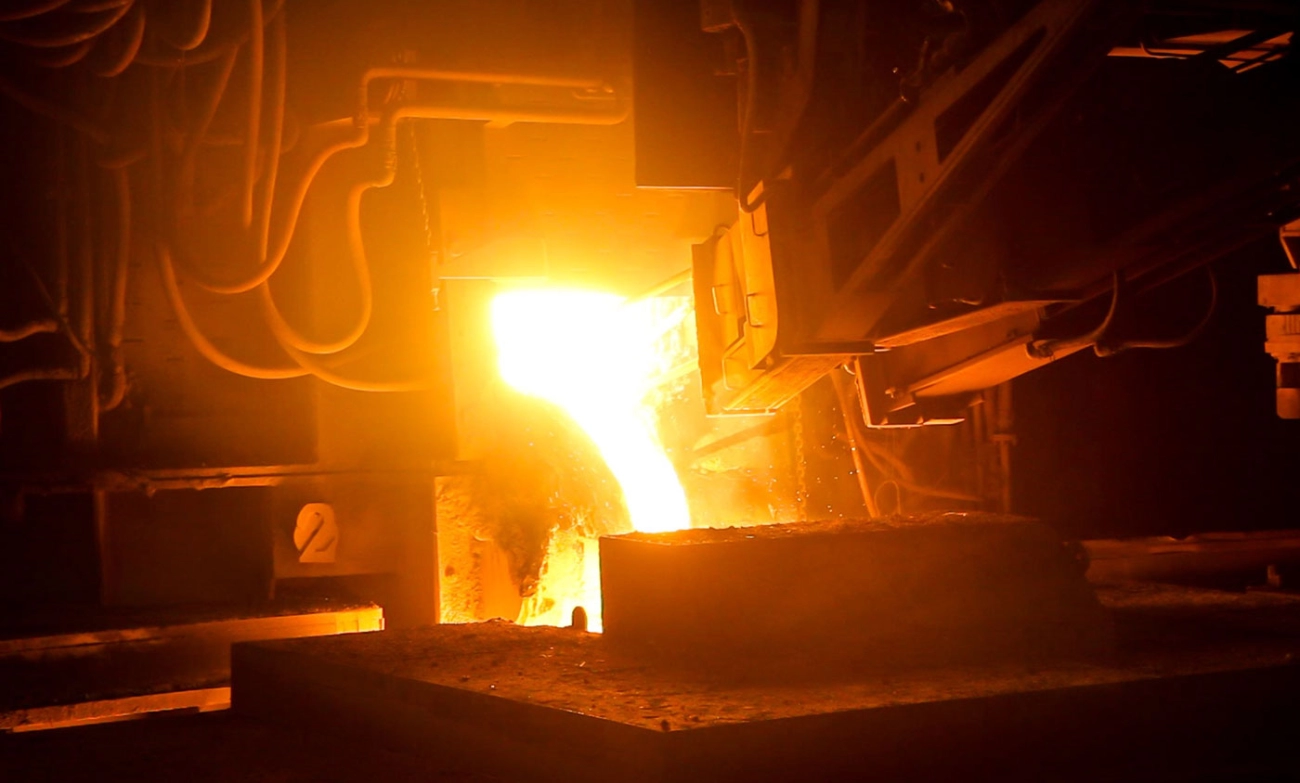
Now that we have our materials prepped, it is time to get our hands dirty. This is the core of how to make a sand cast mold—transforming loose sand into a rigid vessel ready for molten metal. We are going to build this layer by layer to ensure the final casting holds tight tolerances.
Step 1: Positioning the Pattern in the Drag
We start with the bottom half of the flask, known as the drag. Place your molding board on a flat surface and set the drag flask on top. I always place the pattern right in the center of the board.
You need to leave enough room between the pattern and the flask walls—usually about 2 to 3 inches—to prevent the molten metal from breaking out during the pour. If you are planning a gating system design that requires long runners, account for that space now.
Step 2: Applying Parting Dust
Before adding any sand, we need to ensure the pattern doesn’t get stuck. If the sand adheres to the pattern, the mold cavity will be ruined when we try to remove it.
- Dust it lightly: Sprinkle a fine layer of parting dust (often talc or graphite) over the pattern and the board.
- Don’t overdo it: Too much dust can ruin the surface finish of the metal part.
- Coverage: Ensure vertical surfaces and corners are covered to assist with parting line placement.
Step 3: Ramming the Sand
This is where technique matters. We don’t just dump the green sand mixture in all at once.
- Sifting: I start by sifting fine sand (facing sand) through a riddle (sieve) directly over the pattern. This ensures the sand touching the metal is free of clumps, giving us a superior surface finish.
- Tucking: Press the sand firmly around the edges of the pattern with your fingers.
- Filling and Ramming: Fill the rest of the drag with backing sand. Using a hand rammer or pneumatic tool, pack the sand down.
- Consistency: Sand ramming techniques require balance. Ram too soft, and the mold collapses; ram too hard, and you trap gases, causing gas porosity defects.
Once packed, strike off the excess sand level with the flask rim using a straight edge.
Step 4: Flipping, Assembling the Cope, and Locating the Sprue
Now, we flip the entire drag assembly over so the pattern face is visible. Smooth out the parting line surface with a trowel.
Next, place the top half of the flask—the cope—onto the drag. Align the pins carefully to ensure the cope and drag match perfectly. Before adding more sand, position the sprue and riser pins. The sprue pin creates the vertical channel where we will eventually pour the metal. Place it about an inch or two away from the pattern, not directly on top of it.
Repeat the sifting, tucking, and ramming process for the cope.
Step 5: Cutting the Gating System
Once the cope is rammed and the sprue pin is removed, we separate the cope from the drag. Now we cut the channels that guide the metal.
Using a spoon tool or gate cutter, I carve out the runners and gates in the drag side sand.
- Runners: These carry metal from the sprue base toward the pattern.
- Gates: These are the entry points into the mold cavity.
The goal of gating system design is smooth flow. Sharp corners cause turbulence, which traps air. I always round off the edges of the channels to ensure the molten metal pouring process is clean and consistent. Learning how to make sand casting mold runners correctly is often the difference between a usable part and scrap.
Phase 3: Pattern Removal and Finishing
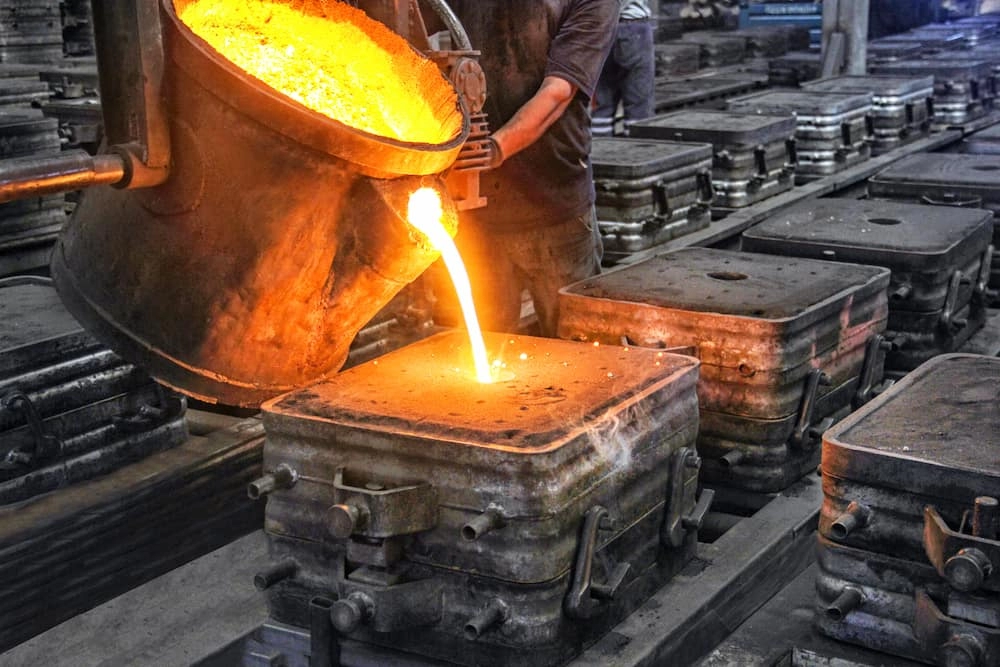
Once the sand is fully rammed and struck off level, we move to the most delicate part of how to make a sand cast mold: extracting the pattern without destroying the cavity. This stage defines the final dimensional accuracy and surface finish of the casting.
Drawing the Pattern
Removing the pattern requires a steady hand. We can’t just yank the pattern out; that will crumble the edges and ruin the dimensional tolerance.
- Swabbing: We use a water brush or specific release agent around the edges of the pattern to slightly moisten the sand, strengthening the corners.
- Vibration: Insert a draw spike or lifting screw into the pattern. Gently tap or vibrate the pattern to break the friction between the pattern walls and the sand.
- Lifting: Lift the pattern strictly vertically. Any side-to-side movement here will distort the mold walls and alter the final part geometry.
Core Setting for Internal Geometries
If your design has hollow sections—like a valve body or a pipe fitting—simply making a cavity isn’t enough. This is where sand core creation comes in. We place a pre-made, resin-bonded sand core into the “core prints” (anchor points) left by the pattern.
- Fit Check: The core must sit snugly. If it’s too loose, molten metal will flow behind it (flashing). If it’s too tight, it crushes the mold sand.
- Cleanliness: Before placing the core, we use an air hose to blow out any loose sand particles from the drag to prevent inclusions.
Venting Techniques
Molten metal generates a lot of steam and gas when it hits the binder in the sand. If this gas is trapped, it causes gas porosity defects (bubbles inside the metal).
To prevent this, we create vent channels:
- Use a thin wire to poke small holes through the Cope (top half) of the sand, stopping just short of the pattern cavity.
- These vents provide a direct path for hot gases to escape outward rather than pushing back into the cooling metal.
Closing the Flask
The final step in how to make a sand cast mold is reassembling the flask. We carefully flip the Cope and lower it onto the Drag.
- Alignment: We rely on the flask pins and bushings to ensure the parting line placement is perfect. A mismatch here leads to “mold shift,” where the top and bottom of the part don’t line up.
- Clamping and Weighting: Once closed, the flask halves must be clamped tightly or weighted down. The hydrostatic pressure of liquid metal can actually lift the Cope, causing a run-out. We secure everything to ensure the mold holds its shape during the pour.
Troubleshooting Common Mold Making Issues
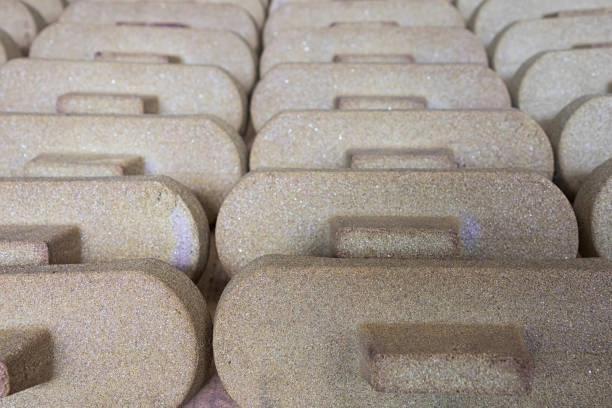
Even when you know how to make a sand cast mold by the book, things can go wrong. I have spent plenty of time staring at a failed casting trying to figure out exactly what happened. Here is how I handle the most common headaches in the foundry to ensure a clean part.
Fixing Sand Inclusions and Loose Wash
If you find sand grains embedded in your metal, that is an inclusion. It usually comes from “cuts” or “washes” where the molten metal pouring velocity erodes the sand surface.
- Check Ramming Density: Weak spots in the mold face break off easily. I improve my sand ramming techniques to ensure the mold face is hard and consistent.
- Clean the Cavity: Before closing up, I always use an air hose or bellows to blow out any loose dust.
- Smooth Gating: If the gating system design creates too much turbulence, it will scour the sand. I keep corners rounded to smooth out the flow.
Preventing Gas Porosity and Trapped Bubbles
Gas porosity defects look like tiny pinholes or bubbles inside the metal. This is caused by trapped steam or gas that couldn’t escape the mold.
- Control Moisture: If the green sand mixture is too wet, it creates excess steam. I dial back the water content.
- Improve Venting: The gas needs a path out. I use a venting wire to poke channels in the cope, ensuring high permeability without touching the pattern face.
- Pour Temperature: Pouring too hot can increase gas absorption. I stick to the recommended temperature range for the specific alloy.
Correcting Mold Shift and Alignment Errors
Mold shift happens when the cope and drag do not align perfectly, leaving an ugly step along the parting line and ruining dimensional tolerance.
- Inspect Flask Hardware: Worn-out guide pins or bushings are the usual suspects. I replace them if there is any wiggle room.
- Secure Clamping: I make sure the flask is clamped tightly or weighted down properly so the hydrostatic pressure of the metal does not lift the cope.
- Check Pattern Alignment: Sometimes the issue isn’t the flask, but the pattern plate itself. I verify the pattern is mounted dead center before starting.
DIY Garage Pour vs. Industrial Precision
Knowing how to make a sand cast mold in your backyard is a valuable skill, but there is a distinct line between a hobby project and a production-ready component. While I love the hands-on nature of a garage foundry, understanding the limitations of home equipment is crucial for project success.
When to Stick to DIY Methods
If you are prototyping, creating artistic sculptures, or making simple replacement parts where precision isn’t critical, the DIY route is perfect. Working with a basic green sand mixture allows for trial and error without breaking the bank. It is the best approach when:
- Tolerances are loose: A millimeter off here or there won’t ruin the assembly.
- Learning is the goal: You want to master sand ramming techniques and understand metal flow.
- Cost is king: You are using scrap aluminum and homemade flasks.
When to Outsource to vastpce: Complex Geometries and Thin Walls
There comes a point where a manual sand mold just can’t hold up to the design requirements. At vastpce, we specialize in handling the projects that cause nightmares for DIY casters. If your design features intricate internal passages requiring a delicate sand core creation or extremely thin walls that cool too fast for gravity pouring, it’s time to send it to us.
We utilize advanced molding technologies that maintain structural integrity under high heat and pressure, ensuring that complex geometries are captured perfectly without the gas porosity defects common in garage pours. We guarantee a superior surface finish that usually eliminates the need for heavy post-processing.
Achieving ISO 8062 Tolerances and Material Certification
The biggest gap between a home shop and an industrial foundry is consistency and verification. When I produce parts at vastpce, we aren’t just guessing; we are hitting strict dimensional tolerance standards like ISO 8062.
- Material Certification: We provide proof that the alloy used meets specific chemical and mechanical properties, something impossible to verify with scrap metal melts.
- Repeatability: Every sand casting mold we produce yields an identical part, ensuring your assembly line doesn’t stop for fitting issues.
If your project demands certified reliability and tight specs, professional manufacturing is the only viable path.
FAQ: Common Questions About Making Sand Molds
What is the best sand mix for beginners?
If you are learning how to make a sand cast mold for the first time, a classic green sand mixture is your best bet. It is a simple recipe: silica sand, bentonite clay binder, and a small amount of water. This mix is forgiving, easy to ram, and reusable. However, for the high-precision industrial parts we manufacture, we often utilize resin-bonded sand. Resin sand offers superior strength and a better surface finish, but it sets quickly and is less forgiving if you make a mistake during the molding process.
How do I calculate the correct shrinkage allowance?
Calculating shrinkage is critical because molten metal pouring involves significant volume contraction as the material cools. To get the dimensions right, you must scale up your pattern.
- Identify the Material: Steel shrinks differently than aluminum or iron.
- Apply the Percentage: Typically, you add between 1% to 3% to the pattern size.
- Check Standards: For industrial reliability, we stick to strict standards like ISO 8062 to ensure the final casting meets the required dimensional tolerance.
If you ignore this, your final metal part will end up smaller than intended.
Can I reuse green sand for multiple molds?
Yes, reusability is the main advantage of using green sand. Once the casting has cooled and you break apart the cope and drag, the sand can be collected and reconditioned. You will likely need to add a little water to reactivate the clay. Just be aware that the sand directly touching the hot metal might lose its bonding properties (dead clay) and should be filtered out to prevent gas porosity defects in future batches.
What is the difference between a pattern and a mold?
It is easy to mix these up, but they serve opposite functions in foundry pattern making:
- The Pattern: This is the “positive” replica of the object you want to cast. It is a reusable tool made from wood, plastic, or metal.
- The Mold: This is the “negative” cavity formed by packing mold sand around the pattern. The mold is usually destroyed to remove the casting after pouring.
Essentially, you use the pattern to create the void inside the sand mold, which eventually becomes your metal part.
 English
  Russian
  German