What is Investment Casting?
The Definition and Primary Purpose
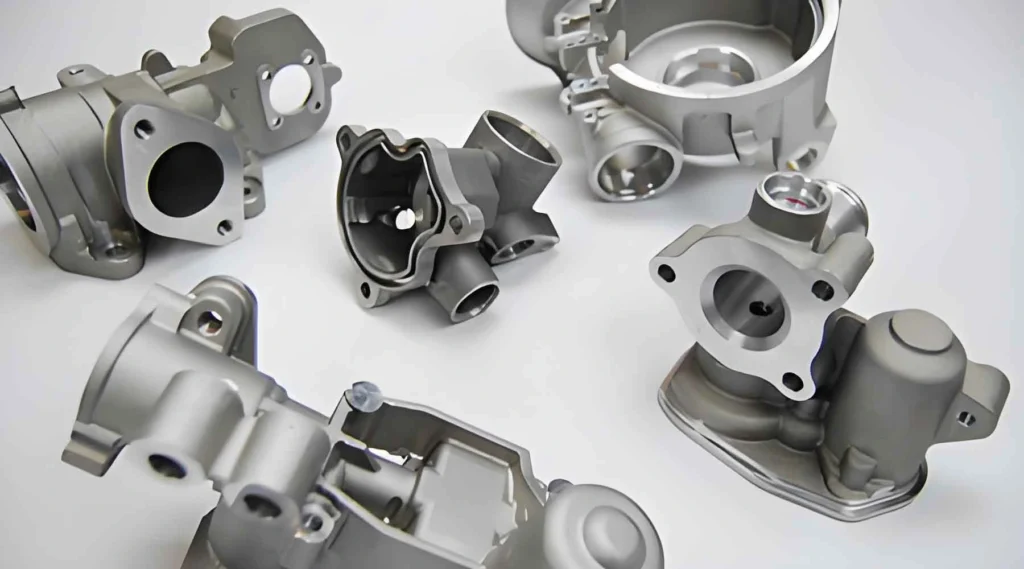
The investment casting process is one of the oldest and most sophisticated metal-forming techniques used in modern manufacturing. At its core, it is a precision casting method designed to produce complex, near-net-shape components that would be difficult or impossible to achieve through traditional machining or other casting methods.
The primary purpose of this process is to provide:
- High Dimensional Accuracy: Achieving tight tolerances that minimize the need for secondary machining.
- Intricate Geometries: Creating internal cavities and thin-walled structures with ease.
- Fine Surface Finishes: Delivering smooth textures directly from the mold, typically ranging from 1.6 to 3.2 microns.
Why is it Called the Lost Wax Process?
Investment casting is frequently referred to as lost wax casting because of the sacrificial nature of the pattern used. In our production cycle, a wax injection machine is utilized to create a precise replica of the final part. Once this wax pattern is encased in a ceramic shell, the wax is melted out—or “lost”—leaving behind a perfectly detailed hollow cavity.
Key reasons for the “Lost Wax” terminology include:
- Sacrificial Patterns: Every part produced requires a dedicated wax pattern that is destroyed during the dewaxing phase.
- Seamless Molds: Because the pattern is melted out rather than pulled out, the ceramic mold can be a single, solid piece without a parting line, ensuring superior structural integrity.
- Precision Replication: The process ensures that the final metal casting exactly mirrors the intricate details of the original wax model.
The Step-by-Step Investment Casting Process
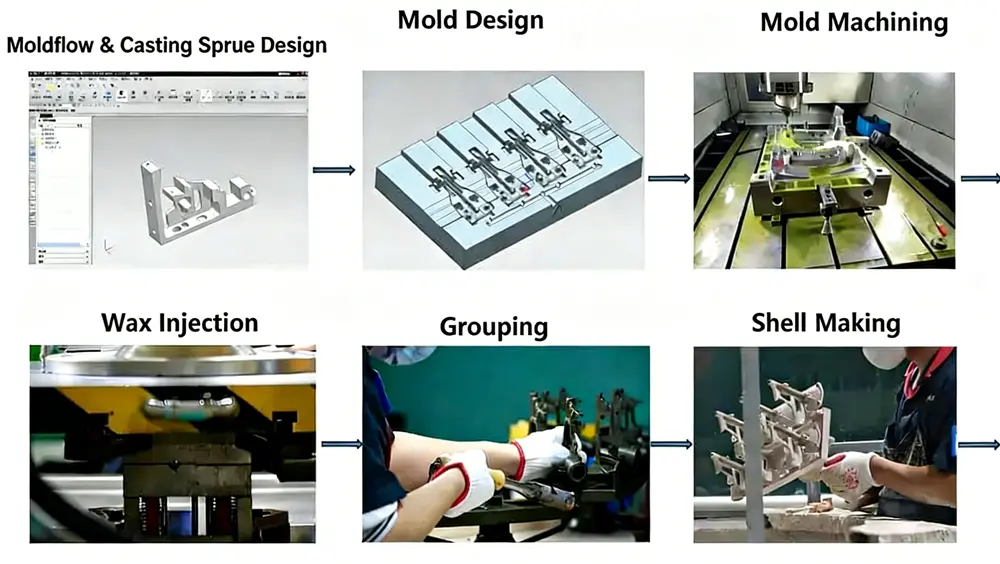
We treat the investment casting process as a blend of traditional craftsmanship and modern engineering. To get the precision our clients expect, we follow a rigorous multi-stage workflow that transforms a simple wax design into a high-performance metal component.
Wax Pattern Creation and Tree Assembly
Everything starts with the wax. We use a high-precision wax injection machine to inject molten wax into a metal die, creating an exact replica of the final part. Once we have these patterns, we “gate” them onto a central wax runner to form a cluster, often called a casting tree. This allows us to cast multiple parts at once, maximizing efficiency. To ensure the best results, we focus heavily on the initial stage of making a mold for wax casting to guarantee the wax patterns are flawless.
Ceramic Shell Mold Construction
Next, we build the ceramic shell around the wax tree. We dip the assembly into a high-grade ceramic slurry and then coat it with fine sand (stucco). This process is repeated several times, allowing each layer to dry before the next is applied. This layering creates a hard, durable mold capable of maintaining extreme dimensional accuracy even when subjected to the high temperatures of molten metal.
Dewaxing and Molten Metal Pouring
Once the shell is thick enough, we move to the dewaxing phase. We place the shells in a steam autoclave or flash fire furnace to melt the wax out, leaving behind a clean hollow cavity. This is the core of the lost wax casting process, where the “lost” wax makes room for the metal. After the wax is gone, we preheat the empty ceramic molds and pour in the molten metal—whether it’s steel, aluminum, or a specialty alloy.
Shell Removal and Final Finishing
After the metal has cooled and solidified, we vibrate or blast the ceramic mold to break it away from the metal parts. The individual components are then cut off the runner tree. Our team performs final finishing, which may include grinding, heat treatment, or sandblasting, to achieve the fine surface finishes that make the investment casting process the preferred choice for complex, near-net-shape parts.
- Key highlights of our process:
- Precision: High-tolerance wax injection.
- Strength: Multi-layered ceramic shells.
- Quality: Controlled cooling for structural integrity.
- Finish: Minimal post-processing required.
Common Materials Used in Investment Casting
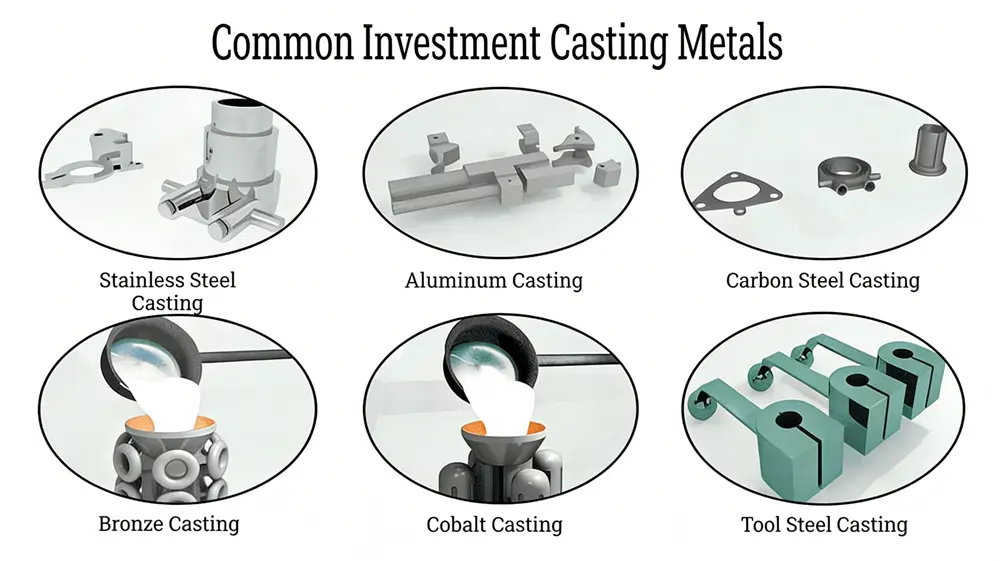
One of the biggest strengths of the investment casting process is its incredible versatility. We can cast almost any metal, allowing us to meet specific mechanical properties and performance requirements. Whether you need extreme hardness, corrosion resistance, or lightweight durability, this metal casting method delivers fine surface finishes and high dimensional accuracy across a wide spectrum of alloys.
Ferrous Metals and Stainless Steel
Ferrous metals are the backbone of many industrial applications. We frequently use various grades of carbon steel and stainless steel to produce parts that require high strength and durability.
- Carbon Steel: Ideal for structural components where cost-effectiveness and toughness are priorities. You can explore our capabilities in carbon steel lost wax casting for heavy-duty industrial parts.
- Stainless Steel: Best for environments prone to corrosion, such as marine or chemical processing. It provides a clean finish and long-term reliability.
- Alloy Steels: Custom-formulated to enhance specific traits like wear resistance or impact strength.
Non-Ferrous Alloys
When weight or conductivity is a factor, non-ferrous alloys are the go-to choice. These materials are easier to machine and offer excellent thermal and electrical properties.
- Aluminum: Highly popular for its strength-to-weight ratio. Our lost wax casting aluminum services cater to automotive and aerospace needs where reducing weight is critical.
- Copper-Based Alloys: Includes bronze and brass. We specialize in lost wax bronze casting for decorative hardware, plumbing fixtures, and marine components due to its superior corrosion resistance.
- Magnesium: Used for ultra-lightweight applications.
Superalloys for Specialized Uses
For the most demanding environments, we utilize superalloys. These materials are designed to withstand extreme heat and high-stress conditions without losing their structural integrity.
- Nickel-Based Alloys: Essential for high-temperature applications like exhaust systems.
- Cobalt-Based Alloys: Known for exceptional wear and temperature resistance.
- Titanium: Offers the highest strength-to-weight ratio and is biocompatible for medical use.
In the energy sector, these materials are vital for high-performance parts. For example, we produce high-precision lost wax casting turbine blades that operate under intense thermal pressure, ensuring maximum efficiency and safety.
Advantages and Limitations of the Process
High Precision and Complex Geometries
We specialize in producing net to near-net precision parts that other manufacturing methods simply cannot match. Through our rigorous Design for Manufacturing (DFM) engineering review, we evaluate gate placement and expected tolerances to ensure every component meets exact specifications. The investment casting process excels at creating complex geometries and intricate internal structures, allowing us to deliver parts that are ready for use with minimal secondary processing.
Excellent Surface Finish and Durability
One of the standout benefits of our process is the superior quality of the final product. We consistently achieve a smooth **125 RMS surface finish**, which is significantly better than most sand-cast alternatives. This high-quality finish, combined with the structural integrity of the alloys we pour, ensures that every part is durable and aesthetically refined. By maintaining strict process control in investment casting, we guarantee repeatable quality across millions of parts.
Production Costs and Lead Time Considerations
While the investment casting process offers massive long-term savings, it is important to understand the production timeline. The creation of the ceramic shell requires 6 to 8 cycles of dipping and sanding, followed by a 24 to 36-hour drying period. However, these steps are essential for achieving the precision we are known for.
Key Considerations:
- Tooling Investment: Our in-house mold shop builds precision-engineered wax injection molds designed to last for millions of cycles.
- Reduced Machining: By casting parts to near-net shape, we drastically reduce the time and money spent on post-casting machining and grinding.
- Material Efficiency: This process minimizes metal waste, making it a cost-effective choice for expensive alloys like stainless steel and cobalt-based metals.
- Lead Times: The multi-step drying and curing process (at temperatures near 1000°C) means initial lead times are longer than simple fabrication, but the efficiency of high-volume production is unmatched.
For those looking to streamline their production, using an automatic wax machine can further enhance the consistency of the wax patterns, ensuring the highest level of accuracy from the very first step.
Industrial Applications of Investment Cast Products
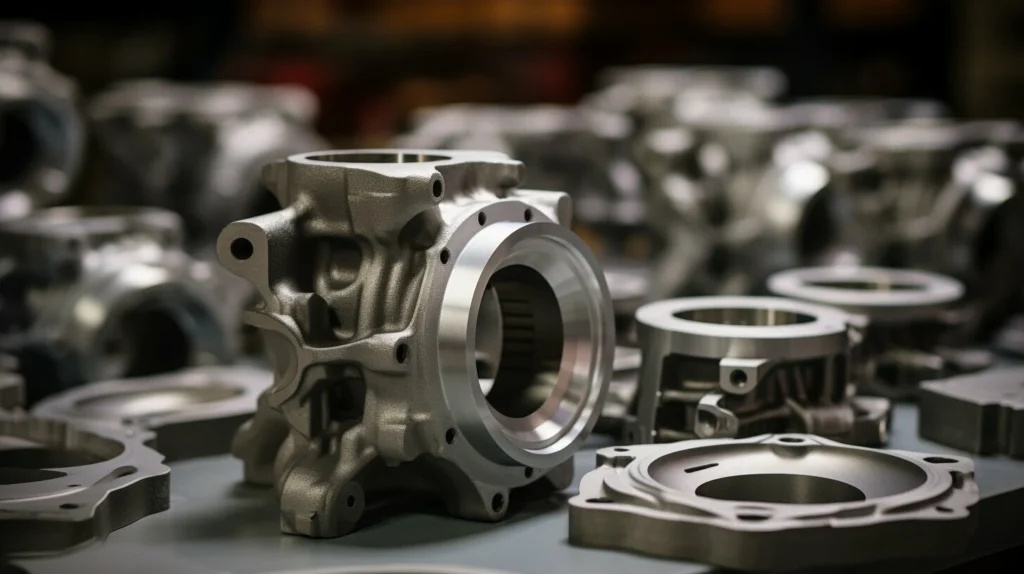
The investment casting process is the go-to solution for industries that cannot compromise on detail or material integrity. Because this method allows for near-net-shape production, we see it used across sectors where high-performance alloys and complex geometries are the standard.
Aerospace and Defense Components
In the aerospace sector, failure is not an option. We use investment casting to produce critical engine components, fuel systems, and structural parts.
- Turbine Blades: Capable of withstanding extreme heat and rotational stress.
- Manifolds: Complex internal cooling channels that are impossible to machine.
- Actuators: Lightweight yet incredibly strong defense components.
To ensure these parts meet rigorous safety standards, many facilities now utilize automated shell coating applications to maintain consistent mold thickness and structural integrity.
Medical and Dental Devices
The medical field relies on the lost wax casting method for its ability to work with biocompatible materials like cobalt-chrome and titanium. The fine surface finishes achieved through this process reduce the need for extensive post-processing.
- Orthopedic Implants: Custom-fit hip and knee replacements.
- Surgical Tools: High-precision instruments that require ergonomic shapes.
- Dental Prosthetics: Crowns and bridges that demand absolute dimensional accuracy.
Commercial and Energy Sector Parts
For the energy industry, durability in harsh environments is key. We provide cast parts that handle high pressure and corrosive fluids without breaking a sweat.
- Oil & Gas: Valve bodies, pump impellers, and drilling tools.
- Power Generation: Burner nozzles and heavy-duty hardware.
- Automotive: High-end turbocharger components and exhaust manifolds.
While the casting process gets us close to the final design, some mission-critical parts require a secondary touch. We often refer to our precision machining component guide to help clients understand how to achieve the ultra-tight tolerances required for high-tech assemblies.
Investment Casting vs. Alternative Methods
Investment Casting vs. Sand Casting
When comparing the investment casting process to sand casting, the most significant differences are precision and surface quality. Sand casting is often used for larger, less complex components, but it cannot match the smooth 125 RMS surface finish we achieve through the lost wax method. Our process yields net to near-net precision parts, which provides substantial time and cost savings compared to the heavy machining often required after sand casting. There is a distinct advantage of investment casting over green sand casting when your project involves intricate geometries, thin walls, and strict dimensional tolerances that sand molds cannot reliably produce.
Investment Casting vs. Die Casting
While die casting is effective for high-volume production of non-ferrous metals, it is limited by the melting points of the metal dies. The investment casting process excels here because our ceramic shells are cured at approximately 1000°C (1832°F), allowing us to cast high-temperature materials that die casting cannot handle, such as:
- Stainless Steel: Including 400 Series and 17-4 PH.
- Ductile Iron: For high-strength applications.
- Cobalt and Nickel-Based Alloys: Essential for aerospace and military hardware.
Investment casting also allows for much more complex internal configurations. Because the wax pattern is melted out to create a hollow cavity, we can produce designs that would be impossible to pull from a permanent metal die. This flexibility makes it the preferred choice for specialized industries requiring high-performance alloys and complex engineering.
FAQs
How accurate is the investment casting process?
The investment casting process is industry-renowned for its exceptional dimensional accuracy. Because the ceramic mold is formed around a precise wax pattern, we can achieve fine surface finishes and tight tolerances that significantly reduce or even eliminate the need for secondary machining.
What is the main advantage of lost wax casting?
The primary benefit is design flexibility. You can produce parts with a complex hollow cavity and intricate internal geometries that are impossible to create with sand casting or die casting. As a leading wax injection machine manufacturer, we see firsthand how this precision allows for thinner walls and lighter, stronger components.
Which metals can be used in this process?
Almost any metal can be cast using this method. Common choices include:
- Stainless Steel and Ferrous alloys.
- Aluminum, Bronze, and other Non-Ferrous alloys.
- Superalloys for high-heat environments like aerospace.
How does the dewaxing stage work?
Once the ceramic shell is fully dry, we use a dewaxing furnace or autoclave to melt the wax out. This leaves a clean, high-strength mold ready to receive molten metal. This step is critical to ensuring there are no residues that could cause defects in the final metal casting.
Is investment casting cost-effective for small runs?
While the initial tooling for the wax injection machine requires an upfront investment, the “near-net-shape” results save money on raw materials and labor. For complex parts, it is often the most economical choice regardless of volume because it skips expensive CNC milling steps.
How do I ensure the best surface finish?
The quality of the finish starts with the wax pattern. We recommend using high-quality industrial automation solutions to maintain consistent pressure and temperature during injection, ensuring the wax surface is flawless before the ceramic coating is applied.
 English
  Russian
  German