
What is Lost Wax Bronze Casting?
Definition and Core Principles
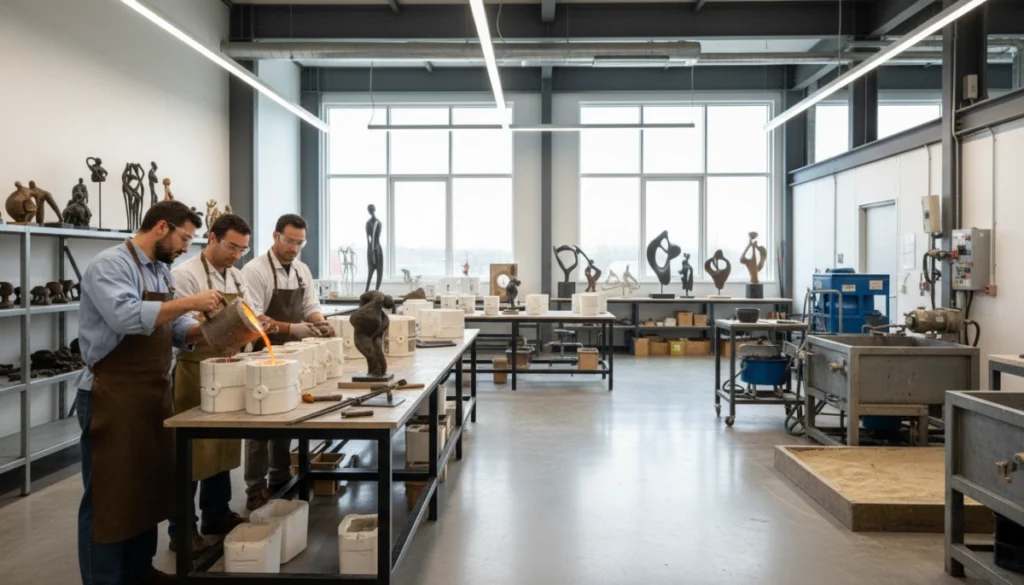
Lost wax bronze casting, traditionally known as cire perdue, is a highly precise metallurgical process used to cast intricate metal sculptures and complex industrial components. The core principle revolves around replacement: creating a precise wax model, building a refractory ceramic shell around it, and then applying heat. The wax melts and drains away—becoming “lost”—leaving a flawless negative cavity. Molten bronze is subsequently poured into this void to solidify into the final form.
As a dedicated casting processing machinery manufacturer and supplier, we engineer our equipment to maintain absolute dimensional stability and temperature control throughout these critical foundational steps.
Advantages of the Lost Wax Technique
Foundries and manufacturers rely heavily on the lost wax technique because it delivers results that other casting methods simply cannot match.
- Unmatched Precision: Captures microscopic details and textures from the original master model.
- Complex Geometries: Easily accommodates severe undercuts, thin walls, and intricate internal cavities.
- Efficient Scalability: By utilizing a specialized wax injection machine, foundries can rapidly mass-produce a flawless duplicate sculpture or precise mechanical part with exact consistency.
- Superior Surface Finish: Yields a remarkably smooth exterior right out of the mold, drastically reducing labor-intensive post-casting machining.
- Broad Versatility: Highly adaptable for varying scales, effectively producing everything from micro-components to monumental bronze installations.
The Historical Origins of Bronze Casting
Lost wax bronze casting is a time-tested technique that has shaped metalwork for thousands of years.
Archaeological Discoveries in Antiquity
Ancient artisans mastered this process long before industrial tools existed.
- Early Beginnings: Artifacts found in the Indus Valley, ancient Egypt, and Mesopotamia highlight the earliest uses of simple beeswax and clay molds.
- Ancient Masterpieces: Craftsmen relied on this method to create incredibly intricate metal sculptures, weapons, and ceremonial artifacts.
- Enduring Quality: The fact that these ancient bronze pieces survive today proves the unmatched durability and precision of the original technique.
Evolution from Ancient to Modern Times
The core concept remains the same, but the execution has evolved massively.
- From Beeswax to High-Tech: We transitioned from hand-carving beeswax to utilizing a highly precise wax injection machine for flawless consistency.
- Improved Materials: Fragile ancient clay molds have been replaced by advanced ceramic slurry systems for stronger, more reliable shelling.
- Modern Scale: Today, we can easily duplicate sculpture designs with exact accuracy, moving far beyond the single-use, labor-intensive molds of the past.
The contrast between ancient hand-pouring and modern manufacturing is stark. Today, mechanical advancements and foundry casting robotics integration allow us to automate the heavy lifting while preserving the artistic integrity of traditional lost wax bronze casting.
Phase 1: Sculpting and Wax Preparation
The success of lost wax bronze casting entirely depends on the precision of the first phase. Before any metal is melted, we must build a perfect wax foundation.
Creating the Original Master Model
Every project begins with a master model. We shape the original design using workable materials like clay, plaster, or 3D-printed resins. This master holds every single detail, texture, and curve intended for the final metal sculptures.
Mold Making and Casting the Wax Replica
To duplicate the sculpture without destroying the original master, we create a flexible, hollow mold, typically using silicone rubber backed by a rigid plaster jacket.
Once the mold is set, we fill it with specialized casting wax. For precision investment casting and consistent production runs, utilizing a reliable wax injection machine is crucial. It forces molten wax into the mold under controlled pressure, capturing the exact micro-details of the original model. After cooling, we carefully remove the hollow wax replica.
Spruing: Creating the Gating System
With the wax replica in hand, we move to spruing. This involves attaching a strategic network of solid wax rods to the replica. Think of it as plumbing for the liquid bronze.
The gating system serves three crucial functions:
- Creating a main cup: A funnel at the top where we will eventually pour the molten bronze.
- Directing the flow: The wax rods (sprues) guide the liquid metal smoothly into every part of the hollow mold.
- Venting gases: Thinner wax rods are added to let trapped air and gases escape, preventing air bubbles in the final piece.
Once the spruing is complete, the wax assembly is rigid and fully prepared for the next step: shelling.
Phase 2: Shelling and The Burnout Process in Lost Wax Bronze Casting
Building the Ceramic Shell (Slurry)
Once the spruing is complete, the wax model needs a highly heat-resistant mold. This critical step is known as shelling. We dip the entire wax assembly into a liquid ceramic mixture called slurry, then immediately coat it with fine silica sand.
We repeat this dipping and sanding process multiple times, letting each layer dry completely to build a thick, robust ceramic shell around the wax. As a dedicated casting processing machinery Manufacturer and supplier, we regularly help foundries scale up their production of metal sculptures by implementing an automated shell coating system. Upgrading to automated equipment ensures a highly consistent shell thickness and drastically reduces manual labor, which directly improves the final casting quality.
The Burnout Stage: Melting the Wax
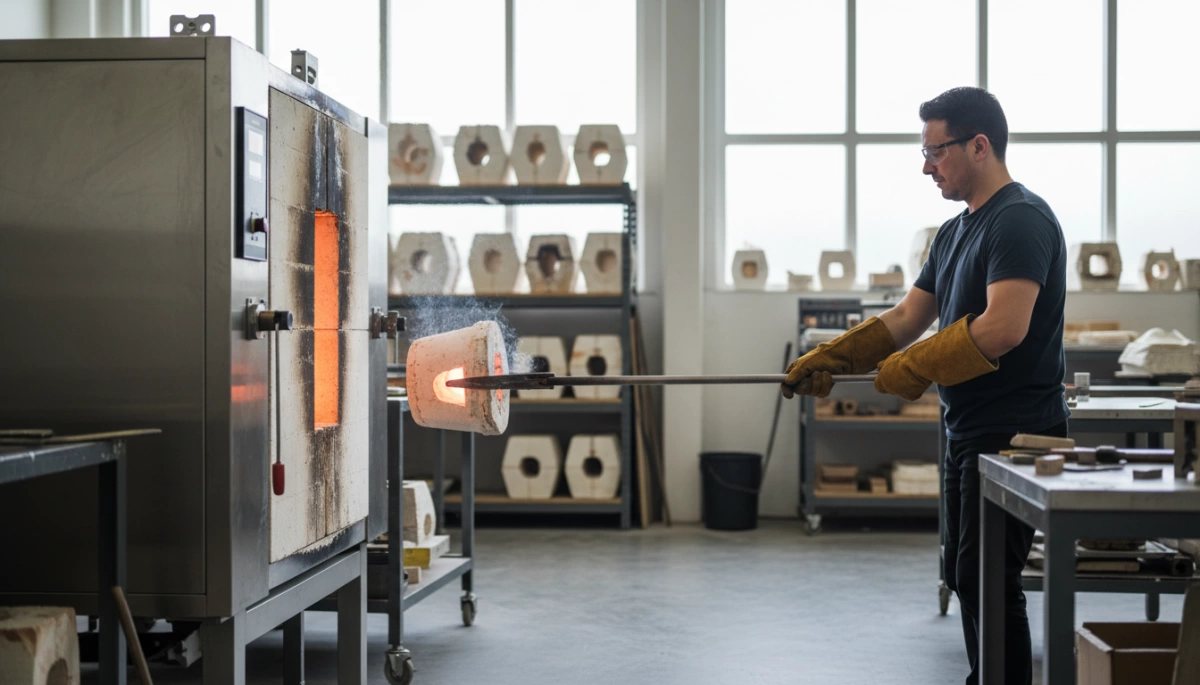
After the ceramic shell is fully cured, we move it into a high-temperature kiln. This specific stage is what gives lost wax bronze casting its name. The extreme heat serves a vital dual purpose: it bakes the ceramic into a rock-hard mold while completely melting away the wax trapped inside.
Here is exactly what happens during the burnout phase:
- Hardening: The kiln fires the ceramic shell, giving it the structural integrity needed to withstand molten metal.
- Evacuation: The wax melts and drains out entirely, leaving a perfect, hollow cavity for your duplicate sculpture.
- Temperature Control: The empty shell is kept hot to prevent thermal shock and cracking when the liquid bronze is poured.
Maintaining strict temperature control is essential during this stage. Integrating automation in the casting process during these critical heating and shelling stages guarantees high-precision results and fewer defects for every investment casting project.
Phase 3: Casting and Finishing in Lost Wax Bronze Casting
Pouring the Molten Bronze
This is where the raw materials finally transform. After the shelling process is complete and the ceramic molds are prepped and heated, we pour liquid bronze into the hollow cavities. The metal is superheated to roughly 2,000°F (1,090°C). Precision during the pour dictates the structural integrity of the final piece. If you want to dive deeper into how different tooling materials and methods compare under high heat, our comprehensive mold and cast guide breaks down the core principles used across the industry.
Breakout, Releasing, and Metal Chasing
Once the molten metal cools and hardens, the ceramic shell has done its job. We then move into the physical labor of refining the piece.
- Breakout: We shatter and remove the hard ceramic shell with hammers and sandblasters to reveal the raw metal sculptures inside.
- Releasing: We use plasma cutters or heavy saws to chop away the complex spruing system that channeled the liquid metal into the mold.
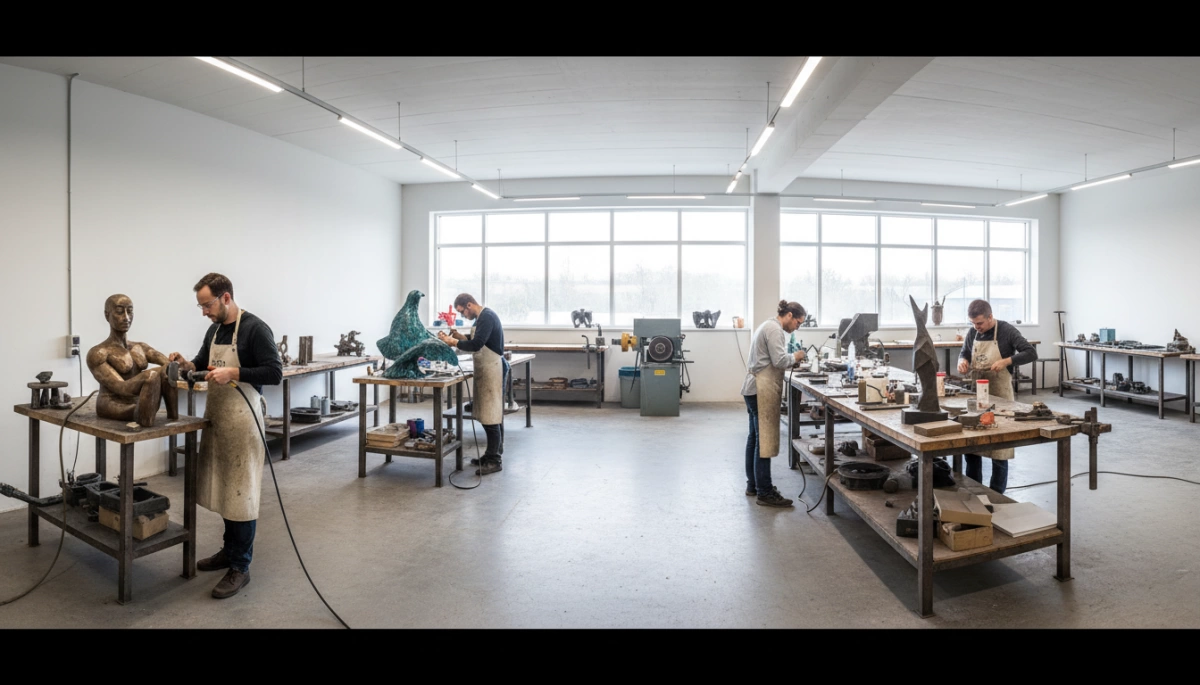
- Metal Chasing: This is the meticulous cleanup phase. We grind down weld marks, sand rough spots, and carefully re-texture the surface so it perfectly matches the details of the original duplicate sculpture.
Patinating and Sealing the Finished Bronze
Fresh out of chasing, raw bronze is highly reflective and uniform. To give the piece character, color, and dimension, we apply a patina. We heat the metal surface with a torch and brush on specific chemical mixtures that react with the bronze to create unique shades and tones. ly, we seal the heated metal with a clear wax coating. As a trusted casting processing machinery manufacturer and supplier, we know that a proper seal is crucial—it locks in the patina and protects the finished bronze from moisture, oxidation, and weathering for generations.
Modern Applications of Lost Wax Casting
Today, lost wax bronze casting isn’t just a historical relic; it is a critical production method across multiple global industries.
Fine Art and Bronze Sculptures
Artists and commercial foundries rely heavily on this traditional technique to bring intricate, large-scale visions to life.
- Flawless Detail: The process perfectly captures every nuance, including the artist’s original fingerprints and textures from the clay.
- Exact Replication: Foundries can seamlessly duplicate sculpture designs to produce accurate, high-quality limited edition runs.
- Durability: It remains the premier method for creating monumental metal sculptures designed to withstand centuries of outdoor exposure.
Jewelry Making and Small Ornaments
The global jewelry industry thrives on the micro-precision of the lost wax method to craft custom rings, detailed pendants, and small decorative ornaments.
- High-Volume Efficiency: Jewelers use specialized equipment to scale their operations. Integrating a reliable wax injection machine allows workshops to rapidly mass-produce hundreds of identical, defect-free wax models for bulk casting.
- Intricate Customization: The technique makes bespoke, one-off jewelry pieces both highly accurate and financially viable to produce.
Industrial and Architectural Uses
Beyond aesthetics, this casting process solves highly complex manufacturing challenges for the aerospace, automotive, and architectural hardware sectors.
- Mechanical Precision: It creates industrial metal components with incredibly tight tolerances, often requiring little to no secondary machining.
- Complex Geometries: The method easily handles intricate internal cavities and undercuts that traditional CNC machining simply cannot reach.
- Advanced Prototyping: Many modern engineering firms evaluate the performance of 3D printed wax vs injected wax for casting to streamline their spruing and shelling phases, ultimately bringing highly complex architectural fixtures and turbine blades to market much faster.
 English
  Russian
  German