
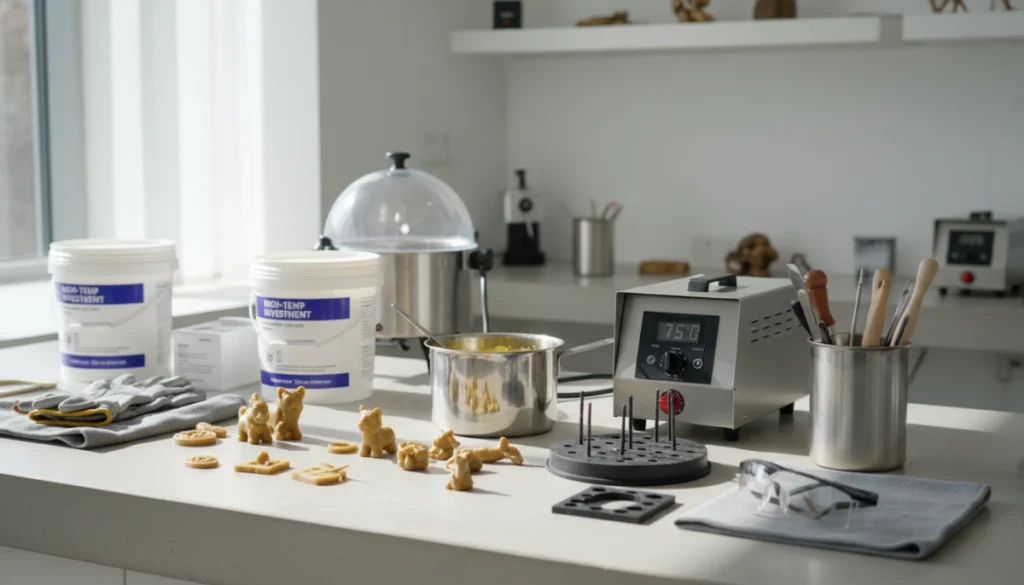
Lost Wax Casting
The Lost Wax Process Explained
Lost wax casting, also known as investment casting, is a manufacturing process with a history spanning over 6,000 years. While the technology has evolved, the fundamental concept remains the same: a sacrificial wax model is created and then encased in a heat-resistant mold material. Once the mold hardens, the wax is melted out—hence the term “lost wax”—leaving behind a perfect negative cavity. Molten metal is then poured into this void to create a duplicate of the original design.
This technique is renowned for its ability to capture intricate details and complex geometries that are difficult to achieve with other manufacturing methods. Whether for fine art sculptures or precision industrial parts, the process follows a strict 8-step sequence, moving from the initial pattern creation to the final metal finishing.
Why Material Selection Matters
The quality of a final cast is directly dictated by the specific lost wax casting materials chosen for the project. Because this process scales from delicate jewelry to massive industrial machinery, understanding material properties is essential for safety and success.
- Wax Types: The choice of wax affects modeling capability. For example, microcrystalline wax is pliable and sticky, making it ideal for modeling, while paraffin wax is brittle and primarily used as an additive to harden other waxes.
- Investment Formulas: The mold material, or “investment,” must withstand specific thermal shocks. Small-scale jewelry projects typically use a mixture of plaster and silica, whereas large-scale foundry work requires ceramic shell or resin-bonded sand to handle the heat of ferrous metals.
- Metal Compatibility: The investment material must match the melting point of the alloy. While plaster-based investments work for non-ferrous metals like silver and bronze, they cannot withstand the extreme temperatures required for pouring iron or steel.
Essential Lost Wax Casting Materials
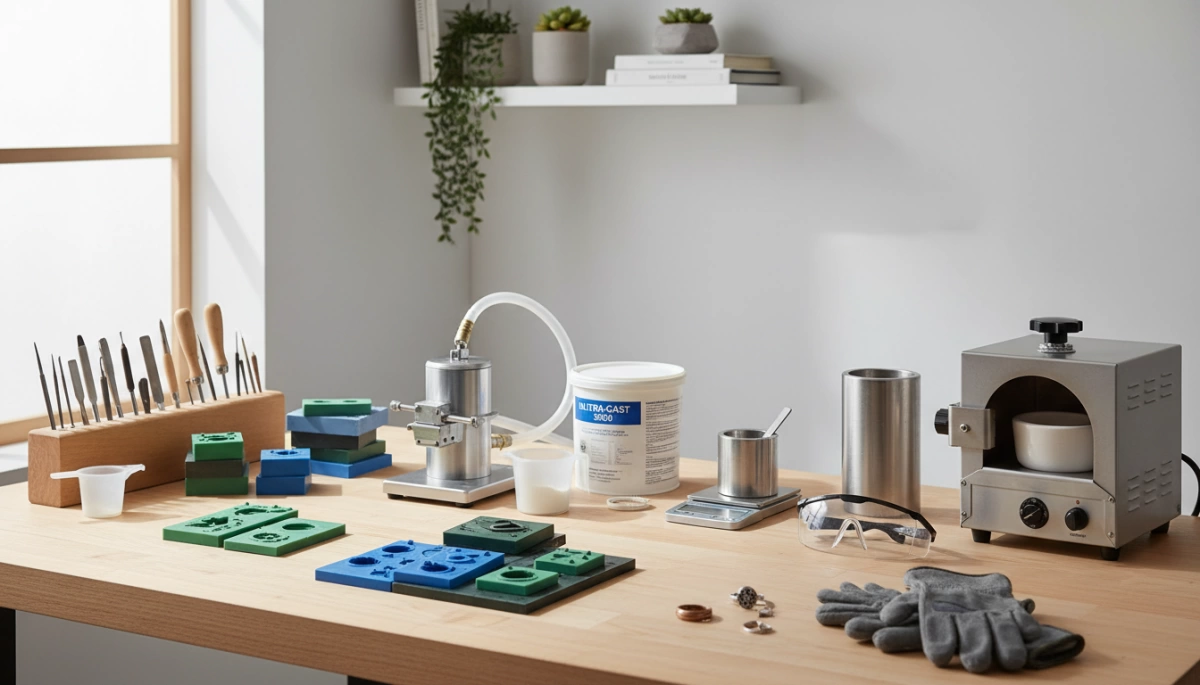
Selecting the correct lost wax casting materials is the foundation of a successful project. Whether you are creating delicate jewelry or large industrial parts, the quality of your consumables directly impacts the surface finish and structural integrity of the final piece.
Types of Casting Waxes
The process begins with the model, and different waxes serve different purposes during the sculpting phase. Understanding the specific properties of types of casting waxes is crucial for achieving the desired detail.
- Microcrystalline Wax: This is the primary choice for modeling. It is pliable, slightly sticky, and has a medium-soft consistency, making it easy to carve and shape by hand.
- Paraffin Wax: This wax is generally too brittle to use on its own for modeling. Instead, it is used as an additive to harden other wax mixtures.
- Beeswax and Specialty Waxes: These are often used for specific carving needs or patching models. When using these, you must be aware of their specific melting points to ensure they burn out cleanly.
Investment and Mold Making Materials
Once the wax model is sprued, it must be encased in a refractory mold material known as “investment.” The composition of this material changes based on the scale of the project. For a deeper dive into these mixtures, you can explore our mold and cast guide.
- Jewelry and Small Scale: The standard investment is a mixture of plaster, silica, and water. The plaster provides structural support, while the silica acts as a refractory agent to withstand high heat. This creates a slurry with the consistency of heavy cream that captures fine details.
- Large Scale Foundry: For larger bronze or aluminum pieces, a ceramic shell method is often used. This involves dipping the model into colloidal silica and coating it with various grades of silica sand.
- Iron Casting: Large iron projects typically utilize resin-bonded sand molds rather than standard plaster investment.
Crucibles and Melting Supplies
Handling molten metal requires specialized equipment designed to withstand extreme temperatures. The crucible is the vessel used to hold the metal while it melts in the furnace. Alongside the crucible, safety gear is non-negotiable when handling these lost wax casting materials.
- Personal Protective Equipment (PPE): You must use leather or insulated gloves and safety goggles to protect against splashes and heat.
- Respiratory Protection: A respirator is essential, particularly when mixing dry investment powder, as silica dust is hazardous if inhaled.
- Clothing: Always wear natural fiber clothing (like cotton) rather than synthetics, which can melt onto the skin in high-heat environments.
Popular Metals Used in Lost Wax Casting
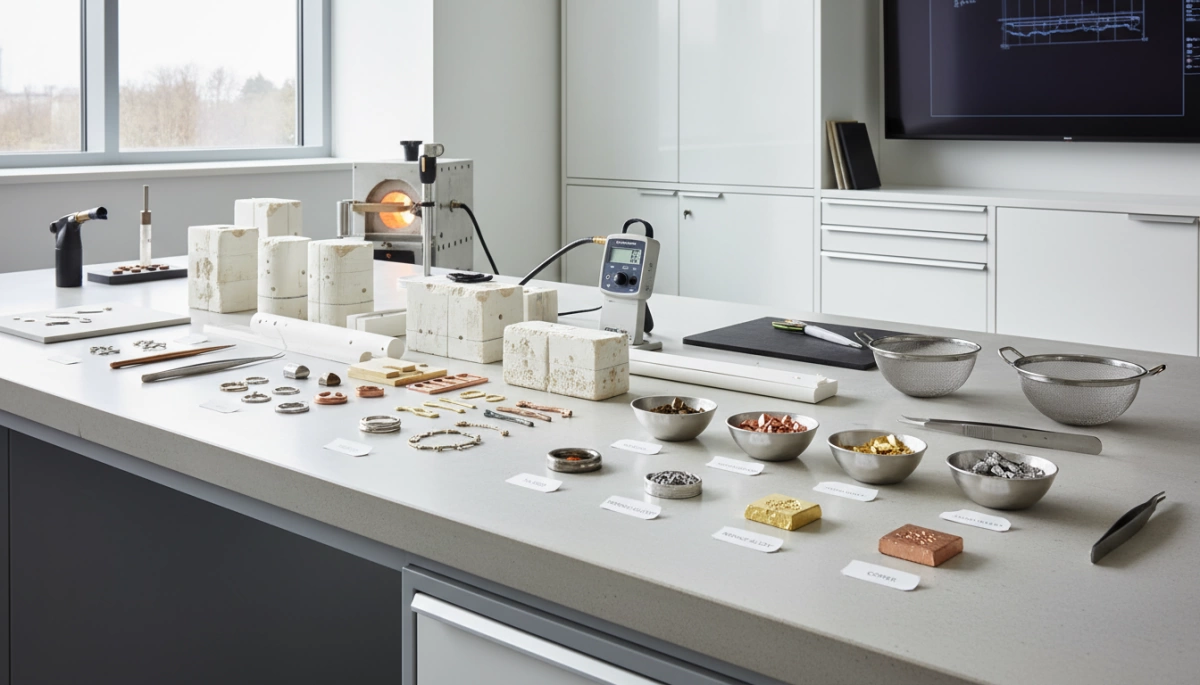
Selecting the right alloy is a critical step in the manufacturing process. The lost wax casting materials you choose determine not only the aesthetic finish of the piece but also its durability and melting requirements. We see a wide range of metals used across different scales, from delicate jewelry to massive industrial components.
Precious Metals: Gold, Silver, and Platinum
For fine jewelry and decorative arts, precious metals remain the standard. Working with these materials requires precision, as they are typically cast on a smaller scale where detail is paramount.
- Silver: A primary material for jewelry classes, offering a balance of workability and value.
- Gold & Platinum: High-value metals used for intricate designs that demand exceptional surface finish and corrosion resistance.
When handling these expensive resources, using an efficient metal melting furnace is essential to minimize waste and ensure a clean pour.
Base Metals: Copper, Brass, and Bronze
Non-ferrous metals are widely favored for art casting, sculpture, and functional hardware because they do not contain iron and are generally resistant to rust.
- Bronze: The historical standard for sculpture, known for its strength and ability to capture fine detail.
- Copper: Often used for its distinct color and conductive properties.
- Aluminum: A lightweight option frequently used in foundry work for parts that require a high strength-to-weight ratio.
Specialized Manufacturing Alloys
For industrial applications and heavy-duty parts, we utilize ferrous metals—those that contain iron. These materials often require higher melting temperatures and specialized mold investments like ceramic shell or resin-bonded sand.
- Steel: Offers superior hardness and tensile strength for mechanical components.
- Iron: We see both malleable iron and gray iron used in foundry settings.
- Cast Iron: Popular for everything from cookware to artistic architectural elements, often processed in large cupola furnaces during iron pour events.
Essential Tools and Casting Equipment

Wax Carving and Injection Tools
Creating a flawless model is the first step in the process. For one-off pieces, we rely on a variety of hand tools, such as dental picks, carvers, and heated wax pens, to sculpt microcrystalline wax into intricate shapes. However, for production work where consistency is critical, manual carving isn’t efficient. In these cases, we use a wax injection machine for investment casting to quickly replicate patterns from a rubber mold. This equipment ensures every wax model is identical, reducing defects before the casting process even begins.
Casting Flasks and Accessories
The flask is the metal cylinder that holds the investment material around your wax model. We use specific flasks depending on the casting method; perforated flasks are common for vacuum casting to allow air to escape, while solid flasks are often used in centrifugal setups.
Sprue Bases: Rubber or metal bases used to hold the wax tree upright inside the flask during investment.
Crucibles and Tongs: You need high-grade ceramic or graphite crucibles to hold the molten alloy. Heavy-duty tongs are essential for safely gripping hot crucibles and flasks when moving them from the furnace to the casting zone.
Safety Gear: Handling these materials requires leather gloves, safety goggles, and a respirator to protect against silica dust during the investment mixing stage.
Burnout Kilns and Casting Machines
To remove the wax and prepare the mold, a programmable burnout kiln is required. This equipment slowly heats the flask to vaporize the wax completely and cure the plaster or ceramic shell. Once the mold is ready, we use **casting machines** to introduce the metal.
Centrifugal Casting: Uses the force of a spinning arm to throw molten metal from the crucible into the mold cavity.
Vacuum Casting: Uses suction to pull the molten metal into the mold, ensuring it fills fine details without trapping air bubbles.
Both methods are effective, but the choice depends on the scale of your project and the specific lost wax casting materials you are working with.
Modern Applications for Casting Materials
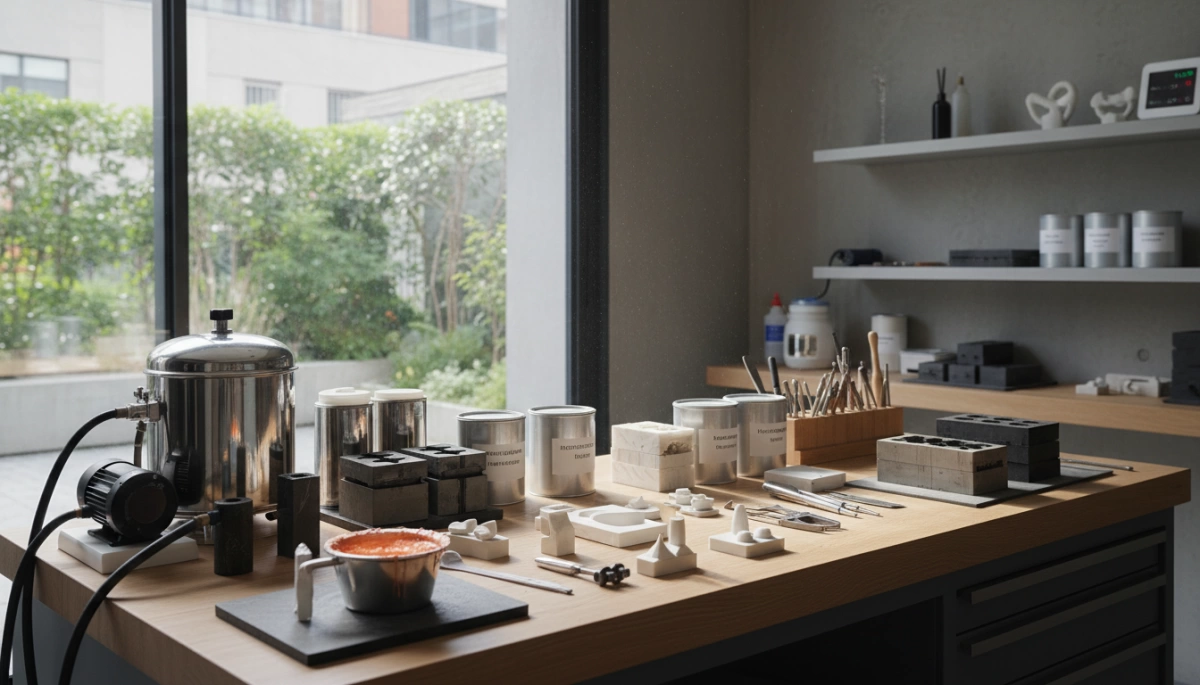
While lost wax casting is a 6,000-year-old process, the materials and techniques have evolved to serve critical modern industries. From fine art to heavy machinery, the versatility of lost wax casting materials allows us to create complex metal parts that would be impossible to machine.
Custom Jewelry Design
Jewelry makers rely heavily on this process to turn delicate designs into wearable art. The investment materials used in jewelry casting are specifically formulated to capture the finest details of a wax model.
Precision: The plaster-silica investment molds can replicate intricate textures, such as fingerprints or leaf veins, directly onto the metal.
* **Material Variety:** Artists frequently cast in precious metals like silver and gold, as well as bronze for larger statement pieces.
* **Scalability:** The process works equally well for a single custom engagement ring or a production run of pendants.
Dentistry and Medical Implants
The medical field demands exact precision, making lost wax casting a standard for dental restoration.
Accuracy: Dental labs use specialized investment compounds to cast crowns, bridges, and inlays that fit a patient’s bite perfectly.
Biocompatibility: The process supports casting in specialized alloys that are safe for long-term use in the human body.
Replication: Just like in jewelry, the ability to create a sacrificial wax model ensures that the final metal piece is an exact replica of the required shape.
Industrial Manufacturing and 3D Printing
In the industrial sector, we use lost wax casting to manufacture components for the automotive and machinery industries. This method is ideal for producing parts with complex internal geometries that traditional machining cannot achieve.
Mass Production: Foundries use durable metal molds to inject wax patterns, allowing for the rapid creation of thousands of identical parts.
Material Strength: Industries cast robust parts using aluminum, steel, and iron, utilizing ceramic shell investments to withstand the intense heat of these molten metals.
Tech Integration: Modern manufacturing often replaces hand-carved models with digital precision. Understanding the nuances of 3D printed wax vs injected wax for casting is essential for optimizing production, as 3D printing allows for rapid prototyping of complex shapes before committing to full-scale casting.
Frequently Asked Questions About Casting Supplies
What is the best wax for beginners?
For anyone just starting to explore **lost wax casting materials**, I always recommend microcrystalline wax. It is pliable, slightly sticky, and has a medium-soft consistency, making it very forgiving for hand modeling. Avoid using pure paraffin wax for your primary model; it is too brittle on its own and works better as an additive to harden other waxes. If you need to do detailed carving, harder specialty waxes or beeswax are excellent options, but they require precise temperature control to work effectively.
Can I reuse lost wax casting materials?
Generally, the core materials are single-use. The process is called “lost wax” because the wax model is melted out and consumed during the burnout phase. Similarly, the investment mold—whether it is a plaster-silica mix for jewelry or a ceramic shell for industrial parts—must be broken apart to release the final metal casting, rendering the mold unusable again. However, you can usually clean and remelt the metal sprues and buttons (the excess metal left in the feed channels) for future pours.
Where can I buy reliable casting equipment?
Sourcing high-quality gear is critical for both safety and casting success. You need robust **crucibles and tongs** that can withstand extreme thermal shock without failing. While hobbyist suppliers offer basic kits, for industrial-grade **burnout furnaces** or a **wax injection machine**, you should rely on dedicated foundry manufacturers. If you are deciding between setting up a full foundry or outsourcing, understanding the differences in precision casting and CNC machining can help you determine if you need heavy machinery or if smaller hand tools will suffice for your production level.
 English
  Russian
  German