
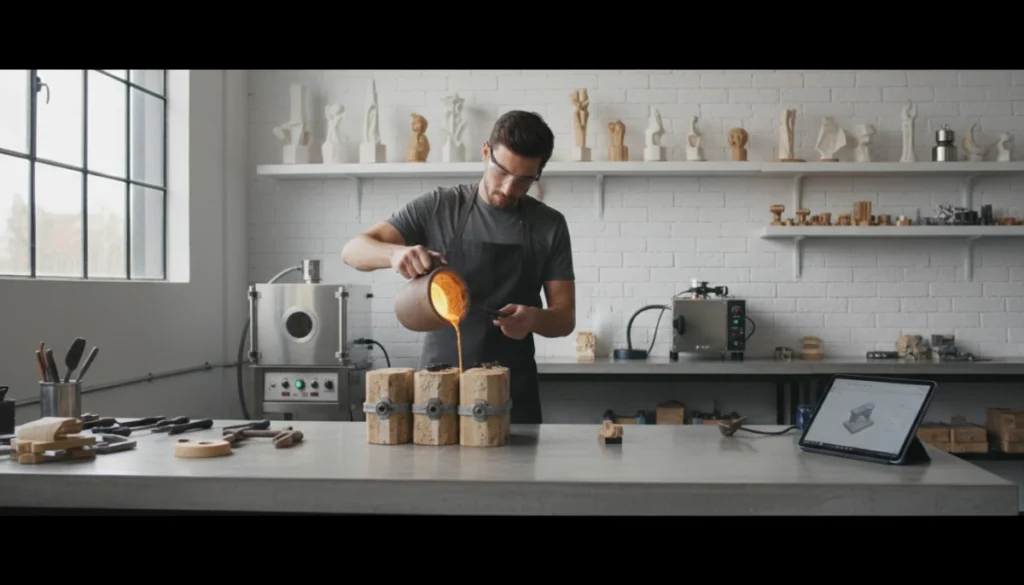
A Brief History of the Technique
The lost wax casting process, historically known as cire perdue, dates back over 5,000 years. Early artisans relied on rudimentary wax design and mold creation to forge intricate bronze sculptures and ornaments. Today, this foundational method has transformed into an ultra-precise industrial operation. As a leading casting processing machinery manufacturer and supplier, we honor this ancient craft by engineering advanced solutions—from robust wax injection machines to automated systems—that elevate traditional model-making into high-volume, modern manufacturing.
Common Applications and Industries
The versatility and precision of the lost wax casting process make it indispensable across highly demanding global markets. It excels in producing complex, near-net-shape geometries where flawless casting extraction and superior surface finishes are strictly required.
Key industries relying heavily on this advanced process include:
- Aerospace & Defense: Manufacturing heat-resistant turbine blades and complex engine components.
- Automotive Sector: Producing high-performance engine parts, turbochargers, and precision fittings.
- Medical & Dental: Engineering custom biocompatible implants and intricate surgical instruments.
- Jewelry & Fine Arts: Crafting highly detailed luxury pieces that demand exacting wax design.
- Heavy Industry: Fabricating durable industrial valves, impellers, and specialized mechanical hardware.
Step-by-Step Guide to the Lost Wax Casting Process
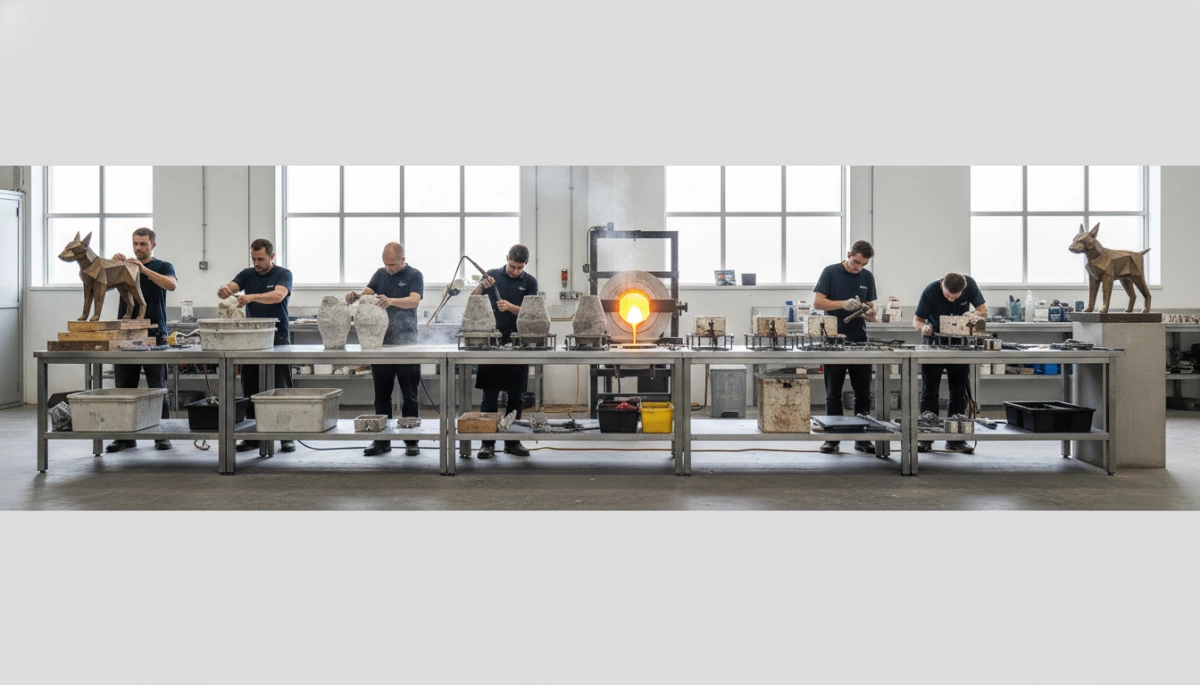
The Lost Wax Casting Process involves several distinct, critical stages to ensure accuracy, structural integrity, and a premium surface finish. Here is exactly how we execute the process from start to finish.
Creating the Wax Model and Spruing
The entire operation depends on the quality of the initial pattern. Precision during model-making sets the standard for the final product.
- Wax Injection: We start by finalizing the wax design, often integrating modern digital design to ensure flawless dimensions. We then use a specialized wax injection machine to push molten wax into a master mold, creating an exact replica of the desired part.
- Tree Assembly (Spruing): Once the individual wax models cool and harden, we attach them to a central wax rod called a sprue. This creates a “wax tree,” allowing us to cast multiple parts simultaneously and creating channels for the molten metal to flow through later.
Investing and the Burnout Cycle
This stage focuses on mold creation, transforming the fragile wax structure into a heavy-duty, heat-resistant shell.
- Investing the Tree: We dip the entire wax assembly into a liquid ceramic slurry and coat it with fine refractory sand. We repeat this dipping and stuccoing process several times, allowing each layer to dry, until a thick, durable ceramic shell is built up around the wax.
- The Burnout Phase: We place the hardened ceramic shell into a high-temperature autoclave or kiln. The intense heat melts the wax, allowing it to drain out completely (hence the term “lost wax”). What remains is a perfectly detailed hollow cavity inside the strong ceramic shell.
Pouring the Metal Alloy
With the mold prepared, we move on to the actual casting.
- Melting and Pouring: We melt the raw metal in a high-frequency induction furnace. While the ceramic mold is still hot—to prevent thermal shock and ensure the metal flows into every tight detail—we pour the liquid metal directly into the hollow cavity.
- Material Selection: Choosing the exact lost wax casting materials is critical to the performance of your final product. Whether the application calls for the strength of carbon steel, the lightness of aluminum, or the corrosion resistance of bronze, the right alloy guarantees the part functions exactly as intended.
Divesting and Finishing the Cast
The final stage is where the finished metal component is finally revealed and prepared for use.
- Casting Extraction: After the metal has fully cooled and solidified, we break away the outer ceramic shell. We use mechanical vibration, water jets, or chemical baths to ensure all ceramic residue is entirely removed from the metal tree.
- Finishing: We cut the individual metal parts away from the central sprue. From there, we grind down the connection points and apply various finishing techniques—such as sandblasting, machining, or polishing—to deliver a smooth, high-precision component ready for the global market.
Essential Materials and Tools
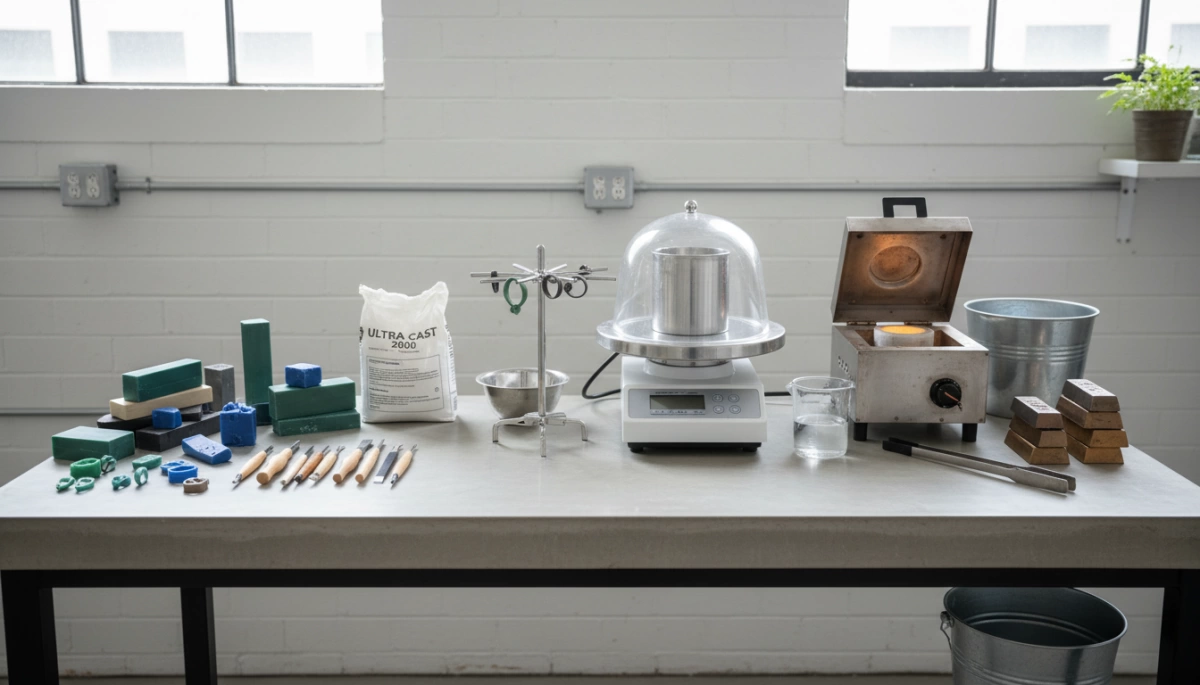
To execute a flawless lost wax casting process, you need the right setup. The quality of your materials directly dictates the precision and surface finish of your final product. Having reliable tools for model-making and mold creation is simply non-negotiable. If you want to dive deeper into optimizing your setup, exploring a reliable mold and cast guide can help you select the exact materials and methods for your specific production line.
Choosing the Right Casting Wax
Your wax pattern is the exact blueprint of your final metal piece. Getting the wax design right means choosing a material with the correct melting point, shrinkage rate, and flow characteristics.
Here are the primary types of wax you will work with:
- Injection Wax: Best used with a specialized wax injection machine. It flows smoothly into rubber or metal molds to replicate high-volume, highly detailed patterns.
- Carving Wax: Hard, rigid, and highly machinable. It is the go-to choice for manual shaping or models milled directly from a digital design.
- Sticky Wax: A fast-setting utility wax used to firmly weld separate wax components and sprues together before investing.
Best Metals and Alloys for the Process
Once the mold is fired and hollowed out, you are ready for the pour. The versatility of the lost wax casting process allows you to use a massive variety of metals. However, the alloy you select heavily impacts your melting temperatures, cooling times, and the final casting extraction process.
Top Metal Choices for Lost Wax Casting:
- Precious Metals (Gold, Silver, Platinum): The industry standard for jewelry making. These metals capture microscopic details and offer brilliant finishes.
- Bronze and Brass: Perfect for artistic sculptures and decorative hardware. They offer excellent fluidity during the pour and high durability.
- Aluminum Alloys: Extremely lightweight but strong. This is the top choice for creating precision components in the automotive and aerospace sectors.
- Stainless Steel: Necessary for heavy-duty industrial parts. It requires significantly higher pouring temperatures but delivers maximum strength and corrosion resistance.
Modern Technologies in the Lost Wax Casting Process
The modern approach focuses on speed, extreme accuracy, and reducing waste.
Integrating Digital Design and CAD
The shift from manual drafting to digital design has completely changed how we approach metalwork. Using computer-aided design (CAD) software means you can perfect a concept on screen before any physical material is touched.
- Flawless Wax Design: CAD software allows for highly complex geometries and internal structures that are simply impossible to carve by hand.
- Better Workflows: Digital files move instantly from the design phase to production, seamlessly integrating with modern precision casting and CNC machining setups.
- Less Trial and Error: Simulating the metal flow digitally ensures you get the engineering right the first time.
The Role of 3D Printing in Pattern Making
3D printing is the biggest upgrade to model-making in decades. Instead of relying purely on a traditional wax injection machine and metal tooling for every single part, rapid prototyping allows us to print the patterns directly from the CAD file.
Here is why 3D printing is taking over this space:
- Rapid Mold Creation: You can print incredibly detailed wax or resin patterns in hours, skipping the costly step of cutting aluminum master molds for short runs.
- Material Versatility: Whether you are printing castable resins or injecting standard waxes for high-volume runs, selecting the right base is crucial. Reviewing an injection wax properties comparison chart helps guarantee a clean burnout without ash residue.
- Smooth Casting Extraction: High-resolution 3D prints leave flawless surface finishes, making the final breakout and polishing steps much faster and easier.
Comparing Lost Wax Casting to Alternative Methods
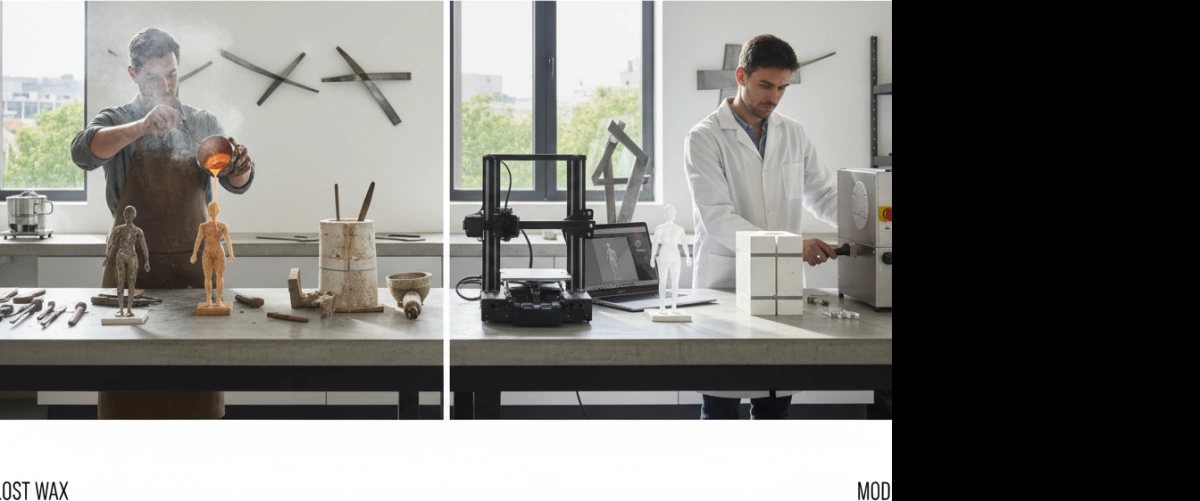
The lost wax casting process is renowned for its precision, but it helps to understand how it directly compares to other popular foundry methods.
Lost Wax Casting vs. Die Casting
Die casting forces molten metal into rigid steel molds under extremely high pressure. It is a fantastic option for mass-producing high-volume parts using metals with lower melting points, such as aluminum or zinc.
- Tooling Costs: Die casting requires heavy, expensive steel molds. In contrast, the lost wax method uses much more affordable aluminum dies to create the initial wax patterns.
- Material Flexibility: If you need to cast high-temperature alloys like stainless steel, die casting won’t work. Lost wax casting can handle almost any metal alloy.
- Design Freedom: Complex geometries and intricate wax design are where lost wax truly shines. By integrating a high-precision wax injection machine for investment casting into your workflow, you can achieve detailed model-making with complex internal cavities that die casting simply cannot produce.
Lost Wax Casting vs. Sand Casting
Sand casting is one of the oldest methods around. It uses packed sand mixed with a binder to create the mold. It remains highly popular for producing massive, heavy components at a low cost.
- Surface Finish: Sand casting inherently leaves a rough, grainy surface on the metal. The lost wax casting process delivers a beautiful, smooth finish right out of the mold.
- Dimensional Accuracy: Lost wax maintains incredibly tight tolerances. This means the parts require far less machining after casting extraction.
- Detail Capture: From the initial digital design to the final mold creation, the lost wax technique captures microscopic details and crisp edges that standard sand casting would wash out.
Quick Method Comparison:
| Feature | Lost Wax Casting | Die Casting | Sand Casting |
|---|---|---|---|
| Precision | Very High | High | Low |
| Initial Tooling Cost | Medium | Very High | Low |
| Surface Finish | Excellent | Good | Rough |
| Best Used For | Intricate, complex parts | High-volume, simple parts | Massive, heavy components |
Frequently Asked Questions
Can You Do Lost Wax Casting at Home?
Yes, you can run a basic lost wax casting process at home. Many hobbyists do this for small jewelry making or art projects. A home setup typically requires tools for simple model-making, a small burnout kiln, basic melting equipment, and proper safety gear.
However, home casting has strict limitations regarding size, safety, and precision. When moving from a hobby to commercial production, manual wax design and DIY mold creation simply cannot keep up. We are a casting processing machinery manufacturer and supplier, and we constantly see businesses outgrow manual methods. For high-volume, repeatable precision, upgrading to an industrial wax injection machine is essential to bridge the gap between a home workshop and a professional, scalable foundry.
What are the Main Advantages of this Process?
The lost wax casting process remains an industry standard for one main reason: unmatched precision. Whether you rely on traditional craftsmanship or integrate modern digital design, this method offers several powerful benefits:
- Complex Geometries: Easily cast highly intricate parts, thin walls, and internal cavities that other casting methods cannot handle.
- Superior Surface Finish: Achieve a smooth, near-net shape right after casting extraction, heavily reducing the need for expensive secondary machining.
- Tight Tolerances: Maintain exact dimensional accuracy consistently across large production runs.
- Material Flexibility: Works flawlessly with almost any metal alloy, from standard aluminum to hard-to-machine high-temperature steels.
These benefits make the technique incredibly cost-effective for complex, detailed parts. If you are currently weighing your production options, understanding the advantage of investment casting over green sand casting makes it clear why this process is the preferred choice for high-end global manufacturing.
 English
  Russian
  German