
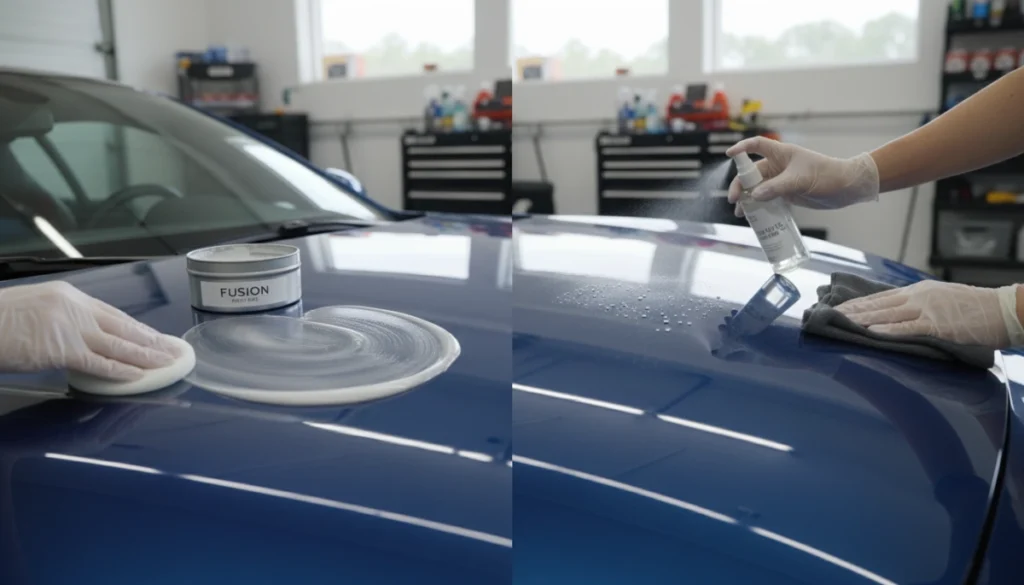
Paste Wax vs Liquid Wax
Achieving a flawless, showroom-quality finish requires the right protective barrier for your vehicle. The ongoing debate between paste wax and liquid wax ultimately comes down to consistency, application method, and the specific level of paint protection you demand. Both options serve the crucial role of sealing the clear coat, but their foundational structures and user experiences are fundamentally different.
What Exactly Is Paste Wax?
Paste wax is the traditional, time-tested standard for automotive paint protection. At room temperature, it maintains a hard, solid consistency.
- Application Mechanism: It requires physical friction from an applicator pad to slightly warm and melt the product, allowing it to bind to the paint.
- The Result: It delivers an exceptionally deep, warm shine and a rich aesthetic that car enthusiasts and professional detailers have trusted for decades.
What Is Liquid Wax and How Does It Work?
Liquid wax represents the modern evolution of car care, engineered for maximum efficiency. It is a highly fluid, easily spreadable formula.
- Application Mechanism: It glides seamlessly onto the vehicle’s surface. The liquid base acts as a highly efficient carrier system, depositing the protective elements evenly across the clear coat before rapidly flashing off (evaporating).
- The Result: A highly durable, uniform protective layer that is achieved with significantly less physical effort and in a fraction of the time.
Core Ingredients and Composition Comparison
Understanding what drives the performance of these two options is critical for making an informed choice. Here is a direct breakdown of their foundational compositions:
| Feature | Paste Wax | Liquid Wax |
|---|---|---|
| Primary Base | Natural ingredients (often premium carnauba wax) | Synthetic polymers, resins, and lab-created polymers |
| Texture | Hard, dense solid | Smooth, flowable liquid or lotion |
| Solvent Ratio | Low (relies heavily on natural oils for workability) | High (utilizes water or chemical solvents for fluidity) |
| Core Benefit | Unmatched gloss, color depth, and traditional feel | Fast application, long-lasting durability, and extreme weather resistance |
Selecting between the two depends entirely on whether your detailing goals prioritize the unmatched organic glow of traditional natural ingredients or the highly resilient, fast-curing nature of modern synthetic waxes.
Paste Wax: The Traditional Long-Lasting Choice
I know that understanding wax consistency changes everything—whether you are dealing with industrial molds or traditional automotive wax. Paste wax is the old-school heavyweight. It heavily relies on carnauba wax and other natural ingredients to create a rock-solid, dependable barrier.
How Paste Wax Works on Automotive Paint
When you apply paste wax, you are physically rubbing a dense, solid protective layer directly into the clear coat. It melts slightly from friction, fills in microscopic scratches, and then hardens into a tight shell. This thick consistency provides exceptional paint protection. If you want to see exactly how different wax formulas stack up regarding density, hardness, and melting points, reviewing an injection wax properties comparison chart helps break down the science behind the solid versus liquid debate.
Pros: Exceptional Durability and Deep Shine
People stick with paste wax for a reason. The payoff is massive if you are willing to put in the work.
- Long-lasting durability: It creates a tough, hydrophobic shield that handles rain, UV rays, and harsh road grime for months.
- The Classic “Wet” Look: Paste formulations give paint a deep, warm glow that many modern synthetic sprays still struggle to replicate.
- Heavy-Duty Defense: The thick nature of the wax leaves a highly substantial, physical layer between environmental contaminants and your vehicle’s surface.
Cons: Time, Effort, and Application Challenges
Despite the beautiful finish, traditional paste wax is not without its headaches.
- Labor-Intensive: It demands serious elbow grease. Applying it evenly and buffing it out takes a lot of time and physical effort.
- Tricky Curing Times: If you leave it on the paint too long, it turns to concrete. If you apply it in direct sunlight, it streaks and smears.
- Zero Automation Potential: Because it is solid at room temperature, it cannot be easily pumped, sprayed, or automated. When speed, scale, and precision matter, modern operations rely on fluid systems. That is exactly why upgrading to a highly efficient wax injection machine makes sense for volume manufacturing, leaving the thick pastes strictly for custom, hand-applied detailing jobs.
Liquid Wax: The Modern, Quick, and Easy Option
As a leading wax injection machine Manufacturer and supplier, we understand how wax behaves under varying conditions and temperatures. While our daily focus involves engineering high-performance automatic wax machines for precision investment casting, the core science behind wax viscosity and application translates perfectly to surface care. For everyday users, liquid wax represents the ultimate blend of modern chemistry and speed.
How Liquid Wax Formulation Differs from Paste
Liquid wax is engineered for flow and workability. Instead of relying heavily on dense, solid natural ingredients like raw carnauba wax, these modern formulas blend lower-viscosity synthetic waxes with specialized polymers and carrier solvents.
- Viscosity: It is significantly thinner, acting more like a heavy lotion than a hard block.
- Composition: Relies heavily on engineered polymers rather than strictly natural bases.
- Adaptability: The liquid state allows it to bond to clear coats rapidly, offering solid paint protection without the traditional curing hurdles of paste.
Pros: Convenience and Ease of Application
When we compare paste wax vs. liquid wax injection or application, liquid formulas win heavily on sheer convenience. You do not need to be a professional to get a great result.
- Speed: Goes on fast and buffs off easily, drastically cutting down detailing time.
- Smooth Application: The liquid format glides effortlessly over the surface.
- Machine Friendly: Perfectly suited for dual-action polishers or buffers.
- Consistent Finish: Synthetic blends ensure a uniform, glossy look with minimal physical effort.
Cons: Fast Drying Times and Even Coverage Issues
Despite its modern advantages, liquid wax isn’t completely flawless. Its thinner formulation introduces a few specific challenges during the application process.
- Temperature Sensitivity: Liquid waxes can dry instantly if applied in direct sunlight or on hot panels, making them incredibly difficult to buff off.
- Visibility: Because it spreads so thin, it is often hard to see which sections of the paint you have already covered.
- Coverage Gaps: The thin consistency increases the risk of missing spots, potentially leaving areas without adequate paint protection.
Key Differences
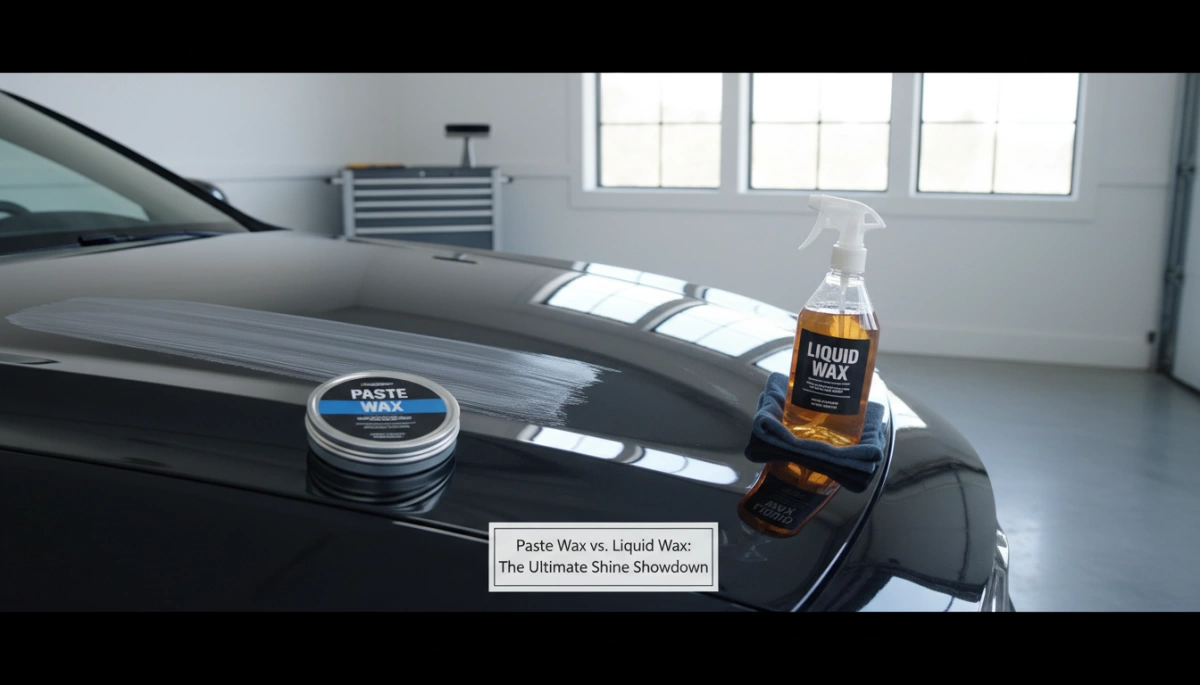
When evaluating paste wax vs. liquid wax injection formulations, the decision comes down to efficiency and the final finish. We apply that same rigorous analytical approach to automotive wax. Just as we assess equipment performance metrics in a detailed machines comparison, breaking down the attributes of car care products reveals distinct advantages for different users.
The Application Experience: Effort vs. Reward
Applying wax should not be a guessing game. The physical effort required varies drastically between these two options:
- Paste Wax: Requires dedicated elbow grease. You have to take the time to physically massage it into the surface. However, this tactile process gives you complete control over the coverage and thickness of the application.
- Liquid Wax: Engineered purely for speed and convenience. The fluid consistency spreads quickly and evenly across body panels, making it the superior choice if you are short on time but still demand solid results.
Durability and Long-Term Paint Protection
Protecting the clear coat is the ultimate goal. The longevity of your protective layer depends heavily on the core chemical makeup of the product.
- Natural Defense: Paste options heavily rely on high concentrations of natural ingredients like carnauba wax. This creates a hard, sacrificial shell against environmental contaminants, water, and debris.
- Synthetic Strength: Liquid formulations generally utilize advanced synthetic waxes and engineered polymers. These synthetic molecules crosslink and bond tightly to the paint, delivering exceptional long-lasting durability and robust paint protection that easily withstands harsh weather conditions.
Shine, Finish, and Overall Aesthetics
The visual payoff is where the magic happens, and each type offers a distinct look for your vehicle.
- The Warm Glow: Traditional paste delivers a deep, warm, three-dimensional shine that classic car collectors and purists prefer.
- The Glassy Finish: Liquid variants provide a sharp, mirror-like gloss that makes modern metallic and pearl paints pop with intense reflection.
Head-to-Head
| Feature | Paste Wax | Liquid Wax |
|---|---|---|
| Core Formula | Carnauba wax & natural ingredients | Advanced synthetic waxes |
| Application Effort | High (Demands physical effort) | Low (Fast and easy spreading) |
| Paint Protection | Excellent hard-shell physical barrier | Outstanding UV and chemical resistance |
| Finish Style | Deep, warm, 3D natural shine | Sharp, highly reflective, glassy gloss |
| Durability Level | Moderate to Long | Superior long-lasting durability |
Making the Choice: Which Wax is Right for Your Vehicle?
Deciding between paste wax vs liquid wax comes down to your personal goals, budget, and how much time you want to spend in the garage. As a team that understands wax applications inside and out—from automotive finishes to supplying heavy-duty equipment like a two-station wax injection machine for investment casting—we know that picking the right formula makes all the difference in your final results.
Assessing Your Car Care and Detailing Goals
Your daily driving habits and parking situation should dictate your paint protection strategy. Ask yourself what matters most:
- Maximum Protection: If your vehicle faces harsh weather daily, a traditional paste wax loaded with natural ingredients like carnauba wax provides the thickest barrier and long-lasting durability.
- Speed and Convenience: If you prefer quick weekend wash routines, liquid wax is your best bet. It goes on fast and buffs off easily.
Cost Analysis and Value Proposition
Let’s break down the real cost of keeping your car protected.
| Product Type | Upfront Cost | Application Time | Long-Term Value |
|---|---|---|---|
| Paste Wax | Higher | 1-2 Hours | High (Requires fewer applications per year) |
| Liquid Wax | Lower | 30-45 Minutes | Medium (Requires more frequent touch-ups) |
While paste wax demands a slightly higher initial investment and more elbow grease, its extended lifespan often balances out the cost. Liquid automotive wax is cheaper upfront but will run out faster if you reapply it monthly.
The Professional Detailer’s Perspective
Pros do not lock themselves into just one product. We consistently see professional detailers rotate their products based on the specific vehicle in front of them.
- For Show Cars: Detailers reach for premium paste wax to get that unmatched, warm, deep shine.
- For Daily Drivers: Detailers lean on liquid synthetic waxes to quickly seal the paint and deliver robust, UV-resistant paint protection in half the time.
Evaluate your own garage setup, match it to how the pros operate, and choose the wax that perfectly fits your workflow.
Best Practices for Flawless Wax Application
Whether you are dealing with industrial manufacturing or applying automotive wax, the core rules of adhesion are identical.
Why Proper Surface Prep is Essential Before Waxing
You simply cannot achieve long-lasting durability on a contaminated surface. Proper preparation is the absolute foundation of any successful coating.
- Strip the old: Remove any leftover sealants, grime, or old wax residues.
- Decontaminate thoroughly: Use a clay bar to pull out microscopic, embedded dirt from the clear coat.
- Create a smooth canvas: Polish out minor scratches so the new wax bonds directly to the paint.
Just as precision manufacturing requires selecting the right types of casting waxes for specific metal components, your surface preparation must be tailored to the exact condition of the material you are protecting.
Techniques for Applying Paste and Liquid Waxes
Understanding the physical mechanics of paste wax vs. liquid wax injection and application ensures you get an even, flawless coat without wasting product.
| Wax Format | Best Application Method | Pro Tip |
|---|---|---|
| Paste Wax | Apply manually using a soft foam pad in tight, overlapping circular motions. | Waxes heavily formulated with natural ingredients like carnauba wax need a few minutes to haze over before buffing. |
| Liquid Wax | Apply by hand or with a dual-action machine polisher for maximum speed. | Liquid synthetic waxes spread incredibly easily. Keep the layer extremely thin to prevent streaking during removal. |
Routine Maintenance for Extended Paint Protection
Applying the wax is only half the job. Routine care is what keeps that protective barrier intact month after month.
- Stick to pH-neutral soaps: Aggressive industrial cleaners and household dish soaps will instantly strip away your hard work.
- Clean environmental hazards immediately: Bird droppings, bugs, and tree sap will burn through your paint protection if left sitting in the sun.
- Use quick boosters: After a regular wash, quickly wipe down the surface with a spray wax booster to refresh the slickness and extend the life of your base layer.
FAQs
What wins in Paste Wax vs. Liquid Wax Injection?
When it comes to industrial manufacturing, choosing between paste wax vs. liquid wax injection depends entirely on your mold design and production speed.
- Liquid Wax: Flows faster and easily fills intricate mold details.
- Paste Wax: Injected at a semi-solid state, drastically reducing shrinkage and preventing surface defects.
We build equipment to handle both states seamlessly. To maximize efficiency, many of our clients pair these machines with foundry casting robotics integration for high-speed, repeatable precision.
Which is better for automotive paint protection?
If we are talking about car care, your choice impacts both finish and lifespan:
- Traditional Paste: Usually packed with natural ingredients like premium carnauba wax. It provides a rich, warm glow but requires more elbow grease.
—– * Modern Liquid: Often formulated as synthetic waxes. They apply effortlessly, cure fast, and offer superior, long-lasting durability against the elements.
Can automated systems process different wax viscosities?
Absolutely. Whether you are injecting thick paste wax or highly fluid liquid wax, modern machinery adapts to the required temperatures and pressures. Streamlining your wax room operations and moving components through an automated shell coating line ensures that your final castings maintain flawless dimensional accuracy from start to finish.
 English
  Russian
  German