
Why Choose Vastpce for Foundry Automation?
Is your production line suffering from inconsistent quality or frequent downtime due to extreme environmental conditions? In the metal casting industry, standard automation simply cannot survive. At Vastpce, we specialize in foundry & casting robotics integration designed specifically to thrive where human operators and standard machines fail. We don’t just sell robots; we engineer resilience into every step of your casting process.
Solving Industry Challenges: Heat, Fumes, and Heavy Loads
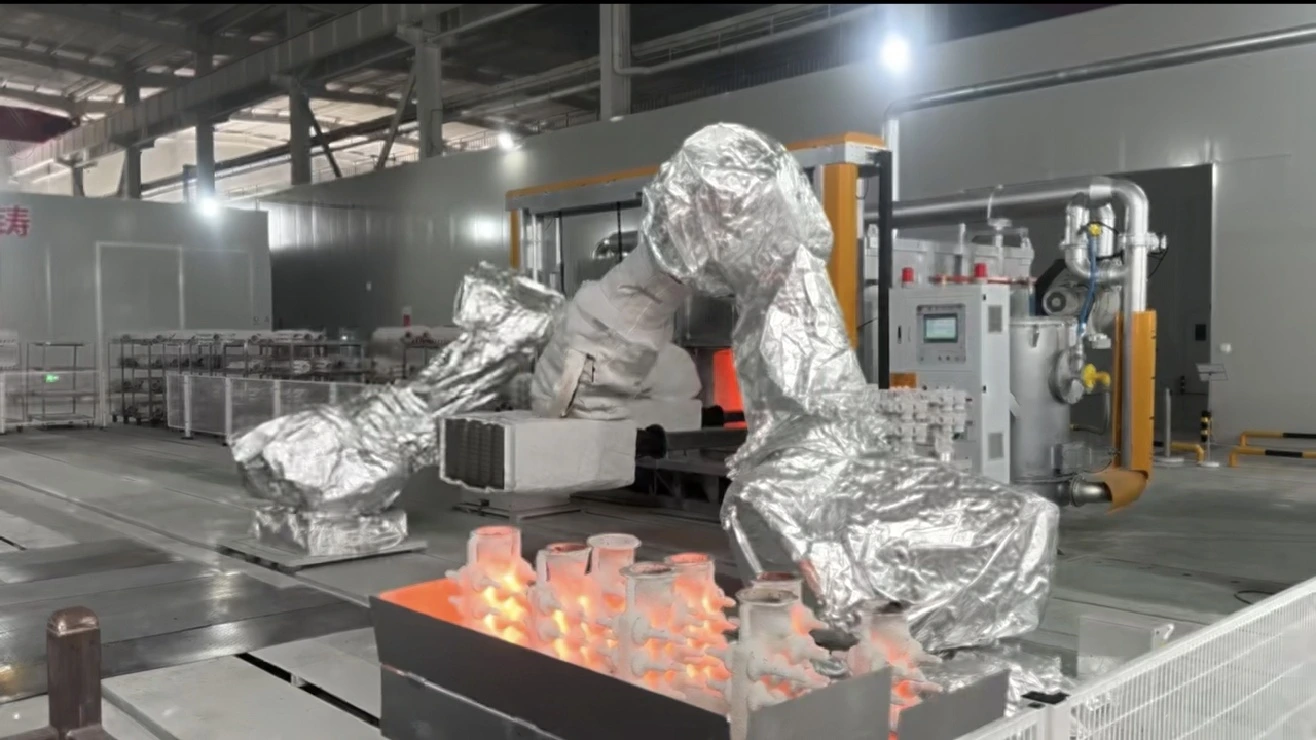
The foundry environment is one of the harshest sectors in manufacturing. We understand that foundry automation systems must contend with temperatures exceeding 1,200°C, corrosive fumes, and abrasive metal dust. Our solutions are built to tackle these specific pain points head-on.
How We Address Core Foundry Hurdles:
| Industry Challenge | Vastpce Solution |
|---|---|
| Extreme Temperatures | Heat-resistant robotic arms capable of working near molten metal without component degradation. |
| Abrasive Dust & Grit | Specialized sealing to prevent metallic dust ingress, protecting gears and electronics. |
| Heavy Payloads | Heavy-payload casting manipulators designed to handle massive ladles and molds with precision. |
| Toxic Fumes | Automation that removes workers from hazardous zones, ensuring safety compliance. |
Proprietary Foundry-Grade Protection and Sealing
You cannot drop a standard industrial robot into a sand casting line and expect it to last. Our IP67 foundry robots feature proprietary protection technologies developed through years of on-site testing. We utilize high-grade epoxy paints and pressurized arm systems to ensure zero contamination.
- Advanced Sealing: Wrist and axis seals designed to repel pressurized water and fine particulate matter.
- Thermal Protection: Optional protective suits and heat shields for molten metal handling robotics.
- Corrosion Resistance: Coatings that withstand chemical exposure during the die lubrication and cleaning processes.
Complete End-to-End System Integration Capabilities
We provide more than just hardware; we deliver turnkey robotics integration. Transitioning to an automated foundry is complex, and piecemealing equipment often leads to compatibility issues. We handle the entire lifecycle of the project.
From the initial site analysis to the final programming of end-of-arm tooling (EOAT), we ensure every component communicates perfectly. Whether you need die casting machine tending robots or a complete sand core assembly cell, our engineering team manages the design, simulation, installation, and commissioning. We guarantee a seamless transition that boosts your throughput and reduces scrap rates immediately upon deployment.
Key Application Areas for Foundry Robotics
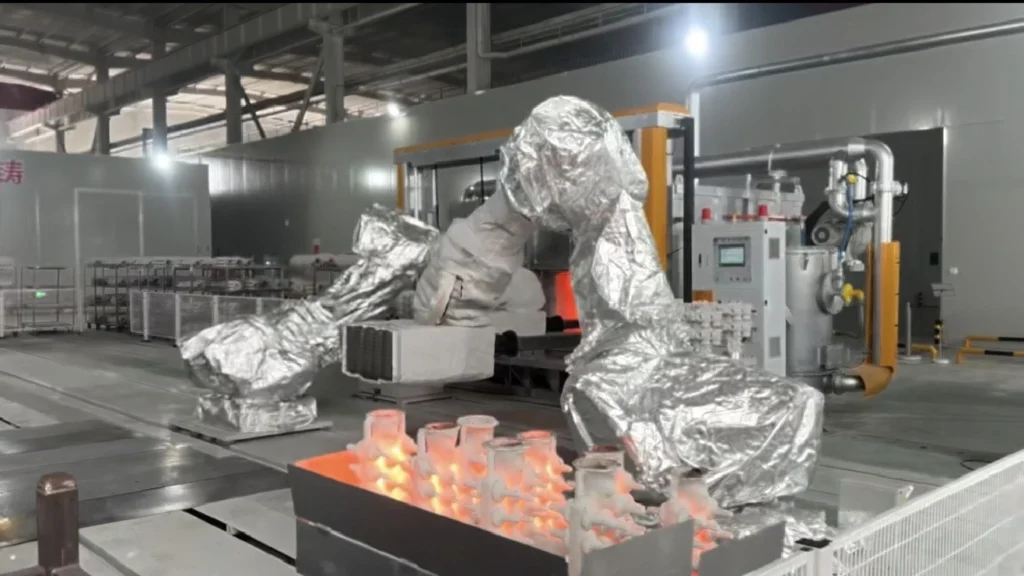
We design our foundry & casting robotics integration solutions to tackle the toughest jobs on the floor. Whether you are running a job shop or a high-volume automotive line, we apply automation where it makes the biggest impact on safety and throughput. We don’t just sell arms; we build systems that handle the heat.
Automated Metal Pouring with Precision Ladle Control
Pouring is the most critical moment in the casting process. Manual pouring often leads to turbulence, slag inclusion, or short pours. Our automated metal pouring systems utilize foundry ladle handling robots equipped with advanced sensors to control the flow rate and pouring position dynamically.
- Synchronized Motion: The robot matches the speed of the mold line perfectly.
- Waste Reduction: Precise dosing eliminates over-pouring and reduces metal waste.
- Safety: Operators are removed from the immediate danger of splashing molten metal handling robotics.
Die Casting and High-Pressure Machine Tending
In high-pressure die casting (HPDC), cycle time is everything. We integrate die casting machine tending robots that withstand the harsh spray of lubricants and the intense heat of the extraction zone. These robots handle the entire cell process: spraying the die, automated casting extraction, and placing the part into a cooling bath or trim press. You can browse our industrial robotics shop to see the specific models built for these aggressive environments.
Sand Casting, Core Handling, and Flask Transport
Handling heavy flasks and delicate sand cores requires a unique balance of brute strength and gentle touch.
- Sand Core Assembly: We implement sand core assembly automation that picks up fragile cores and places them into molds without breakage.
- Heavy Lifting: Our heavy-payload casting manipulators transport massive flasks and molds, replacing dangerous overhead crane operations.
- Mold Handling: Robotic sand mold handling ensures molds are moved smoothly to prevent shifting or cracking before the pour.
Robotic Finishing: Grinding, Deburring, and Fettling
The cleaning room is often the biggest bottleneck in a foundry. Manual grinding is physically demanding and creates health risks due to dust and vibration. We deploy robotic deburring and fettling cells that never get tired. These systems perform robotic gate cutting and grinding with consistent pressure, ensuring every casting meets exact tolerances. By automating this stage, you eliminate the variability of manual finishing.
Investment Casting and Wax Tree Manipulation
Investment casting automation relies on precision dipping. Our robots manipulate wax trees through ceramic slurry and stucco beds with programmed rotation patterns. This ensures an even shell thickness, which is vital for casting integrity. If you are evaluating different payload capacities for your shell room, check our robot model comparison to match the right arm to your tree weight.
Vastpce Foundry Series Technical Specifications
When we design for the foundry, we build for the worst-case scenario. Our foundry & casting robotics integration is engineered to withstand extreme temperatures, abrasive grit, and corrosive fumes that would destroy standard automation equipment within weeks. We focus on durability to ensure your production line stays active without constant maintenance downtime.
Built for the “Red Zone”
We ensure every component is hardened against the environment. Our systems are designed to handle the specific rigors of metal casting, from the melt deck to the finishing room.
| Feature | Specification | Operational Benefit |
|---|---|---|
| Protection Class | IP67 & IP69K Options | Completely sealed against fine sand and liquid ingress; withstands high-pressure washdowns. |
| Heat Defense | Heat-Resistant Robotic Arms | Specialized epoxy paints, heavy-duty seals, and pressurized arms prevent thermal damage and dust entry. |
| Thermal Shielding | Protective Suits | Reflective jackets and nickel-plated wrists protect against radiant heat during molten metal pouring. |
| Capacity | Heavy-Payload Manipulators | High-rigidity designs capable of handling heavy castings, molds, and ladles with absolute precision. |
Ruggedized Control and Durability
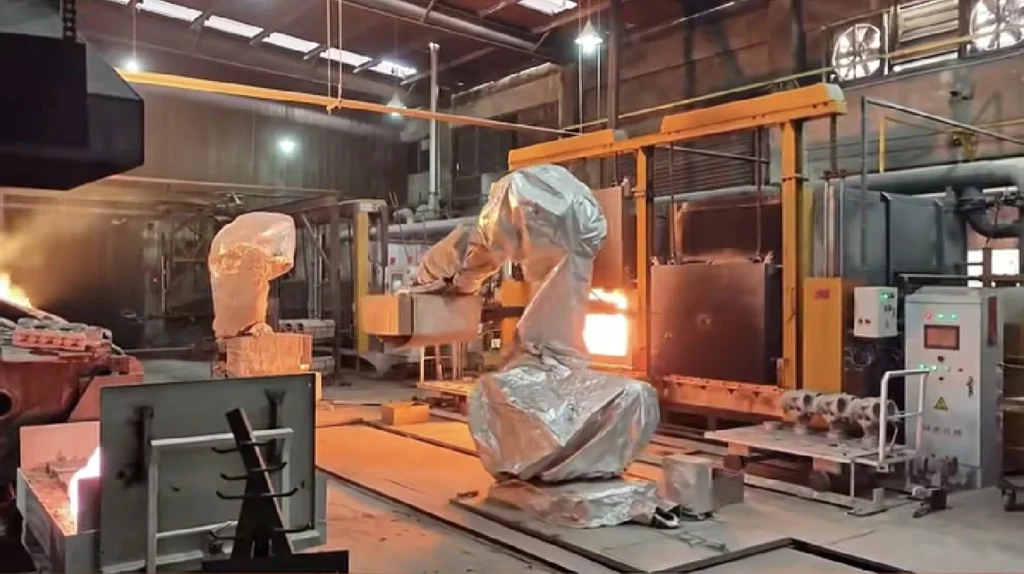
Reliability goes beyond the arm itself. Our controllers are ruggedized to function correctly even in dusty factory corners. We utilize foundry protection class standards to ensure that conductive dust does not short-circuit sensitive electronics. As a specialized robot integrator, we configure every axis and seal to ensure long-term uptime. Whether you need high-speed movement for core handling or slow, steady control for pouring, our hardware is built to last in the harshest industrial environments.
Our Turnkey Integration Methodology
Implementing automation in a foundry isn’t just about buying a robot; it requires a strategic approach to handle the extreme variables of heat, dust, and heavy payloads. As a leader in foundry & casting robotics integration, we follow a strict, four-step roadmap to ensure your system delivers immediate value and withstands the harsh environment.
Step 1: Site Analysis and Hazard Evaluation
We start by walking your floor to identify the “Red Zones”—areas with the highest heat, toxic fumes, or safety risks. We evaluate your current manual workflow to pinpoint bottlenecks and determine the necessary protection levels for the equipment. This ensures we select the right foundry protection class and shielding from the start.
Step 2: 3D Simulation and Design Validation
We don’t guess; we verify. Before any hardware is installed, we build a digital twin of your casting cell. Through advanced 3D simulation, we validate reach studies, cycle times, and collision detection. This allows us to optimize the layout for maximum throughput and ensure the robot can maneuver effectively within tight spaces.
Step 3: Custom End-of-Arm Tooling (EOAT) Engineering
Standard grippers often fail in high-heat environments. We engineer custom End-of-Arm Tooling (EOAT) specifically for your materials. Whether you need a rugged gripper for heavy ladles or delicate handling for an automated shell coating application, our tooling is built to resist heat transfer and abrasive grit while maintaining a secure grip.
Step 4: On-Site Installation and Staff Training
Our job isn’t done until the line is running smoothly. We handle the complete physical installation, including integrating the robot with your existing furnaces and presses. Once operational, we provide hands-on training for your staff, ensuring they are confident in operating and maintaining the new turnkey robotics integration system. For a broader look at how we tailor these systems, explore our full robot integrator application capabilities.
Operational Impact and ROI of Foundry & Casting Robotics Integration
Investing in foundry & casting robotics integration isn’t just about keeping up with technology; it is about securing your bottom line. We know that in the foundry business, margins can be tight, and efficiency is everything. By automating the hardest parts of the process, we deliver a return on investment that goes beyond simple labor savings.
Enhancing Worker Safety in the “Red Zone”
The most immediate impact we see is in safety. The area directly around the furnace and pouring station—the “Red Zone”—is hostile. By swapping in molten metal handling robotics, we remove your skilled workers from exposure to extreme heat, toxic fumes, and heavy lifting.
- Zero Burns: Robots handle the splash and spark risks.
- Reduced Liability: Fewer accidents mean lower insurance premiums and compliance costs.
- Better Retention: Staff are happier monitoring foundry automation systems rather than sweating next to a crucible.
Ensuring Quality Consistency and Repeatability
Manual casting relies on the steadiness of a human hand, which changes as the shift goes on. Our robots don’t get tired. Whether it is die casting machine tending robots or sand core assembly, the motion is identical every single time. This repeatability ensures that the thousandth part is just as precise as the first, stabilizing your production quality.
Reducing Scrap Rates and Material Waste
Scrap kills profit. Over-pouring wastes expensive alloy, and turbulence causes defects. Automated metal pouring systems control the flow rate and pouring path with mathematical precision.
- Precise Dosing: We eliminate overfills and reduce the need for fettling later.
- Less Re-work: Consistent cooling and handling mean fewer internal defects.
- Material Savings: You use exactly the amount of metal required, nothing more.
Maximizing Uptime in Dirty Environments
Foundries are abrasive. Dust, grit, and sand usually destroy standard machinery. We utilize harsh environment industrial robotics specifically designed to withstand this abuse. With high IP ratings and robust sealing, our systems keep running when others fail. This maximizes your uptime, ensuring your facility is making parts, not waiting on repairs.
Success in Action: Automotive Block Casting Line
Challenge: High Scrap Rates from Manual Pouring
In the automotive sector, consistency is non-negotiable. One of our clients struggled with quality control in their engine block production line due to reliance on manual labor. Human operators, affected by fatigue and the intense heat, could not maintain a consistent pour rate. This led to turbulence in the mold, causing defects like porosity and cold shuts. The result was a high scrap rate that wasted expensive materials and slowed down the entire molten metal handling robotics workflow.
Solution: Vastpce Heavy-Duty Pouring Robot Integration
To address these inefficiencies, we deployed a specialized foundry & casting robotics integration solution tailored for heavy industrial use. We installed a heavy-payload casting manipulator capable of handling large ladles with extreme precision.
- Adaptive Control: The system uses sensors to adjust the pouring angle and flow rate in real-time, ensuring a smooth fill.
- Heat Protection: The robot is outfitted with high-grade protective suits to resist radiant heat and metal splashes.
- Seamless Setup: Our experts at Vastpce managed the entire installation to ensure the robot communicated perfectly with the existing molding line.
Result: Increased Throughput and Reduced Waste
The shift to automated pouring transformed the facility’s performance. By removing the variable of human error, the foundry achieved a level of repeatability that manual processes simply couldn’t match.
- Waste Reduction: Scrap rates due to pouring defects dropped by over 15% in the first quarter.
- Efficiency: The consistent cycle times allowed for a 20% increase in daily throughput.
- ROI: The reduction in wasted metal and improved speed delivered a rapid return on investment for this turnkey robotics integration.
Frequently Asked Questions About Foundry Robotics
Handling Abrasive Foundry Sand and Grit
One of the biggest concerns we hear is whether robots can survive the abrasive nature of silica sand and metallic dust. Standard automation often fails here, but our foundry & casting robotics integration utilizes hardware specifically hardened for these conditions. We deploy robots with IP67 ratings and pressurized arms that actively push contaminants away from sensitive joints. This ensures that robotic sand mold handling and core assembly continue reliably without grit compromising the internal gears or electronics.
Integrating with Legacy Furnaces and CNCs
You do not need to replace your entire production line to automate. We specialize in retrofitting modern die casting machine tending robots to work alongside older equipment. Whether you have legacy furnaces or manual presses, we engineer the necessary interfaces to establish communication between the new robot controller and your existing machinery. You can explore our diverse industrial application capabilities to see how we bridge the gap between old iron and new tech for seamless operation.
Maintenance Schedules for High-Wear Environments
Heat and dust accelerate wear, so the maintenance strategy in a foundry differs from a clean assembly room. We focus on preventative care to avoid unplanned downtime.
- Protective Covers: We often use specialized suits to shield the arm from molten splatter and fine dust.
- Routine Checks: Seals and cables require more frequent inspection in harsh environment industrial robotics.
- Lubrication: High-heat environments may require specialized greases to prevent drying out.
If you need help setting up a service plan that fits your specific cycle times and environmental severity, our technical support team can guide you through the best practices for maximizing equipment lifespan.
 English
  Russian
  German
Reviews
There are no reviews yet.