
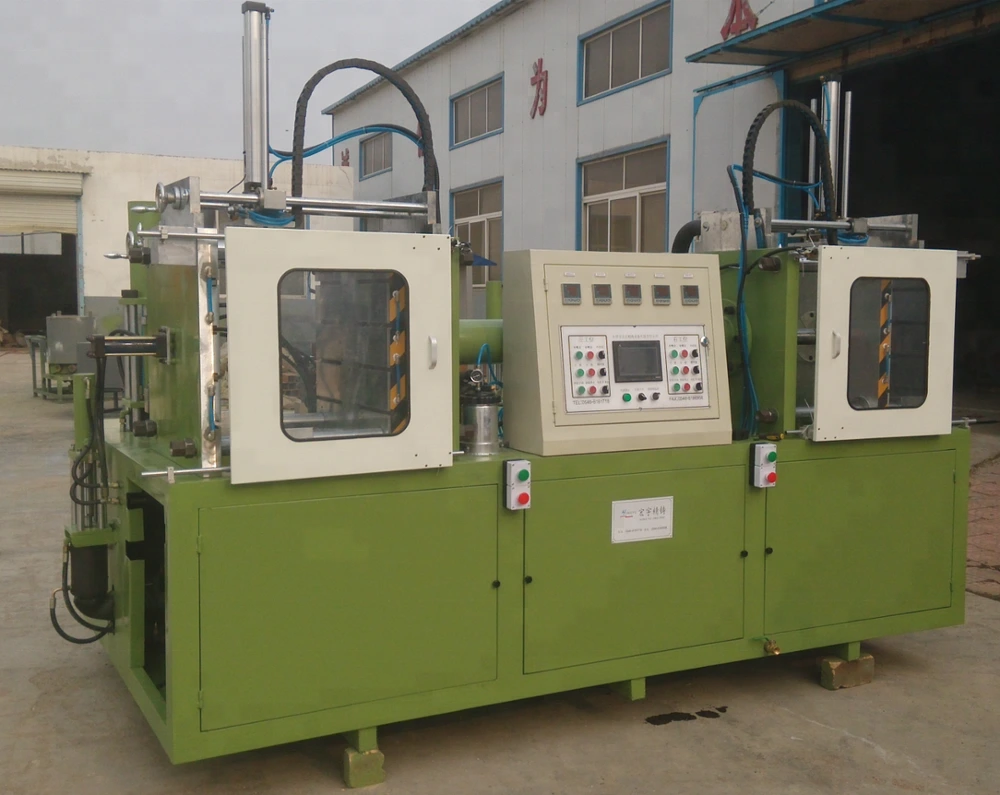
What is the Wax Injection Process?
The wax injection process is the foundational stage of investment casting, serving as the absolute blueprint for the final metal component. At Austin Alloy Cast, we treat this phase not just as a manufacturing step, but as a science. It involves injecting conditioned, molten wax into a precision-engineered die to create a replica of the desired part. This wax pattern dictates the dimensional accuracy, surface finish, and overall integrity of the final casting.
Role in Precision Investment Casting
In the realm of precision investment casting, the wax injection phase is the critical determinant of quality. A casting can only be as good as its wax pattern. Our process focuses on producing defect-free patterns that meet strict engineering tolerances. By utilizing advanced injection machinery—ranging from vertical manual units to semi-automatic systems with 12-ton to 20-ton capacity—we ensure that even the most complex geometries are replicated with exacting precision. This stage eliminates variables that could lead to downstream failures in the metal pouring phase.
Basic Principles of Wax Pattern Making
Successful wax pattern making relies on the precise control of thermodynamic and hydraulic variables. It is a balancing act between Temperature and Pressure:
- Temperature Control: The wax must be hot enough to flow into intricate details but cool enough to prevent “flashing” or excessive shrinkage.
- Pressure Management: We apply calibrated injection pressure to ensure the mold is fully packed, preventing issues like cold shuts (incomplete filling) or internal voids.
- Mold Rigidity: The process utilizes CNC-machined molds designed to withstand injection forces without distortion, ensuring repeatability across production runs.
Importance of Wax Patterns in the Lost Wax Method
The wax pattern is the sacrificial heart of the lost wax method. Because the ceramic shell is built directly around this pattern, the wax acts as the definitive void for the molten metal. Any surface roughness, air entrapment, or dimensional instability in the wax will be faithfully reproduced in the final metal part. Therefore, achieving a perfect wax injection is non-negotiable. We employ strict process controls and simulation-optimized pressure profiles to ensure that every pattern serves as a flawless foundation for the casting process.
The Step-by-Step Wax Injection Process
The wax injection process acts as the blueprint for the entire investment casting cycle. We approach this stage with strict engineering rigor because the quality of the final metal component is directly tied to the precision of the initial wax pattern. If the pattern has flaws, the casting will too.
Wax Conditioning and Preparation
Before we even think about injection, the wax must be conditioned to the exact temperature profile required for the specific part. This is a critical balancing act. We utilize automated heating systems to ensure the wax paste is consistent throughout the reservoir.
- Too Hot: If the wax is overheated, it becomes too fluid, leading to excessive shrinkage and “flash” (excess material) on the pattern.
- Too Cold: If the temperature drops below the optimal range, the wax becomes sluggish, causing flow lines, cold shuts, or incomplete filling of the mold details.
Injecting Wax into the Tooling
Once the material is prepped, we inject it into the CNC-machined mold. We rely on a high-precision wax injection machine for investment casting to deliver the wax at a calibrated pressure and flow rate.
Depending on the geometry of the part, we might use top, side, or dual injection points to ensure the cavity fills uniformly without turbulence. For complex geometries or thicker sections, dual injection is often necessary to prevent air entrapment. The machine applies specific clamping force—often ranging from 12 to 20 tons—to keep the mold tightly closed against the injection pressure.
Cooling and Solidification Stages
The process doesn’t end the moment the mold is full. We must maintain pressure during the cooling phase, a technique known as “mold packing.” As wax cools, it naturally contracts. By keeping the pressure applied during solidification, we force additional material into the cavity to compensate for this shrinkage.
If we fail to manage this dwell time correctly, the pattern may suffer from sink marks or internal voids. Proper packing ensures the pattern retains the exact dimensions of the mold cavity.
Pattern Removal and Flash Trimming
After the wax has solidified sufficiently, the mold opens, and the pattern is ejected. This can be done manually on vertical machines or automatically on semi-automatic systems. We immediately inspect the pattern for any imperfections.
If our pressure settings were too high, we might see “flash” along the parting lines, which requires trimming. Conversely, if the pressure was too low, we might see non-fill areas. The goal is to produce a “net shape” pattern that is clean, dimensionally accurate, and ready for assembly without needing extensive repair.
Key Parameters for Successful Wax Injection
The wax injection process serves as the blueprint for the entire investment casting cycle. If the wax pattern isn’t perfect, the final metal part won’t be either. We treat this stage with strict engineering rigor, focusing on three critical variables to ensure repeatability and precision.
Optimizing Injection Temperature and Viscosity
Temperature control is the heartbeat of the process because it directly dictates the viscosity (thickness) of the wax. We use automated heating systems to maintain a standardized temperature profile, ensuring the wax flows exactly as predicted.
- Too Hot: If the wax is overheated, it becomes too fluid. This leads to flashing (excess material leaking out), excessive shrinkage upon cooling, and potential damage to the mold surface.
- Too Cold: If the wax is too cool, it becomes sluggish. This results in cold shuts, rough surface finishes, and internal air voids because the material cannot flow into intricate details before solidifying.
Controlling Injection Pressure and Flow Rates
Pressure management is a balancing act. We must apply enough force to “pack” the mold completely without overdoing it. We utilize simulation tools to determine the optimal pressure profile for each specific component, minimizing the need for extensive wax injection troubleshooting later in production.
| Parameter | Risk of Low Setting | Risk of High Setting |
|---|---|---|
| Injection Pressure | Underfilled molds, cold weld lines | Pattern distortion, internal stress |
| Flow Rate | Incomplete filling of thin sections | Turbulence, air entrapment |
Using calibrated machines, we ensure the pressure is sufficient to fuse the wax lines but controlled enough to prevent mold distortion.
Managing Mold Filling Dynamics and Dwell Time
Successful filling depends on how the wax travels through the cavity. This involves the strategic design of gates and vents to allow air to escape as the wax enters. If air gets trapped, it creates porosity defects.
For complex geometries or thick sections, we often employ dual injection techniques (injecting from both top and side) using advanced industrial wax equipment for investment casting. This ensures uniform filling and density. We also strictly manage dwell time—the duration the wax remains under pressure in the mold—to ensure it solidifies correctly and maintains dimensional stability before removal.
Types of Wax Injection Moulds and Tooling
The quality of your final casting starts long before the metal is poured; it begins with the tooling used to create the wax pattern. Choosing the right mold material and operation style is a balance between upfront cost, expected volume, and the complexity of the part.
Aluminium vs. Steel Injection Moulds
When we look at tooling materials, the debate usually lands on aluminium versus steel.
- Aluminium Moulds: These are typically faster and cheaper to machine because aluminium is softer. They offer excellent heat transfer, which helps the wax cool down quickly. For low-to-medium volume production, aluminium is often the smart choice because it balances durability with cost-efficiency.
- Steel Moulds: If you are running high-volume production where the mold will cycle hundreds of thousands of times, hardened steel is the standard. It resists wear and tear much better than aluminium, maintaining tight tolerances over a longer lifespan. However, the initial machining takes longer and costs more.
Pre-Series vs. Multiple Series Production Molds
The stage of your product development dictates the type of mold you need.
- Pre-Series (Prototype) Molds: Before committing to mass production, you often need a “soft tool.” These are usually single-cavity molds made from aluminium or even softer alloys. They allow us to test the design, check for shrinkage issues, and validate the geometry without a massive investment.
- Multiple Series (Production) Molds: Once the design is locked in, we move to production tooling. These are often multi-cavity molds (making several wax patterns at once) designed for speed and longevity. While the upfront cost is higher, the per-unit cost drops significantly because you are producing more patterns per injection cycle.
Manual vs. Automatically Operated Tooling Systems
Efficiency in the wax room depends heavily on how the tooling interacts with the wax injection machine.
- Manual Tooling: In this setup, an operator manually assembles and disassembles the mold for each cycle. They place the mold into the clamp, inject the wax, and then pull it apart to remove the pattern. This is common for complex shapes requiring loose cores or low-volume runs where automation isn’t cost-effective.
- Automatically Operated Systems: For high-volume output, we use automatic tooling. These molds are bolted directly into the machine platens. The machine opens and closes the mold automatically, and ejector pins push the wax pattern out. This reduces cycle time drastically and ensures consistent handling of the delicate wax parts.
For those looking to upgrade their production capabilities, exploring advanced machines comparison can help you decide which level of automation suits your specific tooling needs.
Specialized Wax Injection Techniques
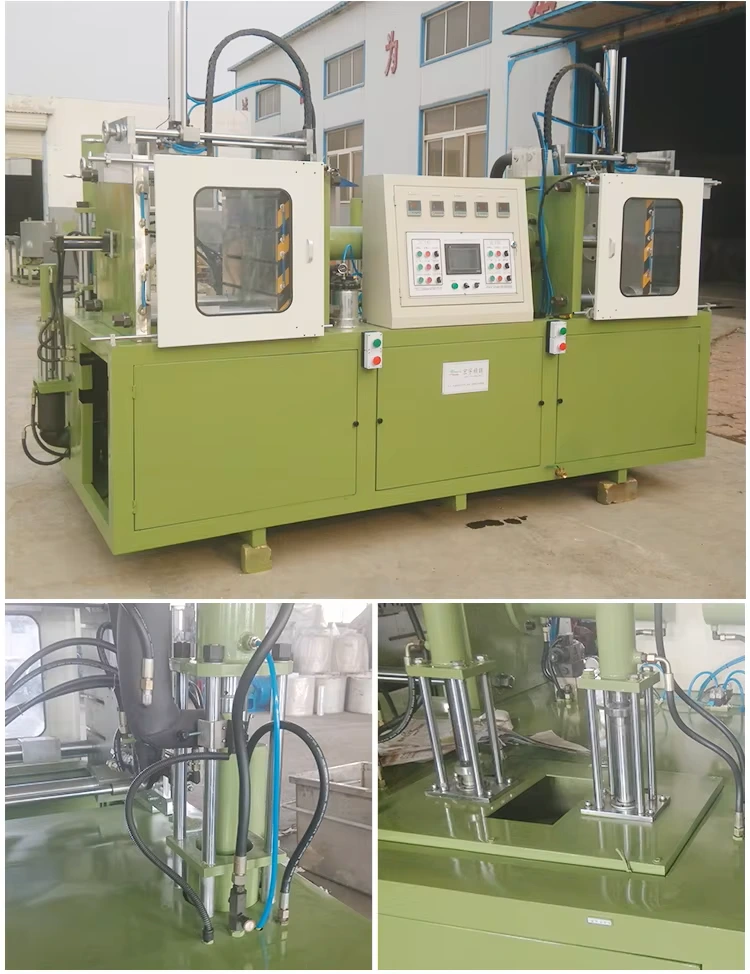
Standard injection methods work for many parts, but when you need extreme detail or high-volume output, we turn to specialized techniques. These advanced methods push the boundaries of what the wax injection process can achieve, ensuring that even the most difficult designs are castable.
Vacuum Wax Injection for Jewelry and Fine Detail
When you are dealing with intricate designs—like filigree in jewelry or micro-components for electronics—air pockets are the enemy. Standard injection can trap tiny bubbles in the mold, ruining the surface finish.
Vacuum wax injection solves this by sucking the air out of the mold before the wax enters.
- Zero Air Entrapment: The vacuum ensures the wax fills every microscopic crevice without fighting against air pressure.
- Perfect Reproduction: The resulting wax pattern captures details invisible to the naked eye.
- Reduced Rejects: Since there are no bubbles, the final casting in molten metal is flawless, reducing scrap rates significantly.
Fully Automatic Wax Injection Production Lines
For high-volume manufacturing, manual operation just doesn’t cut it. We utilize fully automatic production lines to ramp up efficiency and eliminate human error. These systems handle the entire cycle—from mold clamping and injection to pattern removal—without an operator touching the parts.
This automation guarantees that every single cycle is identical. If you are evaluating high-end manufacturing solutions, understanding the capabilities of precision casting and CNC machining is critical for selecting the right automated equipment. Automatic lines provide:
- Consistent Cycle Times: Predictable output for scheduling.
- Uniform Quality: Every pattern has the exact same density and dimensions.
- 24/7 Operation: Machines don’t need breaks, maximizing your ROI.
Ceramic Core Injection for Complex Internal Geometries
Sometimes, the outside of a part is simple, but the inside is a nightmare of channels and hollows—think turbine blades or complex cooling systems. You cannot make these with a solid block of wax.
In these cases, we use ceramic core injection. A pre-made ceramic core is placed into the die, and the wax is injected around it. This technique is vital for the investment casting of hollow parts. Once the metal is cast, the ceramic core is chemically dissolved, leaving behind complex internal passages that no drill bit could ever create.
Advantages of the Wax Injection Process
Extremely High Dimensional Accuracy
In my experience, the wax injection process serves as the absolute blueprint for the final metal component. If the wax pattern isn’t precise, the casting won’t be either. We achieve exceptional dimensional accuracy by using CNC-machined molds, which offer far superior rigidity and exactness compared to manual tooling. By strictly controlling engineering parameters—specifically temperature and pressure profiles—we minimize shrinkage and distortion. This rigor ensures that every wax pattern produced meets tight tolerance requirements before it ever reaches the casting stage.
Capability for Intricate and Complex Shapes
One of the standout benefits of this method is the ability to replicate complex geometries that are often impossible with other manufacturing techniques. We utilize advanced equipment, including machines with dual injection capabilities (top and side injection), to ensure wax fills even the most difficult areas.
- Thin-walled sections: Proper flow control prevents incomplete filling.
- Undercuts and internal features: Specialized tooling allows for sophisticated designs.
- Uniform density: Multi-point injection ensures consistent packing for thick and thin areas alike.
Superior Surface Finish and Consistency
The surface quality of a casting is directly determined by the wax pattern. By optimizing the injection speed and maintaining precise temperature control, we prevent common defects like flow lines, cold shuts, or surface roughness. This process isn’t just about making one good part; it is about repeatability. Through automated heating systems and calibrated pressure settings, we ensure that every pattern in a production run maintains the same high standard. For projects demanding the highest levels of detail, our precision casting solutions rely heavily on this consistency to deliver defect-free components.
Wax Injection vs. 3D Printing for Pattern Making
Production Speed and Scalability Comparison
When we look at scaling up production, the traditional wax injection process remains the industry standard for speed. Our facility utilizes automated injection machines with clamping forces ranging from 12 to 20 tons. These machines are engineered to produce thousands of identical patterns rapidly.
While 3D printing is excellent for rapid iteration, it generally cannot match the cycle times of a calibrated injection press. Once our CNC-machined molds are set up and the pressure profiles are optimized, we achieve a high-volume throughput that additive manufacturing struggles to compete with. For large orders, injection is simply faster and more reliable.
Cost-Effectiveness for Prototype vs. Mass Production
The choice between these two methods often comes down to the volume of the project. In our experience, the economics shift distinctively based on quantity:
- Prototypes: For a single unit or a very small run, 3D printed sand molds or patterns can be cost-effective because they eliminate the need for expensive metal tooling.
- Mass Production: For the wax injection process, we invest upfront in high-precision tooling. Once this initial cost is absorbed, the price per unit drops significantly. If you need hundreds or thousands of parts, injection is far more economical than printing each pattern individually.
Cost & Efficiency Breakdown:
| Feature | Wax Injection | 3D Printing |
|---|---|---|
| Tooling Cost | High (Initial investment) | Low (No tooling required) |
| Unit Cost (High Vol) | Low | High |
| Production Speed | Fast (Seconds/Minutes per part) | Slow (Hours per part) |
| Best For | Mass Production | Prototyping / Custom One-offs |
Material Properties and Pattern Precision
The quality of the “blueprint” dictates the quality of the final casting. In our process, we strictly control injection temperature and pressure to ensure the wax flows perfectly into every detail of the mold. This results in a wax pattern with superior surface finish and dimensional stability.
3D printed patterns often exhibit “stair-stepping” or layer lines that can transfer to the final metal part, requiring additional finishing work. By using rigid, CNC-machined molds, we ensure that the surface finish is smooth and the dimensions are repeatable, batch after batch. The engineering rigor we apply to mold filling dynamics ensures that our wax patterns are defect-free, providing a solid foundation for the subsequent casting stages.
Troubleshooting Common Wax Injection Defects
Achieving a perfect wax pattern is the foundation of the entire investment casting process. When defects occur here, they inevitably transfer to the final metal part. We focus on strict engineering rigor to minimize these issues before they happen.
Preventing Air Entrapment and Porosity
Air entrapment often results in surface roughness or internal voids, which compromises the integrity of the casting. This is frequently caused by wax that is injected too cold or flow that is too turbulent.
- Temperature Control: If the wax temperature is too low, it creates a semi-solid flow that traps air pockets. We use automated heating systems to keep the wax at the precise viscosity needed for smooth flow.
- Venting: Proper mold design is critical. Our CNC-machined molds include calculated vents that allow air to escape as the wax fills the cavity, preventing back-pressure and bubbles.
Managing Shrinkage and Dimensional Variations
Dimensional accuracy is the hallmark of a quality wax injection process. Variations usually stem from improper temperature or pressure settings.
- Shrinkage: This is the primary risk when the wax is injected too hot. As the overheated wax cools, it contracts significantly, leading to undersized parts and sink marks.
- Pressure Balance: If injection pressure is too low, the mold is underfilled, causing cold weld lines. Conversely, excessive pressure leads to mold distortion and internal stress. We implement rigorous process control in investment casting for defect-free precision to maintain the exact pressure profile required for each specific geometry.
Repairing and Recycling Defective Wax Patterns
While our goal is always a “defect-free” pattern straight from the press, quality control is essential. Patterns showing “flash” (excess material) due to overheating or “cold shuts” from low temperatures are identified immediately.
- Trimming: Minor flash can sometimes be trimmed, but significant defects usually result in the pattern being rejected to ensure the final metal component meets specifications.
- Recycling: The beauty of the lost wax method is material efficiency. Defective wax patterns are typically collected, melted down, and filtered. This allows the wax to be reused for runner systems or non-critical applications, reducing waste while maintaining high standards for the primary patterns.
 English
  Russian
  German