
2026年7月30日
Precision cast component solutions for custom high tolerance alloy parts with fast quotes and OEM quality
What Is a Precision Cast Component?
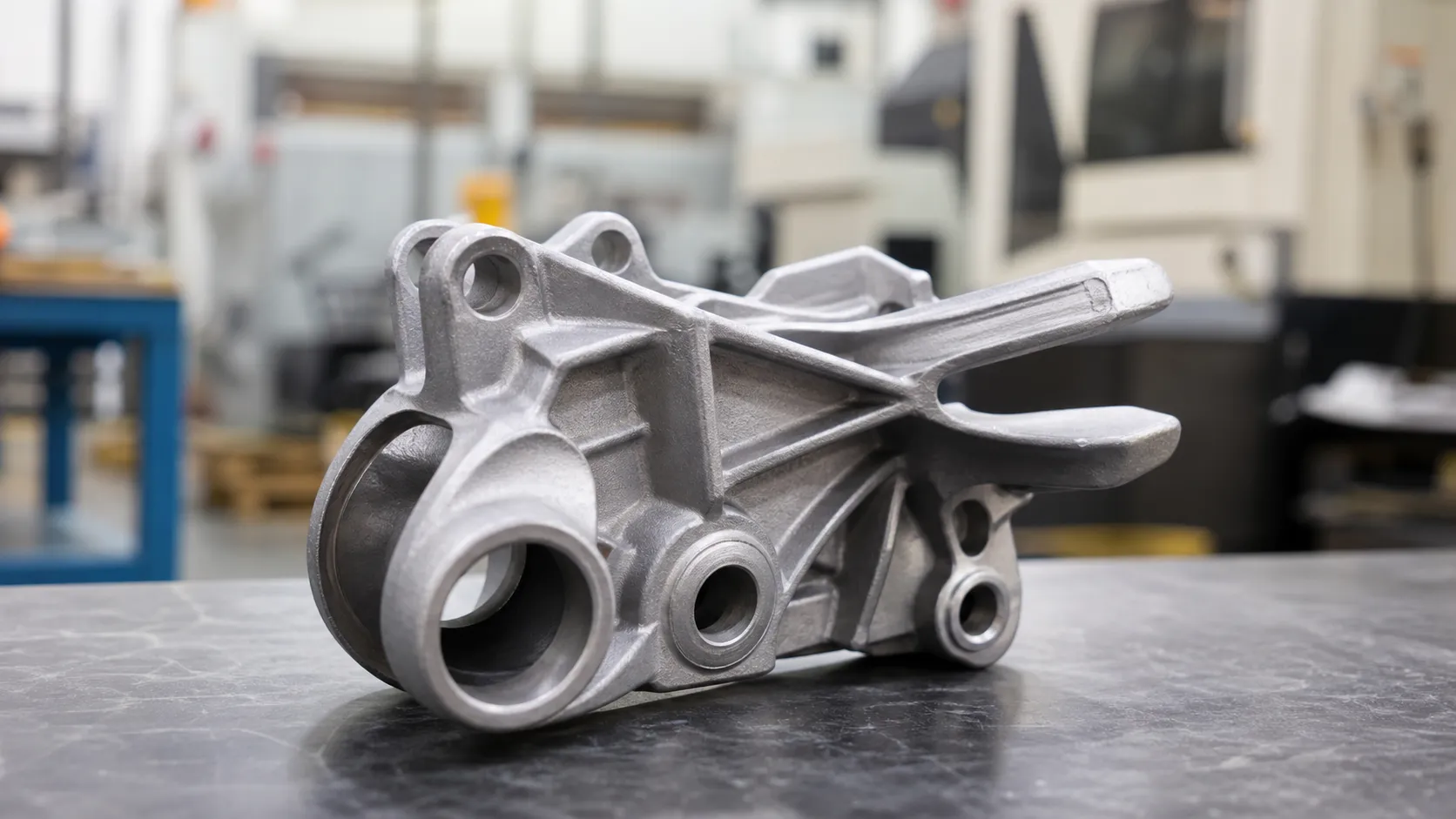
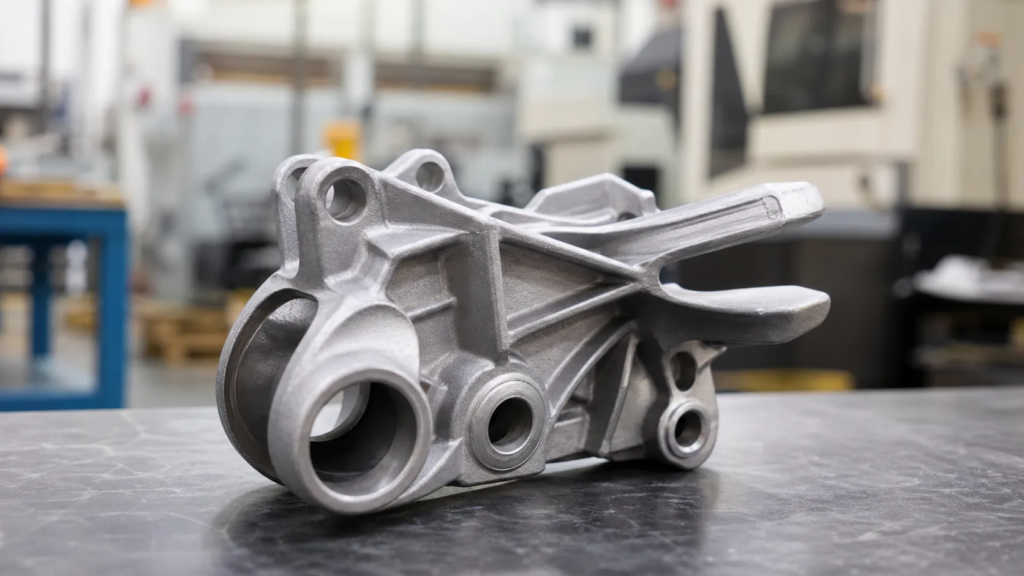
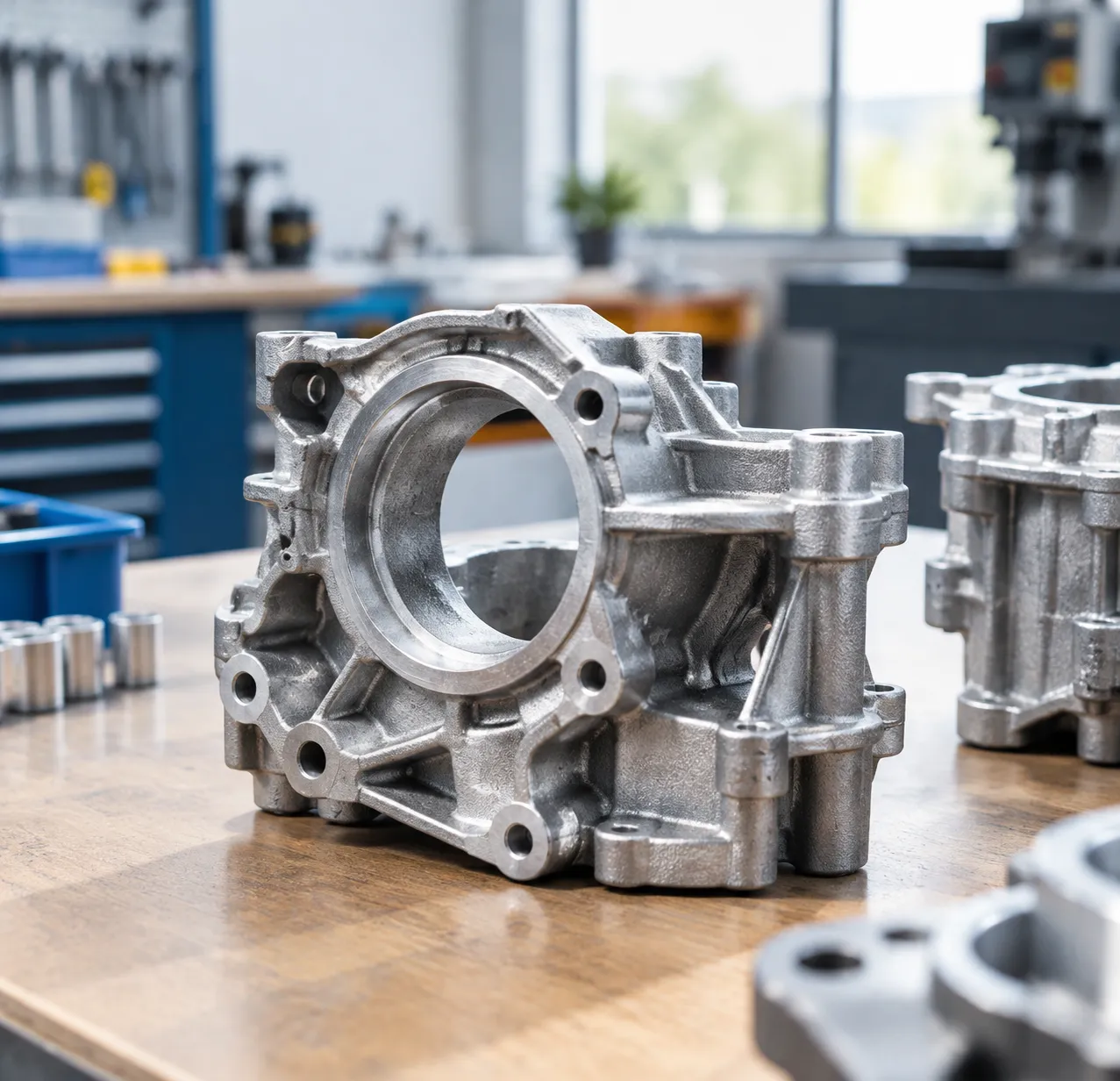
A precision cast component is a metal part engineered to extremely tight dimensional tolerances and intricate geometries with minimal need for secondary machining. We produce these high-integrity parts by utilizing advanced liquid metal forming techniques—primarily the investment casting process (also known as lost wax casting)—to convert complex CAD designs into functional net-shape components.
By pouring molten alloy into custom-engineered ceramic molds, we deliver custom metal casting solutions that capture exact design specifications, reduce material waste, and optimize structural strength.
Investment Casting vs. Traditional Sand Casting
Selecting the right casting method depends on your performance requirements, surface finish specifications, and budget goals.
| Feature | Precision Casting (Investment) | Traditional Sand Casting |
|---|---|---|
| Dimensional Tolerances | Extremely tight (+/- 0.005 in/in) | Standard (+/- 0.030 in/in) |
| Surface Roughness Finish | Smooth (125 RMS or better) | Rough (300 to 500 RMS) |
| Geometry Complexity | High (thin walls, internal passageways) | Moderate to simple |
| Secondary Machining | Minimal to none required | Heavy machining required |
| Initial Tooling Cost | Moderate | Low |
Key Industrial Benefits of Precision Cast Parts
Choosing a precision cast component streamlines your supply chain and lowers overall production costs. Key advantages include:
- Near-Net-Shape Accuracy: Dramatically reduces raw material usage and eliminates expensive CNC finish machining.
- Intricate Internal Details: Easily creates complex internal channels, undercuts, and thin-walled structures that traditional tools cannot machine.
- Superior Surface Quality: Delivers an impressive surface roughness finish directly from the mold, cutting down on polishing and surface preparation.
- Broad Alloy Compatibility: Casts seamlessly across stainless steels, aluminum, bronze, and heat-resistant superalloys while maintaining consistent mechanical properties.
Key Manufacturing Processes for Precision Castings
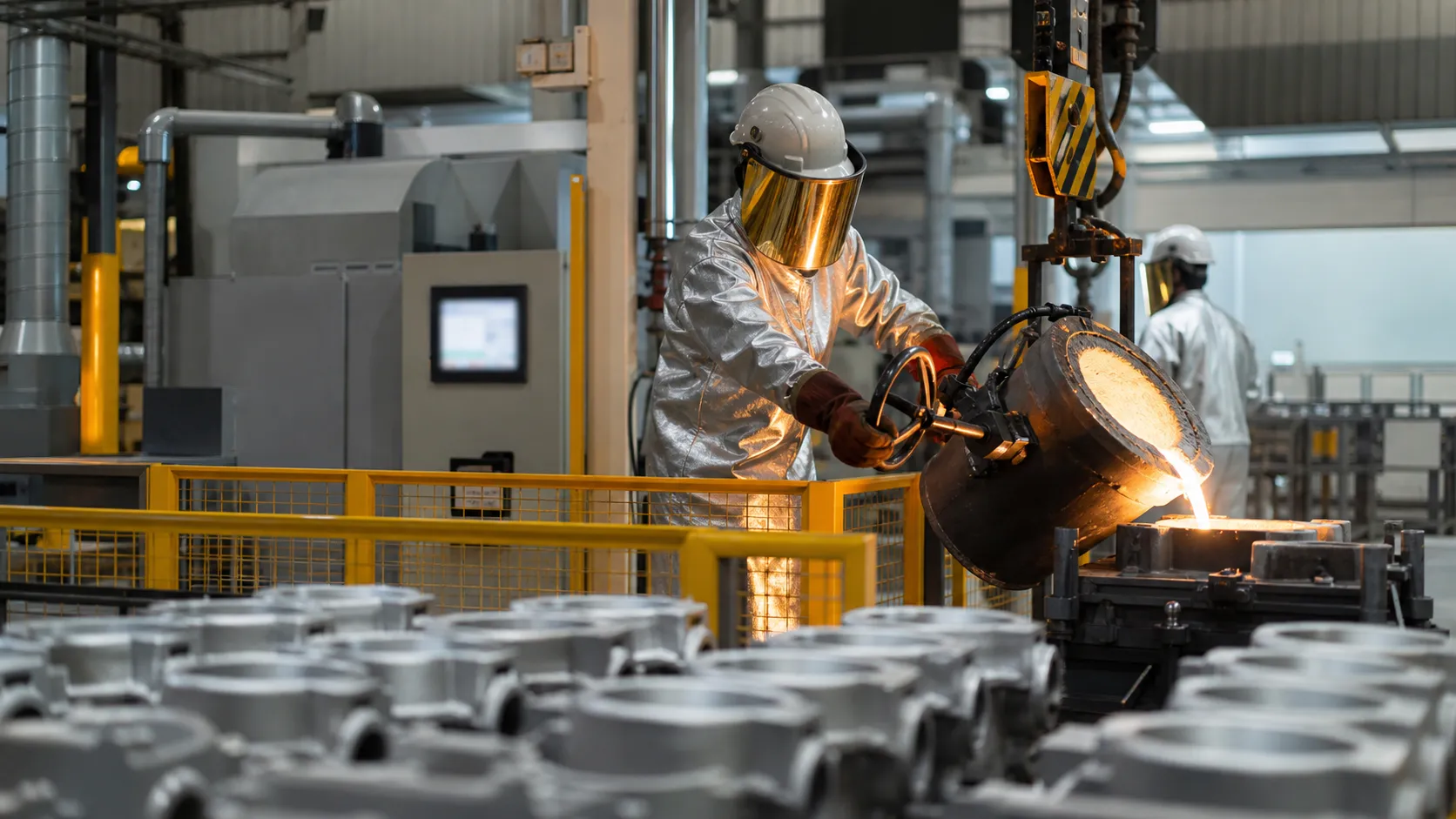
Selecting the right production process depends on part geometry, production volume, and material requirements. We rely on four primary methods to produce every precision cast component to exact specs.
Investment Casting (Lost Wax Process)
The investment casting process—often called lost wax casting—is our standard for intricate, highly detailed parts.
- How it works: We create a wax model, coat it in ceramic slurry to build a rigid mold, melt the wax out, and pour molten metal into the cavity.
- Best for: Complex geometries like a pump casting or thin-walled housing that require tight dimensional tolerances and minimal material waste.
Shell Mold Casting Techniques
Shell molding offers a cost-effective middle ground between traditional sand casting and investment casting for medium-to-large production runs.
- How it works: We apply resin-coated sand onto a heated metal pattern to form a rigid, thin-walled shell mold.
- Best for: Parts needing better surface quality and tighter tolerances than sand casting, while keeping initial tooling costs under control.
High-Pressure Die Casting for Precision Components
When you need high-volume output with rapid cycle times, high-pressure die casting delivers maximum efficiency.
- How it works: We inject molten metal under high pressure into reusable steel dies.
- Best for: Non-ferrous metal parts that require consistent wall thickness, high dimensional repeatability, and smooth surfaces right out of the mold.
Post-Casting Machining and Surface Finishing
While casting brings parts near their final shape, secondary operations ensure exact fit and finish. As an experienced OEM casting manufacturer, we combine primary casting with precision secondary processing:
- CNC Machining: Mills critical dimensions, threads, and mating faces to tight tolerances.
- Heat Treatment: Optimizes grain structure and mechanical strength for heavy-duty alloy precision castings.
- Surface Finishing: Shot blasting, grinding, and polishing achieve the exact surface roughness finish required for your application.
Essential Materials for Precision Cast Components
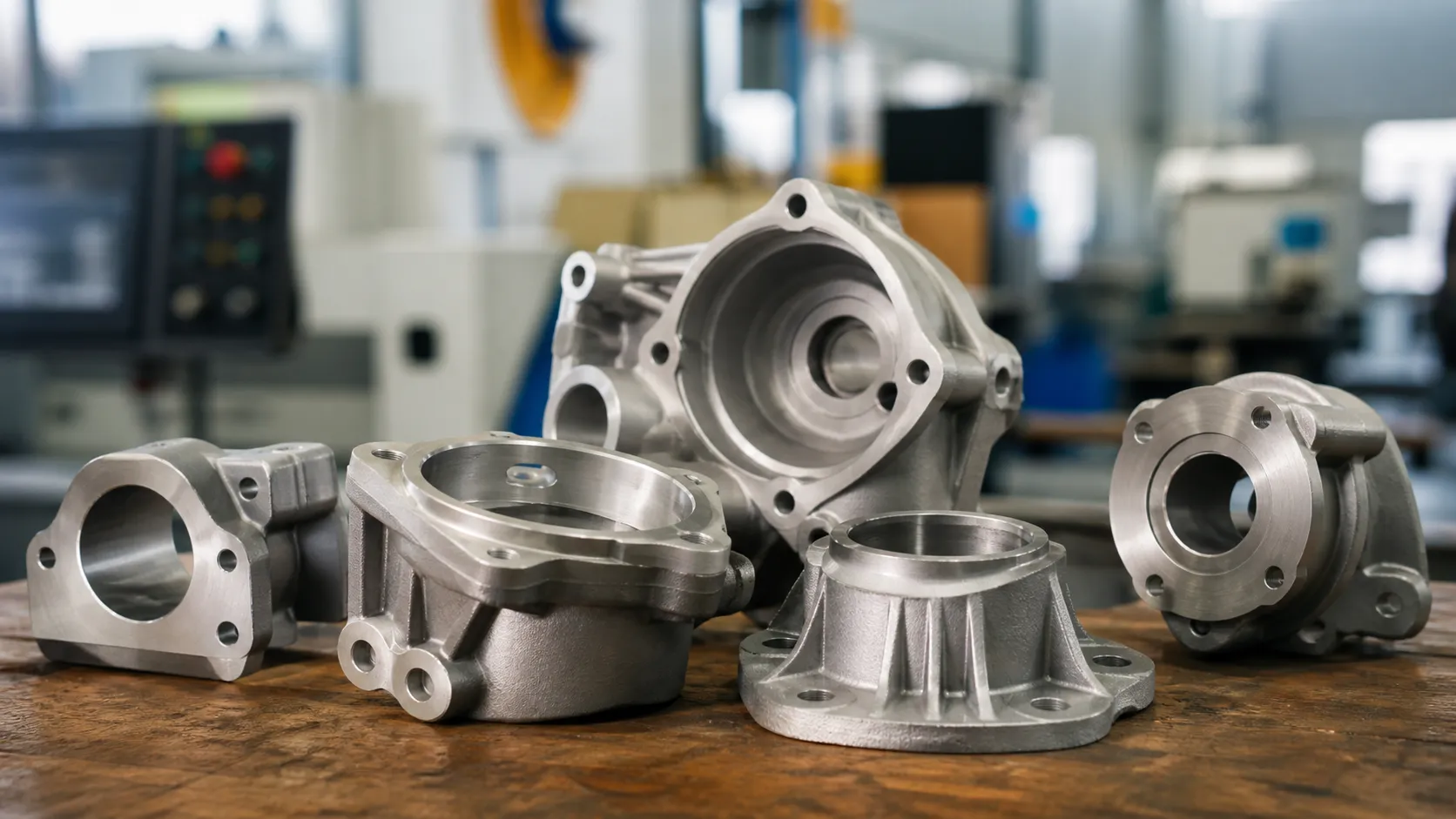
Selecting the right alloy is the most critical step in custom metal casting. The material you choose directly impacts how your precision cast component withstands heat, pressure, wear, and corrosion. We work with a broad spectrum of metals to ensure every alloy precision casting matches your exact mechanical requirements.
Stainless Steel and Carbon Steel Alloys
Steel alloys form the backbone of high-strength industrial applications, delivering long-term durability under heavy loads.
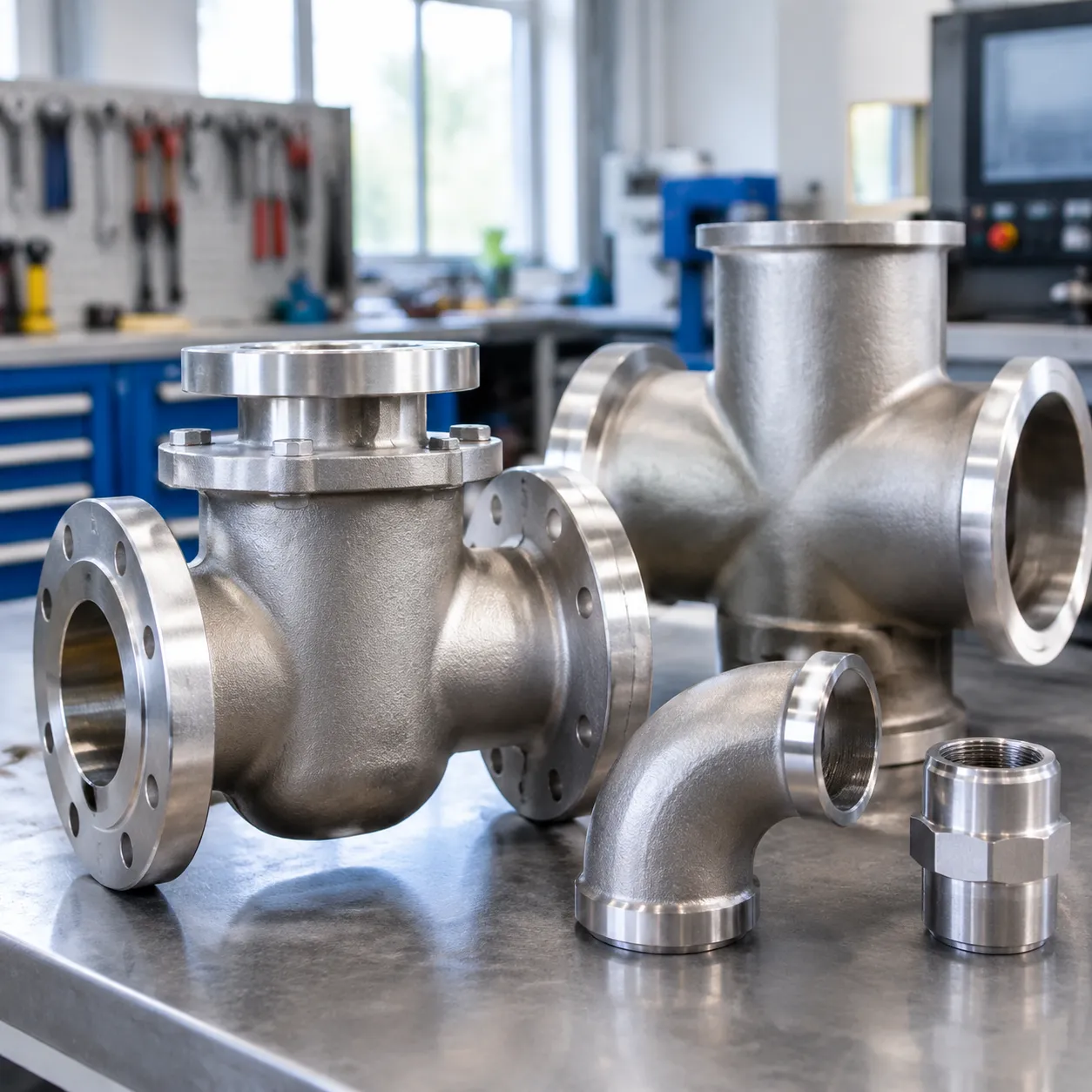
- Stainless steel casting: Exceptional resistance to rust and chemical corrosion. Ideal for fluid control systems, marine fittings, and pump casting applications.
- Carbon steel: Cost-effective, highly ductile, and tough. Best suited for high-stress structural parts, automotive brackets, and heavy machinery components.
Aluminum and Titanium Alloys
For applications where reducing weight without losing structural integrity is critical, non-ferrous light alloys are the standard.
- Aluminum alloys: Lightweight with excellent thermal conductivity and corrosion resistance. Perfect for engine blocks, housings, and heat sinks.
- Titanium alloys: Delivers an unmatched strength-to-weight ratio and temperature resistance. Used heavily in specialized aerospace casting parts and medical hardware.
Copper-Base Alloys and Bronze
Copper-based alloys are ideal for components requiring natural lubricity, high electrical conductivity, or spark resistance.
- Bronze alloys: Highly resistant to friction and saltwater wear, making them superior for bushings, bearings, and impellers.
- Brass alloys: Easy to machine with strong corrosion resistance, widely used for valves, plumbing hardware, and electrical connectors.
Heat-Resistant Superalloys for Extreme Conditions
When operating temperatures spike and chemical environments turn aggressive, standard metals fail. We cast heat-resistant superalloys designed for the toughest operating environments.
- Nickel-base superalloys (Inconel, Hastelloy): Retain high yield strength and creep resistance at elevated temperatures, ideal for turbine blades, exhaust manifolds, and energy hardware.
- Cobalt-base alloys: Provide extreme wear resistance and hot corrosion resistance in unlubricated high-temperature environments.
Design Standards and Dimensional Tolerances
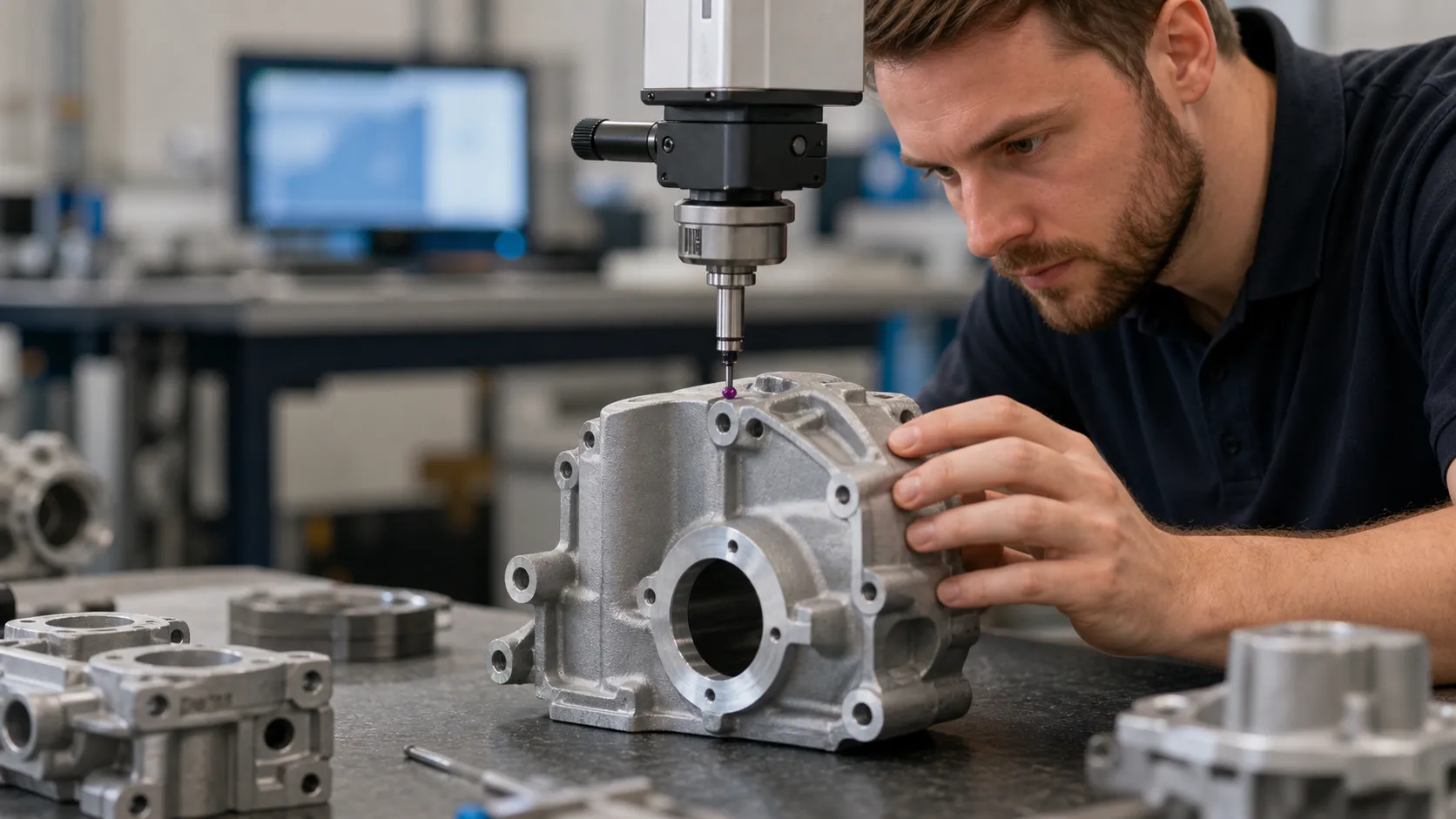
When we produce a precision cast component, hitting exact specs right out of the mold saves time and cuts tooling costs. We align every casting with strict ISO and ASTM standards to ensure your parts fit perfectly without unnecessary secondary machining.
Achieving Strict Dimensional Tolerances
We control thermal expansion throughout the investment casting process to hit tight limits that standard foundry methods cannot match. Following ISO 8062 and ASTM guidelines, we hold consistent linear dimensions across every production run.
| Casting Process / Standard | Typical Dimensional Tolerance | Key Feature |
|---|---|---|
| Precision Investment Casting (ISO 8062 CT4–CT6) | ±0.005 in/in (±0.13 mm) | High precision, minimal machining needed |
| Traditional Sand Casting (ISO 8062 CT9–CT11) | ±0.030 in/in (±0.76 mm) | Requires heavier stock allowances |
Surface Roughness Specifications and Finishes
A smooth surface roughness finish improves component life and performance. The lost wax casting method gives us superior surface quality right out of the ceramic shell.
- Standard As-Cast Finish: 125 to 250 µin RMS (3.2 to 6.3 µm Ra)
- High-Precision As-Cast Finish: 63 to 125 µin RMS (1.6 to 3.2 µm Ra)
- Post-Processed Finish: Down to 32 µin RMS (0.8 µm Ra) using bead blasting or electropolishing
Optimizing Wall Thickness and Draft Angles
Smart part design eliminates defects before we pour any molten metal. We optimize these key geometry features for maximum castability:
- Uniform Wall Thickness: Aim for a minimum wall thickness of 0.060 in (1.5 mm). Keeping walls uniform prevents hot spots and thermal stress.
- Minimal Draft Angles: Thanks to ceramic shell flexibility, we often run draft angles as low as 0.5° to 1°—and 0° on short features.
- Blended Radii: Generous fillets smooth out metal flow, preventing cracks and porosity during cooling.
Quality Control and Defect Prevention in Precision Cast Components
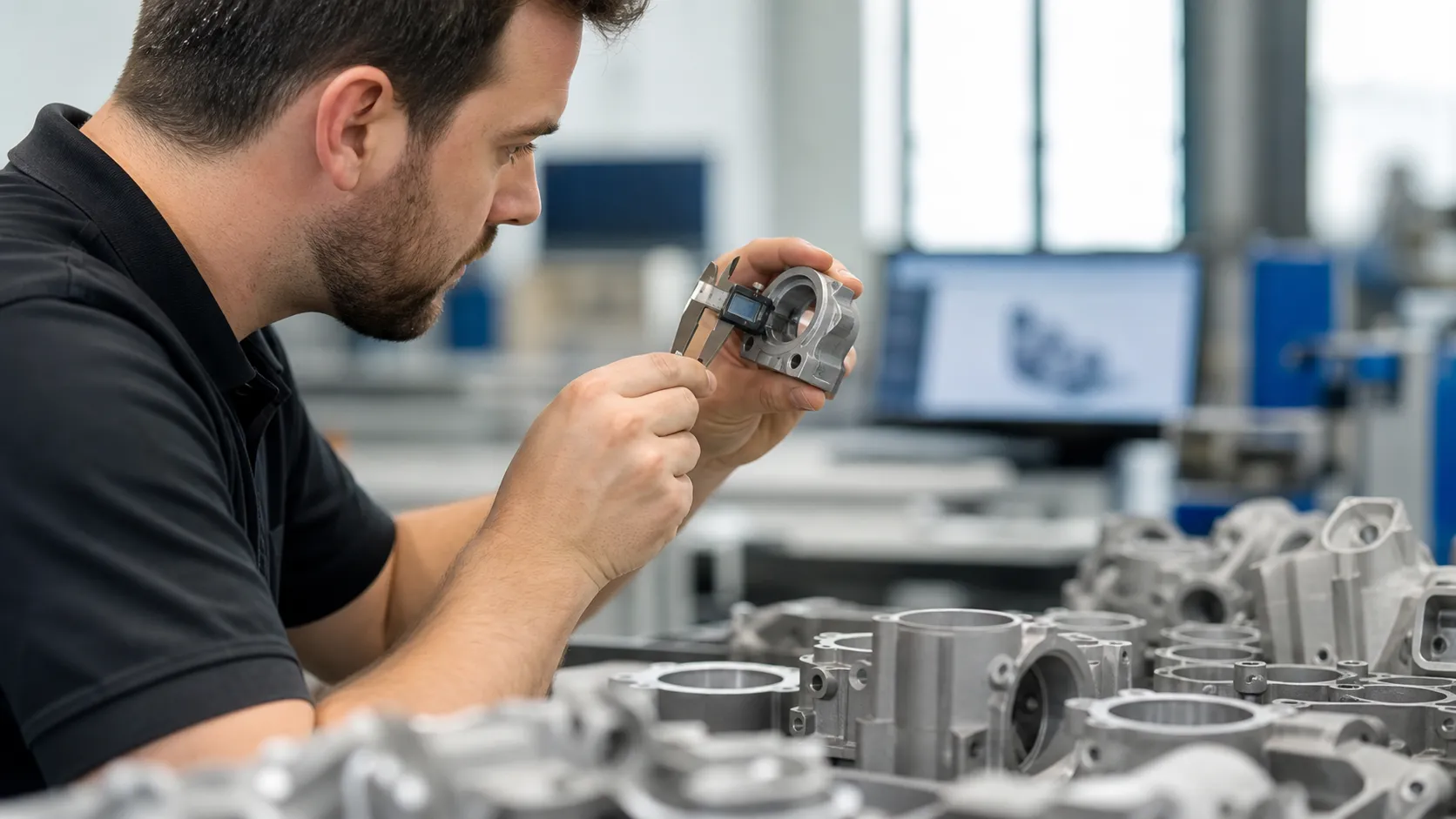
We back every precision cast component with rigorous quality control at every step of production. Delivering flawless parts requires strict inspection protocols that catch internal and surface flaws before your order leaves our facility.
Non-Destructive Testing (NDT)
We use non-destructive testing NDT methods to verify internal structural integrity without damaging the finished part:
- X-Ray Radiography: Scans the interior of the precision cast component to detect hidden voids, inclusions, or sub-surface cracks.
- Dye Penetrant Inspection (LPI): Highlights microscopic surface cracks, laps, and seams that are invisible to the naked eye.
- Magnetic Particle Testing: Scans ferromagnetic alloys for near-surface discontinuities.
Metallurgical Testing and Chemical Alloy Analysis
Getting the exact melt composition is critical for performance under extreme pressure or heat. We run optical emission spectrometry on every heat batch to verify alloy chemistry before pouring.
| Quality Check | Inspection Method | Primary Purpose |
|---|---|---|
| Chemical Composition | Optical Emission Spectrometry | Verifies exact alloy grade compliance |
| Hardness & Strength | Rockwell / Brinell Testing | Confirms mechanical load capabilities |
| Microstructure Analysis | Metallurgical Testing Microscopy | Evaluates grain structure and heat-treat response |
Preventing Porosity Casting Defects and Shrinkage
Defect prevention starts long before metal hits the mold. We eliminate common risks like porosity casting defects, shrinkage voids, and gas inclusions through proactive engineering:
- Mold Flow Simulation: Advanced software optimizes runner and gating design to ensure smooth metal fill and uniform cooling.
- Precise Melt and Pour Controls: Strict monitoring of melt temperatures and pouring speeds stops air entrapment before it happens.
- Degassing Treatments: Inert gas purging removes dissolved hydrogen from molten metal to prevent micro-porosity formation.
Primary Applications Across Key Industries
Every industry relies on reliable hardware to keep operations running safely. We manufacture each precision cast component to meet strict mechanical standards, giving our partners total peace of mind in high-stakes environments.
Aerospace and Defense Structural Parts
Modern flight demands lightweight hardware that survives extreme friction and high temperatures. Critical Structures: We produce jet engine brackets, missile guidance housings, and fuel system fittings engineered for severe stress. Advanced Alloys: Specialized aerospace casting parts made with titanium and nickel alloys for maximum thermal stability and low weight.
Automotive and Engine Components
Under the hood, heat resistance and part consistency are non-negotiable. Powertrain Hardware: Turbocharger impellers, exhaust manifolds, and rocker arms built for continuous heavy wear. Consistent Precision: High-volume alloy precision castings designed to drop straight onto assembly lines without extra machining rework.
Medical Devices and Surgical Tools
Healthcare equipment requires zero surface defects and total biocompatibility. Surgical Tooling: Forceps, joint implants, and scalpel handles produced using precise stainless steel casting techniques. Sterilization Ready: Ultra-smooth, dense surfaces that resist corrosion from harsh chemical cleaning and autoclaves.
Oil, Gas, and Energy Valve Hardware
Energy production pushes metal to its limit with massive pressure and harsh chemicals. Fluid Handling: Heavy-duty pump casting units, valve bodies, and wear-resistant impellers for upstream and downstream operations. Severe Service: Custom alloys formulated specifically to stop sour gas corrosion and abrasive slurry erosion.
How to Select the Right Precision Casting Manufacturer
Finding the right partner for your precision cast component needs isn't just about getting the lowest bid. It's about securing supply chain reliability, tight quality controls, and consistent delivery. Here is how we evaluate capabilities and deliver real value as a trusted OEM casting manufacturer.
ISO 9001 and AS9100 Quality Certifications
Quality management certifications are non-negotiable when sourcing critical metal components. We maintain strict industry compliance so every part performs out of the box.
- ISO 9001: Ensures consistent quality controls, process repeatability, and clear documentation across all production runs.
- AS9100: Required for demanding aerospace casting parts and defense applications where full lot traceability is mandatory.
In-House Tooling and CNC Machining Capabilities
Outsourcing secondary operations adds unnecessary lead time and increases the risk of tolerance stack-up. Partnering with a full-service foundry keeps every step under control.
| Capability | What It Delivers |
|---|---|
| In-House Tooling | Faster pattern modifications, lower initial die costs, and extended mold life. |
| Precision CNC Machining | Tight surface finishes and exact final dimensions without managing extra vendors. |
Lead Times, MOQ, and Prototyping Services
Production schedules rely on predictable turnarounds and flexible volume options.
- Rapid Prototyping: Uses 3D-printed wax patterns to test form and fit before cutting hard tooling.
- Flexible MOQ: Accommodates short-run custom metal casting orders as well as full-scale mass production.
- Clear Delivery Schedules: Provides accurate, transparent timelines from initial sample approval to final shipment.
Cost Breakdown and Value Optimization
True cost savings come from smart design, not cutting corners on material quality. By optimizing gate placement, wall thickness, and alloy selection early in the process, we eliminate scrap waste, reduce machine time, and lower your overall cost per part on every precision cast component.
Frequently Asked Questions About Precision Cast Components
We answer the most common questions our customers ask when sourcing high-precision cast parts for their applications.
Precision Casting vs. Sand Casting
The main difference lies in surface finish, accuracy, and tooling complexity. We use the investment casting process (lost wax casting) to deliver net-shape parts with minimal need for secondary machining.
| Feature | Precision Cast Component | Traditional Sand Casting |
|---|---|---|
| Dimensional Tolerances | Ultra-tight (±0.005 in/in) | Standard (±0.030 in/in) |
| Surface Roughness Finish | Smooth (125 RMS or better) | Rough (300 to 560 RMS) |
| Design Complexity | High (thin walls, complex cores) | Moderate to low |
| Post-Machining Needed | Minimal to none | Extensive |
Metals Best Suited for Precision Casting
We cast a wide variety of alloys to match your exact performance requirements:
- Stainless Steel Alloys: Ideal for stainless steel casting applications requiring high corrosion resistance, like pump casting units and valve bodies.
- Carbon and Low-Alloy Steels: Excellent for tough, load-bearing structural parts.
- Aluminum and Titanium Alloys: Best for lightweight, high-strength aerospace casting parts.
- Copper-Base Alloys and Bronze: Preferred for marine hardware, bushings, and electrical components.
- Nickel-Based Superalloys: Built for extreme temperature and high-stress environments.
Dimensional Tolerances for Precision Castings
Our custom metal casting runs achieve linear dimensional tolerances as tight as ±0.005 inches per inch. This accuracy eliminates unnecessary weight, reduces material waste, and drastically cuts down on secondary CNC machining costs while meeting strict industry standards.
Lead Times for Custom Metal Casting
As a dedicated OEM casting manufacturer, our typical timelines for a precision cast component project are:
- Tooling and Prototyping: 2 to 4 weeks.
- Sample Approval (FAI): 1 to 2 weeks post-tooling.
- Production Runs: 4 to 6 weeks, depending on order volume and required post-casting surface treatments.
 English
  Russian
  German