
Overview
Learn green sand casting basics process advantages limits and compare it with precision investment casting for complex high accuracy parts.
The Anatomy of Green Sand: What’s Inside the Mold?
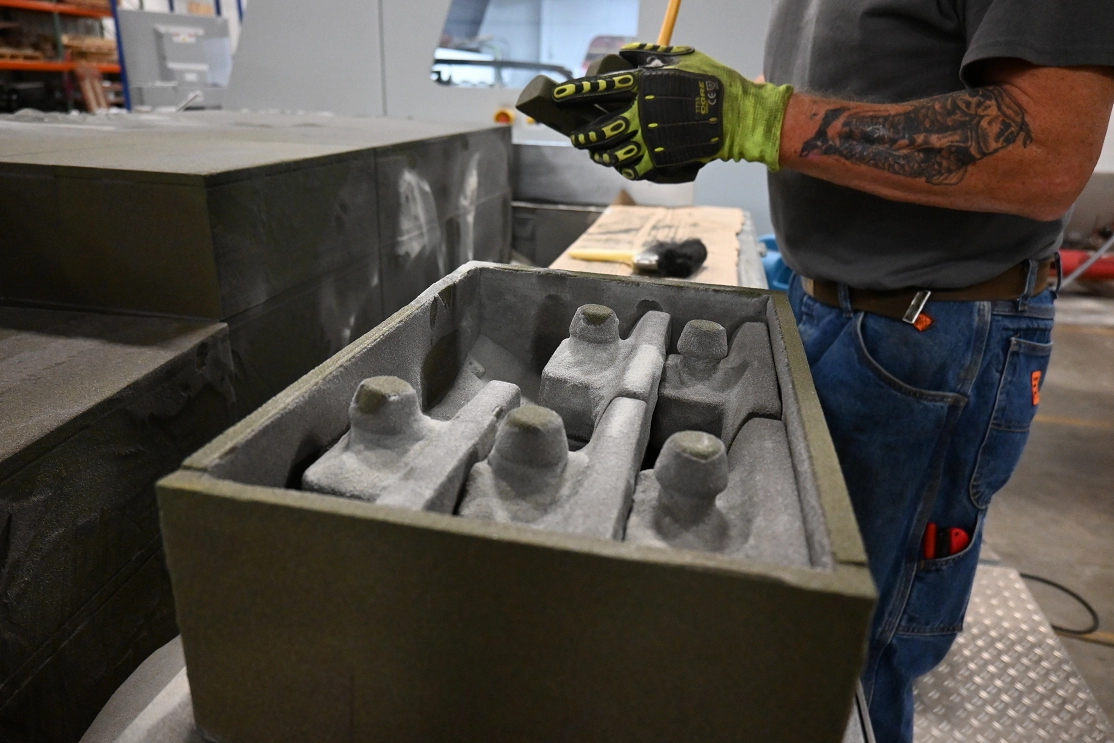
When we talk about green sand casting, we aren’t discussing color. We are talking about the fundamental mixture that drives high-volume production. Getting the chemistry right is the first step in our manufacturing philosophy, ensuring the mold holds up under the intense heat of molten metal. Whether we are designing automated lines or consulting on raw materials, understanding this mixture is critical.
The Core Composition
The “green” in green sand molding refers to the moisture present in the mixture before drying. A standard, effective mix relies on a precise balance of three main components:
- Silica Sand (85-95%): This is the structural body of the mold. We rely on specific silica sand properties for high refractoriness, allowing the mold to withstand extreme temperatures without breaking down.
- Bentonite Clay Binder (4-10%): Think of this as the glue. This clay absorbs water and bonds the sand grains together, giving the mold its necessary strength.
- Water (2-5%): The activator. It triggers the plasticity of the clay, making the sand moldable and ready for the pattern.
Critical Additives for Surface Finish
To push the limits of what sand can do, we often see specific additives introduced to the mix. Materials like coal dust (seacoal) or cornstarch are utilized to prevent metal penetration and improve the final surface finish. In an industry where precision is our benchmark, these additives help reduce the roughness typically associated with sand casting.
Why Call It “Green”?
It is a common misconception in the industry. The term strictly refers to the uncured state of the mold.
Want to learn about green sand casting? Please see this article: What Is Green Sand in Casting Process Types and Uses
- Moisture Content: The sand is damp (tempered) with water, distinct from “dry sand” molds which are baked.
- Not Color: The sand is typically black or dark gray due to the carbon additives, not actually green.
Understanding these variables is part of the technical foundation required for successful casting projects, ensuring that even traditional methods meet modern standards.
The Step-by-Step Green Sand Casting Process
We approach the green sand casting cycle as a systematic loop of precision and repetition. While the fundamental chemistry of the sand remains consistent, the mechanical execution determines the quality of the final component. From creating the master pattern to the final shakeout, every stage requires strict control to minimize defects and ensure dimensional accuracy.
Pattern Making: The Foundation
Everything starts with the pattern, which is essentially a replica of the object we intend to cast. We typically craft these from wood, metal, or high-density plastic, depending on the production volume. Crucially, we must engineer the pattern with a specific pattern making allowance. Since metal contracts as it cools, the pattern is machined slightly larger than the final specifications to compensate for this shrinkage. For complex geometries, we refer to our industrial precision guide on making sand cast molds to ensure the tooling aligns perfectly with the molding equipment.
Molding Techniques: The Cope and Drag Method
The actual green sand molding process revolves around the flask assembly, which holds the sand in place. This is divided into two distinct sections:
- The Drag: The bottom half of the mold where the lower part of the pattern sits.
- The Cope: The top half that is placed over the drag to close the mold.
We pack the prepared green sand mixture tightly around the pattern in both halves. This compaction provides the necessary mechanical strength so the mold doesn’t collapse when the pattern is removed.
Core Placement and Assembly
If the design requires internal cavities or hollow sections—like the water jackets in an engine block—we cannot rely on the green sand alone. We insert cores, which are hardened sand shapes, into the mold cavity before closing the flask. These cores must be strong enough to resist the pressure of the liquid metal but brittle enough to break down during shakeout.
Pouring: Gravity-Fed Molten Metal
Once the mold is clamped shut, we proceed to molten metal pouring. This is a critical phase where turbulence must be minimized to prevent air entrapment or sand erosion. In modern foundries, we utilize automation and robot integrators to control the pouring rate and temperature precisely. This consistency helps reduce common issues like porosity and ensures the metal fills every detail of the mold cavity before solidifying.
Cooling, Shakeout, and Finishing
After the pour, the metal must cool until it solidifies completely. We then move to the shakeout station, where the mold is vibrated to break the sand away from the casting. The used sand is collected for reconditioning and reuse. Finally, the casting goes through finishing operations. We cut off the gating system (the channels that fed the metal) and risers, and typically use shot blasting to clean the surface, resulting in a raw part ready for machining or final inspection.
Why Manufacturers Choose Green Sand Casting

In the metalworking industry, green sand casting remains the dominant method for producing metal components, accounting for a significant portion of total casting tonnage. We see manufacturers consistently choose this route because it strikes an optimal balance between economic feasibility and production flexibility. It is the workhorse of the foundry world, offering distinct advantages that high-tech alternatives sometimes cannot match.
Cost-Efficiency and Reusability
The primary driver for adopting the green sand molding process is cost control. The raw materials—silica sand, bentonite clay, and water—are inexpensive and readily available. Unlike permanent mold processes that require high-cost metal dies, the tooling (patterns) used here is affordable.
- Reusable Materials: The sand mixture is recycled and reused in a continuous loop, drastically cutting material expenses.
- Low Setup Costs: Pattern equipment is cheaper to produce than the metal dies required for other methods, which is a key factor when comparing die casting vs. sand casting for short-to-medium runs.
Versatility Across Metals and Sizes
This method is incredibly versatile regarding the alloys it can handle. It effectively casts both ferrous and non-ferrous metals, including gray iron, ductile iron, steel, aluminum, and bronze.
The scalability is equally impressive. We can produce components weighing just a few ounces up to massive parts weighing several tons. Whether it is high-volume casting production or specialized heavy machinery parts, the process adapts. For facilities looking to maximize this output, adding foundry casting robotics integration helps automate the pouring and handling of these heavy molds, ensuring consistency across different scales.
Sustainable Foundry Practices
Sustainability is built into the process. Because the molding sand is reclaimed and reconditioned after the shakeout phase, waste is kept to a minimum. This cycle of reusing natural materials aligns well with modern environmental standards, reducing the foundry’s overall carbon footprint.
of Advantages
| Feature | Description | Key Benefit |
|---|---|---|
| Material Cost | Uses abundant silica sand and clay. | Significantly lower operational expenses. |
| Alloy Flexibility | Casts iron, steel, aluminum, and bronze. | One process for multiple product lines. |
| Production Speed | Fast mold making cycles. | Ideal for high-volume manufacturing. |
| Eco-Friendly | High sand recyclability. | Supports sustainable foundry practices. |
Limitations: When Green Sand Isn’t Enough
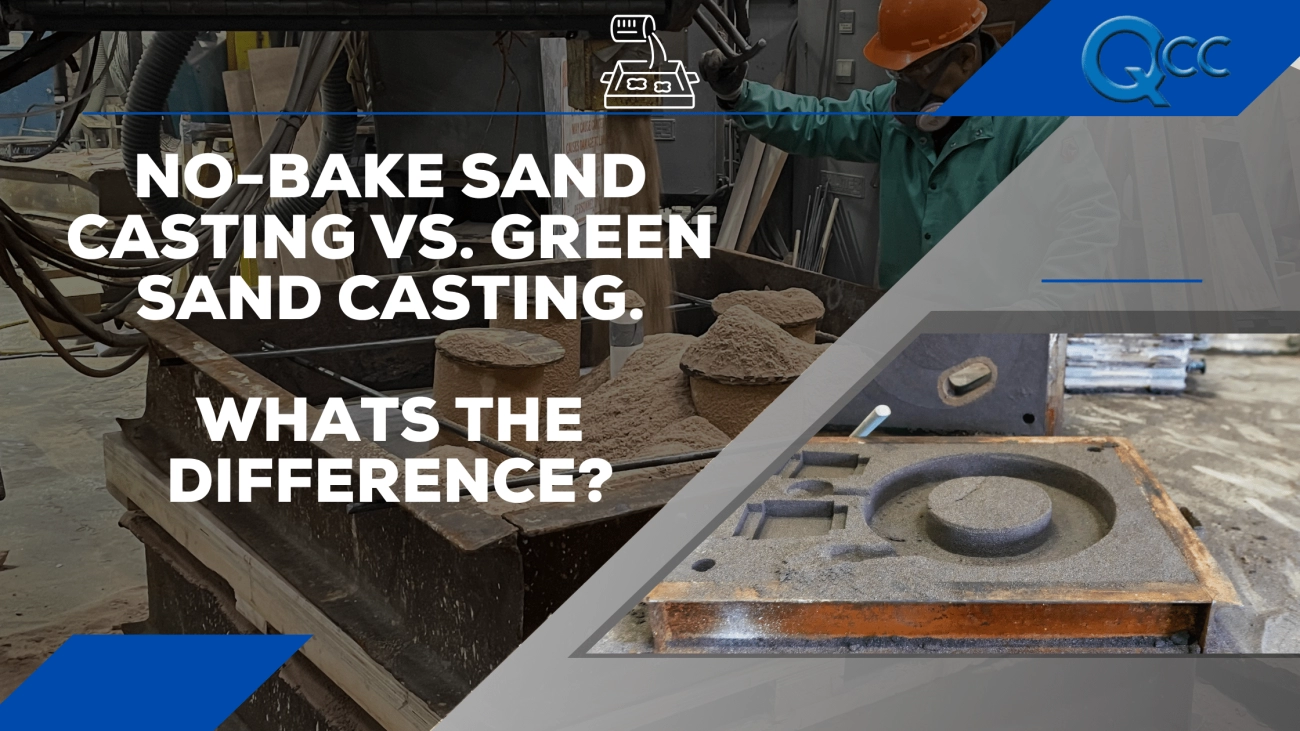
While green sand casting is a manufacturing workhorse, it is not the silver bullet for every project. We have to be realistic about where this method hits a wall, especially when high precision is non-negotiable.
Surface Finish Roughness
The most obvious drawback is the texture. Because we are packing sand grains against the pattern, the resulting metal surface will have a granular feel. It is significantly rougher compared to investment casting or die casting. If your part requires a mirror-like aesthetic or a smooth sealing surface, you will almost certainly need secondary operations. Many manufacturers rely on precision machining services to grind and polish these critical areas to meet final specifications.
Dimensional Accuracy in Casting
Green sand molding relies on a mixture of sand, clay, and water. This composition is somewhat flexible, which is good for avoiding cracks, but bad for holding tight tolerances.
- Micron-level precision: It struggles here. Achieving tolerances tighter than ±0.030 inches is difficult without extra machining.
- Mold wall movement: The pressure of the molten metal can shift the sand slightly, affecting the final dimensions.
For a deeper look at how this stacks up against other methods, viewing a manufacturing process comparison can help clarify when to stick with sand and when to switch to precision techniques.
Potential Casting Defects
The “green” in green sand casting refers to moisture, and moisture can be problematic if not managed correctly.
- Porosity and Blowholes: If the steam generated during pouring cannot escape through the sand’s permeability, it gets trapped inside the metal, creating voids.
- Sand Inclusions: Loose sand grains can wash into the molten stream and get embedded in the casting, creating weak spots.
Green Sand vs. Investment Casting: Making the Right Choice

Choosing between green sand casting and investment casting often comes down to balancing cost against precision. While green sand is the workhorse for high-volume, heavy-duty parts, it simply cannot match the dimensional accuracy required for complex, high-tech components.
Comparison of Use Cases
We see green sand molding dominate in industries where size and speed matter more than surface perfection. It is the standard for manufacturing automotive engine blocks, transmission cases, and railway components. In contrast, investment casting is the preferred method for aerospace components, medical implants, and intricate valves where every micron counts.
Precision Requirements: When to Switch
If your project demands dimensional accuracy in casting within strict tolerances (≤ 5μm), green sand will likely fall short. The sand texture inherently limits how fine the details can be. For projects requiring complex geometries and tight specs, switching to investment casting is necessary. This process relies on high-quality patterns created by advanced wax injection machines for investment casting, ensuring the final metal part matches the design perfectly.
Surface Quality Needs
Surface finish roughness is a major differentiator. Green sand castings typically leave a rough, granular texture that usually requires secondary machining to smooth out mating surfaces. Investment casting delivers a near-net-shape with a smooth, often mirror-like finish right out of the shell. This reduces the need for extensive post-processing, saving time on the production line.
Quick Comparison: Green Sand vs. Investment Casting
| Feature | Green Sand Casting | Investment Casting |
|---|---|---|
| Primary Advantage | Low tooling & material cost | Superior surface finish & precision |
| Typical Tolerance | ±0.030 inch (approx.) | ±0.003 inch (Precision) |
| Surface Finish | Rough (Ra 250-500) | Smooth (Ra 63-125) |
| Best Application | Engine blocks, manhole covers | Turbine blades, surgical tools |
| Production Volume | High volume, rapid cycles | Low to High (dependent on automation) |
For manufacturers aiming to upgrade from rough casting to precision components, understanding the capabilities of precision casting vs. machining is critical for optimizing the production budget.
Modernizing the Foundry: Automation and Robotics
Gone are the days when a foundry was just a dark, dusty environment relying solely on manual labor. Today, we are transforming green sand casting facilities into high-tech manufacturing hubs. By integrating advanced foundry automation solutions, we aren’t just speeding up the production line; we are drastically improving consistency, safety, and profitability.
The Role of Robot Integrators
In modern setups, robots have taken over the heavy lifting and the most hazardous tasks. Robot integrators are essential for upgrading traditional lines to handle high-volume casting production with minimal downtime.
- Automated Pouring: Robots control the ladle with extreme precision, ensuring the molten metal enters the sprue at the exact right velocity. This consistency is vital when working with sensitive alloys like Aluminum Grade 357, where turbulence or temperature drops can compromise mechanical properties.
- Mold Handling: Robotic arms handle the cope and drag assembly with perfect alignment, eliminating the human error that often leads to mold shift and dimensional inaccuracies.
Digitalization: The Smart Foundry
It’s not just about moving parts; it’s about data. We are moving toward “Smart Foundry” concepts where digitalization monitors the green sand molding process in real-time.
Sensors embedded in the mixing equipment track critical variables like moisture content, compactability, and sand temperature instantly. If the sand becomes too dry or the bond strength drops, the system automatically adjusts the water or bentonite mix before a defective mold is ever made. This real-time quality monitoring ensures that whether we are casting ten parts or ten thousand, the surface finish and structural integrity remain uniform.
FAQ: Common Questions About Green Sand Molding
We encounter many inquiries regarding the green sand molding process and how it stacks up against other methods. Whether you are looking at cost savings or material versatility, understanding these basics helps in making the right manufacturing decision. If you have more specific technical concerns, you can always review frequently asked questions regarding our capabilities.
Can green sand be reused effectively?
Absolutely. One of the primary reasons we champion green sand casting is its recyclability. The sand mixture—comprising silica sand, bentonite clay binder, and water—can be reclaimed and reused through many cycles. After the shakeout process, we simply recondition the sand by adding fresh clay and water to restore its bonding properties. This makes it a cornerstone of sustainable foundry practices, significantly reducing material waste and disposal costs compared to chemically bonded sands.
Differences between green sand and dry sand casting
While both methods utilize sand, the state of the mold differs significantly. Green sand in casting refers to the presence of moisture, while dry sand molds are baked to remove that moisture before pouring.
| Feature | Green Sand Casting | Dry Sand Casting |
|---|---|---|
| Moisture Content | Moist (Water + Clay) | Dried/Baked (No Moisture) |
| Mold Strength | Moderate | High (Less prone to breaking) |
| Production Speed | Fast (No baking time) | Slower (Requires baking) |
| Dimensional Accuracy | Good | Better (Rigid mold) |
| Cost | Lower | Higher |
Is green sand casting suitable for aluminum parts?
Yes, green sand for metal casting is highly effective for aluminum and other non-ferrous metals. It is widely used to produce automotive components like engine blocks, transmission cases, and pump housings. While it may not achieve the micron-level precision of investment casting, it offers excellent efficiency for high-volume production runs. However, manufacturers must carefully control the sand’s permeability to prevent gas defects, ensuring the dimensional accuracy in casting meets the required specifications for aluminum parts.
Related Sources
https://vastpe.com/what-is-green-sand-in-casting/
 English
  Russian
  German