
As a foundry professional, I know that achieving tight dimensional casting tolerances while maintaining the superior mechanical properties of ductile iron is a massive engineering challenge. Traditional sand casting simply falls short when you are manufacturing intricate, high-stress components.
In this guide, you're going to learn exactly how to master ductile iron investment casting, step by step.
From selecting the right ASTM A536 grades to managing the complex casting shrinkage rate, I've put together everything you need to know to optimize your production. We will even cover how upgrading your infrastructure with a state-of-the-art wax injection machine for casting can eliminate dimensional warping before the metal is even poured.
If you are looking to engineer complex, defect-free parts with unmatched precision and strength, this guide is for you.
What Makes Ductile Iron Ideal for Investment Casting?
Engineers constantly face the challenge of balancing complex part designs with the need for extreme mechanical durability. We solve this by leveraging ductile iron investment casting. With nearly 60 years of industry experience, we know this process gives you immense design freedom without ever sacrificing performance.
Spheroidal Graphite and Material Superiority
Often referred to as nodular cast iron, this material delivers the best combination of part design versatility, surface hardening ability, elasticity modulus, and corrosion resistance. One of its most critical advantages in our investment casting foundry is its non-existent shrink rate. This unique characteristic actively prevents the formation of external shrinkage, ensuring structural integrity in every high-volume production run.
Why Choose the Lost Wax Casting Process?
When you need reliable, near-net shape casting, the lost wax method excels. We use technologically advanced equipment to produce parts that serve as a highly cost-effective alternative to welded fabrications, forgings, and other ferrous alloys. It allows for tight tolerances and intricate details that standard methods simply cannot achieve efficiently.
Mechanical Properties of Ductile Iron vs. Steel
The mechanical properties of ductile iron offer an exceptional strength-to-weight ratio for industrial applications. Depending on the specific ASTM grade selected, ductile iron can be up to 10% lighter than standard carbon steel while maintaining immense tensile and yield strength.
Core Advantages of Ductile Iron in Investment Casting
| Feature | B2B Production Benefit |
|---|---|
| Shrink Rate | Non-existent; actively prevents external shrinkage defects |
| Design Freedom | Near-net shape casting allows for highly complex geometries |
| Weight Reduction | Specific grades are 10% lighter than carbon steel |
| Cost Efficiency | A highly cost-effective alternative to forgings and weldments |
| Material Strength | Superior elasticity modulus and surface hardening ability |
Key Advantages of Investment Cast Ductile Iron
We have seen firsthand how ductile iron investment casting gives engineers immense design freedom without sacrificing performance. This process delivers a highly competitive alternative to other ferrous alloys, welded fabrications, and forgings.
Here is why nodular cast iron is a top choice for high-performance manufacturing:
- High Strength-to-Weight Ratio: The mechanical properties of ductile iron provide the best combination of surface hardening ability, elasticity modulus, and corrosion resistance. Certain grades are even 10% lighter than carbon steel, offering exceptional durability while reducing overall part weight.
- Near-Net Shape Precision: Utilizing the lost wax casting process allows us to achieve tight dimensional accuracy right out of the mold. This near-net shape casting capability drastically reduces the need for secondary CNC machining ductile iron components, saving both time and material costs.
- Superior Surface Finish: By leveraging the silica sol casting process, we produce parts with exceptionally smooth surfaces. A major benefit of this material and process combination is a virtually non-existent shrink rate, which prevents the formation of external shrinkage and ensures a flawless finish.
- Cost-Effective High-Volume Production: Ductile iron maintains a highly favorable cost of manufacturing. When scaled for high-volume production runs, it becomes a highly cost-effective solution that consistently meets demanding tensile and yield strength requirements.
We provide direct design assistance to help you leverage these advantages, ensuring your custom parts are optimized for both peak performance and your production budget.
Technical Specifications & ASTM A536 Grades
Choosing the right material grade is the most critical step in ductile iron investment casting. We provide a range of ASTM A536 grades to ensure your parts meet specific mechanical requirements, whether you need maximum elongation or extreme wear resistance. We can guide you through understanding these technical specifications, thereby optimizing part performance and reducing costs.
ASTM A536 Mechanical Properties Table
| ASTM Grade | Tensile Strength (ksi) | Yield Strength (ksi) | Ductility (Elongation %) | Brinell Hardness (HB) |
|---|---|---|---|---|
| 60-40-18 | 60 | 40 | 18% | 187 max |
| 65-45-12 | 65 | 45 | 12% | 156-217 |
| 80-55-06 | 80 | 55 | 6% | 187-255 |
| 100-70-03 | 100 | 70 | 3% | 214-302 |
Performance Breakdown by Grade
- Grade 60-40-18: This is our go-to for high ductility and superior machinability. It offers the best impact resistance and is ideal for components requiring significant pressure tightness.
- Grade 65-45-12: A versatile "middle ground" grade. It provides a balanced profile of strength and shock resistance, making it a reliable choice for general engineering applications.
- Grade 80-55-06: Known for high as-cast strength. We utilize this grade for parts that require a tougher matrix without the need for additional heat treatment.
- Grade 100-70-03: This grade offers maximum wear resistance and is notably 10% lighter than carbon steel. It is the preferred choice for heavy-duty industrial components.
Austempered Ductile Iron (ADI) for Extreme Fatigue Life
For applications that push standard materials to their limit, we offer Austempered Ductile Iron (ASTM A897). This specialized heat-treat process significantly boosts tensile and yield strength. Our ADI options range from Grade 1 (130 ksi tensile) to Grade 5 (230 ksi tensile), providing an exceptional strength-to-weight ratio that rivals many forged steels. By leveraging our technical advantages, we ensure that every casting achieves the precise microstructure needed for long-term durability in the field.
The Ductile Iron Investment Casting Process Step-by-Step
The lost wax casting process for ductile iron involves several highly controlled steps to ensure you receive the best combination of part design, surface hardening ability, and strength-to-weight ratio.
Here is exactly how we execute the ductile iron investment casting process from start to finish:
- Pattern Creation & Wax Injection: Precision begins with the pattern. We inject specialized liquid wax into an aluminum die to create an exact replica of the final part. Utilizing a high-performance two station wax injection machine for investment casting guarantees strict dimensional accuracy and consistency, which is the foundation for successful high-volume production runs.
- Tree Assembly & Shell Building: We attach the individual wax patterns to a central wax sprue to form a casting "tree." This assembly is then repeatedly dipped into a liquid ceramic slurry and coated with fine refractory sand. Mastering the shell mold casting process is critical at this stage to build a robust ceramic shell capable of withstanding extreme thermal shock.
- Dewaxing & Firing: Once the ceramic shell fully cures, we place it in a high-pressure autoclave to melt out the wax. The resulting hollow ceramic mold is then fired in a high-temperature kiln to maximize its strength and eliminate any residual moisture or wax.
- Melting & Pouring: We melt the nodular cast iron while strictly monitoring the chemistry to manage nodularity and pouring temperature. Ductile iron features a virtually non-existent shrink rate. Managing the pour correctly prevents the formation of external shrinkage and ensures flawless near-net shape casting.
- Knockout, Finishing & Heat Treatment: After the molten metal cools and solidifies, we mechanically break away the ceramic shell. The individual ductile iron parts are cut from the central sprue and finished. For applications requiring maximum durability, we utilize austempering—a specialized secondary heat-treat process for as-cast ductile iron that significantly increases both tensile and yield strength.
This meticulous, step-by-step approach makes our ductile iron investment casting a highly reliable and cost-effective alternative to traditional forgings, welded fabrications, and other ferrous alloys. Engineers gain immense design freedom without ever sacrificing mechanical performance.
Common Industrial Applications for Ductile Iron Investment Casting
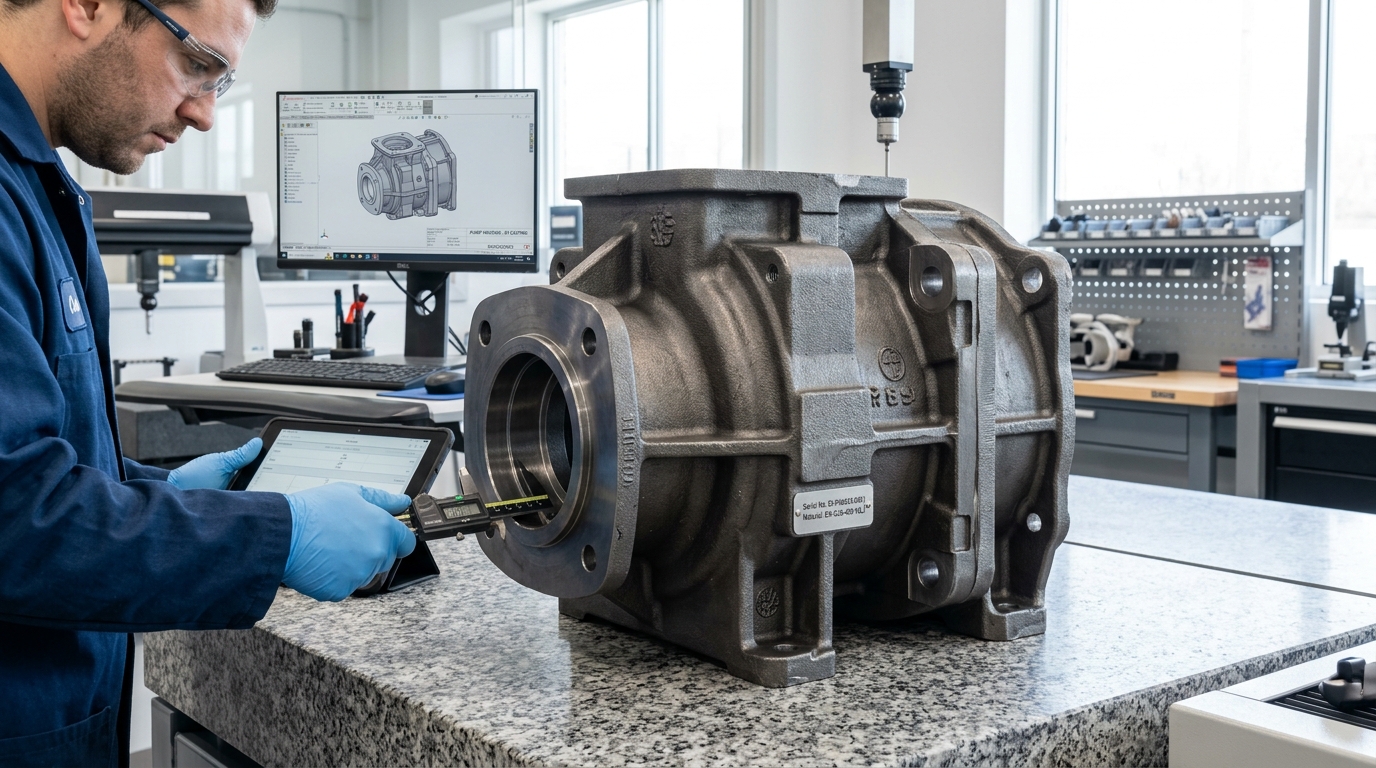
We provide high-performance nodular cast iron components for industries that demand a perfect balance of strength, durability, and cost-efficiency. By utilizing ductile iron investment casting, we deliver near-net shape parts that serve as superior alternatives to welded fabrications and expensive forgings.
Automotive & Heavy Machinery
In the automotive and heavy machinery sectors, our castings are essential for high-stress components. We manufacture critical parts such as:
- Suspension components that require high yield strength and elasticity.
- Gear housings designed to withstand constant vibration and mechanical wear.
- Brackets and mounts that benefit from the material's excellent strength-to-weight ratio.
Agriculture and Field Equipment
For the agricultural market, we supply rugged tractor parts and fertilizer boots designed to withstand abrasive soil conditions and corrosive environments. These parts are often produced using our industrial wax equipment for investment casting to ensure every intricate detail meets strict field requirements. The high ductility and shock resistance of nodular cast iron make it the ideal choice for equipment that faces heavy impact daily.
Fluid Handling and Pressure Systems
Our facility specializes in fluid handling solutions, producing components that must maintain integrity under pressure. We cast:
- High-pressure pump housings with superior surface hardening ability.
- Valve bodies that offer excellent corrosion resistance.
- Manifolds and connectors that require the precise tolerances of the lost wax casting process.
From aerospace components to security and door hardware, our ductile iron castings provide the versatility and performance needed for modern industrial machinery.
Overcoming Challenges in Ductile Iron Investment Casting
Producing high-volume, near-net shape parts requires technologically advanced equipment and deep industry expertise. With nearly 60 years in the business, we know exactly how to tackle the toughest manufacturing hurdles in the foundry to deliver consistent, high-performance components.
Managing Casting Shrinkage Rate
One of the standout benefits of ductile iron investment casting is the immense design freedom it offers engineers without sacrificing performance.
- Non-Existent Shrink Rate: Our advanced casting process effectively manages the casting shrinkage rate, which is virtually non-existent when working with high-grade ductile iron.
- Preventing External Shrinkage: By strictly controlling the cooling and solidification phases, we completely prevent the formation of external shrinkage. This guarantees maximum structural integrity and maintains the superior strength-to-weight ratio required for demanding industrial applications.
Precision Wax Injection Machines
The entire lost wax casting process relies heavily on the very first step: creating the perfect pattern.
- The Foundation of Quality: A high-end wax injection machine for casting dictates the final accuracy of the metal part. If the wax pattern is flawed, the final casting will be too.
- Dimensional Accuracy: Flawless wax patterns ensure we consistently hit strict dimensional casting tolerances, drastically reducing the need for secondary CNC machining.
- Material Consistency: Utilizing premium equipment and deeply understanding injected wax properties allows us to produce highly accurate ceramic shells. This sets the stage for a perfect, defect-free metal pour during high-volume production runs.
FAQs About Ductile Iron Investment Casting
When evaluating materials for high-volume production, engineers often have specific questions about our ductile iron investment casting capabilities. Here are the most common inquiries we receive.
Can ductile iron be investment cast as easily as steel?
Yes, and it often provides distinct manufacturing advantages. Ductile iron offers immense design freedom and versatility without sacrificing performance. One of its greatest benefits is a virtually non-existent shrink rate, which prevents the formation of external shrinkage during cooling. This makes it a highly reliable and cost-effective alternative to other ferrous alloys, forgings, and welded fabrications.
What are the typical dimensional casting tolerances?
We specialize in high-volume, near-net shape casting. Because the process captures intricate details so accurately, the final parts require minimal secondary operations. This precision delivers a favorable cost of manufacturing. While specific numerical tolerances depend on the part's geometry, we offer direct design assistance and project consultation to ensure your exact specifications are met.
How does ADI compare to standard ASTM A536 grades?
Austempered Ductile Iron (ADI) takes standard nodular cast iron to the next level. Austempering is a secondary heat-treat process applied to as-cast ductile iron to significantly increase both tensile and yield strength.
- Standard ASTM A536 Grades: Offer tensile strengths ranging from 60 ksi up to 100 ksi.
- Austempered Ductile Iron (ASTM A897): Available in 5 distinct grades, starting at Grade 1 (130 ksi tensile / 90 ksi yield) and scaling up to Grade 5 (230 ksi tensile / 185 ksi yield) for extreme durability.
Why is the wax injection phase so critical for final accuracy?
The entire lost wax casting process relies entirely on the exactness of the initial wax pattern. As a supplier deeply familiar with wax injection technology, we know that creating a flawless wax model is the only way to guarantee the final ductile iron component achieves its near-net shape. Precision at the injection stage dictates the superior surface finish, dimensional stability, and overall quality of the finished metal part.
 English
  Russian
  German