
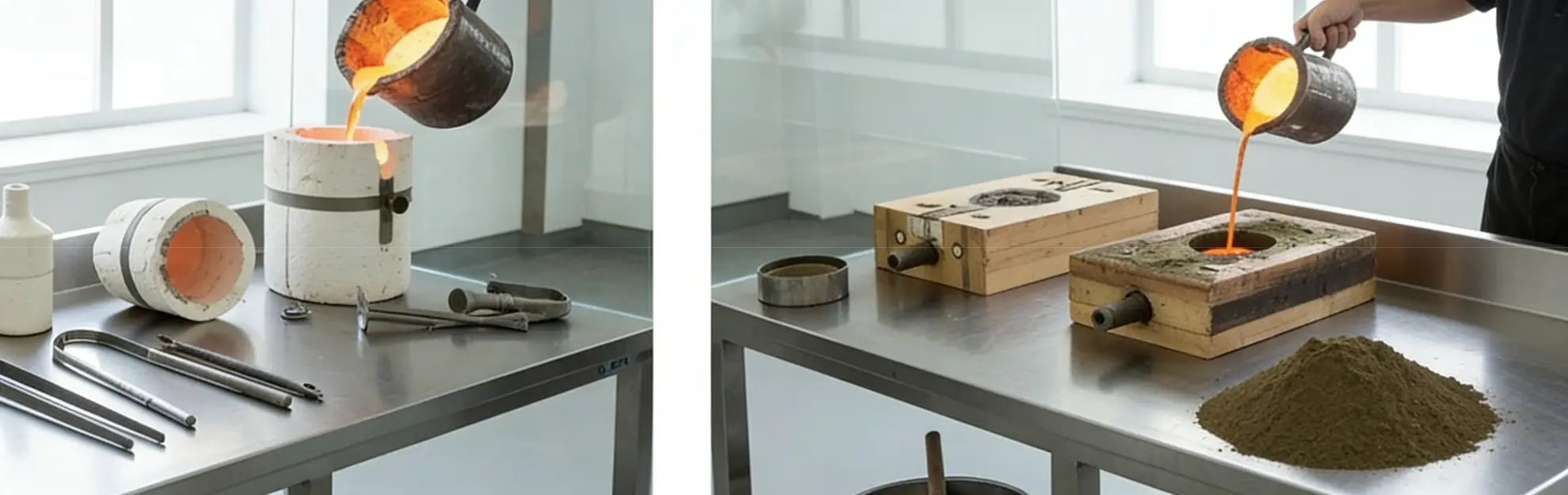
Lost Wax Casting vs Sand Casting (Core Difference)
The fundamental difference between lost wax casting and sand casting lies in the mold material and the level of precision achieved. While both methods involve pouring molten metal into a cavity, lost wax casting (investment casting) focuses on intricate details and high-quality surface finishes, whereas sand casting is the preferred choice for larger, less complex components where cost-efficiency is a priority.
| Feature | Lost Wax (Investment) Casting | Sand Casting |
|---|---|---|
| Mould Material | Ceramic Shell | Sand / Clay Mix |
| Pattern Type | Disposable Wax Pattern | Reusable Wood or Metal Pattern |
| Precision | High Precision Manufacturing | Standard Industrial Tolerance |
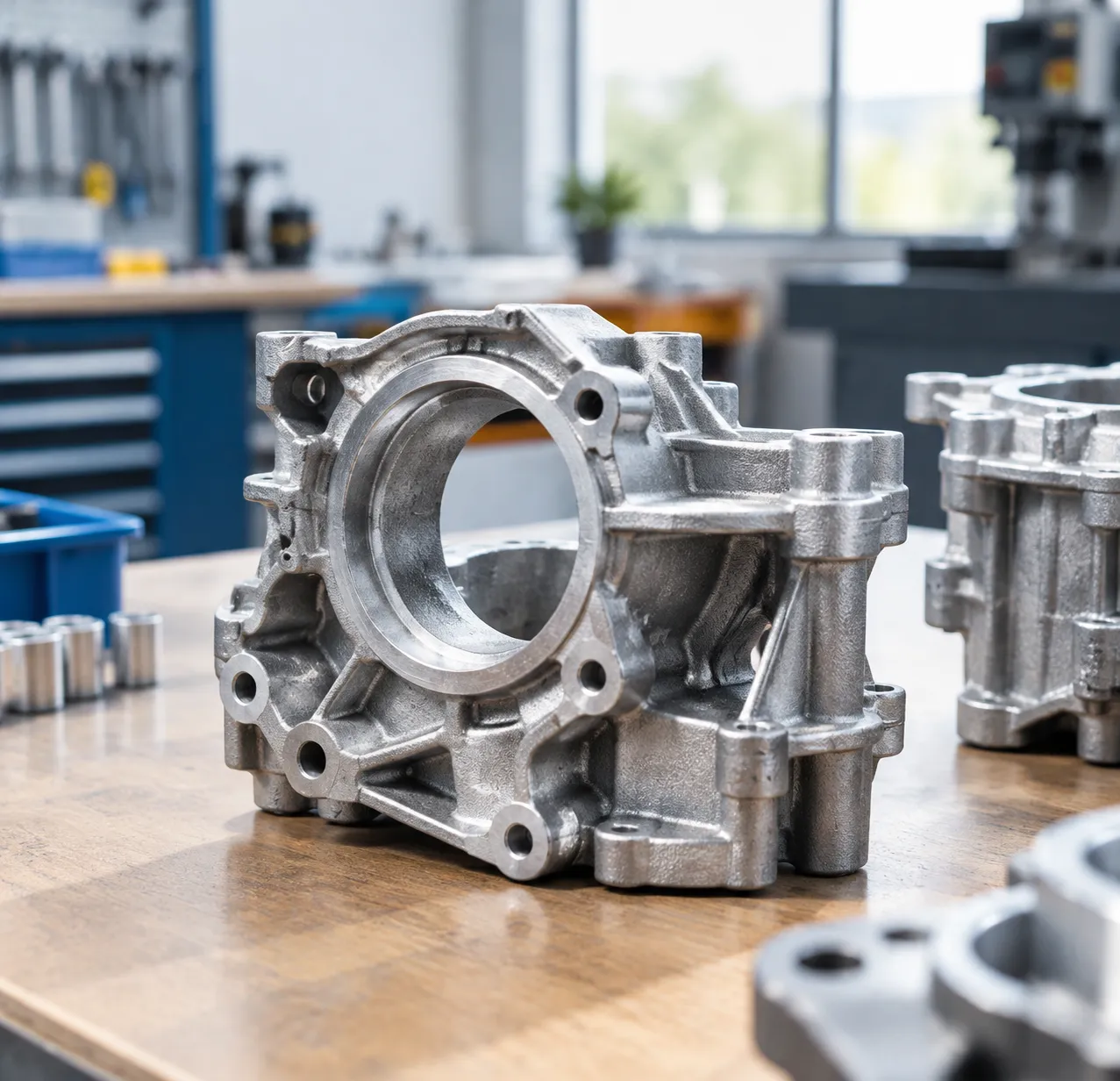
| Surface Quality | Smooth and Refined | Grainy and Textured |
| Design Complexity | High (Intricate Geometries) | Low to Moderate |
What is Lost Wax (Investment) Casting?
Lost wax casting, or investment casting, is a sophisticated process designed for high-accuracy production. The process begins with a wax injection machine to create a precise replica of the final part. This wax pattern is then coated in a refractory ceramic shell. Once the shell hardens, the wax is melted out—hence the term "lost wax"—leaving a detailed cavity for the metal casting. This method is the industry standard for precision manufacturing, allowing for thin walls and complex internal structures that other methods cannot achieve.
What is Sand Casting?
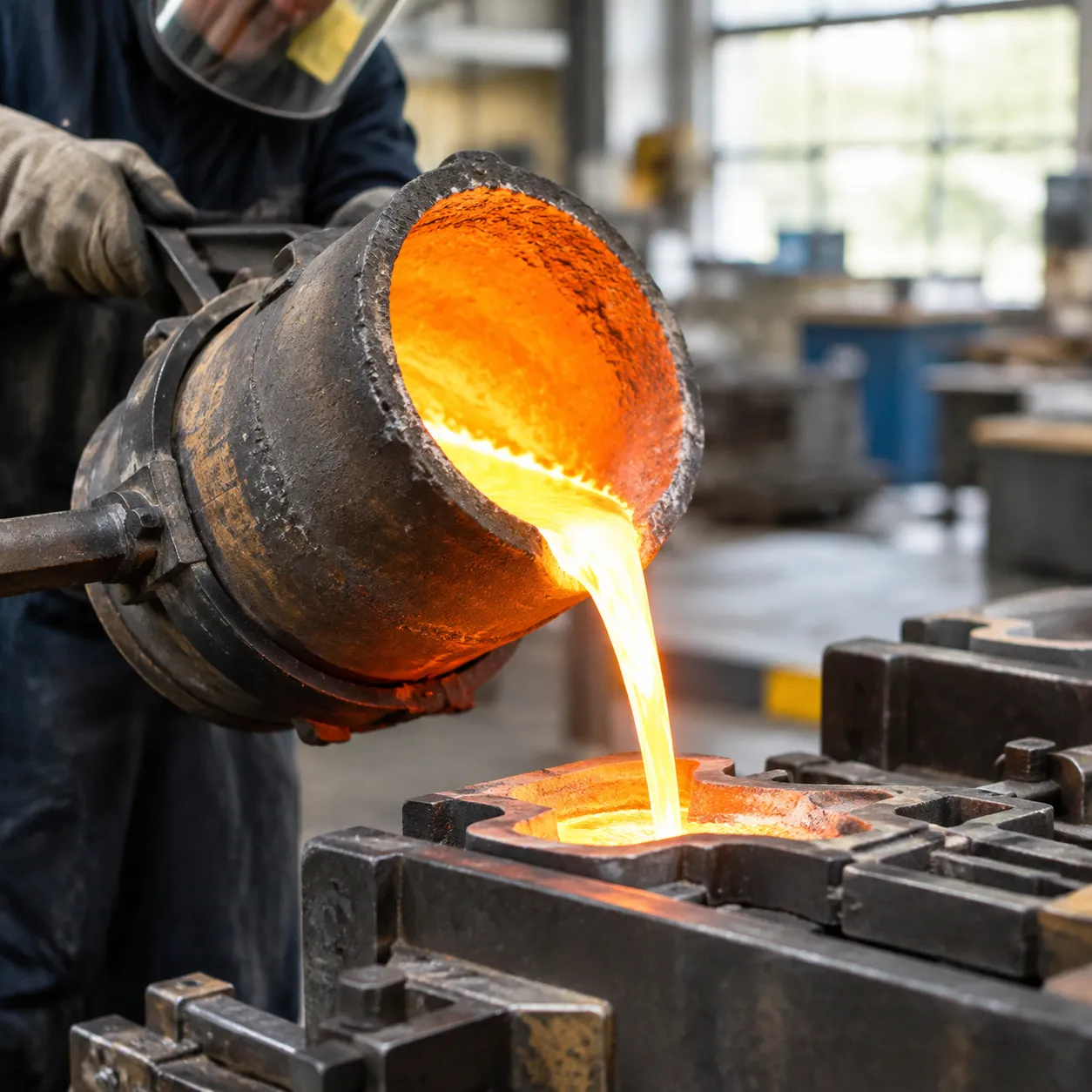
Sand casting is a traditional and highly versatile metal casting technique. It utilizes a mixture of sand and binders as the primary mould material. A pattern is pressed into the sand to create a cavity, which is then filled with molten metal. Because the sand mold is broken away after each pour, it is ideal for producing large-scale industrial parts. While it offers lower tooling costs and faster initial setup, the surface finish is typically rougher compared to investment casting, often requiring additional machining to reach final specifications.
Understanding the Lost Wax Casting Process
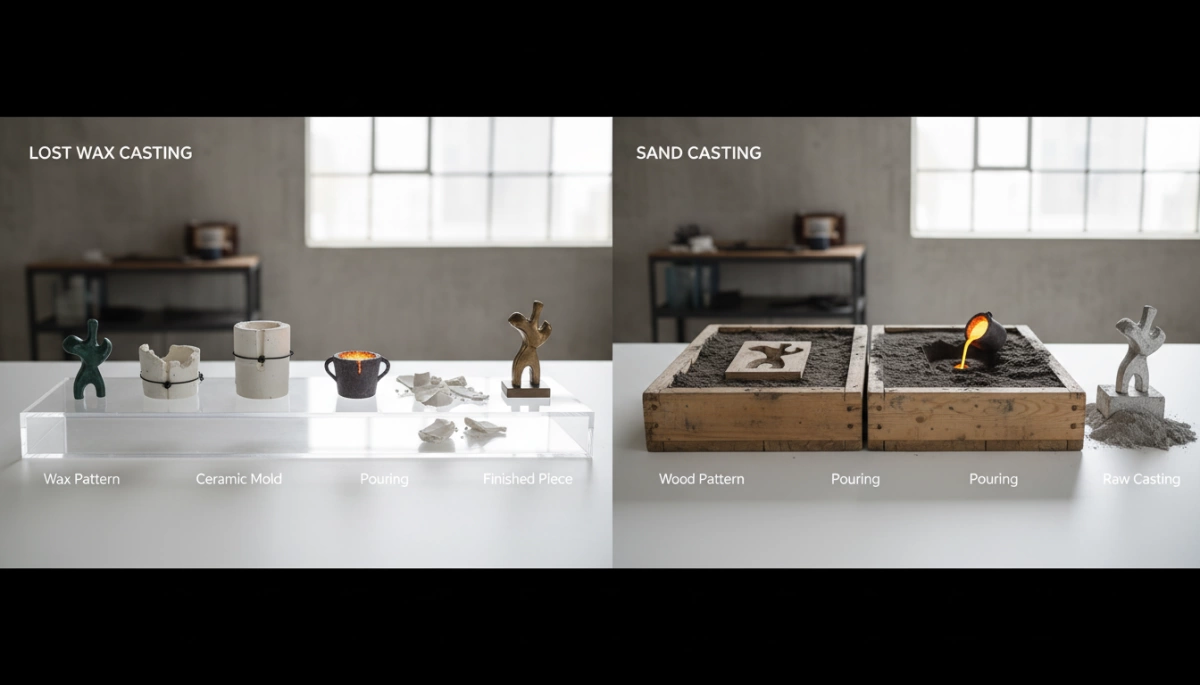
How the Lost Wax Technique Works
The lost wax casting process is a highly accurate metal casting method used to create intricate parts. First, we create a precise replica of the desired part using wax. We rely on a high-quality wax injection machine to form this exact pattern. Next, we dip the wax pattern into a liquid mould material to build a solid ceramic shell. We typically use a silica investment for this step to ensure durability. Once the shell hardens, we heat it to melt the wax out—leaving an empty cavity. Finally, we pour molten metal into the ceramic shell to form the finished piece.
Main Advantages of Lost Wax Casting
When evaluating lost wax casting vs sand casting, the lost wax method clearly leads in precision manufacturing. Understanding the advantages and disadvantages of lost wax casting is crucial for optimizing your production line.
- Exceptional Accuracy: Achieves incredibly tight dimensional tolerances right out of the mold.
- Superior Surface Finish: The fine ceramic shell leaves a smooth surface, drastically reducing the need for costly secondary machining.
- Complex Designs: Easily handles intricate geometries, undercuts, and thin walls that standard sand casting simply cannot achieve.
- Material Versatility: Works flawlessly with a wide range of ferrous and non-ferrous alloys.
Common Applications and Industries
Because investment casting delivers such reliable quality and detail, it is the preferred choice for critical components across global markets.
- Aerospace: Turbine blades, fuel systems, and lightweight structural parts.
- Medical: Precision surgical instruments and orthopedic implants.
- Automotive: High-performance engine components and custom brackets.
- Industrial Machinery: Specialized fluid control valves, impellers, and precision gears.
Understanding the Sand Casting Process
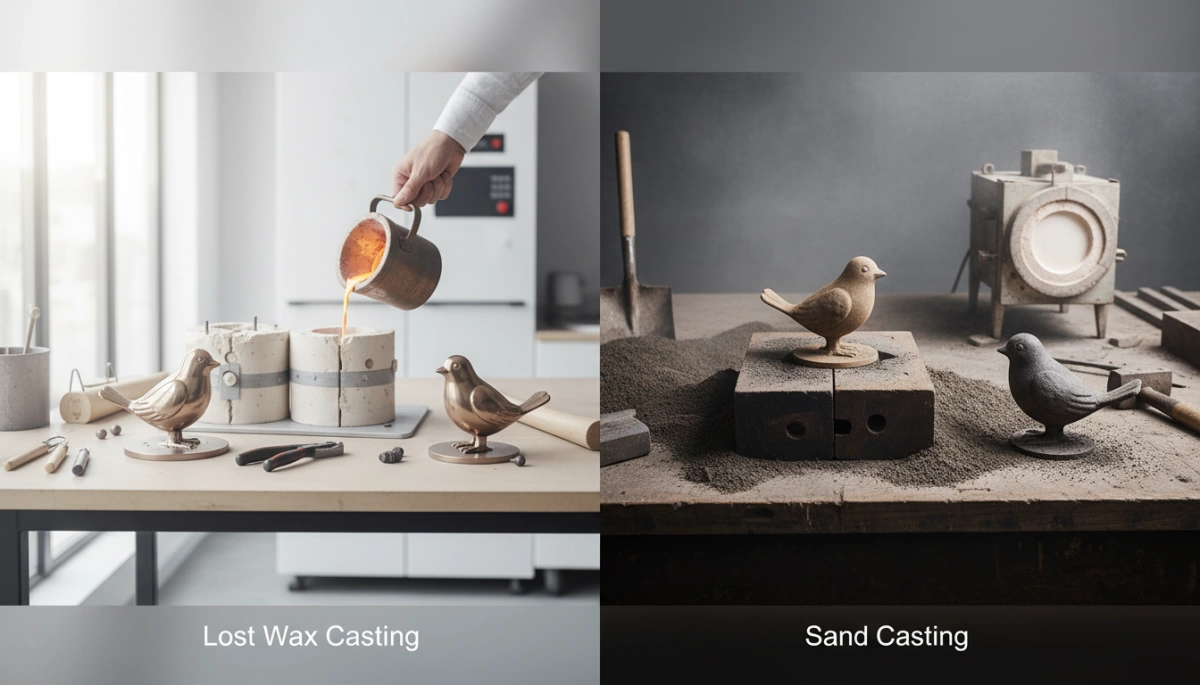
How Mold-Based Sand Casting Works
Sand casting is a foundational metal casting method that relies on a specialized sand mixture to create a mold. We start by placing a pattern—usually made of wood or metal—into a flask, which is then packed tightly with sand and binders to hold its shape. Once the pattern is removed, it leaves a hollow cavity. Molten metal is poured into this cavity, and after it cools, the sand mold is broken away to reveal the part. For those looking for a deeper dive into the technicalities, our sand mold casting guide covers the precision materials and machining steps involved in modern production.
Main Advantages of Sand Casting
When comparing lost wax casting vs sand casting, the latter stands out for its sheer versatility and cost-effectiveness, especially for larger components.
- Lower Tooling Costs: Creating sand molds is significantly cheaper and faster than producing complex wax injection dies.
- Scale and Weight: There is virtually no limit to the size of the parts we can produce, ranging from a few ounces to several tons.
- Material Flexibility: It works with almost any alloy, including those with high melting temperatures.
- Rapid Prototyping: Because the molds are easier to create, we can move from design to physical part much faster for large-scale industrial needs.
Ideal Applications for Sand Castings
Sand casting is the go-to choice for heavy-duty industries where structural integrity and size are more critical than a mirror-like surface finish. We frequently use this method for:
- Automotive: Engine blocks, cylinder heads, and transmission cases.
- Heavy Machinery: Large housings, frames, and structural supports for construction equipment.
- Infrastructure: Large-scale valves, pump bodies, and pipe fittings.
- Mining and Energy: Components for turbines and heavy-duty crushing equipment.
While it may require more post-process machining than investment casting, its ability to handle massive volumes of metal makes it indispensable for global industrial manufacturing.
Key Comparisons: Investment Casting vs Sand Casting
When evaluating lost wax casting vs sand casting, the right choice depends entirely on your project's specific needs. As a reliable partner in metal casting, we look at four main factors to help you make the best manufacturing decision.
Surface Finish and Aesthetics
Lost Wax Casting: Delivers an exceptionally smooth surface finish. The fine ceramic shell used in this method captures incredible detail, drastically reducing the need for secondary polishing or grinding.
Sand Casting: Leaves a noticeably rougher, grainy texture on the metal surface due to the sand mould material. It usually requires extensive post-machining to achieve a clean, aesthetic look.
Dimensional Tolerances and Precision
Lost Wax Casting: This is the go-to method for precision manufacturing. It holds very tight tolerances, making it perfect for complex, intricate geometries. Understanding the complete investment casting process shows exactly why it achieves such high accuracy without extra machining.
Sand Casting: Offers lower precision. The natural shifting of sand and mold expansion means tolerances are much looser, making it better suited for simpler, bulkier parts where exact dimensions aren't critical.
Production Volume and Lead Times
Lost Wax Casting: The initial setup takes a bit longer. However, once the master mold is ready, utilizing a high-quality wax injection machine allows for rapid, high-volume production of identical parts. As a wax injection machine Manufacturer and supplier, we see firsthand how automation drastically cuts down cycle times for large runs.
Sand Casting: Much faster to set up and get the first part in hand. It is ideal for rapid prototyping, short runs, or low-volume production where speed to market is the priority.
Tooling Costs and Overall Pricing
Lost Wax Casting: Features higher upfront tooling costs because you need precision metal molds to create the wax patterns. However, you save significant money on the back end since there is little to no secondary machining required.
Sand Casting: Features lower initial tooling costs. The patterns are cheaper and faster to make, but you will likely spend more money and time on CNC machining to hit your final dimensions.
Quick Comparison Table
| Feature | Lost Wax Casting | Sand Casting |
|---|---|---|
| Surface Finish | Excellent / Smooth | Rough / Grainy |
| Precision | High (Tight tolerances) | Low (Loose tolerances) |
| Tooling Cost | Higher upfront | Lower upfront |
| Best For | Intricate, high-volume parts | Large, simple, low-volume parts |
| Post-Machining | Minimal to none | Extensive |
Choosing the Right Metal Casting Method
Deciding between lost wax casting vs sand casting comes down to your project's specific needs. We always look at the part's complexity, required finish, and production volume before making a call. Both metal casting methods have distinct strengths that cater to different manufacturing goals.
When to Choose Lost Wax Casting
Also known as investment casting, this method is our go-to for high-end precision manufacturing. It uses a detailed wax pattern coated in a durable ceramic shell to create the mold.
- Complex Geometries: Perfect for intricate parts with thin walls, undercuts, or internal cavities.
- Superior Surface Finish: Delivers exceptionally smooth surfaces right out of the mold, minimizing the need for secondary machining.
- Tight Tolerances: Achieves exact dimensions for critical, high-performance components.
When to Choose Sand Casting
Sand casting is the heavy-lifter of the foundry world. It relies on a packed sand mold material rather than a delicate silica investment.
- Large Components: Ideal for massive, heavy parts that investment casting simply cannot handle.
- Cost-Effective Tooling: Significantly lower upfront costs for patterns and molds.
- Quick Setup: Faster initial tooling preparation for simpler, bulkier designs.
Material Versatility and Design Freedom
Both methods offer great flexibility, but they handle design limits differently. Lost wax casting allows for near-net-shape designs, giving you ultimate freedom to cast complex shapes without worrying about extensive secondary machining. Sand casting is highly versatile with common metals but struggles to capture very fine details.
When exploring your options, understanding the wide range of lost wax casting materials available can help you match the exact mechanical properties required for your specific application.
Quick Comparison Table
| Feature | Lost Wax Casting | Sand Casting |
|---|---|---|
| Precision | High | Low to Medium |
| Surface Finish | Excellent | Rough |
| Part Size | Small to Medium | Medium to Very Large |
| Design Complexity | Very High | Basic to Moderate |
Frequently Asked Questions
Is lost wax casting stronger than sand casting?
Strength is primarily determined by the metal alloy and the heat treatment process rather than the casting method alone. However, lost wax casting often produces parts with fewer internal defects and better structural integrity. Because the process uses a ceramic shell rather than packed sand, there is a lower risk of sand inclusions or gas porosity, which can sometimes weaken sand-cast components.
Can you switch from sand casting to lost wax casting?
Yes, many of our clients transition from sand casting to investment casting when they need to reduce secondary machining costs or improve the surface finish. While the initial tooling for a wax injection machine is a higher upfront investment, the precision you gain often offsets the cost by eliminating extra finishing steps. It is a smart move for parts that require high precision manufacturing and complex details.
Which metal casting method is faster?
If you are looking for the shortest lead time for large, simple components, sand casting is generally faster. The mold-making process is quick, allowing for rapid pouring. In contrast, the lost wax process involves multiple stages, including wax pattern creation, shell building, and drying. However, when comparing shell molding vs sand casting, investment casting provides a "near-net-shape" result that significantly reduces the time spent on post-process grinding and polishing.
 English
  Russian
  German