
Single-Station vs. Two-Station Wax Injectors
In the precision-driven world of lost wax casting, selecting the right machinery configuration defines your foundry's throughput. At Vastpce, we engineer both single and double-station units to match specific production goals. Understanding the fundamental operational differences between a standard investment casting wax injection machine and a two station wax injection machine is the first step toward optimizing your floor plan.
What is a Single-Station Wax Injection Machine?
The single-station unit is the traditional workhorse of the industry. It features a dedicated hydraulic system, wax reservoir, and clamping unit designed to operate a single mold at a time.
- Dedicated Focus: One operator manages one die, allowing for total concentration on complex pattern removal.
- Simplicity: Easier setup for heavy molds or prototypes that require frequent parameter adjustments.
- Application: We recommend this for lower volume runs or very large parts where die cooling cycle time is long and unpredictable.
Understanding the Two-Station (Double-Station) Wax Press
The double station wax press is essentially two machines fused into a single operational footprint. It allows a single operator (or automated arm) to manage two molds simultaneously. The workflow is staggered: while Station A is in the injection and cooling phase, the operator is removing the wax pattern from Station B.
- Zero Idle Time: Eliminates the "waiting for cooling" bottleneck.
- High Output: Significantly increases the pattern production rate without doubling the labor cost.
- Versatility: You can often run two different molds with different injection parameters on the same machine.
Key Structural Differences: C-Frame vs. Four-Column
We offer different frame structures depending on the mold clamping force and accessibility required. Choosing the right structure is critical for maintaining wax pattern shrinkage control.
| Feature | C-Frame Wax Injector | Four-Column Wax Injector |
|---|---|---|
| Structure | Open on three sides (C-shape). | Four solid pillars supporting the platen. |
| Accessibility | Excellent; easy manual access for operators. | Restricted side access; higher stability. |
| Stability | Good for standard tonnage (10T–20T). | Superior rigidity for high tonnage (35T–100T). |
| Best For | Frequent mold changes and manual pattern removal. | High-precision, automated heavy-duty runs. |
The Role of Shared Hydraulics in Two-Station Units
The efficiency of the two-station design lies in its shared architecture. Instead of maintaining two separate power units, we utilize a centralized hydraulic wax press system to drive both stations.
- Energy Efficiency: One motor and pump system powers both clamping units, reducing overall energy consumption compared to running two separate machines.
- Footprint Optimization: By sharing the wax reservoir and electrical cabinet, we drastically improve foundry floor space efficiency.
- Consistent Quality: A unified heating and agitation system ensures the paste wax injection temperature and viscosity remain identical across both workstations.
Head-to-Head: Efficiency, Space, and Labor Comparison
When deciding between a standard investment casting wax injection machine and a two station wax injection machine, the choice usually comes down to how you manage downtime. In our experience manufacturing these units, the biggest bottleneck in the lost wax casting process isn't the injection itself—it's the cooling time. Here is how the two configurations stack up against each other in a direct comparison.
Round 1: Production Efficiency & Cycle Time
The pattern production rate is the primary metric for any foundry. With a single-station machine, the cycle is linear: inject, wait for cooling, remove, repeat. The machine and operator are effectively paused during the cooling phase.
In contrast, a double station wax press allows for overlapping cycles. While Station A is in the cooling phase (which can take significantly longer than injection for thick parts), the operator can inject wax at Station B. This staggered approach effectively doubles the output potential for molds with medium-to-long cooling times without requiring faster injection speeds that could compromise pattern quality.
Round 2: Floor Space Utilization (Footprint)
Factory real estate is expensive. Running two separate single-station machines requires space for two hydraulic systems, two wax reservoirs, and two electrical cabinets. This creates a cluttered floor plan and increases the maintenance footprint.
Our two-station wax injection machines are designed for maximum foundry floor space efficiency. By sharing a central hydraulic drive and a single, larger thermal control system between two clamping units, we significantly reduce the physical footprint. You get the output capacity of two machines while occupying roughly 1.5x the space of a single unit.
Round 3: Labor Optimization and Operator Uptime
Labor costs often outweigh equipment costs over time. On a single-station C-frame wax injector, the operator utilization rate drops whenever the mold is clamped and cooling. The operator is simply waiting.
The two-station configuration optimizes this labor. One operator can comfortably manage both stations. As they remove the finished pattern from the left station, the right station is finishing its cooling cycle. This keeps the operator active and productive throughout the shift, drastically reducing the cost per wax pattern.
Round 4: Cost vs. Benefit Analysis
Investing in a two-station machine requires a higher upfront capital expenditure than a single standard unit, but it is substantially cheaper than buying two separate machines. The shared components (hydraulics, PLC, wax tank) lower the manufacturing cost, savings we pass on to the foundry.
When you factor in the reduced labor cost (one operator vs. two) and the space savings, the wax injection ROI for a two-station unit is typically achieved much faster for high-volume production environments.
Quick Comparison: Single vs. Two-Station
| Feature | Single-Station Machine | Two-Station (Double) Machine |
|---|---|---|
| Throughput | Standard (1x) | High (1.8x - 2.0x) |
| Operator Requirement | 1 Operator | 1 Operator |
| Cooling Downtime | High (Machine waits) | Low (Overlapped cycles) |
| Footprint | Compact | Efficient (Shared hydraulics) |
| Ideal Application | Large molds, Prototypes | High-volume, Small/Medium parts |
| Maintenance Points | Single system | Shared central system |
Deep Dive: The Cooling Bottleneck Solution
Why Wax Cooling Slows Down Production
In the lost wax casting process, the actual injection of liquid or paste wax takes only a few seconds. The real drag on your pattern production rate is the die cooling cycle time. Wax needs time to solidify and stabilize inside the aluminum mold before it can be safely removed without distortion.
On a standard single-station machine, the equipment and the operator sit idle during this cooling phase. For thicker parts requiring longer dwell times, this "dead time" can account for over 50% of the total cycle, significantly hurting overall foundry efficiency.
How Two-Station Machines Eliminate Idle Time
We engineered our two-station wax injection machine for investment casting to turn that downtime into production time. By integrating two independent workstations into a single unit, we allow the operator to manage a continuous workflow.
While one side is locked down under pressure for cooling, the operator is unloading the finished pattern and prepping the next injection on the other side. This setup drastically improves the operator utilization rate, ensuring you aren't paying staff to watch a machine wait.
Synchronizing Injection and Cooling Cycles
The core efficiency difference in the investment casting wax injection machine vs two station wax injection machine comparison lies in cycle synchronization. Our double-station units utilize a shared hydraulic and wax supply system but allow for independent control of each station.
This means you can stagger the cycles perfectly:
- Station A: Clamped and cooling (Passive phase).
- Station B: Injecting and unloading (Active phase).
You can even run two completely different molds with different cooling requirements simultaneously. This flexibility ensures that the machine is always producing value, effectively doubling output for parts with long cooling times without doubling your equipment investment.
When to Stick with a Single-Station Wax Injector
While the efficiency of a double-station machine is undeniable for high-volume output, there are specific scenarios where a dedicated single-station wax injection machine remains the superior choice. As manufacturers, we know that "faster" isn't always synonymous with "better" if the machine configuration doesn't match your specific product mix or operational workflow.
Handling Large Geometry Parts and Heavy Molds
When your foundry is casting massive industrial components—such as large turbine blades or aerospace structural parts—the physical size and weight of the die become the deciding factor. A standard C-frame wax injector or a heavy-duty four-column model offers the open access and structural rigidity required for these oversized applications.
- Access: Single-station units typically offer wider daylight openings and easier access for overhead cranes or forklifts to load heavy molds.
- Stability: Concentrating the entire mold clamping force (often 50T to 100T) on a single die ensures maximum stability and minimizes flash on large surface area parts.
- Focus: Operators can focus entirely on the complex extraction of one large pattern without the distraction of a second cycle finishing simultaneously.
Complex Automation and Robotic Removal
Automation thrives on consistency. When you are integrating sophisticated foundry automation equipment, a single-station setup often simplifies the programming logic for robotic arms.
If your process requires delicate pattern removal or the insertion of ceramic cores prior to injection, a dedicated station provides a fixed, repeatable point for the robot. For facilities implementing advanced robot integrator applications, a single-station machine reduces the complexity of the cell, ensuring that the robot arm doesn't have to toggle between two different coordinate systems or wait for staggered cycles. This setup is ideal for maintaining a precise, uninterrupted rhythm in fully automated lines.
Low-Volume Prototype Work and Specialty Runs
Not every job is a high-volume production run. For job shops focusing on R&D, prototyping, or "high-mix, low-volume" orders, the single-station wax press offers unmatched flexibility.
- Quick Changeovers: Setting up one mold is faster than balancing the parameters for two.
- Parameter Control: You can fine-tune the injection pressure parameters and wax temperature for a specific specialty part without worrying about how those settings might affect a second mold sharing the same reservoir.
- Efficiency: There is no benefit to a dual-station machine if the second station sits idle due to a lack of orders.
For short runs where the pattern production rate is less critical than pattern accuracy and quick die swaps, the single-station machine is the most cost-effective and logical solution.
When to Upgrade to a Two-Station Wax Injection Machine
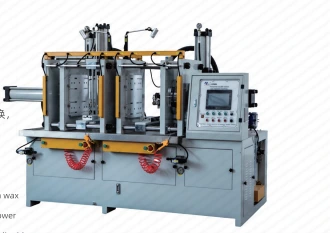
Deciding between a standard single unit and a double-station configuration often comes down to your production goals. As a manufacturer, we recommend upgrading to a double station wax press when your facility needs to drastically increase throughput without significantly increasing overhead. If your order book is overflowing but your floor space isn't, this is the logical next step for your investment casting equipment.
High-Volume Production Runs (Automotive, Medical)
For industries like automotive and medical sectors, where demand for precision components is relentless, speed is non-negotiable. A single-station machine simply cannot keep up with mass production quotas unless you install rows of them.
- Double the Output: By utilizing two workstations on a single frame, you effectively double your pattern production rate for small-to-medium components.
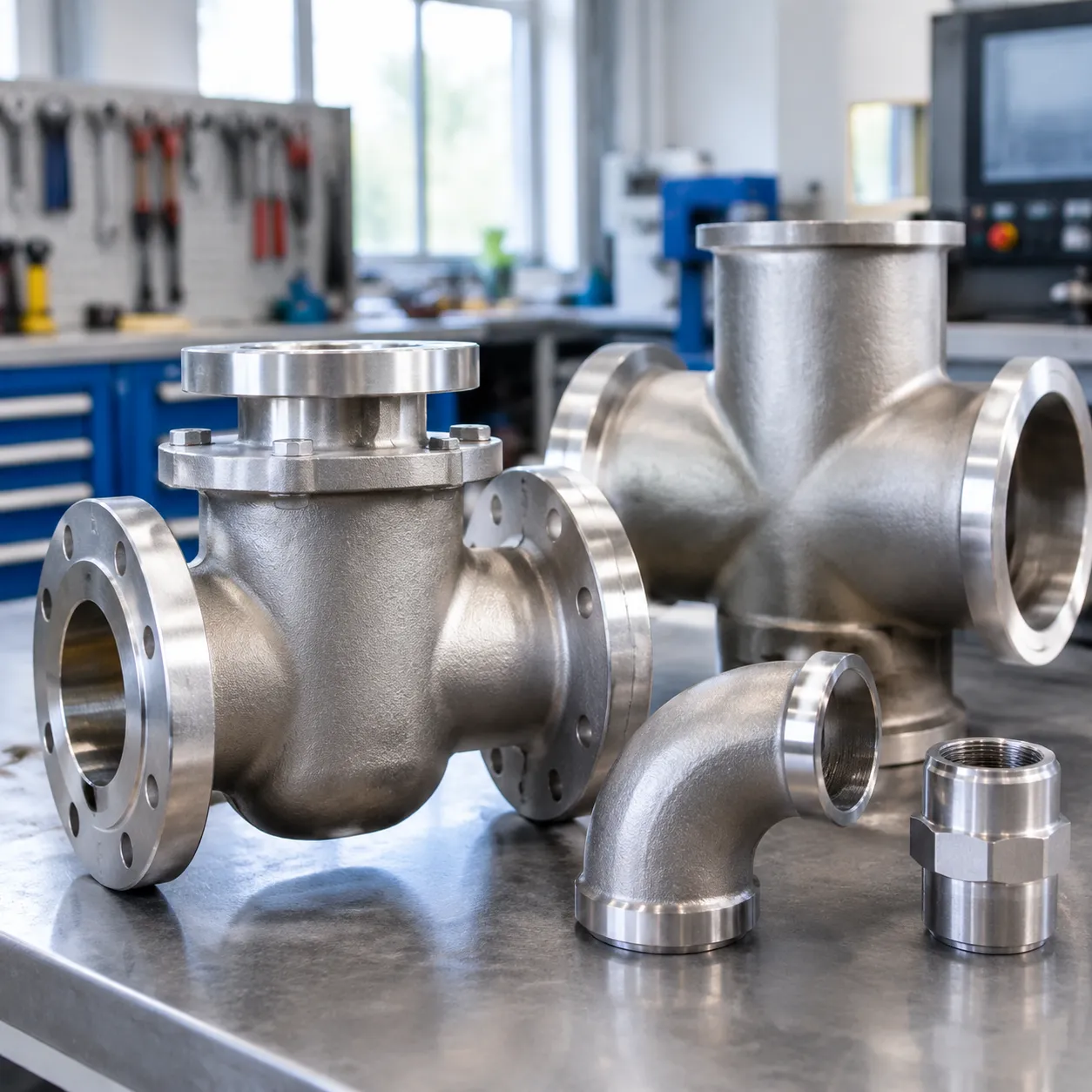
- Streamlined Workflow: This setup is ideal for producing high quantities of identical or similar parts, such as valve bodies or orthopedic implants, ensuring your wax injection ROI remains high.
Running Molds with Similar Cooling Times
The real efficiency of a two-station machine comes from synchronizing the die cooling cycle time. In a single-station setup, the operator often stands idle while the wax solidifies inside the mold.
- Eliminate Downtime: With a dual-station unit, the operator injects the second mold while the first one is in its cooling phase.
- Balanced Cycles: This works best when running two molds with similar thermal properties. The continuous rhythm keeps the hydraulic wax press active and the operator busy, maximizing labor utility.
Maximizing Output in Limited Factory Space
Real estate is one of the biggest costs for any foundry. Installing two separate single-station machines requires double the footprint, double the electrical hookups, and more maintenance access space.
- Compact Footprint: A two-station machine shares the main hydraulic system, wax tank, and control panel. This design offers superior foundry floor space efficiency, delivering the output of two machines in roughly the space of 1.5.
- Shared Resources: You save on energy and maintenance since there is only one power unit and one wax reservoir to manage.
To see how these configurations stack up against each other in detail, you can review our machine comparison guide to determine the best fit for your production line.
Vastpce Technical Specs & Precision Control
At Vastpce, we engineer our equipment to deliver consistent results, whether you are running a standard investment casting wax injection machine vs two station wax injection machine. The difference in output often comes down to the control systems and build quality. We integrate high-end components to ensure that every wax pattern meets strict dimensional tolerances.
PLC and Touch Screen Integration (Siemens/Omron)
We don't cut corners on the "brain" of the machine. Our units feature PLC controlled injection systems powered by industry leaders like Siemens, Omron, and Mitsubishi. The human-machine interface (HMI) is designed for simplicity, allowing operators to monitor cycle times and adjust parameters without navigating complex coding.
- Recipe Storage: Save injection parameters for hundreds of different molds.
- Real-Time Monitoring: Track cycle counts and fault diagnostics instantly.
- User-Friendly: Intuitive touch screens reduce operator training time.
You can browse our equipment catalog to see which models feature these advanced control systems as standard.
Temperature Stability and Injection Pressure Control
Controlling the state of the wax is critical for minimizing wax pattern shrinkage control. Our machines utilize advanced PID temperature controllers to maintain the wax reservoir and nozzle temperature within ±1°C.
Precise injection pressure parameters are equally vital. We allow for multi-stage injection settings, ensuring that complex geometries are filled completely without flashing.
| Feature | Specification | Benefit |
|---|---|---|
| Temp Control | PID (±1°C) | Prevents flow lines and shrinkage |
| Injection Pressure | 0–10 MPa (Adjustable) | Handles both delicate and dense patterns |
| Flow Control | Proportional Valve | Smooth filling for intricate dies |
Customization Options: Auto-Clamp and Tonnage (10T–50T)
Every foundry has unique requirements regarding part size and mold clamping force. We offer a flexible range of tonnage options, from compact 10-ton units for jewelry and small precision parts up to heavy-duty 50-ton presses for automotive and aerospace components.
- Clamping Force: 10T, 20T, 35T, up to 50T available.
- Structure: Choose between C-Frame for accessibility or Four-Column for maximum stability.
- Automation: Optional auto-clamp and hydraulic ejection systems to speed up the pattern production rate.
If you need specific modifications to fit your production line, visit our support page to discuss custom engineering solutions.
FAQ: Common Questions About Wax Injection Configurations
Does a two-station machine really double production output?
In many scenarios, yes. While the actual injection speed remains constant based on the wax type, the investment casting wax injection machine process is often bottlenecked by cooling time. A two station wax injection machine allows the operator to unload a finished pattern from Station A while Station B is still in its cooling cycle. This overlapping workflow significantly increases the pattern production rate per operator compared to a single-station setup where the operator waits idly for the wax to solidify.
Can I run two different molds on a double-station machine simultaneously?
Absolutely. We design our double station wax press units with independent workstations. Even though they share a central hydraulic system and wax supply, the injection parameters—such as pressure, flow, and dwell time—can be set individually for each side via the PLC. This flexibility allows you to run a heavy industrial valve mold on the left station and a smaller precision bracket mold on the right without any interference.
How much floor space do I save with a two-station unit?
You save a significant amount of factory real estate. Replacing two separate single-station machines with one double-station unit eliminates the need for a second hydraulic power pack, a second wax tank, and the extra clearance required between machines. This maximizes foundry floor space efficiency, allowing you to fit more production capacity into a smaller footprint. For more details on installation dimensions, you can check our frequently asked questions page.
Is maintenance more difficult on a shared hydraulic system?
Actually, it often simplifies the maintenance routine. Instead of servicing two separate motors, pumps, and oil reservoirs, your maintenance team only needs to focus on one centralized hydraulic wax press system. This reduces the number of wear components and simplifies troubleshooting. If you need specific maintenance checklists for our systems, feel free to contact our support team for guidance.
 English
  Russian
  German