
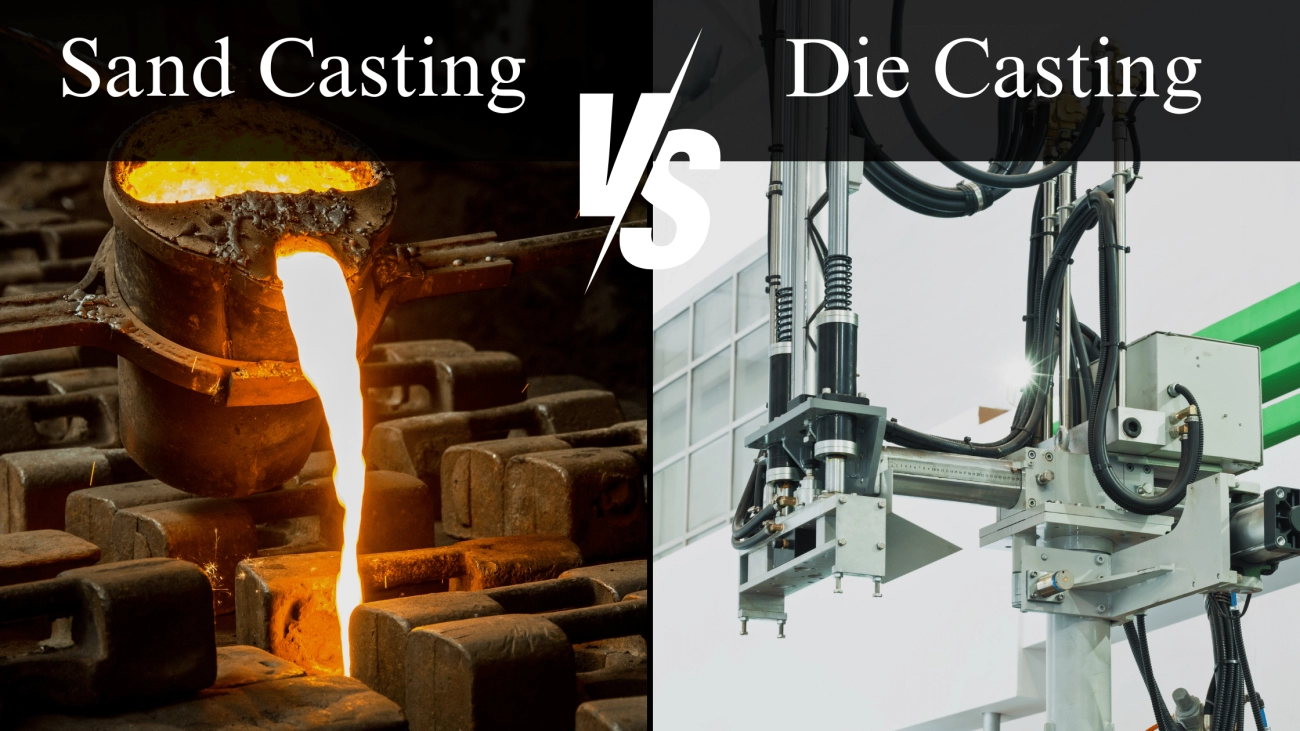
What is Die Casting? (Permanent Mold Process)
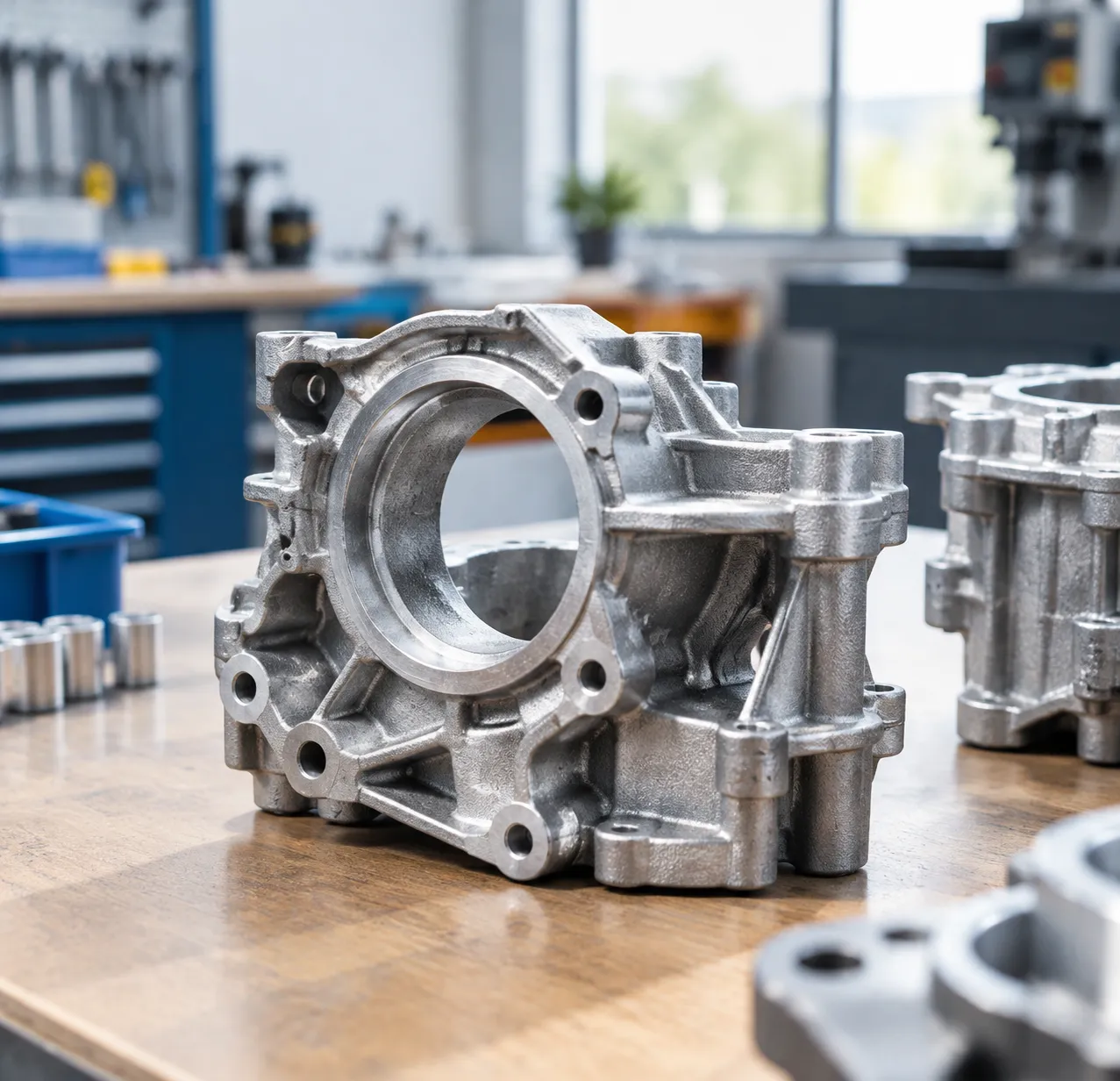
Die casting is a high-speed manufacturing method that utilizes permanent molds, typically machined from high-grade steel. In this process, molten metal is forced into the die cavity under extreme pressure. Because the steel dies are reusable and durable, this method is engineered for mass production, delivering exceptional consistency and dimensional accuracy across thousands of cycles. It is predominantly used for non-ferrous metals like aluminum, zinc, and magnesium, where surface finish and tight tolerances are critical.
What is Sand Casting? (Expendable Mold Process)
Sand casting relies on an expendable mold process, meaning the mold is destroyed to remove the final casting. The mold is created by packing a mixture of sand and bonding agents around a pattern. Once the molten metal solidifies, the sand is broken away, requiring a new mold to be created for every single part. This method offers immense flexibility, allowing for the production of small to very large components and supporting a wider range of alloys, including ferrous metals like iron and steel.
The Core Differences in Manufacturing Logic
The fundamental distinction between these two methods lies in the lifecycle of the tooling and the economics of production. Die casting invests heavily in upfront tooling to achieve low per-unit costs and high speed, while sand casting minimizes initial setup costs at the expense of slower cycle times and higher labor per unit.
Comparison of Manufacturing Logic:
| Feature | Die Casting | Sand Casting |
|---|---|---|
| Mold Type | Permanent (Reusable Steel Dies) | Expendable (Single-use Sand Molds) |
| Process Pressure | High-Pressure Injection | Gravity or Low Pressure |
| Primary Goal | High Volume & Precision | Flexibility & Low Tooling Cost |
| Cycle Time | Seconds to Minutes | Minutes to Hours |
| Ideal Volume | Large Production Runs | Low to Medium Volumes |
The Die Casting Process: Precision and High Volume
When we talk about churning out thousands of identical parts, die casting is the heavyweight champion. As a Wax Injection Machine manufacturer and supplier, we understand the critical need for consistency and speed in manufacturing logic. This process is designed for high-volume production where efficiency is the top priority.
High-Pressure Injection Mechanics
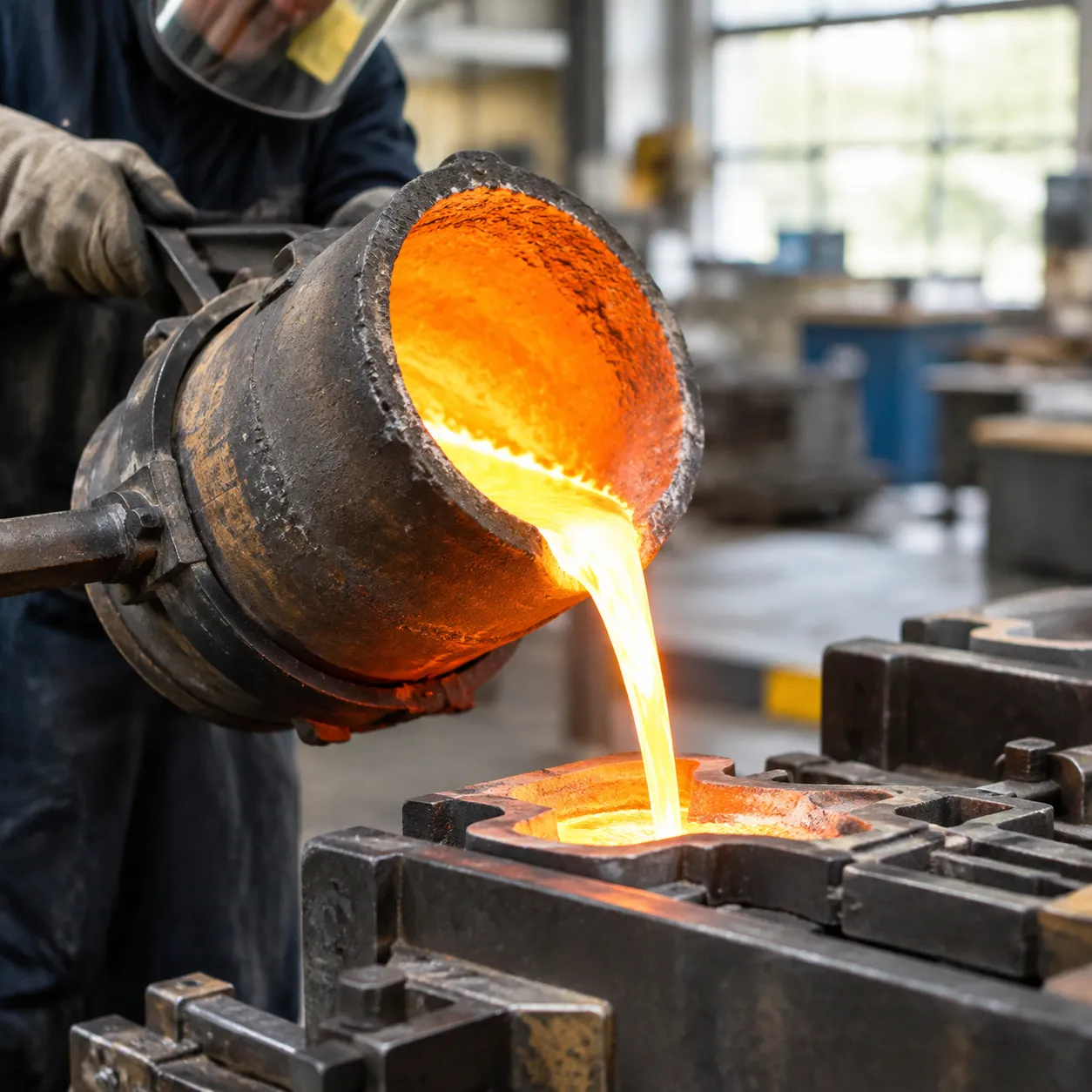
The mechanism here is intense. Unlike gravity-fed processes, die casting forces molten metal into a reusable steel mold (the die) under immense pressure. It is not a slow pour; it is a rapid injection.
This high pressure—often ranging from 1,500 to over 30,000 psi—ensures the metal fills every microscopic crevice of the mold cavity before it has a chance to solidify. This results in a very dense, non-porous structure. The cycle time is incredibly fast, allowing us to produce hundreds of parts per hour depending on the machine size.
Key Advantages: Superior Surface Finish and Accuracy
The biggest selling point here is the quality of the part right out of the gate. You don't need nearly as much post-processing work compared to other methods.
- Excellent Surface Finish: The parts come out smooth and clean. You often skip the heavy grinding and polishing stages.
- Dimensional Precision: We can hold very tight tolerances. If your design requires exact fits for assembly, this process delivers.
- Thin Wall Capability: You can cast intricate, lightweight designs with thin walls that would be impossible with sand casting.
- Consistency: Part #1 and Part #10,000 are virtually identical.
Limitations: Tooling Costs and Size Constraints
However, precision comes at a price. This method is not agile when it comes to setup changes or low volumes.
- High Tooling Costs: The steel dies must be heat-treated and precision-machined. This represents a massive upfront investment. If you are making a prototype or a small batch, the cost per unit is prohibitive.
- Size Limits: You are constrained by the clamping force of the machine. While we can make fairly large engine components, massive industrial parts are generally out of reach.
- Metal Restrictions: This process is primarily used for non-ferrous metals like aluminum, zinc, and magnesium. It is rarely suitable for steel due to the high melting temperatures involved.
The Sand Casting Process: Versatility and Scale
When we look at die casting vs sand casting, the latter stands out for its sheer adaptability. While it may not match the speed of high-pressure methods, sand casting is the industry standard for projects requiring large components or specific alloy types that other processes simply cannot handle. It prioritizes flexibility over raw speed.
How Sand Molds and Patterns Work
The logic here is fundamentally different from permanent mold methods. In sand casting, we create a temporary mold using a mixture of sand and a binding agent packed around a pattern. This mold is "expendable," meaning it is destroyed to remove the solidified part after casting.
Because the mold is created and destroyed for each unit, the setup is much faster and cheaper than machining a steel die. This makes it ideal for lower volumes where high tooling costs would kill the budget. For a broader look at how these methods stack up, you can review our detailed process comparison to see which workflow aligns with your production line.
Advantages: Material Flexibility and Large Part Capability
The biggest win for sand casting is its compatibility with materials. While die casting is mostly limited to non-ferrous metals like aluminum and zinc, sand casting excels with ferrous metals, including iron and steel.
- Size Versatility: We can cast everything from small brackets to massive engine blocks.
- Low Tooling Costs: Patterns are cheap to make compared to hardened steel dies.
- Alloy Range: It handles high-melting-point metals that would damage a permanent die.
Limitations: Dimensional Tolerances and Post-Processing
Despite its versatility, sand casting has trade-offs. The nature of the sand mold results in a rougher, granular surface finish compared to the smooth output of die casting.
- Tolerances: You generally need wider tolerances and thicker walls to ensure a successful cast.
- Secondary Operations: Parts almost always require machining to achieve precise dimensions and smooth surfaces.
- Cycle Time: The process of reforming the mold for every single part is slower and more labor-intensive per unit.
Key Performance Comparison: Head-to-Head
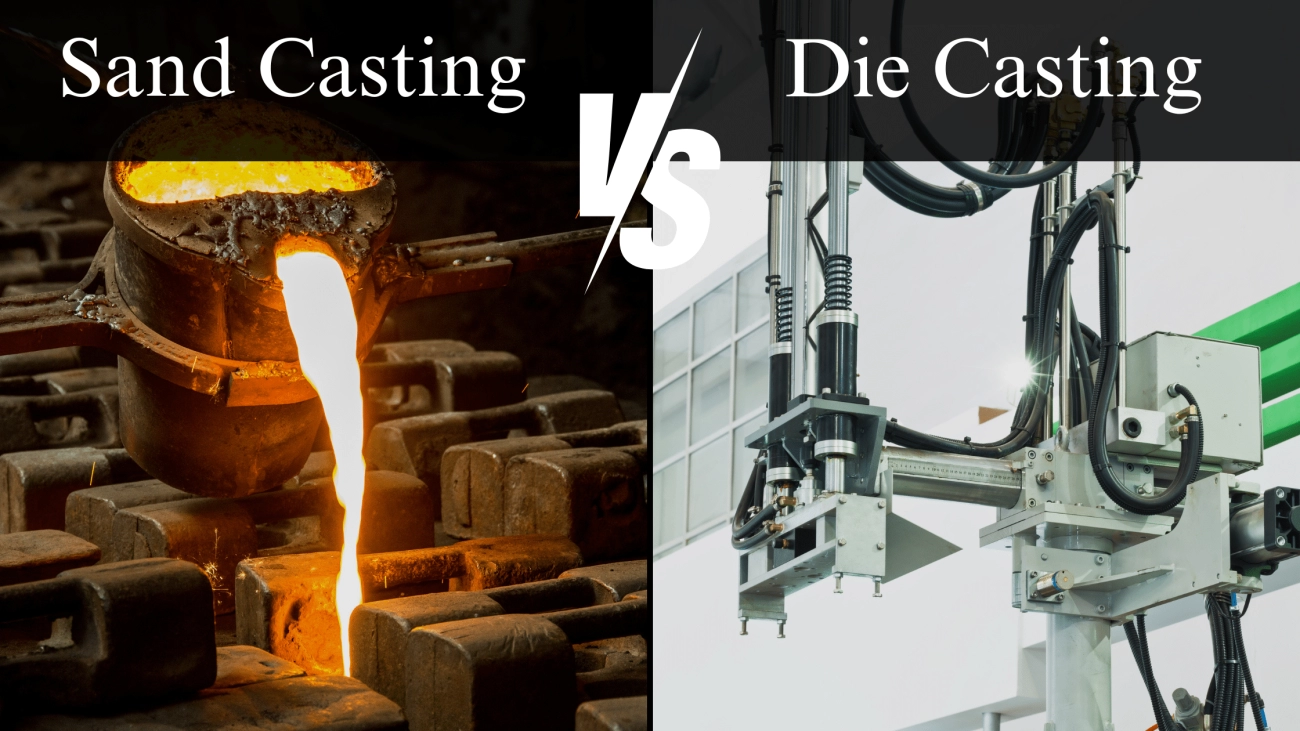
When we analyze die casting vs sand casting, the decision often comes down to specific project constraints rather than one process being universally "better." We need to weigh the trade-offs between speed, precision, and material properties to find the right fit for your supply chain.
Production Volume and Lead Times
Die casting is the undisputed leader for high-volume manufacturing. Once the tooling is ready, we can produce thousands of parts rapidly with consistent quality. The high-pressure injection allows for fast cycle times, making it ideal for mass production. However, the initial lead time is longer due to the complexity of machining steel dies.
In contrast, sand casting is far more agile for low to medium volumes. Since the molds are created from sand and binders, we can move from design to finished part much faster. It avoids the long wait times associated with hardening steel tools, making it the preferred choice for prototypes or smaller batches where speed-to-market for the first unit matters more than the cycle time per unit.
Dimensional Accuracy and Wall Thickness
If your design calls for intricate details and tight tolerances, die casting is the superior method. We can achieve very thin walls—often as low as 0.5mm—and complex geometries that reduce the need for secondary machining. This precision is critical for modern, lightweight components.
Sand casting generally requires thicker walls (typically min. 3mm) to ensure the molten metal flows properly without cooling prematurely. The nature of the sand mold means tolerances are wider. We usually have to add extra material to the design, known as machining allowance, to ensure the final dimensions can be cut to spec during post-processing.
Surface Quality and Aesthetic Requirements
For parts that are visible to the end-user, die casting delivers a much better finish right out of the mold. The surface is smooth and clean, often requiring only minimal polishing or painting. This makes it excellent for consumer electronics or automotive trim.
Sand casting leaves a distinct, rough texture on the part, reflecting the granular nature of the sand mold. While this is acceptable for internal engine components or heavy machinery, parts requiring a sleek aesthetic will need significant grinding, sanding, and finishing work, which adds to the labor cost.
Strength, Durability, and Material Integrity
Sand casting holds a major advantage in material versatility, specifically its ability to handle ferrous metals like iron and steel. This makes it the go-to for heavy-duty structural parts requiring high heat resistance and immense strength.
Die casting is primarily limited to non-ferrous metals like aluminum, zinc, and magnesium. While these alloys are durable and excellent for weight reduction, the process can sometimes trap air pockets (porosity) due to the high-speed injection. For a detailed manufacturing process comparison, it is crucial to balance the mechanical load requirements against the material limitations of each method.
| Feature | Die Casting | Sand Casting |
|---|---|---|
| Primary Volume | High (Mass Production) | Low to Medium |
| Surface Finish | Smooth, High Quality | Rough, Granular |
| Wall Thickness | Thin (Complex Shapes) | Thick (Simple Shapes) |
| Tolerances | Tight (High Precision) | Wide (Requires Machining) |
| Metals | Non-Ferrous (Al, Zn, Mg) | Ferrous (Steel, Iron) & Non-Ferrous |
Material and Metal Compatibility
Best Metals for Die Casting: Aluminum, Zinc, and Magnesium
When we look at **die casting**, we are almost exclusively dealing with **non-ferrous metals**. The process utilizes reusable steel molds, which means the metal being cast must have a lower melting point than the mold itself. If we tried to use iron or steel, the high temperatures would damage the expensive tooling immediately.
- Aluminum: Lightweight and corrosion-resistant, making it the most popular choice for automotive and aerospace parts.
- Zinc: Offers high ductility and is easy to plate, perfect for smaller, intricate components.
- Magnesium: Extremely light and easy to machine, often used when weight reduction is critical.
Why Sand Casting is Ideal for Ferrous Metals and Steel
**Sand casting** offers a distinct advantage regarding material freedom. Because the molds are made of sand mixed with a binder, they have high refractoriness, meaning they can withstand the extreme heat required to melt **ferrous metals**. This makes sand casting the standard method for producing heavy-duty iron and steel components that require high structural integrity.
Since the mold is destroyed after every cycle, we don't have to worry about thermal fatigue damaging permanent tooling. This flexibility allows manufacturers to cast everything from grey iron to stainless steel. For facilities handling these heavy, high-temperature operations, integrating a robot integrator application can significantly improve safety and efficiency by automating the handling of heavy sand molds and hot castings.
Comparing Alloy Properties: A380 vs. A356 Aluminum
Even when using the same base metal, the casting process dictates the specific alloy we use. A prime example in the **die casting vs sand casting** debate is the choice of aluminum alloys.
- A380 (Die Casting): This is the most common alloy for die casting. It is formulated for excellent fluidity, allowing it to fill tight die cavities quickly under high pressure. It provides good mechanical properties but is generally not heat-treated.
- A356 (Sand Casting): Frequently used in sand casting, A356 offers superior strength and ductility. Unlike A380, this alloy responds very well to heat treatment (like T6), making it the preferred choice for critical structural parts that need to withstand significant stress.
Cost Analysis: Tooling vs. Unit Price
When evaluating die casting vs sand casting, the financial decision usually hinges on the balance between upfront capital and long-term unit savings. We help our clients navigate this trade-off to ensure the manufacturing method aligns with their budget and volume targets.
Initial Investment: Die Casting Dies vs. Sand Patterns
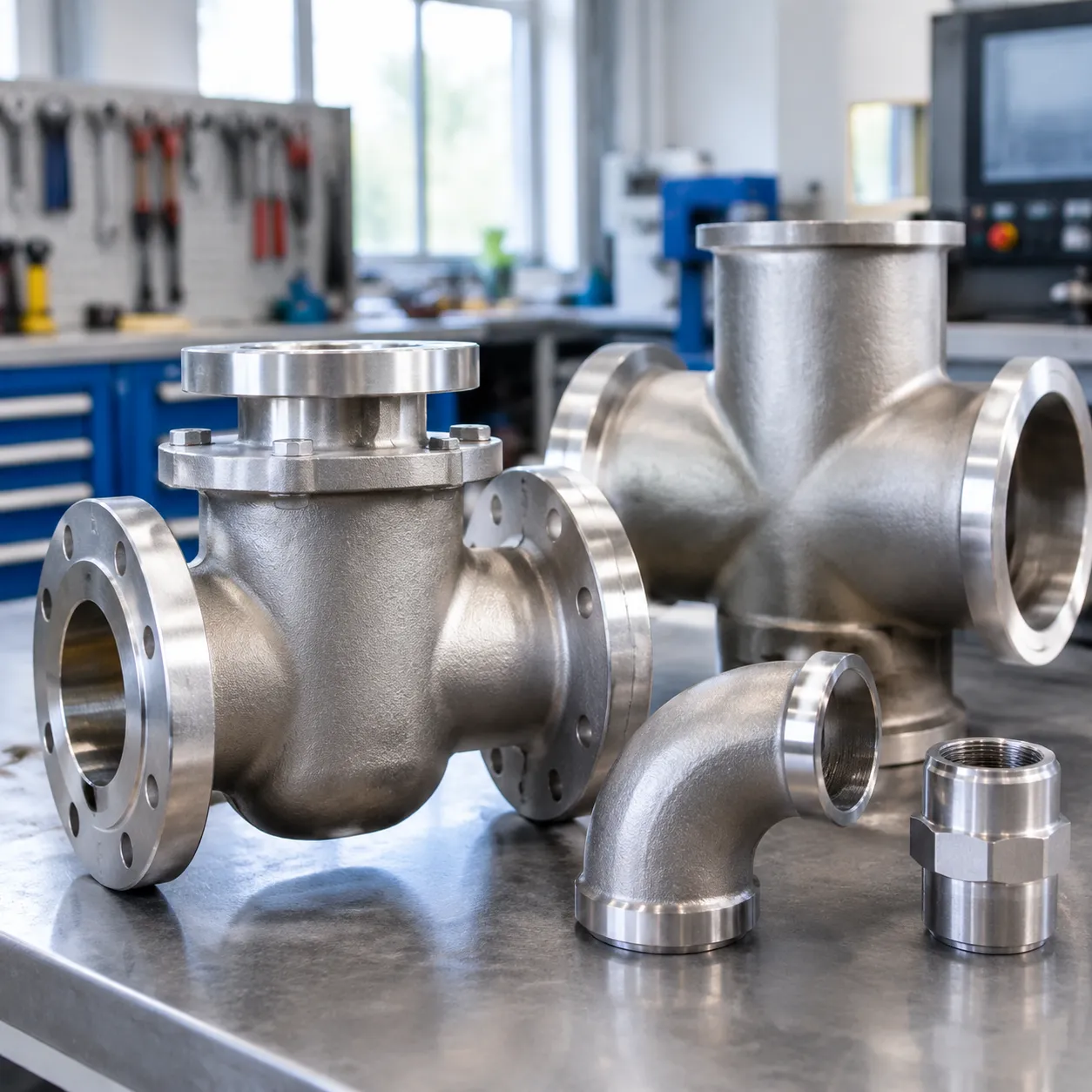
The entry cost is the most immediate difference. Die casting requires the creation of permanent steel molds (dies). These tools must be precision-machined to withstand high pressure and thermal cycling, making them a significant upfront investment. In contrast, sand casting uses patterns typically made from wood, plastic, or softer metals. These patterns are far cheaper and faster to produce than steel dies. If you are looking to minimize initial risk or capital expenditure, sand casting offers a much lower barrier to entry.
Labor Costs and Automation Efficiency
Once production starts, the cost structure flips. Die casting is a highly automated process designed for speed. A single mold can produce thousands of parts with very little manual intervention, drastically reducing the labor cost per unit. Sand casting, however, requires a new mold to be created for every single metal part. This repetitive, manual process keeps the per-unit labor cost high. While we leverage advanced technology like a Wax Injection Machine for other precision casting needs, in this specific comparison, the automation of die casting provides a clear efficiency edge for high-output runs. You can verify our efficient production setups by viewing our factory capabilities.
Total Cost of Ownership (TCO) for Small vs. Large Batches
Ultimately, the "best" price depends on your production volume.
- Low Volume: For prototypes or runs of a few hundred parts, the amortization of expensive die casting tooling makes the per-part cost astronomical. Sand casting is the winner here due to low setup costs.
- High Volume: As you scale into the thousands, the low cycle time and reduced unit price of die casting quickly offset the initial tooling investment.
- The Verdict: For mass production, die casting delivers a significantly lower Total Cost of Ownership.
Real-World Applications and Industry Use Cases
When deciding between die casting vs sand casting, the choice often comes down to the specific demands of the industry. Each method has carved out its niche based on volume requirements, material properties, and necessary precision.
Automotive and Aerospace High-Precision Components
In the automotive and aerospace sectors, reducing weight without sacrificing strength is critical. Die casting is the standard for producing high-volume, lightweight parts using non-ferrous alloys like aluminum and magnesium.
- Engine Components: Transmission cases, engine blocks, and valve covers rely on die casting for its ability to hold tight tolerances and create thin walls.
- Aerospace Fittings: Complex brackets and instrumentation housings benefit from the high-speed production and dimensional accuracy of die casting.
While sand casting is used for prototyping these parts to test designs before cutting expensive steel dies, the final mass production almost always shifts to die casting to ensure consistency and lower unit costs.
Heavy Machinery and Large Industrial Castings
For massive components where size and material strength are paramount, sand casting takes the lead. This process is not limited by the size of a steel mold, making it the only viable option for parts that weigh hundreds or thousands of pounds.
- Ferrous Applications: Unlike die casting, sand casting handles high-melting-point ferrous metals like iron and steel, which are essential for durability.
- Typical Parts: We see this method used extensively for pump housings, large impellers, and heavy equipment bases in the construction and mining industries.
If you are exploring how different manufacturing technologies fit into these industrial workflows, you can view our application examples for more context on part production.
Consumer Electronics and Small Intricate Parts
The consumer electronics market demands sleek aesthetics and compact designs. Die casting is favored here because it delivers a superior surface finish directly from the mold, requiring minimal secondary machining.
- Thin-Walled Enclosures: Laptop chassis, smartphone frames, and camera bodies are typically die-cast to achieve a lightweight yet rigid structure.
- Surface Finish: The smooth surface allows for easy painting, plating, or anodizing, which is difficult to achieve with the granular finish typical of sand casting.
For high-volume runs of small, complex parts where appearance is just as important as function, die casting offers the efficiency and quality control needed to meet consumer expectations.
Selection Guide: Which Casting Method Suits Your Project?
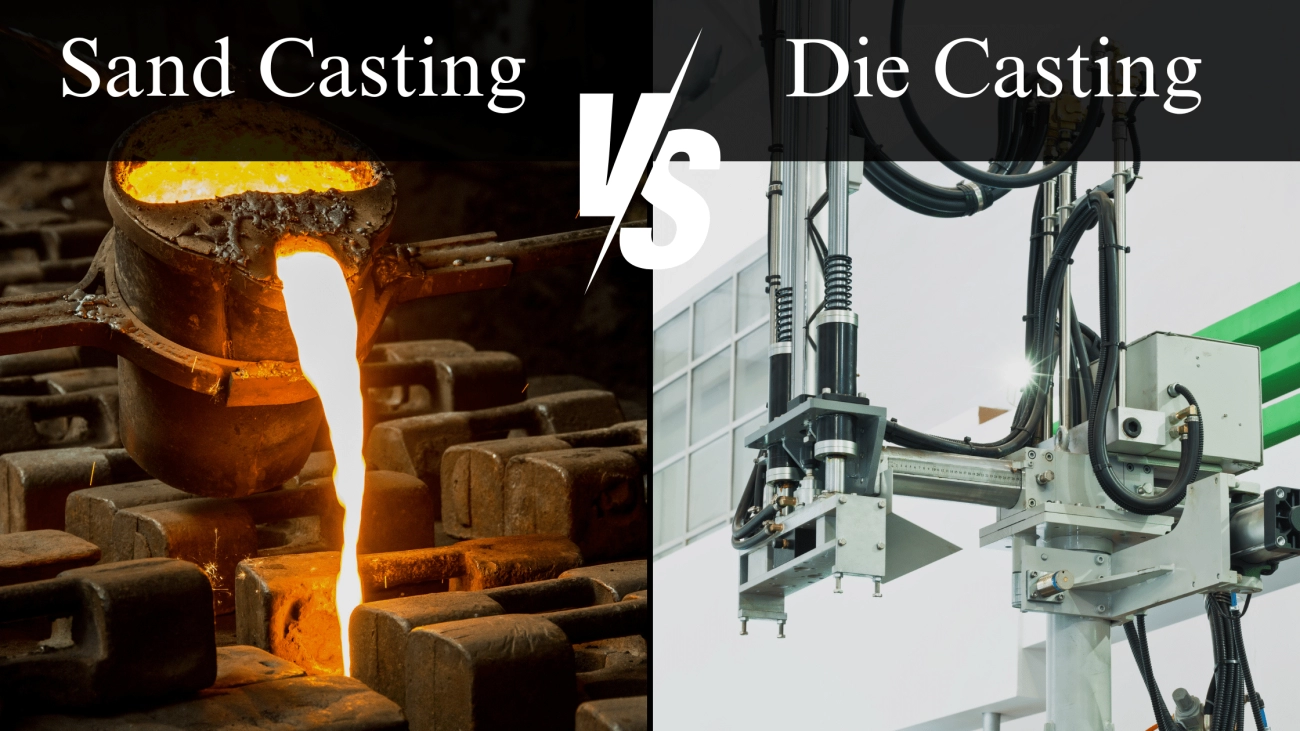
Deciding between die casting vs sand casting ultimately comes down to balancing your budget, production goals, and the physical requirements of the part. As a manufacturer, I always advise looking at the total cost over the product's life cycle rather than just the upfront price tag.
Choosing Based on Production Volume (The Tipping Point)
The most critical factor in this decision is quantity. The economics of these two processes behave very differently as you scale.
- Low to Medium Volume (Sand Casting): If you need anywhere from 1 to 1,000 units, sand casting is usually the winner. The initial tooling (the pattern) is inexpensive to create. You don't want to sink thousands of dollars into a steel die if you are only making a few hundred parts.
- High Volume (Die Casting): Once you cross the threshold into thousands or millions of parts, die casting becomes far more economical. While the initial investment for the steel molds is high, the incredibly fast cycle times drive the per-unit cost down significantly.
Evaluating Design Complexity and Geometry
Your design's physical traits will often dictate the process for you.
- Precision and Thin Walls: If your part requires intricate details, thin walls, and tight dimensional tolerances, die casting is the superior choice. It produces a "near-net-shape" part that requires very little machining.
- Size and Flexibility: For massive components or parts with thick walls, sand casting is more capable. It is also the go-to method for ferrous metals like iron and steel, whereas die casting is typically restricted to non-ferrous alloys like aluminum and zinc.
Prototyping Strategies: Transitioning from Sand to Die Casting
A common strategy in product development is to start with sand casting for prototyping and initial market testing. Since sand molds are temporary and patterns are easy to modify, you can refine your design without breaking the bank.
Once the design is frozen and demand spikes, you can invest in hard tooling for die casting to handle mass production. As a Wax Injection Machine manufacturer and supplier, we understand that having the right machinery is vital for any stage of production. You can visit our shop for industrial manufacturing solutions to see how we support scalable manufacturing workflows. This hybrid approach allows you to minimize risk while maximizing scalability.
Frequently Asked Questions
Which process is more cost-effective for low-volume production?
For small batches, sand casting is almost always the more economical choice. The reason comes down to upfront investment. Creating a sand mold is quick and cheap compared to machining the hardened steel dies required for die casting. If you only need a few hundred parts, the high tooling cost of die casting won't amortize well, making the per-unit price far too high. We recommend sticking to sand casting until your volumes justify the switch to permanent steel molds.
Can sand casting achieve the same precision as die casting?
Generally, no. Die casting is known for its exceptional dimensional accuracy and superior surface finish because the metal is forced into a precision-machined steel mold under high pressure. This allows for thin walls and complex shapes right out of the gate. In contrast, sand casting produces parts with a rougher, granular surface and wider tolerances. While sand cast parts are durable, they almost always require secondary machining to achieve the tight specs that die casting offers naturally.
How do environmental impact and sustainability compare?
The primary difference lies in the mold's lifecycle. Die casting utilizes permanent molds that are reusable for thousands of cycles, which minimizes waste over high-volume production runs. On the other hand, sand casting relies on expendable molds that are destroyed after a single use to release the part. While the sand can often be recycled, the process involves constantly creating and destroying molds, which consumes different energy resources compared to the one-time tooling creation in die casting.
 English
  Russian
  German