
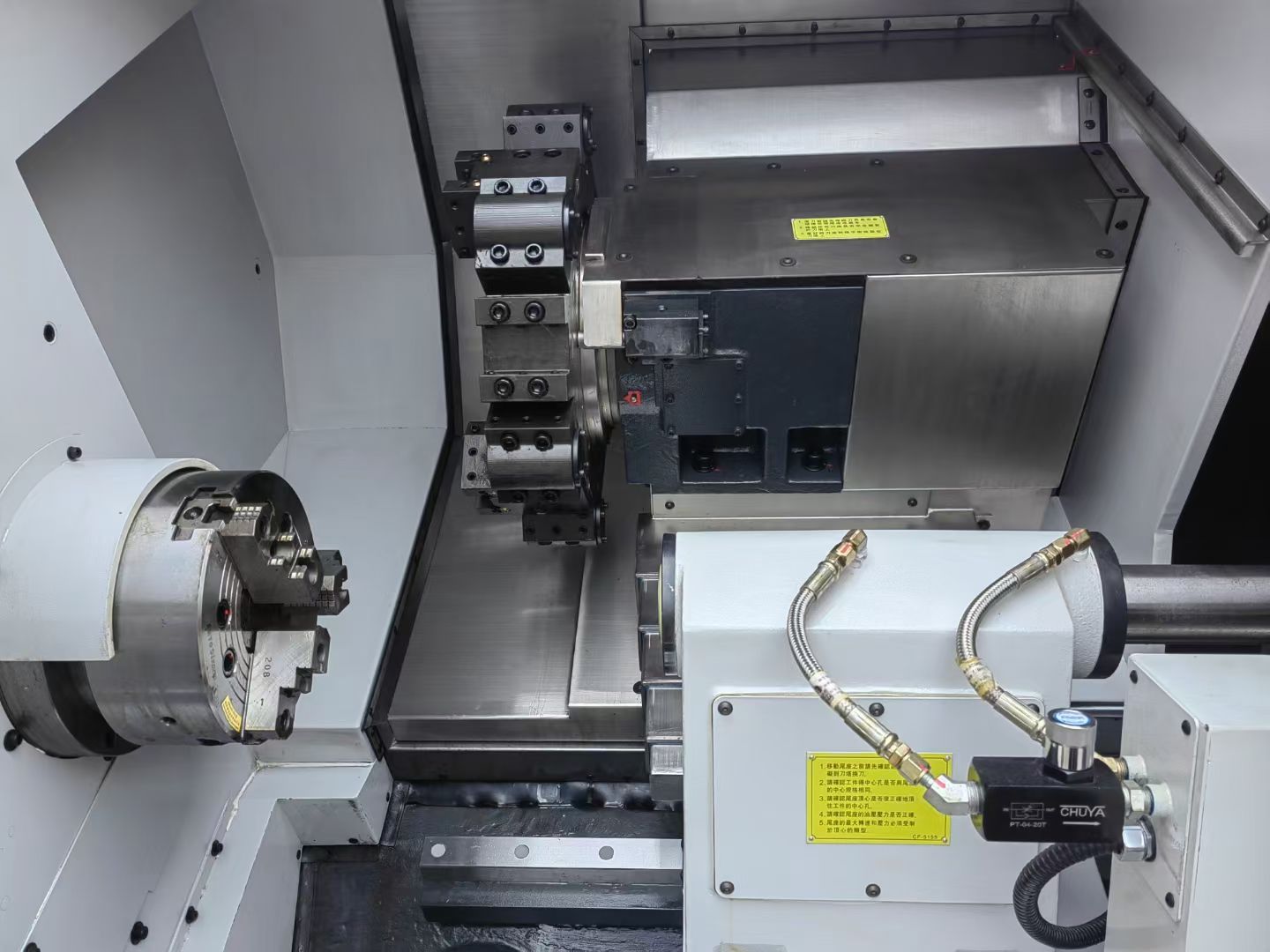
Engineer focused guide to sourcing precision machining parts with CNC milling turning tight tolerances quality control materials and Vast PCE expertise.
Defining Precision Machining Parts
Are you tired of receiving components that fail final inspection? Does the fear of a supplier missing a critical dimension by a hair’s breadth keep you up at night? We understand that sourcing a precision machining part is about more than just cutting metal; it is about purchasing engineering certainty. When you trust us with your designs, we know you aren’t looking for “close enough”—you need components that fit perfectly the first time, every time. Here is exactly how we define and deliver true precision.
Understanding Tolerance Levels
In the world of precision part machining, tolerance is the difference between a functional component and a paperweight. While general machining might accept variances of +/- 0.005 inches, tight tolerance machining demands much stricter control, often down to microns (+/- 0.0001 inches).
We categorize tolerances based on functionality:
- Standard Fit: General assembly parts where minor variance doesn’t impact performance.
- Press/Interference Fit: Precision mechanical components requiring force to assemble, demanding exact dimensional accuracy.
- Running Fit: Parts that must move or rotate against each other without excessive friction or play.
Geometric Complexity Factors
Precision isn’t just about hitting a number on a flat surface; it’s about maintaining accuracy across complex geometry parts. Modern designs often feature organic shapes, deep cavities, and intricate undercuts that standard 3-axis machines struggle to produce.
As a precision machining part manufacturer, we tackle complexity through:
- Multi-Axis Reach: Accessing hard-to-reach features without re-fixturing.
- Thin-Wall Stability: Machining lightweight structures without inducing warping or chatter.
- 3D Contouring: Creating smooth, organic curves essential for aerodynamic or ergonomic applications.
Surface Finish Standards
A part can be dimensionally perfect but still fail if the surface texture is wrong. Surface finishing is a critical aspect of our custom CNC machining services, affecting everything from seal integrity to wear resistance. We measure surface quality using Ra (Roughness Average) to ensure the part performs as intended.
Common Surface Requirements:
- Ra 3.2 µm (125 µin): Standard “as-machined” finish; visible tool marks but cost-effective.
- Ra 0.8 – 1.6 µm (32 – 63 µin): Smooth finish; ideal for mating surfaces and precision machine parts.
- Ra 0.4 µm (16 µin) or lower: Polished or ground finish; required for high-speed bearings or sealing surfaces.
Core Manufacturing Processes
To deliver a flawless precision machining part, we rely on a mix of advanced subtractive manufacturing technologies. As a dedicated precision part machining manufacturer, we don’t believe in a “one size fits all” approach. We select the specific process that guarantees the best geometric accuracy and surface finish for your specific application.
5-Axis CNC Milling Capabilities
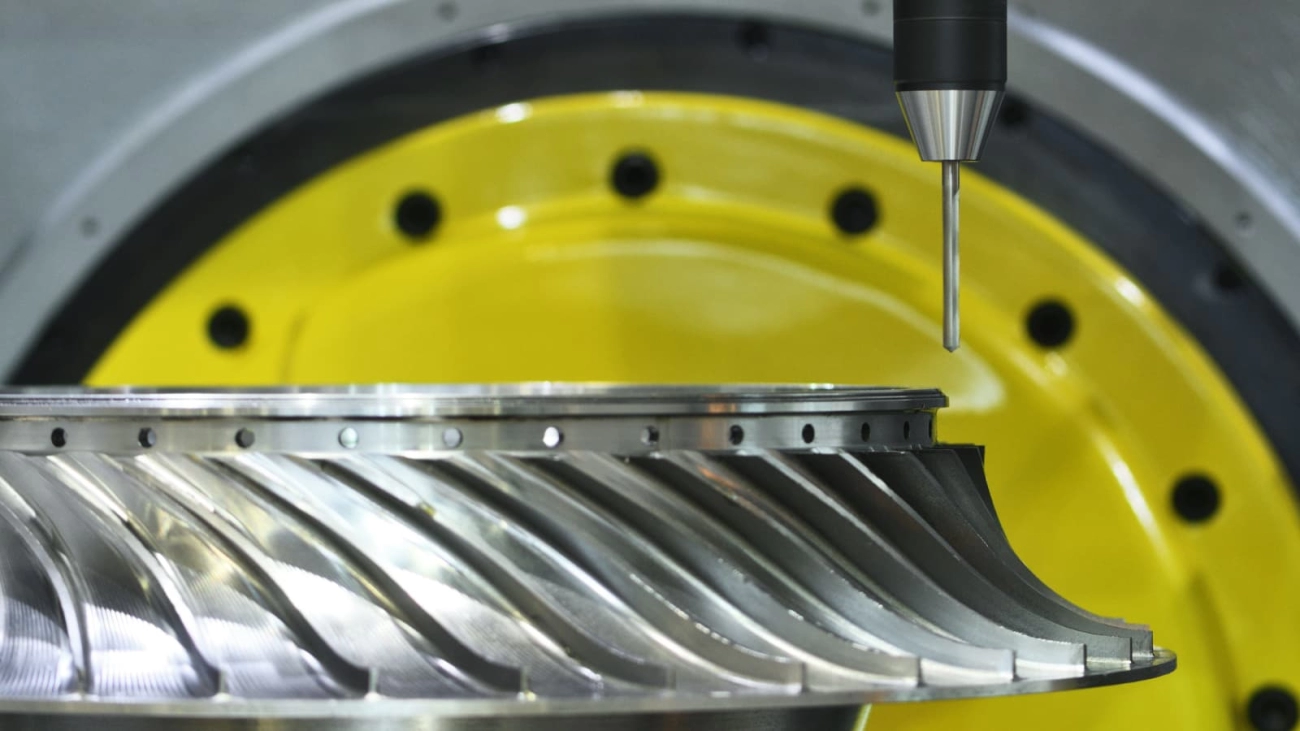
When dealing with complex geometry parts, standard 3-axis machines often require multiple setups, which introduces room for error. We utilize state-of-the-art 5-axis CNC machining to produce intricate precision mechanical components in a single operation. This capability is crucial for aerospace and medical applications where every micron counts.
- Reduced Setup Time: Machining complex shapes in one go speeds up custom CNC machining services.
- Higher Accuracy: Eliminates tolerance stacking from re-fixturing.
- Complex Contours: Easily handles impellers, turbines, and organic shapes.
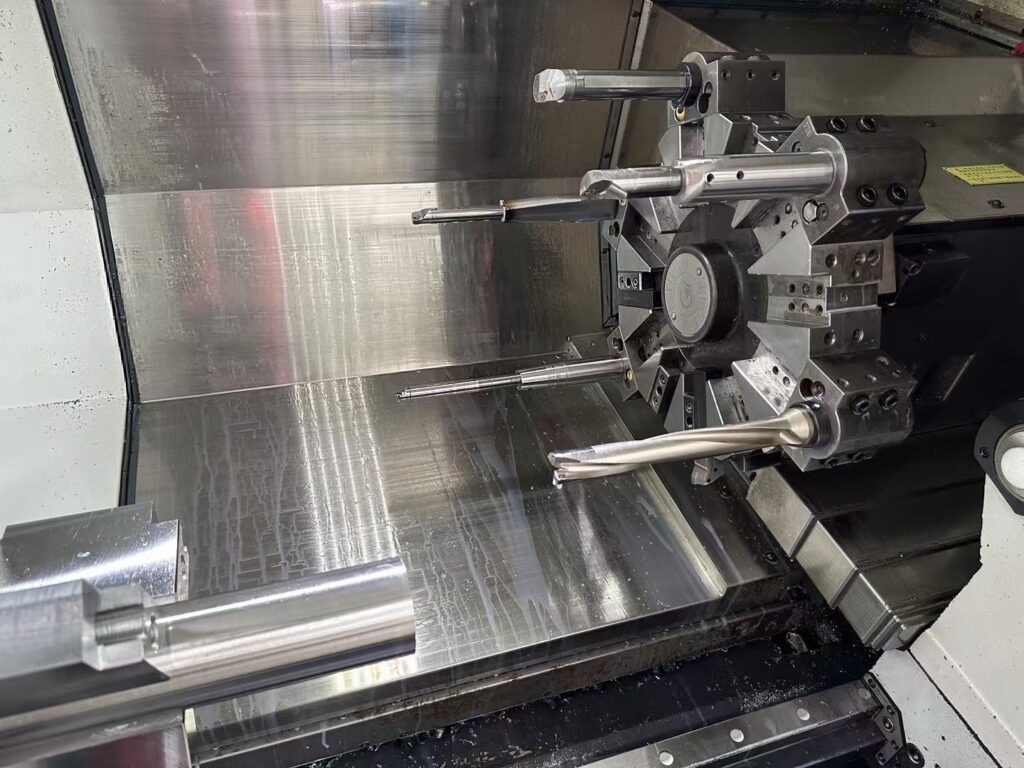
CNC Turning and Lathe Work
For cylindrical components like shafts, pins, and bushings, our CNC milling and turning centers offer unmatched efficiency. We combine live tooling with traditional turning to complete features like cross-holes and flats without moving the part to a separate mill. Whether you need aluminum 6061 machining or harder stainless steel components, our lathes ensure high concentricity and smooth finishes for every precision machine part.
Electrical Discharge Machining (EDM)
Some designs feature internal corners or deep pockets that traditional cutting tools simply cannot reach. This is where we deploy Electrical Discharge Machining. EDM allows us to achieve tight tolerance machining on hardened tool steels and conductive materials without physical contact stress.
- Wire EDM: Perfect for cutting tight radii and tall, straight walls.
- Sinker EDM: Ideal for blind cavities and intricate mold details.
If you are unsure which manufacturing method is best for your design, you can reach out to our team for technical support and design assistance. We help you navigate the trade-offs to ensure you get a cost-effective precision mechanical part that meets your exact specs.
Material Selection for High-Performance Components
Selecting the right material is critical for the functionality and longevity of any precision machining part. At Vast PCE, we don’t just cut metal; we help you match the physical properties of the stock to the specific demands of your application. Whether you need lightweight components for aerospace or corrosion-resistant parts for medical devices, our precision part machining capabilities cover a vast spectrum of certified raw materials.
Aluminum and Stainless Steel Options
Metals remain the backbone of precision mechanical part manufacturing. We specialize in Aluminum 6061 machining and 7075 alloys, which offer an excellent strength-to-weight ratio and are easy to anodize for aesthetic or protective finishes. For environments requiring higher durability and corrosion resistance, our stainless steel components are the industry standard.
- Aluminum 6061/7075: Ideal for structural aircraft parts, automotive frames, and electronics housings.
- Stainless Steel 303/304: Excellent for general industrial hardware and food-grade applications.
- Stainless Steel 316/17-4 PH: The go-to for marine environments and high-stress medical instruments requiring superior hardness.
Machining Engineering Plastics
We are a precision machining part manufacturer that understands plastics are not just for prototyping. Engineering plastics offer unique properties like electrical insulation and low friction that metals cannot match. We routinely machine complex geometries from high-performance polymers, holding tight tolerance machining standards that rival metal components.
Common plastics we machine include:
- PEEK: High thermal resistance, used in medical implants and aerospace.
- POM (Delrin): High stiffness and low friction, perfect for gears and bushings.
- Nylon & ABS: Versatile for general-purpose mechanical parts and enclosures.
Specialty Alloys and Hardness
For projects demanding extreme performance, we process specialty alloys including Titanium, Brass, Copper, and Carbon Steel. Machining these harder materials requires rigid setups and advanced tooling strategies to maintain accuracy. As a precision part machining manufacturer, we utilize robust 5-axis centers to cut these tough materials without sacrificing surface finish or dimensional integrity.
Material Selection Guide
| Material Family | Common Grades | Key Characteristics | Typical Applications |
|---|---|---|---|
| Aluminum | 6061, 7075 | Lightweight, easy to machine, conductive | Aerospace frames, drone parts, heat sinks |
| Stainless Steel | 304, 316, 17-4 PH | Corrosion resistant, high strength | Medical devices, marine hardware, shafts |
| Yellow Metals | Brass, Copper | Electrical conductivity, low friction | Electrical contacts, plumbing fittings |
| Hard Plastics | PEEK, Delrin (POM) | Chemical resistance, lightweight | Insulators, bushings, surgical guides |
| Titanium | Gr2, Gr5 | High strength-to-weight, biocompatible | Implants, high-performance racing parts |
Choosing the correct material impacts both the performance of the precision machine part and the cost of production. Our engineering team provides DFM feedback to ensure your material choice aligns with your budget and the functional requirements of the final assembly.
Quality Assurance and Inspection
When you order a precision machining part, “close enough” doesn’t cut it. At Vast PCE, quality assurance is the backbone of our operation. We don’t just manufacture components; we verify every single dimension to ensure your precision mechanical components function exactly as intended. Our goal is to eliminate risk and deliver parts that fit your assembly line immediately.
ISO 9001:2015 Certification Standards
Being an ISO 9001 certified machine shop means we follow a rigorous, internationally recognized system for quality management. This isn’t just a badge on the wall; it is the playbook that governs our consistency. As a dedicated precision part machining manufacturer, we document every step of the workflow, from raw material verification to the final pack-out. This traceability ensures that if you order a precision machine part today and another batch next year, you get the exact same quality every time.
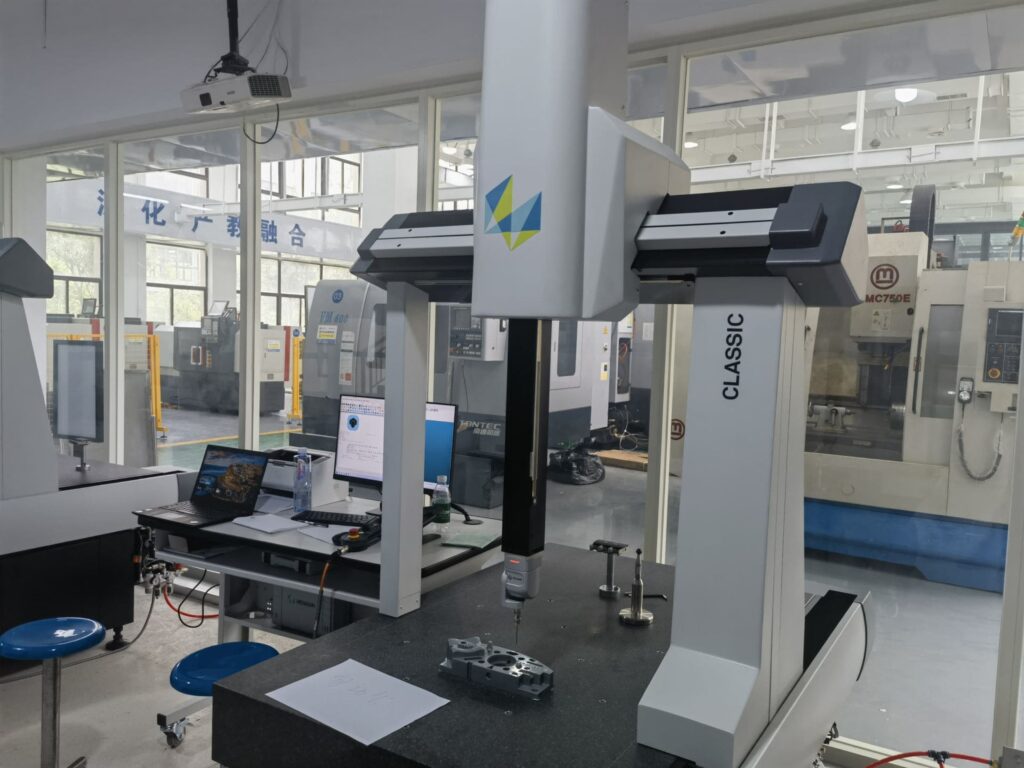
CMM Inspection Protocols
For tight tolerance machining, manual calipers often aren’t enough. We utilize advanced Coordinate Measuring Machines (CMM) to verify complex geometries that standard tools might miss. This technology allows us to compare the physical part directly against the CAD model.
- Dimensional Verification: We measure critical dimensions down to the micron.
- Geometric Tolerancing: We check for flatness, concentricity, and parallelism.
- Documentation: We can provide a detailed CMM inspection report to validate that every feature meets your specifications.
In-Process vs. Final Inspection
Quality control happens at every stage, not just at the end. Our machinists perform in-process inspections right at the CNC machine to catch potential deviations early during the precision part machining process. This proactive approach prevents scrap and keeps costs down.
Once production is finished, the components move to our climate-controlled QC room for final inspection. Here, we perform a comprehensive audit to guarantee compliance. We ensure every shipment meets strict acceptance criteria as outlined in our terms and conditions, ensuring you receive only defect-free parts ready for use.
Cost Drivers in Precision Manufacturing
Understanding what drives the price of a precision machining part is essential for keeping your project within budget without sacrificing quality. At Vast PCE, we believe in transparency. The final cost isn’t just about the material; it is a combination of machine time, labor, and the specific demands of your design. We work closely with our clients to identify cost-saving opportunities through smart Design for Manufacturing (DFM) adjustments.
Balancing Complexity and Cost
The geometric complexity of a part is the biggest factor in determining machining time. A simple block with holes is fast and cheap to produce. However, complex geometry parts that require simultaneous 5-axis CNC machining or multiple setups will naturally cost more.
- Machining Time: Deep pockets, sharp internal corners, and thin walls require slower cutting speeds to avoid tool breakage or part deformation.
- Tooling: specialized undercuts or non-standard thread sizes often require custom tooling, adding to the expense.
- Optimization: We recommend simplifying features that don’t impact functionality. For example, allowing standard radii on internal corners can significantly reduce run time.
The Cost of Tight Tolerances
While we specialize in tight tolerance machining, demanding extreme precision on every single dimension is a common way to inflate costs unnecessarily. Achieving tolerances like ±0.005mm requires rigorous process control, slower feed rates, and frequent tool checks.
- Standard vs. Critical: Apply tight tolerances only to critical mating surfaces or bearing fits.
- Inspection: High-precision features require advanced verification using CMM or OMM, which adds to the labor cost.
- Scrap Rate: Tighter constraints increase the risk of non-conformance, which must be factored into the pricing.
Volume and Economy of Scale
In custom CNC machining services, volume plays a massive role in unit price. A significant portion of the cost for a single prototype comes from the initial programming and machine setup (NRE). Once the machine is running, the cost per unit drops dramatically.
- Low-Volume: Ideal for prototyping and testing fit/form. You pay for the flexibility and speed.
- High-Volume: Setup costs are amortized over thousands of parts. For extremely high volumes where material waste is a concern, we might suggest starting with a near-net shape using our precision casting solution with silica sol process before finish machining, which can offer substantial savings compared to machining from solid stock.
- Material Efficiency: Larger production runs allow us to optimize nesting and material ordering, passing those savings directly to you.
Industry Applications for Custom Parts
At Vast PCE, we understand that a precision machining part is often the critical link in a much larger system. We don’t just cut metal; we engineer solutions for high-stakes sectors where failure is not an option. Our adherence to ISO 9001:2015 and AS9100D standards allows us to serve industries requiring absolute reliability. You can explore our diverse industry applications to see how we adapt our manufacturing strategies to meet specific regulatory and technical demands.
Medical Device Components
In the medical field, precision is directly tied to patient safety. We serve as a trusted precision part machining manufacturer for surgical instruments, orthopedic implants, and diagnostic equipment. Our team specializes in machining biocompatible materials, including Titanium (Ti6Al4V) and medical-grade plastics like PEEK and Ultem. We ensure every precision machine part features burr-free finishes and meets the ultra-tight tolerances required for complex medical assemblies.
Aerospace and Defense Parts
Aerospace manufacturing demands strict traceability and material certification. As an AS9100D certified shop, we produce precision mechanical components that withstand extreme environments. We routinely work with lightweight, high-strength materials such as Aluminum 7075, Stainless Steel 17-4 PH, and Inconel.
- Flight Control Systems: Actuators and brackets.
- Engine Components: High-heat resistant fittings.
- Structural Parts: Lightweight frames and mounts.
Automotive and Electronics Solutions
The rapid evolution of electric vehicles (EVs) and consumer electronics requires a precision machining part manufacturer capable of scaling from prototype to production quickly. We deliver high-quality precision mechanical parts that drive innovation in automation and connectivity.
- Automotive: Sensor housings, custom transmission components, and suspension parts.
- Electronics: Complex heat sinks for thermal management, connectors, and durable enclosures for sensitive circuitry.
- Robotics: Gearboxes and actuator arms requiring high geometric complexity.
Why Choose Vast PCE Services for Your Precision Machining Part Needs
When sourcing a precision machining part, you need more than just a vendor with a CNC machine; you need a manufacturing partner who understands the stakes. At Vast PCE, we combine advanced technology with rigorous quality standards to deliver components that meet the exact specifications of US industries, from aerospace to medical devices.
One-Stop Shop Capabilities
Managing multiple vendors for a single project creates bottlenecks and quality risks. We eliminate that headache by offering comprehensive one-stop service capabilities that cover the entire production lifecycle. From the initial CAD file review to final surface finishing and assembly, we handle every step under one roof.
Whether you need complex 5-axis milling, Swiss turning for small diameter parts, or secondary operations like anodizing and bead blasting, we integrate these processes seamlessly. This integration ensures that every precision mechanical part we ship maintains strict consistency and arrives ready for immediate use.
Our Integrated Process Flow:
- Design Review: Immediate DFM feedback to optimize costs.
- Fabrication: High-speed CNC milling and turning.
- Finishing: Plating, powder coating, and polishing.
- Assembly: Sub-assembly and kitting services.
Global Logistics and Speed
In the fast-paced US market, time is often the most critical factor. We have optimized our workflow to match the speed of domestic suppliers while offering the cost benefits of global manufacturing. Our digital quoting system typically provides detailed cost breakdowns within 24 hours.
We understand that a delayed precision machining part can stall an entire production line. That is why we prioritize rapid prototyping services and flexible logistics. We work with major international couriers to ensure that whether you are in California or New York, your parts arrive on schedule.
20 Years of Engineering Expertise
Experience is the difference between a part that “looks right” and a part that functions perfectly. With over two decades in the industry, our team brings deep technical advantages to every project. We are an ISO 9001:2015 and AS9100D certified machine shop, meaning our processes are audited and proven to meet the highest quality standards.
Our engineers don’t just program machines; they analyze your designs to suggest improvements that enhance manufacturability without compromising performance. This proactive approach to Design for Manufacturing (DFM) helps us hold tight tolerances down to ±0.005mm and solve complex geometric challenges that other shops might turn away.
| Feature | Vast PCE Standard | Benefit to Customer |
|---|---|---|
| Experience | 20+ Years | Proven track record in solving complex machining issues. |
| Certification | ISO 9001 & AS9100D | Guaranteed adherence to aerospace-grade quality protocols. |
| Turnaround | Rapid Prototyping | Faster time-to-market for new product development. |
| Support | Free DFM Analysis | Identifies cost-saving opportunities before production begins. |
Frequently Asked Questions
What is the standard tolerance for precision parts?
In the world of custom CNC machining services, “standard” can vary, but at Vast PCE, we hold ourselves to rigorous benchmarks. For general dimensions, we typically follow ISO 2768 standards. However, for a high-performance precision machining part, we routinely achieve tight tolerance machining down to ±0.005mm. Whether you need a complex aerospace component or a precision mechanical part for medical devices, our ISO 9001:2015 and AS9100D certified processes ensure every micron is accounted for.
How does material hardness affect machining cost?
Material selection is a major driver of final part cost. Softer metals, like those used in Aluminum 6061 machining, are faster to cut and easier on tooling, which keeps costs lower. Conversely, harder materials like stainless steel components, Titanium, or hardened tool steels require slower cutting speeds and consume more tooling. This increases machine run time and operational costs. We help you balance material performance with budget during the Design for Manufacturing (DFM) review.
Can you handle low-volume prototypes?
Absolutely. We specialize in rapid prototyping services and support low-volume production runs. We understand that product development often starts with a single precision machine part for testing and validation. You don’t need to commit to thousands of units to get started with us. Our facility is set up to transition seamlessly from a one-off prototype to full-scale manufacturing without sacrificing quality. If you are ready to start your project, contact our support team to discuss your specific volume needs.
What file formats do you accept for quotes?
To provide the most accurate quote for a precision part machining project, 3D CAD files are essential. We prefer STEP (.stp) or IGES (.igs) formats, as these allow our engineers to analyze geometry for 5-axis CNC machining and turning strategies. For specific tolerance requirements, threads, and surface finish callouts, please accompany your 3D model with a 2D engineering drawing (PDF). This ensures we capture every detail of your precision machining part requirements correctly.
 English
  Russian
  German