
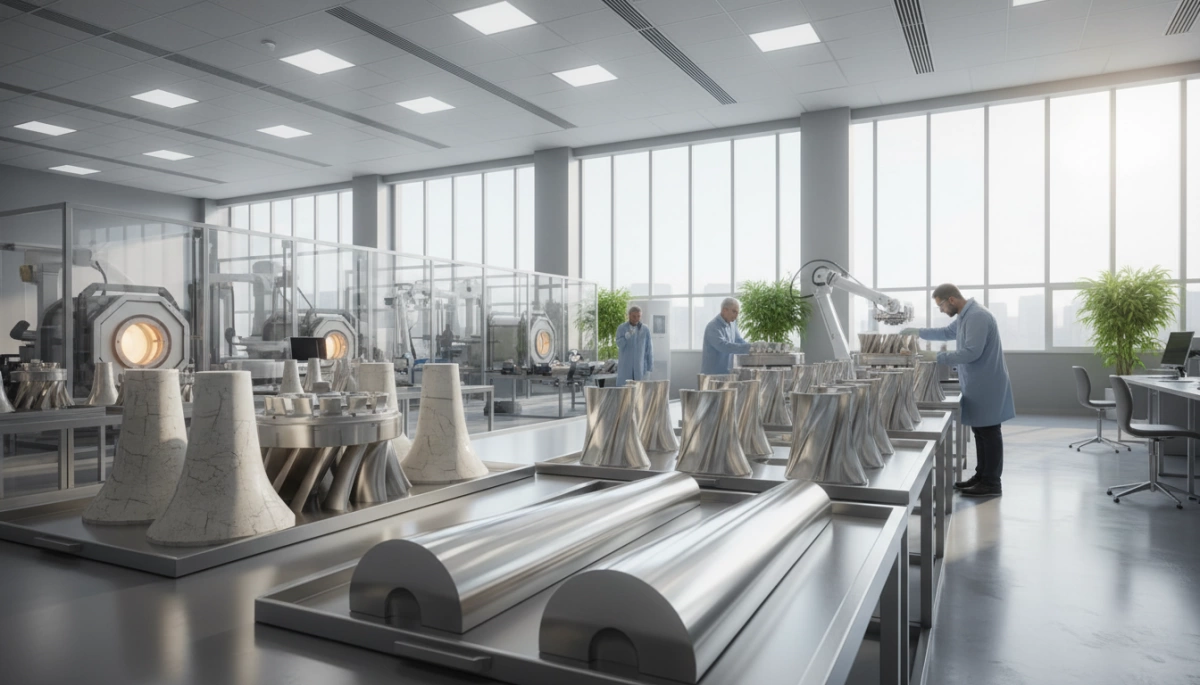
The Lost Wax Casting Process for Turbine Blades
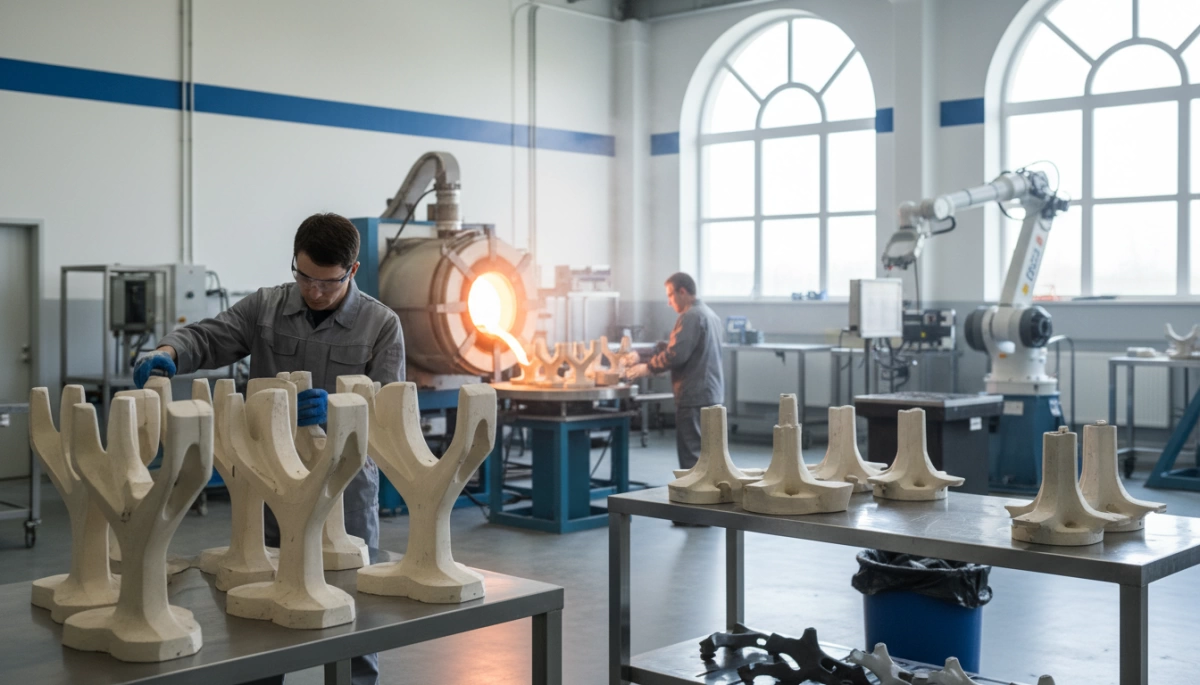
As a dedicated casting processing machinery manufacturer and supplier, we know that manufacturing lost wax casting turbine blades requires absolute precision. The investment casting method turns raw metal into high-performance components through a highly controlled, multi-step process.
Wax Pattern Creation and Assembly
- Pattern Injection: We use a precision wax injection machine to create exact replicas of the final blades.
- Intricate Details: This step captures the precise structural design, which is incredibly important for complex parts like hollow turbine blades.
- Assembly: We attach these individual wax patterns to a central sprue, building a wax "tree" that allows us to cast multiple blades simultaneously.
Ceramic Shell Building and Dewaxing
We build the mold by repeatedly dipping the wax assembly into a liquid slurry, coating it with stucco sand, and letting it dry. This creates a highly durable ceramic shell. Once the shell is thick enough, it undergoes dewaxing. We place the coated assembly into a high-pressure steam autoclave, which rapidly melts out the wax without cracking the mold. This core step in the lost wax casting process leaves behind a perfect, empty cavity ready for metal.
Metal Pouring and Solidification
- Pre-heating: We fire the empty ceramic shell in a kiln to strengthen it and prevent thermal shock.
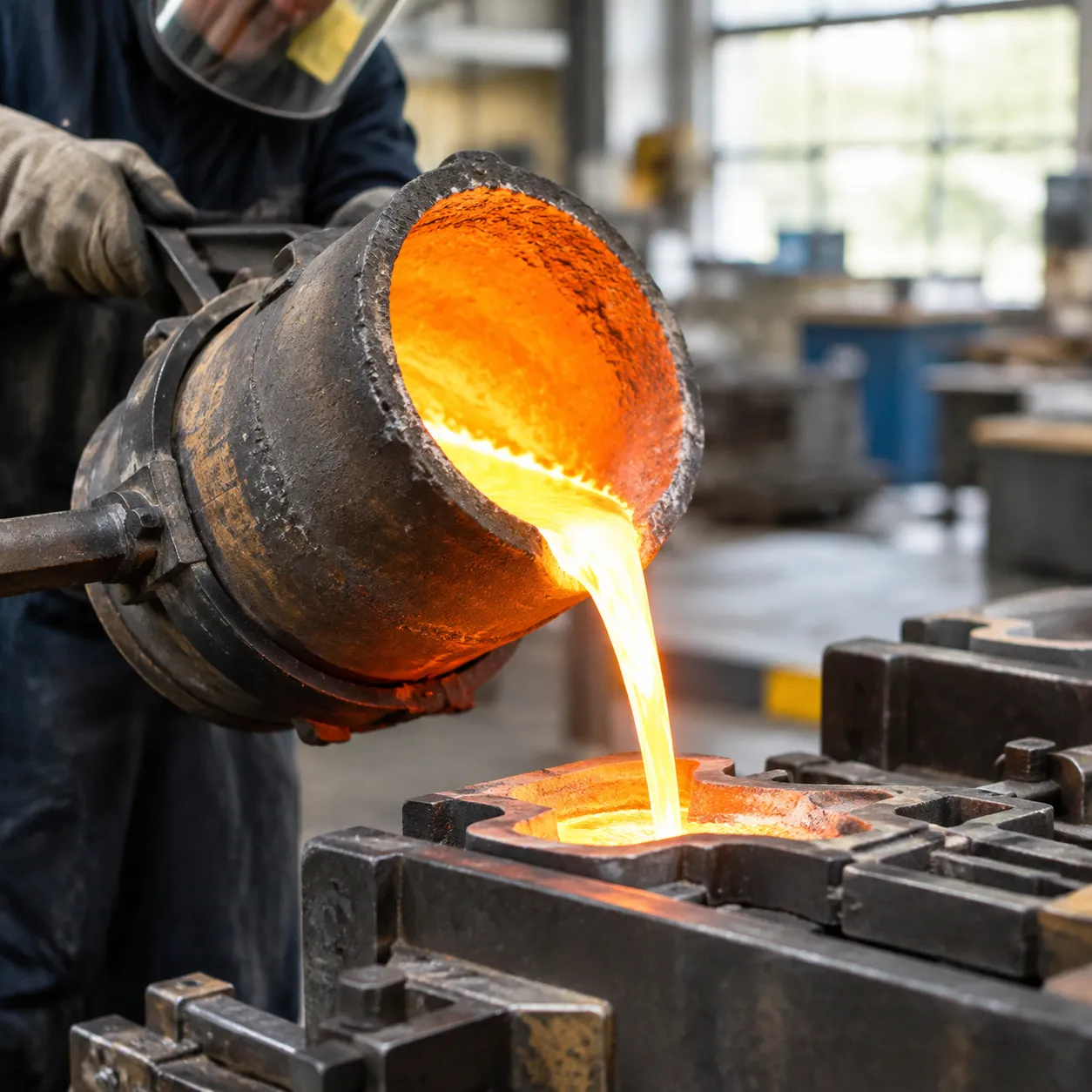
- Pouring: Operators pour the molten aerospace-grade superalloy directly into the pre-heated mold.
- Solidification: We strictly control the cooling environment to manage exactly how the metal solidifies, ensuring the turbine blades develop the exact internal grain structure needed for high-temperature survival.
Cooling, Shell Removal, and Post-Casting Finishing
After the metal has completely cooled and solidified, we break away the ceramic shell using mechanical vibration or high-pressure water jets. The individual cast blades are then cut away from the main tree. ly, each blade goes through post-casting finishing—including grinding, precision machining, and surface treatments—to meet strict dimensional tolerances before final inspection.
Advantages of Investment Casting for Turbine Blades
Producing lost wax casting turbine blades is the definitive standard for modern aerospace and industrial power applications. We know that the investment casting process delivers the unparalleled precision, durability, and performance necessary for components operating in extreme, high-stress environments.
Superior Surface Finish and Dimensional Accuracy
Investment casting consistently yields near-net-shape components, bypassing the limitations of traditional manufacturing.
- Exceptional Smoothness: Achieves a highly refined surface finish directly from the ceramic shell, crucially minimizing aerodynamic drag.
- Tight Tolerances: Ensures exact dimensional accuracy for perfect, frictionless fitment within the complex engine assembly.
- Reduced Post-Processing: Drastically cuts down on expensive, time-consuming secondary machining.
Compatibility with High-Temperature Superalloys
Turbine blades must survive incredibly harsh, high-heat conditions without failing.
- Advanced Material Integration: Seamlessly processes high-performance nickel, cobalt, and titanium-based superalloys.
- Hard-to-Machine Metals: Easily forms complex alloys that are notoriously difficult to shape using traditional subtractive machining methods.
- Uncompromised Structural Integrity: Preserves the critical mechanical properties of the superalloy during the pouring phase, ensuring maximum operational reliability.
Creating Complex Internal Cooling Channels
Next-generation turbine efficiency relies heavily on advanced internal cooling networks to prevent catastrophic failure.
- Innovative Structural Design: Enables the creation of highly intricate, serpentine cooling passages directly inside the blade.
- Hollow Turbine Blades: Utilizes precision ceramic cores during the wax injection phase to flawlessly form these complex hollow structures.
- Superior Thermal Management: Allows the blades to operate continuously at gas temperatures that far exceed the actual melting point of the metal itself.
Key Applications of Investment Cast Turbine Blades
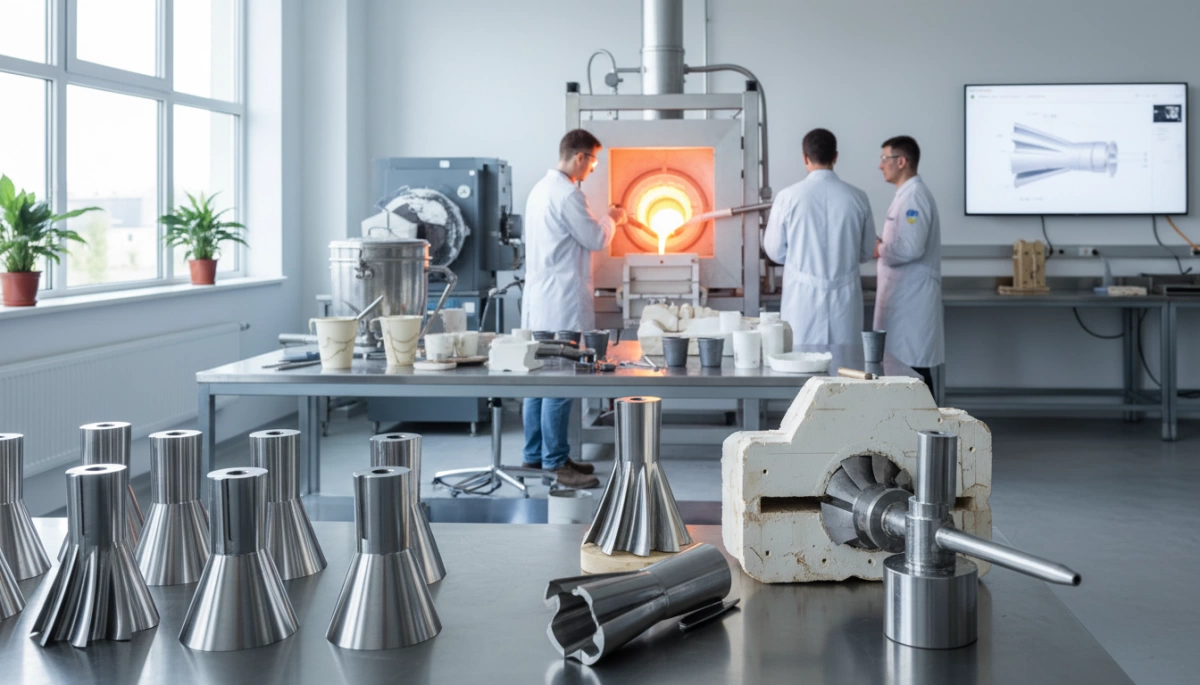
The precision of lost wax casting turbine blades makes them the backbone of heavy-duty operations where failure is simply not an option.
Aerospace Jet Engines and Component Production
Aerospace demands absolute perfection. Jet engines operate under extreme temperatures and mechanical stress, requiring materials that refuse to compromise.
- Complex Geometries: We utilize advanced investment casting to achieve the intricate structural design required for modern aerospace parts.
- Advanced Cooling: Creating hollow turbine blades with internal cooling channels is essentially only achievable through this precise method.
- Superior Reliability: This capability highlights the clear advantage of investment casting over green sand casting when pilot safety and exact dimensional accuracy are non-negotiable.
Industrial Gas Turbines for Power Generation
Our machinery directly supports the massive scale of the power generation sector. Industrial gas turbines require larger, incredibly durable blades to keep global energy grids running continuously without costly downtime.
- Initial Precision: Shaping the initial pattern with a top-tier wax injection machine ensures tight tolerances from the very first step.
- Continuous Operation: The resulting cast blades resist the intense heat, corrosion, and rotational forces necessary to produce reliable electricity year-round.
Marine and Automotive Turbochargers
Beyond the sky and power plants, precision casting drives heavy-duty ground and sea transportation. Marine vessels and high-performance automotive turbochargers rely on highly durable turbine wheels to manage harsh exhaust gases at extreme RPMs.
- Flawless Molds: The controlled dewaxing process inside a high-pressure steam autoclave ensures the delicate ceramic shell remains perfectly intact.
- High-Speed Durability: This meticulous shell integrity guarantees the final metal cast can endure the punishing environments of marine and automotive engine bays without cracking or breaking down.
Quality Control and Testing for Cast Turbine Blades
When manufacturing lost wax casting turbine blades, precision is non-negotiable. As a dedicated casting processing machinery manufacturer and supplier, we know that even the smallest microscopic defect can lead to failure in high-stress aerospace or power generation environments. Strict quality control ensures that complex components, especially hollow turbine blades, meet exact performance standards.
Non-Destructive Testing (NDT) Methods
We cannot break a finished turbine blade to check its internal quality. NDT allows us to verify the integrity of the structural design without damaging the final part. Relying on rigorous process control in investment casting is how we consistently achieve defect-free precision.
Our primary NDT procedures include:
- Radiographic Testing (X-Ray): Scans the blade to detect internal voids, porosity, or leftover ceramic shell material inside cooling channels.
- Fluorescent Penetrant Inspection (FPI): Uses specialized dyes and UV light to reveal microscopic surface-level cracks or imperfections.
- Ultrasonic Testing: Emits high-frequency sound waves to measure wall thickness and locate hidden internal flaws.
Dimensional Inspection and Grain Structure Analysis
Beyond structural integrity, the physical geometry and the metallurgical makeup of the blade must be perfect. Modern foundries frequently utilize advanced vision inspection systems to verify tight tolerances rapidly and accurately.
Critical final checks involve:
- CMM and Optical 3D Scanning: Coordinate Measuring Machines and laser scanners compare the physical casting to the original CAD model, ensuring every airfoil curve and root dimension is exact.
- Grain Structure Verification: Through chemical etching, we analyze the metal's crystal alignment. We confirm if the blade achieved the required equiaxed, directionally solidified, or single-crystal structure necessary to survive extreme engine temperatures.
 English
  Russian
  German