
2026年7月24日
Custom stainless steel sand casting services with wide alloy options tight tolerances large part capacity and inhouse machining
What Is Stainless Steel Sand Casting?
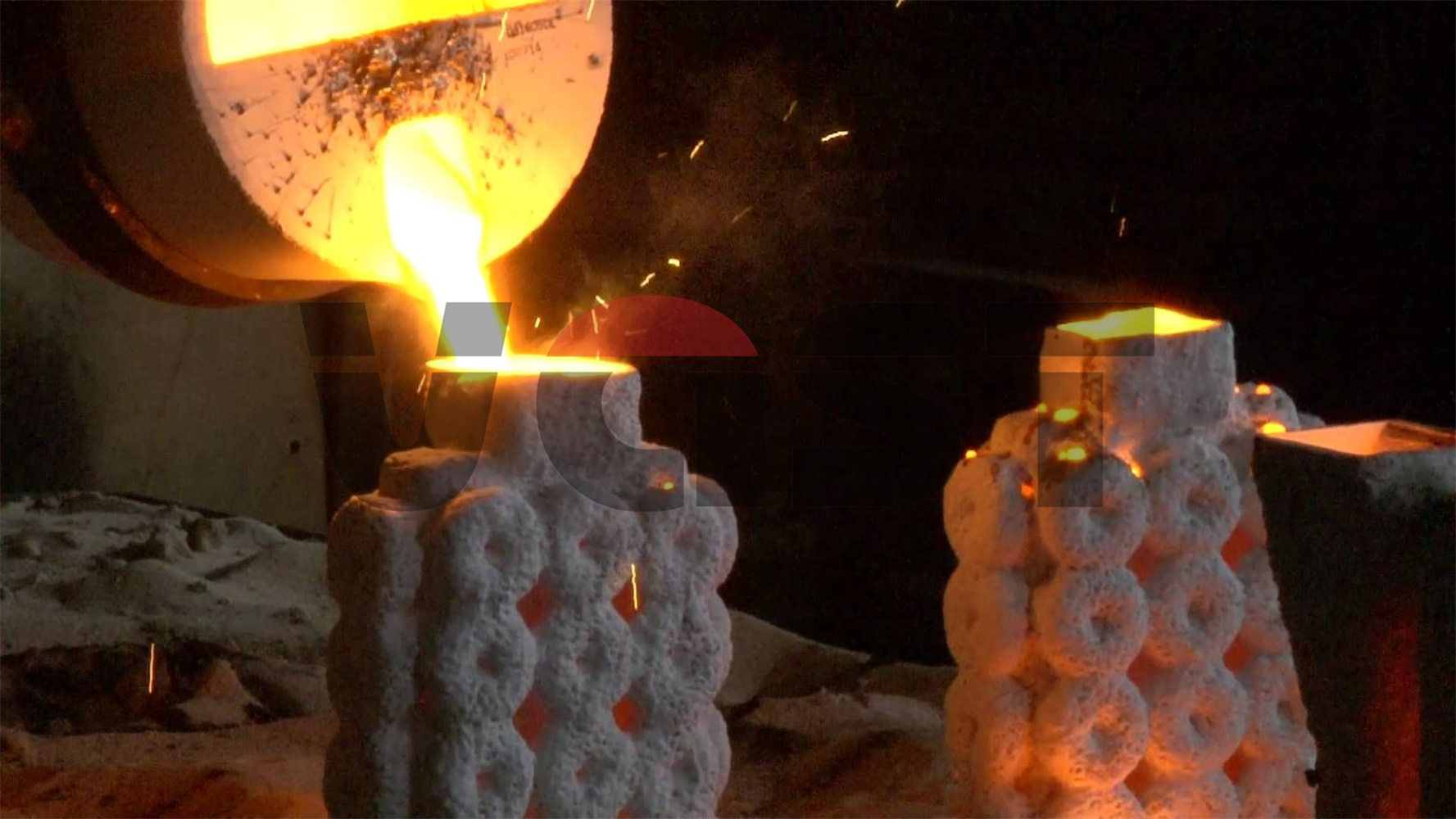
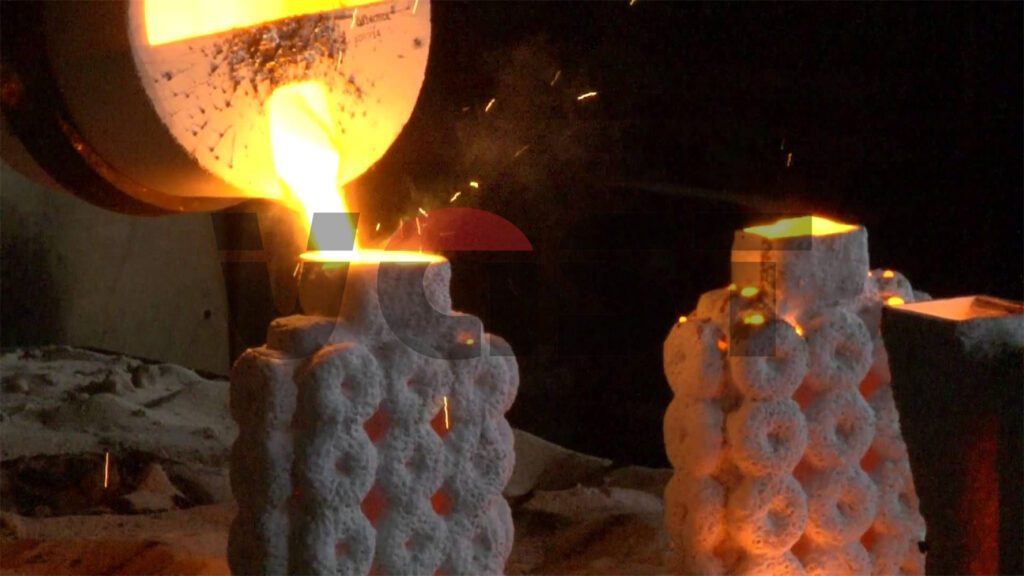
When you need heavy-duty, heat-resistant components built to exact specifications without astronomical tooling costs, stainless steel sand casting is our go-to manufacturing method. We pack specialized sand around a pattern to form a precise cavity, then pour molten stainless steel directly inside to produce dense, custom metal components.
How the Sand Mold Casting Process Works
The core sand mold casting process transforms raw metal alloys into complex structural parts through four key steps:
- Pattern & Mold Setup: We pack silica sand or chemically bonded sand around a pattern to form the top and bottom mold halves.
- Melting & Pouring: We melt chosen stainless steel grades in induction furnaces at temperatures exceeding 2,900°F and pour the liquid metal into the mold.
- Solidification: The steel cools and hardens inside the thermal-resistant sand cavity.
- Shakeout: We break open the sacrificial sand mold to extract the raw casting for finishing.
Key Benefits of Stainless Steel Sand Casting
We choose sand casting when projects require high durability, massive scale, and strict cost control.
| Benefit | Why It Matters for Your Production |
|---|---|
| Cost Efficiency | Minimal upfront tooling investment compared to die or investment casting. |
| High Heat Resistance | Cast alloys withstand high operating temperatures without structural degradation. |
| Large Part Capacity | Capable of casting components from 5 lbs up to several tons with ease. |
| Material Flexibility | Compatible with austenitic, duplex, martensitic, and ferritic steel alloys. |
Stainless Steel Casting Grades We Pour
Choosing the right alloy determines how your parts perform under heavy stress, heat, and corrosive environments. At our stainless steel foundry, we match your exact performance requirements with the ideal stainless steel casting grades to optimize durability and cost-efficiency.
Austenitic Alloys: 304 and 316 for Superior Corrosion Resistance
Austenitic grades are the workhorses of liquid and chemical handling equipment:
- 304 Stainless Steel Casting: Offers excellent overall corrosion resistance and ease of machining. Ideal for food processing equipment, sanitary fittings, and architectural components.
- 316 Stainless Steel Casting: Formulated with molybdenum for added protection against chlorides and harsh chemicals. Essential for marine hardware, pharmaceutical processing, and chemical valves.
Martensitic and Ferritic Grades for High-Strength Applications
When mechanical wear, impact, and high yield strength take priority, we pour specialized high-strength alloys:
- Martensitic Grades: Heat-treatable alloys that deliver high hardness and high tensile strength. Perfect for pump impellers, turbine blades, and heavy-duty shafting.
- Ferritic Grades: Offer superior resistance to stress-corrosion cracking and thermal oxidation at a lower cost. Great for high-temperature exhaust parts and automotive components.
Duplex Stainless Steel Casting for Extreme Environments
For severe operating conditions where standard alloys fail, duplex stainless steel casting combines the benefits of both austenitic and ferritic structures.
| Alloy Type | Primary Strength | Ideal Operating Environment |
|---|---|---|
| Austenitic (304/316) | Corrosion resistance & versatility | Food, chemical processing, general industrial |
| Martensitic / Ferritic | High hardness & wear resistance | High-wear mechanical parts, high-temp components |
| Duplex Stainless | Double yield strength & salt/acid resistance | Marine propulsion, offshore oil & gas, high-pressure pumps |
Selecting the right alloy for your stainless steel sand casting project ensures long-term reliability and eliminates premature component failure in the field.
Green Sand vs Resin Sand in Stainless Steel Sand Casting
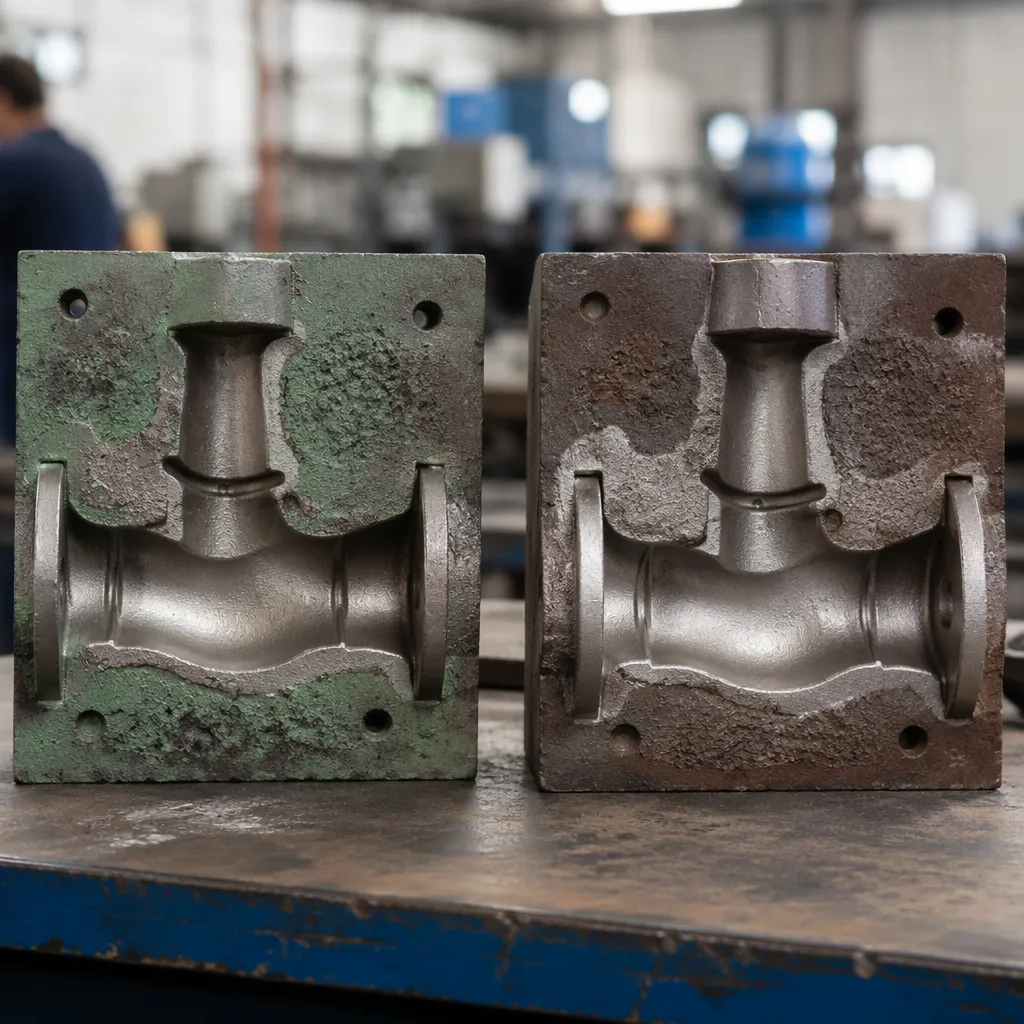
Choosing the right sand mold casting process comes down to balancing your target budget with your part requirements. In our foundry, we rely on two primary silica sand molding methods to pour custom components: green sand and resin bonded sand. Both deliver robust structural integrity, but they serve very different production scales and tolerance needs.
Green Sand Molding: Flexible and Cost-Effective
Green sand uses a natural blend of silica sand, clay, and water. It is our top recommendation when keeping piece-part costs low on medium to large production runs is your main priority.
- Lower Material Overhead: Highly recyclable sand mixtures lower raw material costs.
- Rapid Turnaround: Fast mold prep speeds up production cycles for high-volume orders.
- Great Versatility: Ideal for medium and large parts where fine surface detail isn't strictly required.
Resin Bonded Sand Molding: Smooth Finish and Tight Accuracy
Resin sand uses liquid chemical binders to form a rigid, self-hardening mold. When your design demands high dimensional accuracy or a clean casting surface finish straight out of the mold, resin sand is the clear winner.
- Tighter Casting Tolerances: The hard mold resists deformation under high heat, maintaining strict dimensions.
- Superior Surface Quality: Produces smooth cast surfaces that reduce expensive post-cast machining time.
- Complex Features: Handles intricate cores, sharp angles, and thin walls with minimal scrap rates.
Choosing the Right Mold Material
We match the sand system directly to your project's volume, tolerance requirements, and machining budget:
| Process Feature | Green Sand Casting | Resin Bonded Sand Casting |
|---|---|---|
| Best Production Volume | Medium to High Runs | Low to Medium Runs & Prototypes |
| Dimensional Accuracy | Moderate | Exceptional (Tighter Tolerances) |
| Surface Finish | Standard cast texture | Smooth, clean detail |
| Tooling & Material Cost | Lowest per-part cost | Slightly higher binder cost |
If your stainless steel sand casting project calls for minimal machining and tight tolerances, resin sand delivers maximum value. For high-volume production with standard dimensional needs, green sand keeps your project lean and competitive.
Step-by-Step Stainless Steel Sand Casting Process
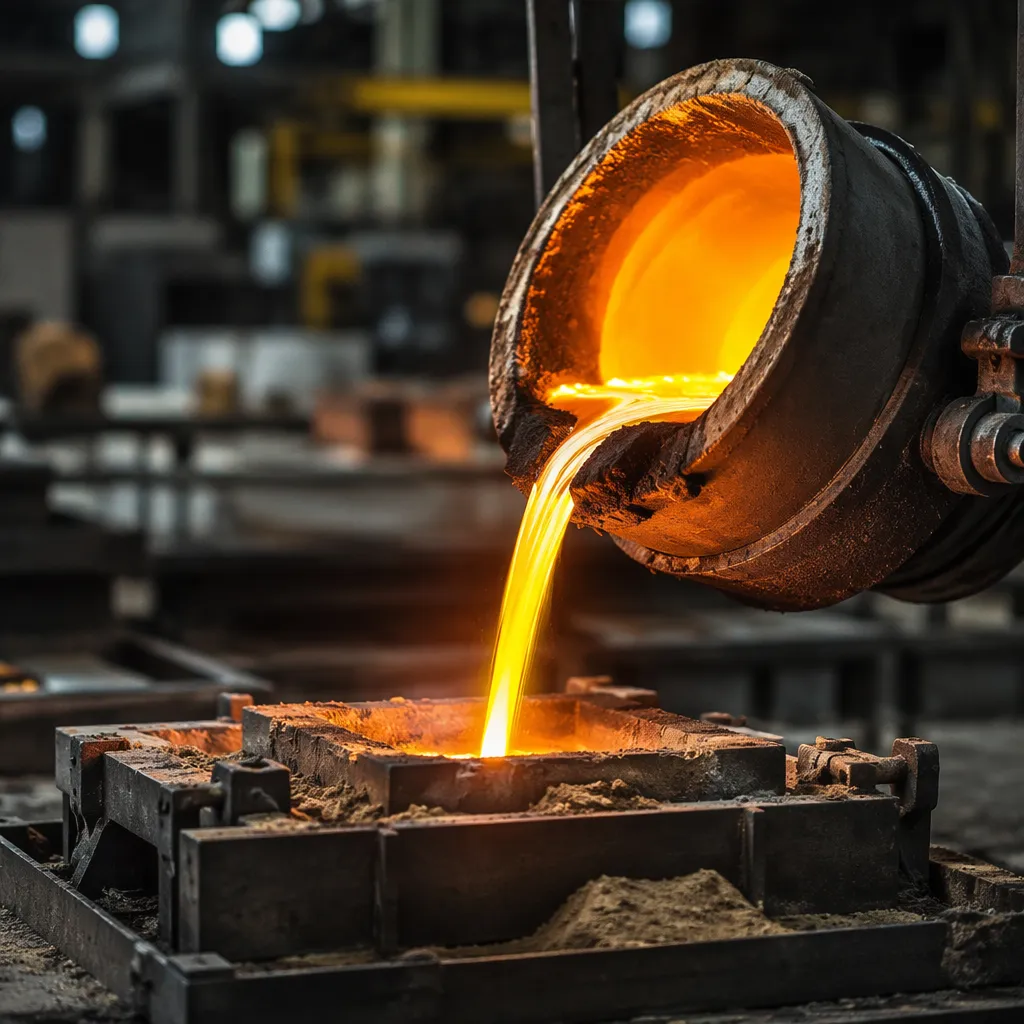
When we execute a stainless steel sand casting run at our foundry, precise process control is what guarantees dimensional accuracy and high structural integrity. Here is how our sand mold casting process takes your design from raw alloy to a finished component.
1. Pattern Creation and Mold Preparation
- Pattern making: We craft a high-precision replica of your part using wood, resin, or metal, accounting for metal shrinkage during cooling.
- Binder sand molding: We pack specialized silica sand mixed with chemical binders around the pattern. Once the sand hardens, we pull the pattern out to leave a clean mold cavity.
2. High-Frequency Induction Melting
We melt raw stainless steel alloys in high-frequency induction furnaces. This gives us tight temperature control and fast melting times, keeping the liquid steel pure and free from unwanted carbon contamination.
3. Precision Pouring and Controlled Cooling
- We pour the molten stainless steel into the sand mold under strict temperature monitoring.
- We manage the cooling cycle so the metal solidifies uniformly, preventing internal stresses and shrinkage defects.
4. Shakeout, Riser Removal, and Shot Blasting
- Shakeout: After the metal cools completely, we vibrate the mold to break away the sand.
- Riser removal: We cut away gates and risers that fed liquid steel during solidification.
- Shot blasting: We clean the final casting using high-velocity shot blasting to remove scale and residual sand, delivering a clean, smooth surface.
Quality Control and Preventing Common Casting Defects
We know there is nothing worse than spending time machining a custom component only to hit an unexpected internal void. In stainless steel sand casting, rigorous quality control is what separates a structural component from costly scrap metal. We prioritize casting defects prevention early in the process to guarantee every part meets your exact specifications.
Catching Porosity, Shrinkage, and Sand Inclusions
Defects usually happen when liquid steel cools unpredictably or traps gas during pouring. Here is how we identify and stop the main issues in our stainless steel foundry:
- Gas Porosity: Smooth, round voids caused by trapped gas. We prevent this by strictly controlling moisture levels in our sand molds and thoroughly degassing the molten metal before pouring.
- Shrinkage Cavities: Jagged holes formed as the metal cools and contracts. We eliminate porosity and shrinkage by engineering optimized risers that continually feed liquid steel into the mold until it fully solidifies.
- Sand Inclusions: Loose sand particles washed into the casting cavity. Using high-strength resin binders and high-pressure air blowouts keeps sand out of the metal.
Non-Destructive Testing (NDT) Methods
Visual inspection only covers the surface. To verify internal integrity for high-pressure or critical applications, we rely on non-destructive testing:
| NDT Method | Primary Focus | Best Used For |
|---|---|---|
| Radiographic Testing (X-Ray) | Internal structure and hidden voids | Detecting internal gas pockets, shrinkage, and dense inclusions |
| Ultrasonic Testing (UT) | Subsurface flaws and wall thickness | Finding fine cracks, voids, and measuring core thickness |
Post-Casting Heat Treatment
The extreme heat of pouring molten steel alters the alloy's crystalline structure, which can reduce toughness and corrosion resistance. We use post-casting heat treatment to restore the metal's natural mechanical properties:
- Solution Annealing: Heating austenitic parts to around 1900°F (1040°C) followed by rapid water quenching. This redissolves chromium carbides, ensuring maximum corrosion resistance in marine or chemical environments.
- Stress Relieving: Controlled heating that removes internal stress caused during cooling, keeping the part stable so it will not warp during final machining.
Design Guidelines and Casting Tolerances
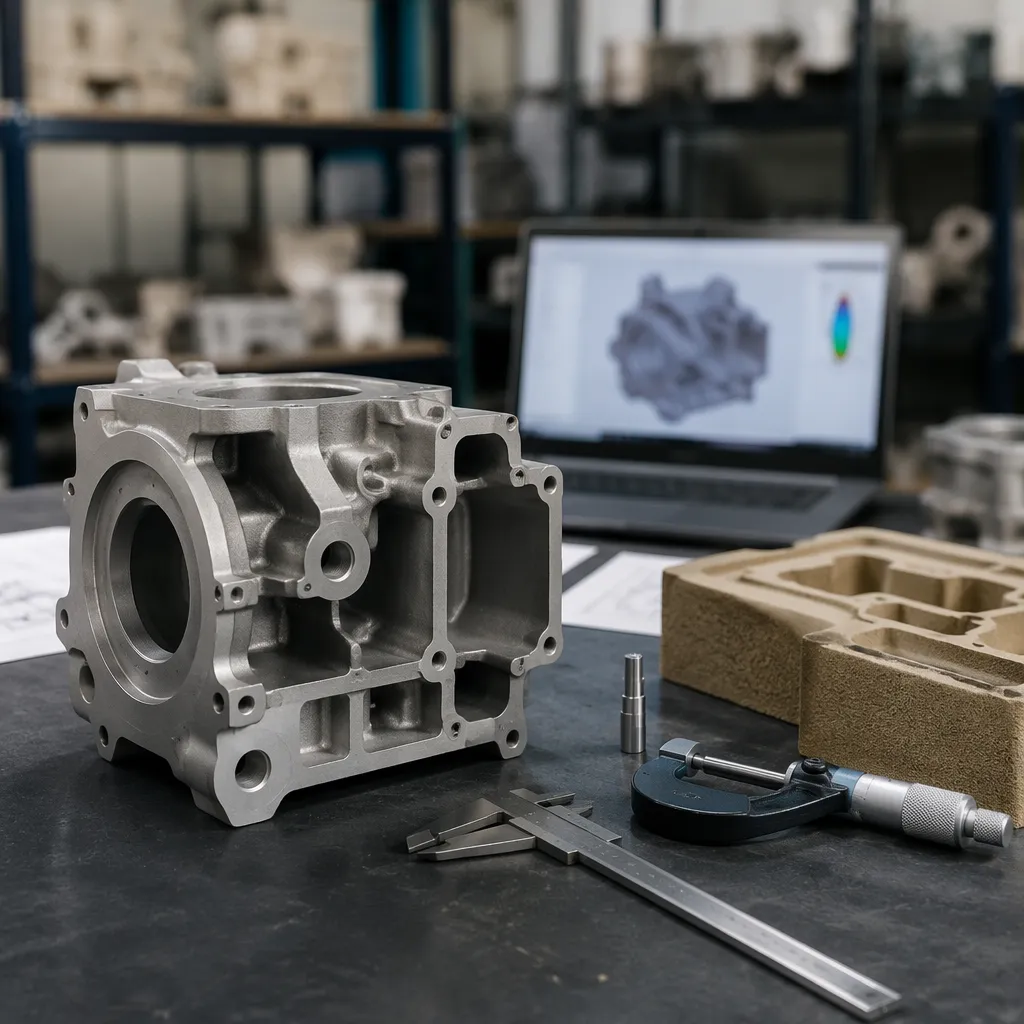
When we engineer components for stainless steel sand casting, getting the design right up front prevents costly re-tooling and excessive post-processing. We balance molten steel flow, thermal contraction, and machining requirements to deliver parts that match your exact specs.
Minimum Wall Thickness Recommendations
Molten stainless steel cools rapidly as it enters a sand mold. To ensure smooth liquid metal flow and prevent incomplete fills, we follow these core thickness rules:
- Small Components: Maintain a minimum wall thickness of 0.187 in (4.75 mm).
- Medium to Large Castings: Target at least 0.25 in (6.35 mm) for uniform mold filling.
- Wall Transitions: Keep cross-section changes gradual (using a 3:1 taper) to eliminate hot spots and structural stress.
Draft Angles and Machining Allowances
To pull pattern equipment cleanly out of the mold sand without damaging the walls, proper draft and excess stock are essential:
- Draft Angles: We apply a 1.5° to 3° draft angle to all vertical walls perpendicular to the parting line.
- Machining Allowance: We add 0.125 in to 0.25 in (3 mm to 6 mm) of extra material on critical functional surfaces, ensuring your machine shop has sufficient stock to hit tight final tolerances.
- Dimensional Accuracy: Standard sand cast tolerances typically fall within ISO 8062 CT9 to CT11 before secondary machining.
Surface Finish Standards (RMS/Ra Values)
Raw sand cast surfaces naturally carry a textured finish. By selecting the right binder system and abrasive blast processing, we achieve consistent, repeatable casting surface finish targets:
| Molding Method | Surface Roughness (Ra) | Microinch RMS Range |
|---|---|---|
| Green Sand Casting | 12.5 – 25 µm | 560 – 1120 RMS |
| Resin Bonded Sand | 6.3 – 12.5 µm | 280 – 560 RMS |
| Post Shot-Blasting | 3.2 – 6.3 µm | 140 – 280 RMS |
Planning for these guidelines during the initial design phase keeps production fast, controls unit costs, and ensures your finished stainless steel parts perform reliably in the field.
Optimizing Stainless Steel Sand Casting Costs
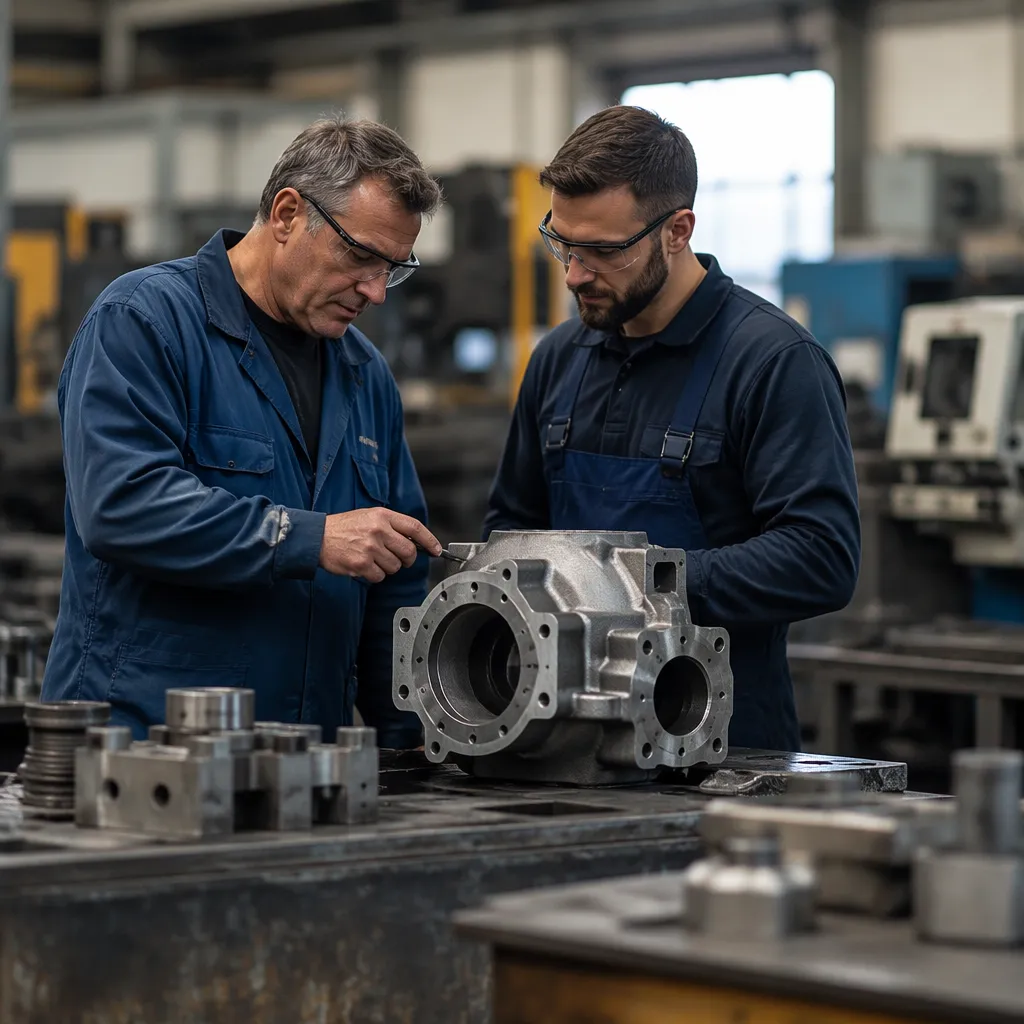
When we evaluate manufacturing budgets for custom metal casting, controlling expenses comes down to finding the sweet spot between upfront tooling and ongoing unit costs. Stainless steel sand casting gives us the flexibility to handle small production runs up to heavy industrial volumes without blowing your budget on expensive permanent tooling.
Tooling and Pattern Costs vs Per-Unit Expenses
Patterns for sand mold casting are significantly cheaper to make than hard steel dies.
- Lower Initial Tooling: We build patterns using wood, plastic, or aluminum, which dramatically cuts initial pattern making in sand casting costs.
- Scalable Production: As production volumes scale up, the initial pattern expense quickly amortizes down to pennies per part.
- Inexpensive Modifications: Updating a sand casting pattern for a design revision is fast and budget-friendly compared to re-machining hard tooling.
Sand Casting vs Investment Casting
Choosing between stainless steel sand casting and investment casting depends on your part size, surface requirements, and total production budget.
| Cost & Process Factor | Stainless Steel Sand Casting | Investment Casting |
|---|---|---|
| Initial Tooling Cost | Low to Moderate | High |
| Part Size Capacity | Unlimited (Small to 1,000+ lbs) | Usually limited (under 100 lbs) |
| Casting Surface Finish | Standard (250–500 RMS) | High smoothness (125 RMS) |
| Dimensional Accuracy | Moderate | High |
| Best Application | Medium-to-large heavy parts, structural bodies | Small, highly intricate components |
Design Optimization to Reduce Machining Waste
Smart component design directly lowers post-processing expenses. To keep machining stainless steel castings fast and cost-effective, we use these design strategies:
- Incorporate Proper Draft Angles: Add a 1° to 2° taper to ensure the pattern releases cleanly from the sand mold without damaging edges.
- Keep Wall Thickness Uniform: Prevent sudden transitions in wall thickness to eliminate hot spots and shrinkage defect risks, cutting down rework and scrap rates.
- Minimize Machining Allowances: Cast parts as close to near-net shape as possible to reduce excess stock, saving cutting tool wear and machine cycle time on tough stainless alloys.
Frequently Asked Questions About Stainless Steel Sand Casting
Can stainless steel sand casting achieve tight tolerances?
Standard stainless steel sand casting typically delivers commercial tolerances around ISO 8062 CT9 to CT11. While silica sand molding inherently yields broader tolerances than investment casting, we consistently hit tighter dimensional accuracy by utilizing resin-bonded sand tooling and machining critical interfaces post-cast.
What is the typical surface finish of sand cast stainless steel?
A standard raw casting surface finish ranges between 250 to 560 RMS (6.3 to 12.5 µm Ra). We routinely perform shot blasting, grinding, or passivating to clean up part exteriors and deliver a uniform, professional finish suited for heavy industrial use.
How does sand casting compare to investment casting in price?
- Tooling Expense: Pattern making in sand casting costs substantially less upfront than complex investment casting dies.
- Part Size & Weight: Sand casting is vastly more economical for larger, heavier custom steel components.
- Overall Value: For medium-to-large parts where ultra-smooth cosmetic surfaces aren't required everywhere, sand casting delivers the lowest total cost per part.
What stainless steel grade is best for marine sand castings?
For general saltwater exposure, 316 stainless steel casting is the industry standard due to its molybdenum content, which fights pitting and crevice corrosion. For extreme offshore, high-pressure marine environments, we recommend a duplex stainless steel casting alloy to maximize structural strength and corrosion resistance.
 English
  Russian
  German