
2026年11月6日
Discover reliable small batch investment casting equipment for precise flexible and efficient metal casting production
Flexible Pattern Production for High-Mix Foundries
We design our small batch investment casting equipmen to address the core challenges of high-mix, low-volume foundries. By focusing on modularity and precision, we remove the setup bottlenecks that typically hinder lost wax casting efficiency.
Eliminating Setup Bottlenecks
Our systems are engineered to minimize transition times between different jobs. By streamlining the mold-mounting and calibration process, we ensure your team spends less time adjusting equipment and more time producing high-quality patterns.
Doubling Operator Throughput
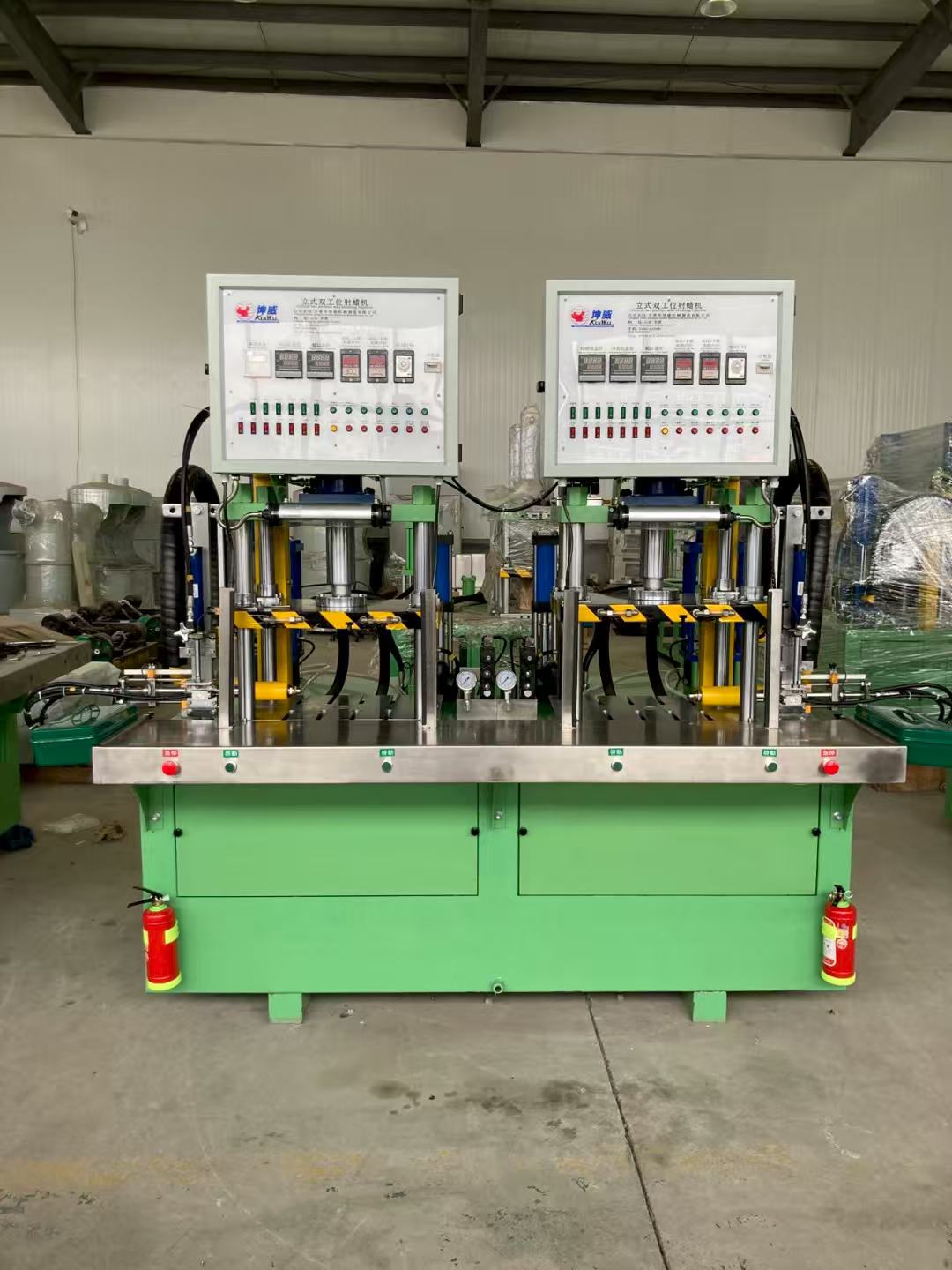
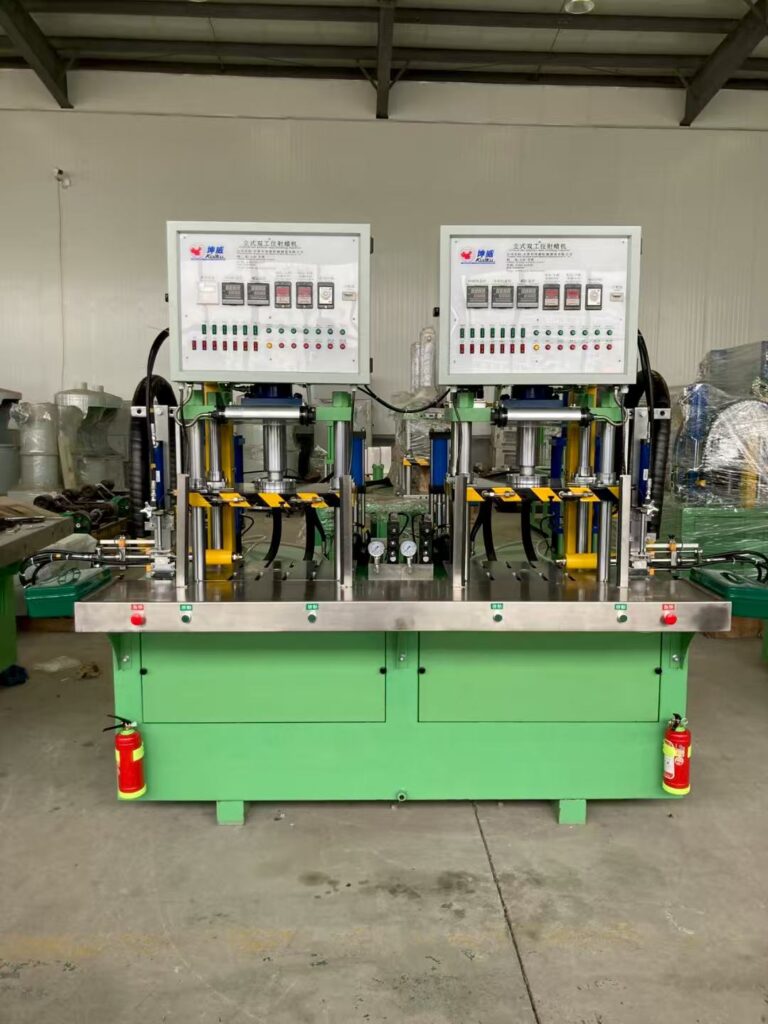
Our dual-station configurations allow a single operator to manage two distinct production cycles simultaneously. While one station undergoes cooling or tool changeover, the other remains in active injection, effectively doubling your output potential without increasing floor space requirements.
Preventing Pattern Distortion
Thin-wall parts are highly susceptible to volumetric shrinkage and geometric distortion. We integrate precise thermal regulation and controlled injection pressure profiles to ensure: Dimensional Stability: Uniform wax cooling across complex geometries. Minimized Shrinkage: Targeted hold-pressure stages that compensate for contraction during the solidification phase. Structural Integrity: Consistent density, preventing internal voids or surface sinking in delicate pattern features.
Precision-Engineered Subsystems for Consistent Wax Patterns
We engineer our small batch investment casting equipment around rigid, serviceable subsystems designed to deliver dimensional repeatability on every cycle. By separating critical process stages into dedicated mechanical and thermal zones, we remove the process drift that typically compromises short-run production.
Independent Dual-Station Hydraulic Clamping Architecture
Our two-station wax injection machine for investment casting uses separate hydraulic circuits for each workstation. Station A and Station B operate with dedicated proportional valves, allowing simultaneous runs of completely different dies without cross-station pressure drops.
- Isolated clamping forces: Independent cylinder regulation prevents clamp deflection when adjacent stations actuate.
- Dual-circuit hydraulics: Cycle timing, clamp speed, and holding pressure operate on independent logic loops.
- Zero cross-talk: Pressure spikes during mold closure on one side do not impact flow rates on the other.
Intelligent Multi-Zone PID Thermal Control
Maintaining precise wax conditioning prevents premature solidification and sink defects. We divide thermal management into distinct, digitally monitored heating zones:
- Wax conditioning reservoir: Bulk paste or liquid wax is heated evenly with low-watt-density heating elements to avoid thermal degradation.
- Insulated transfer lines: Electrically heated hoses maintain fluid consistency right up to the injection manifold.
- Nozzle zone control: Dedicated PID loops at the tip eliminate nozzle freeze-up and prevent stringing during die separation.
- Thermal stability: Closed-loop sensors hold temperature tolerances within ±0.5°C across the entire delivery path.
Dynamic Injection Flow Tuning and Bubble-Free De-aeration
Trapped air and turbulent flow cause pattern porosity. We address both issues at the fluid-delivery stage:
- Proportional flow profiling: Multi-stage injection curves allow slow gate entry to prevent air entrapment, ramping up to full packing pressure to fill intricate thin walls.
- Vacuum de-aeration: Integrated reservoir degassing strips micro-bubbles from molten wax before it reaches the injection cylinder.
- Closed-loop pressure holding: Controlled pack cycles maintain constant density as the pattern cools inside the die.
Quick-Die Changeover Platens for Prototype Tooling
Short-run foundries cannot afford long setups between jobs. We design our platen workspace for rapid mechanical changeovers:
- Standardized T-slot layouts: Accommodate custom prototype tooling, modular aluminum dies, and manual-insert configurations without custom machining.
- Adjustable daylight and stroke: Easily adapt to varying mold stack heights across different production runs.
- Quick-disconnect utility ports: Integrated cooling lines and ejector interfaces snap into place to get new tooling running in minutes.
Small Batch Investment Casting Equipment Technical Parameters
We build our compact wax injection units to balance rigid die clamping with fine volumetric flow control. Below are the core operational parameters for our standard dual-station small batch investment casting equipment, engineered specifically for rapid prototyping and short-run foundry cells.
Core Machine Specifications
| Parameter | Station A (Standard Tooling) | Station B (High-Mix / Rapid Tooling) |
|---|---|---|
| Clamping Force | 80 kN (8 Metric Tons) | 80 kN (8 Metric Tons) |
| Platen Dimensions (W × H) | 450 mm × 400 mm | 450 mm × 400 mm |
| Daylight Opening (Max/Min) | 380 mm / 120 mm | 380 mm / 120 mm |
| Maximum Injection Volume | 1.8 Liters per shot | 1.8 Liters per shot |
| Injection Pressure Range | 0.5 to 6.5 MPa (Proportional) | 0.5 to 6.5 MPa (Proportional) |
| Wax Reservoir Capacity | 35 Liters (Independent) | 35 Liters (Independent) |
| Hydraulic System Pressure | 14 MPa | 14 MPa |
| Connected Electrical Load | 11 kW (400V / 3-Phase / 50-60Hz) | Integrated shared power pack |
| Footprint (L × W × H) | 2,100 mm × 1,350 mm × 1,950 mm total cell footprint |
Clamping Tonnage and Usable Platen Dimensions
- Rigid Four-Tie-Bar Clamping: Delivers uniform 8-ton locking across the full 450 × 400 mm platen face to eliminate parting line flash on prototype dies.
- Flexible Die Daylight: Accommodates mold heights from 120 mm to 380 mm with mechanical stroke limits, allowing fast switching between small hand dies and automated modular tools.
Injection Shot Volume and Proportional Pressure Ranges
- Precision Volumetric Output: Displaces up to 1.8 liters of conditioning wax per shot with an injection accuracy of ±0.5 cm³.
- Closed-Loop Proportional Valve: Regulates wax flow across two distinct pressure stages—rapid filling at low pressure followed by programmable high-pressure packing to prevent cavitation before entering the ceramic shell investment casting process and benefits workflow.
Hydraulic Performance and Cell Layout Dimensions
- On-Demand Hydraulic Circuit: Variable-displacement piston pumps limit baseline power consumption to under 11 kW during continuous multi-station cycling.
- Compact Foundry Footprint: Designed to occupy just 2.8 m² of floor space, allowing operators to run two active molds simultaneously within a tight production cell layout.
Turnkey Integration into Small-Batch Production Cells

Fitting a wax pattern injection press into short-run workflows requires immediate downstream compatibility. We engineer our small batch investment casting equipment to interface smoothly with downstream tree assembly, dipping, and dewaxing stations without requiring secondary tooling modifications.
Producing Zero-Flash Wax Patterns for Prototype Runs
Parting-line flash adds labor and ruins dimensional repeatability on prototype batches. We solve this by balancing direct hydraulic clamping with closed-loop injection pacing: Rigid Platen Parallelism: Eliminates micro-gapping under peak hold pressures up to 80 bar. Balanced Thermal Profile: Heated nozzle tips prevent premature freeze-off, stopping injection spikes that force dies open. Minimal Bench Finishing: Parts transfer directly from die ejection to assembly trees without hand-trimming.
Assembly Tree Setups with Predictable Thermal Contraction
Tight dimensional control on individual patterns ensures hassle-free sprue mounting. Uniform Density: Precise proportional packing prevents core sinking and uneven shrinkage across varying cross-sections. Standardized Gates: Runners and patterns fuse securely to the central wax tree at standard hot-knife temperatures without pattern distortion. Batch Consistency: Every wax replica maintains uniform volumetric mass, ensuring predictable metal fill and solidification dynamics during pouring.
Slurry Dipping and Ceramic Shell Building Compatibility
Our low-volume lost wax casting equipment works with both filled and unfilled industrial waxes, producing smooth surface finishes that improve prime-coat adhesion: Wettability: Surface tension allows even coating with primary zircon or silica sol slurries, eliminating slurry repulsion. Bubble Rejection: Uniform wax density avoids micro-porosity on pattern surfaces, stopping air bubbles from clinging during automated or manual slurry dipping. Shell Layer Strength: Stable pattern surfaces prevent shell spalling during multi-layer stucco applications.
Clean Dewaxing and Autoclave Burnout Performance
Rapid expansion during dewaxing is the primary cause of cracked ceramic shells. We tune wax conditioning parameters to ensure clean evacuation during thermal processing: Fast Heat Conduction: Wax blends melt inward from the shell boundary rapidly inside a steam dewaxing autoclave for fast wax removal, relieving hydraulic pressure before the shell can fracture. Low Ash Residue: Thorough wax evacuation leaves zero carbon residue after processing in a shell firing furnace for steel and alloy investment casting, maintaining clean mold cavities ready for metal pouring.
Validated Casting Materials and Industrial Applications

Our small batch investment casting equipment handles diverse pattern materials and meets tight tolerances across critical engineering sectors. We engineer each wax pattern injection press to cycle complex patterns reliably, whether you are pouring superalloys or structural stainless grades.
Processing Straight, Filled, Emulsified, and Water-Soluble Waxes
Different part geometries demand distinct wax formulations. We calibrate our conditioning units and hydraulic systems to inject standard and specialized compounds without phase separation or thermal degradation:
- Filled Waxes: Maintained under constant low-shear agitation to keep filler materials suspended, preventing localized shrinkage on heavy sections.
- Straight and Emulsified Waxes: Injected under low-temperature, paste-like conditions to yield sharp edges and reduce thermal contraction.
- Water-Soluble and Soluble Cores: Flawlessly molded for intricate internal passages, undercut features, and complex hollow sections.
Aerospace Impeller Blades and Structural Brackets
Aerospace prototyping demands thin trailing edges and zero cavitation. Our low-volume investment casting system delivers repeatable flow profiles for precision aerospace casting components such as shrouded impellers, stator vanes, and weight-reduced airframe brackets. The closed-loop injection prevents surface flow lines and keeps profile tolerances within micro-inch specifications before shell building.
Orthopedic Implants and Surgical Tool Prototyping
Medical hardware leaves zero room for geometric variance. We configure our prototype investment casting setup to produce fine-pitch surgical forceps, bone plates, and hip stem prototypes. Controlling wax viscosity and clamp pressure ensures exact replication of organic contours and porous surface features needed for end-use clinical parts governed by strict metal investment casting process tolerances.
Automotive Manifolds, Turbo Components, and Custom Hardware
For short-run automotive development, high-performance racing, and specialty hardware:
| Component Type | Material Focus | Injection Benefit |
|---|---|---|
| Turbocharger Impellers | Filled pattern wax | Stable blade pitch and balanced weight distribution |
| Exhaust Flanges & Manifolds | Emulsified wax | Thick-to-thin section stability without sink marks |
| Custom Suspension Hardware | Straight pattern wax | Rapid cycle execution with crisp parting lines |
By pairing rigid platens with responsive thermal regulation, our machinery gives foundries direct control over rapid-response product launches and high-mix production schedules.
Lower Total Cost of Ownership for Short Production Runs
Short production runs fail financially when consumable waste, idle power consumption, and excessive floor space inflate unit costs. We designed our small batch investment casting equipment to eliminate these hidden operational expenses at every stage of pattern molding.
Reducing Raw Wax Loss via Anti-Drip Closed-Loop Nozzles
Tool changeovers and frequent cycle pauses in low-volume casting typically cause nozzle drool, wax degradation, and flash clean-up scrap. Our closed-loop injection system prevents these losses:
- Positive Shut-Off Mechanism: Spring-loaded and pneumatically assisted shut-off pins seal the nozzle tip instantly upon cycle completion, preventing molten wax dripping onto platen faces.
- Closed-Loop Purging: Wax purge cycles return directly to the heated conditioned reservoir rather than scrap bins, maintaining consistent viscosity and eliminating cross-contamination.
- Minimized Post-Processing: By delivering repeatable, zero-drool shots, our units avoid flash lines and secondary trimming. When comparing 3D printed wax vs injected wax for casting, injected patterns produce far less material waste across repeat batches.
Cutting Energy Draw with On-Demand Hydraulic Delivery
Standard hydraulic wax pattern machines run fixed-displacement pumps continuously, dumping excess oil over relief valves and creating parasitic heat. We replace continuous pumping with an on-demand servo-hydraulic architecture:
- Zero Idle Power Draw: The variable-speed drive shuts down during pattern cooling and mold prep times, drawing near-zero power while dies dwell.
- Proportional Flow on Demand: Oil delivery matches exact clamping tonnage and injection velocity requirements in real time, reducing overall electricity consumption by up to 45%.
- Lower Cooling Load: Because the oil is not constantly sheared through bypass valves, thermal build-up stays minimal, dropping the load on external chillers and extending hydraulic fluid life.
Maximizing Floor Space Efficiency in Compact Foundry Cells
Floor space is a major constraint in modern precision casting facilities. Our compact foundry casting equipment integrates the reservoir, chiller tie-ins, electrical controls, and hydraulic manifold into a self-contained envelope.
| Cost Driver | Conventional Wax Injection Setup | Our Small Batch Investment Casting Equipment |
|---|---|---|
| Idle Energy Usage | Continuous motor operation | On-demand servo hydraulic shut-off |
| Material Scrap | Open nozzle drool & manual trimming | Closed-loop anti-drip needle shut-off |
| Machine Footprint | Separate pump skid, reservoir, & clamp | Fully integrated, self-contained single cell |
| Tooling Changeover | 30–45 minutes manual bolt-down | Quick-change platen fixtures under 10 minutes |
By condensing these functions into a single rigid frame, we help you deploy high-mix, low-volume casting cells directly adjacent to your shell rooms without requiring costly plant modifications.
Foundry Safety Standards and Quality Acceptance Testing

Reliability on the foundry floor begins with strict shop-floor validation. Every piece of our small batch investment casting equipmen undergoes rigorous verification before dispatch, ensuring our machinery meets global casting quality standards for reliable metal parts right out of the crate.
72-Hour Continuous Pressure and Thermal FAT Protocols
We eliminate early component failures by subjecting every machine to an unbroken 72-hour Factory Acceptance Testing (FAT) protocol before sign-off:
- Continuous Clamping Pressure Hold: Verified zero-bleed hydraulic lock over continuous duty cycles at maximum rated tonnage.
- Multi-Zone Thermal Stability: Wax reservoir and injection manifold temperatures are tracked continuously to guarantee temperature drift remains under ±0.5°C.
- Hydraulic Integrity Checks: Full-pressure cycling under heated conditions to confirm zero seal leakage and stable proportional valve response.
Dual-Hand Anti-Repeat Safety Cycles and Optical Light Curtains
Operator safety is engineered directly into our lost wax casting equipment control logic:
- Dual-Palm Anti-Tie-Down Controls: Clamp close routines require concurrent, two-hand activation within a 0.5-second window, preventing single-hand bypass.
- Anti-Repeat Safety Relays: Platen motion automatically halts if either button is released prematurely during the closing stroke.
- Type 4 Optical Light Curtains: Fast-response optical safety barriers guard the active mold workspace, immediately interrupting platen closure if the perimeter is breached.
- Independent Emergency Stops: Dedicated E-stop buttons located at both workstations instantly vent hydraulic pressure and disable drive pumps.
CE Conformity and International Electrical Compliance
Our precision casting machinery is built to integrate smoothly into regulated manufacturing environments worldwide:
- CE Mark Certification: Full alignment with European Machinery Directive 2006/42/EC and Low Voltage Directive 2014/35/EU.
- Industrial Control Cabinets: Enclosed to IP54 standards with clean wire ducting, numbered terminal strips, and separation between high-voltage lines and 24V DC logic.
- Grid Compatibility: Configured for standard three-phase industrial inputs (380V, 415V, or 480V at 50/60 Hz) featuring thermal overload protection across all motors and heaters.
Frequently Asked Questions About Small Batch Investment Casting Equipment

Can Station A and Station B run different mold heights and shot sizes simultaneously?
Yes. Our dual-station wax injector systems are built with fully independent hydraulic clamping circuits and individual digital control channels.
- Tooling heights: Station A and Station B feature separate platen stroke limits, allowing you to run a low-profile prototype die on one side while running a tall production mold on the other.
- Shot profiles: Injection speed, shot volume, and secondary holding pressure are set independently per station on the touchscreen interface.
- Cycle timing: Operators can clamp, inject, and strip patterns on Station A while Station B finishes its dwell and cooling phase without pressure drop or hydraulic interference.
How does the equipment eliminate wax cavitation and sink marks?
Cavitation, sink lines, and core voids happen when wax enters the die with trapped air or shrinks away from mold walls during phase change. We eliminate these defects using closed-loop paste wax management:
- Vacuum de-aeration: The wax conditioning reservoir continuously draws vacuum to pull micro-bubbles out of the liquid wax before conditioning it into paste form.
- Two-stage proportional injection: The injection cylinder fills the die cavity rapidly at low pressure, then shifts instantly to a high-pressure dwell phase.
- Controlled pack-out: Continuous holding pressure feeds additional paste into cooling gates to compensate for volumetric contraction. Controlling these variables allows foundries to balance the known advantages and disadvantages of lost wax casting when producing complex, solid-section components.
What utilities and chillers are required before shop-floor commissioning?
Our compact foundry casting equipment requires standard industrial hookups before we begin startup:
| Utility Requirement | Specification | Operational Purpose |
|---|---|---|
| Electrical Power | 3-Phase 380V / 480V (±10%), 50/60 Hz | Drives hydraulic pump motor and multi-zone heating bands |
| Compressed Air | 0.6 – 0.8 MPa (85 – 115 PSI), clean and dry | Operates pneumatic safeties, ejector pins, and nozzle shut-offs |
| Process Water Chiller | 3 to 5 RT cooling capacity, 10°C to 15°C supply | Regulates platen cooling blocks and hydraulic heat exchangers |
| Hydraulic Fluid | ISO VG 46 anti-wear hydraulic oil | Initial reservoir fill for clamping and injection circuits |
What are the standard manufacturing lead times and FAT witness options?
Standard manufacturing lead time for our semi-automatic wax injection equipment is 8 to 12 weeks from engineering sign-off on platen bolt patterns and nozzle geometry.
We offer two Factory Acceptance Testing (FAT) witness options before crate dispatch:
- On-Site Witness Testing: Tooling engineers and plant managers visit our assembly plant to witness 72-hour continuous thermal holding, full clamping force verification with load cells, and test shots using your supplied mold tooling.
- Remote Live FAT: For overseas clients, we conduct live, multi-camera streaming sessions tracking dimensional accuracy of test patterns, cycle consistency, and hydraulic pressure curves across both stations. Full inspection reports and video documentation accompany the final machine sign-off package.
Configure Your Custom Small Batch Investment Casting Setup
We help you design a small batch investment casting equipmen configuration that matches your specific production volume and part geometry requirements. Our team works directly with your engineering data to ensure every system component is optimized for your foundry’s workflow.
Tailored Hydraulic Tonnage and Reservoir Capacities
Selecting the right machine starts with balancing your part size against total throughput needs. We assist in determining: Optimal Clamping Force: Matching hydraulic tonnage to your die size and projected surface area to prevent flash. Reservoir Sizing: Calculating the necessary wax volume to maintain thermal stability throughout continuous production runs. Flow Rate Requirements: Scaling injection pressure and volume to match the intricacy of your precision casting requirements.
CAD Verification and Tooling Compatibility
To ensure seamless integration, we verify your tooling before the machine reaches your floor. By submitting your CAD models, we conduct: Mold Compatibility Analysis: Checking clamp dimensions and nozzle alignment for your specific die sets. Process Simulation: Reviewing gating and venting strategies to minimize pattern shrinkage. Technical Readiness: Ensuring our equipment parameters align with your existing injection dies and shell-building protocols.
 English
 Russian
 German