
2026年11月6日
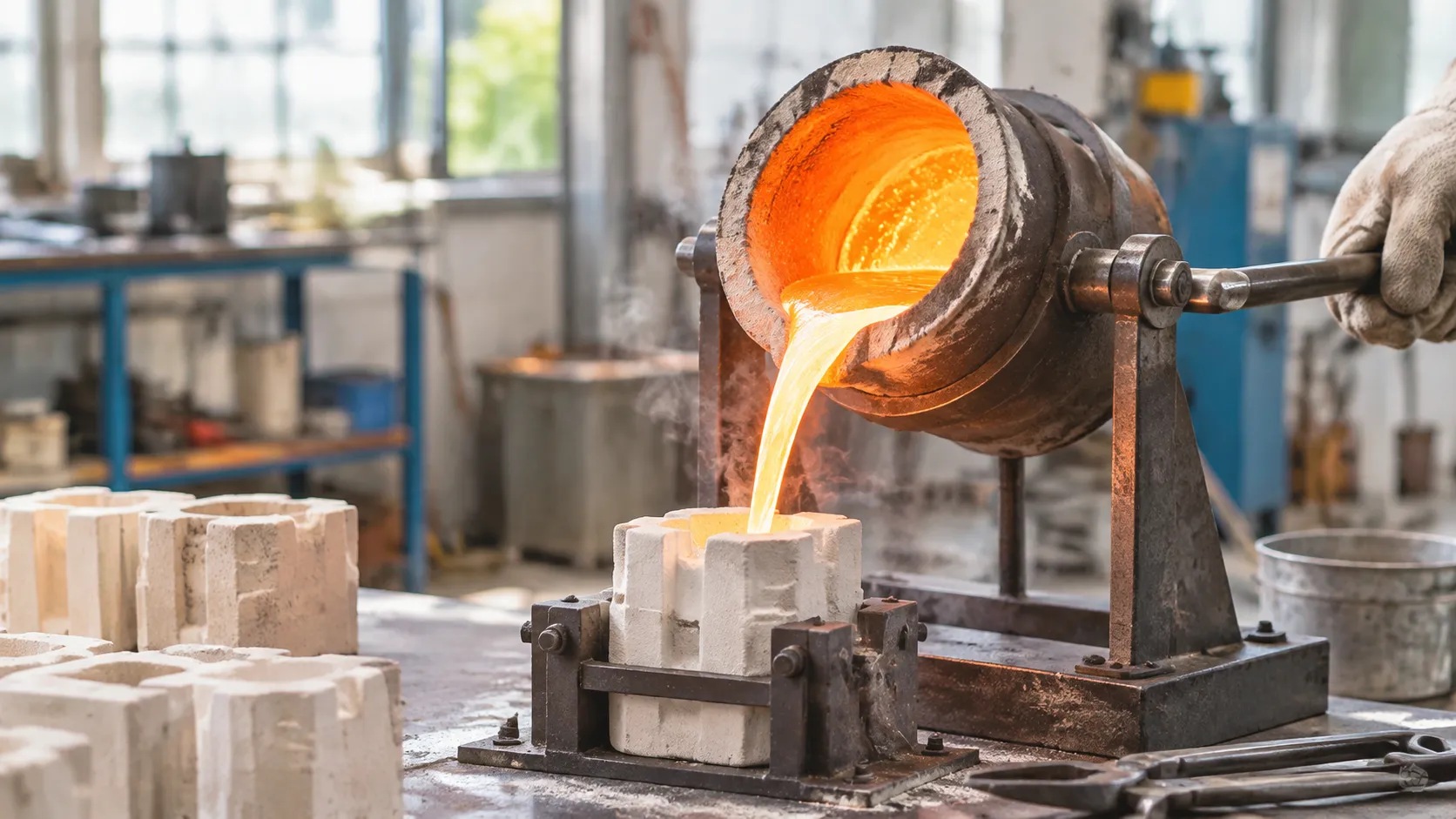
Compare investment casting vs die casting vs sand casting and explore small batch investment casting equipment for efficient precise production

Core Differences: Investment Casting vs Die Casting vs Sand Casting
Selecting the right metal casting method requires balancing part complexity, volume, and metallurgical needs. Each process offers distinct trade-offs regarding surface finish, dimensional precision, and initial investment.
Performance and Capability Comparison
| Feature | Investment Casting | Die Casting | Sand Casting |
|---|---|---|---|
| Surface Finish (Ra) | 0.8–3.2 µm | 0.4–1.6 µm | 6.3–25 µm |
| Tolerance | High Precision | Excellent | Low/Standard |
| Complexity | Extremely High | Moderate to High | Low to Moderate |
| Alloy Range | Ferrous/Non-ferrous | Non-ferrous | Nearly All Metals |
| Tooling Cost | Moderate | Very High | Low |
Method Characteristics
- Investment Casting (Lost-Wax): Known for producing near-net-shape parts with excellent surface finish and tight tolerances. It is highly flexible, supporting stainless steel, superalloys, and bronze, making it the superior choice for complex geometries in low-to-medium volumes.
- Die Casting: A high-pressure process that delivers rapid cycle times and high dimensional accuracy. However, the high cost of hardened steel tooling makes it economically prohibitive for small batch production. It is largely restricted to non-ferrous alloys like aluminum and zinc.
- Sand Casting: The most cost-effective solution for large, simple components or single-unit prototyping. While it handles almost any alloy, the process results in a rough surface finish, often necessitating significant secondary machining to achieve final specifications.
Economic Considerations for Small Batches
When evaluating investment casting vs die casting / vs sand casting small batch investment casting equipment, the break-even point is the primary driver. Sand casting involves minimal tooling investment but higher labor and finishing costs per part. Die casting requires massive upfront capital for dies, requiring long production runs to amortize costs. Investment casting occupies the "sweet spot" for engineers, offering the ability to produce complex, high-quality components without the massive tooling barriers of die casting or the high finishing requirements of sand casting.
Why Sand Casting Struggles with Detailed Small Runs
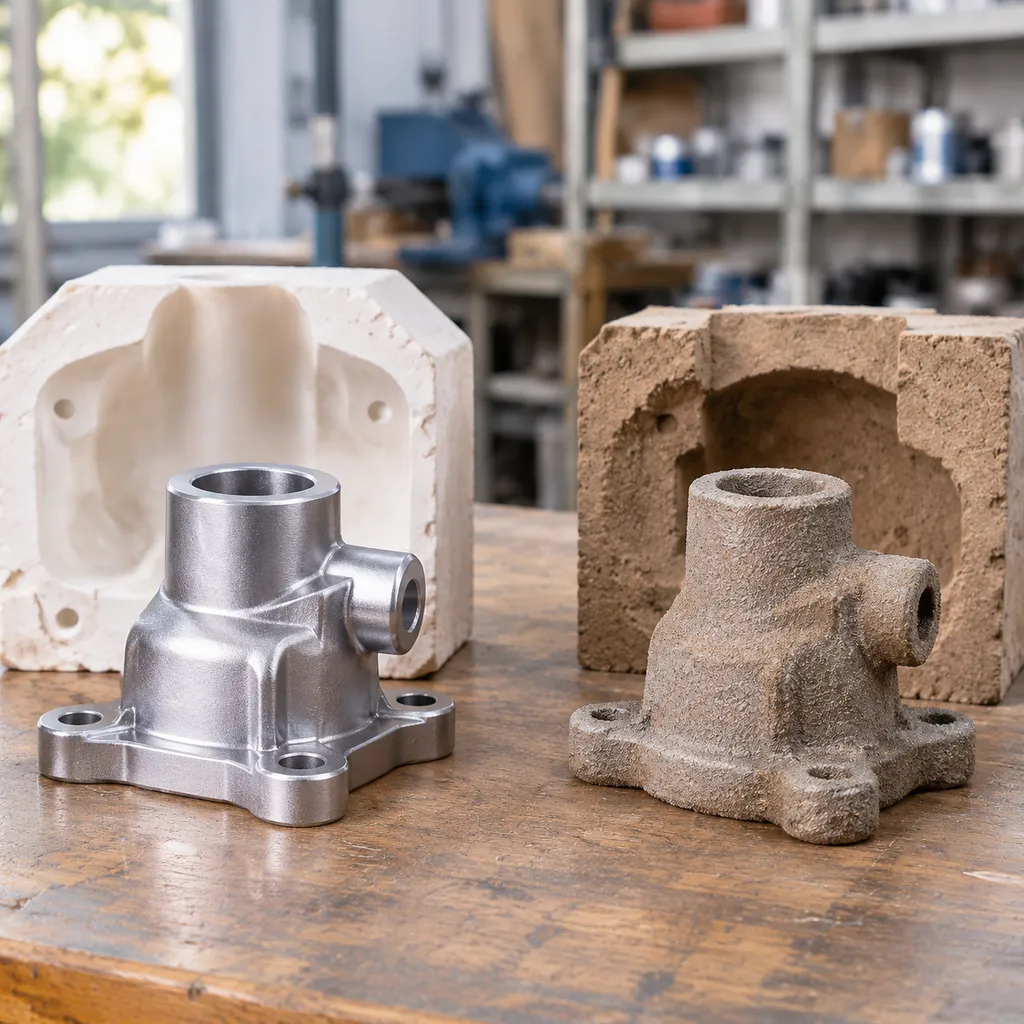
While sand casting works well for heavy iron blocks and simple geometries, we run into immediate roadblocks when producing small batches of detailed, intricate components. Comparing sand casting to precision options like investment casting or high-pressure methods shows clear mechanical and economic trade-offs on the shop floor.
Rough Surface Finishes Force Secondary CNC Machining
Sand casting naturally leaves a coarse surface finish, typically ranging from Ra 12.5 to 25 µm (500 to 1000 µin RMS). Because the sand grains imprint directly onto the metal: Sealing faces, bore alignments, and mounting flats require heavy machining allowances (often 3 mm to 6 mm of extra stock). Secondary CNC setups drive up total cycle times and consume tooling inserts rapidly on cast skin. As detailed in our sand mold casting guide with precision materials and CNC machining, cleaning up cast surfaces on small runs often ends up costing more than the casting process itself.
Minimum Wall Thickness Limits and Draft Angle Headaches
Sand molds collapse or fail to fill properly when pushed to cast thin, intricate cross-sections: Wall thickness limits: Getting sound walls below 3 mm to 4 mm (0.120 in) in sand is difficult without misruns and cold shuts, whereas precision lost wax methods routinely hit 1.5 mm. Mandatory draft angles: Rigid sand patterns require a 1° to 3° draft angle so the tooling pulls clean without tearing the mold walls. Removing these tapers requires extra machining or forces design compromises that alter the original CAD geometry.
High Labor Costs on Complex Geometries
On short production runs of 20 to 200 parts, sand casting labor piles up fast: Core assembly and mold prep: Setting fragile sand cores for internal cavities takes skilled manual labor for every single pour. Aggressive fettling: Parting-line flash, bulky risers, and large gates demand extensive manual grinding and cut-off work. Defect rates: Inclusion defects from loose sand washing into the gate system lead to high scrap rates during final machining, eroding profit margins on low-volume orders.
The High Tooling Trap of Die Casting for Low Volumes

When comparing investment casting vs die casting / vs sand casting, die casting looks great on paper for high-speed output. But for low-volume runs, it becomes a severe financial trap. We regularly see engineers attempt to use high-pressure die casting for short production schedules, only to stall their budgets before the first part is even poured.
Hardened Steel Tooling Destroys Small Batch Margins
Die casting requires heavy, hardened steel dies machined from premium tool steels to withstand immense injection pressures.
- Prohibitive upfront capital: Tooling costs routinely start in the tens of thousands of dollars for a single cavity.
- Brutal unit amortization: Spreading a $30,000 mold cost over 100 or 500 parts adds an unbearable premium to your per-unit cost.
- Expensive modifications: Any design adjustment requires costly CNC rework or scrapping the die entirely.
In a pressure die casting vs investment casting scenario, investment casting bypasses these heavy hard-tooling expenses entirely through low-cost tooling or directly printed patterns.
Crushing Lead Times for Early Prototypes
If you need metal parts fast, die casting works against you. Designing, cutting, heat-treating, and validating high-pressure dies typically takes 8 to 16 weeks. Waiting months to hold a first article is unacceptable when you need functional testing next week. If a design flaw surfaces during fit checks, the entire tooling cycle resets.
Alloy Restrictions: Locked Out of Ferrous Metals
Die casting is practically limited to low-melting-point, non-ferrous alloys—predominantly aluminum, zinc, and magnesium. The thermal shock and extreme temperatures of ferrous pours destroy hardened steel dies rapidly.
If your component requires structural strength, wear resistance, or high operating temperatures—such as tough 4340 steel casting or stainless grades—die casting is physically off the table. Investment casting handles these demanding ferrous and specialty alloys without mold degradation issues.
Why Small Batch Investment Casting Equipment Wins for Short Runs
When comparing investment casting vs die casting / vs sand casting, low-volume production has traditionally been an expensive headache. Die casting demands tens of thousands of dollars in hard tooling upfront, while sand casting leaves you with rough surfaces and poor tolerances that require endless CNC cleanup.
Deploying dedicated small batch investment casting equipment bridges this gap, giving us precision metal parts at a fraction of the setup cost.
Bypassing Hard Tooling with 3D-Printed Patterns
Machining dedicated injection dies for a run of 50 or 200 parts ruins your profit margins before the first pour. We solve this bottleneck by using 3D-printed wax patterns for rapid investment casting to bypass metal tooling entirely.
- Zero mold tooling costs: Send your CAD file straight to an SLA or DLP printer using castable resin or wax.
- Instant pattern production: Produce dozens of complex patterns overnight instead of waiting six to ten weeks for a toolmaker.
- Direct burnout: Modern pattern resins burn out cleanly in standard burnout kilns without expanding and cracking the ceramic shell.
Complex, Thin-Walled Net-Shape Parts Without Draft Angles
Both die casting and sand casting force you to design parts around mold release constraints. Because investment casting relies on an expendable ceramic shell that gets broken away after cooling, you can throw out those design limitations:
- No draft angles required: Cast straight vertical walls, deep blind holes, and reverse tapers that cannot pull out of a rigid mold.
- Thin-wall capability: Fill intricate cross-sections down to 1.5 mm or thinner under vacuum assistance without cold shuts.
- True net-shape geometry: Cast threads, internal channels, and sharp logos directly into the part to cut out secondary machining.
Fast Design Iteration for 10 to 500 Pieces
The 10 to 500 piece bracket is the ultimate dead zone for traditional production foundries. With an agile in-house lost-wax setup, you can turn design changes around in days rather than months:
| Production Factor | High-Pressure Die Casting | Sand Casting | Small Batch Investment Casting |
|---|---|---|---|
| Tooling Modification | Costly rework or full rebuild | Pattern rework required | Update CAD file and reprint |
| Lead Time to First Part | 8–16 weeks | 2–4 weeks | 3–5 days |
| Part Complexity | High (must pull from die) | Low to Medium | Unlimited (lost wax process) |
| Sweet Spot Batch Size | 5,000+ units | 1–50 rough units | 10–500 precision units |
If an engineering change order arrives after batch number twenty, we simply modify the 3D model, print fresh patterns, and pour updated castings the very next shift.
Must-Have Small Batch Investment Casting Equipment
Setting up an agile foundry cell requires the right footprint, modular machinery, and process control. When weighing investment casting vs die casting / vs sand casting small batch investment casting equipment, precision lost-wax hardware gives you unmatched geometric freedom without crushing capital expenses. Here is the core machinery we rely on to run low-volume melts cleanly and efficiently.
Pattern Making: Wax Injection Machines & SLA/DLP 3D Printers
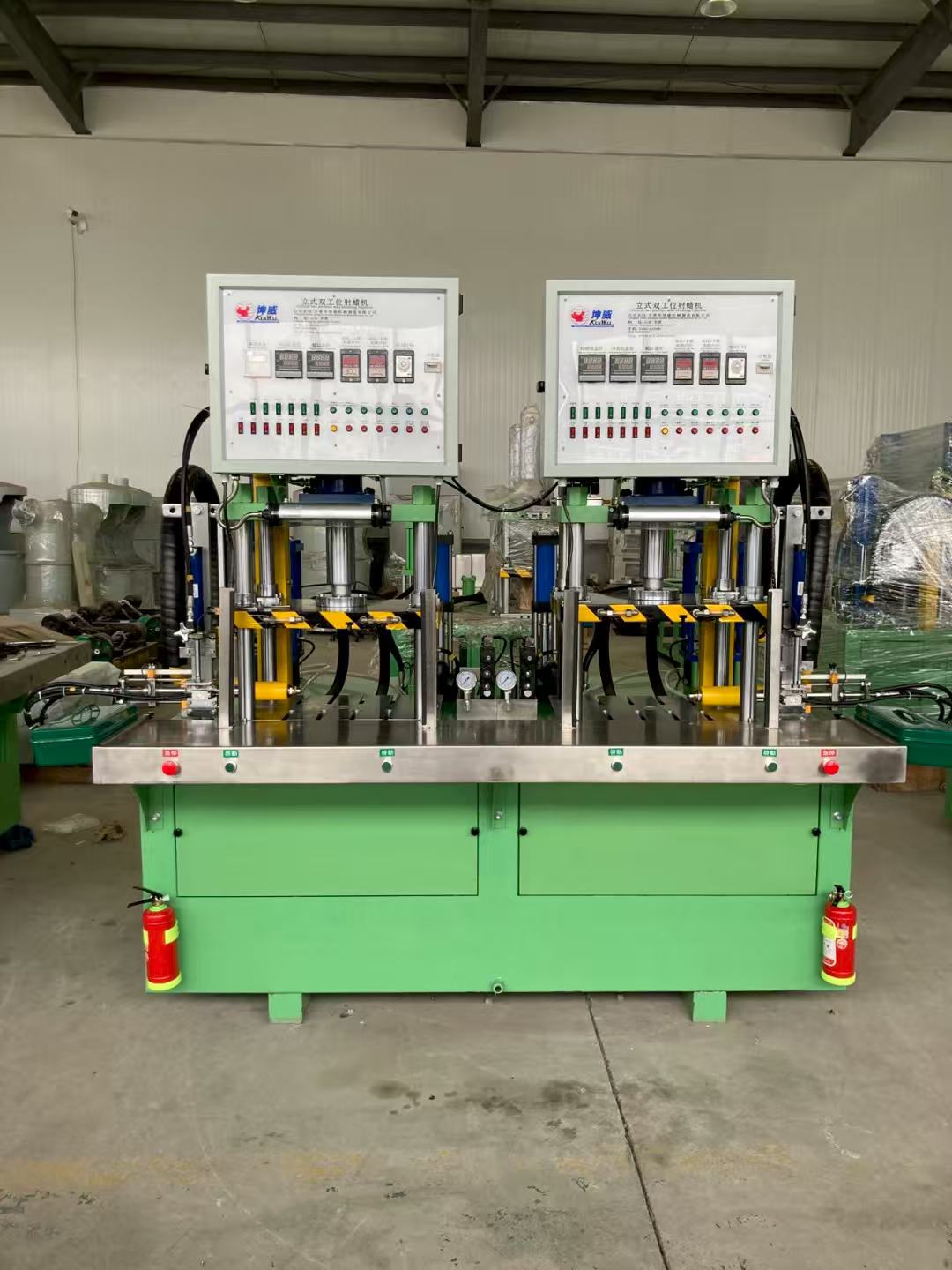
Every cast part starts with a precise consumable pattern. For repeat short runs of 50 to 500 units, benchtop wax injection machines deliver consistent wax patterns using cost-effective aluminum soft tooling.
When producing one-off prototypes or rapid design iterations, we bypass hard tooling entirely using SLA/DLP 3D printers loaded with castable resin. These photopolymer patterns burn out cleanly without ash residue, letting us jump straight from CAD to shell dipping within hours.
Ceramic Shell Mold Making: Slurry Mixers & Fluidized Sanding Beds
Consistent slurry suspension and uniform stucco coverage are critical to avoid shell cracking under thermal shock. Continuous Slurry Mixers: Heavy-duty rotating tanks keep refractory powders (zircon or fused silica) and colloidal silica binders in constant motion to prevent settling and air entrapment. Fluidized Sanding Beds: Using low-pressure pneumatic air to suspend refractory sands, these beds allow us to coat intricate wax trees evenly without damaging fine features or delicate wax gates.
Mold Prep: Dewaxing Autoclaves & Burnout Kilns
Getting the pattern out without rupturing the green ceramic shell requires rapid heat transfer. Steam dewaxing autoclaves pressurize and melt out the bulk of the wax in minutes before it can expand and fracture the shell walls.
Following dewaxing, shells move into high-temperature burnout kilns. We run molds through a controlled thermal ramp up to 1,000°C using an industrial shell firing furnace for steel and alloy investment casting to burn out any leftover carbon residue and fully sinter the ceramic bond before pouring.
Melting & Pouring: Vacuum Induction Melting Furnaces & Centrifugal Casters
The final pour demands precise thermal management and atmospheric control: Vacuum Induction Melting (VIM) Furnaces: Essential for pour-sensitive stainless steels, nickel superalloys, and reactive metals. Melting under vacuum or an inert argon blanket prevents melt oxidation, gas porosity, and slag inclusions. Centrifugal Casting Machines: For thin-walled geometries and micro-features, centrifugal force drives molten alloy deep into the mold cavity far more reliably than plain gravity pouring, ensuring razor-sharp edges and high structural integrity.
Cost and Turnaround Comparison for 100 Parts
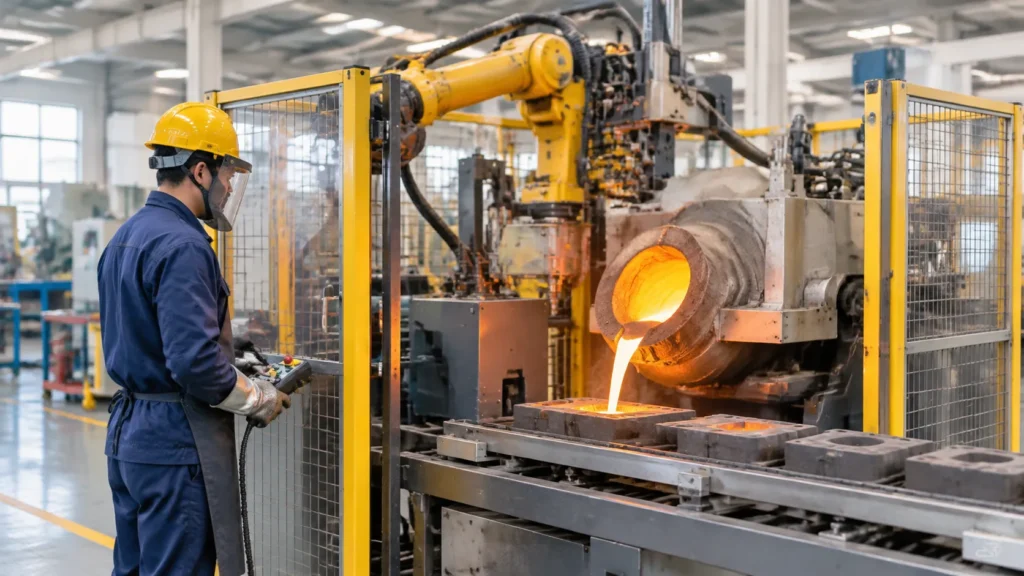
When evaluating small-batch production of 100 parts, the economics shift significantly depending on your choice of manufacturing method. For low volumes, investment casting often provides the best balance between high-quality surface finish and total cost, especially when avoiding the high entry price of die casting.
Economic Comparison Matrix (100 Units)
| Factor | Sand Casting | Investment Casting | Die Casting |
|---|---|---|---|
| Initial Tooling | Low | Low to Moderate | Very High |
| Lead Time | Fast | Moderate | Slow |
| Secondary Machining | High | Low | Low |
| Per-Part Cost | Moderate | Competitive | High (if amortized) |
Analyzing the Dynamics
- Initial Setup: Sand casting carries the lowest tooling investment but frequently suffers from higher per-part costs due to extensive post-processing requirements. Die casting is rarely viable for a 100-piece run because the massive expense of hardened steel dies cannot be efficiently amortized.
- Production Efficiency: Small batch investment casting equipment allows for flexible, rapid production. By utilizing 3D-printed patterns, we bypass the need for expensive metallic molds, effectively bridging the gap between prototyping and full-scale manufacturing.
- Secondary Finishing: The "net-shape" capability of investment casting means parts exit the shell close to final dimensions. This drastically cuts down the time and expense spent on CNC machining or manual grinding, which are usually required to clean up the rough surfaces common in sand casting.
For projects where dimensional tolerance and surface quality are non-negotiable, comparing die casting vs investment casting cost and material highlights why investment casting remains the standard for mid-to-low volume production runs.
Setting Up an In-House Small Batch Casting Cell

Bringing your pours in-house gives you full schedule control. When we compare investment casting vs die casting / vs sand casting small batch investment casting equipment, an investment casting cell delivers the highest precision in the smallest footprint. A functional, modular setup requires clear floor layout planning, dedicated utilities, and strict environmental controls.
Shop Floor Space and Electrical Power Requirements
You do not need a massive foundry floor for short runs. A dedicated 400 to 800 sq. ft. cell comfortably houses a complete lost wax casting workflow:
| Station | Recommended Footprint | Power & Utility Requirements |
|---|---|---|
| Pattern Prep & 3D Print | 80–120 sq. ft. | 110V / 220V single-phase, clean compressed air |
| Shell Dipping & Drying | 100–150 sq. ft. | 220V single-phase, continuous climate control |
| Dewax & Burnout Kiln | 80–100 sq. ft. | 220V/480V 3-phase or natural gas / propane |
| Melting & Casting Station | 120–150 sq. ft. | 480V 3-phase (15–30 kW for induction melters), cooling water loop |
| Knockout & Cutoff | 60–80 sq. ft. | 220V, high-flow compressed air for pneumatic tools |
Exhaust Ventilation and Controlled Shell Drying Rooms
Ceramic slurry layers demand uniform drying to prevent mold blowout during the pour. Understanding the ceramic shell investment casting process and benefits will help you dial in airflow and humidity settings for consistent mold strength.
- Shell Room Environment: Maintain temperature at 68°F to 72°F (20°C to 22°C) with relative humidity between 45% and 55%. Constant air movement speeds layer turnover without cracking fragile waxes.
- Burnout & Melt Exhaust: Install a dedicated canopy hood with local exhaust ventilation capable of handling wax vapor combustion and metal fumes. Never vent your burnout furnace into shared shop air.
Safety Gear and Handling Molten Metal Safely
Molten metal gives no second chances. Every operator in your casting zone needs proper personal protective gear before running melts:
- Foundry PPE: Full-face clear and infrared-rated shields, aluminized split-cowhide foundry aprons, wool underlayers, and aluminized spat-covered leather boots.
- Tool Handling: Inspect graphite crucibles and heavy-duty pouring shanks for hairline cracks before preheating.
- Moisture Elimination: Keep all charge metal, scrap gates, and skimming rods bone-dry. Preheat every metal piece on the furnace deck to prevent explosive steam pops when dropping stock into the liquid bath.
Frequently Asked Questions
Is investment casting cheaper than sand casting for small runs?
Yes, especially when dealing with complex geometries or tight tolerances. While sand casting offers cheaper initial flask setups, the rough surface finish and draft angle requirements demand heavy secondary CNC machining. When evaluating investment casting vs die casting / vs sand casting small batch investment casting equipment, the total landed cost tilts in favor of investment casting. By using 3D-printed patterns to bypass hard tooling, you produce near-net-shape parts right out of the mold. To better understand the direct trade-offs on the shop floor, examine the advantage of investment casting over green sand casting regarding scrap rates and machining labor.
Can small batch investment casting equipment melt steel and titanium?
Yes. Modern small batch investment casting equipment paired with a compact induction melting system handles stainless steel, carbon steel, and high-temp nickel superalloys with ease. For reactive metals like titanium, processing requires a specialized cold crucible vacuum induction melting setup to prevent oxidation and interstitial contamination. Standard ferrous pours simply need properly powered induction coils and refractory crucibles matched to your target metal.
How fast can you go from CAD design to a finished metal cast?
You can go from a digital CAD file to a poured, finished metal part in 48 to 72 hours:
- Day 1: 3D print sacrificial patterns in castable resin or wax, clean, and cure.
- Day 2: Tree the patterns, dip multiple coats using slurry mixers and fluidized beds, and dry the ceramic shell.
- Day 3: Dewax in a flash-fire kiln, preheat the ceramic mold, melt the charge, and pour your alloy.
Compare this turnaround against the 8 to 12 weeks standard for machining hardened steel tooling in pressure die casting.
What is the bare minimum equipment needed to start casting in-house?
To run a functional low-volume production cell without massive capital outlays, prioritize these five foundational machines:
- Pattern Maker: A commercial SLA/DLP 3D printer for direct-pour resin patterns or a compact benchtop wax injector.
- Shell Dip Station: A motorized slurry mixer drum and a manual or air-fluidized sand rainfall bed.
- Burnout Kiln: An electric, programmable ceramic burnout furnace capable of reaching 1000°C to 1100°C for dewaxing and mold curing.
- Melting System: A compact, modular induction melting furnace matched to your batch weight.
- Finishing Setup: A pneumatic hammer for shell knockout and a standard abrasive bead-blasting cabinet.
 English
 Russian
 German