
2026年11月5日
Learn how to reduce casting defects with proven methods for better quality fewer rejects and more efficient foundry production

How to Reduce Casting Defects with Process Control and Casting Lubricants
Impact of Casting Defects on Yield and Production Costs
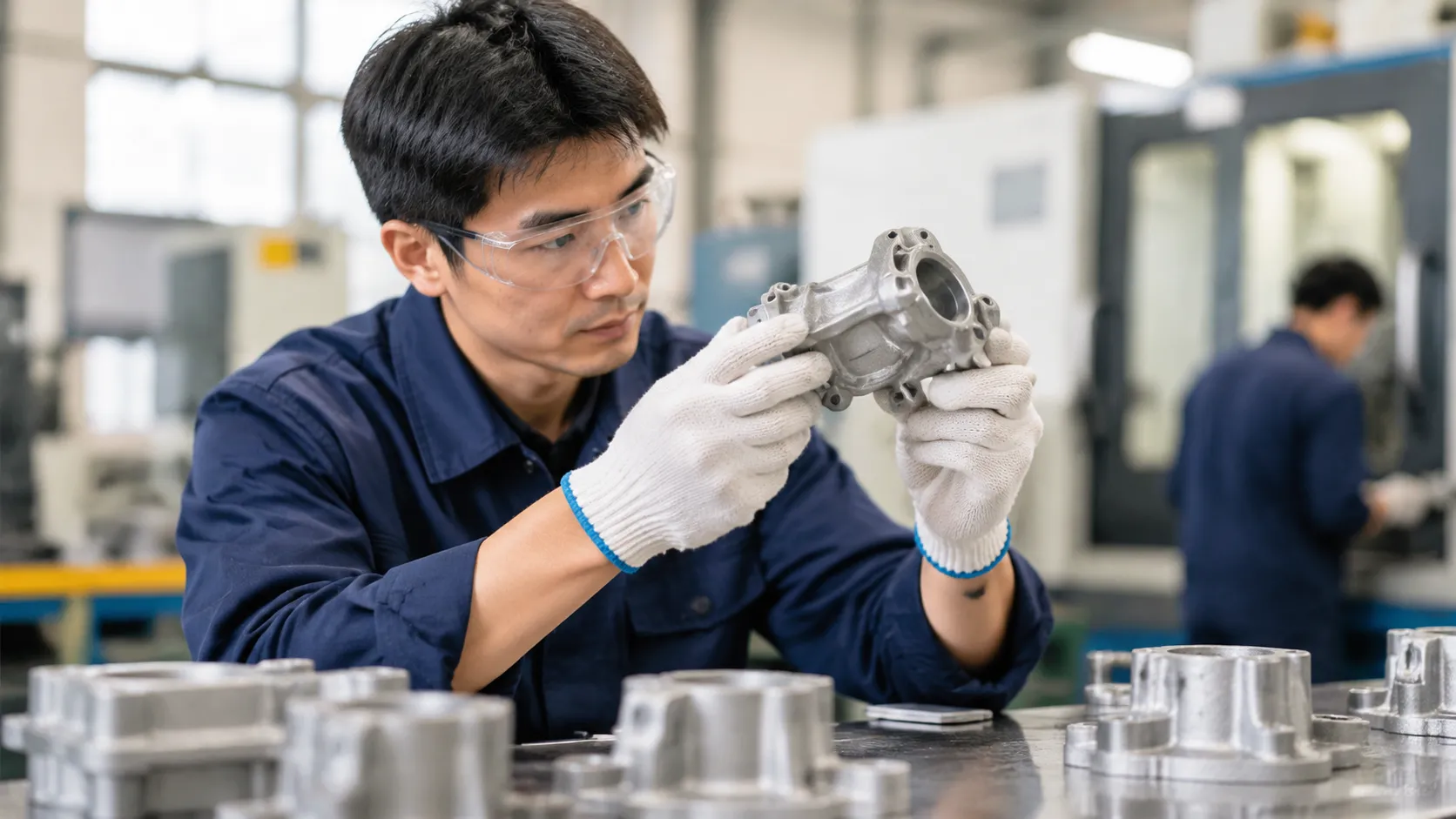
Casting defects—including porosity, surface scarring, tears, and dimensional variations—directly undermine foundry profitability. In high-stress manufacturing environments, rejected parts trigger compounding expenses:
- Direct Scrap Losses: Wasted alloy, non-recoverable melting energy, and unbilled production hours.
- Secondary Processing Inefficiencies: Unplanned secondary machining, grinding, or structural welding to salvage components.
- Unscheduled Downtime: Interrupted run schedules to inspect tooling, clear stuck parts, and reset thermal parameters.
- Premature Tool Wear: Excessive mechanical stress during ejection that accelerates die fatigue and tool replacement cycles.
Achieving high-yield casting operations requires eliminating defects at the root before finished components reach quality inspection.
The Need for a Holistic Defect Reduction Approach
Sustained defect mitigation cannot rely on isolated mechanical adjustments. Casting quality depends on the dynamic interplay between metal delivery, cycle timing, thermal regulation, and mold interface conditions.
| Process Pillar | Operational Focus | Defect Risk If Neglected |
|---|---|---|
| Thermal Equilibrium | Balanced heat dissipation across the die face | Hot tearing, shrinkage, localized porosity |
| Fluid Dynamics | Consistent fill velocities and venting control | Incomplete fills, cold shuts, trapped gas |
| Surface Interface | Uniform barrier formation and release dynamics | Surface tearing, metal solder, ejection damage |
Eliminating defects demands an integrated strategy where process parameters and fluid chemistry support each other throughout every cycle.
Integrating Vastpe Lubricants into Your Quality Strategy
At Vastpe, we view lubrication not as a passive consumable, but as an active engineering control. Our industrial lubricants and specialty fluids are developed to stabilize the interface between molten metal and high-stress tooling:
- Thermal Management: Engineered formulations help regulate surface temperature shifts to reduce thermal shock and shrinkage stress.
- Clean Release Action: Consistent film formation prevents metal adherence and eliminates surface tearing during ejection.
- Equipment Longevity: Superior surface protection shields precision dies and machine components, minimizing maintenance downtime.
By aligning tailored lubrication strategies with your process parameters, we help transform casting lines from reactive defect containment to predictable, high-yield manufacturing.
What Causes Casting Defects?
In our engineering work with high-stress foundry and die-casting floors, we find that scrap rates usually spike when thermal control, fluid flow, and interface protection fall out of balance. Pinpointing the root cause is the first step in learning how to reduce casting defects across production runs.
| Root Cause Area | Primary Mechanism | Resulting Defects |
|---|---|---|
| Metal Temperature | Improper melt heat (too hot or too cold) | Cold shuts, misruns, gas absorption, shrinkage |
| Tooling Condition | Thermal fatigue, wash-out, poor venting | Parting line flash, burrs, dimensional drift |
| Flow Dynamics | Turbulent cavity filling and uneven cooling | Internal porosity, oxide skins, hot tearing |
| Lubrication Failure | Uneven film coverage or thermal breakdown | Soldering, die sticking, rough surface finish, cracks |
How Incorrect Metal Temperatures Lead to Filling Issues
Pouring temperature directly impacts fluid viscosity and flow behavior: Melt temperature too low: The alloy loses fluidity before completely packing the cavity. This triggers misruns, seams, and cold shuts where flow fronts meet without fusing. Melt temperature too high: Excessive heat increases gas solubility in the melt and accelerates localized shrinkage, driving up rejection rates from internal voids.
Identifying Poor Mold or Die Conditions
Tooling takes severe thermal and mechanical punishment. Over time, micro-cracks, surface pitting, and venting blockages develop. Maintaining tooling in line with recognized casting quality standards for reliable metal parts keeps parting lines true and prevents excess metal from escaping as flash and burrs.
Analyzing Unstable Filling and Solidification Patterns
When molten metal fills a cavity turbulently, it traps ambient air and vaporized process fluids, leading directly to porosity. Unbalanced thermal gradients create uneven cooling rates across thin and thick walls, which sets up high residual stresses that trigger hot tearing and structural cracks.
Recognizing the Role of Inadequate Release Lubrication in Defect Formation
Lubrication is an active engineering control, not just a parting spray. When die release agents break down under high heat: Die sticking and soldering occur: Molten alloy chemically welds onto the tooling steel, causing galling, drag marks, and part deformation during ejection. Thermal shock accelerates: An inconsistent lubricant layer fails to regulate localized surface temperatures, causing premature thermal cracking in the tool. Surface pitting increases: Excess fluid pooling in deep cavities vaporizes violently upon metal contact, leaving pinholes, blisters, and localized porosity on the cast surface.
How to Reduce the Most Common Casting Defects

Targeting specific flaws at the root is the fastest way to stabilize your yield. When we troubleshoot high scrap rates on the shop floor, we focus on mechanical alignment, thermal control, and fluid interaction to eliminate the five most frequent defects.
Controlling Burrs and Flash
Parting line wear and poor clamping pressure allow molten alloy to escape the cavity, creating unwanted flash. Maintain clamping tonnage: Verify hydraulic pressure and tie-bar calibration to prevent micro-gaps during injection. Inspect parting surfaces: Remove hard lubricant buildup or metal debris that keeps die halves from seating flush. Control local heat: Overheated die edges expand unevenly, accelerating edge erosion and burr formation.
Minimizing Porosity via Venting and Vapor Control
Porosity stems from trapped air, gas, or vaporized moisture inside the cavity. Optimize spray volume: Excess water-based lubricant pools in low spots, turning to steam upon metal contact and causing gas entrapment. Clear vents and vacuum paths: Clean off flash and residue blocking exhaust channels before each production run. Balance shot speed: Adjust slow-shot to fast-shot transition points to maintain a laminar flow front without folding air into the melt.
Preventing Cracks and Hot Tearing
Hot tears occur when alloy shrinkage is constrained during solidification while the metal lacks tensile strength. Smooth out thermal gradients: Apply targeted die cooling and balanced lubrication to eliminate extreme hot spots adjacent to cold sections. Modify cycle dwell times: Eject parts before excessive contraction against rigid cores triggers stress fractures. Reduce mechanical drag: Ensure uniform lubricity across deep-draw ribs and cores to let the casting shrink without binding.
Improving Surface Finish and Limiting Surface Pitting
Pitted, rough, or cold-lapped surfaces undermine cosmetic quality and structural integrity. Demanding applications like aluminum investment casting rely heavily on immaculate surface contact, making cavity cleanliness critical across all casting methods. Eliminate overspray residue: Use high-purity release fluids that leave zero sticky carbon residues or ash deposits in the cavity. Maintain proper die temperatures: Cold dies chill metal fronts prematurely, creating folds, cold shuts, and orange-peel textures. Ensure atomization quality: Set spray nozzles to deliver fine, uniform droplets rather than heavy droplets that cause localized washouts.
Preventing Deformation During Ejection
Parts warp when mechanical ejection forces exceed the hot strength of the solidifying metal.
| Root Cause | Process Adjustment | Lubrication Control |
|---|---|---|
| High Die Sticking | Verify core draft angles and polish drag marks | Switch to a high-slip release agent on deep cavities |
| Uneven Pin Force | Rebalance and align ejector pin layout | Ensure uniform lubricant coverage across all ejector pins |
| Early Ejection | Extend in-die cooling time slightly | Use thermal-barrier fluids to accelerate safe surface skinning |
The Role of Casting Lubricants in Defect Prevention
Selecting the right industrial fluids is a critical engineering control when determining how to reduce casting defects. Beyond basic part separation, a specialized casting process lubricant functions as a thermal barrier, a surface protector, and a chemical buffer between molten metal and the tooling surface.
Consistent Mold and Die Release
To stop tears, hot cracks, and mechanical distortion during part ejection, the release interface must perform predictably on every cycle. Die sticking prevention: A dependable release barrier minimizes friction between the solidified part and the steel cavity, eliminating drag marks and pin pushes. Lower ejection forces: Balanced lubrication prevents mechanical stress during part removal, directly addressing problems with part deformation.
Managing Thermal Stability Under Extreme Heat
High-temperature casting cycles create severe thermal shock. A robust lubricant blend helps control local surface temperatures without breaking down or gassing out prematurely. Prevents localized hot spots that trigger shrinkage, hot tearing, and porosity. Resists thermal breakdown, meaning fewer burnt residues and trapped carbon inclusions on the part surface.
Ensuring Uniform Film Formation
Effective casting defect prevention relies on a continuous, uniform lubricating film across intricate cavities and high-wear tooling areas.
| Film Characteristic | Process Benefit | Defect Prevented |
|---|---|---|
| Even Surface Wetting | Smooth metal flow along cavity walls | Cold shuts and incomplete fills |
| Controlled Thickness | Rapid moisture or carrier evaporation | Gas porosity and blistering |
| Residue Resistance | Clean cavity finish between cycles | Surface pitting and inclusions |
Tooling Protection and Extended Service Life
Tool wear is a primary cause of part dimensional drift and burrs. We formulate our specialty lubricants to shield expensive dies from solder formation, thermal fatigue cracking, and abrasive wash. By preserving the sharp profile of parting lines and shut-offs, high-grade lubricants keep tooling within tolerance and lower long-term tooling replacement costs.
Matching Fluid Performance with Process Compatibility
No single fluid handles every operating condition. Proper defect reduction requires matching lubricant chemistry to alloy reactivity, cycle speeds, and downstream operations like washing, painting, or plating. Integrating fluid chemistry directly into our casting process guide methods and key steps ensures predictable quality, tighter dimensional control, and higher overall operational efficiency.
How to Select the Right Casting Lubricant
Choosing the correct die release agent or mold release lubricant is critical when learning how to reduce casting defects on high-volume production lines. We approach fluid selection as an engineering control, ensuring the lubricant's physical and chemical properties align directly with your mechanical setup.
Choosing Products Based on Casting Methods
Different casting processes create distinct thermal and mechanical demands on fluid chemistry:
- High-Pressure Die Casting (HPDC): Requires lubricants with rapid film-forming capability, high thermal dissipation, and strong adhesion under high-velocity metal flow.
- Gravity Die Casting: Demands stable release barriers that control heat transfer rates to assist steady solidification without insulating excessively.
- Permanent Mold Casting: Relies on durable permanent mold lubricants that withstand repeated thermal cycling while preventing sticking and tearing.
| Casting Method | Key Process Demands | Primary Defect Prevented | Recommended Lubricant Focus |
|---|---|---|---|
| High-Pressure Die | Extreme injection velocity, fast cycles | Soldering, thermal cracks, gas porosity | Rapid-film synthetic or water-based emulsions |
| Permanent Mold | Controlled cooling, moderate cycle speeds | Surface pitting, incomplete fills | Insulating, heat-resistant barrier fluids |
| Gravity Casting | Low-pressure filling, continuous heat | Cold shuts, surface tearing | High-lubricity, low-residue release agents |
Matching Lubricant Chemistry to Your Alloy
Molten metal temperatures directly dictate the required degradation threshold of your casting process lubricant. Pouring temperatures vary significantly across alloys, meaning the fluid film must stay intact at the point of contact without producing excessive gas:
- Aluminum Alloys: High pouring temperatures require robust thermal stability to prevent die soldering and shrink defects. Review our casting alloy properties and material selection guide to align operational temperatures with the right fluid package.
- Zinc Alloys: Lower melting points allow lighter lubricant coatings that focus on flow optimization and surface cosmetic quality.
- Magnesium Alloys: Require specialized carrier systems that limit reactivity and prevent moisture-induced porosity.
Evaluating Application Equipment Requirements
A lubricant formulation must match the delivery hardware on your factory floor:
- Automated Spray Manifolds: Require fluids with balanced viscosity and anti-clogging agents to ensure uniform nozzle atomization.
- Proportional Mixing Systems: Demand highly stable concentrate formulations that do not separate or stratify in holding tanks.
- Robotic Reciprocators: Need fast-wetting agents that build an even protective film within tight cycle times.
Reviewing Essential Technical and Safety Documentation
Before moving a fluid into production trials, verify critical product data to maintain operational safety and consistent results:
- Technical Data Sheets (TDS): Check dilution thresholds, refractometer index factors, and optimal working die temperature ranges.
- Safety Data Sheets (SDS): Confirm VOC levels, biostability features, and operator handling requirements.
- Environmental and Disposal Compliance: Ensure wastewater treatment compatibility and effluent compliance for spent fluid run-off.
Best Practices for Applying Casting Lubricant

Achieving consistent results in your metal casting process depends heavily on how you apply your lubricant. Even the highest-grade chemistry will fail if the application protocol is inconsistent. Follow these core practices to ensure optimal performance:
- Die Surface Preparation: Before applying any lubricant, the die surface must be completely cleaned of residual carbon, metal buildup, and old lubricant. A clean, pristine die surface is essential for achieving a uniform bond and preventing surface pitting.
- Precision Dilution: Always calculate and maintain correct dilution ratios. Using an incorrect concentration is the leading cause of poor thermal management and inconsistent release. Use automated mixing equipment to ensure the ratio remains stable across all production shifts.
- Controlled Coating Techniques: Aim for a thin, uniform coating across the entire die cavity. Over-application is a common mistake that leads to gas porosity and excessive buildup; use a controlled spray pattern that covers the geometry without pooling.
- System Maintenance: Regularly inspect your spray nozzles and feed lines. A clogged or damaged nozzle will disrupt your spray pattern, leading to uneven cooling and increased risk of casting defects.
- Uniformity Checks: Periodically perform manual checks to verify that the lubricant film is drying evenly. If you notice streaks or dry patches, adjust your spray duration or air-to-fluid pressure settings immediately to maintain process stability.
Process Controls That Work Alongside Lubrication
Applying high-grade release fluids is only half the battle when discovering how to reduce casting defects. To achieve true metal casting process optimization, we pair our fluid chemistry with strict mechanical and thermal parameter controls on the floor.
Optimizing Die and Metal Temperature Profiles
Maintaining steady thermal balance across the mold prevents thermal shock, hot tearing, and misruns. Metal pouring temperature: Keep alloy temperatures within a strict operating window to eliminate premature freezing or excessive gas absorption. Die surface temperature: Use internal heating and cooling channels to keep die faces at stable temperatures before lubricant spray, ensuring the fluid forms an even protective barrier.
Fine-Tuning Injection Speed and Filling Parameters
Turbulent flow traps air and washes away protective lubricant films. In processes like high-pressure die casting, balance the slow-shot and fast-shot transitions to fill the cavity cleanly without atomizing the melt or eroding the tooling surfaces. Understanding the process requirements outlined in our guide on die casting vs sand casting helps when matching filling speeds to specific casting methods.
Enhancing Venting and Vacuum Systems
Gases from molten metal and evaporated lubricant carrier fluids must escape instantly: Keep parting line vents clean of flash and carbon deposits. Maintain vacuum chill blocks to assist fast evacuation. Clean vent paths during routine shifts to ensure direct casting porosity reduction.
Improving Cooling and Solidification Monitoring
Localized hot spots cause shrinkage porosity and internal cracks. We balance internal water lines with external lubricant spray times to drive directional solidification toward the risers or shot sleeves. Thermal imaging tools help verify that no section of the cavity remains excessively hot before part ejection.
Implementing Scheduled Die Maintenance Routines
Tooling wear directly drives part defects. A reliable die maintenance schedule includes: Checking parting lines for burrs and mechanical damage. Polishing out minor scratches before metal soldering occurs. Descaling internal cooling lines to sustain designed heat transfer rates.
| Process Variable | Target Defect Addressed | Control Action |
|---|---|---|
| Die & Melt Temp | Hot tearing, cold shuts | Stabilize pre-spray temperatures; monitor melt furnaces |
| Shot Profile | Flash, turbulent porosity | Smooth out fast-shot switchover points |
| Venting / Vacuum | Gas porosity, air blisters | Clear vents; inspect vacuum valve timing |
| Cooling Lines | Shrinkage cracks, deformation | Descale water lines; balance cycle dwell times |
| Die Maintenance | Burrs, surface drag marks | Regularly clean parting lines and polish cavity faces |
How to Monitor Whether Defects Are Being Reduced

To effectively assess how to reduce casting defects, you must shift from anecdotal evidence to data-driven process monitoring. My approach prioritizes objective performance indicators to ensure that lubrication strategies translate into tangible quality improvements.
Key Performance Indicators for Quality Control
Tracking the right metrics provides an immediate view of your casting process health: Scrap Rates: Monitor the percentage of parts discarded due to surface pitting, porosity, or structural flaws. Yield Efficiency: Calculate the ratio of usable components against the total number of cycles. Ejection Force: Use sensor data to track the force required to release parts; high force is often a precursor to sticking and deformation. Cycle Consistency: Measure variations in timing, which often indicate thermal instability or inconsistent film buildup.
Establishing a Production Baseline
Before implementing any changes, you must document your current state. Capture at least one full shift’s worth of data under standard operating conditions. This baseline serves as your "control" to prove that the lubricant performance is truly impacting the outcome. If you are refining cast alloy products for durable industrial applications, ensure your baseline accounts for specific alloy characteristics.
The One-Variable-at-a-Time Method
Avoid the common trap of changing multiple process parameters simultaneously. When testing a new lubricant or application technique, keep all variables—such as die temperature, injection speed, and spray duration—fixed. By isolating the lubricant as the single variable, you gain a clear, defensible understanding of its impact on reducing casting porosity and improving surface finish. Documenting these trials meticulously allows you to refine your standard operating window for maximum yield.
Casting Lubricant Trial and Validation Plan
Testing a new die release agent or casting process lubricant requires a methodical approach to confirm real-world performance without disrupting plant throughput. A structured validation plan ensures you understand exactly how to reduce casting defects while establishing repeatable production benchmarks.
Defining Objectives and Recording Initial Baselines
Before introducing a new fluid, we establish measurable targets based on existing machine data. Running a trial without a baseline makes it impossible to evaluate true return on investment.
- Primary Metrics: Track current scrap rates, rejection reasons (such as porosity, blistering, or cracks), and cycle times.
- Operating Data: Log average die surface temperatures, spray duration, and mechanical ejection force.
- Baseline Part Quality: Inspect current production runs for surface finish consistency and die sticking before changing chemistries.
Conducting Controlled Production Trials
Validating casting defect prevention requires tight process isolation. We introduce the new lubricant under steady-state operating conditions rather than during cold starts.
- System Flush: Thoroughly clean supply lines, mixing tanks, and spray manifolds to eliminate cross-contamination with prior fluids.
- Single-Variable Testing: Keep metal temperature, shot velocity, and tooling geometry identical to standard runs.
- Controlled Application: Begin spraying at recommended dilution ratios and verify uniform film coverage across the entire die cavity.
Similar to validating tooling parameters in precision investment casting and prototypes, tight control over production variables during fluid trials prevents false readings.
Comparing and Documenting Results
Once the run reaches steady operating temperature, evaluate performance against your baseline data.
| Evaluation Area | Key Observation Points | Success Indicator |
|---|---|---|
| Release & Ejection | Part release smoothness, pin drag marks | Lower ejection force, no sticking |
| Surface Integrity | Visual pitting, cold shuts, staining | Clean, uniform surface finish |
| Die Cleanliness | Carbon buildup, residue in vents | Minimal buildup, clear vents |
| Scrap Tracking | Defect counts over shift run | Measurable drop in scrap rates |
Finalizing the Standard Operating Window
After documenting positive results, we lock in the process parameters to maintain consistency across shifts:
- Set Dilution Standards: Fix the operational dilution ratio and implement regular concentration checks.
- Program Spray Cycles: Lock in nozzle angles, spray volume, and air blow drying times.
- Update SOPs: Document operating limits for die temperature and fluid pressure so machine operators maintain the ideal operating window.
Why Use Vastpe Casting Lubricants?
We do not treat industrial lubrication as an afterthought or a commodity. In high-stress manufacturing and metalworking setups, the fluid you choose directly dictates your yield, tool life, and bottom-line stability. Our casting and specialty industrial lubricants are formulated to solve real production bottlenecks, giving you a reliable partner in learning how to reduce casting defects through engineered fluid control.
Application-Specific Technical Guidance
Every production floor faces distinct thermal stresses, tooling geometries, and alloy behaviors. Instead of pushing one-size-fits-all products, we deliver engineering-led fluid strategies tailored to your exact operating parameters.
- Engineering-First Mindset: We evaluate your operational environment to match fluid characteristics with your thermal and mechanical demands.
- Targeted Protection: Our industrial lubricants and specialty fluids protect expensive tooling from premature thermal fatigue and heavy friction wear.
- Operational Longevity: We focus on extending machine life and reducing unscheduled maintenance downtime across your entire foundry casting process.
Supporting Process Optimization
Defect mitigation requires stable, repeatable boundary conditions. Our technical solutions provide the chemical and thermal stability needed to keep your operations consistent shot after shot.
| Operational Priority | Vastpe Strategic Approach | Manufacturing Result |
|---|---|---|
| Tooling Longevity | Formulated for high-stress industrial environments | Decreased die wear and reduced replacement downtime |
| Defect Mitigation | Balanced thermal stability and uniform surface coverage | Fewer surface flaws, tears, and release-related rejects |
| Process Consistency | Tailored fluids engineered for specific operating windows | Stable cycle times and predictable production runs |
| Operational Efficiency | High-performance industrial lubricants and metalworking fluids | Lower total operating costs and optimized resource use |
By aligning fluid chemistry directly with your machine operating conditions, we help you stabilize cycle parameters, protect critical tooling, and achieve repeatable, high-yield results.
Frequently Asked Questions

What is the difference between casting lubricant and die-release agent?
While many in the industry use these terms interchangeably, they serve slightly different functions:
| Product Type | Primary Function | Key Focus Area |
|---|---|---|
| Die-Release Agent | Prevents molten metal from soldering or fusing to the die surface. | Parting line, cavity surfaces, and clean part ejection. |
| Casting Lubricant | Provides comprehensive friction control, thermal cooling, and mechanical wear protection. | Entire tooling system, ejector pins, slides, and mold cavities. |
Understanding tooling demands across different methods—such as evaluating die casting vs. investment casting—ensures we select the exact fluid profile needed for component accuracy.
Can lubricant reduce casting cycle time?
Yes. A well-formulated lubricant acts as an active heat-transfer medium. By pulling heat away from critical areas efficiently, it helps the cast metal reach solid state faster. Furthermore, consistent release properties allow faster ejection speeds without risking part warping or deformation.
What causes lubricant buildup on a die?
Lubricant residue and carbon buildup typically happen due to three common shop-floor issues: Over-spraying: Applying excess volume rather than fine-tuning the spray pattern. Low die surface temperatures: If the tool is below the fluid's flash-off window, the carrier fluid cannot evaporate cleanly. Incorrect dilution: Running a mix that is too rich leaves thick organic deposits that trigger surface pitting and gas porosity.
Why does a casting stick even when lubricant is applied?
When castings stick despite lubrication, the lubricant film is usually failing under heat: Thermal breakdown: The local die temperature exceeds the lubricant’s thermal rating, causing the protective barrier to burn off before metal injection finishes. Shadow zones: In complex geometries, manual or automated spray heads may miss deep ribs or pockets. Worn die coating: Tooling wear and micro-soldering can tear the fluid boundary layer, demanding mechanical die maintenance rather than simply spraying more fluid.
Should lubricant be changed when the alloy changes?
Yes. Different metals interact differently with casting fluids. Aluminum melts at higher temperatures and solders easily onto tool steel, requiring high-temperature synthetic polymers. Zinc operates at lower temperatures and requires lighter fluids that flash off quickly without leaving greasy stains. Matching the chemistry to the alloy is a fundamental step in our strategy for how to reduce casting defects across mixed-production lines.
How can dilution be checked on the production floor?
We recommend a two-step check routine to keep your lubricant mix within the target operating range: Optical or Digital Refractometer: Take daily Brix readings directly from the spray head lines, not just the central reservoir. Refractive Index Factor: Multiply the reading by the fluid supplier’s specific refractive index to get the exact concentration percentage. Visual Checks: Look out for phase separation or tramp oil contamination, which can throw off refractometer readings and degrade release performance.
Contact Vastpe for a Casting Lubricant Recommendation
Achieving consistent results in metal casting requires more than just high-quality fluids; it demands a tailored strategy that aligns with your specific equipment and alloy requirements. We act as your technical partner to ensure your lubrication strategy directly supports your quality goals and reduces production scrap.
If you are ready to optimize your manufacturing efficiency or need help addressing persistent defects, our team provides custom technical consultations to identify the ideal solutions for your facility.
| Service Area | Focus for Manufacturers |
|---|---|
| Technical Audit | Reviewing current fluid application and dilution |
| Custom Formulation | Aligning lubrication with specific alloy chemistry |
| Process Optimization | Enhancing cycle times and mold release |
| Performance Testing | Validating product efficacy on your production floor |
We provide specialized support for both foundry aluminum casting services and general custom casting manufacturer requirements. Connect with us today to discuss your production environment and secure a recommendation designed to improve your casting yields.
 English
 Russian
 German