
2026年8月17日
Learn stainless steel corrosion resistance grades 304 vs 316 passive film and marine durability for smarter material selection
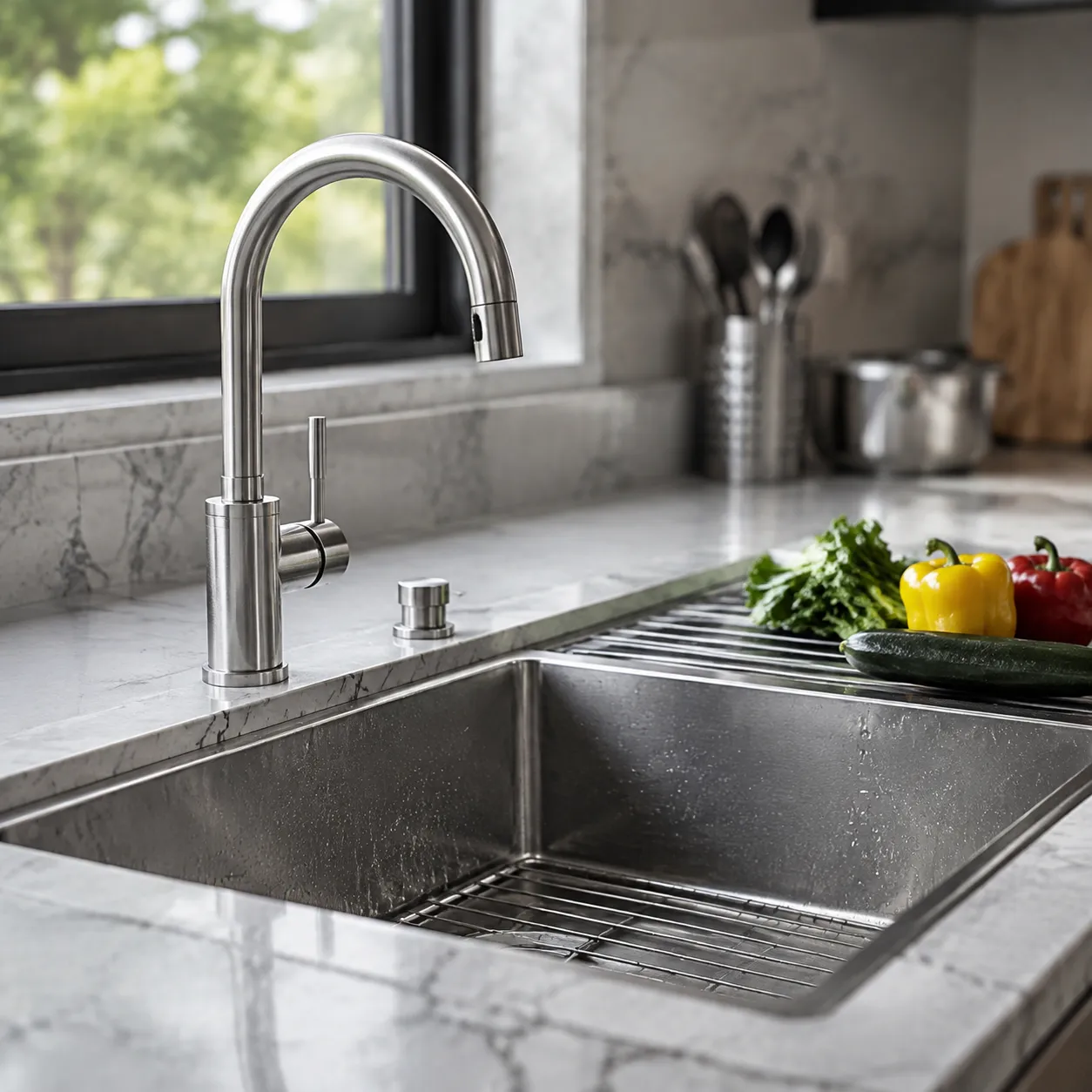
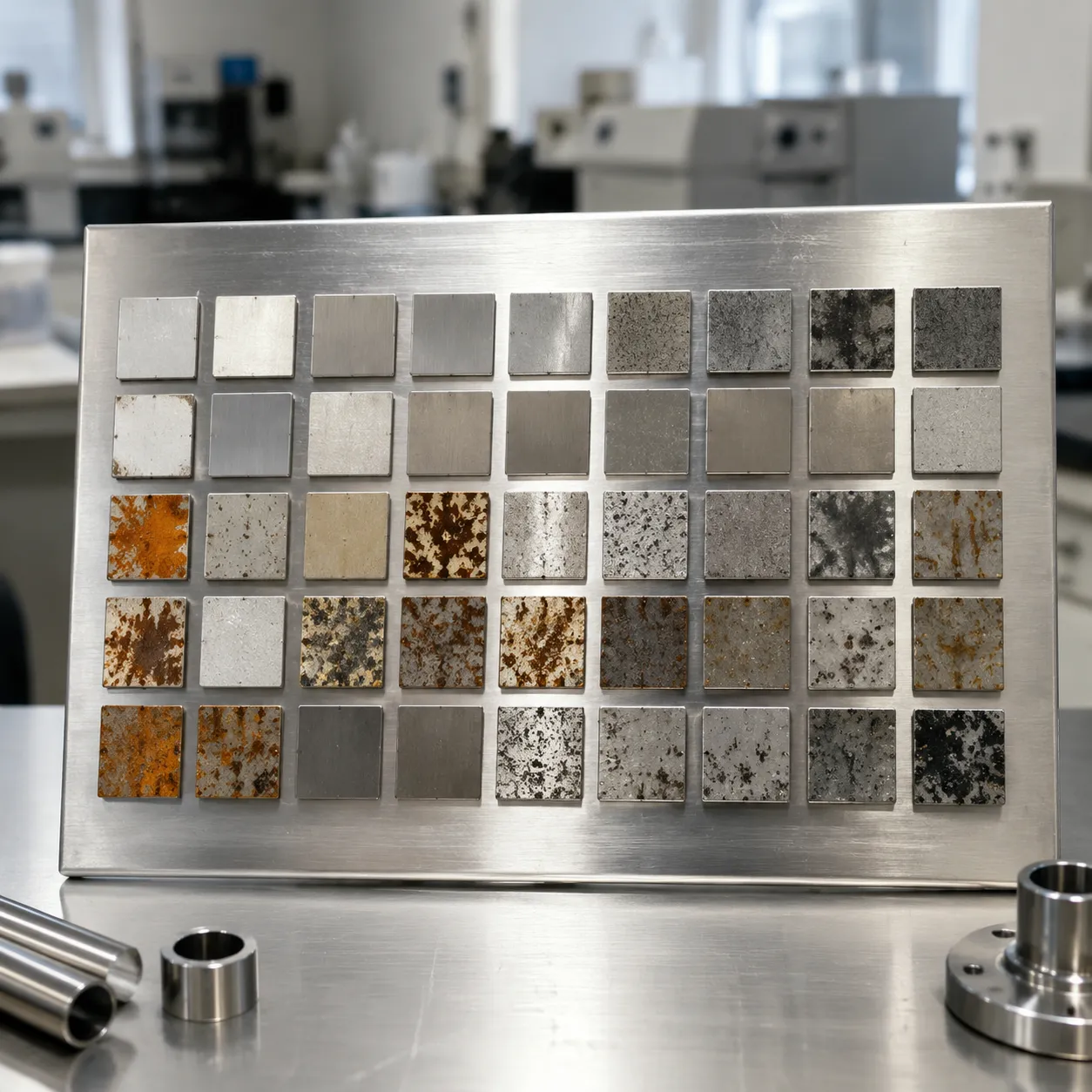
Metallurgical Foundations of Stainless Steel Corrosion Resistance
Unplanned material failure from aggressive chemical exposure disrupts operations and inflates lifecycle costs. Achieving long-term performance starts at the atomic level, where specific alloy chemistries protect critical component surfaces from degradation.
Chromium Oxide Passive Film Mechanism
The primary driver behind stainless steel corrosion resistance is an invisible, nanometer-thick surface film. When chromium concentrations reach at least 10.5%, the material reacts spontaneously with ambient oxygen to build a protective hydrated chromium oxide layer (Cr2O3).
- Stoichiometric Formation: Oxygen rapidly oxidizes surface-bound chromium atoms, forming a dense, dielectric ceramic barrier that halts electron transfer.
- Self-Healing Dynamics: If damaged by impact or scratching, the passive film instantly reforms in oxygenated media, stopping localized corrosion before it spreads.
- Hydration Stabilization: Ambient moisture incorporates hydroxyl ions into the Cr2O3 matrix, strengthening its chemical stability in fluid processing environments.
Key Alloy Elements and Structural Impact
We balance strategic alloy additions to maximize chemical stability while preserving mechanical ductility across extreme operational environments.
| Element | Content Range | Primary Corrosion & Structural Function |
|---|---|---|
| Chromium (Cr) | 10.5% – 30.0% | Essential base element for continuous Cr2O3 passive film formation. |
| Nickel (Ni) | 8.0% – 25.0%+ | Stabilizes the austenitic phase; improves resistance to reducing acids and stress corrosion cracking. |
| Molybdenum (Mo) | 2.0% – 7.0% | Significantly reduces vulnerability to chloride-induced pitting and crevice attack. |
| Nitrogen (N) | 0.1% – 0.5% | Enhances pitting resistance, strengthens phase balance, and elevates yield strength. |
| Carbon (C) | < 0.03% (L-Grades) | Kept low to prevent chromium carbide precipitation and intergranular failure during welding. |
Quantifying Corrosion Resistance Performance
We validate alloy durability before deployment using standardized mathematical modeling and empirical testing methods.
Pitting Resistance Equivalent Number (PREN)
We evaluate localized pitting resistance across different metallurgical blends using the standard equation:
PREN = %Cr + (3.3 x %Mo) + (16 x %N)
Higher PREN values indicate greater resistance to halide-induced pitting: Standard Alloys (e.g., 304): PREN ~ 18–19 Marine Alloys (e.g., 316L): PREN ~ 23–25 Super-Duplex Alloys: PREN > 40
ASTM G48 Testing Protocols
Critical Pitting Temperature (CPT): Identifies the precise temperature threshold where pitting initiates in standard ferric chloride solutions. Critical Crevice Temperature (CCT):Establishes the exact thermal limit where crevice corrosion occurs within tight geometric gaps.
Categorization of Corrosion Modes and Mitigation Strategies
Understanding how environment and geometry interact with stainless steel corrosion resistance allows us to engineer components that survive aggressive industrial service. We break down the failure mechanisms and primary engineering controls below.
Localized Pitting and Crevice Attack
Chloride ions disrupt the protective oxide layer at localized defects, causing rapid pitting. Stagnant fluid trapped in narrow gaps leads to crevice corrosion due to localized oxygen depletion and acid buildup.
- Micro-Geometry Design: We design parts with generous radii, self-draining slopes, and smooth contact surfaces to eliminate fluid traps.
- Alloy Selection: We utilize higher molybdenum content in chloride-heavy settings to boost crevice corrosion protection.
- Surface Finish: Smooth, polished surfaces lower effective surface area and prevent chloride concentration buildup.
Stress Corrosion Cracking and Intergranular Corrosion
Tensile stress paired with hot chloride environments triggers stress corrosion cracking (SCC), often producing sudden structural failure. During thermal processing or welding, chromium carbides precipitate at grain boundaries, stripping nearby areas of chromium and causing intergranular attack.
| Failure Mode | Trigger Mechanism | Primary Engineering Solution |
|---|---|---|
| Stress Corrosion Cracking (SCC) | Tensile stress + hot halide electrolytes | Post-weld stress relief annealing; selection of duplex stainless grades |
| Intergranular Corrosion | Chromium carbide precipitation (450--850 °C) | Use low-carbon "L" grades (316L) or titanium-stabilized alloys |
We maintain strict thermal processing protocols during production to secure long-term intergranular corrosion resistance across welded sections.
Galvanic Corrosion and High-Temperature Oxidation
Direct contact between dissimilar metals in an electrolyte creates an electrochemical potential difference, driving accelerated attack on the less noble metal. At elevated temperatures, ambient oxygen forms thick oxide scale, compromising structural integrity.
- Galvanic Isolation: We install non-conductive gaskets, sleeves, and isolation washers to block electric circuits between mismatched metals.
- Thermal Scaling Limits: We select high-silicon and high-chromium alloys to handle rapid thermal cycles and maintain surface stability.
For high-stress operating environments subject to high heat and severe degradation, utilizing cobalt-based casting for heat wear and corrosion resistance delivers long-term durability where standard stainless alloys reach their limit.
Precision Manufacturing Controls for Stainless Steel Corrosion Resistance
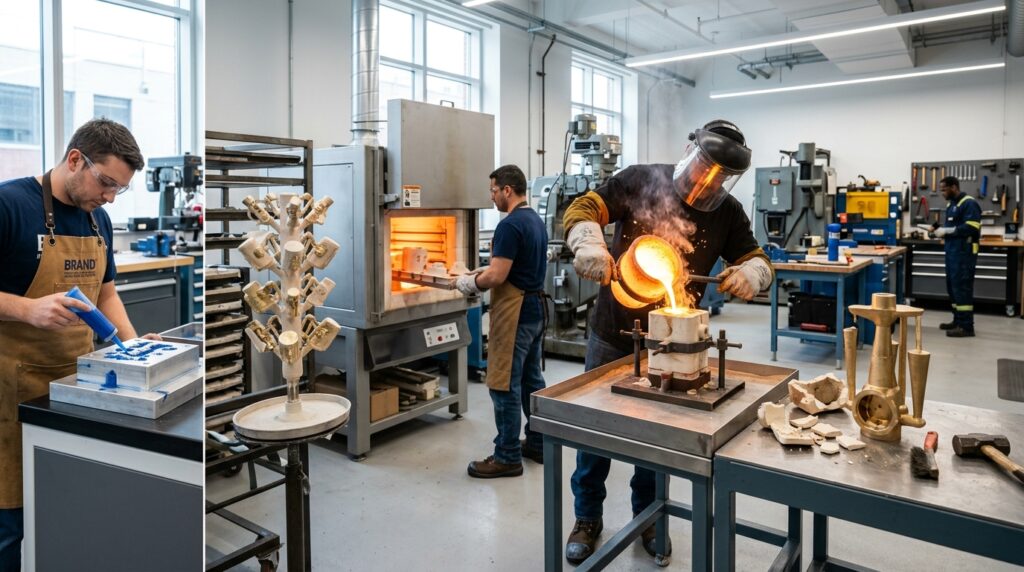
Eliminating Impurities with High-Pressure Dewaxing
Surface contaminants directly degrade stainless steel corrosion resistance. During investment casting, residual pattern wax and free-iron contamination burn into the alloy matrix, triggering carbon pickup and intergranular attack. We utilize high-pressure dewaxing autoclaves to execute rapid steam cycles that purge pattern wax within minutes without leaving carbon ash.
- Thermal shock prevention: Maintains uniform pressure to prevent shell cracking.
- Zero carbon residue: Protects chromium concentration at the grain boundaries.
- Surface purity: Eliminates free iron to optimize the native surface passivation layer.
Automated Shell Coating Systems Prevent Micro-Porosity
Inconsistent ceramic shell thickness causes irregular cooling, creating micro-porosity and localized weak spots where chlorides gather. By integrating an automated shell coating system into our precision casting and CNC machining operations, we standardize slurry viscosity and shell build across every mold layer.
| Process Parameter | Manual Coating | Automated Shell Coating |
|---|---|---|
| Thickness Variance | ±15% (unstable) | ±2% (uniform) |
| Micro-Porosity Mitigation | Low | High |
| Solidification Profile | Irregular cooling zones | Even directional cooling |
Tight Tolerances Reduce Stress Concentration
Rough surfaces and loose manufacturing tolerances create stress concentration points that accelerate pitting and stress corrosion cracking. Following established precision machining component guidelines, we hold critical machining tolerances down to sub-micron levels (≤ 5 µm).
- Ultra-smooth finish: Achieving Ra < 0.4 µm eliminates microscopic traps for corrosive liquids.
- No notch effects: Fine machine tool paths remove sharp transitions that harbor residual tensile stress.
- Tight assembly fit: Perfect dimensional consistency eliminates narrow crevices at mating joints.
Stainless Steel Grade Selection Matrix for Industrial Applications
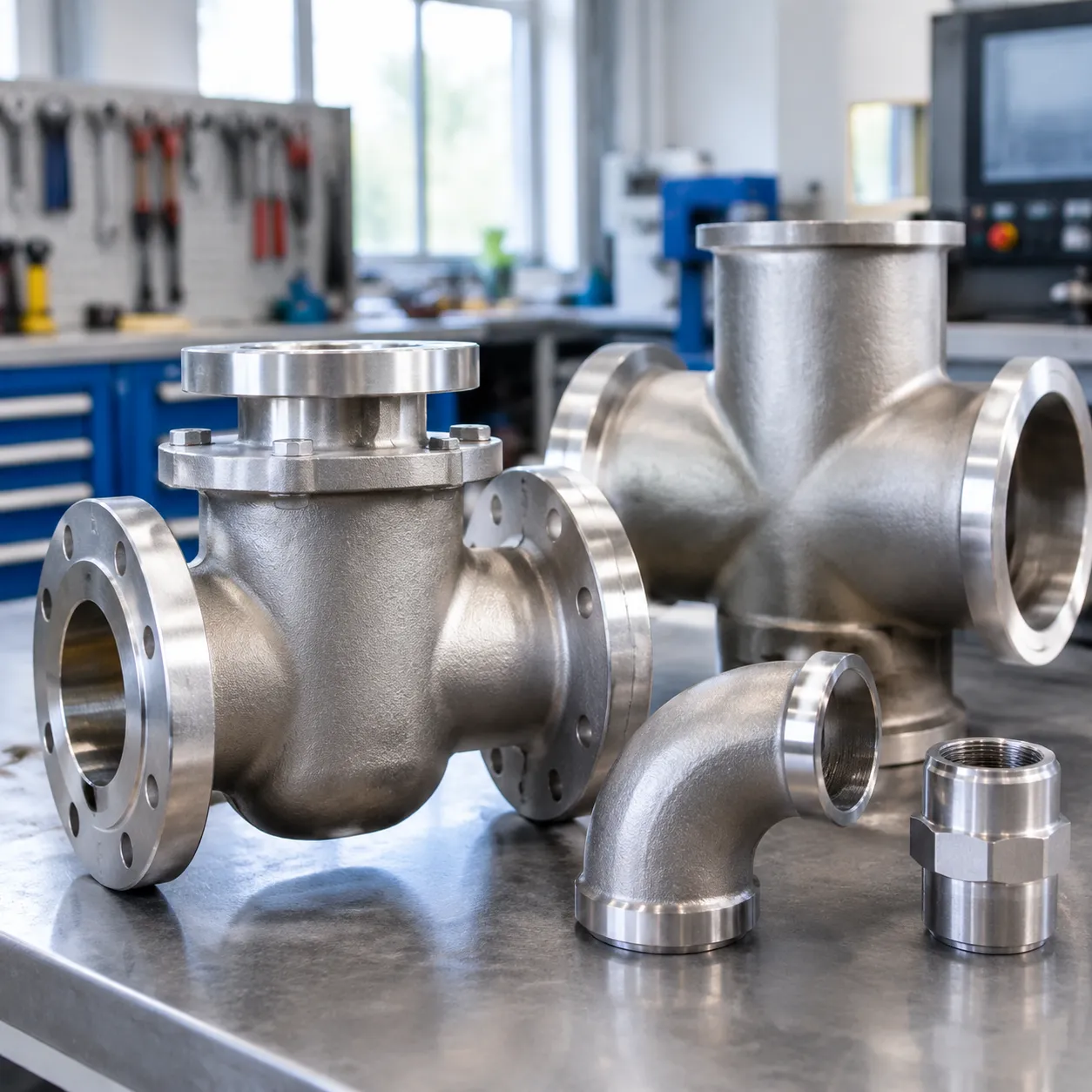
Choosing the right alloy determines whether your components survive harsh operating conditions or fail prematurely. We match specific industrial environments to exact alloy microstructures to maximize overall stainless steel corrosion resistance while keeping material costs controlled.
| Grade Family | Typical Alloys | Primary Environment | PREN Range | Relative Strength | Key Feature |
|---|---|---|---|---|---|
| Austenitic | 304, 316, 316L | Freshwater, Chlorides, Marine | 18 – 25 | Standard | Outstanding ductility & formability |
| Duplex | 2205, 2507 | Chemical Processing, Offshore | 32 – 43+ | High (2x Austenitic) | High SCC resistance & PREN > 40 |
| Ferritic | 430, 444 | Automotive, Indoor Structural | 13 – 20 | Moderate | Magnetic, cost-effective |
| Martensitic | 410, 420 | Wear Parts, Tooling, Valves | 10 – 15 | Very High | Heat-treatable for maximum hardness |
Austenitic Stainless Steels: 304 vs. 316/316L Performance
Austenitic grades form the backbone of industrial production. Standard 304 performs exceptionally well in freshwater and mild atmospheric setups. However, when exposure involves salt spray, brackish fluids, or chemical processing, marine grade steel 316L is essential.
- 304 Grade: Contains 18% Chromium and 8% Nickel. Ideal for general equipment, food processing, and low-chloride water systems.
- 316 / 316L Grade: Includes 2-3% molybdenum alloy additions, drastically elevating corrosion resistance stainless steel performance in chloride-rich environments. The low-carbon 316L variant prevents carbide precipitation during welding, preserving intergranular corrosion resistance.
When selecting appropriate cast stainless steel custom casting alloys and grades, matching chloride levels to molybdenum content prevents premature pitting breakdown.
Duplex and Super-Duplex Alloys for Extreme Environments
For high-stress, highly corrosive applications, duplex alloys offer an ideal balance. By maintaining an equal 50/50 balance between austenitic and ferritic microstructures, duplex steels yield double the mechanical strength of standard 300-series grades.
- High PREN Performance: Super-duplex grades (such as 2507) achieve a Pitting Resistance Equivalent Number (PREN) rating above 40.
- Stress Corrosion Cracking (SCC) Resistance: The mixed phase structure blocks transgranular crack propagation, making duplex alloys essential for offshore oil rigs and aggressive chemical scrubbers.
- Mechanical Efficiency: Higher yield strength allows us to design thinner wall sections without sacrificing structural integrity or overall steel resistance. Reviewing stainless steel strength grades helps optimize component weight against pressure ratings.
Ferritic and Martensitic Steel Considerations
When structural strength or magnetic properties take priority over extreme pitting resistance, straight-chromium grades provide specific engineering advantages.
- Ferritic Grades (e.g., 430): Fully magnetic with zero nickel content. They deliver high resistance to stress corrosion cracking at a lower material cost, though their surface passivation limits make them unsuitable for marine environments.
- Martensitic Grades (e.g., 410, 420): Formulated for high mechanical strength and wear resistance through thermal hardening. Because chromium is tied up in carbide matrix structures, they offer lower general stainless corrosion resistance and require strict post-machining passivation treatment to maintain surface integrity.
Quality Assurance and Digital Monitoring for Stainless Steel Corrosion Resistance
We combine rigorous chemical treatments, real-time IoT monitoring, and ISO 9001 workflows to protect alloy integrity and maximize stainless steel corrosion resistance across all operating conditions.
Post-Processing Passivation Protocols (ASTM A967 & ASTM A380)
To guarantee a resilient surface passivation layer, we remove free-iron contaminants and free-carbon particles created during machining or thermal processing using standardized chemical baths.
| Process Parameter | Citric Acid System (ASTM A967) | Nitric Acid System (ASTM A380) |
|---|---|---|
| Environmental Safety | Eco-friendly, organic, low VOC | Hazardous, requires strict acid scrubbing |
| Iron Removal Target | Selectively targets free iron without stripping metal | Aggressive bath action; potential metal loss |
| Flash Rust Risk | Minimal due to rapid chemical neutralizers | Moderate if bath temperature drops |
| Verification Standard | ASTM B117 salt spray testing (up to 1,000+ hours) | Ferroxyl test & ASTM B117 validation |
IoT Real-Time Process Monitoring
We track core casting and thermal variables in real time to secure consistent corrosion resistance stainless steel properties and prevent micro-porosity mitigation failures before chemical treating begins.
- Autoclave Pressure Control: Continuous digital tracking maintains uniform steam pressure, preventing premature shell cracking.
- Pouring & Melt Monitoring: In-line optical pyrometers log molten alloy temperatures to block slag inclusion and oxide entrapment.
- Cooling Curve Analytics: Automated thermal sensors enforce precise cooling speeds, preventing carbide precipitation along grain boundaries.
ISO 9001 Workflows from Raw Ingot to Inspection
Our quality control system covers every stage of production to ensure full traceability and high dimensional precision. By integrating our precision casting solution with silica sol process, we maintain strict micro-tolerances while guaranteeing superior chemical stability.
- Ingot Spectrometry: Optical emission spectroscopy verifies exact Chromium, Molybdenum, and Nickel chemistry before melt down.
- Automated CMM Scanning: 3D laser coordinate measuring machines check tight tolerance zones on finished components.
- Non-Destructive Testing: Liquid penetrant and radiographic checks verify zero sub-surface defects across high-stress sections.
Turnkey Industrial Solutions & Lifecycle Services
We engineer complete, automated foundry setups built to protect alloy integrity and maximize stainless steel corrosion resistance. From custom line integration to round-the-clock technical assistance, we provide full-lifecycle manufacturing support to keep your operations compliant and efficient.
Factory Line Engineering
We design and integrate high-precision production lines tailored to your exact alloy specifications and throughput goals:
- Custom Equipment Selection: Tailoring autoclaves, shell-building units, and melting furnaces to specific grade requirements.
- Automated Line Design: Streamlining material workflows to prevent cross-contamination and surface defects.
- Robotic Integration: Deploying automated robotic arms for precise shell dipping, liquid metal pouring, and consistent surface cleaning.
For high-integrity component manufacturing, utilize our precision investment casting services to achieve tight dimensional tolerances and superior surface quality.
Technical Support & Lifecycle Services
Our engineering support continues long after line commissioning to preserve long-term production quality and consistent steel corrosion resistance.
| Service Category | Operational Support & Capabilities | Core Engineering Benefits |
|---|---|---|
| 24/7 Technical Troubleshooting | Direct access to metallurgical experts for real-time diagnostics and field support. | Prevents process drift and eliminates costly operational downtime. |
| Custom Tooling Support | In-house tooling design, die modifications, and specialized fixture development. | Extends tool life and maintains sub-micron component accuracy. |
| OEM Spare Parts | Rapid global distribution of original factory-certified replacement parts. | Ensures system compatibility and maintains baseline process parameters. |
Frequently Asked Questions
What primary factor enables stainless steel corrosion resistance?
The single most critical driver of stainless steel corrosion resistance is a minimum chromium content of 10.5%. When exposed to oxygen, chromium rapidly reacts to form an ultra-thin, invisible chromium oxide passive film across the metal surface.
- Self-Healing Capability: If scraped, scratched, or mechanically damaged, the passive layer automatically repairs itself in oxygenated environments.
- Diffusion Barrier: The oxide layer acts as a tight molecular seal, keeping water, airborne salts, and harsh atmospheric chemicals from reaching the underlying steel core.
Why is 316L stainless steel superior to 304 in marine applications?
While Grade 304 performs reliably in freshwater environments, Grade 316L offers vastly superior performance against aggressive airborne salts and marine chlorides:
- Molybdenum Addition: Grade 316L contains 2% to 3% molybdenum, which drastically raises its Pitting Resistance Equivalent Number (PREN) and stops severe localized chloride breakdown.
- Low Carbon Profile: The "L" designation signifies low carbon (\le 0.03%), preventing chromium carbide precipitation during welding and maintaining high intergranular corrosion resistance.
- High-Corrosion Alternatives: For even extreme marine environments, combining marine alloys or specifying duplex stainless steel investment casting doubles mechanical strength while pushing PREN ratings above 40.
How does chemical passivation under ASTM A967 prevent surface oxidation?
Chemical passivation uses targeted acid solutions (nitric or citric acid formulations) to dissolve free-iron contamination and tramp metal particles left behind from tooling, machining, or handling.
- Maximizing Chromium Ratios: Removing surface iron enriches the local ratio of chromium at the surface layer.
- Standardized Testing: Processing parts to ASTM A967 passivation standards guarantees a dense, uniform protective film that easily passes ASTM B117 salt spray environmental tests.
- Preventing Surface Rust: Eliminating embedded free-iron prevents localized pinpoint rusting and atmospheric pitting before parts go into service.
How does precision investment casting reduce micro-porosity and localized pitting?
Liquid trapping and microscopic voids are major causes of crevice corrosion and structural failure. Precision casting practices eliminate these risk factors at the foundation:
- Smooth Mold Surfaces: Automated shell coating builds uniform ceramic molds free of micro-flaws.
- Eliminating Void Traps: High-pressure dewaxing autoclaves eliminate residual wax carbon and structural micro-porosity where corrosive liquids settle.
- Tight Tolerances: Sourcing custom components like 17-4 investment casting custom stainless steel parts ensures tight dimensional control (\le 5μm), removing stress concentrations and keeping flow lines uniform.
 English
  Russian
  German