
2026年11月11日
Investment Casting vs CNC Machining Compare cost tolerances complexity lead times and materials to choose the right process for your parts
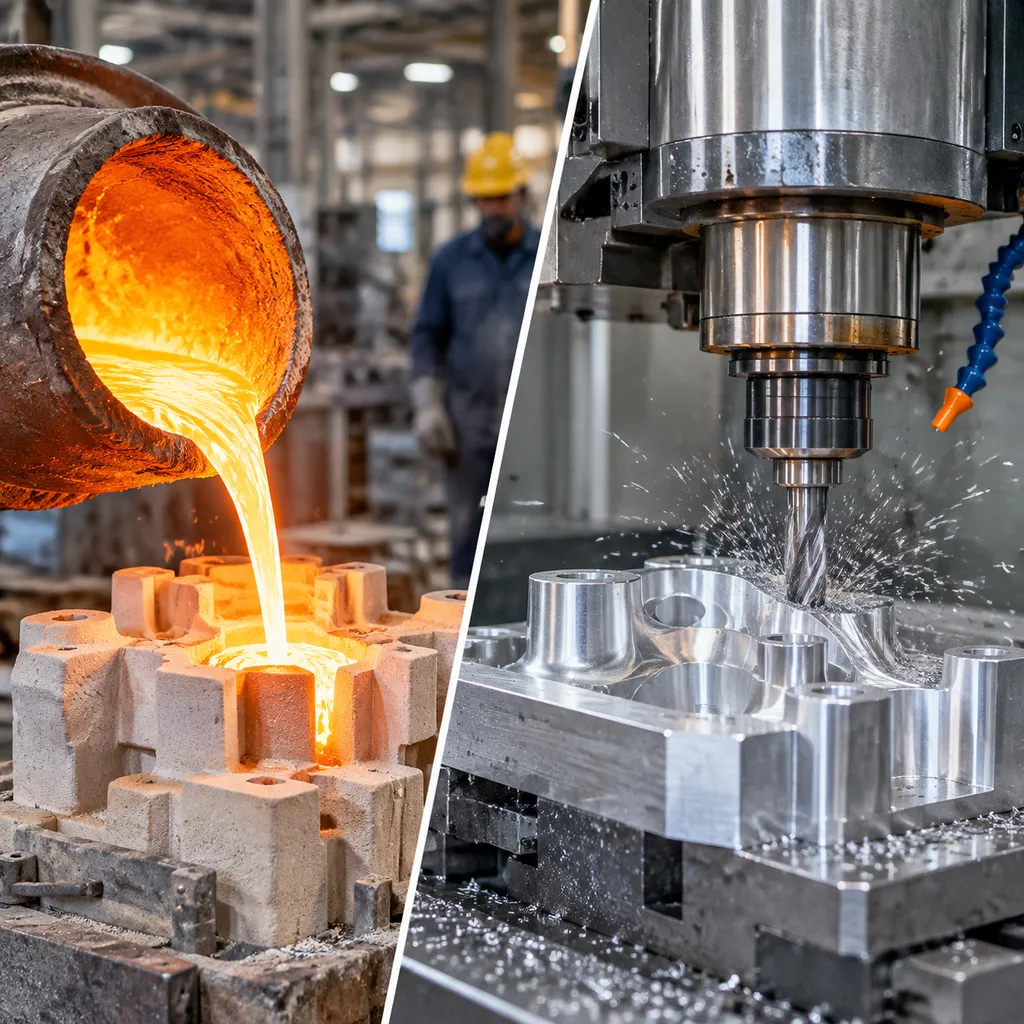
Understanding Investment Casting
Investment casting, often referred to as the lost-wax process, is a precision manufacturing technique essential for producing high-quality metal components with intricate designs. At Vast Precision Engineering, we utilize this method to deliver complex parts that maintain high surface finish accuracy while optimizing material usage.
The Lost-Wax Process
The manufacturing cycle is straightforward yet precise: Wax Pattern Creation: A wax replica of the desired component is produced. Shell Building: The wax pattern is coated in ceramic slurry and built into a robust ceramic shell. Wax Removal: The shell is heated, melting the wax out and leaving a precise mold cavity. Casting: Molten metal is poured into the mold cavity. Finishing: Once cooled, the ceramic shell is broken away, revealing a component with a high-quality surface finish, often requiring little to no additional processing.
Key Advantages and Design Flexibility
Investment casting offers engineers significant design freedom, particularly when dealing with geometries that are impractical or impossible to machine. Key advantages include: Complex Geometries: Ability to cast intricate, organic, and complex shapes with high dimensional accuracy. Material Versatility: Capability to work with a diverse range of metals and alloys suitable for industrial applications. Near-Net Shape: The process creates parts very close to final dimensions, significantly reducing material waste compared to subtractive methods. Surface Finish: Achieves superior surface textures, minimizing the need for secondary machining or post-processing.
Ideal Applications for Complex Geometries
We recommend investment casting for projects where design complexity meets production volume. It is the ideal choice when: You require high-volume production of components with consistent quality. The part geometry includes features that are inaccessible to standard CNC tooling. Material integrity and consistent surface quality across the entire component are non-negotiable requirements.
Understanding CNC Machining

CNC machining is a subtractive manufacturing process that removes material from a solid block to create high-precision components. By utilizing computer-controlled milling and turning equipment, we can achieve exceptional dimensional accuracy and tight tolerances that are often difficult to replicate with other methods.
Key Capabilities
- Precision: Achieves consistent results with tight tolerances, making it ideal for parts requiring a high degree of fit and function.
- Speed: Offers rapid turnaround times, especially for low-to-medium volume production and rapid prototyping.
- Versatility: Compatible with a wide range of materials, including various industrial-grade metals and alloys.
We leverage advanced CNC milling and turning to produce components that meet exact engineering specifications. This subtractive approach is our go-to solution when your design demands strict tolerance controls and a superior surface finish.
Investment Casting vs CNC Machining: Core Differences
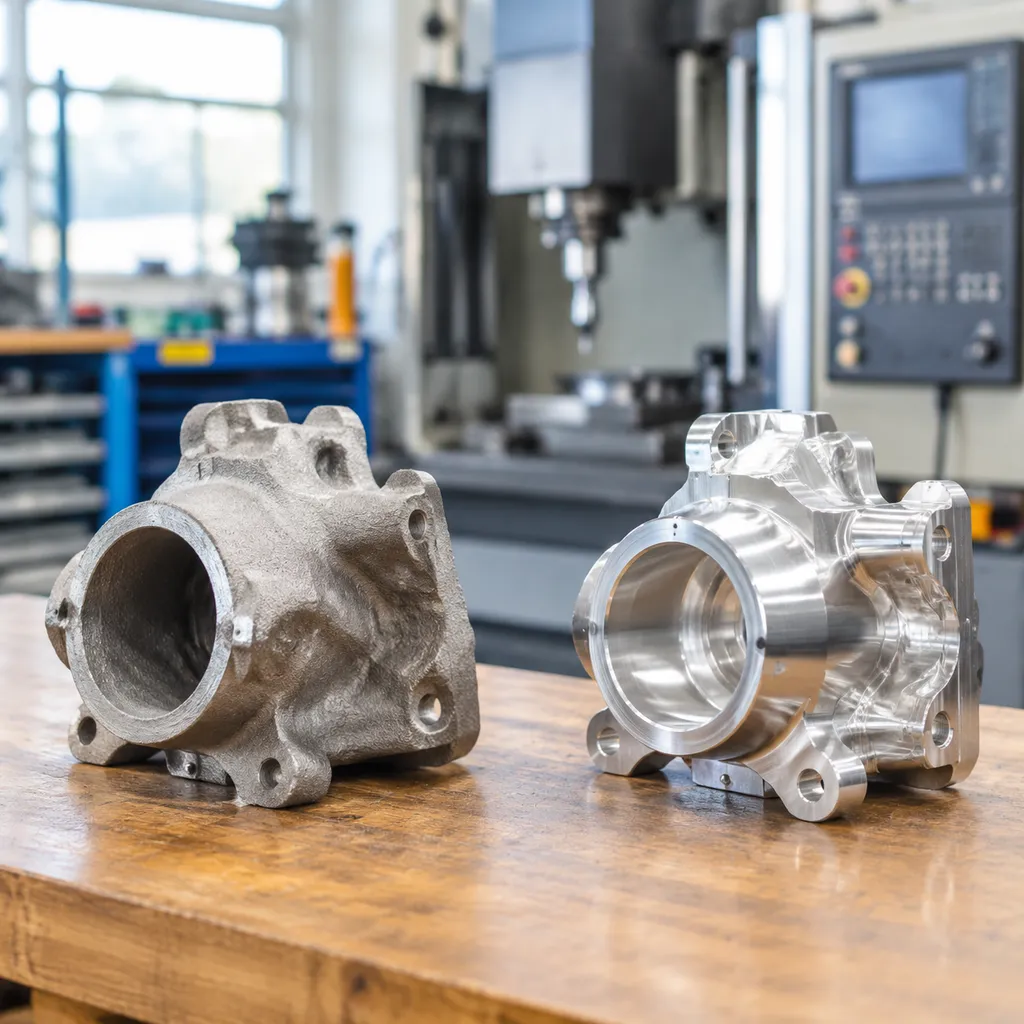
When choosing between manufacturing methods, the primary considerations are lead times, accuracy, and production scale. We approach each project by weighing the unique benefits of precision investment casting against the speed and tolerance control of CNC machining.
| Feature | Investment Casting | CNC Machining |
|---|---|---|
| Lead Times | Longer (due to tooling/mold prep) | Faster (direct from digital files) |
| Surface Finish | Excellent as-cast quality | Superior precision/smoothness |
| Dimensional Accuracy | High, suited for near-net shapes | Very high, strict tolerances |
| Scaling | Ideal for mass production | Best for prototypes & low-medium volume |
Manufacturing Speed and Lead Times
CNC machining offers rapid turnaround for parts, as it requires no specialized tooling to begin production. Conversely, investment casting involves a more intensive initial setup, such as creating molds, which increases lead time. However, once the process is established, casting significantly outperforms machining in speed for high-volume orders.
Precision and Surface Quality
If your design requires extreme dimensional accuracy, CNC milling and turning are often the preferred route for removing material from a block with high repeatability. Investment casting, however, remains highly competitive for complex geometries, delivering high-quality surface finishes that often eliminate the need for extensive secondary processing.
Scaling: From Prototypes to High-Volume
We recommend CNC machining for early-stage prototype production where design iterations are frequent. As requirements shift toward high-volume manufacturing, the unit cost efficiency of investment casting makes it the logical choice for scaling operations without sacrificing the integrity of the part.
Cost Analysis: Which is More Budget-Friendly?
When evaluating project budgets, understanding the shift between tooling investment and per-unit cost is essential. We help clients navigate investment casting cost factors to ensure capital is allocated efficiently based on production volume.
Investment casting generally requires higher upfront tooling costs for molds but offers significant material savings for complex, near-net-shape parts. Conversely, CNC machining minimizes initial tooling investment, making it ideal for rapid prototyping and low-volume production where material waste is less of a concern than speed to market.
Economic Comparison Table
| Feature | Investment Casting | CNC Machining |
|---|---|---|
| Upfront Tooling | Higher (Mold creation) | Lower (Setup/Programming) |
| Material Efficiency | High (Near-net shape) | Lower (Subtractive waste) |
| Low-Volume Cost | Higher per unit | Cost-effective |
| High-Volume Cost | Highly competitive | Increases per unit |
For small batches, CNC machining avoids the expense of mold creation, providing a faster, lower-risk entry point. As production requirements scale, the per-unit material and labor savings inherent in investment casting often outweigh the initial tooling costs, providing a superior long-term financial return for complex metal components.
Evaluating Material Selection
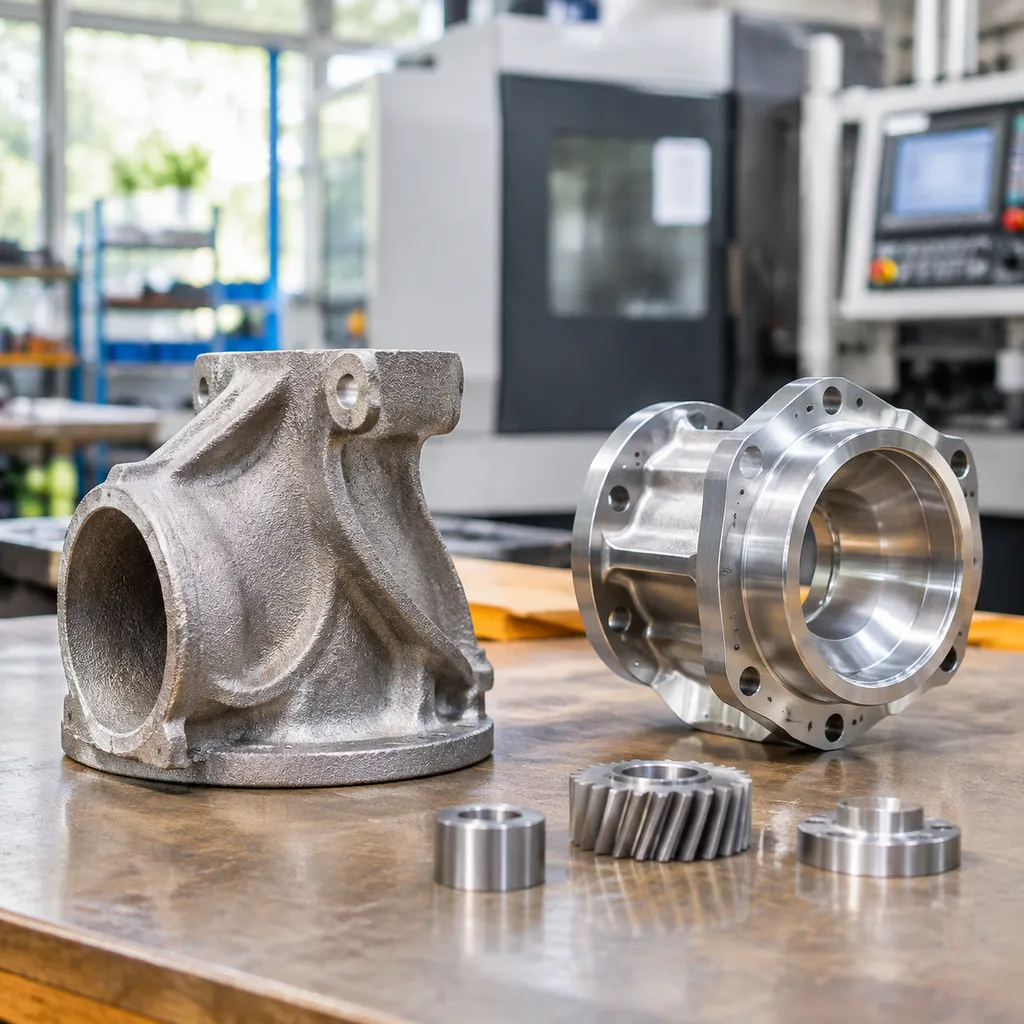
Choosing the right material is a balancing act between mechanical requirements and the limitations of your chosen manufacturing path. At Vast Precision Engineering, we guide clients through investment and precision casting services for metal parts by matching material properties to the desired end-use performance.
- Investment Casting Compatibility: This process excels with a wide range of metals, including stainless steel, carbon steel, and specialized alloys. It is particularly effective for high-performance applications that demand specific metallurgical traits, such as those found in titanium investment casting for aerospace and medical parts.
- CNC Machining Alloys: CNC milling and turning are highly compatible with almost any machinable metal, from aluminum and brass to hardened tool steels. The key factor here is the material's "machinability"—how easily it can be cut without wearing out tools or compromising the final finish.
- Performance Impact: Your material choice directly dictates the part's fatigue strength, corrosion resistance, and heat tolerance. While casting allows for complex internal features using difficult-to-machine alloys, CNC machining is often the preferred route for high-strength materials where consistent, tight tolerances are non-negotiable.
We prioritize material integrity to ensure your components perform exactly as intended, regardless of the production method. By analyzing the alloy's structural requirements early on, we help you avoid unnecessary manufacturing overhead while maintaining high quality standards.
Design Constraints and Geometry Limits
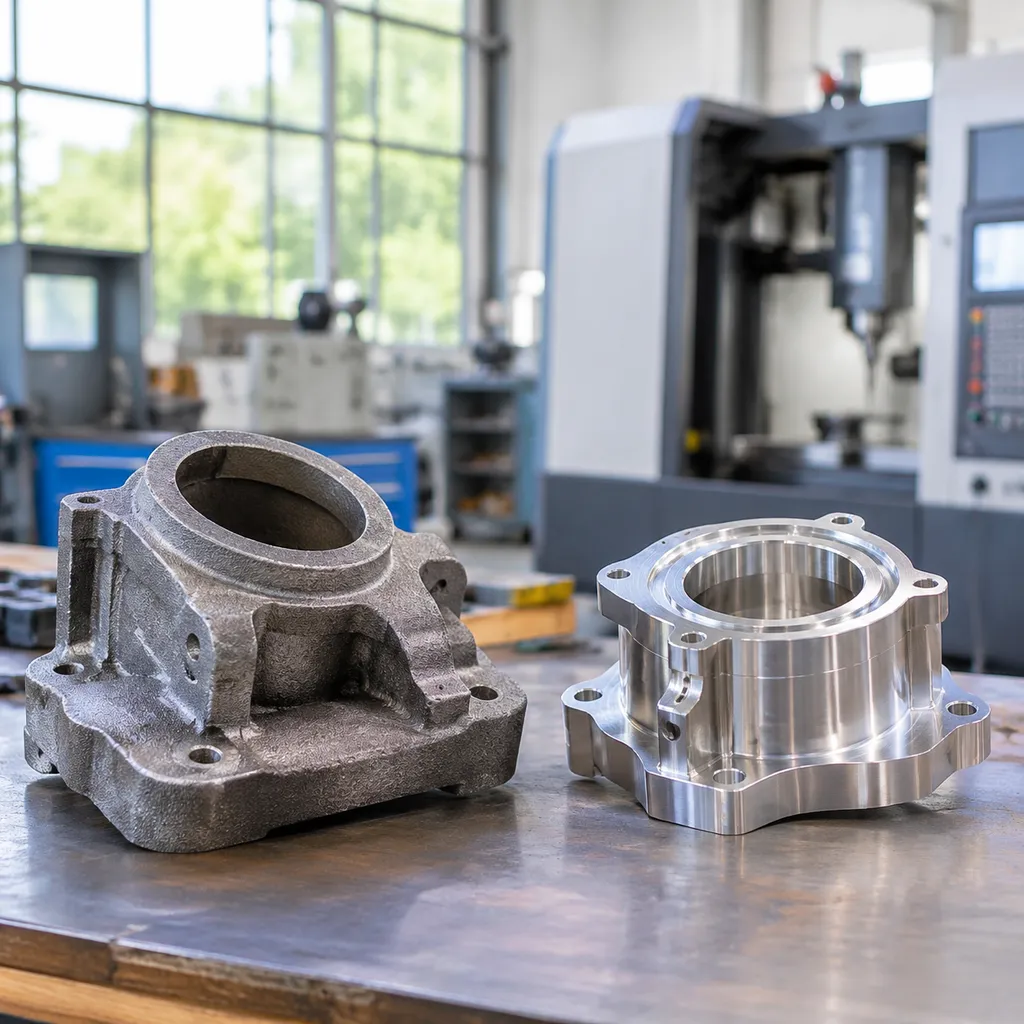
When evaluating design constraints for Investment Casting vs CNC Machining, you must consider how each process physically handles your part geometry.
In investment casting, we work with molds, which necessitates specific requirements such as draft angles to ensure the pattern can be removed without damaging the mold. Wall thickness is also a critical factor; while casting allows for intricate, organic shapes that are difficult to achieve otherwise, you must maintain uniform wall sections to avoid shrinkage and porosity. If you are aiming for high-quality results, reviewing casting quality standards for reliable metal parts is essential to ensure your design remains manufacturable.
Conversely, CNC machining is a subtractive process governed by tool access. Your geometry is limited by the reach, diameter, and orientation of the cutting tools. Internal corners: Machining leaves a radius based on the tool size, unlike casting which can produce sharper internal features. Deep cavities: These can be challenging for CNC milling, often requiring specialized tooling or multi-axis equipment. Undercuts: These are frequently easier to manage in casting but can significantly increase machining costs due to the need for complex setups or multiple operations.
To optimize your parts for specific manufacturing paths, balance these geometric realities against your project goals. If your design features complex internal cooling channels or thin, non-uniform walls, investment casting is typically the preferred route. If your part requires ultra-tight tolerances on exterior features or flat surfaces, CNC machining offers the precision needed to meet those specifications. Understanding these limits early in the design phase prevents costly downstream revisions.
How to Choose the Right Process: Investment Casting vs CNC Machining
Picking between investment casting and CNC machining comes down to how your part is designed, how many units you need, and your target budget. Because we handle both manufacturing routes under one roof, we look at projects through an objective engineering lens to pinpoint the most practical method.
Factors for Production Volume Decisions
Volume is often the clearest deciding factor when comparing these two methods:
- Low Volume & Prototypes (1 to 500 units): CNC machining wins on speed and upfront expense. With no need to produce hard tooling or wax dies, we can machine parts directly from solid bar stock or plate to keep initial development costs low.
- Medium to Mass Production (1,000+ units): Investment casting quickly pays for itself. While creating the initial tooling requires an upfront investment, the per-unit cost drops dramatically at scale, making it the smarter choice for ongoing production.
Assessing Part Size and Complexity Requirements
Part geometry directly dictates how easily a tool can reach surfaces or whether a mold is required:
- Complex, Organic Geometries: When your design features intricate contours, thin cross-sections, or hollow internal cavities, our casting manufacturing services for precision metal parts provide near-net shapes with minimal raw material waste.
- Prismatic and Structural Geometries: Parts with flat faces, straight profiles, and open cavities suit CNC milling and turning setups, allowing for direct cutting without pattern fabrication.
Balancing Precision Needs Against Cost-Efficiency
Achieving the right balance between dimensional accuracy and unit cost requires matching each feature to the right capability.
| Decision Driver | Choose Investment Casting | Choose CNC Machining |
|---|---|---|
| Volume | Medium to high-volume production | Prototypes, custom batches, low volume |
| Geometry | Organic shapes, internal passageways | Prismatic, linear, accessible features |
| Tolerances | Standard near-net tolerances | Ultra-tight, micron-level precision |
| Tooling Investment | Upfront mold tooling required | Zero mold tooling required |
| Material Yield | High efficiency with minimal metal waste | Higher scrap rates from subtractive cutting |
For parts demanding both intricate profiles and strict mating tolerances, the most cost-effective path is often a hybrid workflow: we cast the raw geometry to near-net shape to save metal, then CNC machine only the critical holes, threads, and sealing surfaces.
FAQs About Investment Casting and CNC Machining
When comparing manufacturing methods, our clients often have specific questions regarding surface finish, process integration, and budget management. Here are the most common inquiries we address:
Which process yields better surface roughness?
Generally, CNC machining provides a superior, more consistent surface finish compared to casting, as it removes material with precise cutting tools. However, investment casting is capable of producing excellent surface quality, often requiring little to no secondary finishing. If your project demands exceptionally tight surface textures, we often recommend what is investment casting as a starting point, followed by precision machining to reach the final specification.
Can you combine investment casting and CNC machining?
Yes, this is a common "hybrid" approach for complex industrial components. We often use investment casting to create the near-net shape of a part to save on material and initial costs, then utilize CNC machining to refine critical tolerances or add threaded features. This combined strategy leverages the strengths of both processes to achieve the highest quality at an optimized price point.
What is the most cost-effective method for small batches?
For low-volume or prototype production, CNC machining is typically the most cost-effective solution. Because it does not require the creation of specialized molds or patterns, you avoid the upfront tooling investment associated with casting. Investment casting becomes significantly more economical as production volume increases, allowing for lower per-unit costs during mass production runs.


 English
 Russian
 German