
2026年11月18日
Learn How to Qualify a Precision Casting Equipment Supplier by evaluating process fit technical specs safety integration acceptance and lifecycle supp
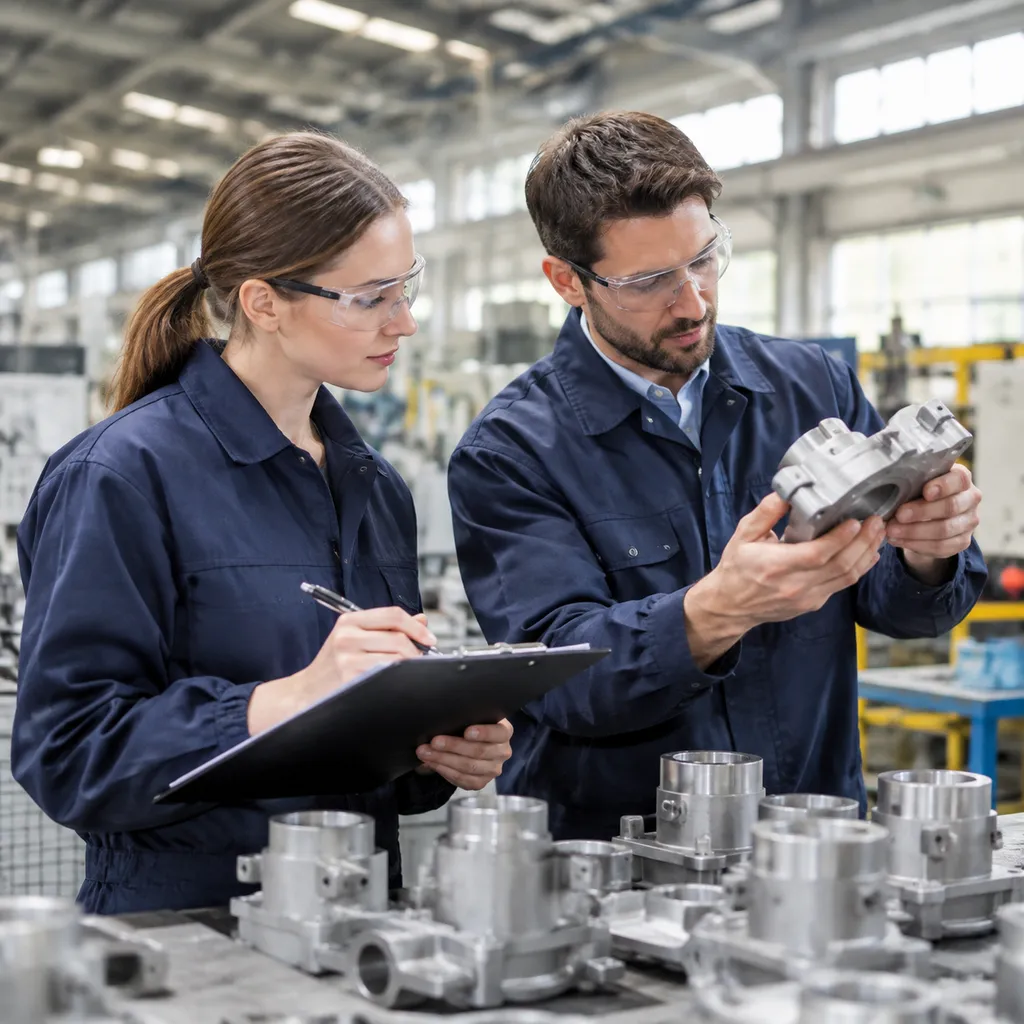
Defining Your Foundry Process Requirements
Before engaging with any precision casting equipment supplier, you must first conduct a thorough audit of your internal production goals. Successful foundry optimization hinges on the precise alignment of hardware capabilities with your specific technical and volume output targets.
Defining these parameters early ensures you invest in investment casting machinery that scales with your growth. Consider the following foundational requirements:
- Material and Alloy Specifications: The nature of the alloys you cast dictates the specific temperature controls and crucible capacities required for your melting and pouring furnaces.
- Production Throughput: Estimate your required units per hour to determine whether your workflow demands manual stations or full foundry automation.
- Part Geometry and Complexity: Intricate components require high-precision wax injection and specialized shell-making processes. Identifying your product range allows the supplier to recommend the appropriate robotic or manual systems.
- Facility Footprint: Assess your current floor space to ensure that any proposed turnkey solutions can be integrated seamlessly into your existing layout without disrupting established safety or production workflows.
By mapping these requirements before starting your supplier search, you establish a clear technical brief. This allows you to evaluate potential partners based on their ability to deliver custom-engineered, efficient, and consistent systems tailored to your unique manufacturing environment.
Evaluate Supplier Capability by Process Stage
When we qualify a precision casting equipment supplier, we evaluate their engineering depth across each individual phase of the investment casting process. A reliable partner must demonstrate proven machine design, stable process control, and turnkey integration capabilities across the entire foundry workflow.
Wax Injection and Pattern Molding
Wax pattern accuracy directly determines the final casting dimensions and surface quality. When evaluating an industrial wax injection machine supplier, we assess:
- Machine Configurations: Availability of both manual and automated wax injection machines to match production volume and mold complexity.
- Process Stability: Precise control over injection pressure, temperature consistency, and flow rate to avoid pattern shrinkage, distortion, or trapped air.
- Operational Flexibility: Clamping force capacity and multi-station compatibility to accommodate diverse tooling designs and dies.
Ceramic Shell Coating and Drying
Shell integrity is critical to withstand high-temperature pouring without shell cracking or metal penetration. A capable equipment manufacturer should provide:
- Coating and Sanding Systems: Slurry tanks, rain-drop sanders, and fluidized beds tailored to silica sol or compound binder processes.
- Controlled Drying Infrastructure: Optimized drying rooms and cooling tunnels that regulate humidity and airflow for uniform shell layer curing.
- Thermal Compatibility: Seamless transition to downstream heating units, such as an energy-efficient burnout furnace for silica sol shells, ensuring mold strength before pouring.
Steam Dewaxing
Dewaxing requires rapid thermal transfer to melt the pattern surface before wax expansion fractures the green shell. Essential qualification checkpoints include:
- Pressure Build-Up: Fast-pressurizing steam dewaxing autoclaves engineered with rapid exhaust cycles to prevent shell rupture.
- Vessel Safety and Standards: Built-in safety interlocks, heavy-duty pressure vessel certifications, and automated valve controls.
- Wax Recovery Efficiency: Integrated collection systems that separate and recover clean pattern wax for reuse, reducing raw material overhead.
Robot Integration and Foundry Automation
Automating repetitive and hazardous foundry operations is the most reliable way to drive yield consistency. We evaluate suppliers based on their automation proficiency:
- Robotic Shell-Making Lines: Multi-axis industrial robots programmed for automated dipping, sanding, and shell transfer to eliminate manual handling variations.
- Turnkey Engineering: Ability to design complete layout integrations linking wax rooms, shell lines, dewaxing, and handling.
- Process Reproducibility: Centralized recipe management that allows operators to store dipping sequences, drying cycles, and motion paths for consistent batch output.
Demand Clear and Transparent Technical Specifications

When evaluating an investment casting machinery builder, vague parameter sheets are an immediate red flag. To properly know how to qualify a precision casting equipment supplier, you must demand detailed, unambiguous engineering specifications up front. Vague claims of "high accuracy" or "custom capacity" do not guarantee repeatable results on your foundry floor.
I always require potential partners to lay out their technical baselines across every critical production station:
- Wax Injection Consistency: Request hard metrics on clamping force, injection pressure ranges, volumetric flow control, and platen temperature stability. Controlled wax conditioning is vital before pouring alloys like those covered in our 300 series stainless steel guide.
- Shell Room Environmental Control: For automated dipping and sanding units, verify exact payload limits, slurry tank rotational speeds, fluid level sensors, and relative humidity integration across drying tunnels.
- Dewaxing Parameters: Dewaxing autoclaves must define clear vessel pressure rise times, operational steam temperatures, interlock safety redundancy, and energy consumption metrics per cycle.
- Melting and Pouring Capabilities: Demand explicit details on furnace coil configurations, power supply ratings, tilt-pour repeatability, and thermal ramp rates.
A dependable precision casting equipment supplier provides itemized component brands (such as PLC architectures, hydraulic valves, and servo drives) right in the proposal. Insisting on full technical transparency protects your capital investment and ensures the machinery seamlessly delivers exact tolerances day after day.
Audit Engineering Design, Build Quality, and Compliance Records
When you evaluate how to qualify a precision casting equipment supplier, looking at sleek brochures is never enough. You need to inspect how the machinery is engineered, assembled, and verified under real foundry conditions before it ever leaves the shop floor.
In our own manufacturing operations, we hold every piece of investment casting machinery to strict industrial benchmarks. Whether you are running high-volume automotive runs or mission-critical aerospace components, your equipment vendor must provide verifiable proof of structural integrity, precision machining, and electrical compliance.
Key Documentation and Build Verification Checklist
- Factory Acceptance Testing (FAT) Protocols: Demand comprehensive FAT documentation outlining dry-cycle tests, pressure limits, temperature uniformity tests, and full safety interlock validations.
- Machining and Assembly Precision: Inspect structural fabrication standards. Critical units—such as automated wax injectors or hydraulic clamping systems—require CNC-machined platens and stress-relieved steel frames to prevent deflection under continuous clamping pressure.
- Component Traceability: Reliable suppliers build with globally recognizable core components (such as Siemens or Schneider PLCs, Rexroth hydraulics, and SMC pneumatics). Standardized components simplify localized maintenance and spare parts sourcing.
- Pressure Vessel & Safety Compliance: Steam autoclaves used for dewaxing must carry certified pressure vessel stamps (such as ASME, CE/PED, or equivalent local certifications). Non-certified pressure vessels are non-negotiable safety hazards.
- Pattern and Tooling Repeatability: In wax pattern preparation, thermal stability and platen parallelism directly impact pattern tolerances. Evaluating these tolerances ensures dimensional stability similar to what foundries expect when comparing 3D printed wax vs injected wax for casting during production ramp-ups.
Engineering Quality Verification Matrix
| Equipment Category | Critical Verification Focus | Required Quality Records |
|---|---|---|
| Wax Injection Systems | Temperature stability (±0.5°C), injection flow control, platen alignment | Thermal mapping logs, hydraulic pressure stability charts |
| Robotic Shell Coating Lines | Payload capacity, slurry viscosity monitoring, axis repeatability | Robot kinematic repeatability data, dust/moisture ingress ratings |
| Dewaxing Autoclaves | Rapid pressurization rate (<5 seconds), door interlock safety | Pressure vessel manufacturing certs, hydro-test reports |
| Melting & Pouring Systems | Coil insulation, refractory lining integrity, hydraulic tilt control | Electrical insulation testing, melt rate efficiency certifications |
A capable precision casting equipment supplier readily opens their engineering files, weld inspection records, and testing logs to your audit team. If a vendor hesitates to share build sheets or quality verification trails, they cannot guarantee long-term operational uptime in your foundry.
V. Defining Installation, Commissioning and Acceptance Criteria
To effectively screen and evaluate precision casting equipment suppliers, the technical metrics for installation, commissioning and final acceptance must be clearly specified in the contract. For complex equipment used in investment‑casting production lines, relying solely on vendor commitments is insufficient; quantifiable delivery standards must be established.
During the evaluation phase, suppliers shall be primarily required to meet the following acceptance requirements:
Equipment Performance Verification: Each unit of equipment must pass rigorous pressure, temperature and accuracy tests to guarantee its capability to produce high‑specification alloys with consistent quality — such as the high‑strength components referenced at https://www.vastpe.com/4340‑steel‑casting‑high‑strength‑custom‑components/.
Facility‑Layout Integration Testing: For complete automated production lines, verify equipment footprint and material‑handling efficiency under real‑world shop‑floor conditions. Ensure seamless process flow from wax‑pattern formation through pouring without introducing manual‑operation bottlenecks.
Operational Consistency Metrics: For robotic shell‑building lines or automated wax‑injection machines, conduct continuous‑production tests to confirm that finished‑part yield meets industrial‑grade standards, mitigating variability inherent in conventional manual manufacturing.
Commissioning Records and Technical Deliverables: Require suppliers to submit comprehensive commissioning logs, equipment calibration certificates and troubleshooting manuals upon hand‑over.
Incorporating these stringent acceptance criteria into contractual agreements ensures that invested foundry‑automation infrastructure can operate stably from day‑one of production, and reduces costly downtime caused by repeated post‑production commissioning.
Evaluating After-Sales and Lifecycle Support

Buying investment casting machinery is not a one-time transaction; it is a long-term operational partnership. When you qualify a precision casting equipment supplier, their post-installation commitment directly dictates your plant's overall uptime and return on investment.
We evaluate a supplier's lifecycle support capabilities through four non-negotiable criteria:
- Global Field Support & Commissioning: Verify whether the supplier deploys qualified field engineers for on-site positioning, wiring, calibration, and operational handoff. Suppliers with extensive export experience ensure seamless overseas execution without costly delays.
- Predictive Maintenance & Remote Diagnostics: High-efficiency foundry automation relies on minimal unplanned downtime. Check if the manufacturer provides remote system access, PLC diagnostic capabilities, and clear preventative maintenance intervals for critical units like wax injectors and robotic dipping cells.
- Spare Parts Supply Chain: Inquire directly about spare parts inventory management. A dependable equipment builder maintains ready stock for wear-prone components—such as hydraulic seals, heating elements, and robotic grippers—ensuring rapid dispatch.
- Ongoing Process Optimization: As your casting portfolio evolves, your machinery must adapt. The right partner offers continuous technical consulting, helping you reconfigure shell drying lines, optimize wax flow parameters, and integrate new tooling.
To learn more about how our international deployment teams maintain uptime across global foundries, explore our company background and engineering support capabilities. Prioritizing complete lifecycle accountability upfront prevents premature obsolescence and ensures consistent casting yields for decades.
VII. Weighted Qualification Checklist

To ensure an objective selection process, foundry managers and procurement teams should utilize a weighted scoring system. This allows for a direct comparison between potential precision casting equipment suppliers based on critical technical and operational requirements.
| Evaluation Criteria | Weight (%) | Key Focus Areas |
|---|---|---|
| Turnkey Capability | 25% | Ability to provide a comprehensive one-stop service covering wax injection to final casting. |
| Automation Proficiency | 25% | Proven track record in robotic shell-making lines and automated process control. |
| Custom Engineering | 20% | Capability to design bespoke factory layouts to optimize existing production footprints. |
| Technical Reliability | 15% | Adherence to stringent technical advantages and precision benchmarks in furnace and dewaxing operations. |
| After-Sales Support | 15% | Global reach for international installation support and long-term maintenance availability. |
By assigning a score of 1 to 10 for each category and multiplying by the corresponding weight, you can effectively rank your suppliers. This structured approach helps eliminate bias and ensures that the selected partner is capable of delivering high-precision investment casting machinery that aligns with your specific industrial output goals. Focusing on these metrics helps stakeholders quantify the long-term value of a supplier rather than simply comparing base procurement costs.
FAQ

To better understand the practical application of high-precision machinery, it is essential to review how an aluminum investment casting guide for precision parts integrates with automated foundry systems. Evaluating specific service capabilities, such as those highlighted in aluminum foundry services for precision castings, provides crucial insight into how robust, turnkey equipment influences final product quality, consistency, and structural integrity in demanding manufacturing environments.
What documents should I send to a precision casting equipment supplier first? To receive the most accurate proposal, you need to provide the supplier with the target material of castings, single-part weight range, planned annual output, layout drawing of the existing workshop, and core process requirements (such as whether aerospace-grade precision is required). Clarifying this information helps suppliers assess compatibility referenced at https://vastpe.com/aerospace-investment-casting-equipment-and-process-guide/ and develop a reasonable equipment selection plan.
Should I select one supplier for the entire investment casting process? For projects covered at https://vastpe.com/advantages-and-disadvantages-of-lost-wax-casting/, a single turnkey supplier is usually advantageous. This ensures seamless logical connection across all stages including wax injection, shell building, dewaxing and melting, reduces system compatibility issues between equipment from different manufacturers, and simplifies subsequent maintenance and technical support.
How can I compare equipment from different suppliers when specifications vary? Do not focus only on standalone peak performance. Instead, benchmark using the comprehensive cost per unit capacity. It is recommended to evaluate the following metrics under equal output: differences in energy consumption, raw material waste, automation level and labor requirements for each solution. Prioritize long-term operational stability of the equipment in scenarios referenced at https://vastpe.com/advantage-of-investment-casting-over-green-sand-casting/, rather than only the initial quotation.
What is the difference between an equipment manufacturer and a robot integrator? Pure equipment manufacturers focus on standalone machine performance, while robot integrators focus on the automation logic of the process workflow. In precision casting, it is critical to select an integrated supplier with in-house R&D capabilities (such as suppliers with robotic shell-building and automatic coating capabilities), as this directly affects line cycle time and part consistency.
When should I engage the after-sales team? The after-sales team should be involved starting from the workshop layout design phase. Early alignment with technical support during equipment selection and line planning helps define reserved maintenance space, installation conditions and logistics passages. This avoids commissioning difficulties caused by improper workshop design and maximizes equipment utilization throughout its lifecycle.
Conclusion: Evaluate project fit, not only the equipment itself The core of successfully selecting a qualified precision casting equipment supplier is shifting from evaluating isolated equipment parameters to assessing overall project fit. A reliable supplier not only supplies advanced wax injection machines, automated shell lines or melting equipment, but also delivers turnkey engineering solutions to ensure every stage from layout design to production integration closely matches your specific requirements.
During evaluation, focus on how the supplier integrates automation into your existing workflow. Whether you specialize in high-standard production referenced at https://vastpe.com/aerospace-investment-casting-for-precision-components/ or high-volume manufacturing covered at https://vastpe.com/alloy-steel-investment-casting/, the supplier’s value lies in maximizing your production efficiency through custom engineering and system integration.
Ultimately, the process to qualify a precision casting equipment supplier is essentially selecting a long-term technical partner. Choosing a company with full-lifecycle support, global installation experience and deep expertise in foundry automation can effectively reduce total cost of ownership and help your foundry maintain consistent quality and competitiveness amid complex market demands. Treating equipment procurement as building an efficient production ecosystem, rather than simply purchasing machinery, is the smart approach to intelligent factory upgrading.
 English
 Russian
 German