
2026年7月28日
Aluminum investment casting for precision parts with tight tolerances smooth finish and rapid custom RFQ support
What Is Aluminum Investment Casting?
Aluminum investment casting—often referred to as lost wax aluminum casting—is a manufacturing process designed to create complex, near-net-shape metal components with exceptional accuracy. We build high-precision wax patterns, assemble them onto a central sprue, and coat them with ceramic slurry to create a rigid shell. Once the wax is melted out, we pour molten aluminum alloy into the empty ceramic mold cavity. This yields intricate, dimensionally precise components with smooth surface finishes.
Why Choose Aluminum for Precision Parts?
Modern manufacturing demands components that cut overall weight without sacrificing structural integrity. Our precision aluminum parts deliver exceptional strength-to-weight ratios and outstanding thermal conductivity. Key advantages include:
- Weight Reduction: Significantly lowers assembly weight while maintaining high strength.
- Complex Geometries: Produces thin-wall structures, internal passageways, and fine features impossible with traditional machining.
- Corrosion Resistance: Provides natural protection against severe environmental and chemical conditions.
- Minimal Material Waste: Reduces secondary machining costs by casting near-net shapes directly.
Key Industrial Applications
Our ceramic mold casting capabilities support high-performance sectors where accuracy and material reliability are critical.
| Industry | Primary Components | Key Performance Advantage |
|---|---|---|
| Aerospace | Environmental control systems, structural brackets, fuel housings | Maximum weight savings and structural strength |
| Defense | Optic housings, missile guidance parts, rugged enclosures | High impact resistance and precision tolerances |
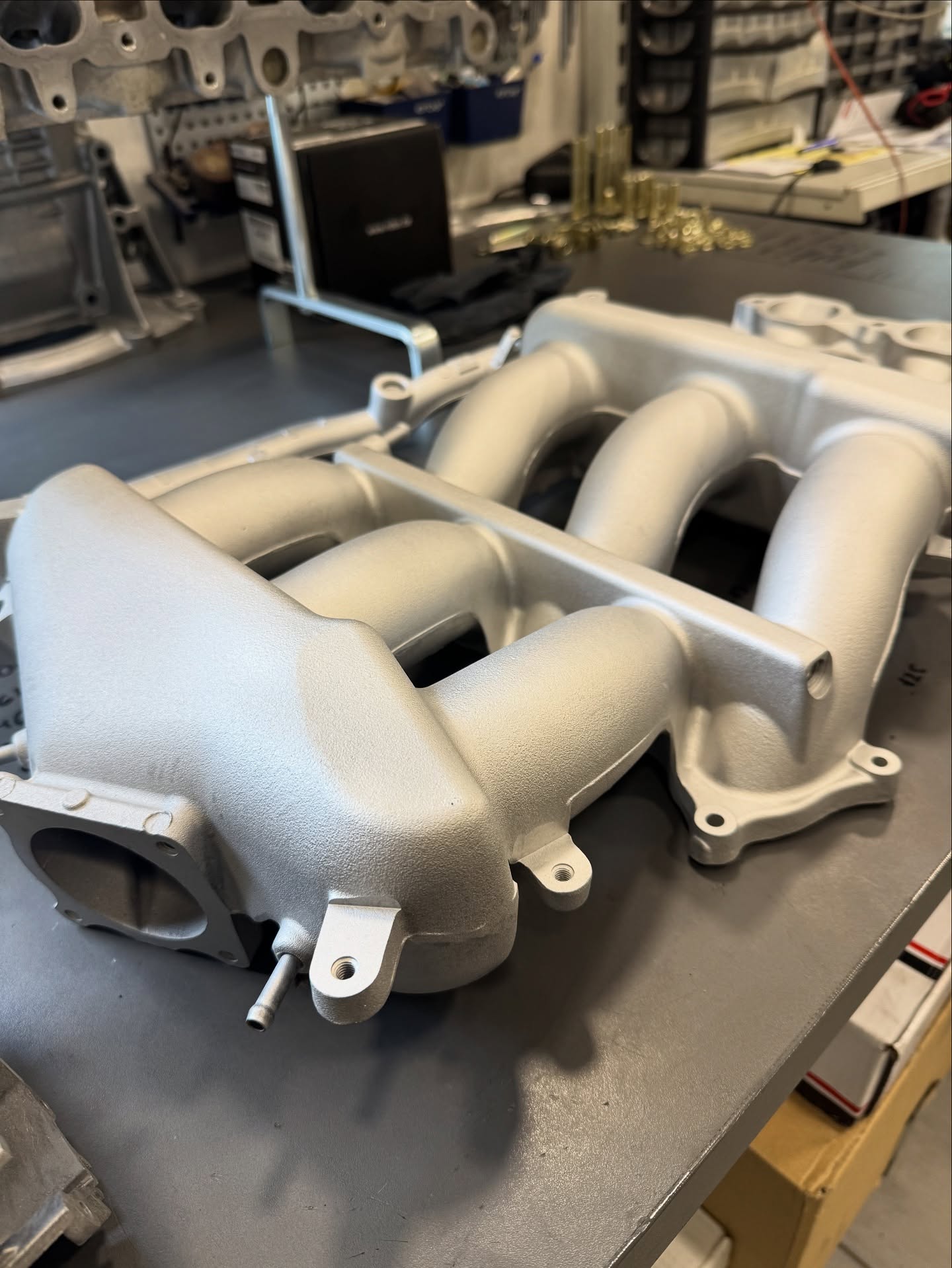
| Automotive | Turbocharger impellers, heat sinks, fluid system manifolds | Excellent heat dissipation and fluid flow efficiency |
| Medical | Surgical tool bodies, diagnostic imaging frames, pump housings | Ergonomic lightness and corrosion resistance |
The Step-by-Step Aluminum Investment Casting Process
Creating high-integrity metal components requires strict process control at every stage. We utilize a refined lost wax aluminum casting workflow to transform complex geometry into net-shape parts with exceptionally smooth surface finishes and reliable structural properties.
1. Precision Wax Pattern Creation and Tree Assembly
- Wax Injection: High-grade wax is injected into aluminum tooling to produce exact replicas of your part, accounting for metal shrinkage.
- Tree Assembly: Technicians mount multiple wax patterns onto a central wax runner (sprue) to form a cluster, or "wax tree," enabling efficient batch production.
2. Ceramic Shell Molding, Stuccoing, and Dewaxing
- Ceramic Coating: The wax tree is dipped in a liquid ceramic slurry and coated with fine refractory sand (stuccoing). We repeat this cycle multiple times to build a thick, heat-resistant shell.
- Autoclave Dewaxing: Once the shell cures, it enters a high-pressure steam autoclave where the wax quickly melts out, leaving an intact ceramic mold cavity.
3. Controlled Melting and Pouring
- Mold Preheating: We fire the empty ceramic shell in a furnace to remove traces of wax and preheat the mold, which improves metal flow into thin-wall sections.
- Temperature-Controlled Pouring: We melt top-grade aluminum alloys under strict atmosphere and temperature control to reduce gas porosity before carefully pouring the liquid metal into the shell.
4. Shell Knockout, Gate Removal, and Finishing
- Knockout & Water Jetting: After the metal solidifies and cools, we break away the outer ceramic shell using vibration equipment and high-pressure water blasting.
- Gate Removal & Grinding: We cut individual components from the main runner tree and grind down remaining gate stubs to flush tolerances.
- Surface Finishing: Castings undergo bead blasting, shot blasting, or specialized surface treatments to achieve a clean, uniform cosmetic finish.
By combining rigorous metallurgical controls with advanced aluminum investment casting process techniques, we consistently deliver ready-to-use precision parts that eliminate unnecessary CNC machining steps.
Common Aluminum Investment Casting Alloys
Selecting the right alloy is critical for achieving the target strength, weight, and performance for your aluminum investment casting project. We work with a wide range of foundry-grade alloys, matching material specifications directly to your application demands.
| Alloy | Core Strengths | Best Used For |
|---|---|---|
| A356 | High structural strength, excellent ductility, fluid castability | Aerospace frames, structural brackets, automotive parts |
| C355 | Superior pressure tightness, great strength at high temperatures | Valve bodies, pump housings, compressor impellers |
| 356.0 | Solid corrosion resistance, strong weldability | Industrial hardware, machinery enclosures |
| 319 | Outstanding machinability, excellent yield strength | Gearbox covers, engine manifolds, commercial fittings |
High-Performance Alloys: A356 and C355
- A356 Alloy: A356 aluminum casting is our top choice for intricate, load-bearing parts. Its exceptional liquid fluidity allows us to cast detailed shapes and thin walls while maintaining deep structural strength.
- C355 Alloy: When components need to hold fluids or gases under pressure without leaking, C355 is the standard. It maintains high mechanical integrity even under elevated operating temperatures.
General Hardware Alloys: 356.0 and 319
- 356.0 Alloy: Offers a dependable balance of corrosion resistance and strength, making it an ideal choice for standard industrial hardware.
- 319 Alloy: Combines fast machinability with cost-effective performance. It is a workhorse option for general industrial components requiring post-cast finishing.
Investment Casting Heat Treatment (T5 and T6)
To get the highest strength out of your precision aluminum parts, we offer targeted heat treatment options:
- T5 Temper (Artificial Aging): Cooled directly from the casting process and artificially aged. It improves hardness and dimensional stability with minimal distortion.
- T6 Temper (Solution Heat Treated + Aged): Significantly boosts tensile strength, yield strength, and toughness. Utilizing investment casting heat treatment T6 provides the maximum mechanical rating possible for critical structural applications.
Design Guidelines and Tolerances for Aluminum Investment Castings
Designing parts for aluminum investment casting gives you incredible geometric freedom, but following smart casting rules keeps production costs down and guarantees defect-free components. We work directly with engineering teams to optimize designs for manufacturing long before metal hits the mold.
Achievable Tolerances and Wall Thickness Limits
We consistently hit tight aluminum casting tolerances that significantly reduce or eliminate the need for secondary CNC machining.
- Linear Tolerances: Standard linear dimensions hold to ±0.005 inches per inch. Finer limits are achievable on critical features with specialized process control.
- Minimum Wall Thickness: Our process supports thin wall aluminum casting down to 0.060 in (1.5 mm) across standard sections, and down to 0.040 in (1.0 mm) on small, localized features.
- Cross-Section Uniformity: Maintaining consistent wall thickness throughout the part ensures balanced heat distribution during solidification.
Draft Angles and Complex Geometries
Unlike die casting or sand casting, the ceramic mold process allows for intricate shapes without steep taper requirements.
- Minimal Draft: Most features require only 0° to 0.5° draft angles, saving material and eliminating unnecessary weight.
- Internal Features: Complex internal passages, undercuts, and blind holes are easy to cast using specialized ceramic or wax core inserts.
Surface Roughness Standards
Our ceramic shells yield exceptionally smooth surfaces right out of knockout, saving you time and finishing costs on precision aluminum parts.
| Surface Metric | Standard Cast Finish | High-Precision Finish |
|---|---|---|
| Ra (Roughness Average) | 3.2 µm (125 µin) | 1.6 µm (63 µin) |
| RMS Value | 135 to 140 RMS | 70 to 80 RMS |
Design Techniques to Prevent Defects
Defect prevention begins in the initial design phase. We apply proven design rules to avoid shrinkage cavities, internal porosity, and hot tears during cooling:
- Generous Fillets and Radii: Sharp internal corners cause stress concentration and thermal cracking. Adding fillet radii of at least 0.060 in (1.5 mm) prevents hot tearing as the metal contracts.
- Gradual Section Transitions: Blending thick-to-thin section changes with a smooth taper (using a 3:1 ratio) keeps aluminum flowing evenly and prevents shrink voids.
- Targeted Mass Distribution: Isolating heavy material sections near gate locations allows liquid metal to feed the cooling casting continuously, locking out internal porosity.
Aluminum Investment Casting vs. Alternative Manufacturing Processes
Choosing the right production method comes down to your part's geometric complexity, required tolerances, order volume, and overall budget. Here is how aluminum investment casting compares to other standard manufacturing methods.
Investment Casting vs. Die Casting
When comparing investment casting vs die casting, the primary trade-offs are tooling costs and design flexibility.
- Tooling Investment: Die casting requires hardened steel dies that come with significant upfront tooling costs. Lost wax aluminum casting uses lower-cost tooling, making it far more economical for low-to-medium production runs.
- Design Freedom: Investment casting easily creates complex internal passages, undercuts, and thin wall aluminum casting features without expensive multi-slide dies.
- Production Volume: Die casting is ideal for ultra-high-volume runs with simpler geometries. Investment casting gives you greater design freedom without locking you into massive initial capital expenses.
Investment Casting vs. Sand Casting
While sand casting works well for large, simple components, it falls short when you need high-precision parts.
- Surface Finish: Sand casting leaves a coarse surface finish (typically 250–500 µin Ra). Our precision aluminum parts made through investment casting deliver smooth finishes (125 µin Ra or better), eliminating the need for extra surface grinding.
- Dimensional Accuracy: Investment casting delivers much tighter tolerances and sharper detail, allowing for thin walls and intricate features that sand molds cannot hold.
- Material Savings: Smoother surfaces and near-net-shape capabilities mean less secondary machining, saving both time and machining costs.
Investment Casting vs. CNC Machining
CNC machining offers extreme precision, but it quickly becomes costly when working with complex three-dimensional shapes.
- Material Waste: Machining intricate components from solid aluminum billet creates massive material scrap. Aluminum investment casting is a near-net-shape process that drastically cuts down raw material waste.
- Internal Geometries: Cutting tools cannot reach complex internal channels, curved voids, or enclosed pockets. Investment casting forms these internal shapes in a single pour.
- Cost Efficiency at Scale: Machining cost scales linearly with every part produced. Casting allows us to produce hundreds or thousands of complex parts efficiently once the mold is created.
Process Comparison Matrix
| Manufacturing Feature | Aluminum Investment Casting | Aluminum Die Casting | Sand Casting | CNC Machining |
|---|---|---|---|---|
| Tooling Cost | Moderate | High | Low | None |
| Part Complexity | Exceptional | Moderate | Low | Moderate to High |
| Surface Finish | Smooth (125 µin Ra) | Smooth | Rough | Very Smooth |
| Material Scrap | Minimal (Near-Net) | Minimal | Moderate | High |
| Optimal Volume | Low to Mid Volume | High Volume | Low Volume | Prototype / Low Volume |
Quality Control Standards for Aluminum Investment Casting
We enforce strict quality control at every stage of the aluminum investment casting process. From raw alloy verification to final dimensional sign-off, our thorough inspection methods guarantee that your precision aluminum parts meet exact engineering specs without internal defects or surface flaws.
Non-Destructive Testing (NDT)
We catch hidden flaws early using industry-standard NDT techniques:
- X-Ray Radiography: Scans deep inside the casting to detect internal voids, gas porosity, and shrinkage before machining.
- Dye Penetrant Inspection: Highlights micro-cracks, surface porosity, and tiny fissures invisible to the naked eye.
CMM Dimensional Verification
Maintaining tight aluminum casting tolerances requires high-precision measuring equipment. We use automated Coordinate Measuring Machines (CMM) and 3D optical scanners to audit complex geometries against your CAD files.
| Inspection Tool | Primary Function | Core Benefit |
|---|---|---|
| CMM Probes | Critical feature and hole location measurements | Ensures true position and tight assembly fits |
| 3D Laser Scanners | Full surface profile mapping | Verifies complex, thin-wall contoured geometries |
Metallurgical and Chemical Analysis
To ensure structural integrity, we test every heat lot before and after pouring:
- Chemical Spectrometry: Optical emission spectrometers analyze molten metal to verify exact alloy composition (such as A356 aluminum casting specs).
- Mechanical Testing: We pull test bars from each batch to confirm tensile strength, yield strength, and elongation.
- Hardness & Microstructure Verification: Confirms proper grain structure and checks hardness after investment casting heat treatment T6 processing.
Tooling Costs vs. Piece-Part Pricing in Aluminum Investment Casting
When budgeting for aluminum investment casting, you need to balance upfront tooling expenses with long-term unit costs. Initial tooling involves creating precision dies used to inject wax patterns. While this requires an initial capital investment, it dramatically lowers your per-piece price over the product's lifecycle.
- Tooling Expense: A one-time upfront investment in durable aluminum or steel molds built to yield thousands of identical wax patterns.
- Piece-Part Savings: Once the mold is complete, producing individual precision aluminum parts becomes fast, repeatable, and cost-effective.
- The ROI Balance: Medium-to-high production runs quickly absorb initial tooling fees, making lost wax aluminum casting far cheaper per unit than full CNC machining from solid billet.
Design Modifications to Reduce Manufacturing Costs
Simplifying part geometry during the early design phase keeps manufacturing costs down without sacrificing component performance. We help our clients spot simple design adjustments before cutting metal to keep budgets on track.
- Minimize Deep Undercuts: Multi-piece dies and complex loose cores drive up tooling build costs and manual assembly labor.
- Relax Non-Critical Tolerances: Unnecessarily tight tolerances demand extra machining, hand-finishing, and tighter inspection protocols. Apply tight tolerances only where functional fits require them.
- Maintain Uniform Wall Thickness: Equalized walls ensure even cooling, which cuts down on shrinkage defects, hot tears, and scrap rates.
- Incorporate Generous Draft Angles: Adding slight draft angles allows wax patterns to release cleanly from the mold, speeding up cycle times and extending tool life.
Optimizing Production Volumes and Order Batch Sizes
Batch size directly influences setup efficiency, material usage, and total job costs. Ordering in optimized batch sizes allows us to pass along significant savings in shell building and alloy melting operations.
| Production Volume | Tooling Strategy | Cost Impact | Ideal Application |
|---|---|---|---|
| Low Volume / Prototypes | 3D-printed wax/resin patterns | Zero tooling cost; higher unit price | Functional prototypes & short-run testing |
| Medium Volume (50–1,000 pcs) | Single-cavity aluminum tooling | Moderate tooling cost; balanced unit price | Specialized machinery & defense components |
| High Volume (1,000+ pcs) | Multi-cavity automated tooling | Higher initial tooling; lowest unit price | High-demand automotive & commercial hardware |
Consolidating smaller purchase orders into scheduled, larger batch runs reduces furnace setup fees and ceramic slurry maintenance costs, ensuring you get the maximum value out of your production budget.
Frequently Asked Questions About Aluminum Investment Casting
How Thin Can Wall Sections Be?
In aluminum investment casting, we routinely achieve wall thicknesses down to 0.060 inches (1.5 mm) across broad areas. For smaller, localized sections with favorable geometry, we can reliably cast thin-wall features down to 0.040 inches (1.0 mm). Our lost wax aluminum casting process ensures proper metal flow to fill delicate structures without misruns or integrity issues.
What Is the Lead Time for Custom Tooling?
Standard lead times for custom aluminum casting tooling typically run 4 to 8 weeks, depending on part complexity and die design.
To streamline your timeline, we offer flexible production options: Rapid prototyping aluminum investment casting: 1 to 2 weeks using 3D-printed wax or resin patterns (no hard tooling required). Standard wax injection tooling: 4 to 6 weeks for precision aluminum dies. Sample inspection & sign-off: Completed right after initial sample pours and dimensional verification.
Is Investment Casting Good for Low Volumes and Prototyping?
Yes. It is one of the most versatile methods for short runs and functional prototypes. By using direct 3D-printed patterns, we eliminate early tooling costs entirely. This allows you to evaluate fully functional, high-density precision aluminum parts before committing to full-scale production molds.
Which Alloy Offers the Best Corrosion Resistance?
A356 aluminum casting alloy delivers the best overall corrosion resistance, combined with excellent pressure tightness and structural strength. It naturally forms a stable protective oxide coating, making it our primary recommendation for harsh aerospace, marine, and defense environments. When paired with T6 heat treatment, A356 delivers maximum strength without sacrificing corrosion resistance.
 English
  Russian
  German