
2026年8月7日
Cobalt alloy casting for custom precision investment parts with high heat wear resistance tight tolerances and quick RFQ
High-Performance Cobalt Alloy Casting for Severe Environments
Are your critical components failing prematurely due to thermal fatigue, metal-to-metal galling, or severe mechanical wear? Standard industrial metals quickly reach their operational limits when pushed into extreme service conditions. We engineer high-performance cobalt alloy casting solutions specifically built to thrive where conventional materials fail.
Overcoming Extreme Thermal & Mechanical Wear
Operating environments exceeding 1,200°C (2,192°F) demand materials that resist oxidation, thermal shock, and structural degradation. Our cobalt-based superalloys retain high mechanical strength, hot hardness, and creep resistance under continuous, elevated-temperature exposure.
Unmatched Galling and Cavitation Resistance
In unlubricated, high-friction applications, nickel and titanium alloys frequently suffer from adhesive wear, severe galling, and cavitation erosion. Cobalt alloy casting formulations naturally form a tough, self-passivating surface layer that drastically outperforms competing metals:
- Superior Galling Resistance: Prevents material transfer and seizing in metal-to-metal sliding contact.
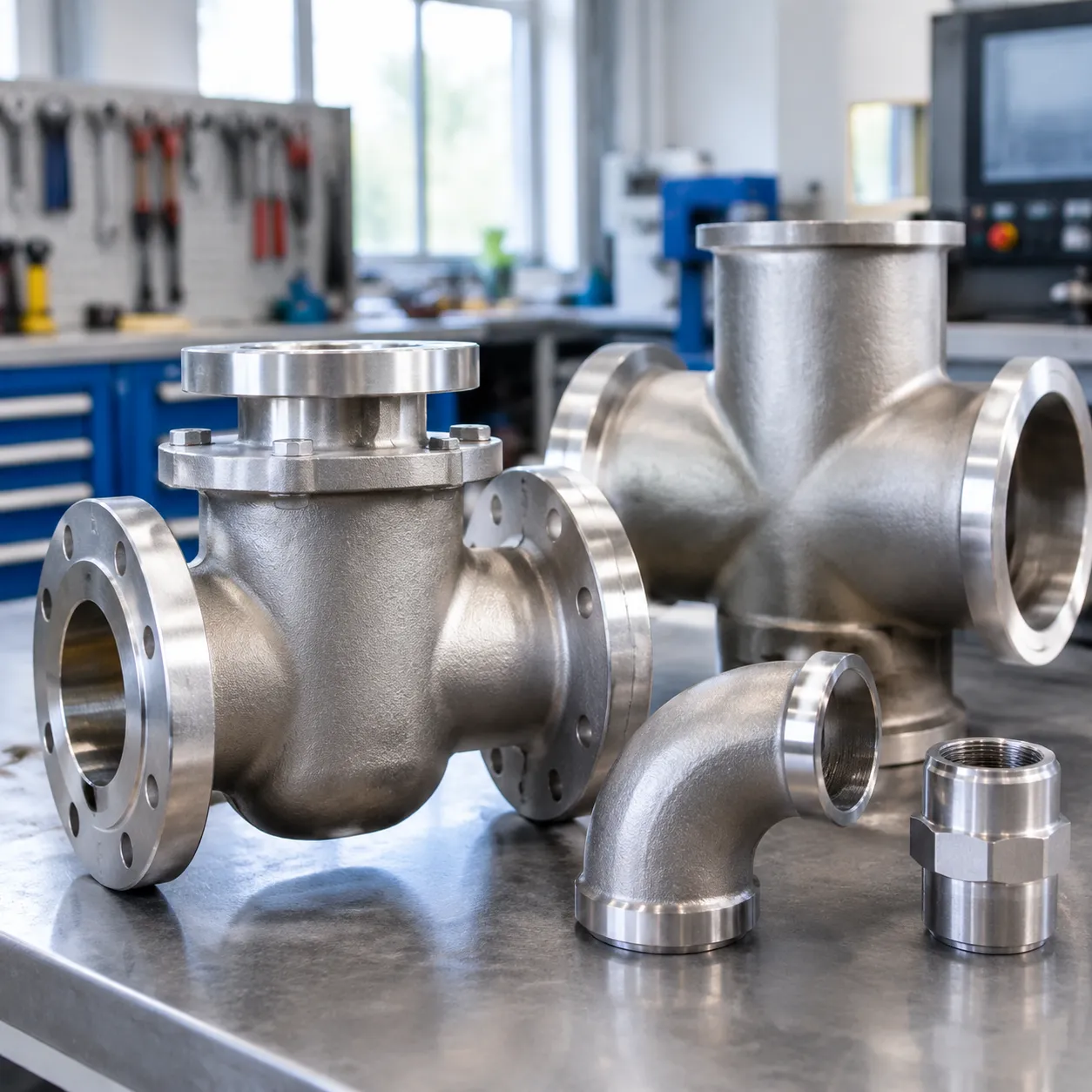
- Cavitation Erosion Protection: Withstands high-velocity fluid impact and turbulent flow in pump and valve bodies.
- Low Coefficient of Friction: Ensures reliable mechanical performance without reliance on external lubricants.
20+ Years of High-Alloy Casting Innovation
Leveraging over two decades of metallurgical innovation, we manufacture high-density, defect-free components engineered for mission-critical operations. Our advanced cobalt based alloy foundry processes guarantee precise chemical stoichiometry and reliable structural integrity across every pour.
Material Grade Selection & Mechanical Property Matrix
Selecting the proper cobalt-based superalloys is critical to maximizing component lifespan and preventing catastrophic wear, thermal fatigue, or corrosive failure. We pour a comprehensive selection of proprietary and standardized grades designed to handle extreme operational stresses. By utilizing precision investment casting solutions, we ensure each heat meets strict metallurgical standards and microstructural specs.
| Alloy Grade | Standards & Specs | Primary Engineering Properties | Target Applications |
|---|---|---|---|
| Cobalt Alloy 6 | AMS 5387 / UNS R30006 | Exceptional anti-galling, sliding wear, and severe cavitation resistance | Valve seats, pump shafts, wear bushings, nozzles |
| Cobalt Alloy 21 | AMS 5385 / UNS R30021 | Superior thermal shock endurance and hot gas oxidation resistance | Gas turbine vanes, combustion hardware |
| Cobalt Alloy 31 (X-40) | AMS 5382 | High stress-rupture strength and creep resistance at 1,200°C+ | Aerospace structural castings, stator segments |
| CoCrMo Medical Grade | ASTM F75 | High biocompatibility, low friction coefficient, excellent fatigue strength | Orthopedic implants, knee joints, surgical tooling |
Industry-Proven Cobalt Superalloy Grades
- Cobalt Alloy 6 (AMS 5387): Known as our benchmark grade for heavy-friction environments. It maintains exceptional micro-hardness and resists galling even in unlubricated, highly abrasive systems.
- Cobalt Alloy 21 (AMS 5385): Formulated for thermal cycling applications. Its chemical composition limits grain growth and scale formation during rapid heating and cooling cycles.
- Cobalt Alloy 31 / X-40 (AMS 5382): Engineered specifically for structural aerospace components that experience high mechanical loads under extreme elevated temperatures.
- CoCrMo ASTM F75 Medical Grade: Refined for biocompatible precision castings. This alloy delivers unmatched wear performance against ultra-high-molecular-weight polyethylene (UHMWPE) in medical implants.
Precision Cobalt Alloy Casting Capabilities & Tolerances
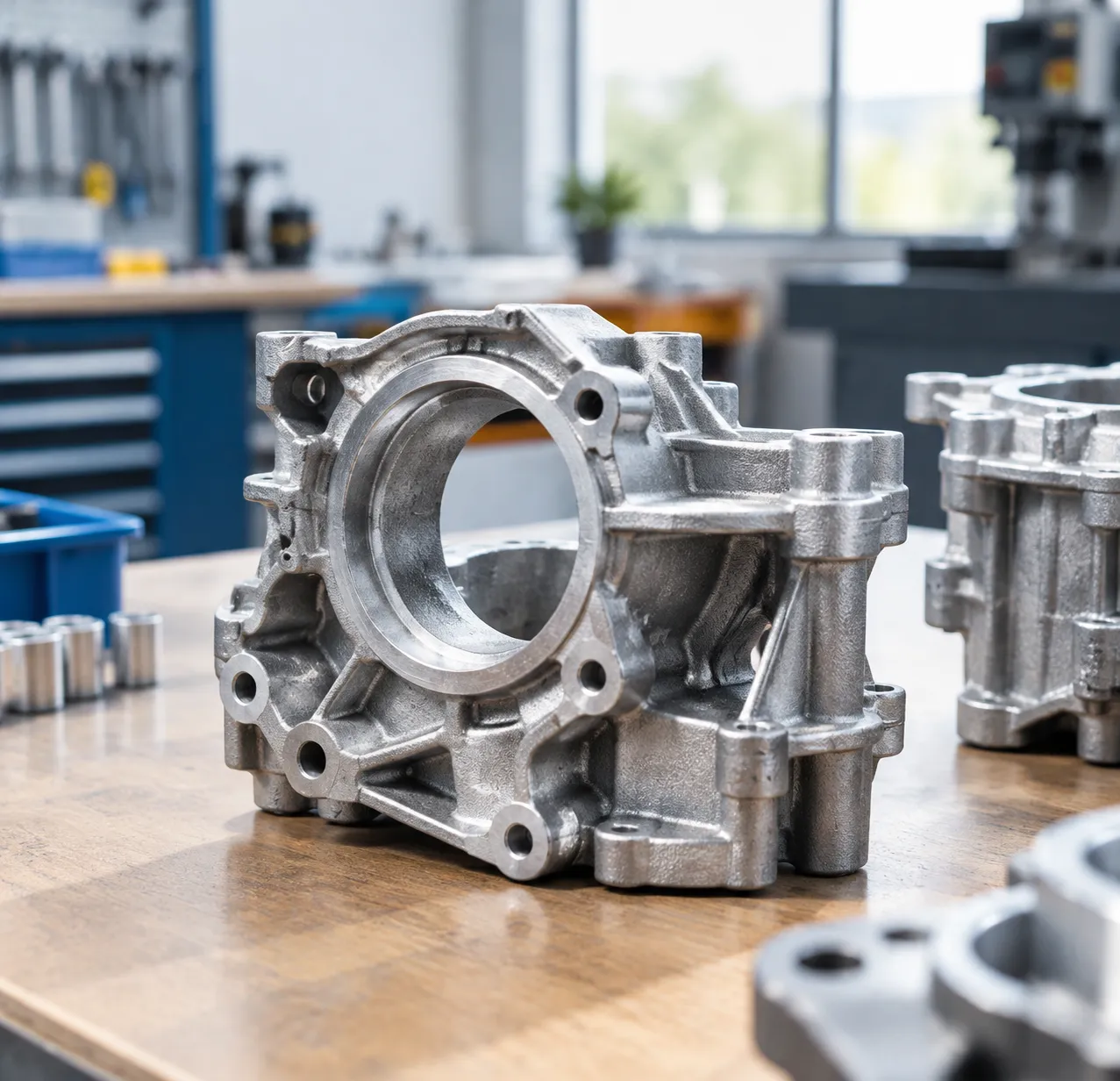
Machining cobalt superalloys is costly and labor-intensive. We engineer our cobalt alloy casting operations around high-precision processes that produce tight-tolerance components directly from the mold, drastically reducing raw material waste and secondary CNC machining.
| Parameter | Performance Specification | Engineering Advantage |
|---|---|---|
| Linear Tolerance | Standard ±0.005" per inch | Eliminates heavy stock removal on hard alloys |
| Surface Finish | 120 RMS or better as-cast | Minimizes post-cast grinding and polishing |
| Weight Capacity | Micro-components up to 100+ kg | Supports delicate valve parts and massive industrial hardware |
| Molding Technique | Ceramic shell mold casting | Delivers superior edge definition and dimensional stability |
Near-Net Shape Casting Features
Our investment casting cobalt workflows yield consistent, dense components built for extreme duty:
- Strict Dimensional Execution: We hold standard linear tolerances within ±0.005" per inch, ensuring exact repeatability across high-volume production runs.
- Surface Finish Quality: Achieving micro-inch finishes down to 120 RMS or better straight out of the ceramic shell mold allows many seal faces and non-mating surfaces to go directly into service.
- Versatile Part Sizing: Our facility handles a broad dimensional scope, pouring everything from micro-precision components weighing under an ounce up to heavy-duty industrial castings weighing over 100 kg.
Integrated Systems for Cobalt Alloy Casting
We equip our cobalt alloy casting facility with fully automated, high-precision production lines engineered to eliminate component defects before liquid metal ever enters the mold.
- High-Precision Wax Injection Equipment: We deploy closed-loop, temperature-controlled wax injection machinery to ensure pattern integrity and strict dimensional stability, locking in exact tolerances for complex geometries.
- Automated Ceramic Shell Coating Systems: Dense cobalt-based alloys require heavy-duty mold containment. Our robotic ceramic shell mold casting lines apply uniform slurry and stuccoing layers engineered to resist thermal shock and liquid metal pressure.
- High-Pressure Dewaxing Autoclaves: We process shell molds in high-pressure dewaxing autoclaves for complete steam evacuation of wax patterns, preventing shell cracking and eliminating carbon inclusions in our melts.
- Robotic Line Integration: Automated shell handling and pour-assist systems manage hazardous, high-temperature foundry operations with surgical precision, guaranteeing repeatable pour speeds and continuous quality control.
High-Stress Applications for Cobalt Alloy Casting
We engineer custom cobalt alloy casting components for mission-critical applications where equipment failure is not an option. Our foundry supplies severe-service industries with dense, defect-free cobalt-based superalloys designed to handle extreme wear, high heat, and corrosive media.
Aerospace & Defense
We manufacture high-precision aerospace turbine components engineered to maintain high yield strength and creep resistance under extreme thermal cycling. Hot-section parts: Turbine vanes, stator segments, and guide vanes. Combustion hardware: Fuel nozzles and custom heat shields.
Medical Devices & Orthopedics
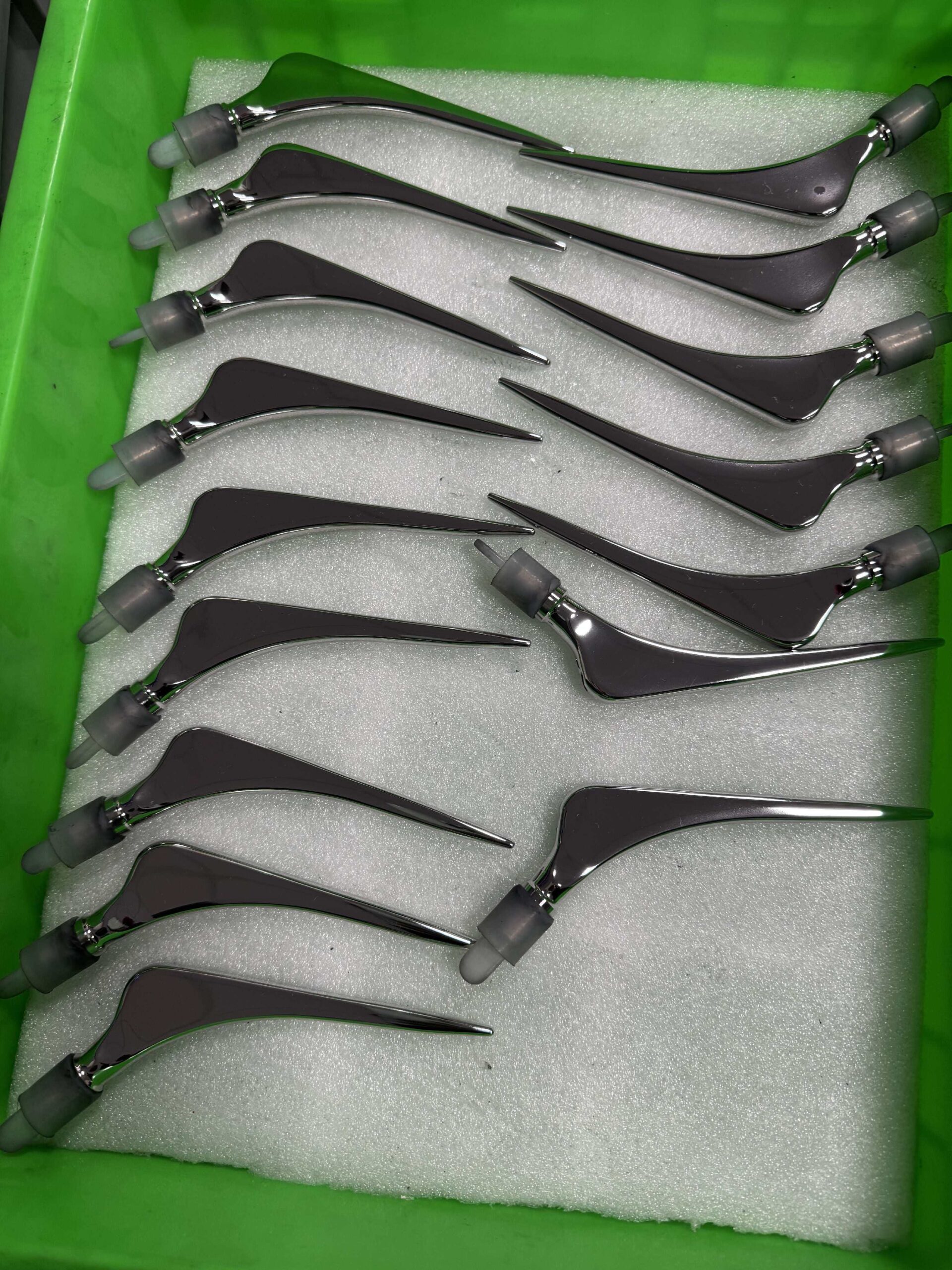
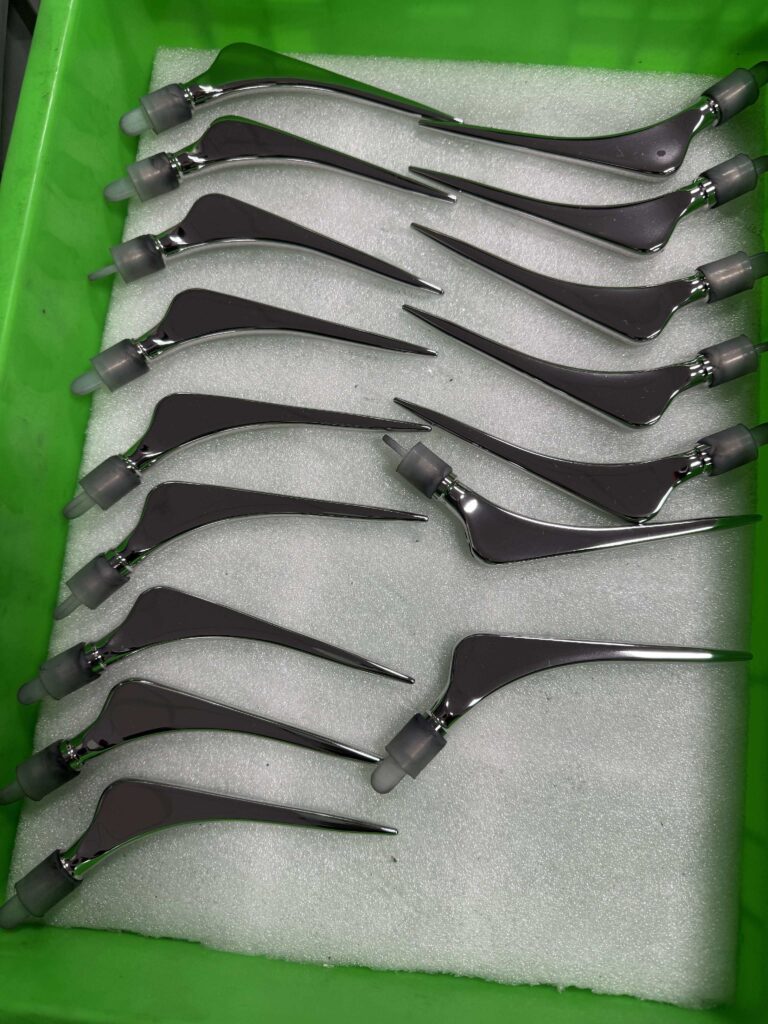
Using biocompatible ASTM F75 medical castings, we produce long-lasting implants and tools that meet rigid medical specifications. Joint prosthetics: Orthopedic implants, knee joints, and hip stems. Surgical instrumentation: Specialized high-strength tooling built for harsh sterilization cycles.
Oil, Gas & Chemical Processing
Our cobalt based alloy components withstand high-velocity erosive slurries, unlubricated friction, and aggressive chemical exposure. Flow control elements: Valve trim components, seats, and wear rings. Extraction gear: Heavy-duty drill bit inserts and slurry pump impellers.
Power Generation
We deliver heavy-duty investment castings engineered for continuous operation in severe thermal and mechanical stress environments. Turbine assemblies: Industrial gas turbine parts and combustion liners. Fluid containment: Steam valve seats engineered to resist galling and steam cutting.
Cobalt Alloy Casting Quality Assurance & Compliance
When you source high-stress cobalt alloy casting components, zero-defect performance is non-negotiable. We enforce rigorous heat-by-heat verification protocols to guarantee every casting meets exact mechanical, chemical, and dimensional specifications before leaving our facility.
Spectrographic Heat Analysis
- Exact Chemical Stoichiometry: We run optical emission spectrometry on every single melt to verify alloy composition, ensuring exact trace-element balance for cobalt-based superalloys prior to pouring.
In-House Non-Destructive Testing (NDT)
We perform complete internal non-destructive testing to detect subsurface voids, inclusions, or micro-cracks without compromising part integrity:
- Radiographic Testing (X-ray): Verifies deep structural density and identifies internal shrink or porosity.
- Fluorescent Penetrant Inspection (FPI): Detects surface-connected micro-fissures on complex investment cast geometries.
- Ultrasonic Testing (UT): Provides volumetric inspection for heavy-wall castings and high-load zones.
Dimensional Inspection & CAD Verification
- Coordinate Measuring Machine (CMM): Delivers precise multi-axis dimensional reporting for tight-tolerance features down to critical engineering limits.
- 3D Laser Scanning: Generates full high-density point-cloud models for direct automated CAD-to-part comparison.
Compliance & Quality Standards Matrix
| Standard / Protocol | Applied Industry | Quality Control Focus |
|---|---|---|
| ISO 9001 Certified | Industrial & Energy | End-to-end process control, heat lot traceability, and continuous audit trails |
| AMS Standards (e.g., AMS 5387) | Aerospace & Defense | High-temperature structural integrity, stress-rupture limits, and NDT compliance |
| ASTM F75 Protocols | Medical Devices | Microstructural density, biocompatibility standards, and surgical-grade surface verification |
Frequently Asked Questions About Cobalt Alloy Casting
| Frequently Asked Question | Primary Advantage | Key Technical Spec / Grade |
|---|---|---|
| Cobalt vs. Nickel / Titanium | Superior galling and unlubricated wear resistance | Maintains matrix stability past 1,200°F (649°C) |
| Achievable Linear Tolerances | Tight dimensional control minimizes machining | Standard ±0.005" per inch (±0.127 mm) |
| Best Grade for Surgical Implants | Superior biocompatibility & high fatigue limit | CoCrMo (ASTM F75) |
| Reducing Machining Costs | Near-net shape casting slashes tool wear | Up to 80% reduction in chip removal |
Cobalt Alloy Casting vs. Nickel and Titanium
When your applications demand intense friction resistance under heavy loads without lubrication, cobalt alloy casting outperforms both nickel and titanium. While titanium delivers high strength-to-weight ratios and nickel handles raw heat, cobalt-based alloys excel at resisting galling, severe cavitation, and adhesive wear. The intrinsic cobalt matrix forms a solid surface oxide layer that prevents metal pick-up during sliding contact.
Tolerances Achieved via Investment Casting Cobalt
Our precision investment casting cobalt process consistently holds standard linear tolerances of ±0.005" per inch. Utilizing advanced ceramic shell mold processes, we achieve fine surface finishes down to 120 RMS or better directly out of the mold. This accuracy dramatically reduces post-cast grinding requirements for precision wear bushings, nozzles, and valve seats.
Optimal Cobalt Grade for Surgical Implants
For orthopedic devices, hip stems, and knee joint prosthetics, ASTM F75 medical castings are the proven industry standard. This cobalt-chromium-molybdenum (CoCrMo) formulation offers total biocompatibility, exceptional resistance to bodily fluid corrosion, and high mechanical fatigue resistance under continuous wear cycles.
Cutting Machining Costs with Near-Net Shape Casting
Cobalt superalloys like Stellite Alloy 6 and Alloy 21 AMS 5385 are exceptionally tough to machine, causing rapid tool wear and slow feed rates. By delivering a near-net shape casting, we deliver components engineered close to your final CAD dimensions. This approach eliminates unnecessary raw material waste, protects cutting tooling, and slashes total finish-machining costs.
 English
  Russian
  German