
2026年8月5日
Cobalt based alloy with high temperature strength wear resistance and corrosion resistance for aerospace medical and industrial use
Material Fundamentals & High-Stress Performance Standards of Cobalt Based Alloy
Operating manufacturing and processing equipment under severe thermal and mechanical stress leaves zero room for material failure. When continuous exposure to high heat degrades conventional materials, a cobalt based alloy provides the metallurgical integrity required to prevent catastrophic component failure.
Crystallographic Stability at Extreme Temperatures
Cobalt-based superalloys rely on an FCC (face-centered cubic) atomic lattice stabilized by elements such as chromium, tungsten, and molybdenum. This matrix delivers outstanding phase stability from ambient conditions up to near-melting temperatures. Unlike standard iron or lower-grade alloys, these systems retain their mechanical strength, resisting phase transformations that lead to deformation, creep, and premature structural failure under continuous heat loading.
Superior Performance Above 1700°F (930°C)
While nickel superalloys perform well in moderate high-temperature zones, cobalt based alloy formulations deliver critical mechanical advantages when operational environments surpass 1700°F (930°C):
- Sulfidation and Hot Corrosion Resistance: High chromium concentrations form a self-healing surface oxide scale, shielding components from aggressive sulfur and alkali micro-environments.
- Galling and Cavitation Resistance: The low stacking-fault energy of cobalt prevents micro-fretting and metal-to-metal galling, even in high-load, unlubricated contact areas like a heavily loaded cobalt based shaft.
- Thermal Stress Tolerance: Superior resistance to thermal fatigue prevents surface micro-cracking during rapid heating and cooling cycles.
Near-Net Shape Investment Casting Advantages
The high work-hardening rate and solid-solution strength of cobalt superalloys make traditional subtractive machining notoriously difficult and expensive. Precision investment casting eliminates these manufacturing bottlenecks by creating near-net shape components directly from the liquid phase.
| Performance Parameter | Subtractive Machining | Precision Investment Casting |
|---|---|---|
| Material Utilization Rate | Low (30%–50% scrap rate) | High (85%–95%+ yield) |
| Tooling Wear & Costs | Extreme tool breakdown | Minimized to final finish passes |
| Geometrical Capability | Restricted to basic profiles | Complex internal cooling passages |
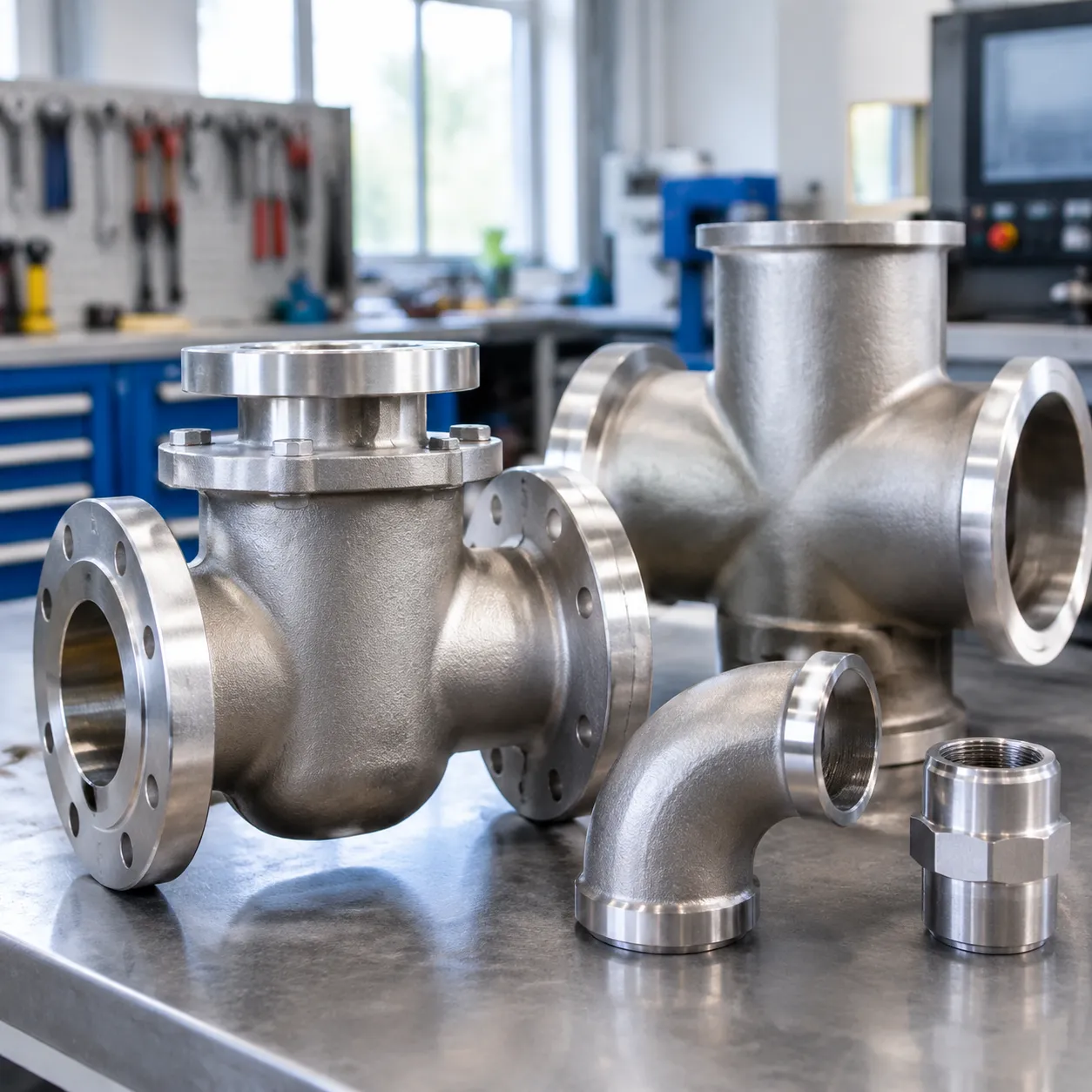
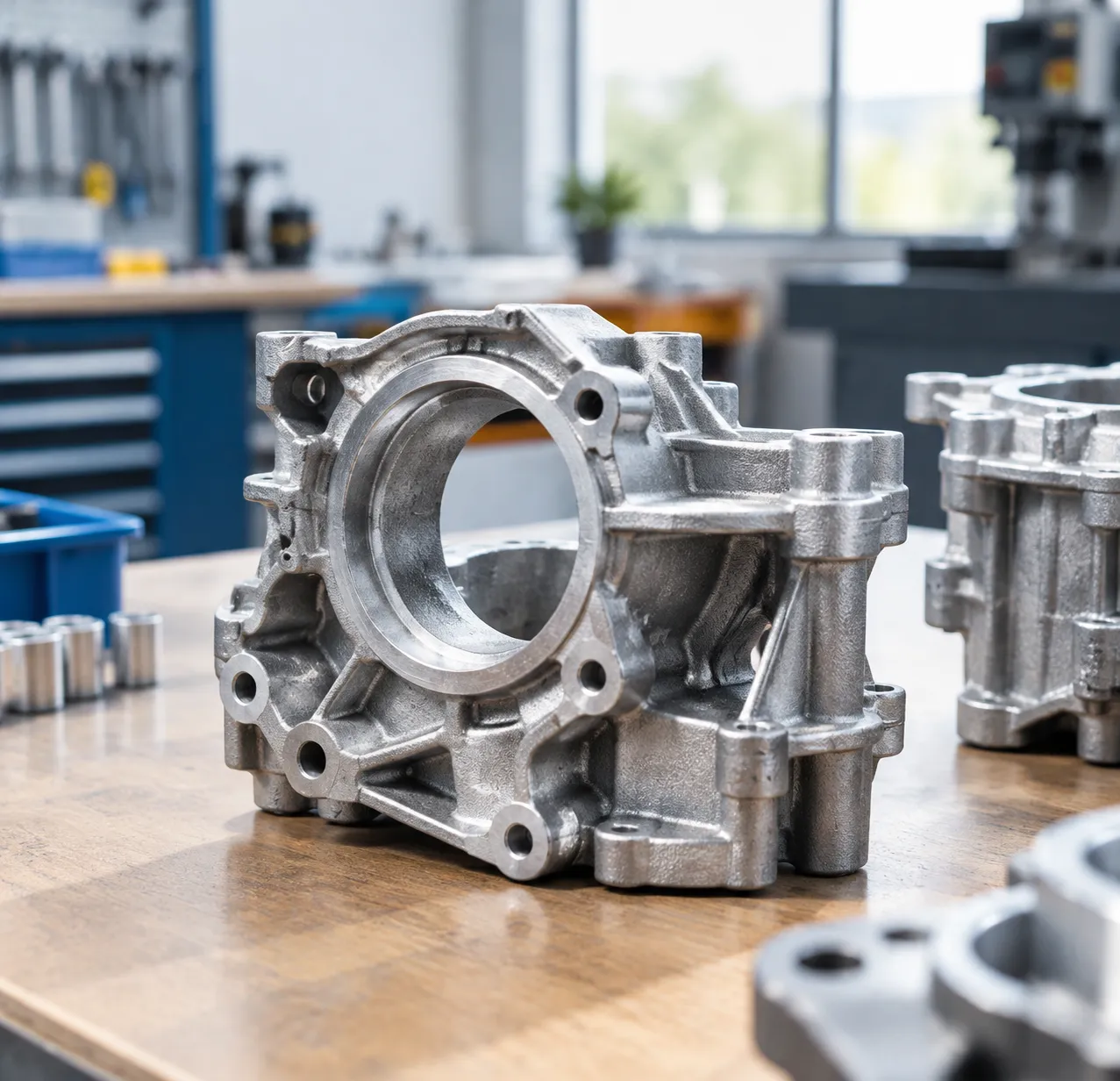
Utilizing advanced precision investment casting equipment allows us to produce complex geometries with exceptional surface finishes—drastically reducing secondary processing time while preserving the high-temperature wear resistance of the alloy.
Cobalt Based Alloy Classifications and Specification Standards
Selecting the right cobalt based alloy requires matching its primary alloy additions—tungsten, nickel, or molybdenum—to your specific operational stresses. We break down these high-performance materials into three distinct chemical systems:
Wear-Resistant Alloys (Co-Cr-W Systems)
Designed to combat severe sliding wear, galling, and cavitation without sacrificing base corrosion resistance: Key Profiles: Stellite hardfacing alloys (such as Stellite 6 and Stellite 21). Metallurgy: Higher carbon content forms hard chromium and tungsten carbides embedded within a durable cobalt matrix. Primary Uses: Valve seats, high-wear bushings, pump impellers, and heavy-duty cobalt based shaft sleeves.
High-Temperature Structural Alloys (Co-Cr-Ni-W Systems)
Engineered for maximum creep resistance and oxidation stability in thermal environments up to 2000°F (1093°C): Key Profiles & Specs: Haynes 25 / L605 (UNS R30605) manufactured under the AMS 5537 specification. Metallurgy: Nickel stabilizes the face-centered cubic (FCC) crystal structure, while tungsten provides solid-solution strengthening. Primary Uses: Industrial gas turbine nozzle guide vanes, combustion liners, and aerospace transition ducts.
Corrosion-Resistant and Biomedical Grades (Co-Cr-Mo Systems)
Formulated for high mechanical fatigue strength and chemical inertness in body tissue and aggressive acids: Key Profiles & Specs: CoCrMo alloy formulations governed by ASTM F75 / F1537 standards alongside multiphase MP35N (UNS R30035). Properties: Non-magnetic biocompatible alloys with exceptional resistance to chloride pitting, crevice corrosion, and stress corrosion cracking. Primary Uses: Total joint replacements (hip/knee prosthetics), dental frameworks, and sour gas (H2S) oilfield valve trims.
Alloy Classification & Specification Summary
| Alloy System | Common Grades | Key Specifications | Primary Performance Driver |
|---|---|---|---|
| Co-Cr-W | Stellite 6, Stellite 21 | UNS R30006, AMS 5387 | Galling & sliding wear resistance |
| Co-Cr-Ni-W | Haynes 25 / L605 | AMS 5537, UNS R30605 | High-temperature strength & thermal fatigue resistance |
| Co-Cr-Mo | CoCrMo, MP35N | ASTM F75 / F1537, UNS R30035 | Biocompatibility & severe corrosion immunity |
Processing these tight-tolerance chemistries requires tight environmental control. Integrating high-performance precision investment casting equipment into production allows foundries to maintain pristine melt purity, eliminate inclusion defects, and achieve precise microstructural stability across all grade families.
Engineering Challenges in Processing Cobalt Based Alloy Castings
Casting a cobalt based alloy presents steep metallurgical obstacles. High melting temperatures exceeding 2400°F (1315°C) combined with steep liquid-to-solid phase transformations mean even minor thermal fluctuations can ruin complex components.
Managing Volumetric Shrinkage and Thermal Expansion
During cooling, cobalt-chromium superalloys exhibit high thermal expansion rates and localized volumetric shrinkage reaching up to 2.2%.
- Hot Tearing Risks: Rapid differential cooling induces severe micro-cracking across thin-to-heavy section transitions.
- Dimensional Drift: Uncontrolled solid-state contraction destabilizes tight geometric tolerances in near-net shape superalloy casting.
- Thermal Gradient Control: Directional solidification requires rigorous mold preheating and targeted chill placement to eliminate internal voids.
Eliminating Porosity and Inclusions in Complex Geometries
High-stress aerospace vanes and orthopedic joint implants demand zero-defect internal structures. Gas entrapment and oxide inclusions severely compromise component fatigue life.
| Defect Type | Primary Cause | Operational Impact |
|---|---|---|
| Micro-Porosity | Dissolved gas and localized volumetric shrinkage | Reduced fatigue strength under dynamic loading |
| Oxide Inclusions | Turbulent air entrapment during molten metal transfer | Stress concentration points and structural failure |
| Surface Slag | Ceramic shell erosion caused by high pour density | Excessive finish-grinding costs and high reject rates |
Precision Requirements for Wax Patterns and Ceramic Shells
A cobalt based alloy component is only as precise as the initial pattern. Achieving consistent metallurgical quality depends on total control over pattern assembly and shell construction.
- High-Density Wax Pattern System: Patterns require zero volumetric distortion and uniform density to prevent surface flow lines.
- High-Strength Ceramic Shells: Molds must resist thermal shock and high melt densities without spalling or micro-fracturing.
- Void-Free Injection: Eliminating microscopic air pockets during wax delivery prevents metal penetration defects during casting.
VastPCC Technical Solutions for Cobalt Based Alloy Investment Casting
Pouring a high-density cobalt based alloy requires absolute process control from the initial wax pattern to final solidification. We engineered our VastPCC precision investment casting equipment to eliminate micro-defects, control thermal variation, and support heavy liquid metal loads.
| Technical System | Core Function | Impact on Cobalt Based Alloy Components |
|---|---|---|
| Cylinder-Free Wax Injection | Delivers pulse-free, continuous wax flow | Eliminates flow lines, cold shuts, and pattern deformation |
| Integrated Vacuum System | Active micro-bubble purging during fill | Guarantees dense, void-free wax models for tight tolerances |
| Intelligent PID Thermal Control | Real-time temperature and viscosity regulation | Stops volumetric shrinkage variability across production runs |
| Automated Shell & Steam Autoclave | Multi-layer ceramic dipping and rapid dewaxing | Yields high-strength ceramic molds that resist heavy molten metal loads |
Advanced Process Controls for Defect-Free Yields
- Pulse-Free Wax Delivery: Cylinder-free injection technology removes hydraulic pulsation. This maintains smooth, laminar fill rates across intricate geometries like turbine vanes, cobalt based shaft components, and joint prosthetics.
- Vacuum-Assisted Bubble Elimination: By purging trapped air before injection, our systems prevent sub-surface micro-porosity. You get smooth, dense wax patterns that convert directly into clean alloy castings.
- Tight Viscosity Management: PID controllers monitor wax and melt temperatures within tight thresholds. Maintaining steady viscosity eliminates dimension drift and sink marks caused by thermal fluctuations.
- High-Strength Ceramic Shells: High-density cobalt based alloys place massive hydrostatic pressure on investment molds. Our automated shell-building equipment applies uniform ceramic coats, paired with steam autoclaves that dewax without shell cracking.
Core Applications for Cobalt Based Alloys
We engineer precision investment casting solutions for mission-critical components where mechanical failure is not an option. Due to their extreme-temperature strength, corrosion resistance, and anti-galling properties, a cobalt based alloy is the preferred material standard across three high-stress industries.
Aerospace & Industrial Gas Turbines
Cobalt based alloys maintain structural integrity and resist hot corrosion at continuous operating temperatures above 1700°F (930°C). We manufacture dense, near-net-shape components built for severe thermal cycling:
- Nozzle Guide Vanes & Turbine Blades: Superior thermal fatigue resistance under extreme stress and gas flow.
- Combustion Liners & Transition Ducts: High oxidation resistance to prevent premature wall degradation in burn chambers.
Biomedical Engineering
Biocompatibility, non-magnetic properties, and ultra-low wear rates make cobalt-chromium (CoCrMo) alloys the standard for medical devices. Our precision casting systems deliver micro-porosity-free implants conforming to ASTM F75 and ASTM F1537 standards:
- Joint Prosthetics: Knee and hip structural implants engineered for high fatigue strength and wear resistance.
- Dental Frameworks: Custom, non-magnetic prosthetic frameworks requiring high dimensional accuracy.
Energy & Chemical Processing
In aggressive fluid-handling applications, cobalt based alloys eliminate galling and cavitation wear without relying on temporary surface coatings:
- Sour Gas (H2S) Valve Trims: Exceptional resistance to sulfide stress cracking and harsh corrosive media.
- Acid Pump Impellers & Bushings: Wear-resistant cobalt based shaft bushings and impellers built for abrasive slurry processing.
Quality Assurance & Metallurgical Verification
When casting a high-performance cobalt based alloy, micro-porosity or slight dimensional deviations can compromise part integrity. We engineer our precision investment casting equipment with real-time feedback loops to maintain tight metallurgical consistency and dimensional control across every production cycle.
Key Processing Metrics & Verification Standards
| Verification Parameter | Target Metric / Standard | Equipment Process Feature |
|---|---|---|
| Dimensional Tolerance | ±0.003 in/in (±0.076 mm) | Real-time optical monitoring & rigid die clamp alignment |
| Volumetric Porosity | ASTM E192 Severity Level 1 | Integrated vacuum degassing & pulse-free injection |
| Grain Structure Control | ASTM F75 / AMS 5537 compliant | Precision PID thermal profiles across melt & mold phases |
| Surface Finish | 63–125 µin RMS (1.6–3.2 µm) | Ultra-smooth wax pattern delivery with zero flow lines |
We inspect every critical part—from an orthopedic implant to a heavy-duty cobalt based shaft—to verify structural soundness before downstream finishing.
Custom Engineering Consultation for Foundry Setups
No two investment casting facilities run the exact same workflow. We partner directly with foundry engineers to design, build, and integrate custom machinery tailored to your specific shop floor requirements.
- Process Diagnostics: We analyze your existing shell-building line, slurry parameters, and dewaxing cycles.
- Machinery Customization: We modify injection pressures, platen sizes, and thermal zones to accommodate complex cobalt-chromium geometries.
- Turnkey Integration: We provide full equipment installation, PLC automation sync, and operator training to minimize startup downtime.
Technical Datasheets, Specifications & RFQ Submission
Upgrading your casting line for demanding cobalt based alloy production requires proven machine performance. Access our technical resources and submit your project requirements directly below.
- Download Technical Datasheets: Obtain complete equipment spec sheets, footprint layouts, and utility requirements.
- Request Machine Specifications: Review detailed performance data for wax injectors, vacuum systems, and automated autoclaves.
- Submit an RFQ: Send your part drawings, material grades, and annual volume targets to receive a custom machinery proposal within 24 hours.
Frequently Asked Questions About Cobalt Based Alloy Precision Casting
Why Choose a Cobalt Based Alloy Over Nickel Superalloys for High-Wear Applications?
Cobalt based alloy grades outperform nickel superalloys in severe friction, galling, and high-temperature wear environments above 1700°F (930°C). While nickel excels at pure tensile load-bearing, cobalt-chromium matrices provide critical operational advantages: Galling & Cavitation Resistance: Prevents metal-to-metal seizing in non-lubricated valve stems and shaft assemblies. Sulfidation & Hot Corrosion Defense: Resists degradation from sulfur-bearing combustion gases and sour gas chemistry. Hardness Retention: Maintains hard carbide phases under aggressive mechanical shear and extreme thermal stress.
How Investment Casting Reduces Machining Costs for Hard Alloys
Because a cobalt based alloy work-hardens rapidly and rapidly degrades standard cutting tools, heavy subtractive machining is cost-prohibitive. Precision investment casting solves this by delivering near-net shape components directly from the mold, reducing finish-grinding steps, tooling wear, and raw material waste by up to 70%.
Key Specifications for Aerospace, Medical, and Industrial Alloys
| Industry Sector | Standard / Specification | Alloy Grade | Target Application |
|---|---|---|---|
| Aerospace | AMS 5537 | Haynes 25 / L605 | Nozzle guide vanes, combustors, turbine rings |
| Biomedical | ASTM F75 | Co-Cr-Mo Cast Alloy | Orthopedic joint prosthetics, knee/hip implants |
| Medical / Surgical | ASTM F1537 | Co-Cr-Mo Wrought Alloy | High-strength surgical tools, implant pins |
| Severe Service Energy | NACE MR0175 / MP35N | Co-Ni-Cr-Mo System | Sour gas (H2S) valve trims, cobalt based shaft sleeves |
How VastPCC Equipment Prevents Micro-Porosity in Wax Patterns
We defeat pattern porosity at the injection stage before any cobalt based alloy is poured into the ceramic shell. Our VastPCC precision injection machinery uses three integrated technical controls: Cylinder-Free Wax Injection: Delivers pulse-free, continuous fluid pressure to prevent flow lines and turbulent air entrapment. Integrated Vacuum Systems: Purges micro-bubbles from the wax reservoir, delivering void-free models for high-density cobalt castings. PID Thermal Regulation: Maintains strict temperature stability within ±0.5°C, eliminating volumetric shrinkage variation across high-volume production runs.
 English
  Russian
  German