
2026年10月23日
Explore Investment Casting Foundry Equipment List featuring wax assembly shell handling pouring assist and finishing cells for efficient casting
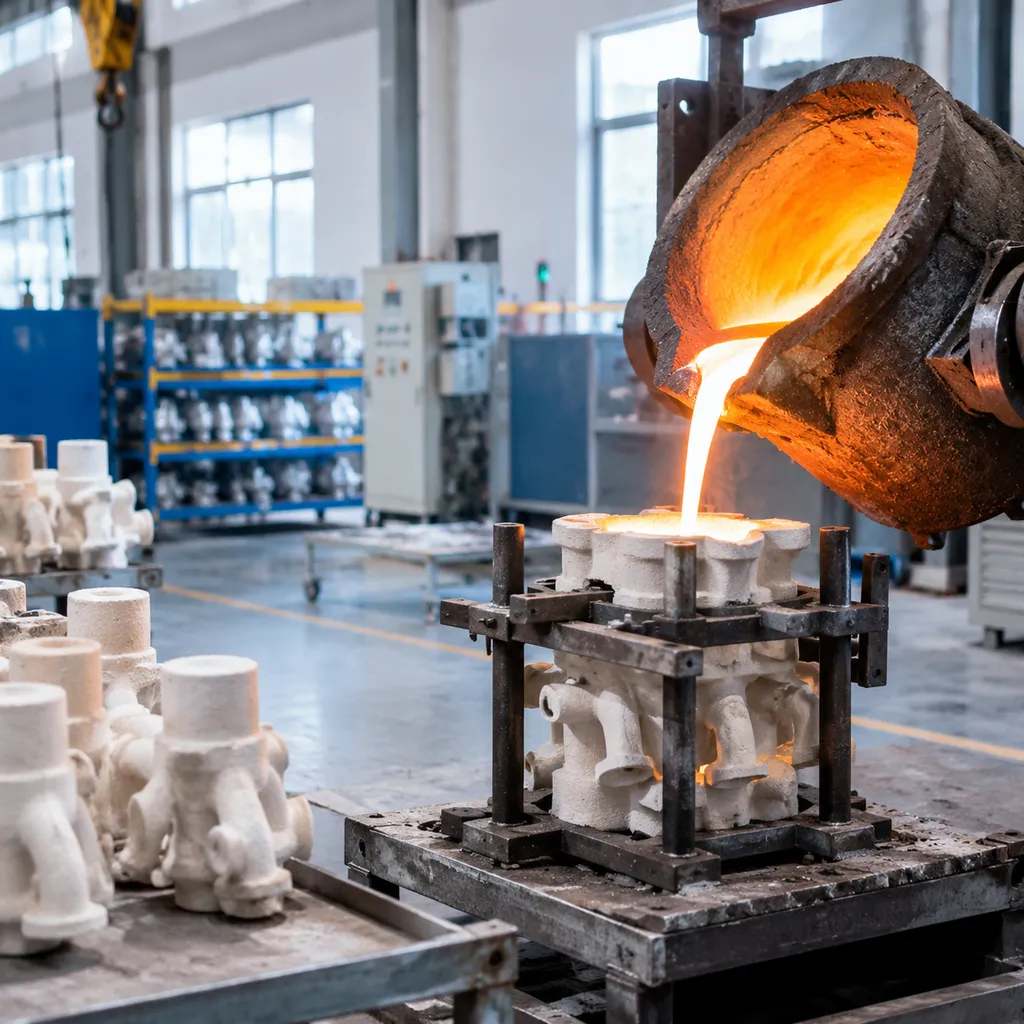
Wax Assembly Cell
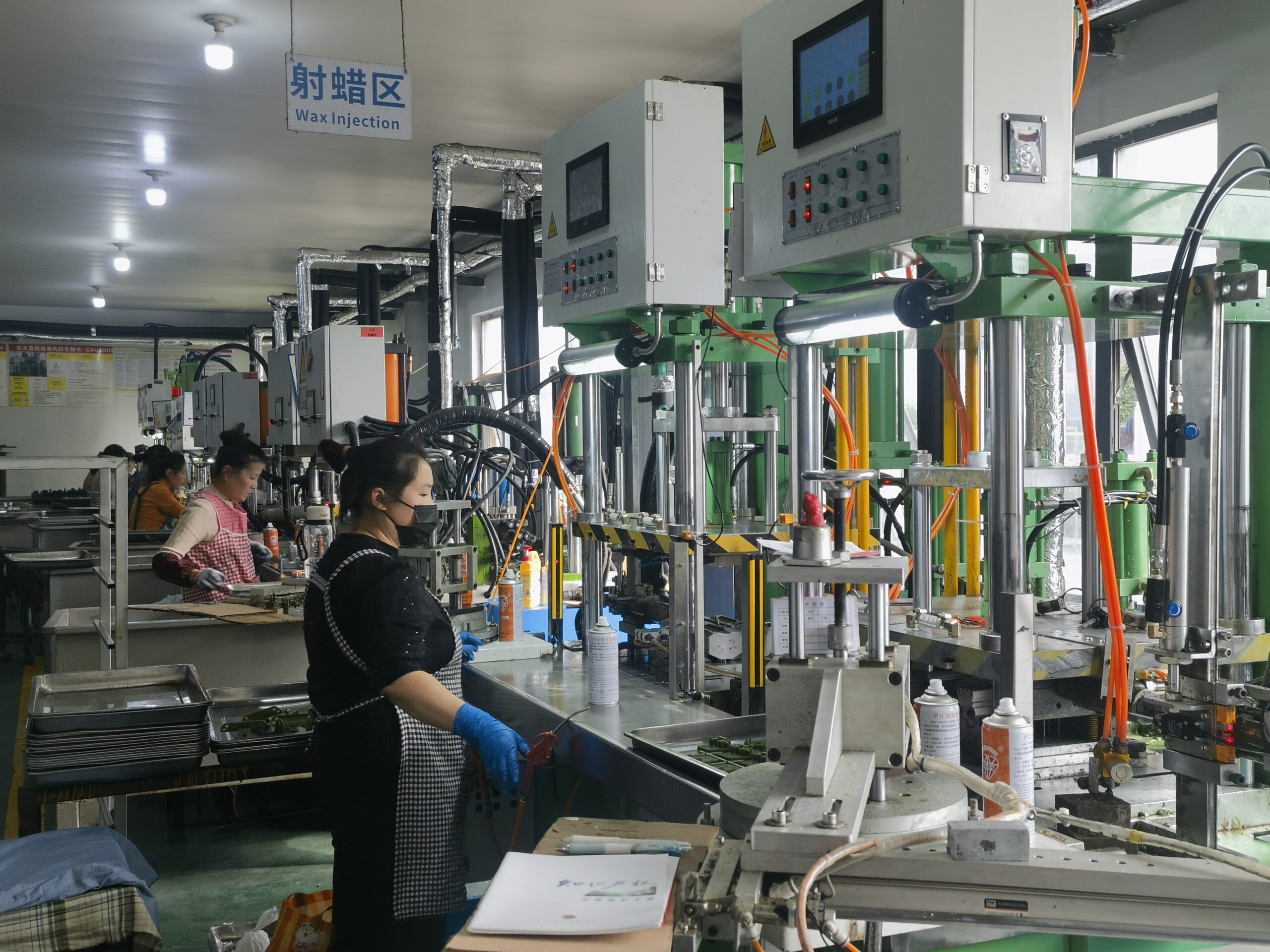
A high-performance wax assembly cell serves as the foundational stage in any modern investment casting foundry equipment list. By automating and streamlining wax pattern preparation, foundries achieve tighter dimensional tolerances, minimize manual handling defects, and secure uniform cluster construction before the ceramic shelling phase.
Pattern Sorting, Gating Assembly
Integrating specialized fixtures and tooling at the pattern sorting and gating assembly stage ensures consistent cluster alignment, higher yield rates, and reduced scrap.
- Pattern Sorting Automation: Rapid visual inspection tables and custom transfer trays protect delicate wax patterns from distortion and surface damage.
- Precision Gating Assembly: Dedicated hot-wire or thermal welding setups create strong, clean joints between patterns and the central sprue runner.
- Ergonomic Workstations: Modular tooling stations support rapid changeovers for varied production batches, from intricate aerospace parts to heavy industrial hardware.
| Key Process Stage | Operational Function | Direct Benefit |
|---|---|---|
| Pattern Inspection & Sorting | Defect screening and orientation | Prevents damaged wax patterns from entering production |
| Gating System Attachment | Thermal joining to central sprue | Guarantees optimal metal flow paths and structural rigidity |
| Tree Cluster Alignment | Precise multi-part positioning | Maximizes mold cavity density and reduces shell breakage |
Shell handling cell
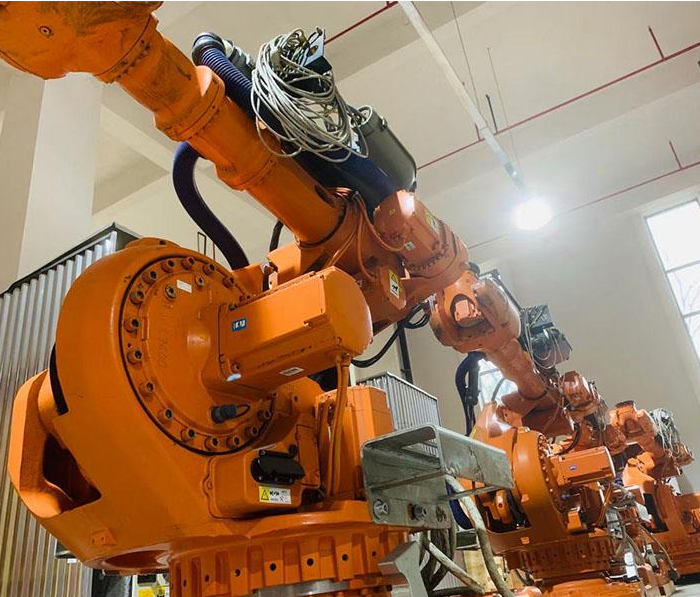
Building a solid shell requires consistent movement and zero mishandling. In any modern Investment Casting Foundry Equipment List, the shell handling cell bridges the gap between fragile wax clusters and durable ceramic molds capable of withstanding molten alloy. We configure this cell to eliminate mechanical shock, ensure uniform slurry drainage, and maintain uninterrupted production flow.
transfer between coating, drying and dewaxing
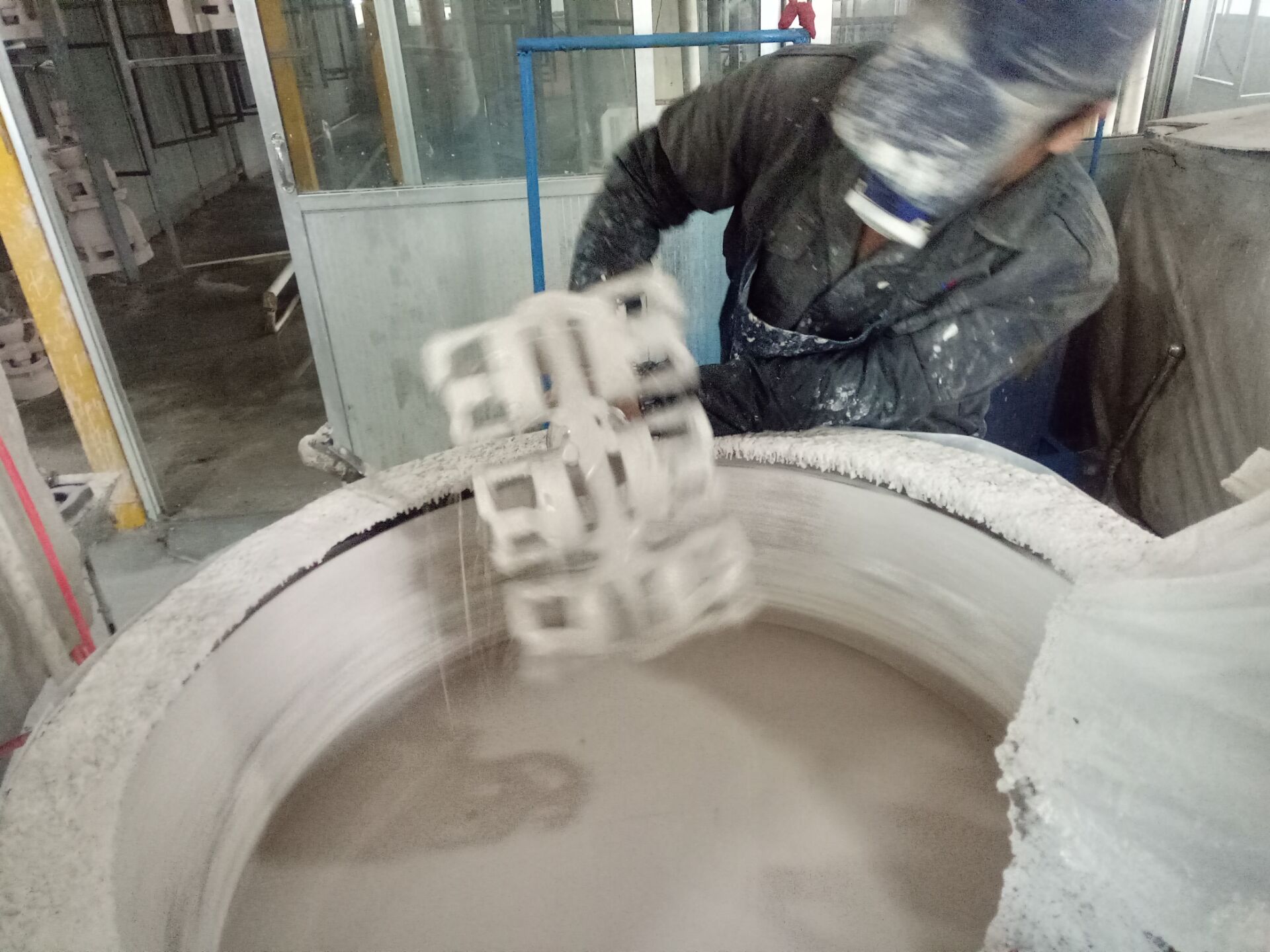
Transferring assemblies through repetitive dipping and drying cycles is where manual handling usually creates scrap. Integrating an automated shell coating line with robotic precision ensures that wet ceramic layers remain intact and drain at precise angles before moving into environmental drying tunnels.
Key transfer systems in this cell include:
- Overhead Power-and-Free Conveyors: Move shell trees smoothly between dipping stations and controlled drying rooms without vibration.
- Transfer Shuttles & Pick-and-Place Units: Position dried molds directly into high-pressure steam autoclaves for fast, crack-free dewaxing.
- Buffer Storage Racks: Balance takt time between multiple coating dips and final mold burnout prep.
By automating the transition from slurry tanks to the dewaxing stage, our setups protect mold integrity, speed up cycle times, and keep your investment casting foundry equipment list running at peak capacity.
Pouring Assist Cell in Your Investment Casting Foundry Equipment List
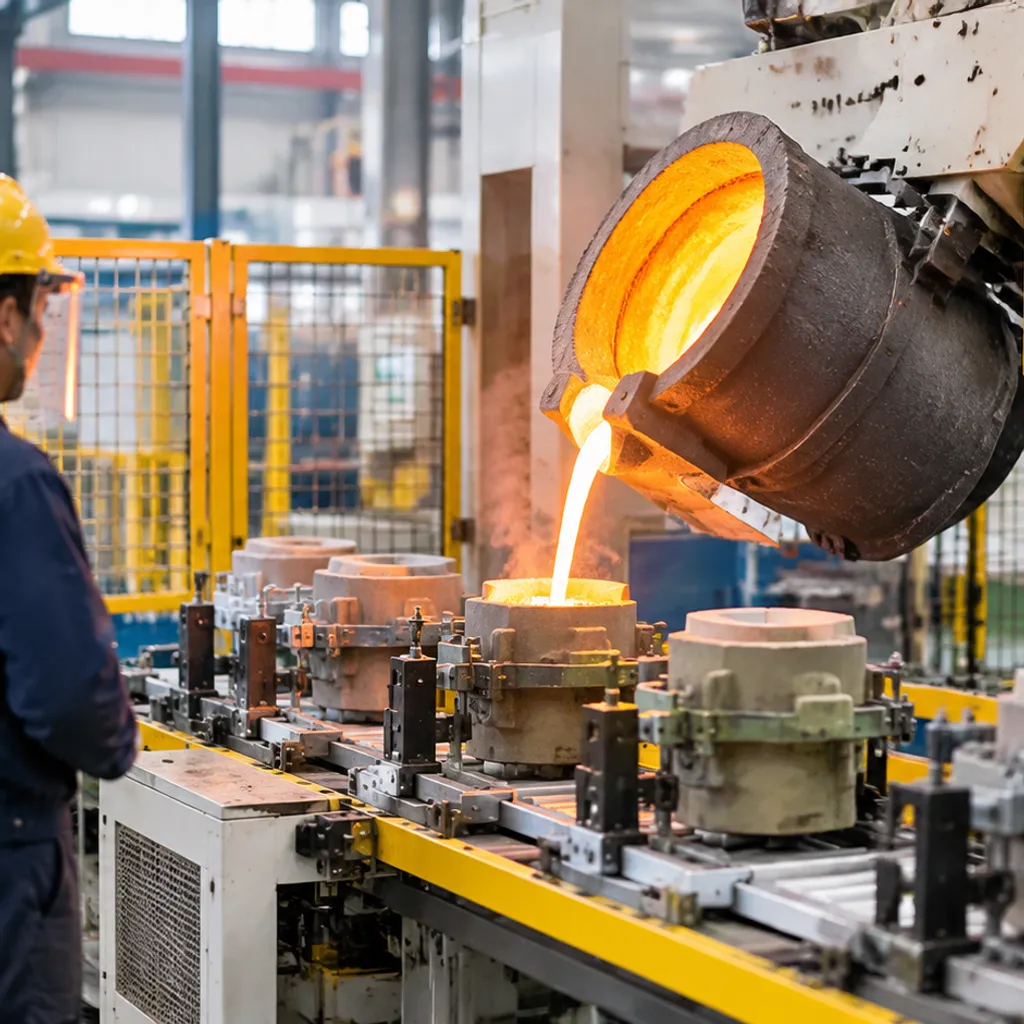
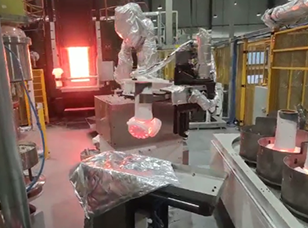
Pouring molten metal is the most critical and hazardous phase of precision casting. In our modern investment casting foundry equipment list, a dedicated pouring assist cell bridges the gap between operator safety and metallurgical accuracy. By mechanically supporting the ladle, this system eliminates manual fatigue, minimizes turbulence, and delivers repeatable fill rates every single cycle.
Ladle Handling Support for Consistent Pouring
Precise liquid metal delivery demands steady positioning and controlled tilt speeds to avoid air entrapment, cold shuts, and inclusion defects. Our pouring assist systems provide steady, ergonomic manipulation so operators can focus entirely on metal flow into the mold cup.
- Controlled Pour Rates: Smooth mechanical tilting prevents splashing and stabilizes liquid head pressure throughout the pour.
- Ergonomic Safety: The cell absorbs the full weight of the ladle and radiant heat, keeping operators out of high-risk splash zones.
- Repeatable Alignment: Fixed-pivot ladle positioning ensures the pour stream hits the sprue center consistently.
- Reduced Scrap Rates: Steady velocity minimizes oxide formation and turbulence-induced porosity.
Foundries upgrading to automated operations often leverage our capabilities as a robot integrator for custom investment casting cells to pair assisted ladle handling with precise mold positioning. Integrating dependable pouring assist machinery into your facility ensures every mold receives an identical fill volume at the target speed, protecting both casting integrity and your workforce.
Finishing cell
cutting, grinding assistance for cast parts
In any complete investment casting foundry equipment list, the finishing cell serves as the bridge between raw breakout and final inspection. Once the ceramic shell is knocked off, parts must be separated from the tree and dressed without altering critical part dimensions or causing thermal damage.
We utilize dedicated cutting and grinding assistance units to handle heavy gates and risers safely and accurately. Integrating automated and power-assisted tools keeps cycle times consistent while eliminating operator strain on tough alloys.
Key Equipment in Our Finishing Cell: Abrasive & Friction Cut-Off Saws: High-torque cutoff units designed to slice gates flush with the part surface, preventing micro-cracking in sensitive sections. Hydraulic Degating Presses: Fast-acting shearing tools that quickly snap gates off high-volume batches with clean separation lines. Manipulator-Assisted Belt Grinders: Heavy-duty grinders equipped with pneumatic or counterbalanced part-holding fixtures, giving operators precise control during edge blending and parting-line removal. Enclosed Grinding Booths: Dedicated dust-collection stations built to capture metal particulate and abrasive debris right at the source.
Our setup provides the rigidity required to protect tight tolerances across diverse production runs, from structural industrial hardware to critical components manufactured through our aluminum investment casting services for precision parts. Controlled grinding pressure prevents localized overheating, ensuring every finished casting retains its metallurgical integrity before entering secondary machining or surface treatment.
 English
 Russian
 German