
2026年10月30日
Learn how to set up a foundry with expert guidance on investment casting foundry setup equipment process layout and safety
Turnkey Investment Casting Foundry Setup: Comprehensive Solutions
Setting up a modern lost-wax precision casting facility requires seamless alignment between process engineering, equipment sourcing, and floor space allocation. When planning how to set up a foundry, I deliver end-to-end engineering packages tailored to specific alloys, output targets, and precision requirements. My turnkey solutions eliminate operational bottlenecks by matching every stage of production—from wax injection to final shot blasting—into a synchronized manufacturing flow.
Scalable Facility Tiers for Precision Investment Casting
Every project demands a configuration balanced for production volume, automation level, and capital expenditure. I structure my investment casting foundry setup programs into three scalable tiers:
- Tier 1: Pilot & Small-Batch Production (50–200 Tons/Year)
- Focus: Prototyping, custom aerospace, medical, and specialized industrial hardware.
- Core Setup: Manual dipping stations, standalone hydraulic wax injectors, medium-frequency melting, and batch-type dewaxing systems.
- Key Benefit: Low initial capital investment with maximum alloy and pattern flexibility.
- Tier 2: Medium-Scale Commercial Plant (300–800 Tons/Year)
- Focus: Automotive components, fluid control valves, pump impellers, and general machinery parts.
- Core Setup: Semi-automated robotic shell dipping arms, climate-controlled shell drying rooms, high-pressure steam autoclaves, and dedicated knock-out lines.
- Key Benefit: Balanced labor costs, consistent dimensional tolerances, and high operational uptime.
- Tier 3: High-Capacity Automated Facility (1,000+ Tons/Year)
- Focus: Continuous production runs for commercial, automotive, and export-grade casting markets.
- Core Setup: Fully integrated robotic slurry and sand-rain systems, automated continuous firing ovens, dual-crucible induction melting platforms, and integrated environmental dust and fume control.
- Key Benefit: Minimal unit labor costs, repeatable metallurgical purity, and strict defect-rate reduction across massive batches.
Complete Turnkey Execution Packages
A successful lost-wax casting plant setup demands more than isolated machine purchases. My turnkey delivery packages integrate:
- Site Assessment & Layout Design: Optimized material workflow to prevent cross-contamination between pattern assembly and pouring zones.
- Machinery Supply & Matching: Sourcing and integrating matched components across the entire production line.
- Process Engineering Transfer: Standardized slurry formulations, drying cycles, and pouring parameters.
- Site Installation & Commissioning: Supervised on-site mechanical alignment, electrical hookups, and trial pour validation.
Core Plant Modules and Equipment Specifications
When configuring an investment casting foundry setup, we organize the plant floor around distinct, synchronized modules. Each section handles a critical phase of the lost-wax process, ensuring smooth material flow, minimal handling damage, and steady production rates.
Wax Pattern Fabrication Workshop
The wax room serves as the starting point of precision casting. Temperature and humidity must stay stable to prevent pattern shrinkage or distortion.
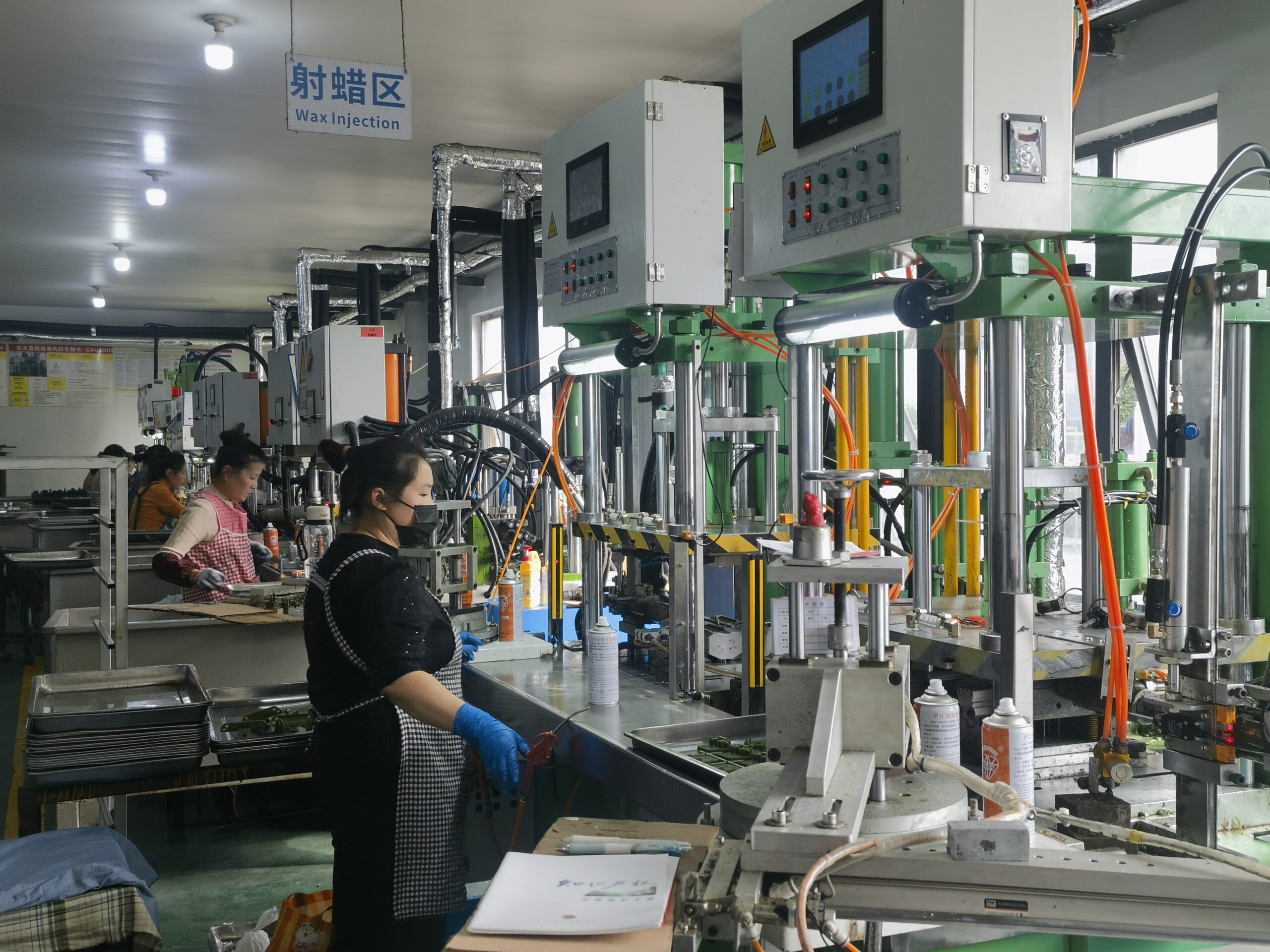
- Hydraulic wax injection machine: Delivers precise flow, temperature, and clamping pressure for consistent dimensional stability.
- Assembly stations: Temperature-controlled welding benches designed for joining wax patterns to runner systems.
- Wax conditioning system: Melts, filters, and removes water from reclaimed wax for reuse.
Ceramic Shell Molding System and Robotic Dipping
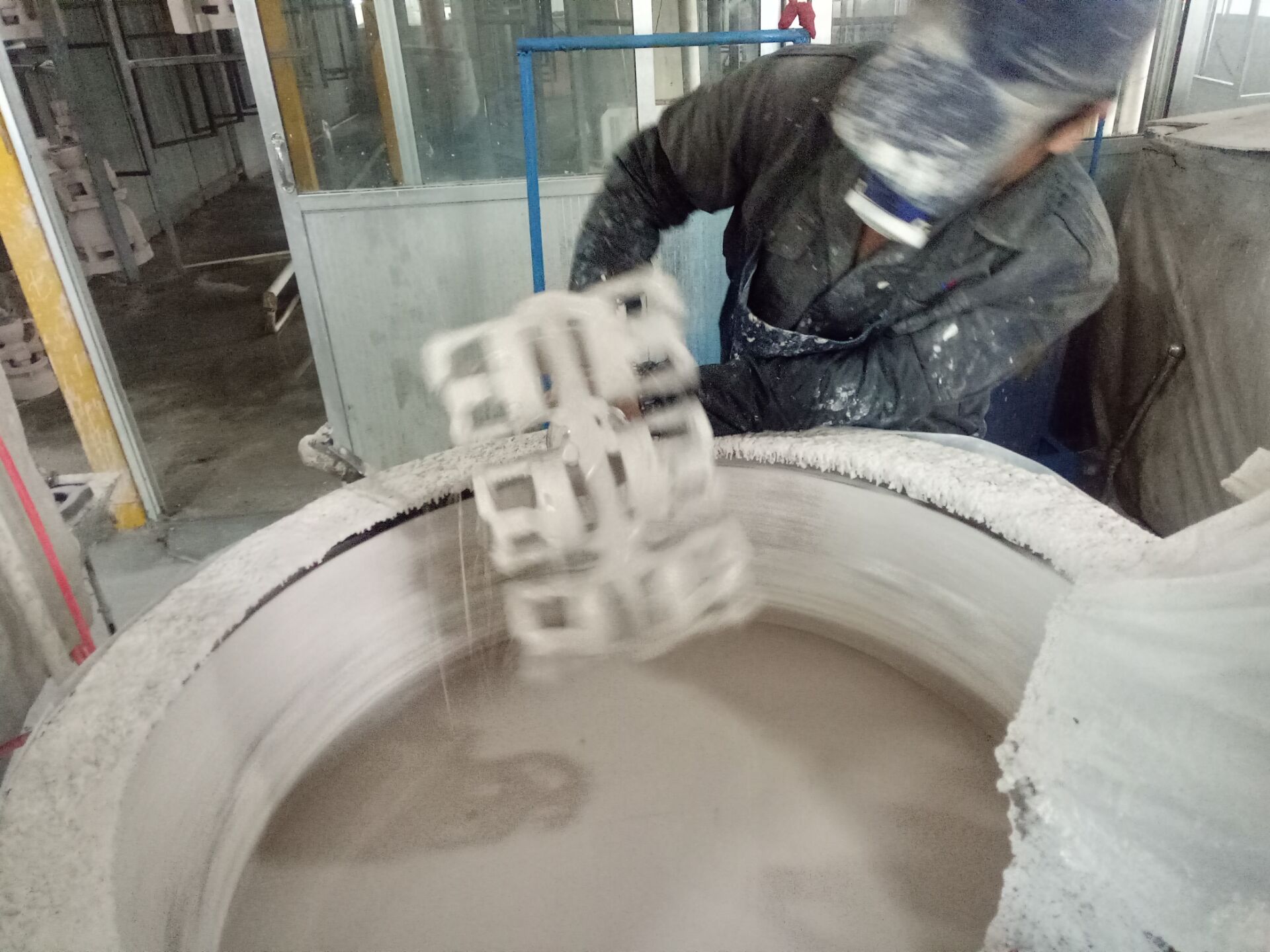
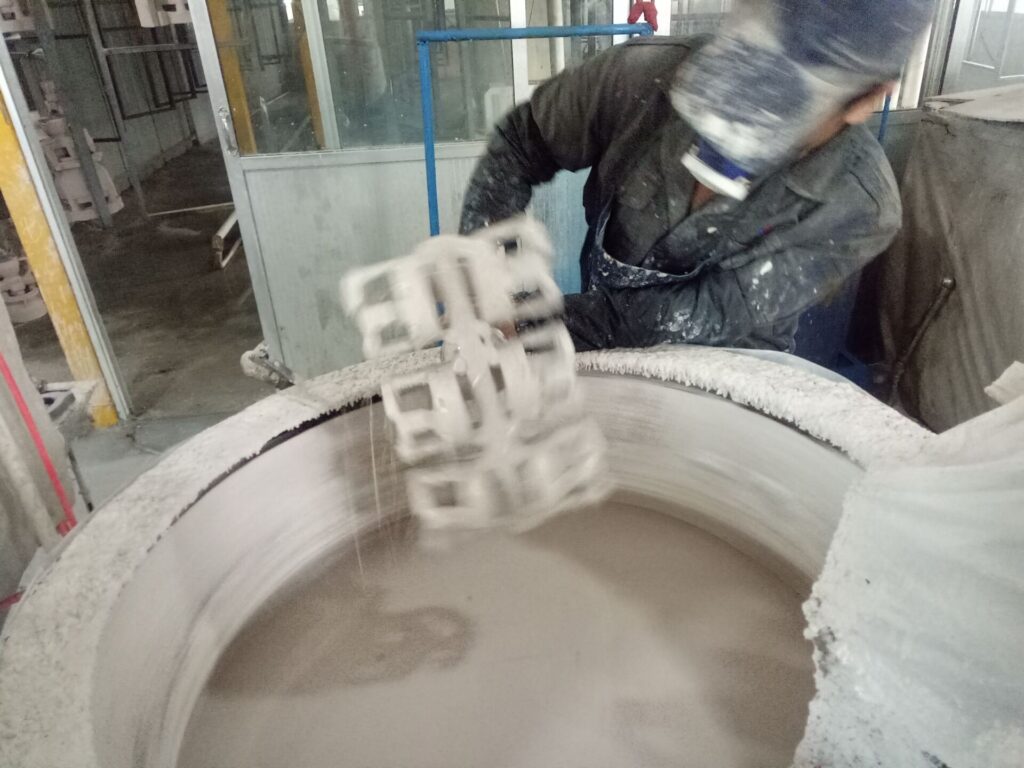
Shell integrity dictates casting quality and surface finish. Understanding the detailed steps of the ceramic shell investment casting process and benefits helps operators maintain clean slurries and uniform mold thickness.
- Robotic dipping arms: Automate slurry coating and sanding to maintain uniform layer thickness on complex trees.
- Slurry preparation tanks: Continuous rotation mixers that maintain optimal viscosity and prevent slurry sedimentation.
- Foundry sand rain machine & fluidized beds: Apply primary zircon and secondary mullite sands evenly.
- Ceramic shell drying room: Controlled environment featuring multi-stage air circulation, temperature regulation, and humidity controls to manage shell drying cycles without cracking.
Dewaxing and High-Temperature Shell Sintering Processes
Mold strength depends on rapid wax removal and thorough firing before metal contact.
- Steam dewaxing autoclave: Quick-pressurizing vessels that purge wax patterns within seconds to prevent thermal expansion cracks in the ceramic shell.
- Wax recovery tank: Separates water from evacuated wax to prep it for recycling.
- Shell firing furnace: A specialized shell firing furnace for steel and alloy investment casting brings molds up to 1,000°C–1,150°C, burning off residual wax and sintering ceramic grains to withstand liquid metal pressure.
| Module | Core Machinery | Key Process Controls |
|---|---|---|
| Wax Room | Hydraulic wax injectors, chiller lines | Temperature (20°C–22°C), wax injection pressure |
| Shell Room | Multi-axis dipping robots, sand rain machines | Slurry viscosity, drying humidity (45%–55%) |
| Dewaxing / Firing | Fast-acting steam autoclave, rotary/box burnout furnace | Dewaxing cycle speed, sintering soak temperature |
| Melting / Pouring | Medium frequency induction melting furnace | Melt chemistry, tapping temperature, deoxidation |
| Post-Processing | Pneumatic knock-out, cut-off saws, shot blasters | Surface cleanliness, gate stub grinding tolerance |
Induction Melting and Pouring Station Configurations
A reliable melt shop delivers uniform metallurgical structures and minimal gas porosity across alloy batches.
- Medium frequency induction melting furnace: Dual-crucible systems designed for high melt rates, efficient alloy transitions, and strict temperature control.
- Pouring ladles & transfer cranes: Geared, preheated pouring systems configured for smooth tilt pouring directly into hot, preheated shells.
- Spectrometer workstation: Positioned adjacent to the melt deck for rapid melt chemistry validation prior to tapping.
Shakeout, Cut-Off, and Finishing Section Logistics
After the poured molds cool, raw castings move to finishing to separate parts from runners.
- Pneumatic shell knock-out machines: Rapid vibration units that fracture and strip external ceramic shells without damaging cast components.
- Investment casting cut-off and grinding equipment: Heavy-duty abrasive wet/dry cut-off saws to detach parts cleanly from sprues, followed by belt grinders for gate flush removal.
- Hydraulic straightening presses: Realignment tooling to correct minor distortion on long or thin-walled components.
Heat Treatment and Surface Finishing Infrastructure
The final stage establishes final mechanical properties and client-specified cosmetic standards.
- Heat treatment furnaces: Batch-type vacuum or atmospheric normalizing, annealing, and solution-treating ovens paired with rapid quench tanks.
- Shot blasting machines: Tumble and hanger-type blast units using stainless steel shot or ceramic beads for clean, scale-free surface textures.
- Acid pickling & passivation baths: Neutralizing lines to treat stainless steel castings and maximize corrosion resistance.
Quality Assurance and Metallurgical Laboratory Setup
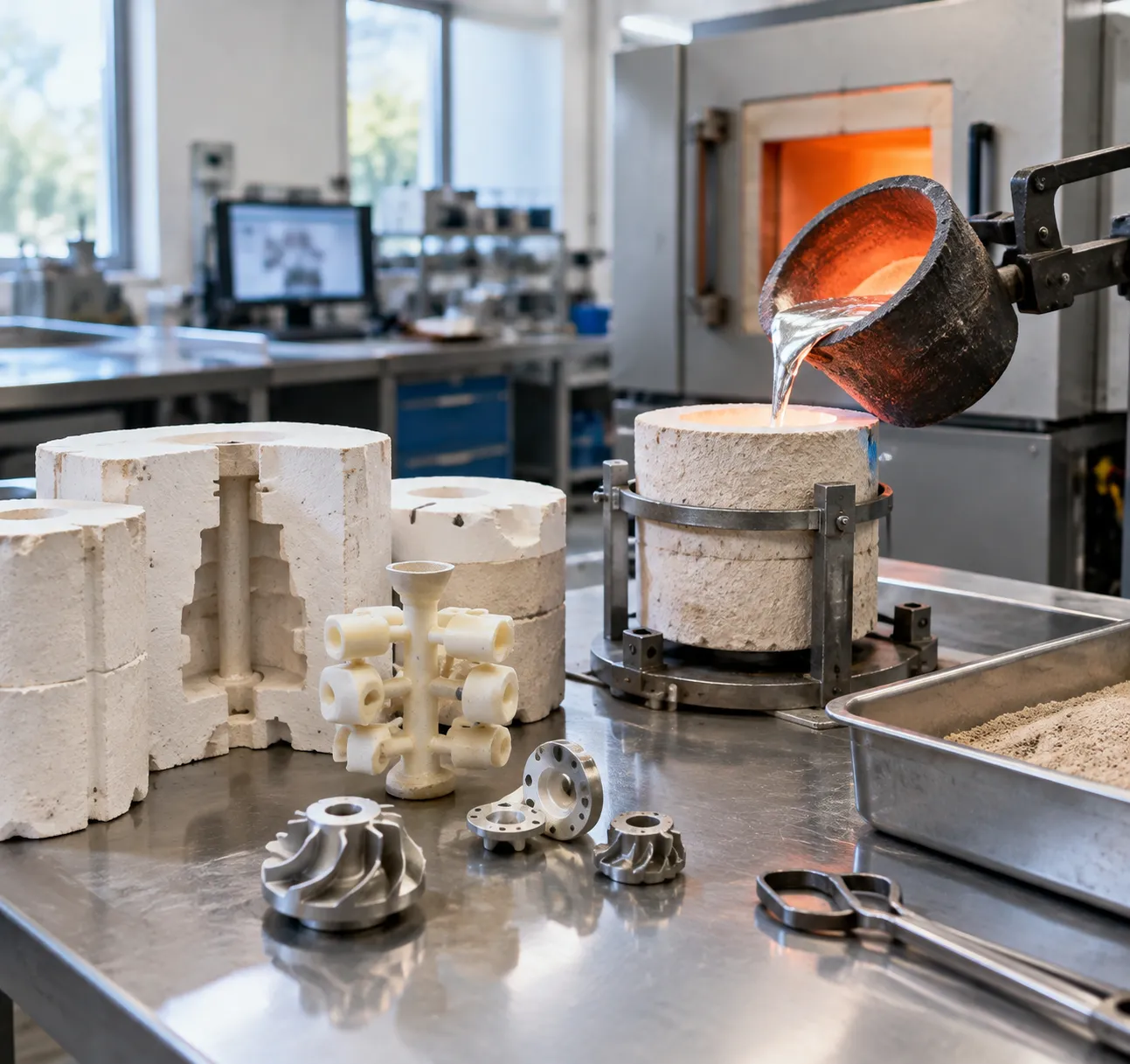
When planning an investment casting foundry setup, your quality control lab is just as vital as the melt deck. We build testing suites that catch defects before castings ship, ensuring every batch meets strict industrial criteria and verified casting quality standards for reliable metal parts.
Here is how we outfit an in-house metallurgy and inspection lab to guarantee defect-free production.
Chemistry, NDT, and Mechanical Testing Equipment
A reliable precision casting setup requires real-time alloy verification and structural integrity checks:
- Optical Emission Spectrometer (OES): Provides rapid chemical composition analysis directly from the furnace melt sample within minutes, preventing off-spec heats.
- Non-Destructive Testing (NDT) Stations: Includes standard Fluorescent Penetrant Inspection (FPI) lines to detect surface micro-cracks and industrial Digital Radiography (X-ray) cabinets for subsurface shrinkage and porosity detection.
- Mechanical Testing Suite: Equipped with a universal tensile testing machine, Charpy impact tester, and digital Brinell/Rockwell hardness testers to verify heat-treated mechanical properties.
- Metallographic Preparation: Automated cutting, mounting, polishing, and metallurgical microscopes to inspect grain size, inclusion levels, and phase distribution.
Dimensional Control and 3D Measurement Capabilities
Maintaining tight tolerances across complex lost-wax geometries requires dedicated metrology tools:
- Coordinate Measuring Machines (CMM): High-precision bridge CMMs handle automated dimensional verification of datum points, hole positions, and profile tolerances.
- Optical 3D Blue Light Scanners: Capture full-field surface scans in seconds, generating CAD-to-part color deviation maps to detect pattern shrinkage or core shift early.
- Dedicated Gauging & Height Masters: Customized go/no-go fixtures, air gauges, and digital height stands for fast inline checks on the production floor.
Facility Layout and Critical Utility Integration
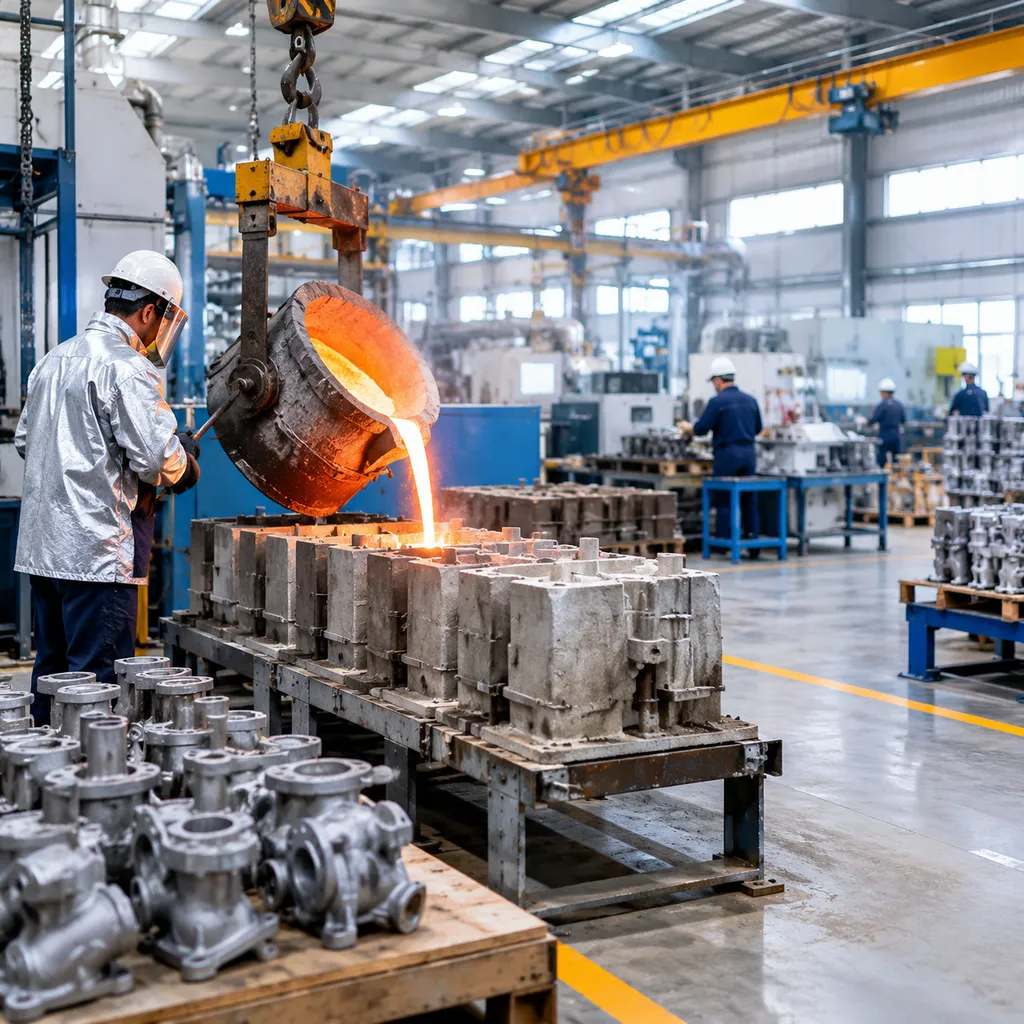
A successful investment casting foundry setup relies heavily on seamless operational logistics. When mapping out how to set up a foundry, I prioritize eliminating cross-traffic between clean zones—like pattern injection and shell building—and high-particulate processing zones. A well-engineered investment casting plant layout design keeps processes moving in a logical, single-direction path: from wax preparation to mold drying, pouring, cutoff, and finishing.
[Wax Tooling & Injection] ➔ [Climate-Controlled Shell Room] ➔ [Dewaxing & Pre-Heat] │ [NDT & Final Quality Inspection] ◄── [Shot Blasting & Grinding] ◄── [Pouring Line]
Optimizing Footprint for Production Flow
Every square foot in a lost-wax facility carries a recurring operating cost. We isolate process stages to protect product integrity and maintain steady cycle times:
- Clean Zones: Wax injection and shell rooms require strictly enclosed spaces with zero cross-contamination from airborne dust or sand particles.
- Thermal Zones: Dewaxing autoclaves, preheat ovens, and melting stations cluster together to shorten the travel path of red-hot ceramic shells and cut ambient heat dissipation.
- Mechanical Post-Processing: Cut-off stations, degating lines, and heat treatment are positioned with wide forklift alleys for smooth bin transport.
Electrical Distribution and Cooling Water Circulation
Thermal equipment consumes the bulk of plant utilities. When sizing plant infrastructure—especially for operations handling high-melt alloys like those highlighted in our casting stainless steel guide for buyers and engineers—we configure dedicated, reliable supply loops:
- Dual-Grid Power Distribution: Induction furnaces demand dedicated high-voltage transformers with transient surge protection, split away from sensitive electronic controls in the wax and lab modules.
- Closed-Loop Cooling Systems: We use closed-circuit cooling towers alongside heat exchangers. These deliver consistent cooling water temperatures for induction coils, vacuum equipment, and hydraulic press packs, avoiding scale build-up inside the piping.
- Back-Up Power Integration: Critical cooling pumps and emergency furnace drives link directly to automatic-start diesel generators to prevent catastrophic freeze-ups during an outage.
Compressed Air and Environmental Compliance Systems
Utility engineering must secure both equipment uptime and full regulatory compliance on the shop floor.
- Instrument-Quality Compressed Air: Pneumatic wax presses, robotic dipping manipulators, and automated slurry tanks require dry, oil-free air. We position screw compressors with twin desiccant air dryers to maintain an uninterrupted pressure profile.
- Foundry Dust Extraction and Fume Treatment: Dewaxing exhaust, shell burnout emissions, and grinding sparks need purpose-built abatement. We install multi-cyclone spark arrestors coupled with high-efficiency baghouse collectors to keep workspace air clean and clear environmental audits.
- Slurry and Wastewater Containment: Dedicated settling basins and acid-neutralization sumps handle shell room washdowns, safeguarding public sewer connections from refractory silicates and binder solids.
Engineering Execution and Project Roadmap
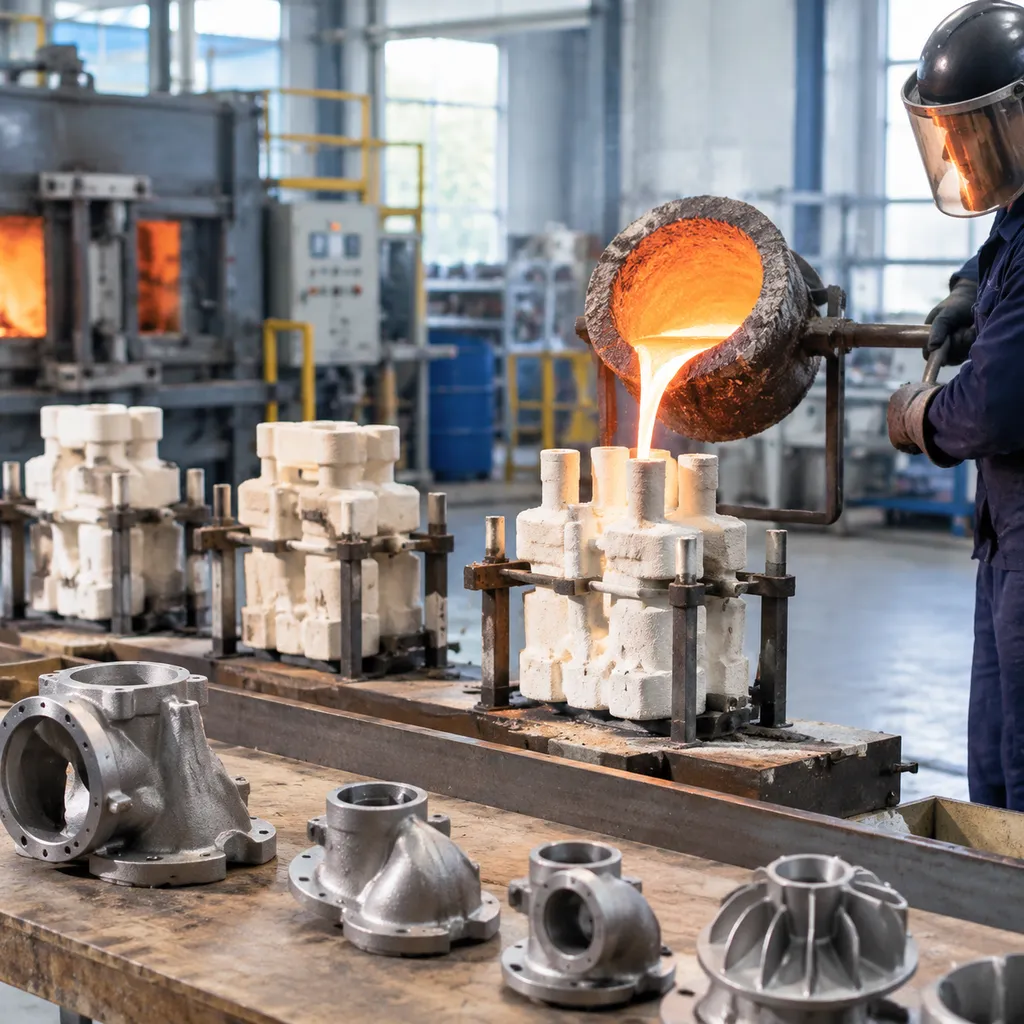
Executing a turnkey investment casting foundry setup requires a phased, disciplined engineering roadmap. We eliminate downtime risks, layout bottlenecks, and compliance delays by combining digital simulation with hands-on technical management across three defined milestones.
Feasibility & CAD/BIM Simulation ➔ Equipment Manufacturing & Site Installation ➔ Commissioning, Training & SOP Handoff
Feasibility Audits and CAD/BIM Plant Simulation
Every setup begins with rigorous metallurgical audits and plant modeling. We match your production volume targets with optimized civil and spatial designs:
- Site & Energy Audits: Evaluating available power grids, cooling water sources, environmental duct routes, and structural floor loads.
- 3D CAD/BIM Plant Simulation: Mapping out automated shell-building lines, pouring loops, and cut-off stations in a digital twin environment to verify workflow ergonomics.
- Engineering Validation: Leveraging precise cast prototypes and engineering to validate gating designs, shell drying parameters, and production tooling before placing machinery orders.
Equipment Manufacturing and Site Installation
Our machinery fabrication runs in parallel with site civil preparations to compress lead times:
- Equipment Build & Quality Control: Constructing hydraulic wax injectors, slurry mixers, robotic dipping cells, and induction melt stations built to international electrical standards.
- Site Preparation: Verifying concrete floor foundations, foundation pits, and ventilation trenches.
- Mechanical & Utility Assembly: Anchoring machines, wiring power distribution networks, and connecting compressed air, cooling water manifolds, and exhaust lines under direct engineering supervision.
Commissioning, Training, and Standard Operating Procedures (SOP)
We hand over a fully functioning facility ready for commercial casting runs, supported by complete foundry commissioning and process engineering:
- Dry & Hot Commissioning: Running cold trial cycles for wax and shell lines, followed by live trial melts to calibrate pyrometry, slurry viscosity, and dewaxing cycles.
- SOP Development: Establishing standard parameters for slurry maintenance, slurry testing schedules, burnout temperatures, and shakeout protocols.
- On-Site Workforce Training: Instructing operators and maintenance crews on safety procedures, automated controls, routine furnace lining care, and scrap-rate management.
Turnkey Technical Parameters Matrix
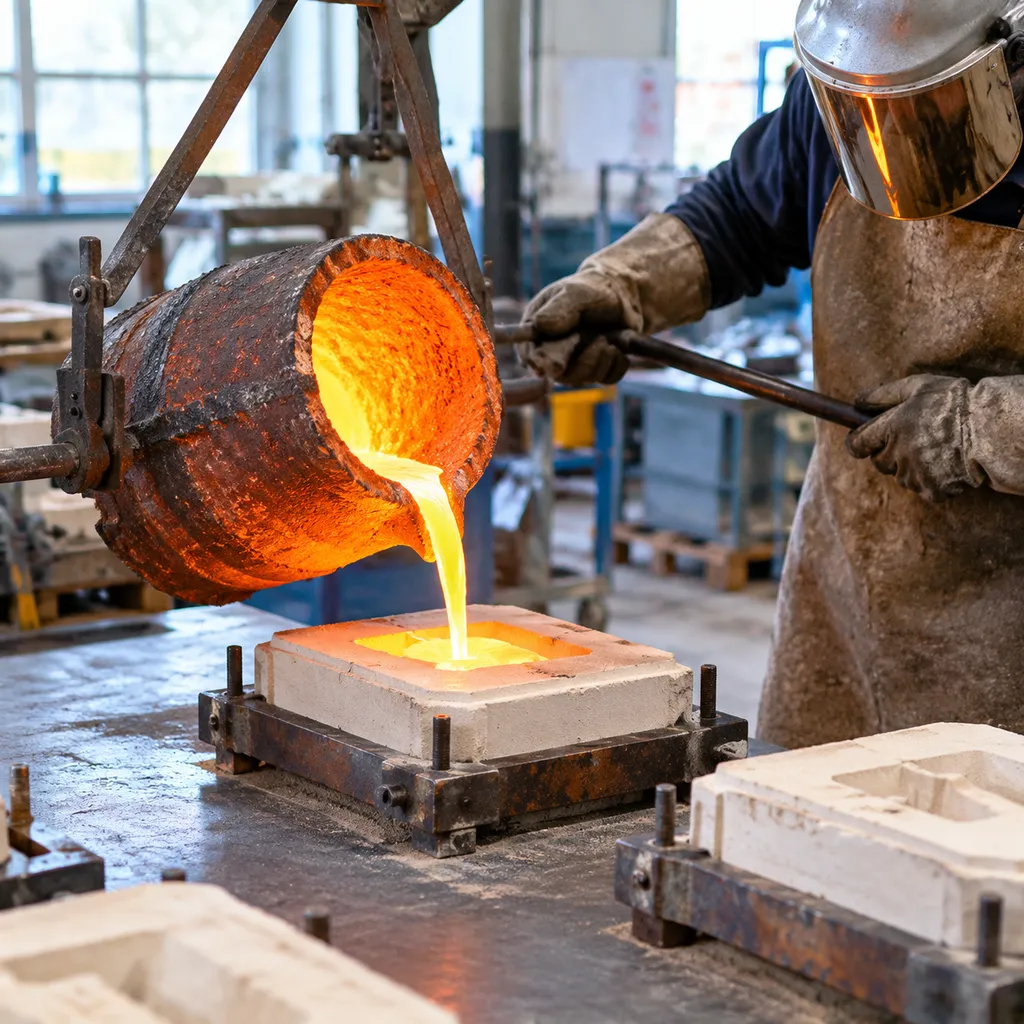
When planning an investment casting foundry setup, we tailor the facility footprint, machinery configurations, and utility ratings to match target throughput and alloy requirements. Understanding how to set up a foundry starts with aligning production volumes with the appropriate level of mechanization.
The matrix below compares key technical parameters across three scalable facility tiers for a modern lost-wax casting plant setup:
| Parameter | Compact / Pilot Line | Standard Commercial Line | High-Volume Automated Facility |
|---|---|---|---|
| Annual Casting Output | 100 – 300 Metric Tons | 500 – 1,200 Metric Tons | 2,000 – 5,000+ Metric Tons |
| Molding Technology | Manual silica sol dip stations | Robotic shell dipping & rain sanding | Fully automated multi-robot dipping lines |
| Automation Level | Semi-manual handling | Semi-automated shell handling | Integrated smart factory solutions with automated drying lines |
| Minimum Building Area | 1,200 – 2,000 m² | 3,500 – 6,000 m² | 8,000 – 15,000+ m² |
| Clear Ceiling Height | 5.5 – 6.0 m | 6.5 – 8.0 m | 8.5 – 10.0 m |
| Connected Power Load | 350 – 550 kVA | 800 – 1,600 kVA | 2,500 – 5,000+ kVA |
| Process Cooling Water | 40 – 80 m³/h closed loop | 120 – 250 m³/h closed loop | 350 – 600+ m³/h centralized cooling |
| Compressed Air Supply | 6 – 10 m³/min @ 0.7 MPa | 15 – 30 m³/min @ 0.8 MPa | 40 – 80 m³/min centralized ring main |
Key Utility & Sizing Considerations
- Layout Modularity: We designate isolated climate-controlled zones for wax pattern injection and ceramic shell drying to eliminate thermal expansion defects.
- Energy Management: Medium-frequency induction melting stations represent the highest energy draw; we balance substation loads to prevent peak-demand surcharges.
- Environmental Sizing: Dust collection networks and wet scrubbing systems scale directly with the number of cutoff, grinding, and sand rain workstations to guarantee compliant emissions.
Strategic Advantages of Partnering with Vastpe for Investment Casting Foundry Setup
Setting up a precision casting line requires more than simply buying standalone machinery. When planning an investment casting foundry setup, you need an engineering partner that ties process parameters directly to machinery performance from day one. We take complete ownership of your production targets, helping you navigate how to set up a foundry that stays profitable and consistent over decades of operation.
Integrating Foundry Metallurgy with Machine Engineering
Most equipment builders only understand mechanics, while foundry managers only understand metallurgy. We bridge that gap directly. We design our production cells around your specific alloy grades, mold geometries, and throughput goals.
- Process-Driven Machinery: Every unit on our investment casting foundry equipment list with automation is tuned for real-world metallurgical requirements, eliminating issues like premature shell cracking, shrinkage, and gas porosity.
- Balanced Production Lines: We size slurry tanks, dewaxing autoclaves, and melting capacities in direct proportion to your target cycle times, eliminating bottlenecks between the shell room and the pour floor.
- Turnkey Metallurgy Support: From alloy chemistry balancing to temperature-controlled drying curves, our engineering team ensures your shell-building and pouring systems match your required dimensional tolerance standards.
Energy Efficiency and Long-Term Spare Parts Support
Operating margins in a precision foundry depend heavily on energy consumption and machine uptime. We engineer our hardware to cut utility waste and back every installation with reliable, global aftermarket support.
- Optimized Thermal Systems: Our melting stations and burnout furnaces use high-grade refractory lining and smart power distribution to prevent heat loss, significantly reducing kilowatt-hour consumption per ton of poured metal.
- Reduced Shell Drying Cycles: We build humidity- and airflow-controlled drying rooms that run continuously with lower HVAC energy draw, stabilizing shell strength while speeding up mold turnaround.
- Standardized Wear Components: We stock all critical mechanical, pneumatic, and electrical wear parts for rapid global dispatch. Standardized components ensure simple local sourcing and rapid field replacements.
- Dedicated Process Engineering: Long after commissioning, our technical teams provide remote monitoring, preventative maintenance audits, and continuous cycle optimization to ensure your plant operates at peak yield.
Investment Casting Foundry Setup: Frequently Asked Questions
How do I select between Silica Sol and Water Glass processes?
Choosing the right binder depends on your target market, dimensional tolerance requirements, and target alloys:
- Silica sol investment casting for precision metal parts: Best suited for stainless steels, superalloys, and complex geometries requiring tight tolerances (CT4–CT6) and superior surface finishes (Ra 1.6–3.2 µm). It requires longer drying cycles and climate-controlled rooms, but it minimizes secondary machining.
- Water Glass process: Ideal for carbon steels and low-alloy commercial components where low capital cost and faster shell drying take priority over fine surface finish (typically Ra 6.3–12.5 µm).
When planning how to set up a foundry, we assess your product catalog and margin goals to determine whether a dedicated silica sol line or a hybrid layout delivers the best return on investment.
What is the typical lead time for a turnkey foundry setup?
A full-scope investment casting foundry setup generally requires 6 to 10 months from initial layout engineering to the first pour:
- Months 1–2: Engineering audits, civil foundation schematics, and custom equipment design.
- Months 3–5: Machinery manufacturing, including wax injection units, automated dipping systems, and melting platforms.
- Months 6–7: International logistics, site preparation, and foundation pouring.
- Months 8–9: On-site mechanical installation, utility hookups (electrical, water, compressed air), and cold testing.
- Month 10: Hot commissioning, trial batch runs, and staff training on operational standard operating procedures.
How does automation impact the rejection rate of high-precision parts?
Automated systems directly eliminate manual variation across the most sensitive production stages:
- Uniform Shell Thickness: Robotic shell-building systems ensure consistent slurry coverage and sand distribution, eliminating thin spots that cause shell cracking and metal runout.
- Controlled Dewaxing and Pouring: Automated handling into steam dewaxing autoclaves and standardized induction pour sequences prevent thermal shock and slag inclusions.
- Measurable Scrap Reduction: Implementing automated lines in a precision casting flundry setup typically cuts shell-related scrap rates from 8–12% down to below 3%, while drastically stabilizing mechanical properties across production runs.
 English
 Russian
 German