
2026年10月26日
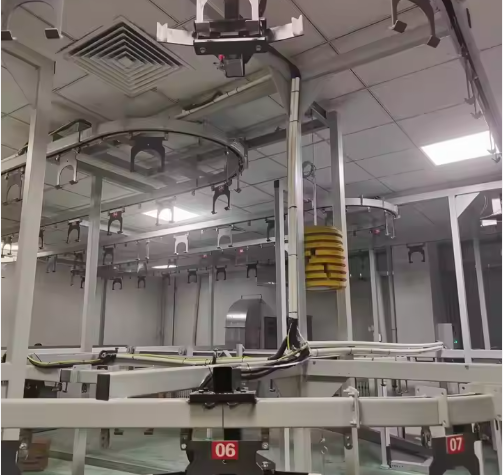
Automated eco friendly silica sol shell making for an efficient lost wax casting process with consistent quality and lower labor costs
In the grand landscape of modern manufacturing, few techniques blend ancient craft with cutting-edge technology as seamlessly as Lost Wax Casting—also known globally as Investment Casting. From the intricate bronze artifacts of ancient civilizations to the high-pressure turbine blades in modern jet engines, biocompatible orthopedic implants, and high-performance automotive components, lost wax casting remains an indispensable process for producing complex, high-precision metal parts.
In this article, we explore the step-by-step methodology of the investment casting process and highlight the core machinery that powers today’s modern precision foundries.
1. What is Lost Wax Casting?
The core principle behind lost wax casting is elegantly straightforward: A disposable pattern made of an easily fusible material (such as paraffin, synthetic wax, or resin) is encapsulated in a ceramic shell. Once the shell hardens, the wax inside is melted away, leaving an empty, highly accurate mold cavity into which molten metal is poured.
Because the original pattern is "lost" or consumed during the process to give way to the final metal component, it gained the name Lost Wax Casting. Industry professionals also refer to it as Investment Casting because the pattern is "invested" (surrounded) by a refractory slurry to form the mold.
2. Step-by-Step Breakdown of the Investment Casting Process
Creating a defect-free precision casting involves a sequence of meticulous steps. Below is the typical seven-stage workflow in modern production:
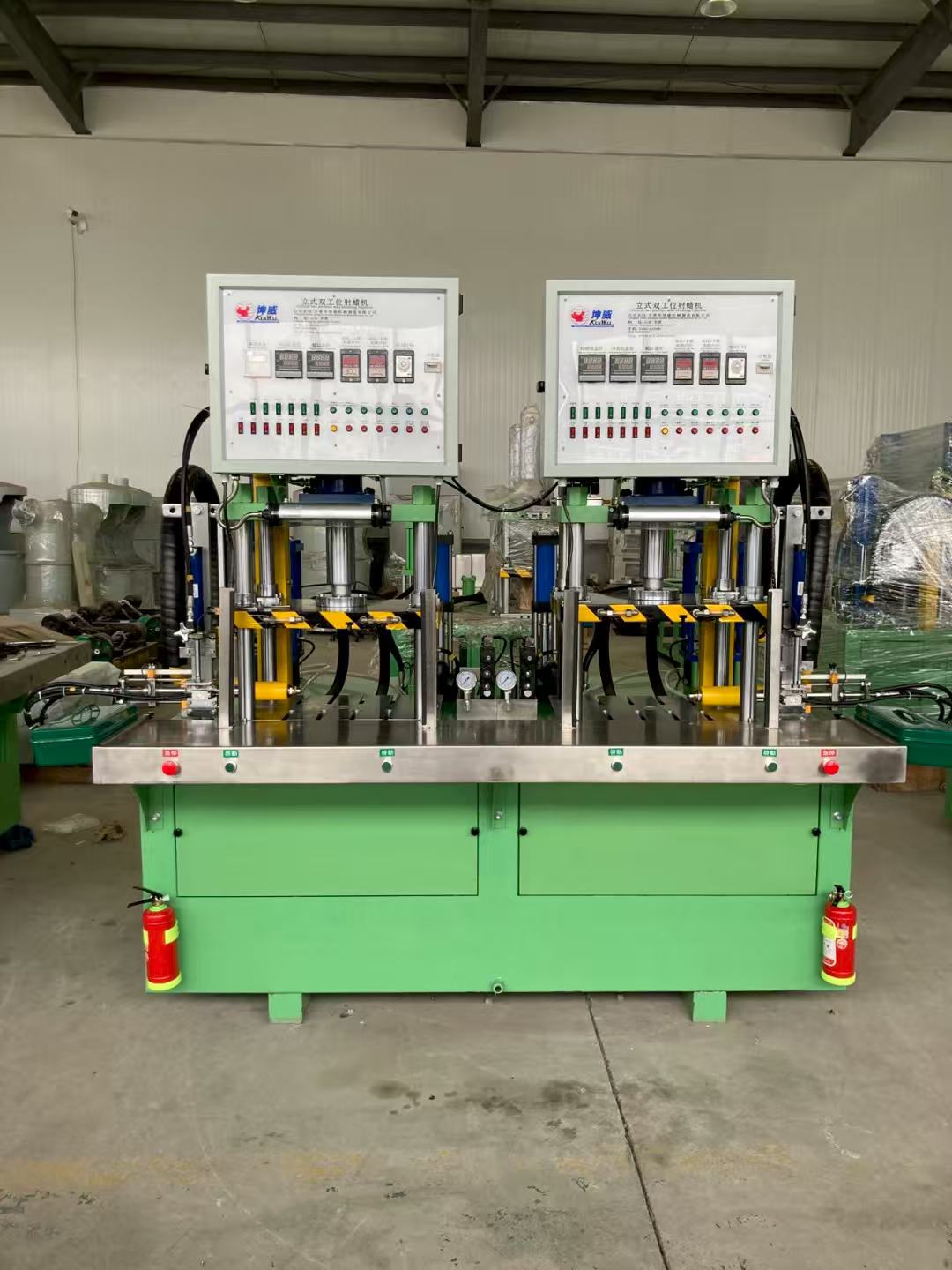
Step 1: Wax Pattern Injection (Pattern Making)
The journey begins with creating a wax pattern. Molten or semi-solid wax is injected under precise pressure into a metal die (tooling). Once cooled, the wax pattern is extracted—representing an exact replica of the final metal component.
Step 2: Tree Assembly (Gating System)
To maximize production efficiency, individual wax patterns are attached to a central wax runner/sprue using heat welding. This assembly resembles a tree bearing fruit, commonly referred to as a wax tree.
Step 3: Shell Building (Investing)
The assembled wax tree undergoes a repeated dip-and-stucco process. It is first dipped into a liquid ceramic slurry (made of refractory powders and binders) and then coated with coarse ceramic sand (stucco). This process is repeated 5 to 7 times until a thick, durable ceramic shell surrounds the wax tree. Each layer must dry under controlled temperature and humidity.
Step 4: Dewaxing
Once the ceramic shell is completely dry, the internal wax must be evacuated. The shell is placed inside a dewaxing autoclave, where high-pressure steam rapidly melts and flushes out the wax within minutes without causing the ceramic shell to crack.
Step 5: Shell Roasting (Sintering)
After dewaxing, residual wax or moisture remains inside the shell. The empty ceramic shell is fired in a high-temperature furnace at temperatures between 800°C and 1100°C. This step burns off any organic traces, hardens the ceramic material, and preheats the mold to prevent thermal shock during metal pouring.
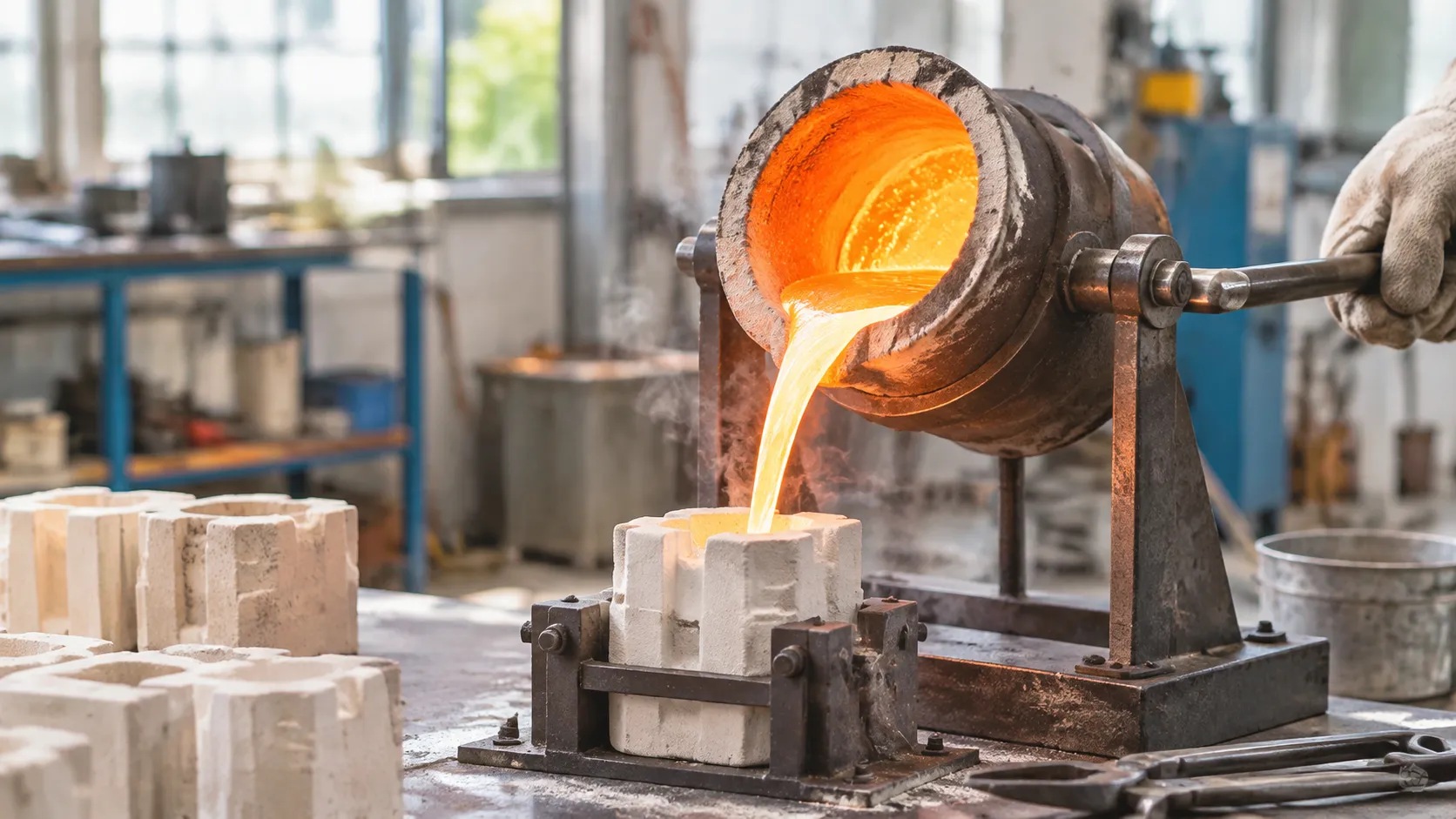
Step 6: Melting & Pouring
Molten metal—ranging from stainless steel and carbon steel to titanium and nickel-based superalloys—is poured into the preheated ceramic mold under atmospheric conditions or inside a vacuum chamber.
Step 7: Knockout & Finishing
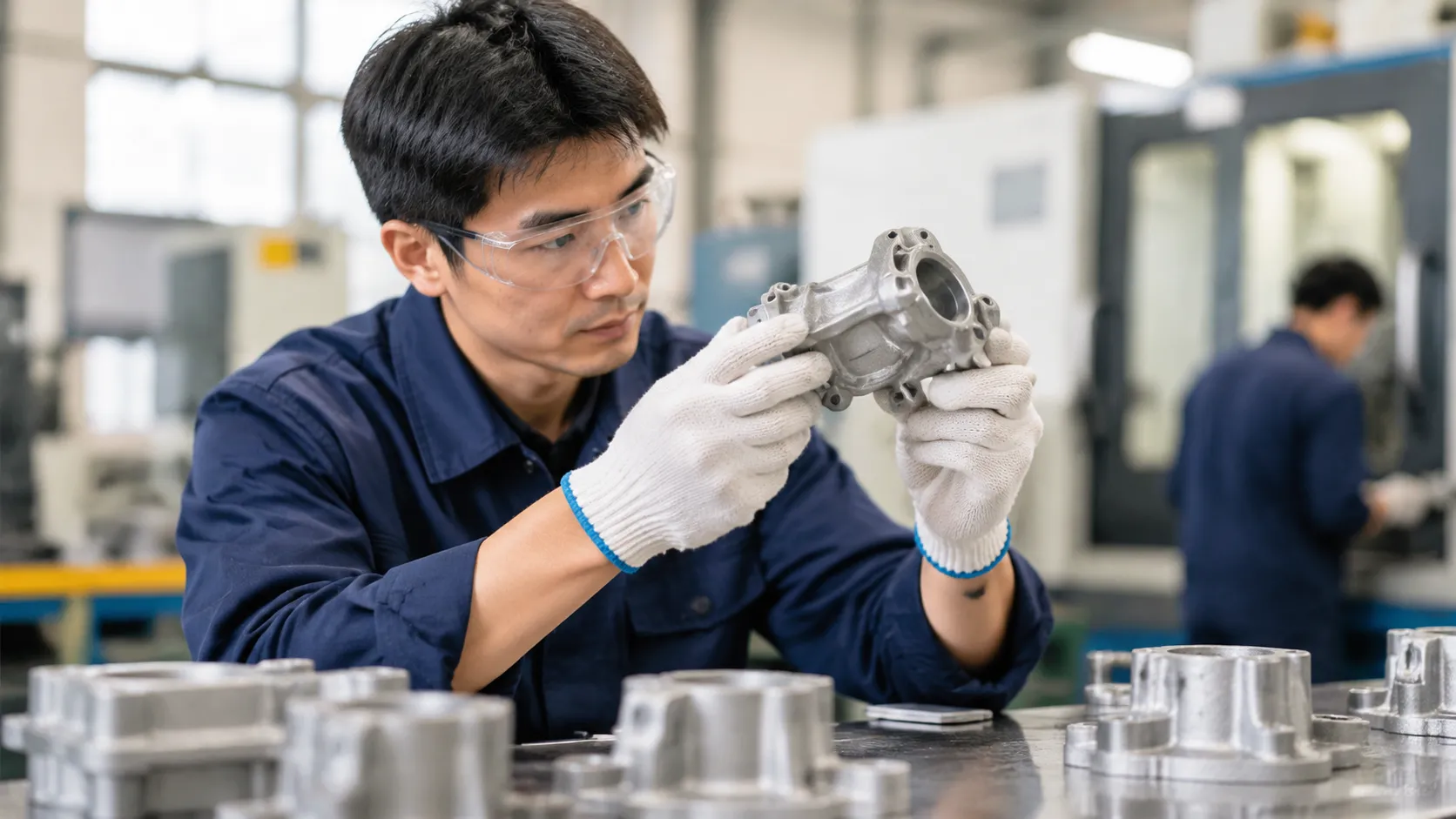
Once the metal solidifies and cools, the ceramic shell is broken away using mechanical vibrators or waterjets. The individual metal parts are cut off from the central tree, followed by grinding, heat treatment, surface finishing (such as shot blasting or pickling), and non-destructive testing (NDT).
3. Core Equipment in Modern Precision Foundries
High-precision components demand high-precision equipment. Today’s investment casting foundries rely on advanced machinery to ensure repeatability and efficiency:
| Equipment Category | Main Function | Key Features & Advantages |
| Wax Injection Machines | Injects wax into metal dies to form patterns. | Features precise temperature/pressure controls, vacuum degassing, and cylinder-free wax delivery to eliminate air bubbles and shrinkage. |
| Robotic Shelling Lines | Automates ceramic slurry dipping and sand stuccoing. | Multi-axis industrial robots deliver consistent shell thickness, eliminating human error and improving shell breathability. |
| Steam Dewaxing Autoclaves | Rapidly removes wax from ceramic shells using steam. | Achieves fast cycle times, minimizes shell thermal expansion cracking, and recovers up to 95%+ of wax for reuse. |
| High-Temp Sintering Furnaces | Roasts and sinters ceramic shells before pouring. | Equipped with multi-zone PLC temperature control to ensure complete binder burnout and uniform preheating. |
| Vacuum Induction Melting (VIM) Furnaces | Melts and pours reactive alloys in a vacuum environment. | Essential for aerospace superalloys and titanium parts to prevent oxidation, inclusions, and gas porosity. |
4. Key Advantages and Industrial Applications
Why Choose Lost Wax Casting?
- Unmatched Geometric Freedom: Capable of producing intricate internal channels, thin walls, and complex contours that are difficult or impossible to machine.
- Superior Surface Finish & Tolerances: Achieves smooth surface finishes ($Ra\ 1.6 - 3.2\,\mu m$) and tight dimensional tolerances, enabling Near-Net Shape (NNS) manufacturing that dramatically reduces post-machining costs.
- Versatile Material Selection: Compatible with virtually any castable alloy, including stainless steel, tool steel, aluminum, bronze, titanium, and cobalt-base superalloys.
Primary Industry Applications
- Aerospace & Defense: Turbine blades, guide vanes, structural brackets, and fuel nozzles.
- Medical Technology: Artificial hip/knee joint prostheses and surgical instruments.
- Automotive & Transportation: Turbocharger wheels, exhaust manifolds, and fuel injection components.
- General Engineering: Pump impellers, valve bodies, and hardware fittings.
Conclusion
Lost wax casting bridges the gap between historical craftsmanship and advanced industrial engineering. As industries push toward lighter, stronger, and more intricate components, investment casting continues to evolve with automation, smart sensors, and advanced ceramic technology. Supported by state-of-the-art machinery like automated wax injectors and robotic shelling systems, this timeless process remains at the heart of modern manufacturing.
 English
 Russian
 German