2026年10月29日
Explore 3D printed wax patterns and rapid prototyping for investment casting with low ash burnout complex designs and tooling free production
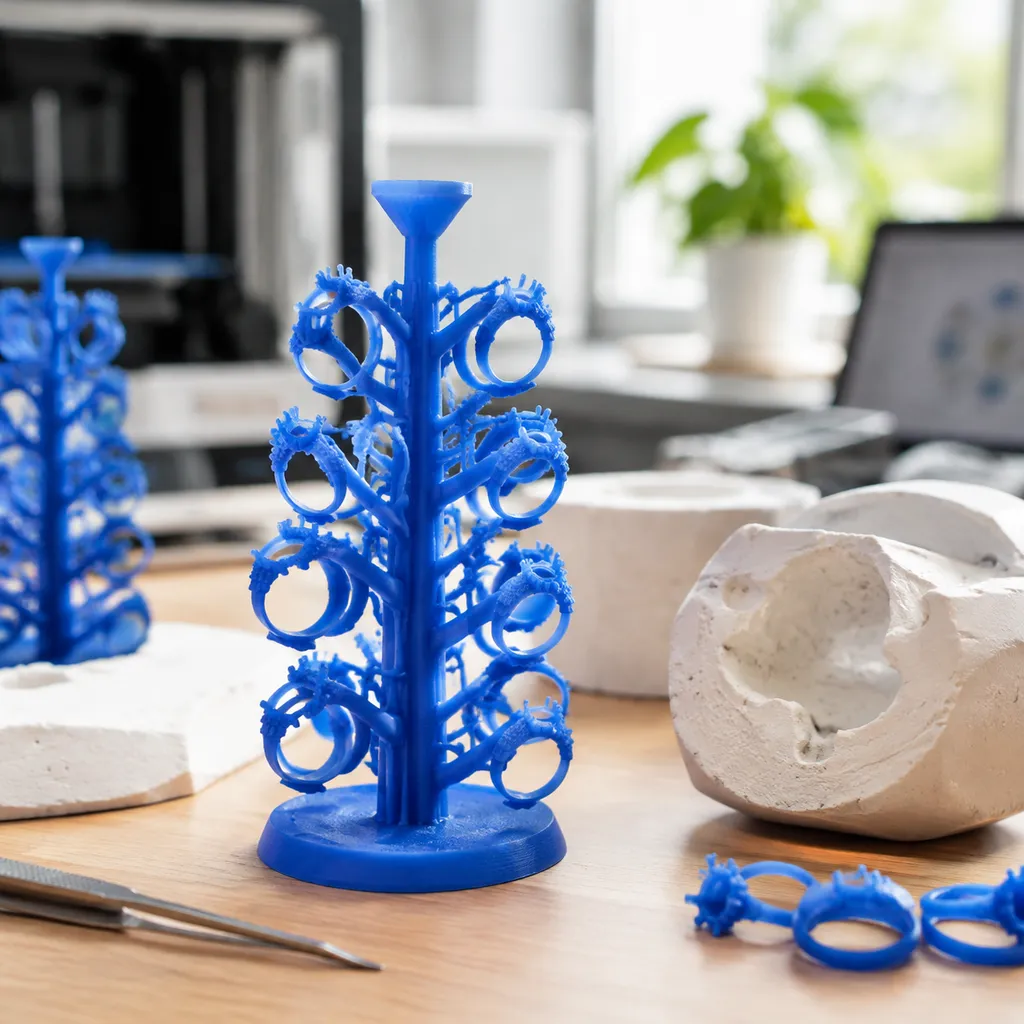
Replace Traditional Tooling with Rapid Pattern Production
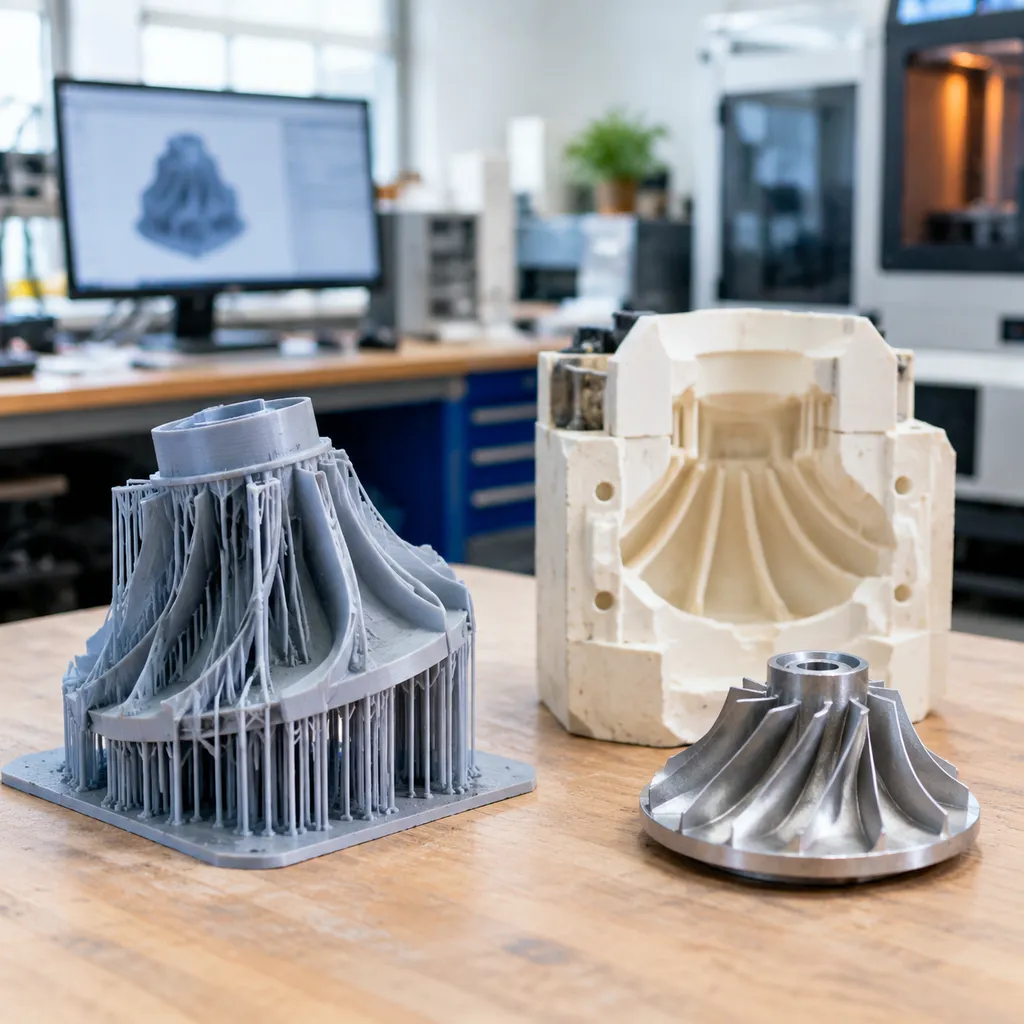
In modern investment casting, the reliance on traditional metal injection molds is a significant bottleneck. By leveraging 3D printed wax patterns and rapid prototyping for investment casting, manufacturers can bypass the high costs and logistical friction associated with traditional tooling. We enable foundries to transition directly from a digital CAD file to a castable pattern, ensuring speed and design flexibility without the need for expensive steel molds.
Why Transition to Tool-less Manufacturing?
Traditional mold making is a capital-intensive process that can delay production by weeks or months. Our additive manufacturing solutions provide a streamlined alternative, offering the following operational advantages:
| Feature | Traditional Tooling | VAST Direct Wax Printing |
|---|---|---|
| Lead Time | 6–8 Weeks | 48 Hours |
| Initial Cost | High (Design & Machining) | Low (Per-pattern cost) |
| Design Changes | Requires New Tooling | Instant CAD Updates |
| Tooling Required | Yes (Metal Molds) | No (Direct Printing) |
Competitive Advantages of Rapid Pattern Production
- Drastic Lead Time Reduction: Move from multi-week wait times for steel molds to 48-hour delivery of functional wax patterns.
- Zero Tooling Investment: Eliminate the high upfront engineering and machining costs of hard tooling.
- Design Freedom: Execute complex geometries, intricate internal channels, and delicate undercuts that are physically impossible to pull from a standard injection mold.
- Agile Iteration: Modify designs instantly between prototype runs, allowing for rapid engineering refinement before committing to high-volume production.
Why Leading Foundries Choose Vastpe’s Wax Printing
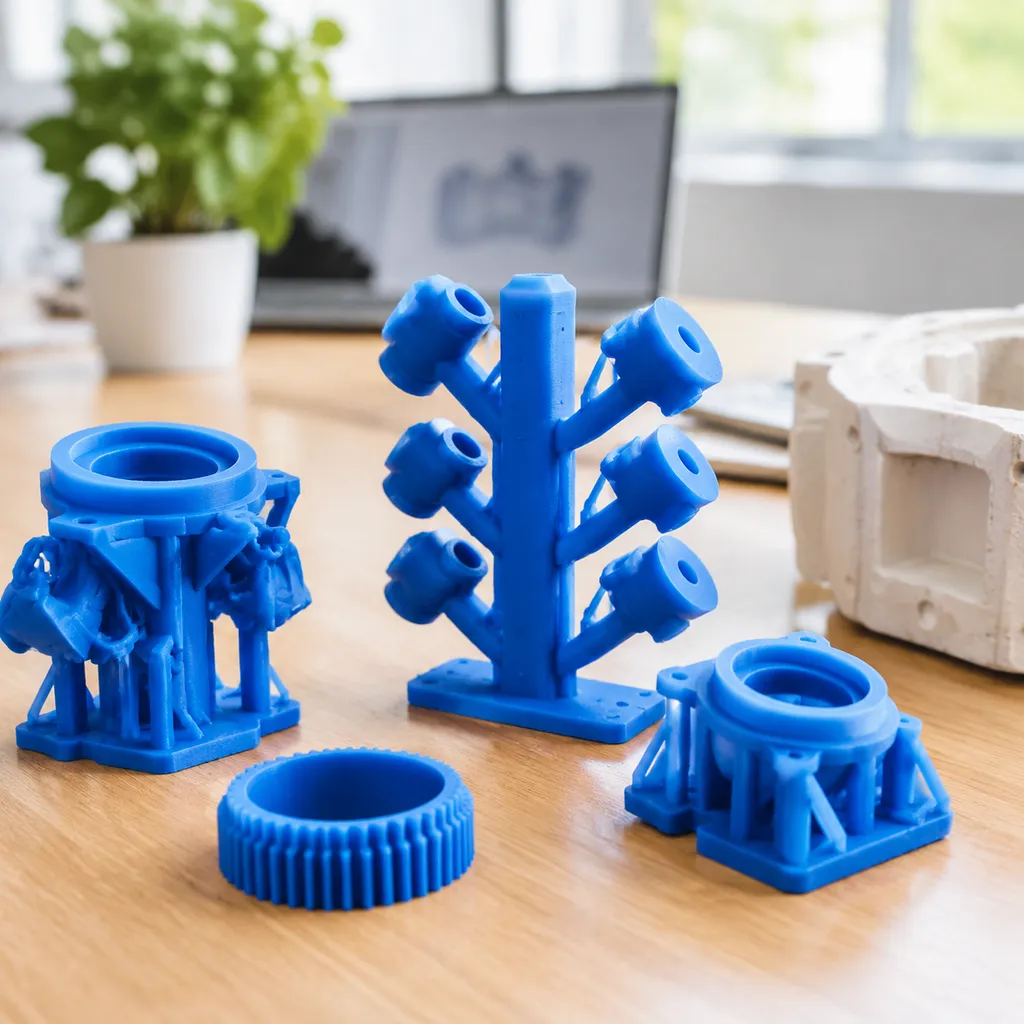
Foundries choose VAST for 3D printed wax patterns because our process directly addresses the technical demands of investment casting. We prioritize material properties that ensure foundry-ready quality and consistent output for high-quality investment casting parts for precision manufacturing.
Our specialized wax materials are engineered to bridge the gap between additive manufacturing and traditional foundry workflows.
Key Technical Advantages
| Feature | Foundry Benefit |
|---|---|
| Low Ash Content | Ensures clean burnouts with zero residue in the ceramic shell. |
| Surface Finish | Reduces time-consuming post-processing and manual finishing. |
| Thermal Stability | Minimizes expansion risks during the high-heat dewaxing cycle. |
| Geometry Freedom | Supports undercuts and complex details impossible via metal molds. |
| Dimensional Control | Maintains strict tolerances, even for thin-walled components. |
By utilizing direct wax printing, foundries achieve the design freedom to produce intricate, high-performance parts without the constraints of traditional tooling. This approach allows us to deliver investment and precision casting services for metal parts that meet the most rigorous industrial standards for reliability and accuracy.
Technical Capabilities and Casting Materials
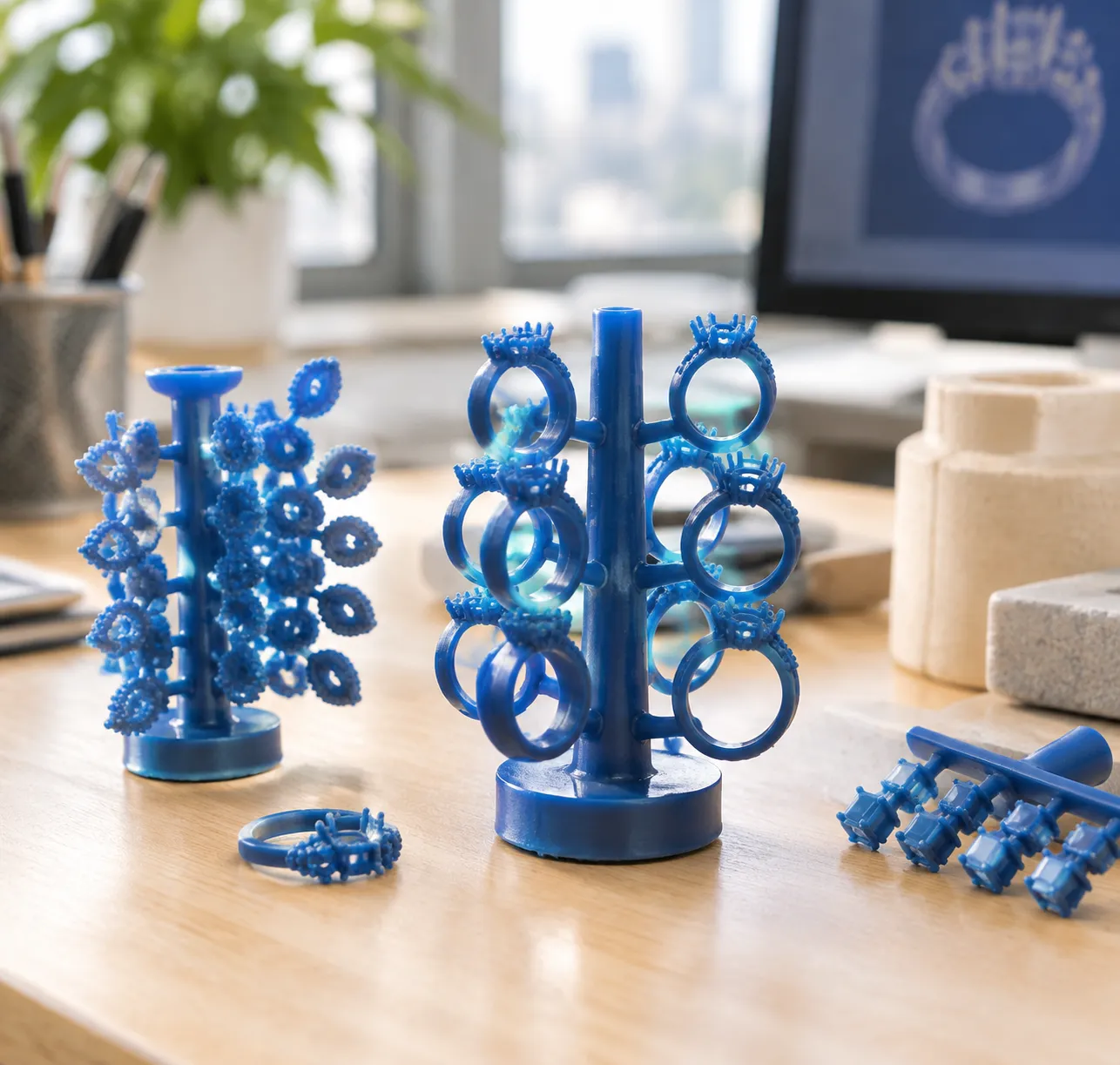
At VAST, we prioritize material science to ensure our 3D printed wax patterns integrate seamlessly into your existing investment casting workflow. We utilize proprietary materials engineered specifically for high-fidelity burnout, minimizing the risk of shell cracking while maintaining structural integrity during the ceramic coating process. Understanding metal investment casting process tolerances and materials is critical to selecting the right additive manufacturing medium for your specific application.
Material Performance Comparison
Our technical approach centers on balancing thermal expansion with clean burnout properties to deliver high-quality castable patterns.
| Feature | VAST Proprietary Wax | Standard Castable Resins |
|---|---|---|
| Burnout Characteristics | Low ash, clean residue-free | Higher potential for ash content |
| Thermal Expansion | Minimal (Low stress on shells) | Higher (Requires careful shell design) |
| Surface Finish | Smooth, superior Ra values | Requires secondary polishing |
| Geometry Complexity | Excellent for thin-walled parts | Moderate |
Key Technical Standards
- Dimensional Accuracy: We maintain tight tolerances required for complex aerospace and medical components, ensuring that your final metal part matches your digital CAD data.
- Surface Finish: Our processes achieve low Ra values, significantly reducing the labor-intensive post-processing steps typically associated with additive manufacturing.
- Scalability: Our build chambers are optimized for both small, intricate patterns and large-scale industrial components, providing the flexibility needed for rapid prototyping for investment casting runs.
- Burnout Stability: Our materials are specifically formulated to withstand the thermal cycles of standard foundry dewaxing autoclaves, ensuring no deformation occurs prior to the metal pour.
The VAST Workflow: From CAD to Casted Part
At VAST, we have streamlined the transition from digital model to finished component, ensuring your 3D printed wax patterns meet the rigorous demands of the investment casting process. Our workflow is designed for maximum efficiency and foundry-ready results:
- Step 1: CAD Review and DFM Optimization: We begin by analyzing your CAD files. Our engineering team performs Design for Manufacturing (DFM) optimization to ensure the geometry is perfectly suited for high-resolution printing and subsequent ceramic shell casting. This proactive step minimizes potential defects and ensures consistency.
- Step 2: High-Precision 3D Printing: Utilizing specialized wax materials, we produce your patterns using high-resolution additive manufacturing. This process captures intricate details and complex undercuts that traditional metal injection tooling simply cannot replicate.
- Step 3: Quality Assurance and Pattern Inspection: Every printed pattern undergoes a strict inspection process. We verify dimensional accuracy and surface integrity to ensure they align with ISO 8062 accuracy standards, guaranteeing that your patterns perform reliably during the burnout and metal pouring phases.
- Step 4: Rapid Logistics and Foundry Shipping: Once the patterns pass our quality gates, they are carefully packaged and shipped. By bypassing the months-long tooling phase, we deliver castable patterns directly to your facility or foundry, drastically reducing your overall project lead times.
Industries Benefiting from 3D Printed Patterns
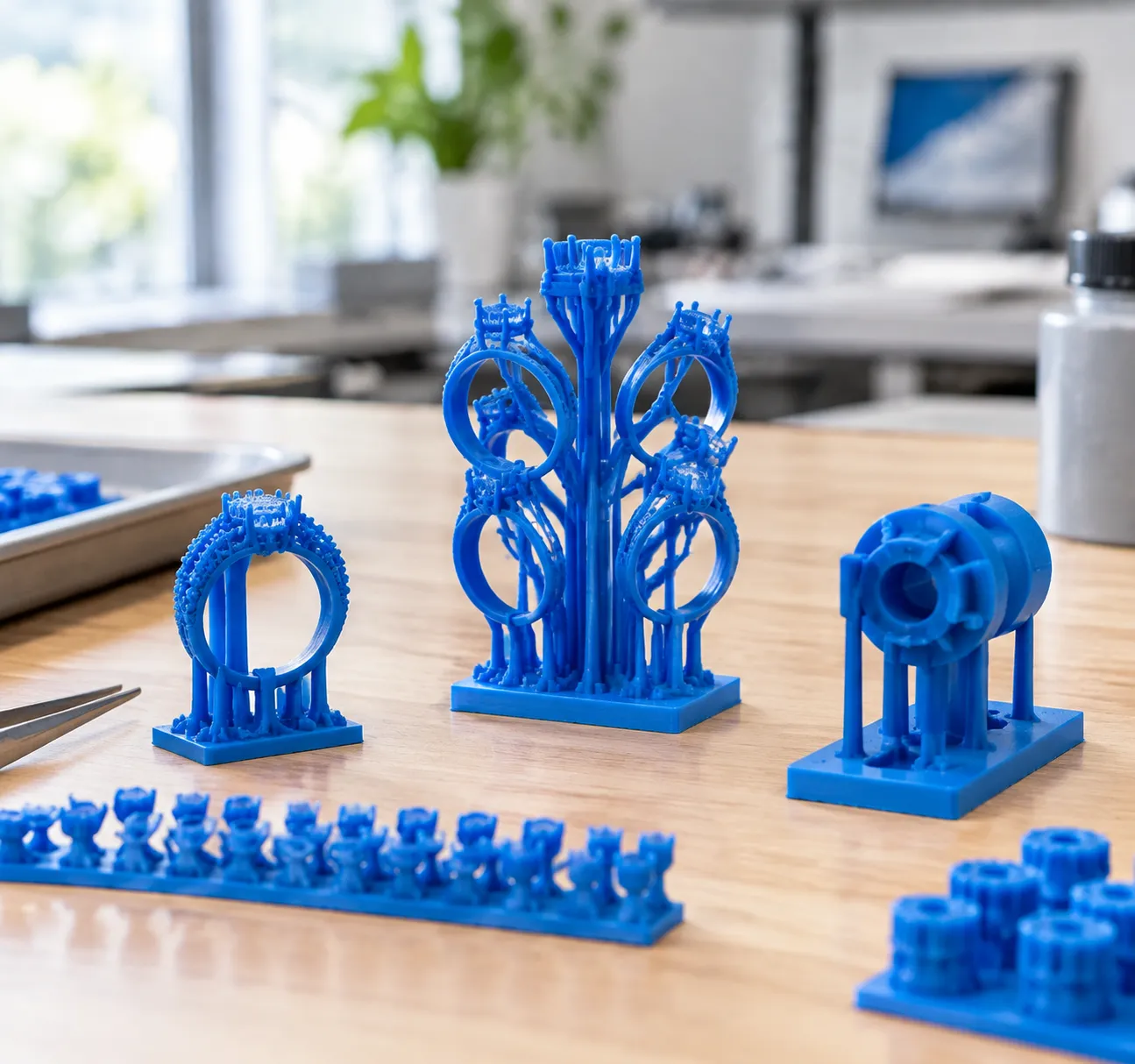
Our 3D printed wax patterns and rapid prototyping for investment casting serve a diverse range of sectors where precision and speed are non-negotiable. By leveraging additive manufacturing, we support engineers in meeting rigorous industry standards without the bottleneck of traditional tooling.
- Aerospace Component Manufacturing: We provide precision aerospace casting components that require high dimensional accuracy, internal cooling channels, and lightweight geometry that is often impossible to achieve through traditional mold-making.
- Automotive Rapid Prototyping: Accelerate vehicle development cycles by transitioning from digital designs to cast metal parts in days. Our patterns are ideal for functional testing of engine components and structural prototypes.
- Medical Implant Production: Our high-resolution wax printing ensures the complex, patient-specific geometries required for orthopedic implants and surgical instruments are cast with medical-grade precision.
- Custom Jewelry and Artistic Casting: Creators utilize our technology to bypass traditional wax carving, allowing for intricate, repeatable designs that maintain perfect detail from the digital file to the final cast metal piece.
Frequently Asked Questions (FAQs)
- Does the material leave ash residue during the burnout process? Our specialized wax materials are engineered specifically for investment casting to ensure clean, complete burnout. By minimizing ash content, we prevent defects in the final metal casting, ensuring high-quality surface integrity that meets rigorous foundry standards.
- How do 3D printed patterns compare to traditional injection-molded wax? While injection molding is effective for long production runs, it requires expensive, time-consuming steel tooling. Direct wax printing offers a tooling-free alternative, allowing for rapid iteration and the production of complex geometries—such as internal undercuts—that are physically impossible to achieve with traditional molds.
- What file formats are required for an accurate casting quote? To provide a precise quote for 3D printed wax patterns, we primarily require STL or STEP files. These formats allow our engineering team to conduct a thorough Design for Manufacturing (DFM) review, ensuring your digital model is fully optimized for the lost-wax casting process.
- What are the standard lead times for low-volume versus medium-volume production runs? Efficiency is at the core of our additive manufacturing service. By bypassing the creation of metal molds, we can deliver functional patterns in as little as 48 hours. Lead times for medium-volume production are scaled based on total part count and complexity, consistently outperforming the multi-week wait times associated with traditional tooling.
 English
 Russian
 German