
2026年8月24日
Metal investment casting services with tight tolerances fine surface finish alloy options and custom DFM support for precision parts
What Is Metal Investment Casting?
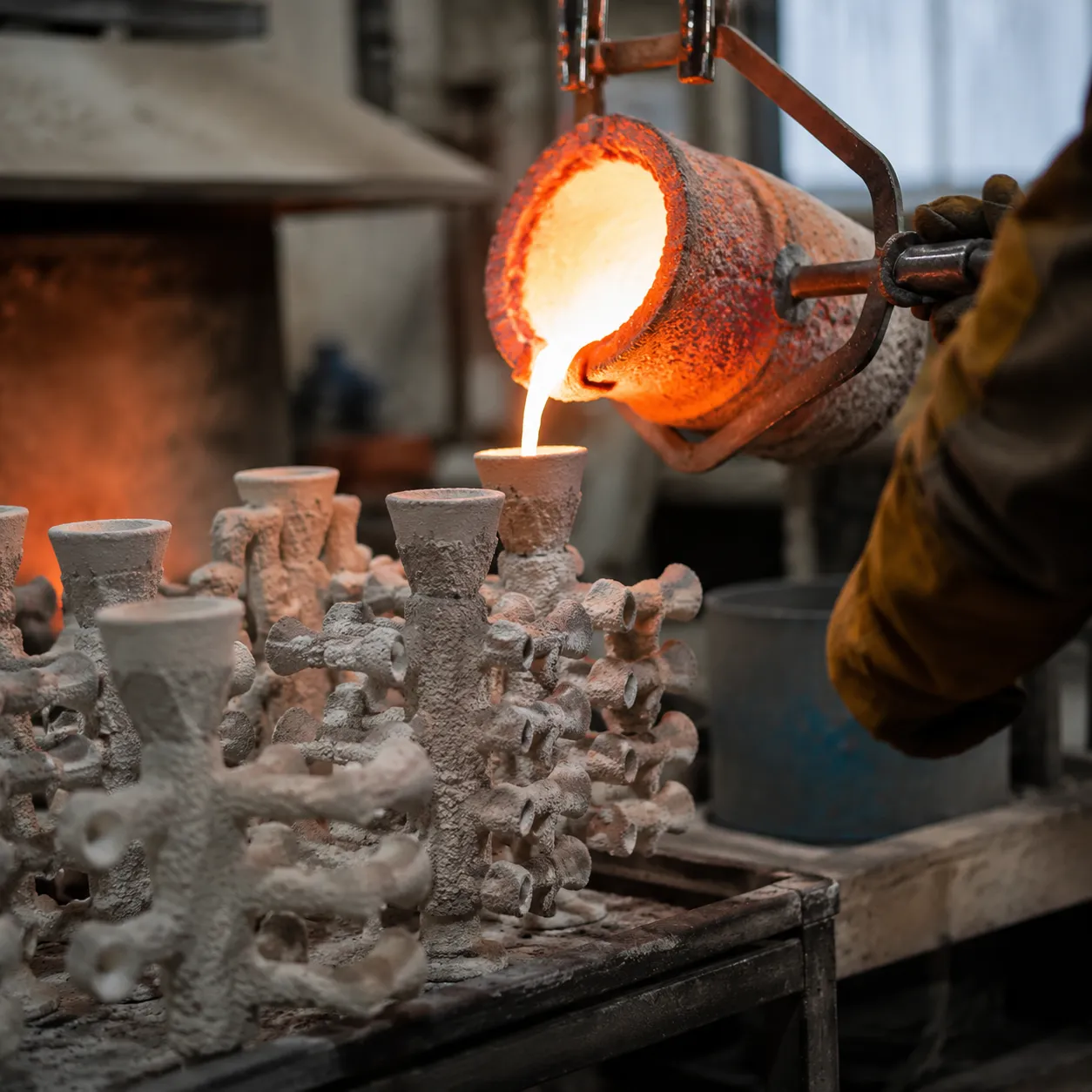
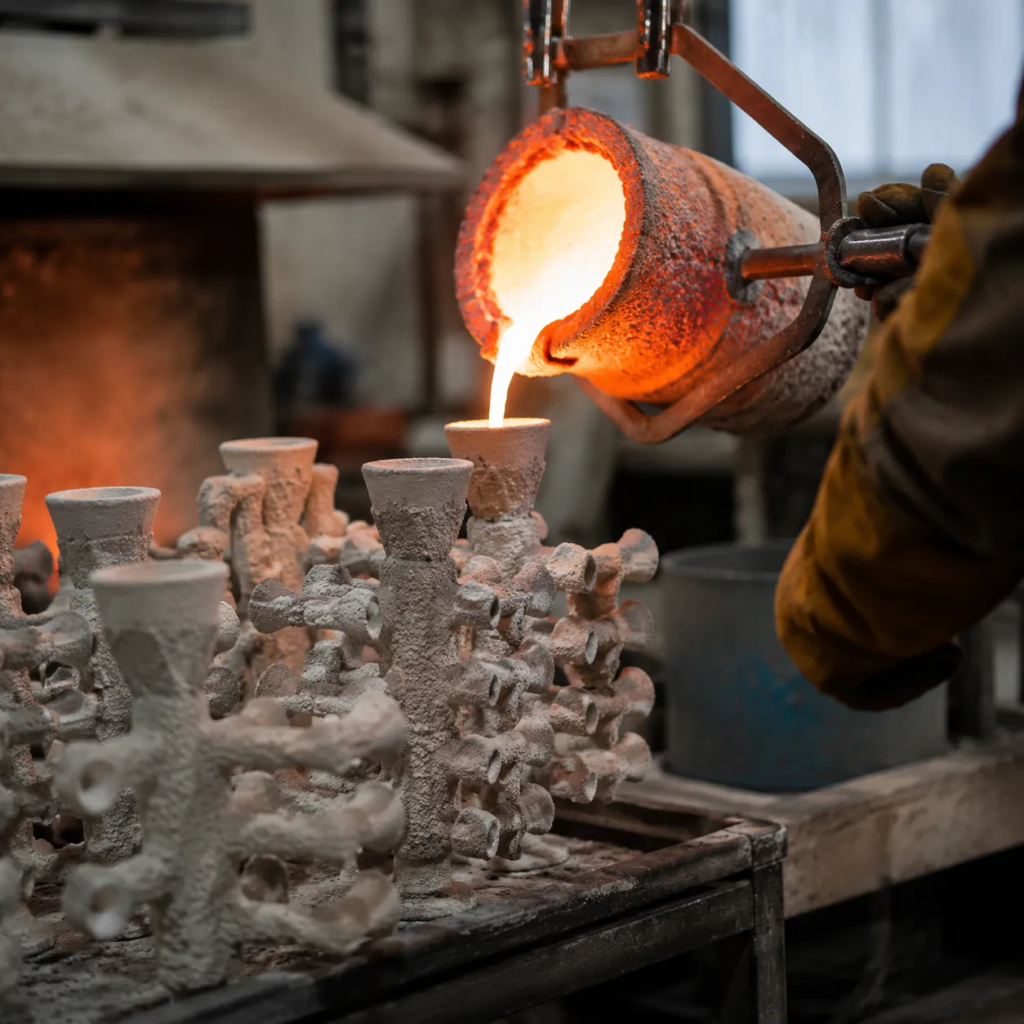
Metal investment casting, traditionally known as the lost wax casting process, is a precision manufacturing technique used to produce complex, net-shape components with high dimensional accuracy. We create custom metal parts by forming a disposable ceramic mold around an exact wax model, melting the wax away, and pouring liquid metal into the hardened ceramic cavity.
Core Process Components
Three core elements drive precision investment casting performance:
- Wax Pattern: An exact replica of the target part created by injecting wax into a custom metal die. Multiple wax patterns are assembled onto a central wax sprue to form a casting tree.
- Ceramic Shell Mold: A refractory shell built by repeatedly dipping the wax assembly into a liquid ceramic slurry and coating it with fine silica stucco.
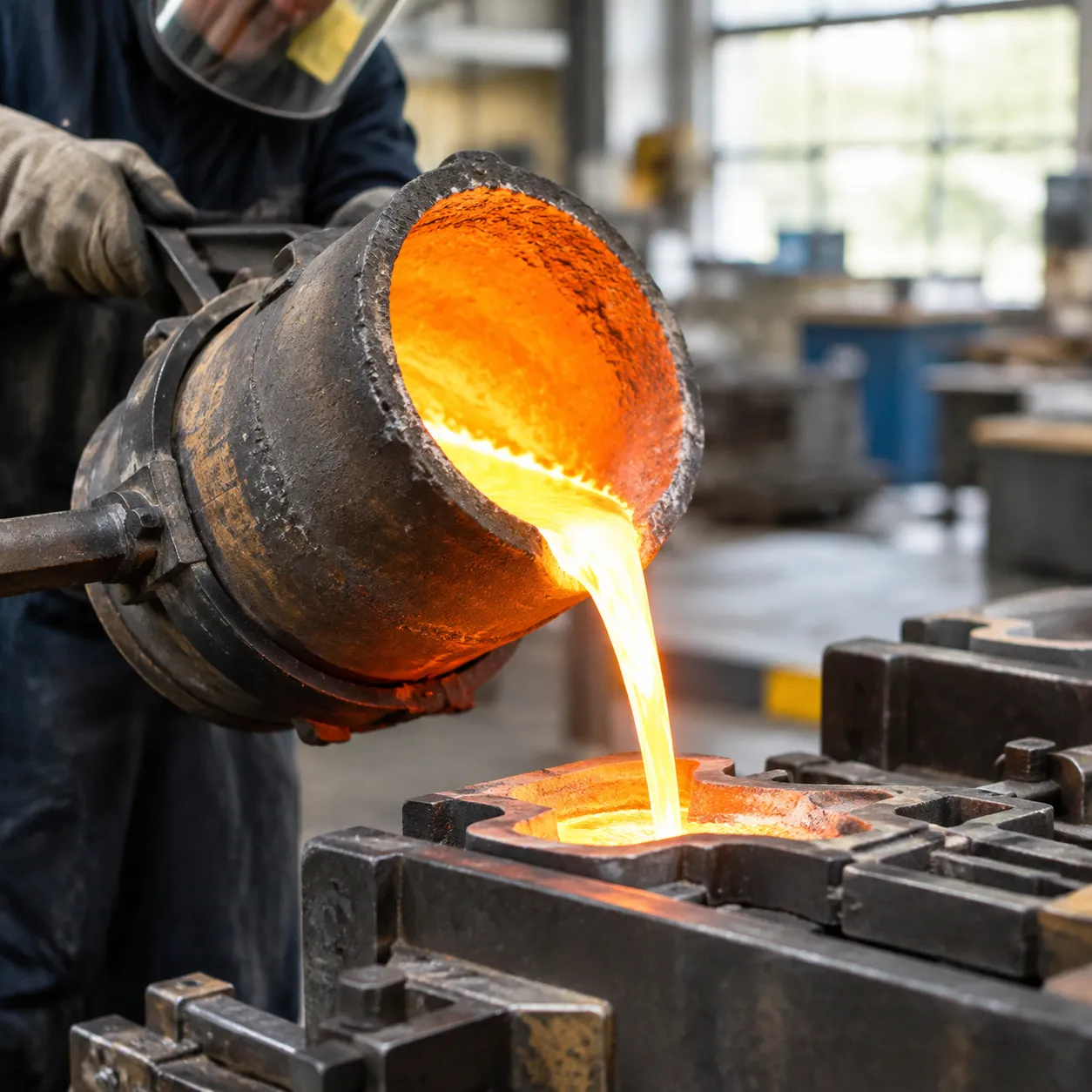
- Molten Metal: Liquid alloy poured directly into the preheated, hollow ceramic shell after the original wax pattern has been melted out (dewaxed) and burned clean.
Investment Casting vs Die Casting
| Feature | Precision Investment Casting | Die Casting |
|---|---|---|
| Material Flexibility | Ferrous and non-ferrous metals (stainless steel, titanium, nickel superalloys) | Non-ferrous metals only (aluminum, zinc, magnesium) |
| Part Geometry | Intricate shapes, internal channels, undercuts, and thin walls | Moderate complexity; limited by die-part ejection requirements |
| Initial Tooling Cost | Lower initial tooling and mold modification costs | High upfront tooling and hardened steel die costs |
| Production Volume | Economical for low, medium, or high batch runs | Best suited for high-volume mass production |
| Surface Finish | Smooth, superior as-cast surface finish needing minimal secondary machining | Good surface finish, but prone to internal porosity in heavy sections |
Metals and Alloys for Investment Casting
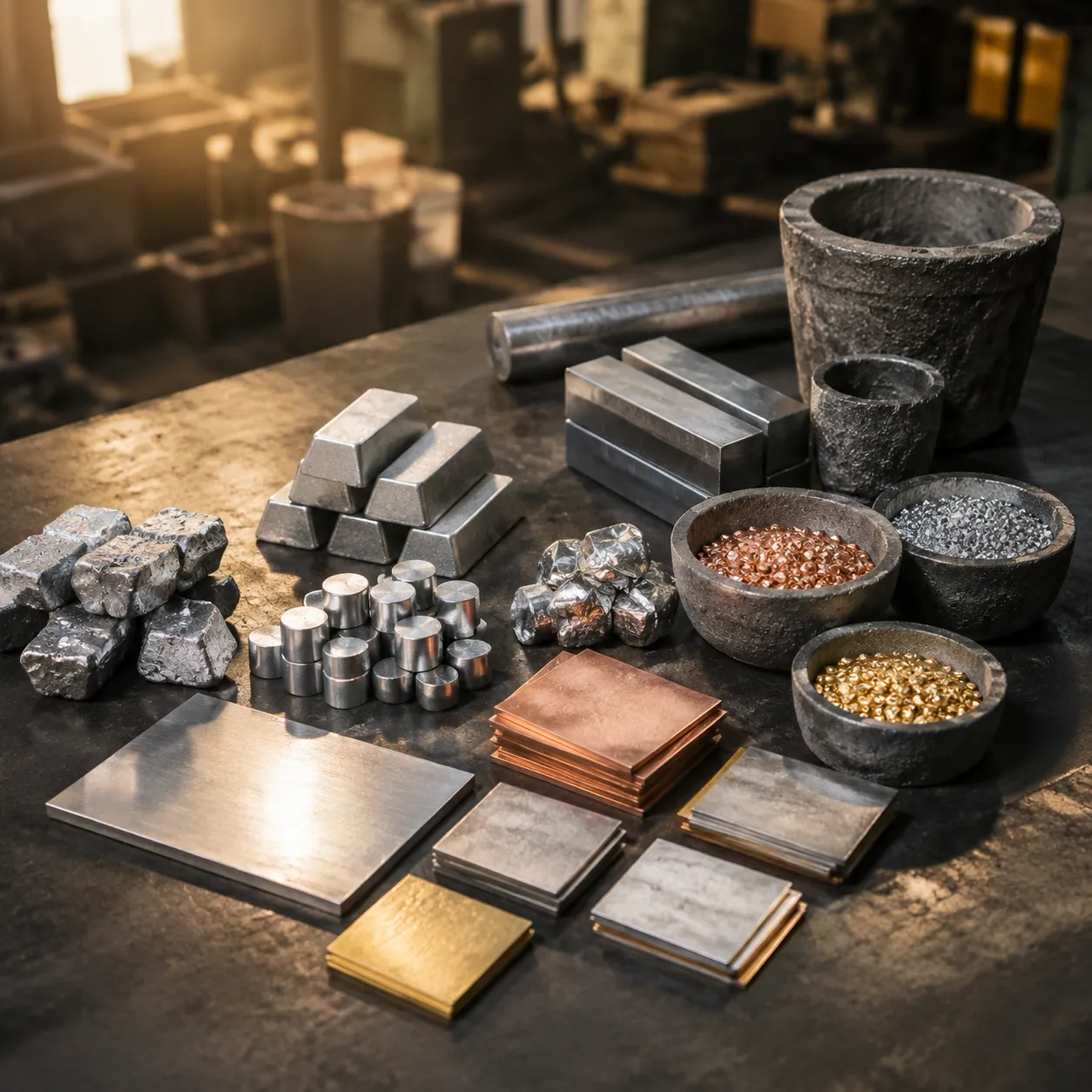
We pour a wide range of investment casting alloys to match your exact structural, thermal, and mechanical requirements. Selecting the right alloy optimizes component strength, weight, and wear resistance while keeping overall manufacturing costs down.
| Alloy Category | Common Grades & Materials | Primary Features & Best Uses |
|---|---|---|
| Stainless Steel & Carbon Steel | 304, 316, 17-4PH, 1020–1045 Carbon Steel, Low-Alloy Steels | High tensile strength, wear resistance, and corrosion protection. Ideal for valve bodies, pump parts, and structural hardware. |
| Aluminum, Brass & Bronze | A356, C83600, Aluminum Bronze (C95400), Silicon Bronze | Lightweight, superior electrical/thermal conductivity, and corrosion resistance. Perfect for aerospace fittings and marine hardware. |
| Titanium & Superalloys | Ti-6Al-4V, Inconel 625/718, Hastelloy, Cobalt-Chromium | Extreme strength-to-weight ratio and heat tolerance. Built for turbine components, medical implants, and aggressive chemical processing. |
Steel Alloys
Carbon and low-alloy steels deliver high durability and hardness for heavy-industrial components. For corrosive or sanitary environments, we produce custom parts using specialized cast stainless steel alloys and grades. Precision stainless steel casting minimizes the need for secondary surface machining while maintaining precise wall thicknesses.
Non-Ferrous and High-Performance Metals
Aluminum, brass, and bronze offer flexible options when weight, machinability, or electrical conductivity is critical. Consult our aluminum alloy casting guide for investment casting to select the right tempering and chemical composition for your design. For high-stress applications facing extreme temperatures, we pour titanium and nickel- or cobalt-based superalloys to ensure reliable performance under severe operational loads.
Step-by-Step Investment Casting Process
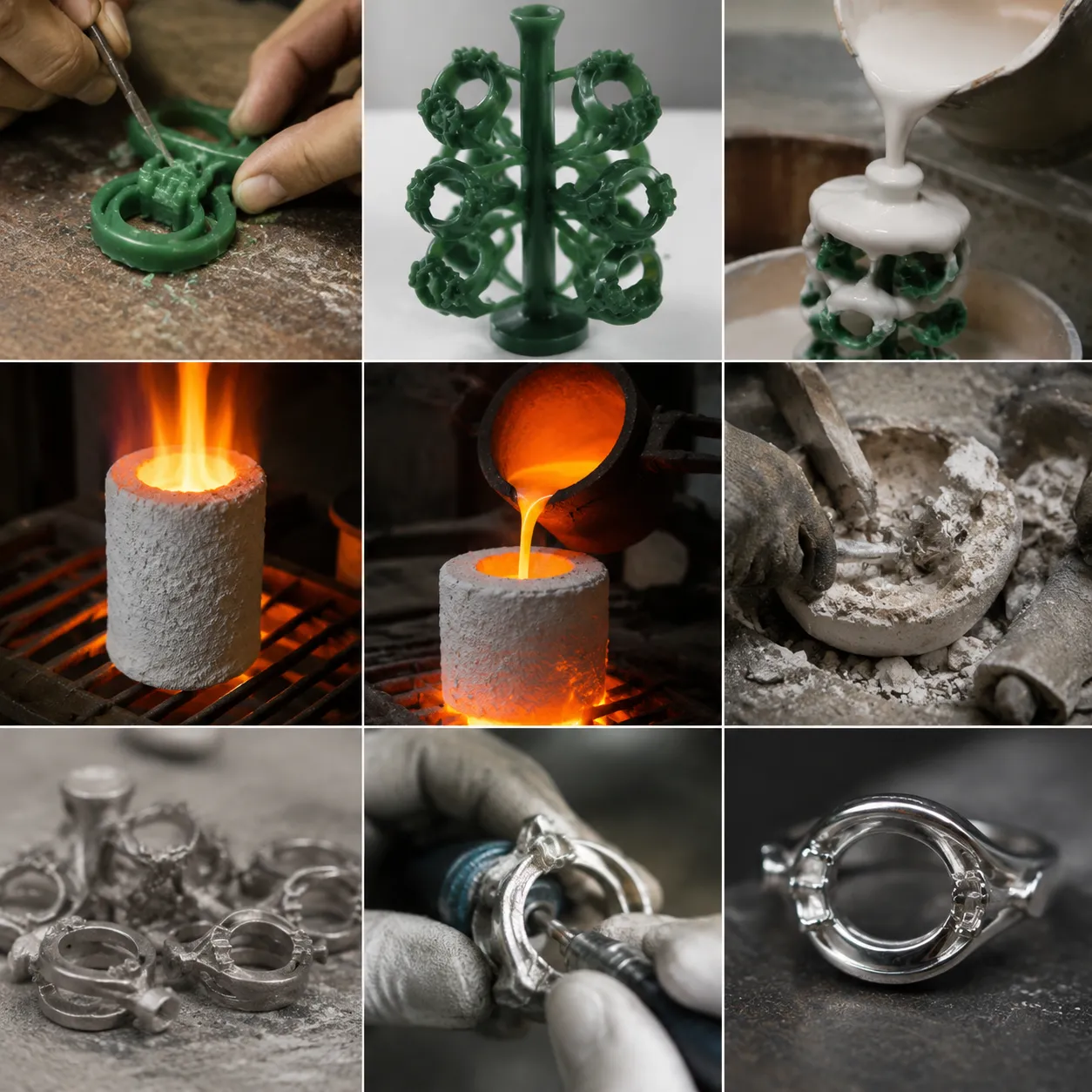
We follow a precise, multi-stage workflow to transform raw alloys into high-integrity components with exceptional accuracy.
1. Wax Pattern Creation & Assembly
- Pattern Injection: We inject high-purity wax into a die mold to produce an exact replica of the intended design.
- Tree Assembly: We weld individual wax patterns onto a central wax sprue, building a tree structure that allows us to cast multiple parts simultaneously.
2. Ceramic Shell Coating & Stuccoing
- Slurry Dipping: We submerge the wax tree into a high-grade liquid ceramic slurry.
- Stuccoing: We immediately coat the wet tree with fine refractory material. Repeating this cycle builds a dense ceramic shell mold designed to withstand high pouring pressures.
3. Dewaxing & High-Temperature Burnout
- Dewaxing: We place the coated assembly into a high-pressure steam autoclave to melt out the wax. This crucial stage defines the classic lost wax casting process.
- Mold Firing: We heat the hollow ceramic shell in a high-temperature furnace to burn off any remaining wax residue and sinter the ceramic wall strength.
4. Molten Metal Pouring & Knockout
- Pouring: While the ceramic mold is still preheated, we pour molten metal into the cavity to ensure full fluid flow into fine features.
- Shell Knockout: Once the metal cools and solidifies, we break away the outer ceramic shell using high-frequency vibration and water blasting to free the solid metal investment casting part.
5. Surface Finishing, Heat Treatment & Inspection
- Gate Removal: We cut individual components off the central runner tree and grind down the remaining gate stubs.
- Post-Processing: We apply shot blasting to achieve an optimal casting surface finish and perform heat treating to align metal mechanical properties with exact design requirements.
- Quality Assurance: We run full dimensional inspections, pressure testing, and non-destructive evaluation to guarantee tight tolerance metal parts.
To understand how this detailed multi-step approach compares with alternative molding methods, explore our investment casting vs sand casting process comparison for a deeper look at accuracy and finish capabilities.
Key Advantages of Precision Investment Casting
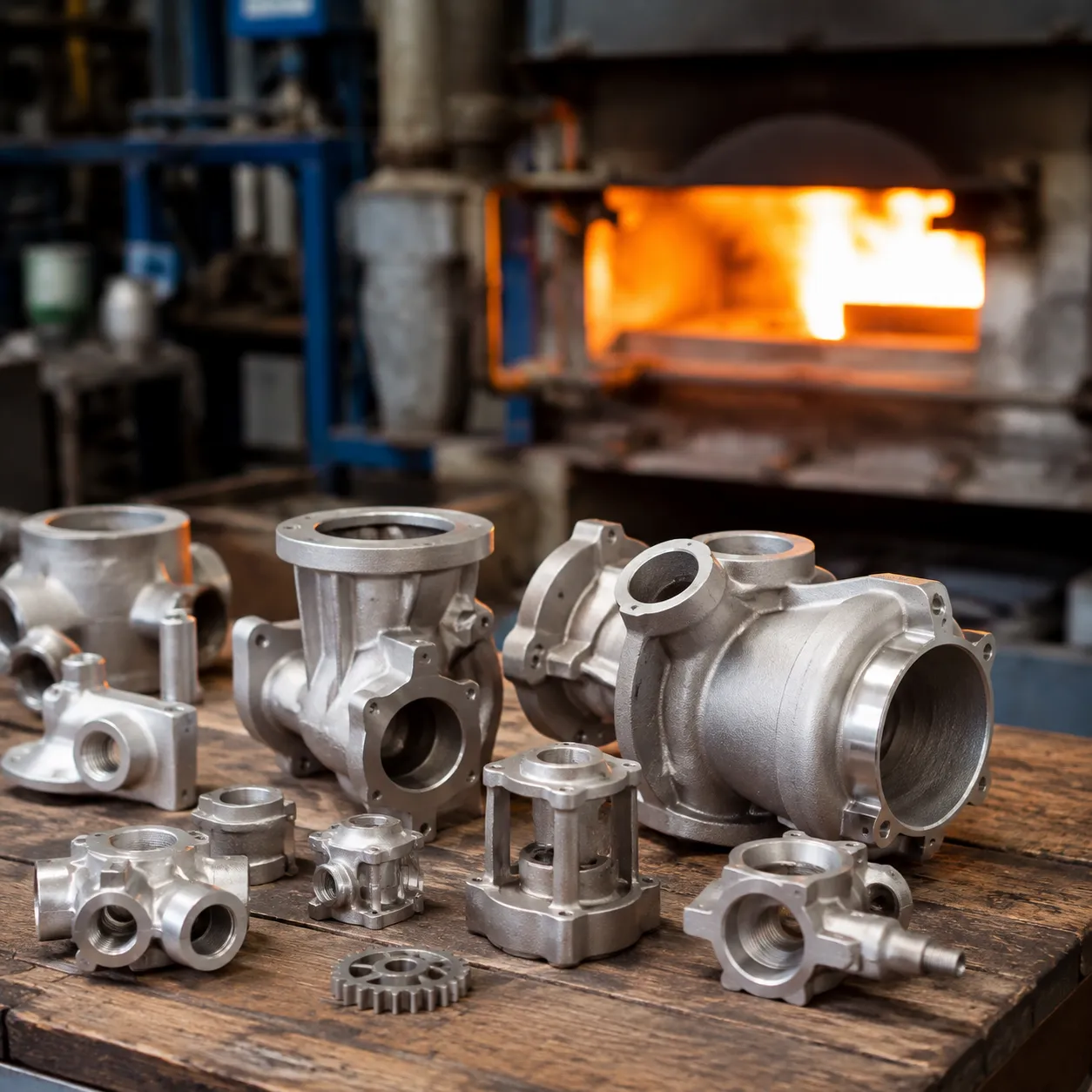
When we produce components for high-spec applications, metal investment casting delivers an exceptional balance of design flexibility and cost efficiency. By forming parts directly from wax patterns, we eliminate expensive machining steps while meeting rigorous engineering standards.
- Tight Tolerances and High Precision: We consistently hold tight dimensional tolerances (typically ±0.005 inches per inch). This precision allows us to manufacture tight tolerance metal parts that require minimal post-processing.
- Complex Geometries and Thin Walls: Our process easily forms complex internal passages, undercuts, and thin-wall sections down to 1.5 mm (0.060 in) without requiring multi-part assemblies.
- Superior Surface Finish: We achieve an exceptional casting surface finish (125 RMS standard). Compared to traditional sand molds, using precision alternatives yields smoother, cleaner surfaces directly out of the ceramic shell.
- Material Savings and Reduced Scrap: Near-net shape manufacturing reduces raw alloy waste and lowers overall unit costs. Through our dedicated precision investment casting and prototypes workflows, we maximize material yield so you only pay for the metal used in the final component.
Metal Investment Casting Applications
We deliver tight tolerance metal parts across demanding industries where safety, performance, and durability cannot be compromised. By utilizing precision investment casting, we produce lightweight, complex components that reduce assembly time and eliminate expensive secondary machining.
Aerospace and Aviation Components
- Engine & Turbine Parts: High-temperature turbine blades, vanes, and combustion chamber hardware.
- Structural Systems: Lightweight mounting brackets, airframe hinges, and fuel nozzles built to withstand severe vibration and stress.
Automotive Engine and Structural Parts
- Engine & Drivetrain: Turbocharger wheels, rocker arms, and transmission gears engineered from high-strength materials like 4140 alloy steel.
- Custom Assemblies: Thin-walled structural brackets that cut vehicle weight while maintaining crash safety ratings.
Medical Equipment and Surgical Instruments
- Surgical Tools: Custom scalpels, forceps, and clamp handles that require sterile, ultra-smooth surface finishes.
- Orthopedic Implants: Biocompatible artificial joint components cast with surgical-grade alloys.
Oil, Gas, and Valve Hardware
- Flow Control: High-pressure valve bodies, pump impellers, and fluid control blocks built to resist harsh, corrosive environments.
- Drilling Equipment: Heavy-duty downhole tool bodies and couplings engineered for extreme pressure applications.
We support projects from initial precise cast prototypes to high-volume manufacturing, guaranteeing every metal investment casting part fulfills exact operational requirements.
Design Rules for Custom Metal Castings
When we design components for metal investment casting, following clear geometric guidelines ensures flawless production, prevents defects, and reduces manufacturing costs.
Wall Thickness and Uniformity
- Maintain Uniform Walls: Keep wall thicknesses as consistent as possible across the part to prevent warping, shrink voids, and structural weak spots during cooling.
- Recommended Thickness: We recommend a minimum wall thickness of 1.5 mm (0.060 in) for most alloys, though high-fluidity metals can achieve thinner sections in smaller areas.
- Smooth Transitions: Blend thick-to-thin wall transitions gradually using a 3:1 taper ratio to encourage steady molten metal flow.
Draft Angles, Fillets, and Radii
- Minimal Draft Needed: Unlike conventional sand casting for custom metal parts, precision investment casting requires little to no draft angle (0° to 1° is typically sufficient).
- Generous Fillets: Avoid sharp 90-degree corners. Use a minimum fillet radius of 1.5 mm (0.060 in) to eliminate stress concentrations and extend mold life.
Tolerances and Shrinkage Allowances
- High Precision Limits: Our standard process produces tight tolerance metal parts within ±0.005 in/in (±0.127 mm per 25.4 mm), minimizing the need for secondary machining.
- Shrinkage Factors: Metal alloys shrink between 1.5% and 3% as they solidify. We build precise shrinkage allowances directly into the pattern tooling to ensure your final part matches exact design specs.
Cost Drivers in Metal Investment Casting
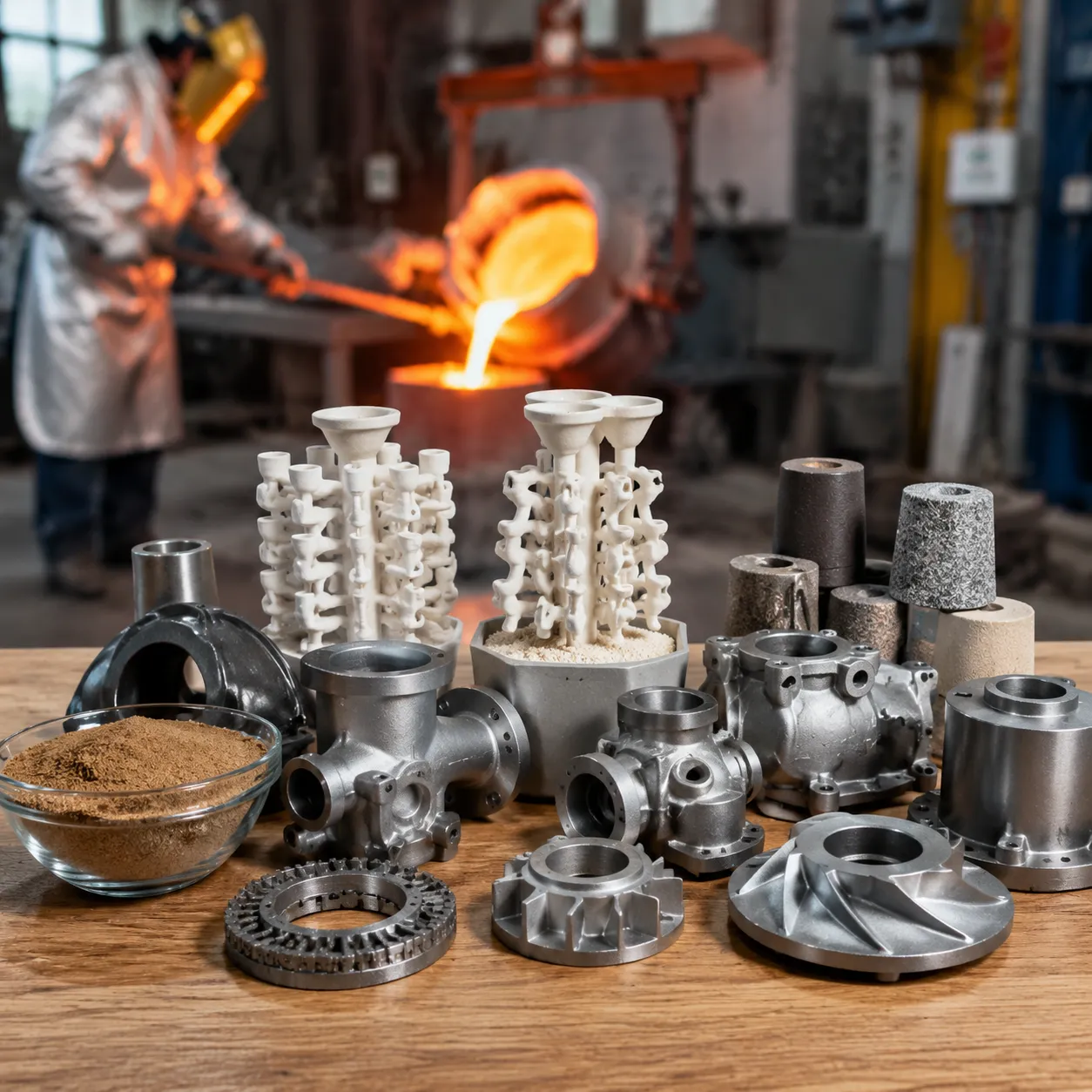
When we estimate project quotes, three primary drivers dictate the total financial investment: initial tooling, alloy selection, and production volume. Managing these key variables allows us to deliver high-precision parts while optimizing unit costs.
Tooling and Die Mold Initial Costs
Creating master die molds to produce accurate wax patterns represents the largest upfront expense in metal investment casting.
- Die Materials: We engineer aluminum dies for prototypes and short-to-medium runs to keep initial expenses down. For long-term production, hardened tool steel dies require higher upfront capital but withstand hundreds of thousands of cycles without losing accuracy.
- Machining Complexity: Highly intricate parts with complex internal passages require multi-piece dies or collapsible cores, increasing initial tooling production costs.
- Process Comparison: While the initial investment casting tooling cost is higher than sand casting tooling, it drastically reduces or eliminates expensive secondary CNC machining. For a detailed cost analysis between processes, review our die casting vs investment casting cost breakdown.
Material Selection and Alloy Pricing
The raw metal you choose impacts both raw material costs and melting complexity.
- Standard Alloys: Carbon steel, standard aluminum, and brass remain cost-effective choices due to lower raw material prices and straightforward melt requirements.
- High-Performance Alloys: Stainless steel, titanium, and nickel-based superalloys incur higher costs driven by raw market pricing, vacuum melting requirements, and strict quality control. To evaluate how raw material choice impacts overall budget, consult our casting alloy properties and material selection guide.
Volume Production vs Low-Batch Costs
Order volume directly affects how initial setup costs amortize across your order, impacting the final unit price.
| Production Scale | Cost Dynamics | Primary Applications |
|---|---|---|
| Low-Batch / Prototypes | Higher cost per part because setup and tooling expenses spread across fewer pieces. | Custom machinery, medical devices, and functional prototypes. |
| High-Volume Production | Lowest unit cost as fixed tooling expenses amortize across thousands of parts alongside automated shell dipping. | Automotive, aerospace, and high-demand valve components. |
Metal Investment Casting FAQs
What metals are suitable for investment casting?
We work with a broad spectrum of ferrous and non-ferrous metals, including stainless steel, carbon steel, tool steel, aluminum, brass, bronze, titanium, and high-temp superalloys. Check out our precision investment casting services for custom parts to see the full range of materials we process daily.
Is investment casting cheaper than sand casting?
Initial tooling for sand casting is cheaper, but metal investment casting produces significantly tighter tolerances and smoother surface finishes. Because it virtually eliminates expensive post-machining and material waste, investment casting often delivers a lower overall cost per part for complex designs and higher production runs.
What tolerances can metal investment casting achieve?
Standard metal investment casting routinely delivers linear tolerances of ±0.13 mm per 25 mm (±0.005 inches per inch). Through strict process control in investment casting, we hold even tighter tolerances on critical part features to ensure net-shape or near-net-shape results.
What is the typical lead time for custom tooling?
Designing and cutting custom wax injection tooling generally takes 3 to 6 weeks, depending on geometry complexity and mold requirements. Once tooling is approved, sample parts are produced quickly for initial fit-and-function validation.
 English
  Russian
  German