
2026年9月22日
Aluminum A356 alloy offers excellent castability strength corrosion resistance and machinability for precision automotive aerospace and industrial com
What Is Aluminum A356 Alloy?
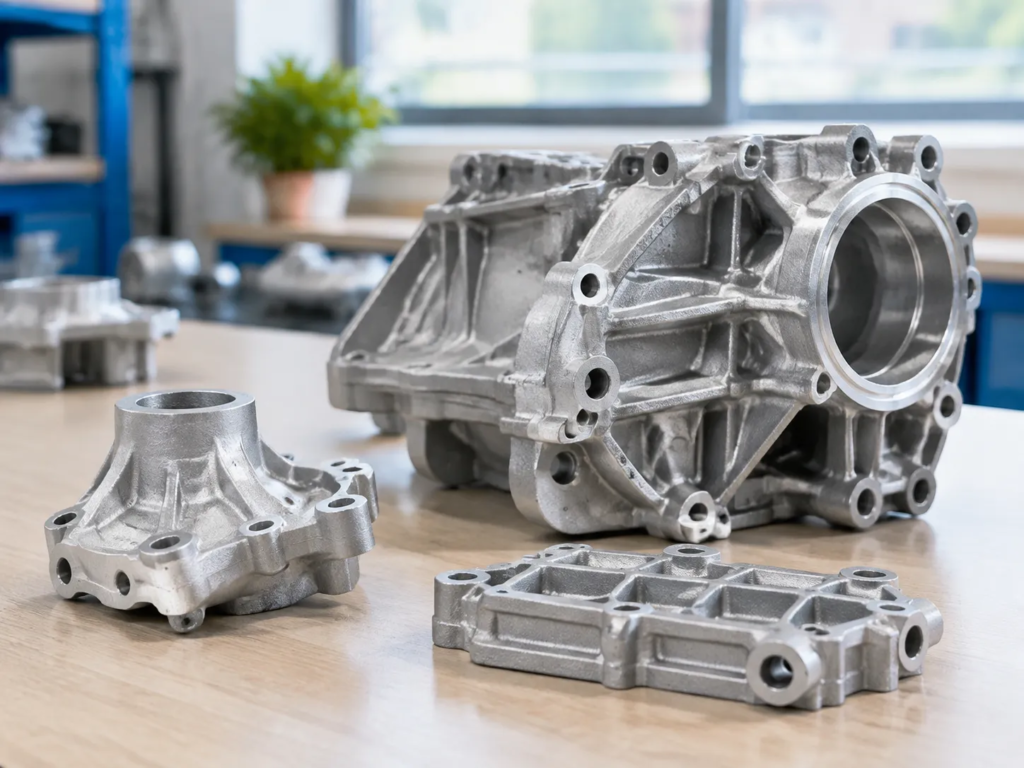
Aluminum A356 is a high-purity, structural silicon-magnesium aluminum casting alloy engineered for critical load-bearing applications. Composed primarily of 7% silicon and 0.3% magnesium, this alloy delivers exceptional fluidity, minimal shrinkage during solidification, and high corrosion resistance.
When subjected to T6 heat treatment, A356 achieves an outstanding strength-to-weight ratio, making it one of the most reliable materials for complex, high-integrity OEM/ODM metal components.
Core Characteristics of A356 Aluminum
- Superior Castability: Excellent fluidity ensures defect-free fills in thin-walled, intricate geometries across sand casting, investment casting, and permanent mold casting.
- Exceptional Mechanical Integrity: Delivers high tensile strength, fatigue endurance, and impact resistance.
- Corrosion Resistance: Performs reliably in harsh outdoor, industrial, and marine operating environments.
- High Machinability & Weldability: Easily machined to tight dimensional tolerances (down to ±0.01 mm) and supports standard post-cast welding operations.
Why A356 Is the Go-To Alloy for High-Stress Castings
We rely on A356 aluminum for mission-critical parts because it bridges the gap between casting ease and mechanical toughness. Under dynamic mechanical stress and high cyclic loads, A356-T6 resists micro-cracking and fatigue failure far better than general-purpose foundry alloys. This makes it the industry standard for lightweight automotive chassis components, structural brackets, aircraft housings, and high-pressure fluid control systems.
Key Differences: Standard 356 vs. A356 Grade
The essential difference between standard 356 and A356 lies in chemical purity—specifically, the strict limitation of iron (Fe) content.
| Feature / Metric | Standard 356 Aluminum | Premium A356 Aluminum |
|---|---|---|
| Purity Grade | Commercial standard | High-purity structural grade |
| Max Iron (Fe) Limit | Up to 0.50% Fe | Controlled to ≤ 0.20% Fe |
| Elongation & Ductility | Moderate (lower strain tolerance) | Superior (higher elongation and toughness) |
| Impact Resistance | Standard | High impact absorption under load |
| Typical Use Cases | General industrial castings | High-stress structural & safety parts |
The lower iron content in A356 aluminum casting prevents the formation of needle-like iron-silicon intermetallic compounds. This structural refinement significantly boosts elongation, fracture toughness, and overall ductility without sacrificing tensile yield strength.
Chemical Composition of Aluminum A356
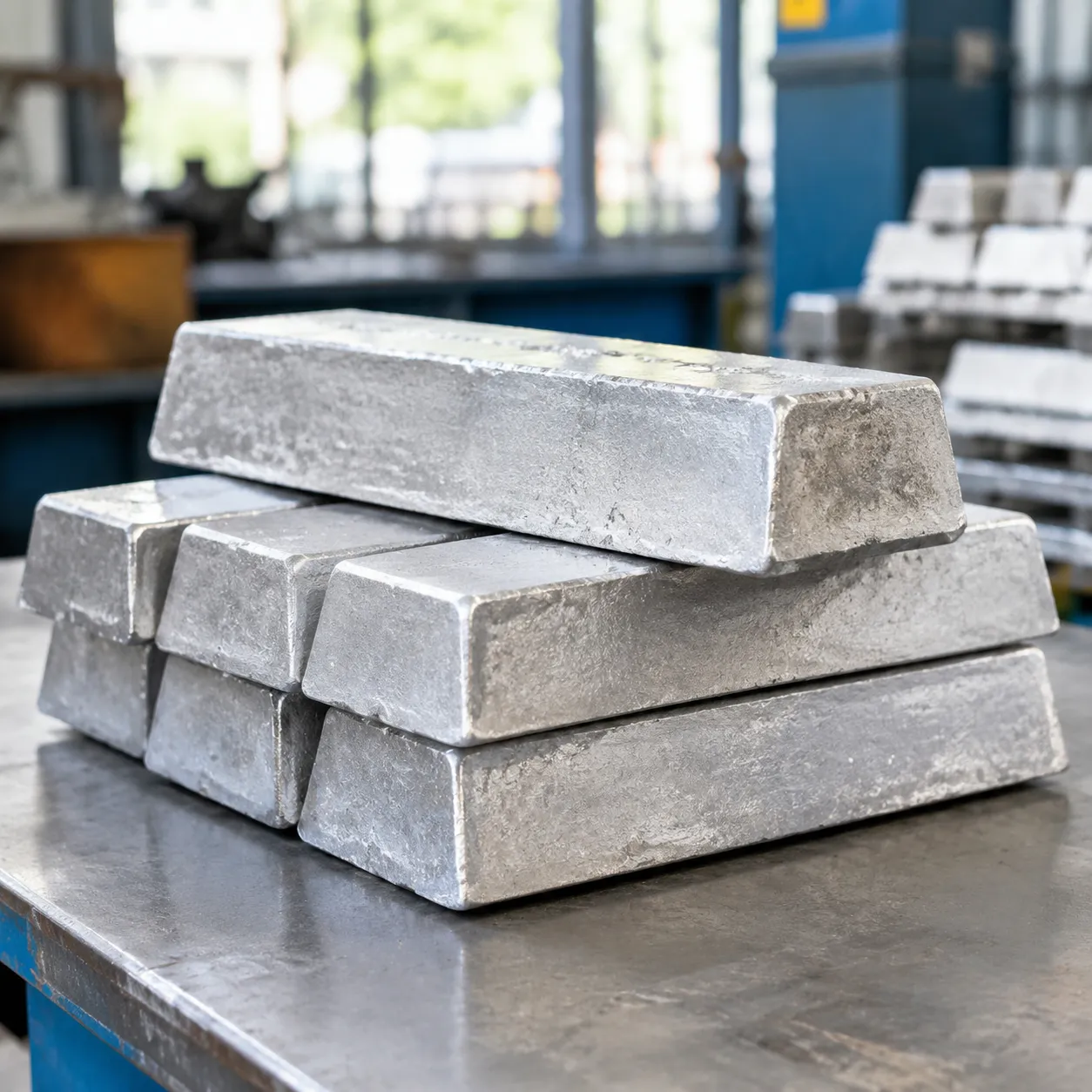
The superior mechanical performance of aluminum A356 comes directly from its tightly controlled chemical makeup. Classified as a hypoeutectic silicon magnesium aluminum alloy, A356 balances excellent fluidity with high structural strength. We verify every melt using in-house optical emission spectrometer analysis to guarantee exact elemental compliance.
Understanding the detailed A356 aluminum alloy specifications and properties allows us to tailor casting integrity to critical load-bearing requirements.
Exact Elemental Breakdown
| Element | Weight Percentage (wt%) | Primary Function in Alloy |
|---|---|---|
| Silicon (Si) | 6.50 – 7.50% | Improves molten fluidity, reduces shrinkage, and boosts castability |
| Magnesium (Mg) | 0.25 – 0.45% | Enables precipitation hardening during T6 heat treatment |
| Iron (Fe) | ≤ 0.20% max | Restricted to preserve high ductility and fracture toughness |
| Titanium (Ti) | ≤ 0.20% max | Acts as a grain refiner to increase structural uniformity |
| Copper (Cu) | ≤ 0.20% max | Kept low to maximize general corrosion resistance |
| Zinc (Zn) | ≤ 0.10% max | Trace control to prevent hot-tearing issues |
| Manganese (Mn) | ≤ 0.10% max | Modifies remaining iron compounds |
| Aluminum (Al) | Balance | Base matrix metal |
Why Low Iron Content Matters for Ductility and Toughness
The defining difference between standard 356 and higher-grade A356 is the strict iron limit:
- Eliminating Needle-Like Intermetallics: Standard grades tolerate higher iron, forming brittle, needle-like beta-phase ($FeAl_5$) platelets that act as internal stress concentrators.
- Maximizing Impact Resistance: By capping iron at 0.20% max, A356 avoids premature micro-cracking, delivering significantly higher elongation ratings and dynamic fatigue resistance.
- Enhanced Fracture Toughness: Lower iron content ensures the metal deforms reliably under extreme mechanical shock rather than experiencing brittle failure.
Trace Elements and Casting Quality Control
Controlling trace alloying additions is critical to achieving defect-free structural castings:
- Titanium (Ti) for Grain Refinement: Titanium promotes a fine equiaxed grain structure during solidification, eliminating coarse columnar zones and boosting yield strength.
- Magnesium (Mg) Precision: Holding magnesium strictly between 0.25% and 0.45% ensures the formation of magnesium silicide ($Mg_2Si$) precipitates, unlocking peak hardness during subsequent artificial aging.
- Porosity and Inclusion Management: Low impurity thresholds reduce dross formation and gas entrapment, ensuring clean, high-density metal matrix structures ready for critical service environments.
Mechanical and Physical Properties of Aluminum A356
When we cast and heat-treat aluminum A356, we target a balanced combination of lightweight performance, high structural strength, and dependable fatigue resistance. Understanding these metrics helps engineers determine if A356 matches the load-bearing demands of their critical parts.
A356-T6 Mechanical Strength & Ductility Ratings
In its as-cast state, the alloy provides modest strength, but undergoing standard T6 solution and artificial aging unlocks peak mechanical capabilities. Below are the standard baseline mechanical values for A356-T6 mechanical properties:
| Property Metric | As-Cast (F Temper) | Heat-Treated (T6 Temper) |
|---|---|---|
| Ultimate Tensile Strength | 130 – 160 MPa (19 – 23 ksi) | 230 – 260 MPa (33 – 38 ksi) |
| Yield Strength (0.2% offset) | 70 – 90 MPa (10 – 13 ksi) | 165 – 195 MPa (24 – 28 ksi) |
| Elongation at Break (%) | 2% – 5% | 3.5% – 6.0% |
| Hardness (Brinell HBW) | 50 – 60 | 75 – 90 |
When applications demand even higher yield thresholds than standard A356, exploring higher-magnesium options like aluminum grade 357 properties and performance provides an effective design alternative.
Core Physical and Thermal Specifications
The low A356 density makes it an industry benchmark for lightweighting structural assemblies without sacrificing thermal stability:
- Density: 2.68 g/cm³ (0.097 lb/in³)
- Melting Range: 555°C – 615°C (1031°F – 1139°F)
- Thermal Conductivity: ~151 W/m·K (at 25°C in T6 temper)
- Coefficient of Thermal Expansion (CTE): 21.4 µm/m·°C (20°C to 100°C)
- Modulus of Elasticity: 72.4 GPa (10.5 × 10⁶ psi)
Dynamic Fatigue Endurance and Corrosion Resistance
- Fatigue Strength: A356-T6 delivers a rotating bending fatigue endurance limit of approximately 60 to 70 MPa at 5 × 10⁸ cycles. This dynamic load capacity makes it a preferred choice for suspension brackets, rotating pump housings, and vehicle wheels.
- Corrosion Performance: The low iron and copper levels protect against intergranular attack. The alloy readily develops a protective passive oxide layer, resisting atmospheric moisture, automotive road salts, and industrial chemical exposure.
A356 Heat Treatment: Understanding the T6 Temper Process
As-cast aluminum A356 offers solid fluidity and structural integrity, but it requires thermal enhancement to reach peak mechanical performance. Applying a T6 temper—consisting of solution heat treating, rapid quenching, and artificial aging—fundamentally alters the internal microstructure of the alloy, precipitating magnesium silicide (Mg_2Si) uniformly across the aluminum matrix to dramatically increase load-bearing capacity.
Step-by-Step Breakdown of A356-T6 Heat Treatment
To achieve optimal A356-T6 mechanical properties, we follow a tightly controlled three-stage thermal cycle:
- Solution Heat Treating (535°C to 540°C / ~1000°F): Castings are held at elevated temperatures for 4 to 12 hours. This dissolves the soluble magnesium and silicon phases into a single solid solution while spheroidizing the eutectic silicon particles to eliminate micro-stress concentrations.
- Water Quenching (60°C to 90°C): The parts are rapidly transferred into a temperature-controlled water bath. This immediate quench freezes the dissolved alloying elements within the supersaturated solid solution before they can form coarse, uncontrolled precipitates.
- Artificial Aging (155°C to 165°C / ~310°F to 330°F): The quenched components are reheated for 4 to 8 hours. This controlled aging allows ultra-fine Mg_2Si particles to precipitate evenly throughout the metal, driving up hardness and structural strength.
A356 Property Evolution: As-Cast vs. T6 Temper
| Parameter / Property | As-Cast (A356-F) | Solution Treated & Aged (A356-T6) | Performance Impact |
|---|---|---|---|
| Tensile Strength | ~160–180 MPa | 290–310 MPa | ~70% increase in ultimate tensile capacity |
| Yield Strength | ~80–110 MPa | 220–240 MPa | More than doubles resistance to permanent deformation |
| Hardness (Brinell) | ~55–65 HBW | 85–100 HBW | Significantly higher wear and indentation resistance |
| Elongation (%) | ~4–6% | 3.5–6% | Retains critical ductility for dynamic fatigue loads |
Maximizing Hardness and Load-Bearing Capacity
Executing precise heat treatment for A356-T6 eliminates the brittleness common in unrefined castings. By controlling soak times, quench delay intervals, and aging temperatures, we tailor the hardness and yield strength to meet rigorous structural demands—ensuring components handle severe cyclic stress, heavy hydraulic pressures, and high-impact working conditions without premature structural failure.
Primary Casting Methods for Aluminum A356

Choosing the right casting technique for aluminum A356 comes down to component geometry, production volume, and required internal soundness. We utilize several primary processes to cast A356 into high-integrity components.
Permanent Mold Casting for High-Volume Precision Parts
Permanent mold casting (gravity die casting) uses reusable steel molds, delivering rapid cooling rates that refine the grain structure of A356. Benefits: Excellent dimensional repeatability, fine microstructures, and superior mechanical properties. Best For: Automotive suspension parts, wheels, and medium-to-high-volume structural brackets requiring minimal porosity.
Sand Casting for Large and Complex Geometries
When part sizes exceed standard mold envelopes or production involves low-to-medium volumes, A356 sand casting provides unmatched flexibility. Resin Sand & Green Sand: Accommodates complex internal passages via sand cores. Key Advantages: Low initial tooling cost and the capacity to pour thick, heavy-duty industrial pump housings and machine frames without thermal stress cracking.
Investment Casting and Low-Pressure Die Casting
For thin-walled components requiring superior surface finishes and tight tolerances, specialized casting methods provide distinct engineering advantages:
| Casting Process | Typical Tolerance | Surface Finish | Best Application |
|---|---|---|---|
| Low-Pressure Die Casting (LPDC) | High | Smooth | High-stress structural automotive components |
| Investment Casting (Lost Wax) | ±0.01 mm to ±0.05 mm | Superior / Near-Net | Intricate aerospace fittings and valve housings |
Using our dedicated aluminum investment casting services for precision parts, we cast intricate A356 features that eliminate secondary machining while maintaining strict density and structural standards.
A356 Aluminum vs. Other Popular Alloys
Selecting the right metal grade depends on your structural requirements, production volume, and geometry complexity. When engineering cast components, we frequently compare aluminum A356 against other widely used cast and wrought aluminum grades.
| Property / Feature | A356-T6 | Standard 356-T6 | 6061-T6 (Wrought) | A380 (Die Cast) |
|---|---|---|---|---|
| Material Class | High-Purity Cast Alloy | Standard Cast Alloy | Wrought Alloy | High-Pressure Die Cast Alloy |
| Tensile Strength (MPa) | ~230–290 | ~205–240 | ~290–310 | ~320 |
| Elongation (%) | 3.5% – 6.0% | 2.0% – 3.0% | 8.0% – 12.0% | 2.0% – 3.5% |
| Heat Treatable | Yes (T6 standard) | Yes (T6 standard) | Yes (T6 standard) | Typically No |
| Corrosion Resistance | Excellent | Good | Excellent | Moderate |
| Primary Strength | High toughness & fatigue strength | General structural casting | High ductility & uniform strength | Fast cycle times & complex thin walls |
A356 vs. 356: Purity Levels and Impact Performance
The primary difference between A356 and standard 356 lies in chemical purity—specifically iron control: Lower Iron Content: A356 strictly caps iron (Fe) at 0.20% maximum, whereas standard 356 allows up to 0.60% Fe. Higher Fracture Toughness: By preventing brittle iron-silicon intermetallic needles from forming during solidification, A356 delivers significantly higher elongation and impact resistance. Structural Reliability: For critical dynamic load components, we use custom A356 investment casting precision aluminum parts to ensure maximum fatigue life without premature brittle failure.
A356 vs. 6061: Cast Aluminum vs. Wrought Aluminum
- Geometry Complexity: A356 is a specialized silicon-magnesium casting alloy engineered to flow into intricate, thin-walled, or hollow shapes in a single pour. 6061 is a wrought alloy supplied in billets, plates, or extrusions that require extensive subtractive CNC milling.
- Material Waste & Cost: For complex 3D geometries, casting with A356 dramatically cuts raw material scrap and machining cycle times compared to carving 6061 solid blocks.
- Mechanical Properties: While wrought 6061-T6 offers slightly higher yield strength and elongation, heat-treated A356-T6 provides near-wrought performance with far greater design freedom.
A356 vs. A380: Strength, Machinability, and Cost Trade-offs
- Heat Treatment and Ductility: A380 contains higher levels of copper and iron, making it optimal for rapid high-pressure die casting. However, A380 cannot be reliably T6 heat-treated and remains relatively brittle. A356 easily takes T6 heat treatment, delivering superior tensile strength and elongation.
- Corrosion Resistance: A356 contains minimal copper, giving it superior resistance to environmental and marine corrosion compared to A380.
- Application Fit: A380 is cost-effective for non-structural electronic enclosures and consumer brackets, whereas our A356 aluminum investment casting services are preferred for high-stress structural, automotive, and pressure-tight pump components.
Top Industrial Applications of Aluminum A356

Because aluminum A356 delivers an exceptional strength-to-weight ratio, high fatigue resistance, and excellent pressure tightness, we rely on this grade for critical, load-bearing parts across demanding global sectors. When a component must handle cyclic stress, severe vibration, or corrosive environments without adding excess weight, A356 aluminum casting is the premier engineering choice.
Our foundry produces a broad range of cast alloy products for durable industrial applications, with A356 serving as the core alloy across several key industries:
Automotive Industry: Lightweight Performance and Safety
The automotive sector represents the largest consumer of aluminum A356, primarily due to its shock-absorbing capacity and high yield strength after T6 heat treatment: Lightweight Alloy Wheels: A356 is the world standard aluminum wheel casting alloy, offering the exact balance of impact toughness and elongation required to absorb road shocks safely. Suspension Knuckles and Control Arms: Critical unsprung suspension components cast in A356 reduce vehicle curb weight while managing severe dynamic loads. Engine Brackets and Transmission Housings: High thermal conductivity and dampening properties protect powertrain assemblies from vibration and thermal fatigue. Brake Calipers and Cylinders: Dense, porosity-free castings ensure complete hydraulic integrity under extreme pressure.
Aerospace Components: High Structural Integrity
In aerospace manufacturing, minimizing weight while maintaining strict safety margins is non-negotiable. A356-T6 provides the structural reliability needed for flight-critical hardware: Airframe Fittings and Brackets: Complex, thin-walled cast aluminum structural parts reduce assembly part counts and eliminate excessive machining from solid billet. Fuel and Hydraulic Pump Housings: Leak-tight casting structures prevent fluid leakage under high internal pressures. Environmental Control System (ECS) Ducting: Excellent castability allows for intricate internal cooling passages and complex manifolds. Cargo Handling and Seat Hardware: High strength-to-weight performance delivers durable, lightweight cabin and cargo mechanisms.
Marine, Defense, and Heavy Industrial Equipment
Beyond automotive and aerospace, the natural corrosion resistance and toughness of aluminum A356 make it an essential material for harsh operating environments: Marine Hardware and Impellers: Forms a protective natural oxide layer, resisting saltwater corrosion in pump bodies, propellers, and marine transmission covers. Defense Ground Vehicle Assemblies: Used in armored vehicle suspension housings, turret support brackets, and electronic enclosure chassis requiring high shock resistance. High-Pressure Industrial Pumps and Compressors: Delivers leak-free performance and dimensional stability in heavy-duty industrial fluid handling systems. Robotics and Automation Arms: Low mass combined with high stiffness enables faster robotic cycle times and minimal motor strain in high-speed industrial machinery.
Machining, Finishing, and Welding A356 Castings
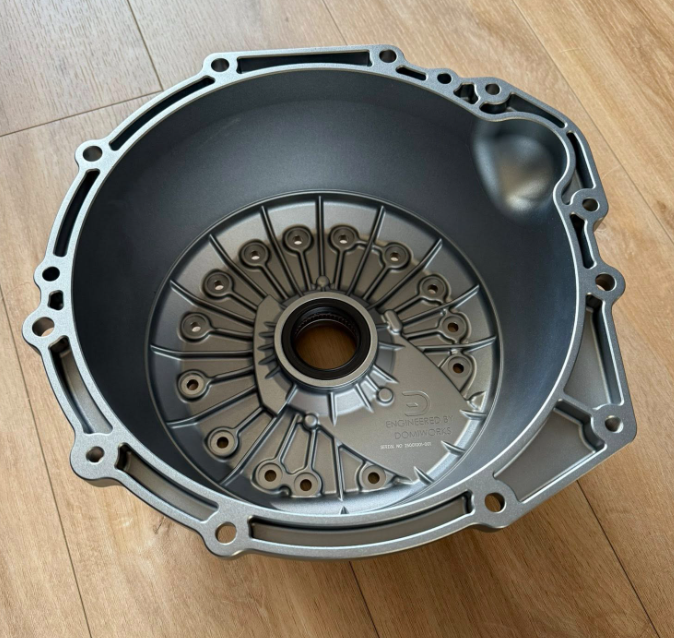
To achieve final part dimensions and surface quality, post-cast processing is critical. We combine dedicated tooling, controlled surface treatments, and proven joining methods to deliver ready-to-assemble a356 aluminum casting components.
Best Tooling and Feed Practices for CNC Machining A356
The silicon content in aluminum A356 gives it excellent fluidity during pouring, but it also creates an abrasive environment for cutting tools. Following specific machining parameters prevents premature tool wear and maintains tight dimensional accuracy:
- Tool Selection: We use uncoated micro-grain carbide with polished flutes or PCD (Polycrystalline Diamond) inserts. The high diamond hardness resists silicon abrasion and extends tool life.
- Speed and Feed Rates: High cutting speeds paired with moderate feed rates yield the best surface finish. Maintaining positive rake angles prevents chip dragging and work hardening.
- Coolant Delivery: Continuous, high-pressure flood coolant clears chips instantly, controls thermal expansion, and eliminates built-up edge (BUE) on the cutting tip.
- Machining Tolerances: Through our precision casting and CNC machining setups, we consistently achieve tolerances from ±0.01 mm to ±0.05 mm based on technical drawing requirements.
Surface Finishing Options for A356 Aluminum
A356 components accept multiple surface treatments to enhance appearance, corrosion resistance, and wear performance.
| Surface Finish | Process Function | Best For |
|---|---|---|
| Shot Blasting / Sandblasting | Cleans scale, removes parting lines, and creates a uniform matte texture | Surface prep prior to coating or standalone industrial finish |
| Anodizing (Type II / Type III) | Forms an oxide barrier; results in a charcoal/greyish hue due to silicon | Wear resistance and corrosion protection in harsh environments |
| Powder Coating | Electrostatic polymer application cured under heat | Automotive wheels, brackets, and outdoor enclosures |
| Painting & E-Coating | Multi-layer primer and topcoat sealing | Structural housings needing specific color matching |
Welding Considerations and Defect Prevention
A356 aluminum offers good weldability when managed with proper joint preparation and filler selection:
- Filler Wire Selection: ER4043 or ER4047 filler rods match the silicon chemistry of A356, providing excellent flow and reducing the risk of solidification cracking.
- Preheating and Cleaning: Thorough degreasing and stainless steel wire brushing remove surface oxides. Preheating thicker sections (150°C to 200°C) prevents rapid chilling and thermal stress cracking.
- Porosity Control: Using clean, dry shielding gas (100% Argon or Argon/Helium blends) prevents hydrogen pickup in the weld pool.
- Post-Weld Heat Treatment: Welding alters the temper in the heat-affected zone (HAZ). Re-subjecting parts to a T6 solution and aging cycle restores uniform yield and tensile strength across the entire weldment.
Frequently Asked Questions (FAQs) About Aluminum A356
Here are direct, practical answers to the most common engineering and production questions we receive about aluminum A356 castings.
Is A356 aluminum weldable?
Yes, aluminum A356 offers excellent weldability using standard TIG (GTAW) and MIG (GMAW) processes.
- Recommended Filler Metals: Use ER4043 or ER4047 filler wire to match the silicon content and avoid hot cracking.
- Post-Weld Heat Treatment: Welding introduces localized heat-affected zones that reduce temper. For critical load-bearing parts, we recommend post-weld stress relief or a complete re-treatment to the T6 temper to restore uniform mechanical strength.
What makes A356 ideal for automotive wheels?
A356 is the premier alloy for cast automotive wheels due to its unmatched balance of lightweight performance, high fatigue endurance, and impact toughness.
- Impact Absorption: Low iron content ensures the elongation needed to absorb curb hits and road vibration without brittle fractures.
- Complex Styling: Excellent liquid fluidity allows us to cast thin-wall spokes, deep concave designs, and aerodynamic profiles through permanent mold or low-pressure die casting. Understanding the difference between forging and casting explained highlights why cast A356 remains the most cost-effective solution for high-volume, visually complex wheels.
What is the difference between A356.0 and A356-T6?
A356.0 designates the raw alloy in its as-cast state (F temper), while A356-T6 has undergone a two-stage thermal process: high-temperature solution heat treatment, rapid water quenching, and artificial aging.
| Metric / Property | A356.0 (As-Cast) | A356-T6 (Heat Treated) | Performance Impact |
|---|---|---|---|
| Yield Strength | ~125 MPa (18 ksi) | ~205 MPa (30 ksi) | +64% load capacity before permanent deformation |
| Tensile Strength | ~160 MPa (23 ksi) | ~260 MPa (38 ksi) | +62% ultimate fracture resistance |
| Hardness (HB) | ~55–65 HB | ~80–90 HB | Superior wear resistance and CNC chip breaking |
| Microstructure | Coarse eutectic silicon | Rounded, spheroidized silicon | Higher ductility and fatigue life |
Can you anodize A356 cast aluminum parts?
Yes, A356 cast parts can be anodized, but the visual outcome differs from wrought alloys like 6061:
- Appearance: Because A356 contains roughly 6.5% to 7.5% silicon, standard sulfuric anodizing produces a dark gray or charcoal-matte finish rather than a bright decorative color.
- Functional Anodizing: Hardcoat anodizing (Type III) works exceptionally well on A356, creating a hard, wear-resistant outer shell for hydraulic pump bodies and industrial brackets.
- Cosmetic Alternatives: For bright, custom-colored parts, we apply powder coating, e-coating, or precision painting over a pre-treated conversion layer.
How does A356 hold up against saltwater corrosion?
A356 demonstrates outstanding natural corrosion resistance in marine and saltwater environments. Because we maintain strictly controlled, minimal levels of iron and copper, the alloy resists the galvanic micro-reactions that cause pitting. For prolonged subsea or marine deck exposure, combining A356 castings with chromate conversion coating (or anodizing) and a marine-grade powder topcoat prevents saltwater corrosion over decades of service.
 English
  Russian
  German