
2026年10月23日
Robot Integrator delivers custom foundry automation cells for wax assembly shell handling pouring assistance and cast part finishing with safe reliabl
Typical Cells
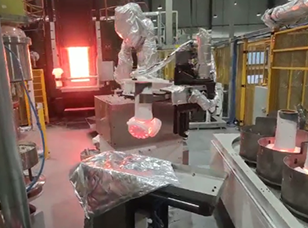
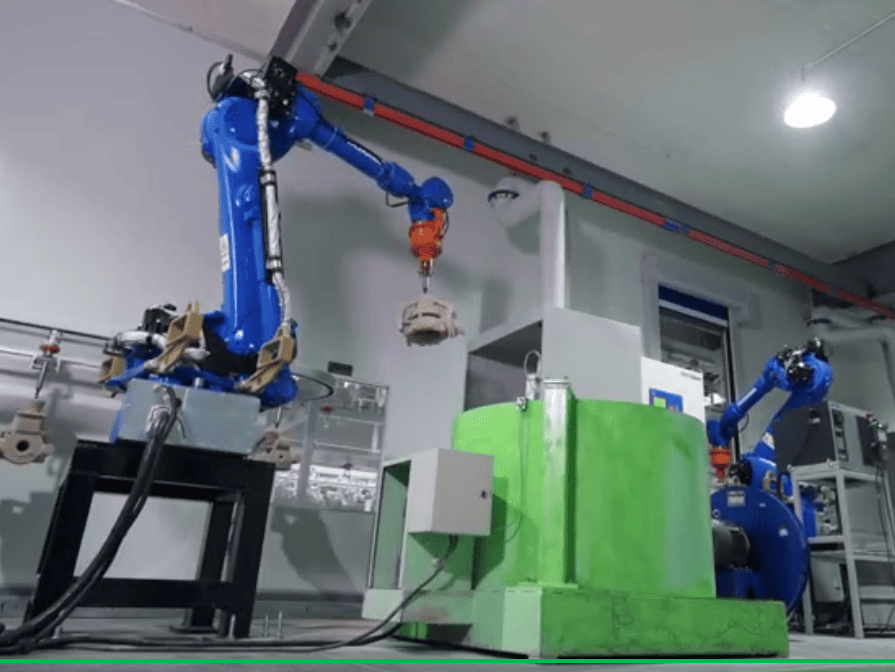
As an experienced robot integrator, we engineer dedicated robotic workcells specifically configured for foundry environments and investment casting automation. Each cell standardizes precision, eliminates ergonomics hazards, and ensures repeatable cycle times across demanding production lines.
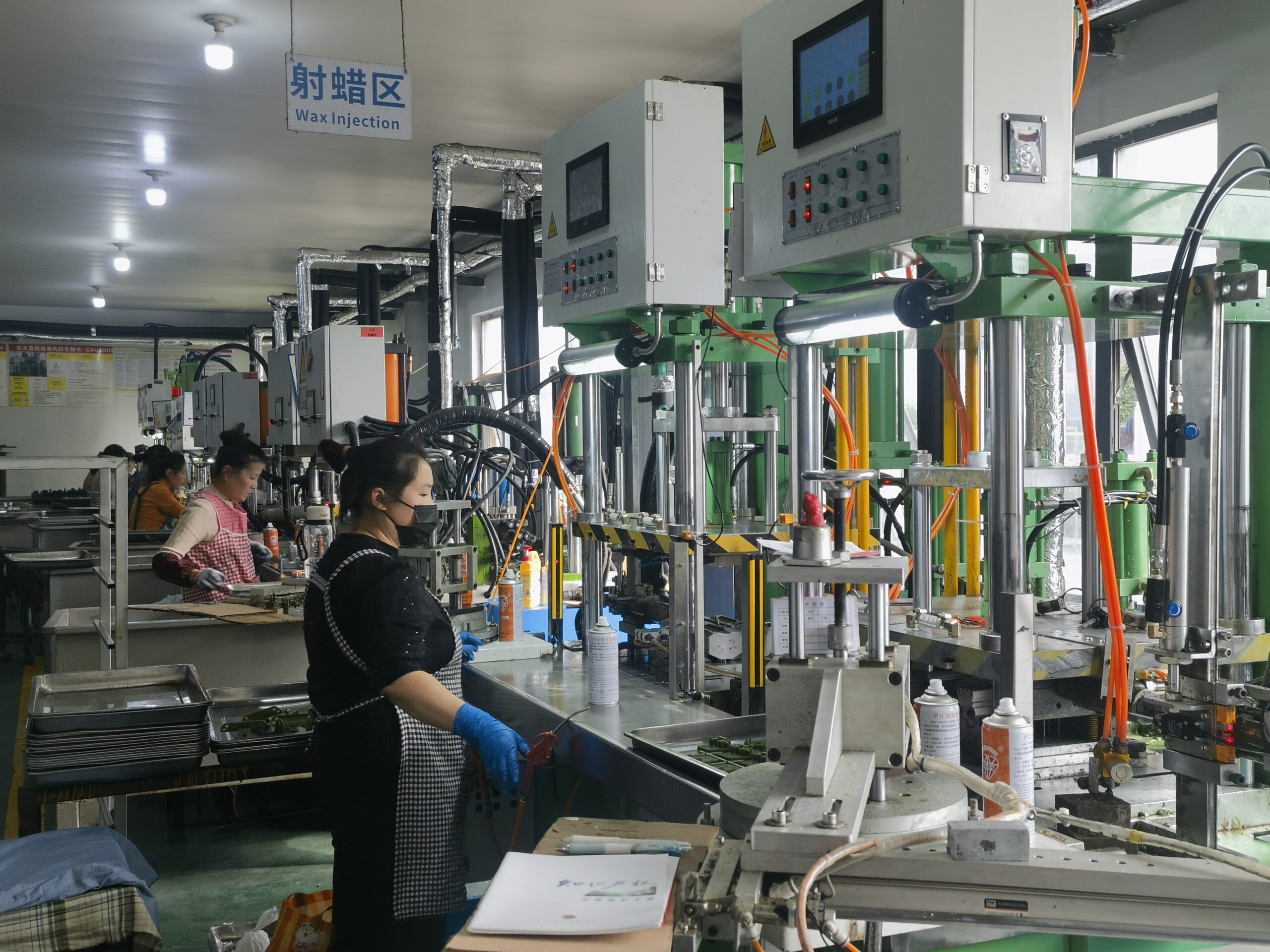
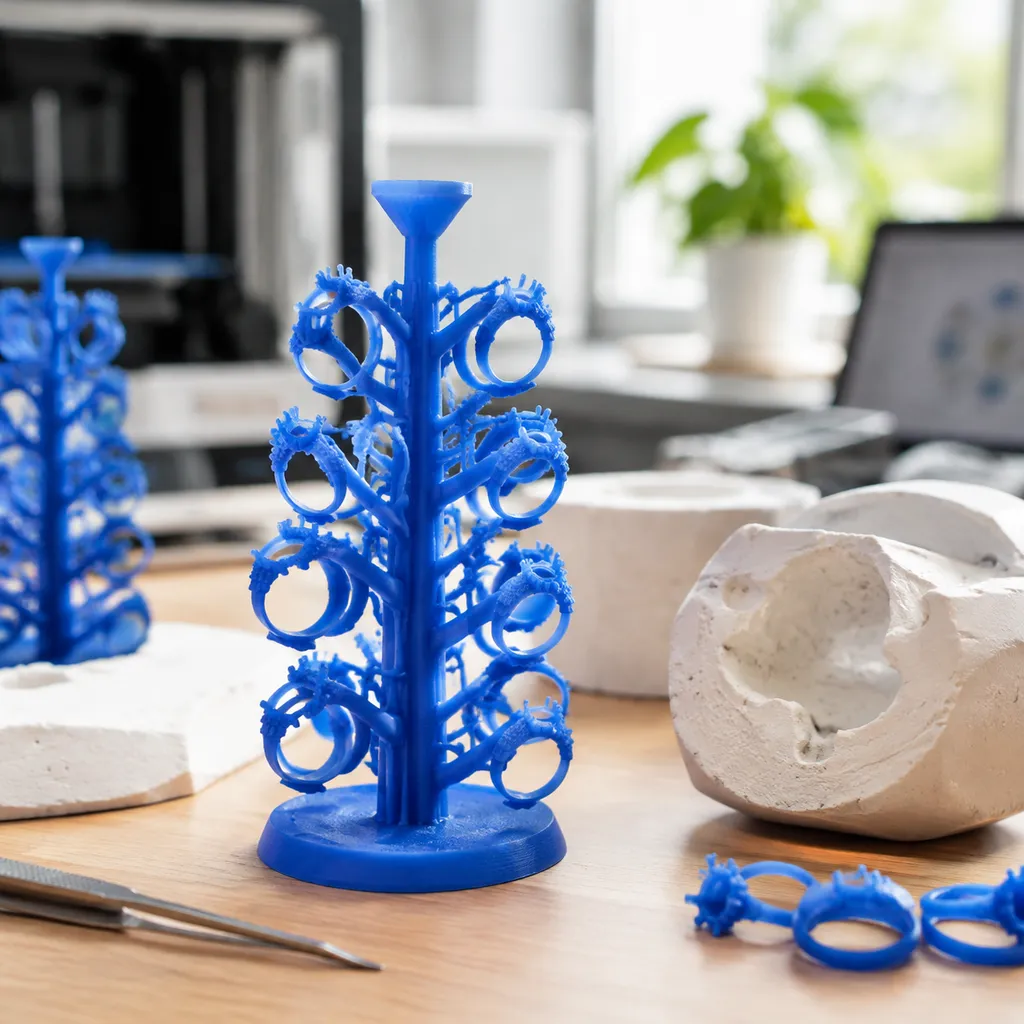
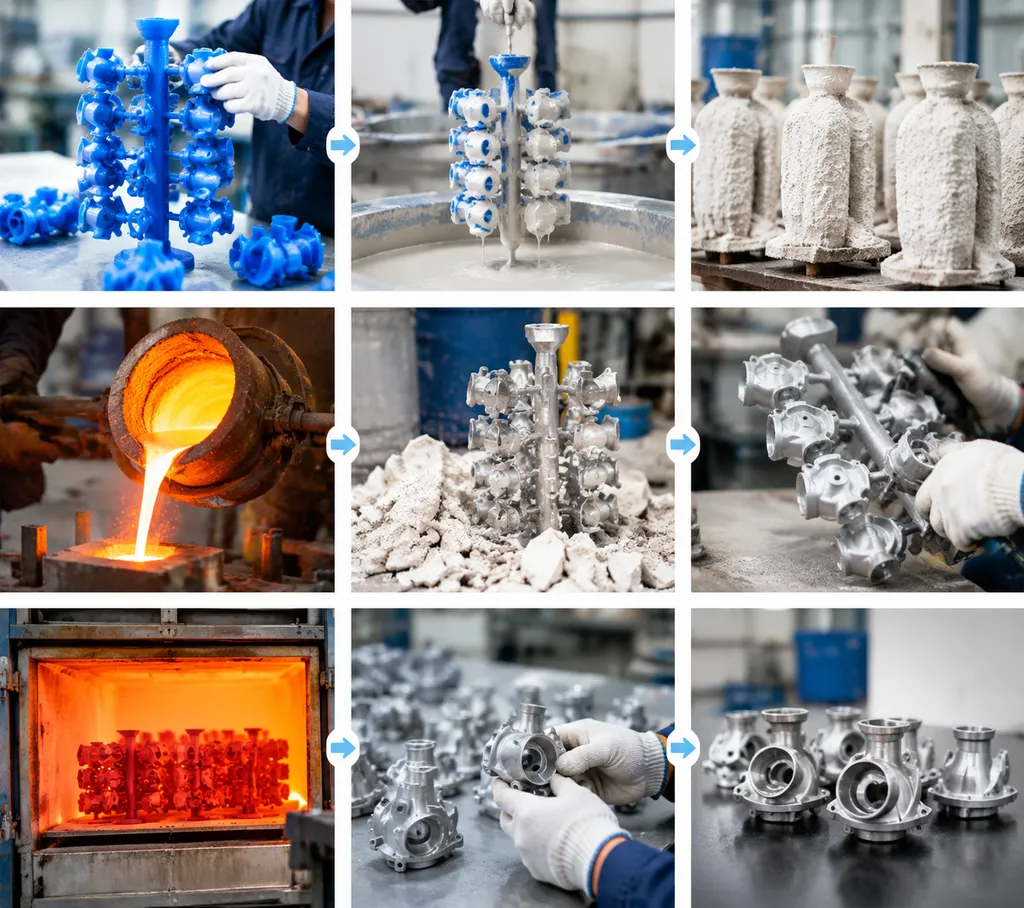
Wax Assembly Cell — Pattern Sorting, Gating Assembly
Our wax assembly cells automate the handling, sorting, and precision joining of delicate wax patterns to central runners:
- Pattern Sorting: High-speed vision-guided sorting identifies and orients wax patterns without surface deformation.
- Gating & Runner Welding: Robotic tooling achieves consistent heat application and bond strength during tree assembly.
- Quality Protection: Minimized human touch drastically lowers scrap rates caused by handling damage or thermal transfer.
Shell Handling Cell — Transfer Between Coating, Drying and Dewaxing
Built to navigate heavy payloads and abrasive dipping environments, this cell automates the multi-dip ceramic mold process:
- Multi-Stage Transfer: Seamless transport of mold assemblies through slurry tanks, sanding rain systems, and drying rooms.
- Dewaxing Transfer: Stable handling during autoclave loading and unloading under extreme temperature variance.
- Slurry Uniformity: Precise axis manipulation ensures controlled dipping angles and smooth draining for uniform shell thickness.
Pouring Assist Cell — Ladle Handling Support for Consistent Pouring
Molten metal handling demands extreme safety and exact velocity control:
- Pouring Trajectory Control: Synchronized axis motion maintains constant pour height and steady laminar flow into the shell mold.
- Ladle Handling: High-capacity articulation supports ergonomic relief and removes human operators from radiant heat and splash zones.
- Repeatable Fill Rates: Accurate positioning mitigates air entrapment, slag inclusion, and thermal shock defects.
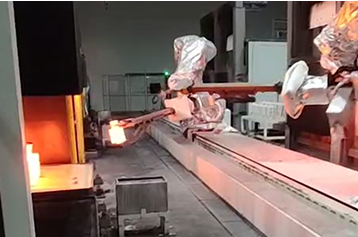
Finishing Cell — Cutting, Grinding Assistance for Cast Parts
Post-cast processing requires rigid, high-force robotics tailored to aggressive material removal:
- Gate & Riser Cutting: High-power abrasive cutoff wheels or plasma tooling to sever gates flush with part surfaces.
- Automated Grinding: Constant-force compliance heads deburr parting lines, remove gating remnants, and blend contours.
- Consistent Surface Quality: Rigid work holding and calibrated path accuracy deliver uniform finishes while isolating workers from airborne dust and vibration.
Key features
As an experienced robot integrator, we engineer our automated workcells to withstand the tough thermal and mechanical demands of foundry operations. We handle everything from the initial reach simulation to final deployment, ensuring high repeatability and process stability.
| Feature Component | Standard Configuration | Capability & Benefit |
|---|---|---|
| Payload Rating | 150 kg – 200 kg | Handles heavy cluster trees, large ladles, and structural components |
| Tooling & Grippers | Custom mechanical/pneumatic EOAT | Tailored specifically to your part geometry and clamping surfaces |
| Safety Architecture | Integrated fencing, scanners, interlocks | Complete perimeter safeguarding with zone-controlled access |
| Connectivity | Profinet / EtherNet/IP | Direct link to plant PLCs, SCADA, and upstream line controls |
| Deployment | Turnkey installation & on-site training | Complete commissioning with dedicated operator handoff |
Application-engineered: layout, gripper and program built for your parts
We do not supply generic off-the-shelf equipment. Every cell layout, mechanical gripper, and robot program is built specifically around your casting geometry, cycle times, and floor constraints. Whether managing delicate wax trees or handling heavy components derived from specialized investment and precision casting services, our custom end-of-arm tooling (EOAT) ensures secure part manipulation without surface damage or dropped loads.
Payload options from 150 kg to 200 kg
Our heavy-duty robotic cells feature payload capacities between 150 kg and 200 kg at full extension. This provides the structural rigidity required for: High-inertia loads: Manipulating heavy ceramic shells through multi-dip coating cycles. Continuous ladle handling: Smooth, vibration-free molten metal pouring. Demanding finishing jobs: Resisting cutting and grinding reaction forces during gate and riser removal.
Fencing, interlocks and safety scanning included
Every workcell is delivered with a complete safety enclosure designed to meet industrial robotic safety standards: Physical safety fencing: Robust modular perimeter guarding around the robot envelope. Safety interlocks: Monitored safety switches on all access doors to cut power immediately upon entry. Laser area scanners: Configurable safety zones that slow or stop robot movement when personnel enter restricted areas.
PLC/upper-system communication (Profinet / EtherNet/IP)
Our controls integrate directly into your existing plant architecture. Using field-proven industrial communication protocols—primarily Profinet and EtherNet/IP—the robot controller communicates seamlessly with supervisory PLCs, HMIs, and plant MES. This setup allows for automated recipe selection, live telemetry tracking, fault logging, and line synchronization.
On-site installation and operator training
As your dedicated robot integrator, our commitment extends beyond the build stage. Our engineering team manages physical placement, wiring, system power-up, and final acceptance testing directly on your production floor. We provide comprehensive, hands-on training for your operators and maintenance technicians, covering routine operation, basic recovery, and ongoing cell upkeep to maximize equipment uptime.
 English
 Russian
 German