

2026年11月11日
ISO 8062 Casting Tolerance Guide with DCTG and GCTG tables process tips and cost saving advice for precise casting design
Understanding ISO 8062: The Grading System
ISO 8062 serves as the international standard for defining tolerances in cast metal components. For engineering teams and procurement specialists, this standard acts as the definitive language for communicating quality expectations. At Vast Precision Engineering, we leverage these benchmarks to ensure that every project—from initial design to final machining—meets the exact requirements for dimensional accuracy and geometric form.
Defining DCTG and GCTG
To maintain strict manufacturing control, ISO 8062 divides tolerance requirements into two primary categories:
- Dimensional Casting Tolerance Grades (DCTG): This metric governs the linear dimensions of the casting. It defines the acceptable variance for distances between points, such as length, width, and wall thickness. DCTG ensures that the cast part fits correctly within the broader assembly.
- Geometrical Casting Tolerance Grades (GCTG): This metric regulates the form, orientation, and position of the cast features. GCTG requirements cover criteria such as flatness, perpendicularity, and coaxiality. Achieving high GCTG levels is critical for parts that require precise mating surfaces or high-performance mechanical operation.
The CT Scale: From High Precision to Loose Tolerances
The ISO 8062 system utilizes a numerical range, known as Casting Tolerance (CT) grades, to classify the degree of precision for a component. The scale runs from CT1, representing the highest possible precision, to CT16, representing the loosest allowable tolerances.
| CT Grade Range | Classification | Typical Application |
|---|---|---|
| CT1 – CT4 | Ultra-Precision | Aerospace, specialized medical, and critical instrumentation components. |
| CT5 – CT9 | Standard Precision | High-performance automotive parts, hydraulic components, and precision machinery. |
| CT10 – CT16 | General/Loose | Structural brackets, base components, and parts where close-tolerance mating is not required. |
Selecting the appropriate grade is a balancing act between engineering requirements and production costs. While higher precision (lower CT numbers) ensures better fitment and functionality, it necessitates more sophisticated casting processes or supplementary CNC machining. By understanding where your project falls on this scale, we can optimize the manufacturing workflow to achieve the required tolerances with maximum efficiency.
Technical Reference: ISO 8062 Tolerance Table Summary

When working with metal components, understanding the ISO 8062-3 tolerance tables is essential for balancing manufacturing costs with functional requirements. The standard classifies parts into Dimensional Casting Tolerance Grades (DCTG), which dictate the allowable variance based on the nominal size of the feature.
Casting Tolerance Classification
We categorize tolerances by the specific process used to create the component. Choosing the right grade is critical, as tighter tolerances often increase production complexity.
| Tolerance Grade | Precision Level | Typical Application |
|---|---|---|
| CT1 - CT5 | Ultra-High | Specialized precision components |
| CT6 - CT9 | High | Standard for precision investment casting |
| CT10 - CT16 | Commercial | General industrial and structural parts |
As-Cast vs. Machined Tolerances
It is important to distinguish between "as-cast" specifications and final machined dimensions. While the casting process provides the near-net shape, we frequently apply CNC machining to meet specific linear tolerance for castings that exceed the capabilities of the initial mold.
- As-Cast Tolerance: Defines the dimensional accuracy directly out of the mold, adhering to standard casting accuracy standards.
- Machined Tolerance: Represents the final, high-precision state achieved through secondary CNC operations.
By integrating these standards early, we ensure that your design accounts for the transition from the casting phase to the final high-precision finish required for industrial assembly. Consistent adherence to these grades reduces manufacturing risk and ensures the structural integrity of your metal components.
Casting Methods and Their Impact on Tolerance Grades

Choosing the right manufacturing path is the first step toward meeting your required ISO 8062 tolerance grade. Each process offers a different level of dimensional control, and understanding these capabilities is vital for project success.
- Sand Casting (CT8–CT14): Ideal for large or complex parts where high-volume production speed is prioritized over extreme precision. Because sand molds are less rigid, you should anticipate looser tolerance ranges within the CT8 to CT14 spectrum.
- Investment Casting (CT5–CT9): Known as lost-wax casting, this process provides superior surface finish and significantly tighter dimensional control. When working with advantages and disadvantages of lost-wax casting, we typically achieve grades ranging from CT5 to CT9, making it suitable for intricate, high-performance parts.
To optimize your project, we focus on the intersection of material flow, cooling rates, and mold stability. While standard casting processes provide the base shape, you can achieve tighter tolerances by strategically selecting your casting method or by factoring in post-process CNC machining to bridge the gap between "as-cast" reality and your final engineering specifications.
Design for Manufacturability (DFM) Tips for Castings
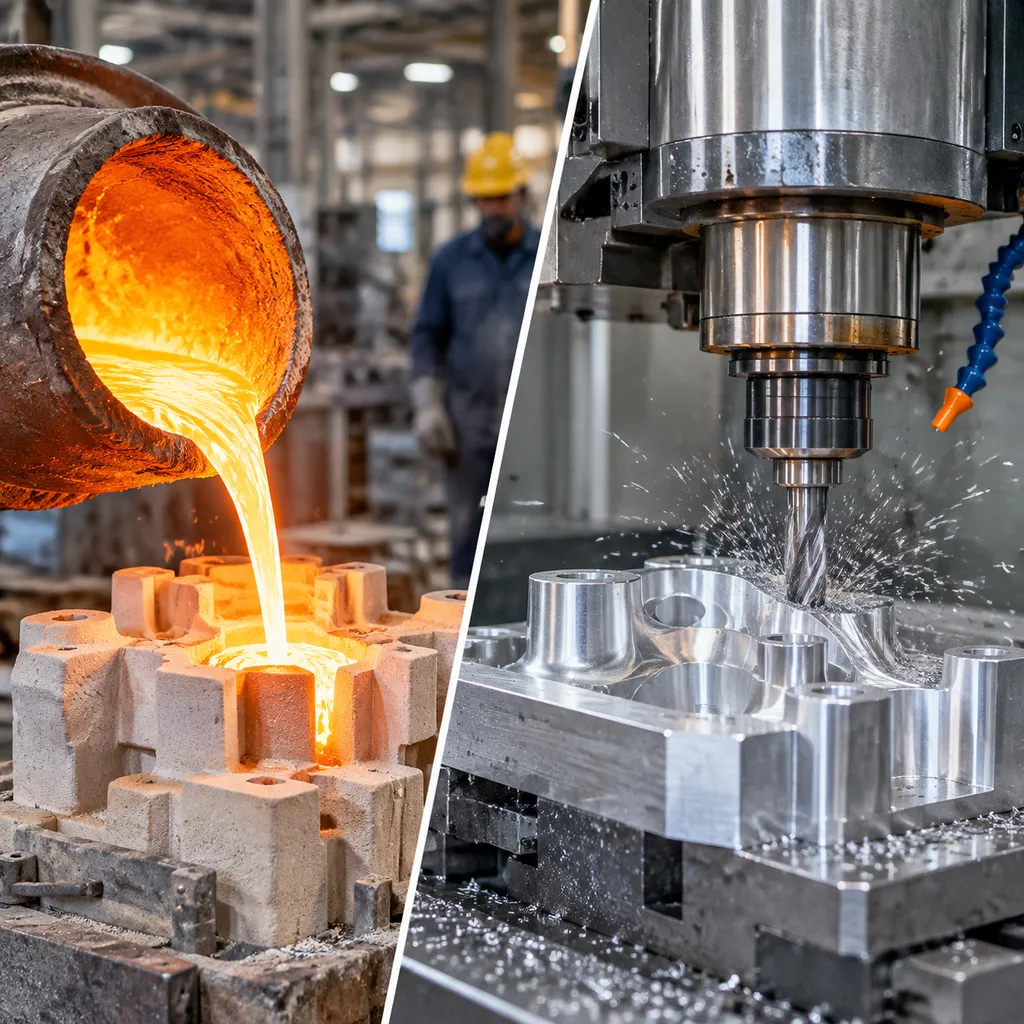
To achieve the best results, we must balance the cost-accuracy curve early in the design phase. High-precision grades often require secondary operations, so we prioritize the most efficient path for your component.
Follow these best practices to ensure optimal metal casting performance:
- Specify Required Precision: Do not over-specify tolerances. If a feature does not require a tight CT grade, opt for a looser tolerance to reduce manufacturing overhead.
- Account for Tooling Geometry: Include proper draft angles in your CAD designs to ensure easy pattern removal. Ignoring these will lead to surface defects and higher scrap rates.
- Define Parting Lines: Clearly identify the parting line location to manage potential flash and maintain dimensional integrity across the assembly.
- Plan for Secondary Processing: If your design demands tolerances tighter than what as-cast processes can provide, utilize precision machining parts and custom CNC components to finish critical surfaces.
We leverage strategic CNC finishing to bridge the gap between casting capabilities and high-tolerance requirements. By integrating machining into the project scope, we ensure your components meet exact geometric specifications without unnecessary costs.
Ensuring ISO 8062 Compliance with Vastpe

At Vast Precision Engineering, we bridge the gap between initial CAD designs and high-accuracy physical metal components. Achieving compliance with the ISO 8062 Casting Tolerance Guide is not just about meeting a standard; it is about ensuring that every part functions perfectly within your specific assembly. We integrate rigorous quality control workflows, including CMM inspection and comprehensive material testing, to verify that every casting meets the required DCTG and GCTG specifications.
Transitioning a design from a digital model to a production-ready metal component often involves navigating the complexities of shrinkage and cooling. We specialize in precision cast components and custom metal parts that demand strict adherence to geometric tolerances. For instance, when handling complex geometries that require high GCTG precision, we utilize a combination of controlled casting processes followed by secondary CNC operations. This dual approach ensures that even the most intricate features remain within tight tolerance envelopes, reducing the risk of failure in demanding sectors like aerospace or industrial machinery. By partnering with us, you gain a one-stop solution where engineering expertise meets advanced manufacturing, ensuring your final product aligns exactly with your ISO 8062 requirements.
Frequently Asked Questions About ISO 8062
Navigating casting standards can be complex. To ensure your procurement process aligns with project specifications, we have compiled answers to the most common questions regarding ISO 8062 and casting accuracy. For engineers selecting materials and processes, our casting stainless steel guide for buyers and engineers provides additional context on balancing performance and manufacturing requirements.
What are the key differences between ISO 8062 and ANSI/ASME standards?
While both sets of standards provide a framework for manufacturing, they are designed with different scopes.
- ISO 8062: This standard is specifically engineered for the casting industry. It addresses the unique challenges of molded parts, such as shrinkage, mold shift, and pattern equipment variations. It uses a clear, grade-based system (CT grades) that scales with the size of the part.
- ANSI/ASME Standards: These are broader engineering standards often focused on machined tolerances. While they can be applied to castings, they lack the specific provisions for as-cast surfaces and mold-related geometric variances found in ISO 8062.
In global manufacturing, ISO 8062 is preferred for defining the baseline accuracy of raw castings, while ASME standards are often layered on top to define post-casting CNC machining requirements.
How can engineers determine the correct CT grade for specific project requirements?
Selecting the right Casting Tolerance (CT) grade involves balancing functionality with production costs. You should consider:
- Component Function: Does the part require high precision for mating surfaces, or is it a structural component with loose clearance requirements?
- Material Properties: Harder metals or materials prone to high shrinkage may require looser CT grades to maintain yield rates.
- Casting Method: Investment casting naturally achieves tighter grades (CT5–CT9) compared to sand casting (CT8–CT14).
- Machining Allowance: If a part requires secondary CNC machining, you can often specify a looser as-cast tolerance, as the final dimensions will be corrected during the machining phase.
How do geometric tolerances impact overall manufacturing costs?
The relationship between geometric tolerance and manufacturing cost is exponential. As you tighten your tolerance requirements, the complexity of mold making, the rate of scrap, and the intensity of quality control inspections increase.
| Tolerance Requirement | Impact on Manufacturing | Cost Correlation |
|---|---|---|
| Loose (CT12-CT16) | Standard mold making, high speed, minimal rejects. | Low |
| Medium (CT8-CT11) | Careful process control, standard inspection. | Moderate |
| Tight (CT5-CT7) | High-precision tooling, secondary machining required, frequent CMM checks. | High |
By clearly defining your GCTG (Geometrical Casting Tolerance Grades) early in the design phase, we can determine whether the required precision is achievable "as-cast" or if it requires strategic CNC finishing to meet your specifications efficiently.

 English
 Russian
 German