
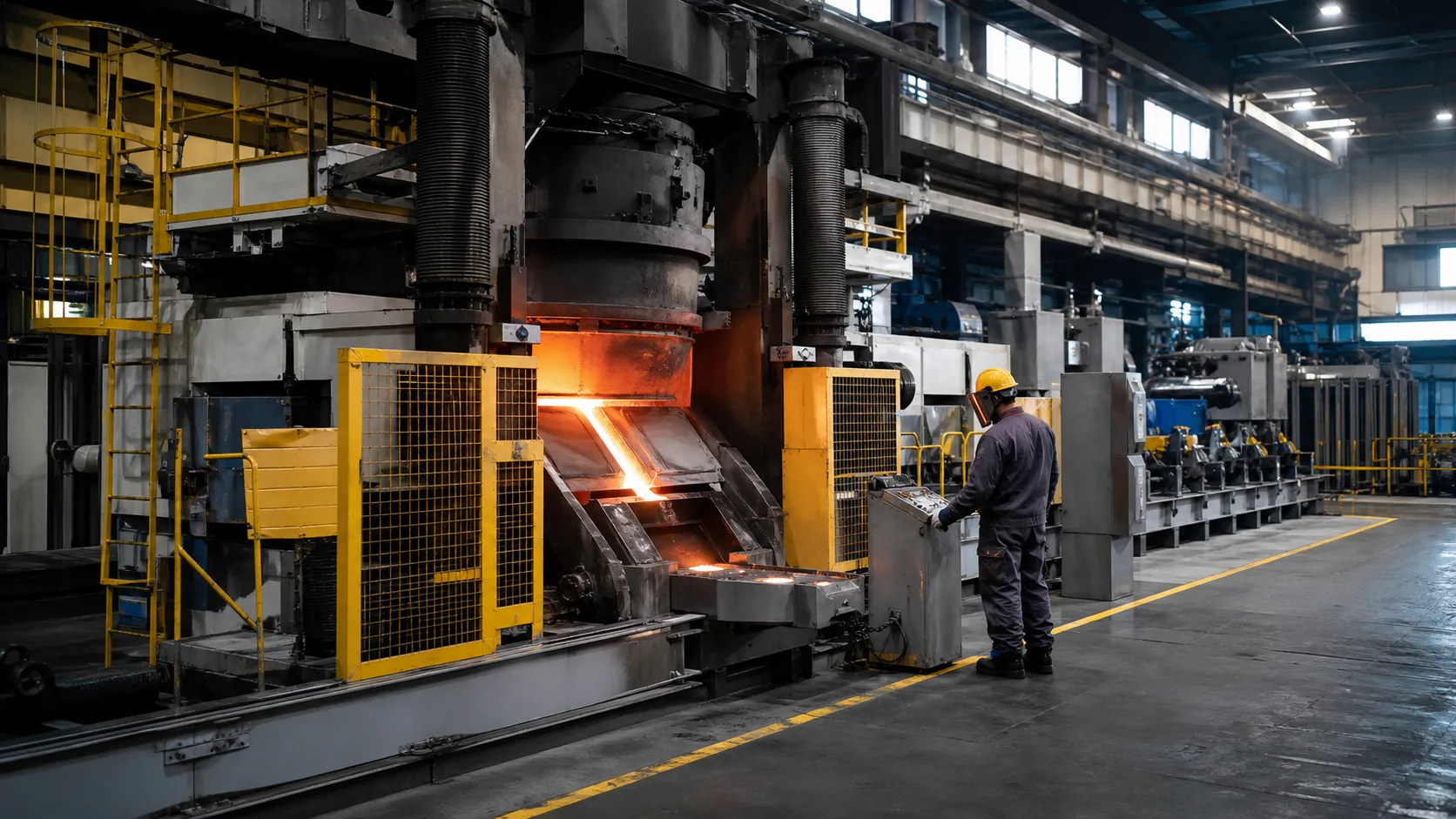
Forging and casting compared for strength cost tolerances and applications to help engineers choose the right process
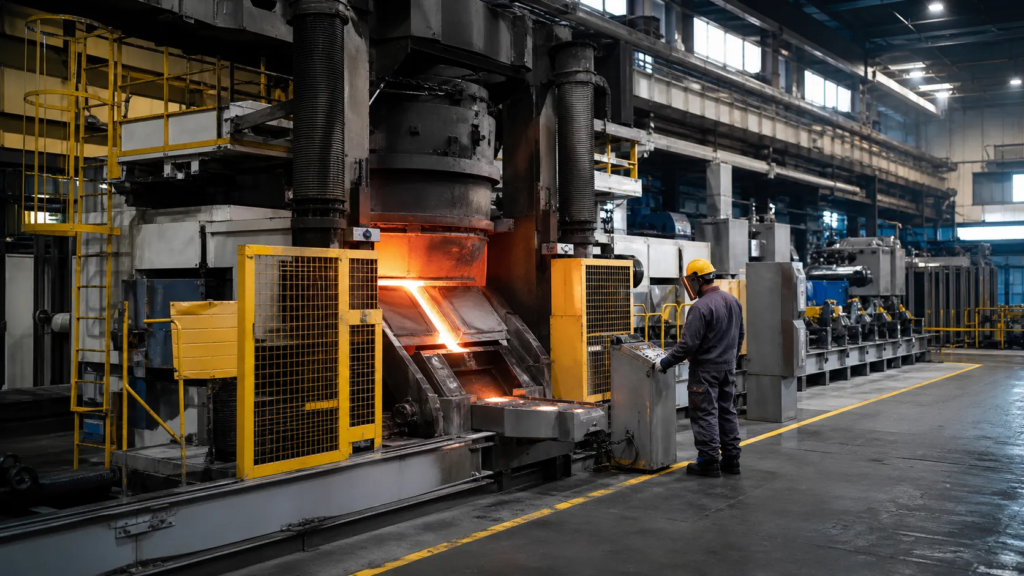
What is Forging and Casting?
Choosing between forging and casting is one of the most critical decisions we make in manufacturing. Pick the wrong method, and you risk early component failure or inflated production costs. Both are foundational manufacturing methods used to shape metal, but they achieve the final result through entirely different physical processes.
Metal Forging Process
The metal forging process shapes solid metal using targeted compressive forces like hammering, pressing, or rolling.
- State of Metal: Solid (often heated to make it malleable, but never melted).
- Core Action: Mechanical force deforms the metal into a desired shape.
- Internal Structure: Aligns the metal's internal grain structure along the contours of the component, dramatically increasing impact strength and fatigue resistance.
Metal Casting Process
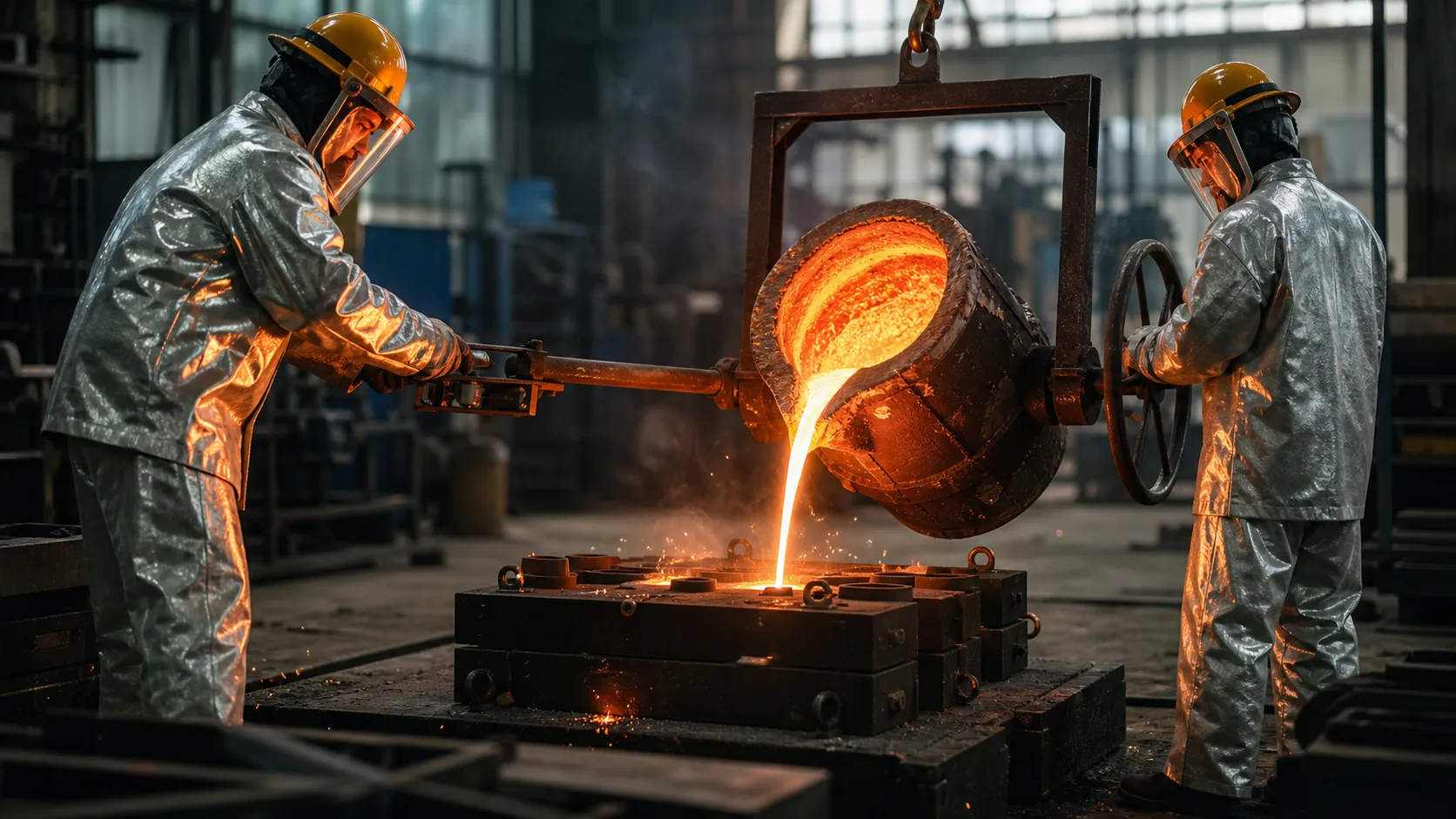
The metal casting process creates parts by pouring liquid metal into a specialized mold cavity.
- State of Metal: Fully molten liquid.
- Core Action: Metal flows into a mold and solidifies as it cools down.
- Internal Structure: Forms a uniform, non-directional grain structure ideal for intricate geometric detail and complex internal voids.
Key Differences: Structural Integrity & Manufacturing Methods
| Feature | Forging | Casting |
|---|---|---|
| Primary Method | High-pressure mechanical deformation | Melting, pouring, and cooling |
| Structural Integrity | Superior; continuous grain flow eliminates voids | Moderate; potential risk of porosity or air pockets |
| Tensile Strength | Exceptional impact and wear resistance | High compressive strength; lower tensile toughness |
| Shape Complexity | Best for simple to moderately complex shapes | Ideal for highly intricate, hollow, or detailed geometries |
Understanding the Forging Process
Forging is the process of shaping solid metal by applying intense compressive force. Instead of melting the material down, we work the metal in its solid state—refining its internal grain structure to eliminate voids and boost overall strength. Modern industrial setups rely on specialized machinery and custom tooling to deliver high-integrity parts built for demanding conditions. Explore our high-precision manufacturing solutions to see how heavy-duty component design fits into scalable production.
How Hot, Warm, and Cold Forging Work
Temperature dictates how the metal behaves during the process:
- Hot Forging: Metal is heated above its recrystallization temperature (up to 2,200°F for steel). This lowers the required force and maximizes ductility, making it ideal for large, complex parts.
- Warm Forging: Performed between room temperature and recrystallization temp (typically 1,300°F to 1,800°F for steel). It offers a middle ground—better surface finish and tighter tolerances than hot forging, with lower force needed than cold forging.
- Cold Forging: Done at or near room temperature. It increases material strength through strain hardening, yields exceptional dimensional accuracy, and leaves a smooth surface finish, though it requires much higher force.
Types of Forging Equipment
Different component shapes and production scales demand specific forging setups:
- Open Die Forging: The metal is compressed between flat or simply shaped dies that do not fully enclose the part. Best suited for massive, simple geometries like large shafts or rings.
- Closed Die Forging (Impression Die): Metal is pressed into custom shaped dies that fully enclose the workpiece. Perfect for high-volume, high-precision structural parts like engine connecting rods.
- Ring Rolling: Specialized equipment rolls a thick-walled ring blank between rotating rollers to expand its diameter while reducing wall thickness. Ideal for seamless rings used in flanges, bearings, and turbines.
Common Metals Used in Forging
We select metals based on required tensile strength, weight, and environmental exposure:
- Steel & Alloy Steel: The standard choice for heavy-duty drive shafts, gears, and structural frames.
- Aluminum: Provides an incredible strength-to-weight ratio for aerospace components and lightweight automotive suspension parts.
- Titanium: Delivers extreme heat resistance and superior strength for critical jet engine components and medical hardware.
Pros and Cons of Forged Components
| Advantages | Limitations |
|---|---|
| Superior Strength: Continuous grain flow maximizes fatigue resistance. | Higher Upfront Tooling Costs: Custom closed dies are expensive to manufacture. |
| High Structural Integrity: Free from internal gas pockets or shrinkage voids. | Shape Restrictions: Not ideal for extremely intricate parts with complex internal channels. |
| Material Efficiency: Less material waste compared to machining from solid bar stock. | Secondary Machining: Hot-forged parts often require extra finishing for tight tolerances. |
Understanding the Casting Process
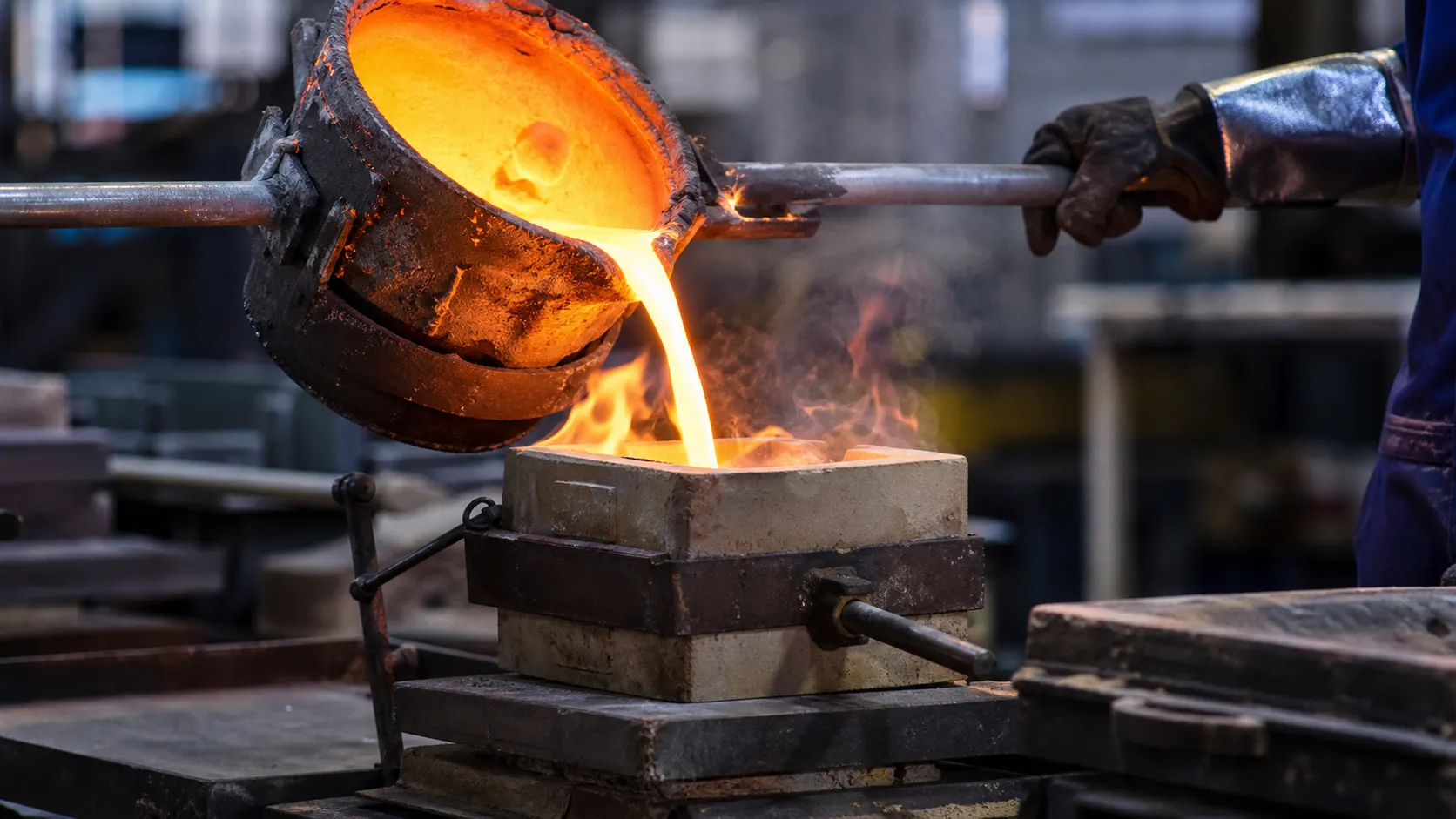
When we need to manufacture complex shapes with intricate internal cavities, the metal casting process is our go-to manufacturing method. Instead of hammering metal into shape, we melt it down completely and pour it into a pre-designed mold. This allows us to create highly detailed components that would be nearly impossible or too expensive to machine from a solid block.
How Common Metal Casting Methods Work
We utilize three primary casting methods depending on the production volume, part complexity, and required surface finish:
- Sand Casting: We pack a specialized sand mixture around a pattern to create a mold. Once we remove the pattern, we pour the liquid metal into the cavity. It is highly cost-effective for large parts and low-volume production, though it requires more post-machining due to a rougher surface finish.
- Investment Casting: Also known as lost-wax casting, we create a wax pattern of the part, coat it in a ceramic shell, and melt the wax out. We then pour the metal into the remaining ceramic mold. This delivers exceptional dimensional accuracy and a smooth surface finish for intricate parts.
- Die Casting: We force molten metal under high pressure into reusable steel molds (dies). This process is incredibly fast and precise, making it the perfect choice for high-volume manufacturing of non-ferrous parts.
Liquid Metal Preparation and Mold Pouring
Our process begins in the furnace, where we heat the raw material past its melting point. During this liquid metal preparation stage, we carefully monitor the chemical composition and remove impurities (slag) to ensure clean material. Once the metal reaches the precise pouring temperature, we transfer it to a ladle and pour it into the mold. The metal then cools and solidifies, taking the exact shape of the mold cavity.
Common Metals Used in Casting
We select specific metals based on the final application requirements:
- Cast Iron: Exceptional wear resistance and vibration damping, making it standard for heavy machinery and automotive blocks.
- Aluminum: Lightweight with excellent thermal conductivity, widely used in aerospace and modern vehicle components.
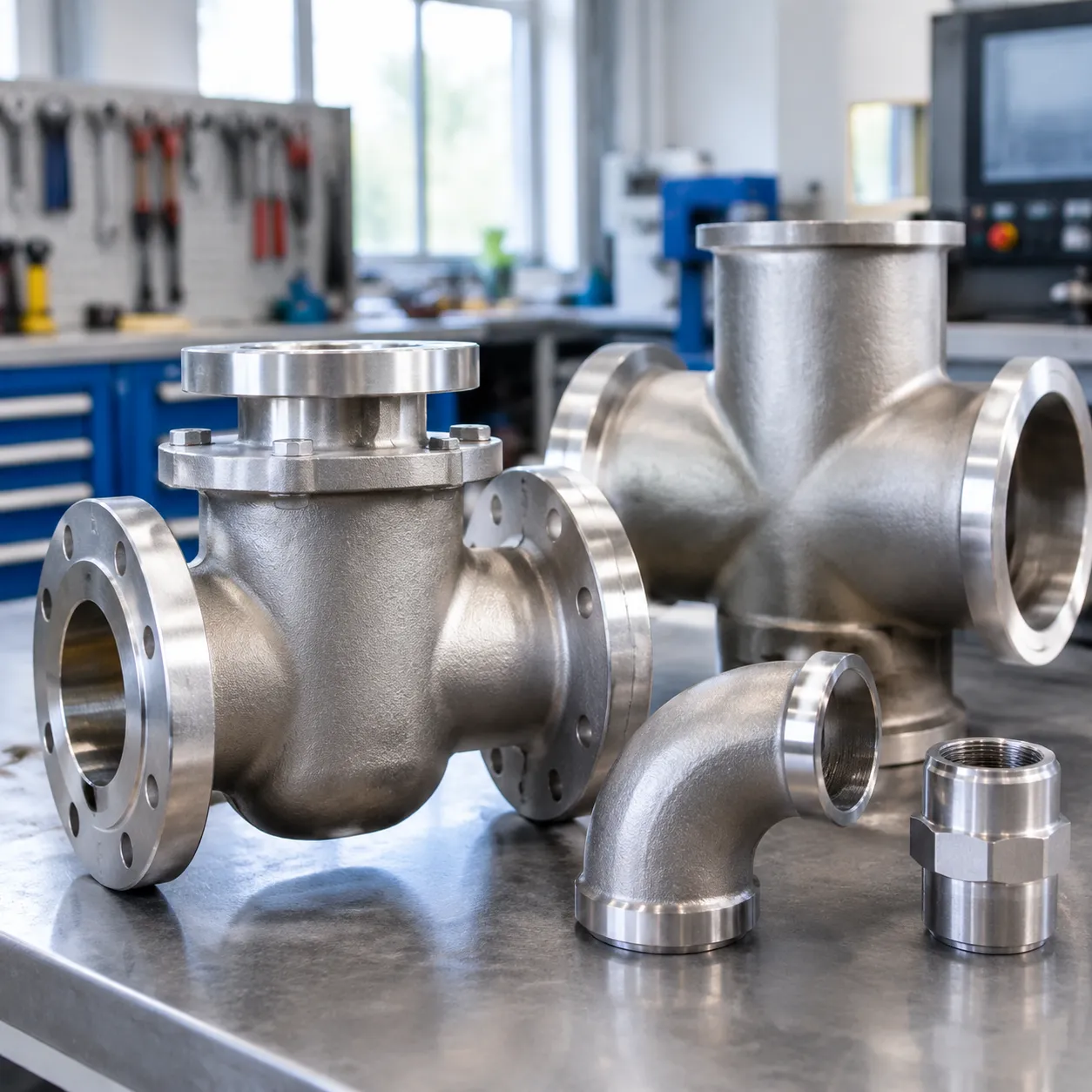
- Bronze and Brass: Excellent corrosion resistance and low friction, perfect for marine hardware, bearings, and valves.
Pros and Cons of Cast Components
| Pros | Cons |
|---|---|
| Virtually unlimited design flexibility for complex, hollow, or curved shapes. | Lower overall tensile strength and toughness compared to forged parts. |
| Lower upfront tooling costs for methods like sand casting. | Internal defects like porosity (tiny air bubbles) can occur during cooling. |
| Highly scalable for massive production runs via die casting. | Typically requires more strict non-destructive testing for critical parts. |
Forging vs Casting: Key Differences and Comparisons
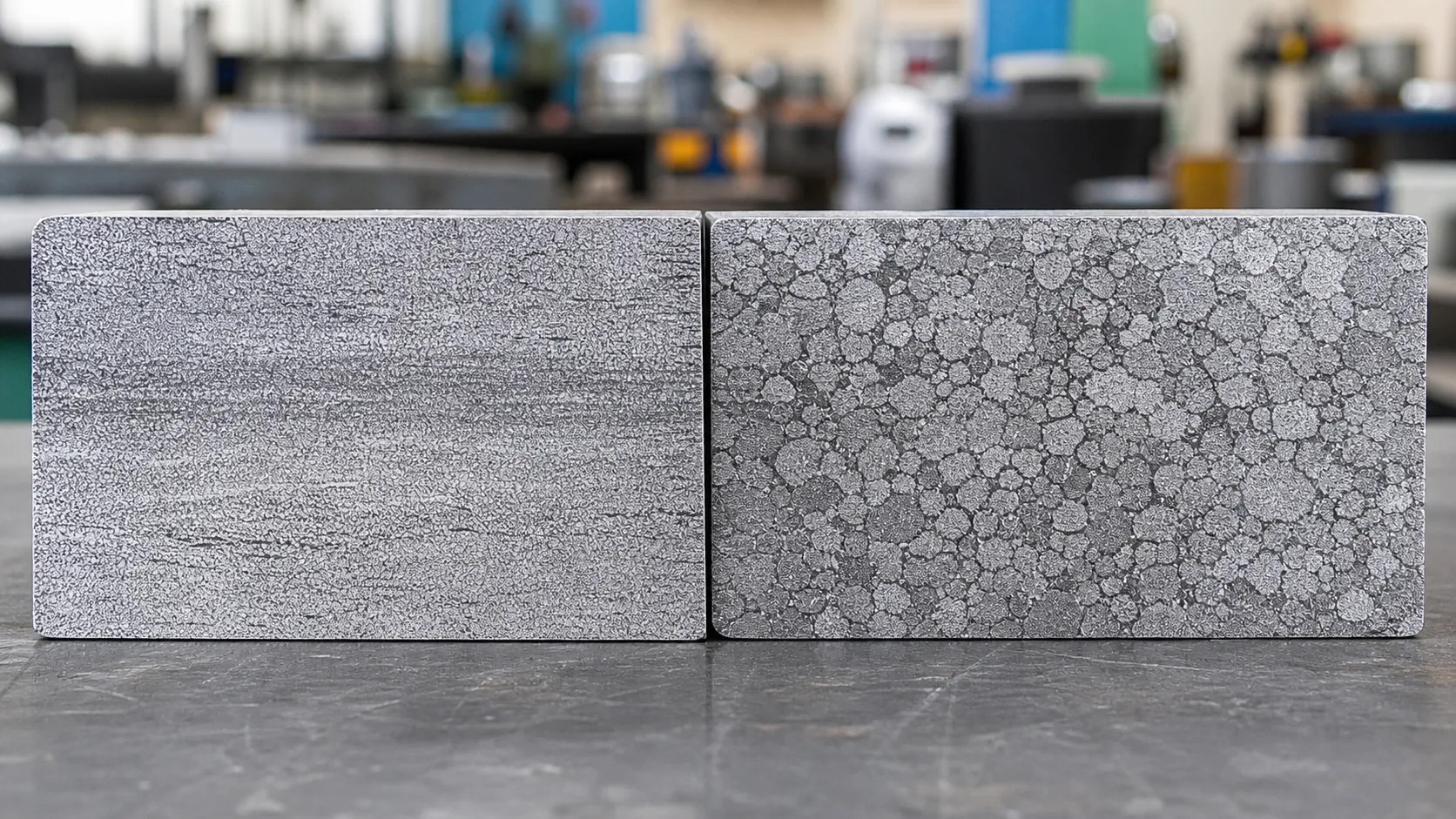
Choosing between the metal forging process and the metal casting process usually comes down to performance demands, shape complexity, and budget. Here is how both manufacturing methods stack up head-to-head across core performance metrics:
| Comparison Metric | Forging Process | Casting Process |
|---|---|---|
| Grain Structure | Continuous, directional grain alignment | Uniform, non-directional grain structure |
| Strength & Toughness | Superior tensile strength and impact resistance | High compressive strength; lower tensile/impact strength |
| Shape Complexity | Limited to simpler, geometric designs | Handles intricate geometries and internal voids |
| Dimensional Accuracy | High precision (especially in closed die forging) | Moderate to high (depends on sand vs. die casting) |
| Surface Finish | Smooth; minimal surface defects | Variable; often requires post-machining |
| Upfront Tooling Costs | Higher initial tooling and equipment cost | Lower initial setup and mold costs |
| Production Volume | Best for high-volume, standard runs | Best for complex prototypes and custom batches |
Grain Structure and Structural Integrity
We rely on forging when component failure is not an option. Pressing or hammering hot metal aligns its internal grain structure along the natural contours of the part. This eliminates internal voids, gas pockets, and porosity, giving forged parts maximum structural integrity and exceptional resistance to fatigue and sudden impacts.
Castings are made by pouring molten metal into a mold. While this liquid metal approach creates a uniform structure, it is prone to microscopic shrinkage and tiny air pockets. This makes cast components slightly more brittle under extreme stress.
Strength, Toughness, and Fatigue Resistance
Forged parts deliver unmatched tensile strength and yield power. Because the internal matrix remains continuous, forged metal resists shear forces, heavy wear, and severe mechanical vibration over long lifespans.
Cast metal offers excellent dampening qualities and solid compressive strength, but it generally cannot match the fatigue resistance of a forged component when subjected to heavy dynamic loads.
Design Flexibility and Shape Complexity
When you need extremely intricate designs, internal channels, or complex hollow cavities, casting takes the lead. Processes like investment casting or sand casting allow us to pour liquid metal into almost any shape imaginable with minimal design boundaries.
Forging compresses solid metal, meaning there are hard mechanical limits on internal cavities, severe undercuts, and sharp turns. Highly complex geometries often require heavy secondary machining if forged.
Dimensional Accuracy and Surface Finish Capabilities
Both methods offer solid control, but their finished textures differ significantly: Precision and Finish in Forging: Methods like closed die forging produce tight dimensional accuracy with a refined, smooth surface finish that requires minimal cleanup. Precision and Finish in Casting: Processes like die casting yield sharp detail and smooth surfaces, whereas traditional sand casting leaves a rougher texture that usually requires extra surface prep and CNC machining.
Production Volume and Upfront Tooling Costs
Financial feasibility often dictates the choice: Initial Tooling Costs: Forging dies require high-grade, heat-treated steel built to withstand thousands of tons of pressure, resulting in higher initial tooling costs. Casting molds—especially for sand or investment methods—are far cheaper and faster to produce. Volume Efficiency: For high-volume production runs, forging amortizes those high upfront die costs quickly, driving down the unit price while maintaining consistent speed and quality. For short production runs, custom prototypes, or low-volume batches, casting remains the most cost-effective path.
When to Choose Forged vs Cast Components
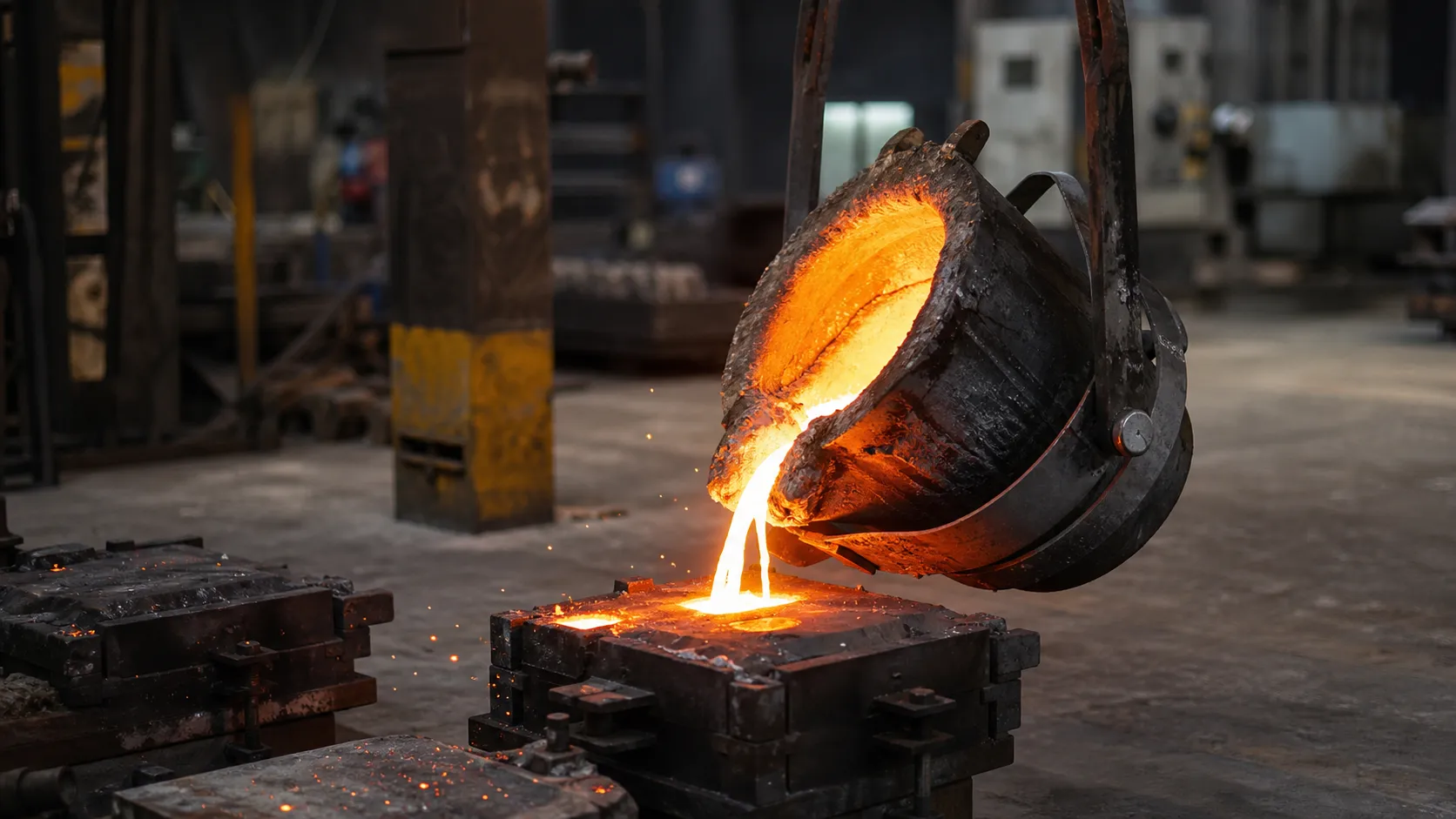
Choosing between forging and casting comes down to three things: safety demands, design complexity, and total budget. We look at where the part will be installed, how much stress it takes daily, and how many units you need before locking in a production method.
Best Applications for Heavy-Duty Forged Parts
When a part absolutely cannot fail under extreme pressure, impact, or high tension, we choose the metal forging process. Forging compresses the metal's grain structure, making it exceptionally tough and resistant to wear.
- Aerospace: Landing gear, turbine blades, structural airframe brackets, and engine mounts.
- Automotive: Engine crankshafts, connecting rods, steering knuckles, and drive shafts.
- Heavy Machinery: Construction excavator teeth, oilfield drill heads, and crane hooks.
Best Applications for Complex Cast Parts
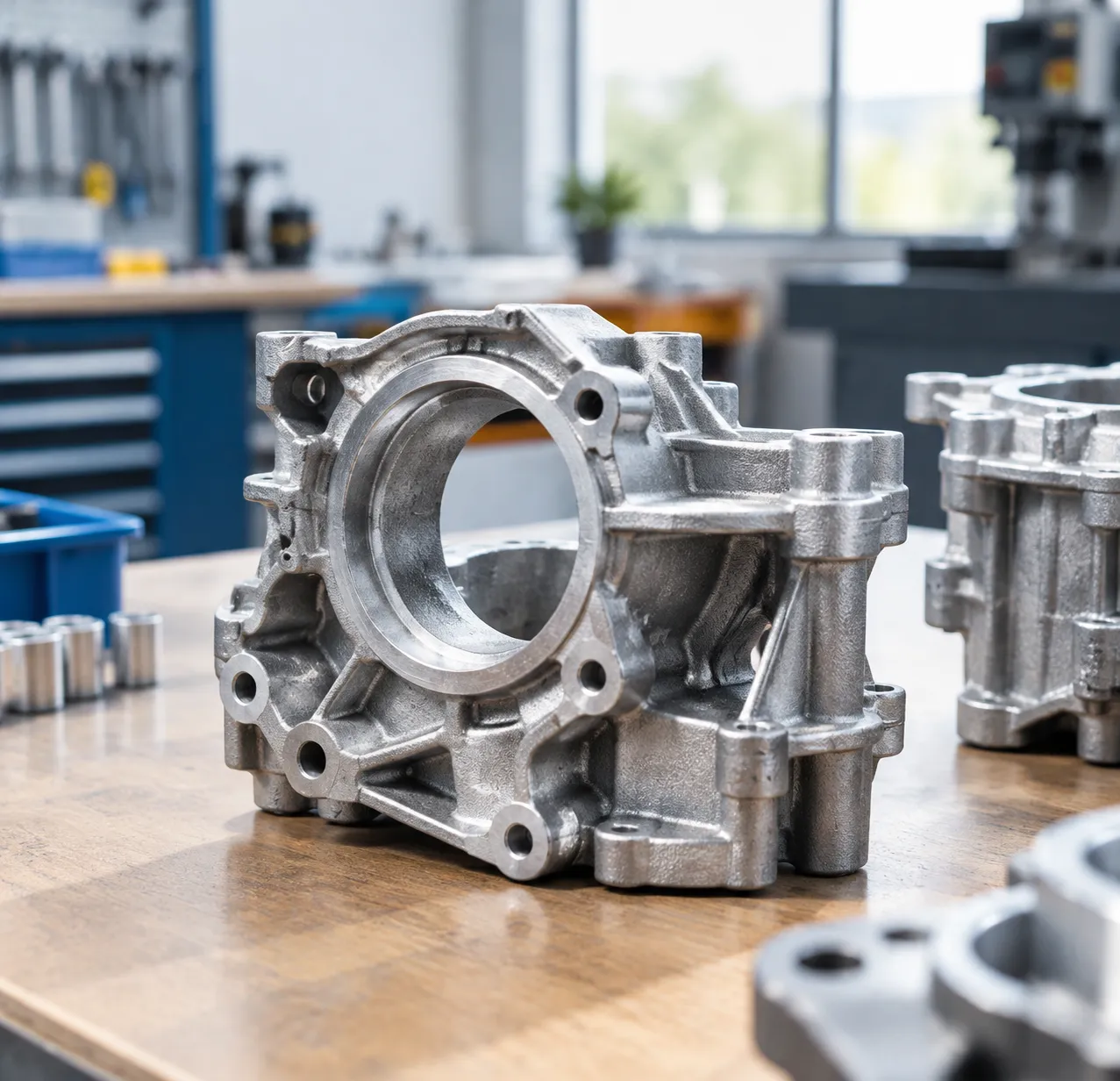
When a part features internal hollows, delicate contours, or intricate shapes that are impossible or too expensive to machine out, the metal casting process is the clear winner.
- Automotive & Marine: Complex engine blocks, cylinder heads, and transmission cases.
- Fluid Systems: Pump housings, heavy-duty valve bodies, and pipe elbows.
- Industrial Tools: Machine tool bases, large impellers, and decorative hardware.
Cost-Benefit Analysis: Low vs High Volume Manufacturing
Production volume and initial tooling costs dictate your unit economics. Here is how both manufacturing methods compare:
| Metric | Forging | Casting |
|---|---|---|
| Initial Tooling Costs | High (Durable steel dies required) | Low to Moderate (Patterns & molds) |
| Material Waste | Minimal (Near net shape) | Moderate (Requires gate & riser removal) |
| Low-Volume Cost Efficiency | Poor (High setup cost per unit) | Excellent (Great for custom prototypes & small runs) |
| High-Volume Cost Efficiency | Excellent (Fast cycles, long die life) | Very Good (Die casting speeds up high runs) |
| Secondary Machining Need | Higher (To achieve fine features) | Lower (Complex geometry cast directly) |
FAQs About Forging and Casting
Is forging stronger than casting?
Yes, forging creates fundamentally stronger parts. When we use the metal forging process, the continuous grain structure aligns with the shape of the component. This gives forged steel vs cast iron a clear advantage in tensile strength, impact resistance, and overall structural integrity.
Which process is more cost-effective for custom prototypes?
Casting wins for low-volume custom prototypes. Sand casting has very low upfront tooling costs compared to the expensive dies required for closed die forging. If you only need a handful of complex parts to test a design, the metal casting process keeps your initial budget in check.
Can you forge any metal that can be cast?
No. While we can melt down almost any metal for investment casting or die casting, some metals crack under the pressure of open die forging or closed die methods. High-carbon irons and certain brittle alloys flow smoothly into a mold but will shatter under a forging hammer.
How do post-processing and machining compare for both methods?
Both manufacturing methods require post-processing, but the work looks different:
- Forged components: Usually require more surface machining to achieve final dimensions, but they have zero internal porosity, making machining predictable.
- Cast components: Can be cast closer to final shapes (dimensional accuracy), but internal air pockets can sometimes appear during machining, which risks scrapping the part.
- Surface finish: Methods like die casting offer a much smoother raw surface finish than standard raw forgings.
 English
  Russian
  German