
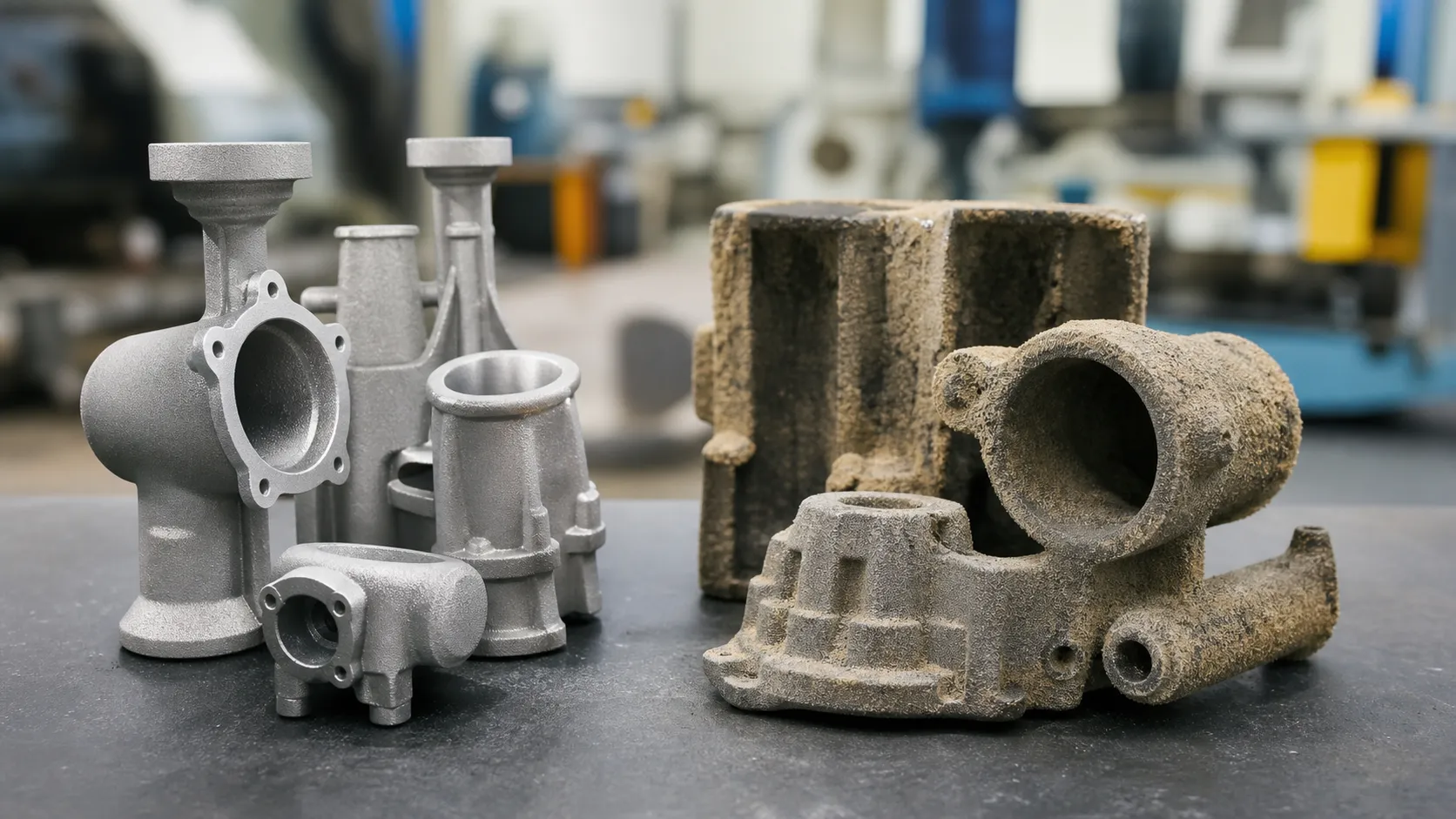
Compare investment casting vs sand casting to find the best fit for cost precision finish and production volume
What Is Sand Casting and How Does the Sand Mold Process Work?
If you need to manufacture heavy-duty metal parts without breaking your tooling budget, sand casting is often the most practical, cost-effective solution. As a proven manufacturing method, sand mold casting relies on packed sand mixtures to create a temporary mold capable of handling extremely high pouring temperatures and massive component dimensions.
Green Sand vs. Resin-Bound Sand Casting Basics
We primarily rely on two main types of sand mixtures depending on your part's structural requirements and surface finish demands:
- Green Sand Casting: Uses a natural blend of silica sand, clay, water, and additives. It is highly recyclable, fast to set up, and offers the lowest overall tooling costs for high-volume production.
- Resin-Bound Sand Casting (Air-Set): Uses sand mixed with synthetic chemical binders. It hardens at room temperature to form a rigid mold, offering superior dimensional stability, higher strength, and better surface finishes for larger or more intricate parts.
Step-by-Step Cope, Drag, and Pattern Setup
Creating a reliable sand mold requires careful preparation of the flask and pattern to ensure structural integrity during metal pouring:
| Step | Action |
|---|---|
| 1. Pattern Creation | A physical replica (pattern) of the desired part is made from wood, metal, or resin, scaled slightly larger to account for metal shrinkage. |
| 2. Drag Setup (Bottom Half) | The bottom section of the molding flask (the drag) is placed over the pattern, packed tightly with sand, and flipped right-side up. |
| 3. Cope Setup (Top Half) | The top section (the cope) is aligned over the drag. Gating systems, risers, and sprues are positioned before packing the cope with sand. |
| 4. Mold Separation & Pouring | The cope and drag are separated to remove the pattern. Once reassembled and clamped shut, molten metal is poured directly into the cavity. |
Typical Applications, Size Limits, and Heavy-Duty Use Cases
When evaluating investment casting vs sand casting, sand casting remains the undisputed champion for massive, high-load structural components.
- Size & Weight Capabilities: We can produce parts ranging from 1 pound up to tens of thousands of pounds with virtually no maximum size ceiling.
- Ideal Heavy-Duty Use Cases: Engine blocks, pump housings, valves, heavy agricultural equipment frames, gearbox cases, and large machinery bases.
- Key Advantage: It easily handles both ferrous and non-ferrous alloys, including iron, steel, bronze, and aluminum, with unmatched cost efficiency for heavy industrial components.
What Is Investment Casting and How Does the Lost Wax Process Work?
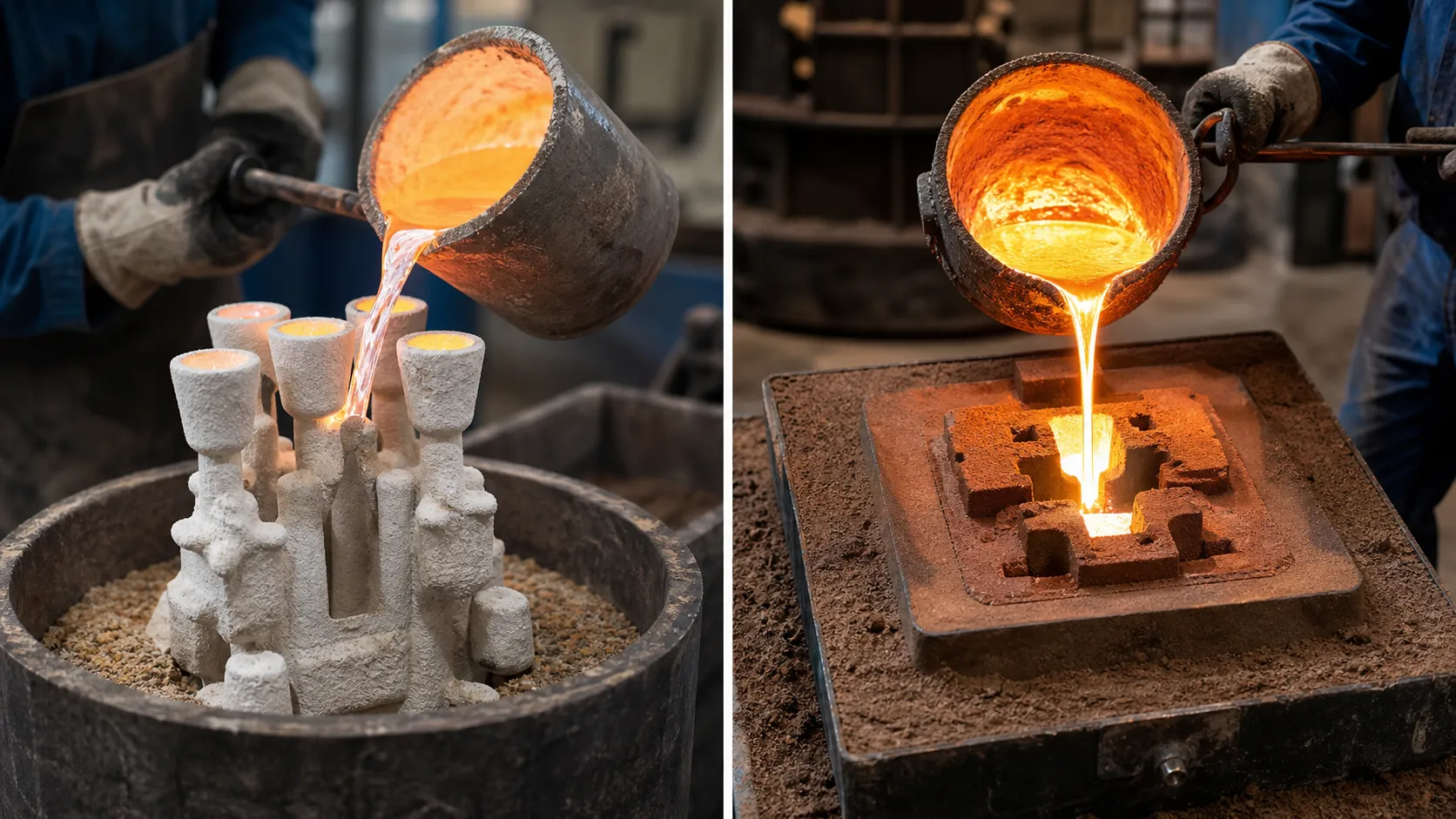
When we need to produce components with intricate shapes, smooth surfaces, and tight tolerances, investment casting—also known as the lost wax casting process—is our go-to method. Unlike traditional sand molds, this technique uses a consumable wax pattern surrounded by a hard ceramic shell mold. It gives us near-net shape results that drastically cut down on secondary machining costs.
| 1. Inject Wax | ---> | 2. Assemble Tree | ---> | 3. Ceramic Dip | | (Create Pattern)| | (Attach Sprues) | | & Stucco Coat | +4. Dewaxing | | (Autoclave Heat) | + | 5. Pour Metal | <--- | 6. Knockout Shell| | & Cut Off Parts | | (Into Hot Shell) | |
Core Principles of Wax Patterns and Ceramic Shells
The process relies on precision tooling and high-grade refractory materials:
- Wax Injection: We inject molten wax into a metal die to create an exact replica of the final part.
- Tree Assembly: We mount multiple wax patterns onto a central wax sprue, creating a tree-like cluster for batch production.
- Ceramic Slurry Dipping: We dip the wax tree into a fine ceramic slurry and coat it with sand (stuccoing). Repeating this process 6 to 9 times creates a dense, rock-hard shell.
Walkthrough: From Dewaxing to Pouring
- Dewaxing: We place the hardened ceramic tree into a steam autoclave. The heat quickly melts the inner wax, leaving behind a hollow ceramic shell.
- Preheating & Pouring: We heat the ceramic shell to roughly 1,800 °F (1,000 °C) to burn off residue and strengthen the mold. We then pour molten metal—such as stainless steel, aluminum, or superalloys—directly into the hot shell.
- Knockout & Cut-Off: Once cooled, we break away the ceramic shell, cut the individual metal parts off the central tree, and grind down the gate stubs.
Ideal Applications: Complex Geometries, Thin Walls, and Fine Details
Investment casting shines when part designs are too complex for sand molds or standard CNC machining:
- Thin-Walled Components: We can reliably cast wall thicknesses down to 0.040 inches (1.0 mm).
- Fine Surface Details: Achieving an impressive surface finish Ra of 63 to 125 microinches, this method reproduces sharp corners, logos, and internal passages cleanly.
- High-Spec Industries: It is the industry standard for aerospace turbine blades, medical implants, automotive valvetrains, and custom industrial hardware sourced through suppliers like Vast.
Investment Casting vs Sand Casting: Key Feature and Performance Differences
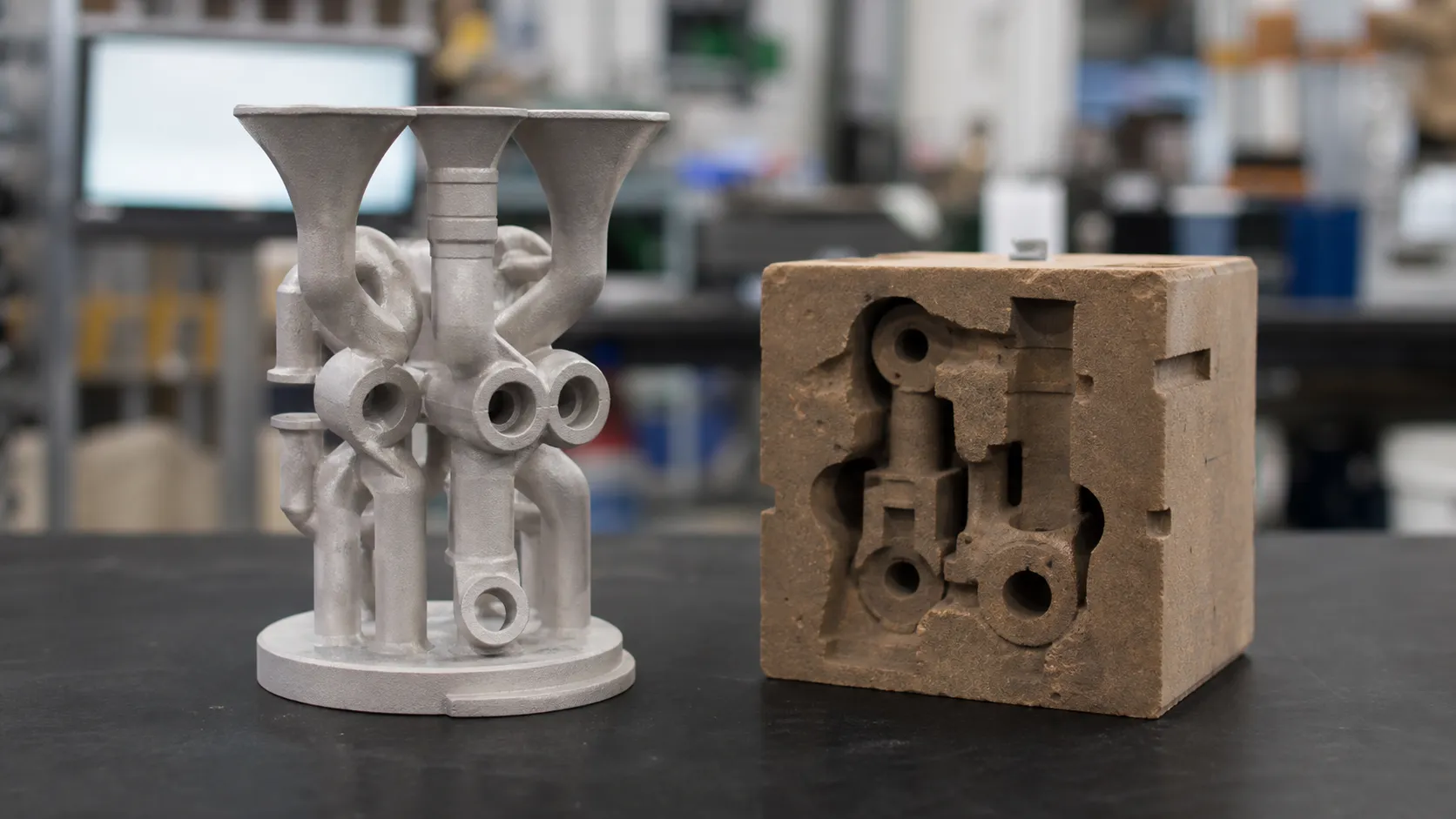
When we evaluate investment casting vs sand casting for a project, the decision usually comes down to precision versus scale. Both methods get the job done, but their performance capabilities vary wildly when it comes to tolerances, surface quality, and design limits.
Here is a direct comparison of how these two manufacturing processes stack up on the shop floor:
| Performance Metric | Investment Casting (Lost Wax) | Sand Mold Casting |
|---|---|---|
| Dimensional Accuracy (ISO 8062) | CT4 – CT7 (High precision) | CT10 – CT13 (Standard precision) |
| Surface Finish (Ra) | 63 – 125 µin (Smooth, near-net shape) | 250 – 500 µin (Rough, textured) |
| Minimum Wall Thickness | 0.040 in (1.0 mm) | 0.120 – 0.190 in (3.0 – 5.0 mm) |
| Weight Capabilities | Ounces up to 250 lbs | 1 lb up to 100,000+ lbs |
| Linear Tolerance (Typical) | ±0.005 in/in | ±0.030 in/in |
Dimensional Accuracy and ISO Tolerance Grades
Investment casting uses a rigid ceramic shell mold, giving us tight CT4 to CT7 ISO tolerance grades. This high accuracy means your parts come out as a near-net shape, practically eliminating the need for expensive secondary machining.
Sand casting uses a green sand mold or resin-bound flask that shifts slightly during the pour. This puts it in the CT10 to CT13 ISO grade range, which works well for large structural components but requires extra machining if you need tight-fitting surfaces.
Surface Finish Comparison: Ra 63 vs Ra 250+
- Investment Casting: Achieves a smooth Ra 63 to 125 microinches surface finish. The ceramic slurry captures fine pattern details, producing clean cosmetics and sharp fluid channels right out of the mold.
- Sand Casting: Yields a rougher Ra 250 to 500 microinches surface finish. The grain structure of the sand leaves a noticeable texture on the casting, which often requires grinding or shot blasting.
Wall Thickness Capabilities and Weight Limits
- Investment Casting: Ideal for lightweight, highly detailed parts. We can pour minimum wall thicknesses down to 0.040 inches (1.0 mm). However, part weight is generally capped at around 250 pounds due to ceramic shell handling limits.
- Sand Casting: Built for heavy-duty applications. It requires thicker walls—typically at least 0.120 inches (3.0 mm)—to prevent cold shuts. The trade-off is massive weight capacity, handling everything from a few pounds to tens of thousands of pounds for massive machinery bases.
Material Selection Flexibility
Both processes handle a wide range of ferrous and non-ferrous alloys, but each has a clear sweet spot:
- Investment Casting: Perfect for high-melting-point materials that are tough to machine later, such as stainless steel, superalloys, titanium, and aluminum.
- Sand Casting: The industry workhorse for ductile iron, gray iron, carbon steel, and heavy bronze alloys where thick cross-sections are required.
Tooling Costs, Unit Price, and Total Cost of Ownership (TCO)
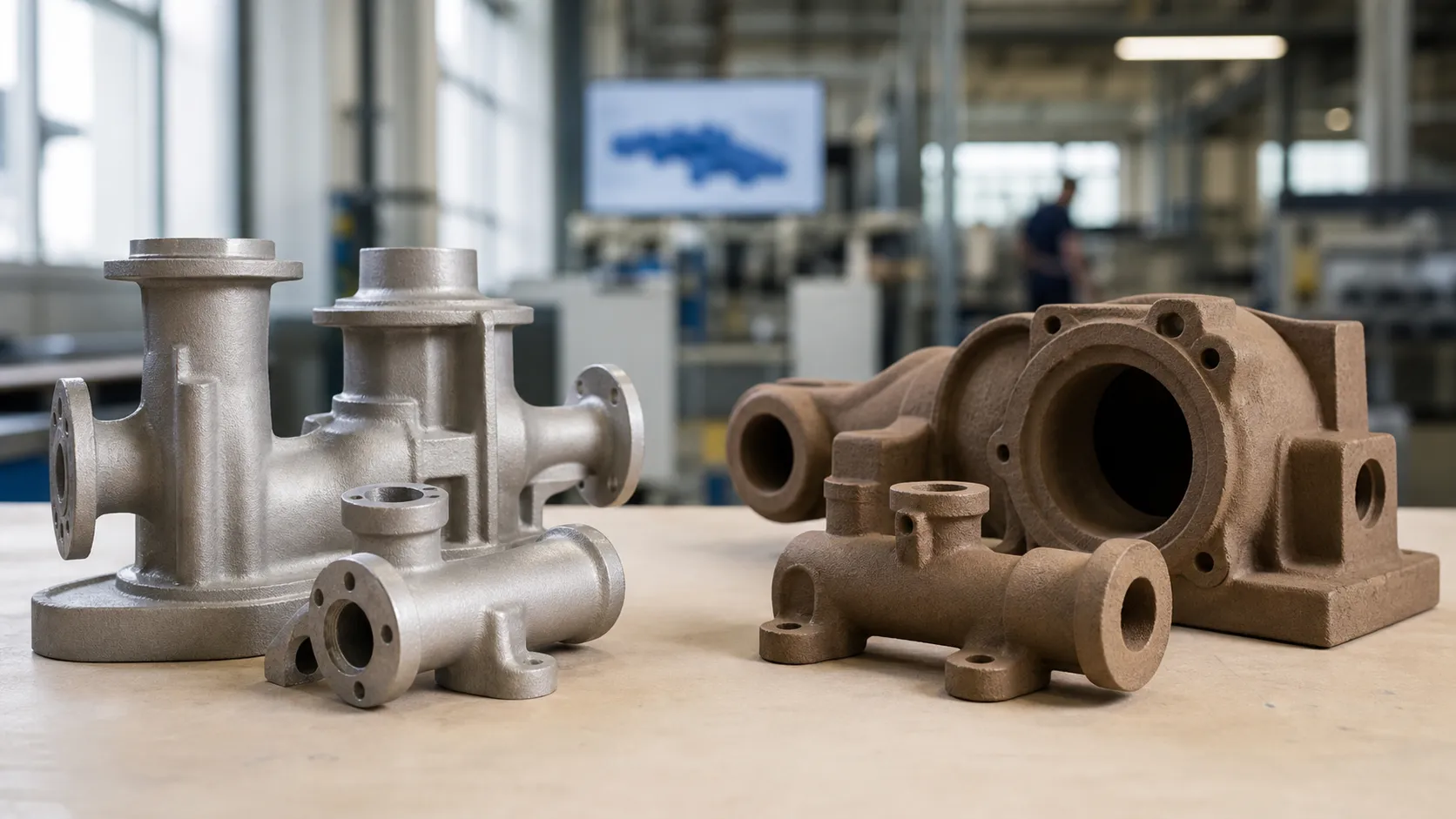
When comparing investment casting vs sand casting, looking only at the initial quote can be misleading. You have to evaluate the total cost of ownership, balancing upfront tooling expenses against per-part labor and secondary machining costs.
Upfront Tooling Expenses
Initial tooling costs represent your first major investment, and the price gap between the two processes is substantial:
- Sand Casting ($500 – $10,000): Uses relatively simple wooden, plastic, or metal patterns to form the sand mold casting cavity. Tooling is fast to produce and easy on your budget, making it ideal for low-risk entry.
- Investment Casting ($5,000 – $50,000): Requires high-precision aluminum or steel injection dies to form wax patterns. Because these dies must create exact shapes with tight tolerances, the initial tooling costs are significantly higher.
Secondary Machining and Labor Trade-Offs
The unit price of a raw casting never tells the full story. Secondary processing often shifts the financial balance:
| Cost Factor | Sand Casting | Investment Casting |
|---|---|---|
| Raw Unit Price | Lower (faster cycles, cheaper materials) | Higher (multi-step lost wax process) |
| Secondary CNC Machining | High (requires extensive cleanup & milling) | Low to None (delivers near-net shape parts) |
| Labor & Finishing | Heavy grinding and riser removal required | Minimal gate grinding and cleanup needed |
| Material Scrap Costs | Higher due to extra machined-off metal | Minimal metal waste |
While sand casting gets you a cheaper raw part, the extra secondary machining costs can quickly erase those savings. Investment casting delivers a near-net shape right out of the ceramic shell mold, drastically reducing machine shop time.
Production Volume Break-Points
Choosing the most cost-effective method depends on your total production volume:
- Low Volumes & Prototyping (1 – 500 units): Sand casting wins on overall ROI due to minimal upfront risk. The low pattern costs outweigh the higher per-part machining expense.
- Medium Volumes (500 – 5,000 units): The tipping point. If your design requires extensive machining, investment casting pays for itself by eliminating CNC setup time.
- Mass Production (5,000+ units): Investment casting shines. High upfront tooling costs amortize down to pennies per part, while lower unit labor and reduced metal waste maximize your profit margins.
How to Choose the Right Casting Method for Your Project
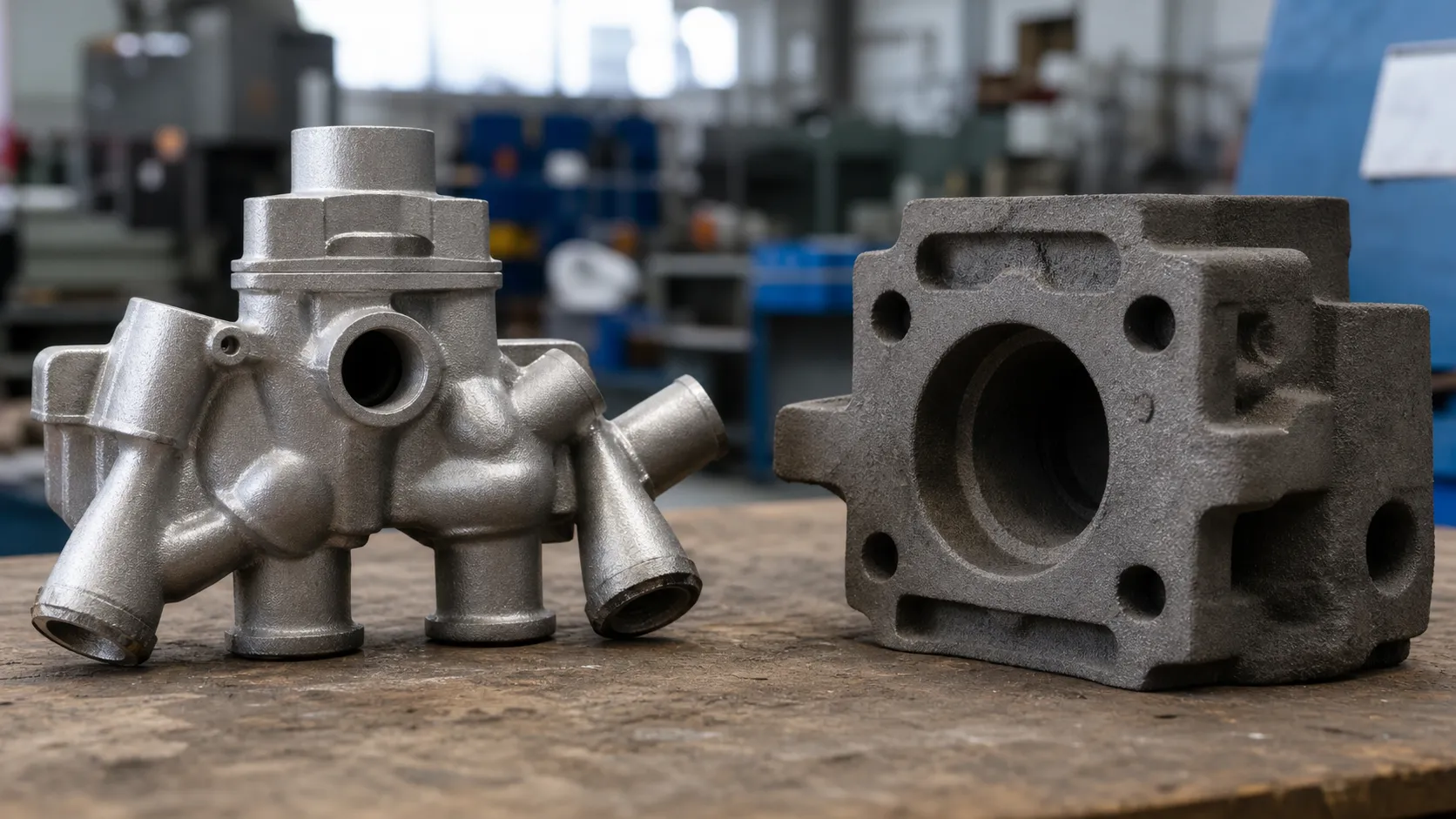
Choosing between investment casting vs sand casting comes down to balancing your upfront budget, part size, structural complexity, and final volume. I help engineering and purchasing teams navigate this decision daily, and the choice usually becomes clear once we look at your design requirements and total cost targets.
When to Choose Sand Casting
Sand casting is my go-to recommendation when you need a cost-effective solution for heavy, large, or structurally simple metal parts.
- Low Upfront Cost: Tooling expenses are minimal, making it ideal for small production runs or early-stage prototypes.
- Massive Size & Weight Capacity: Easily handles giant parts weighing anywhere from 10 pounds up to thousands of pounds.
- Thick Wall Sections: Performs exceptionally well for heavy-duty structural components where ultra-fine surface finishes are not critical.
- Fast Tooling Setup: You can get patterns produced quickly and start pouring metal with minimal lead time.
When to Choose Investment Casting
Investment casting (the lost wax process) is the clear winner when precision, complex geometry, and minimal post-processing are your top priorities.
- Near-Net Shape Precision: Achieves tight tolerances, reducing or completely eliminating expensive secondary machining costs.
- Complex Geometries: Perfect for intricate internal passages, thin-walled sections, and fine detail features.
- Superior Surface Finish: Yields smooth surfaces straight out of the ceramic mold, saving time on grinding and polishing.
- Material Versatility: Casts high-temperature stainless steel, aluminum, and exotic alloys with extreme consistency.
Quick Decision Checklist
Use this quick reference table to match your project specs with the right manufacturing process:
| Project Requirement | Sand Casting | Investment Casting |
|---|---|---|
| Primary Goal | Low tooling cost & large scale | High precision & smooth finish |
| Part Weight | 10 lbs to several tons | Ounces up to 100 lbs |
| Minimum Wall Thickness | >0.120 in (3 mm) | Down to 0.060 in (1.5 mm) |
| Dimensional Accuracy | Moderate (ISO CT10–CT13) | High (ISO CT4–CT7) |
| Surface Roughness | 250-500 μin Ra | 63-125 μin Ra |
| Tooling Budget | Low ($500–$10,000) | Moderate to High ($5,000–$50,000) |
| Secondary Machining Needed? | Typically required | Minimal to none |
Frequently Asked Questions About Investment Casting vs Sand Casting
Is investment casting stronger than sand casting?
Strength mostly comes down to the metal alloy you choose, not just the process. However, investment casting typically delivers better mechanical properties and higher structural integrity.
Because we pour metal into a preheated ceramic shell mold, the cooling rate is far more controlled. This minimizes internal defects, porosity, and gas pockets that often happen in a green sand mold. As a result, investment cast parts offer higher density, superior grain structure, and better fatigue resistance.
Why is investment casting more expensive than sand casting?
The higher cost comes down to a multi-step, labor-intensive lost wax casting process and premium tooling costs.
- Labor and Steps: Creating individual wax patterns, dipping them repeatedly into ceramic slurry, dewaxing, and firing ceramic shell molds takes more time and hands-on work than packing sand in a cope and drag sand flask.
- Tooling Expense: Precision metal dies for wax injection run $5,000 to $50,000, compared to simpler sand patterns that cost $500 to $10,000.
The payoff? Investment casting yields near-net shape parts that eliminate expensive secondary machining costs down the line.
Which process is better for low-volume prototyping versus mass production?
It depends on design complexity and long-term total cost of ownership.
- Low-Volume Prototyping: Sand casting is usually faster and cheaper upfront due to low tooling costs. However, 3D-printed wax patterns now make low-volume investment casting affordable without hard tooling.
- Mass Production: Investment casting wins when parts have tight dimensional tolerances and complex geometries, as it scales well and saves on machining. Sand casting dominates mass production for heavy, structurally simple components where surface finish Ra isn't critical.
| Factor | Low-Volume / Prototyping | Mass Production |
|---|---|---|
| Sand Casting | Best for large, simple parts; lowest upfront tooling expense | Best for heavy, high-tonnage structural components |
| Investment Casting | Great via 3D-printed wax; avoids tooling costs entirely | Best for complex, high-precision, near-net shape production runs |
Can both casting processes use stainless steel and aluminum alloys?
Yes. Both processes handle a wide range of ferrous and non-ferrous alloys, including stainless steel, carbon steel, iron, aluminum, bronze, and specialty nickel alloys.
- Investment Casting: Ideal for thin-walled aluminum or hard-to-machine stainless steel parts where precise dimensional accuracy (CT4–CT7) matters.
- Sand Casting: Excellent for pouring heavy stainless steel valves, massive aluminum housings, or thick-walled iron castings where minimum wall thickness is less of a constraint.
 English
  Russian
  German