
2026年8月18日
What is the difference between 316 and 304 stainless steel Compare composition cost and corrosion resistance to choose the best grade
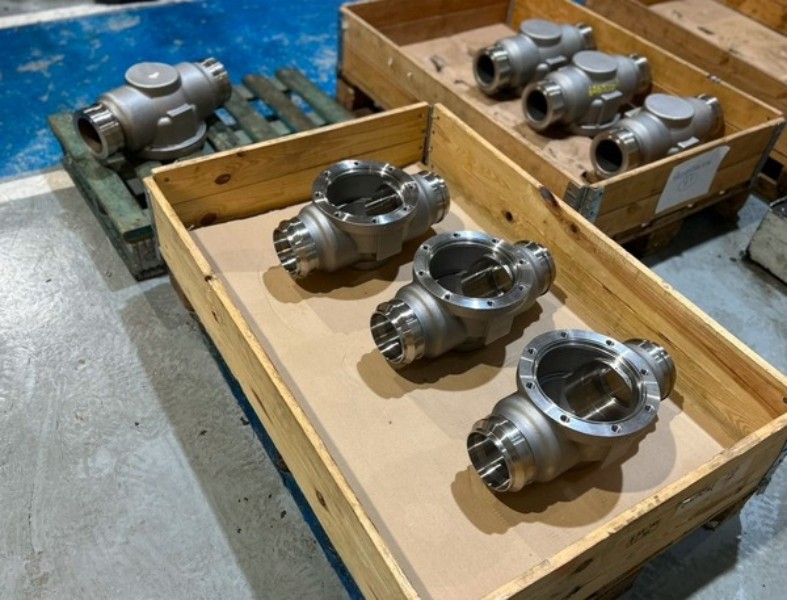
Metallurgy & Chemical Composition Breakdown
Understanding what is the difference between 316 and 304 stainless steel starts at the atomic level. Both alloys belong to the austenitic family of iron-chromium-nickel materials, but their specific alloying ratios dictate vastly different resistance profiles, crystalline stability, and thermal behavior.
Chemical Composition Matrix: UNS S30400 vs UNS S31600
| Element | Grade 304 (UNS S30400) | Grade 304L (UNS S30403) | Grade 316 (UNS S31600) | Grade 316L (UNS S31603) |
|---|---|---|---|---|
| Chromium (Cr) | 18.0% – 20.0% | 18.0% – 20.0% | 16.0% – 18.0% | 16.0% – 18.0% |
| Nickel (Ni) | 8.0% – 10.5% | 8.0% – 12.0% | 10.0% – 14.0% | 10.0% – 14.0% |
| Molybdenum (Mo) | — | — | 2.0% – 3.0% | 2.0% – 3.0% |
| Carbon (C) | Max 0.08% | Max 0.03% | Max 0.08% | Max 0.03% |
| Manganese (Mn) | Max 2.0% | Max 2.0% | Max 2.0% | Max 2.0% |
| Silicon (Si) | Max 0.75% | Max 0.75% | Max 0.75% | Max 0.75% |
| Iron (Fe) | Balance | Balance | Balance | Balance |
Molybdenum Content in 316
The core metallurgical distinction lies in the addition of 2.0%–3.0% Molybdenum content in 316. Standard 18/8 stainless steel (Grade 304) relies on a pure chromium oxide passive film for corrosion resistance. However, halogen ions—specifically chlorides—break down this film, causing localized breakdown.
- Pitting Resistance Equivalent Number (PREN): Adding molybdenum increases the alloy's PREN rating from ~19 in Grade 304 to ~25 in Grade 316, significantly expanding its operational envelope in aggressive media.
- Repassivation Kinetics: Molybdenum ions alter the oxide structure to accelerate self-healing whenever micro-cracks or chemical breaches occur.
- Crevice Corrosion Prevention: Mo blocks localized halide accumulation in low-oxygen crevices, such as threaded fasteners, flanged joints, and gasket seats.
Chromium-Nickel Balance in Austenitic Stainless Steel
We analyze austenitic stainless steel properties by balancing ferrite-forming elements (Chromium) against austenite-stabilizing elements (Nickel):
- 18/8 Matrix (304): Features 18% chromium and 8% nickel. While highly formable, cold working induces a partial phase transformation from austenite to deformation martensite, increasing magnetic permeability and strain-hardening rates.
- 16/10 Matrix (316): Lowers chromium to 16% while increasing nickel to 10–14%. This elevated nickel concentration strongly stabilizes the face-centered cubic (FCC) crystal structure.
- Magnetic Permeability & Ductility: Grade 316 retains lower magnetic permeability post-deformation and delivers enhanced cryogenic toughness and elevated temperature ductility compared to Grade 304.
Low-Carbon Variants: 304L vs 316L Low Carbon
Standard 304 and 316 alloys permit up to 0.08% carbon. During high-temperature exposure—such as welding or investment casting thermal cycles between 425°C and 860°C (800°F–1600°F)—carbon precipitates out as chromium carbides (Cr23C6) along grain boundaries.
- Intergranular Corrosion Risk: Chromium carbide precipitation depletes free chromium from adjacent regions, leaving the heat-affected zone (HAZ) vulnerable to intergranular corrosion under corrosive exposure.
- 304L vs 316L Solution: Restricting carbon content to a maximum of 0.03% in L-grade variants suppresses carbide precipitation during joining or pouring processes.
- PWHT Elimination: Utilizing low-carbon variants eliminates the need for post-weld solution annealing, preserving structural integrity in complex welded assemblies.
Mechanical & Physical Performance Comparison
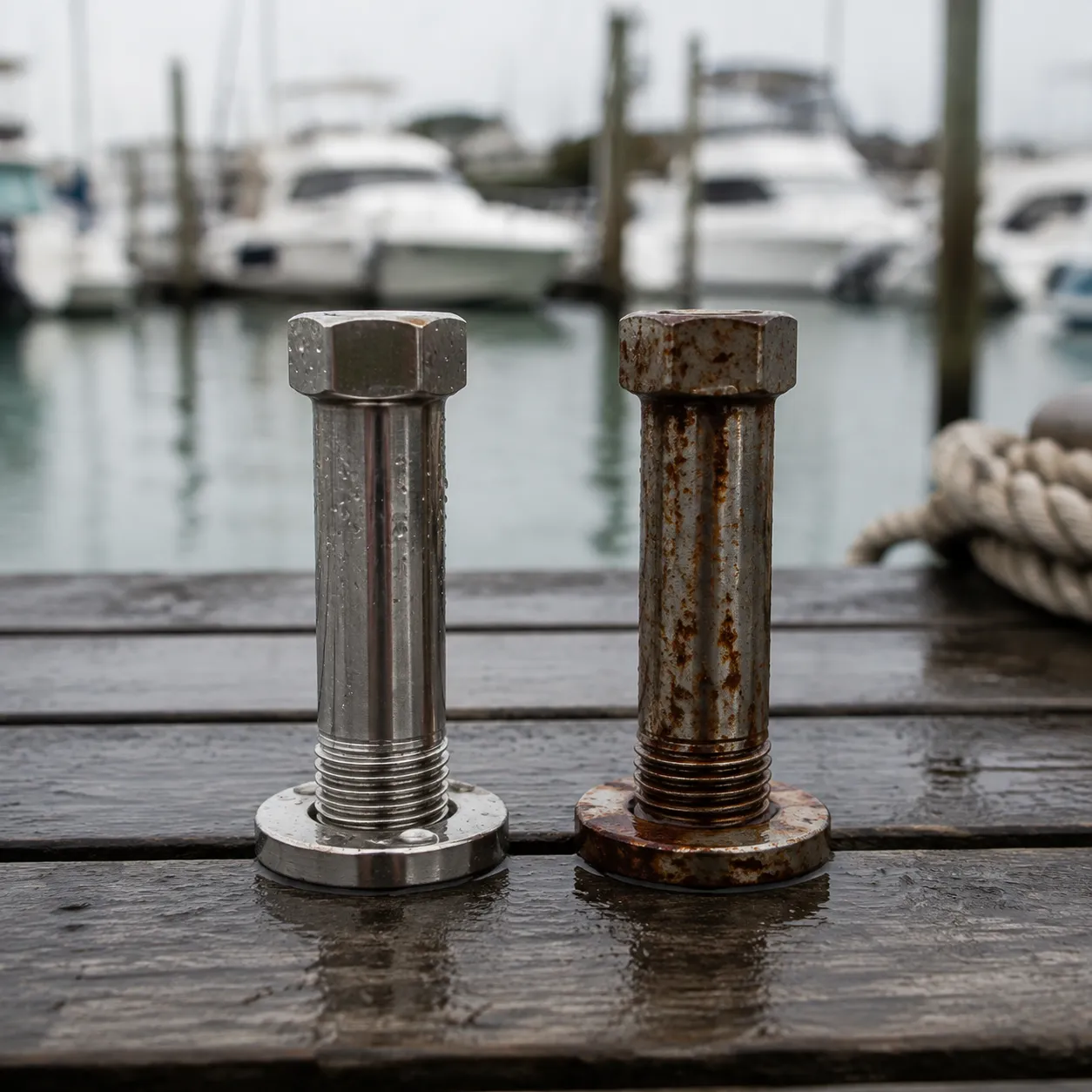
Understanding what is the difference between 316 and 304 stainless steel comes down to how each grade performs under harsh chemical, thermal, and dynamic stress. We evaluate these core mechanical properties to ensure components do not fail under demanding field conditions.
Performance Metrics Breakdown
| Performance Metric | 304 Stainless Steel (A2) | 316 Stainless Steel (A4) |
|---|---|---|
| Tensile Strength (MPa) | 515 - 620 | 515 - 620 |
| Yield Strength 0.2% Proof (MPa) | 205 | 220 |
| Pitting Resistance Equivalent Number (PREN) | ~19.0 | ~23.1 - 25.0 |
| Max Continuous Service Temp | 870°C (1600°F) | 870°C (1600°F) |
| Chloride Corrosion Resistance | Moderate (Risk of pitting) | High (Pitting & crevice resistant) |
Chloride & Chemical Resistance
The chemical response to harsh environments is where the functional divide between these two alloys becomes apparent:
- Chloride Pitting Corrosion: Grade 304 suffers from localized pitting and crevice corrosion when exposed to salt spray, de-icing salts, or marine atmospheric conditions with chloride levels exceeding 25 ppm.
- Molybdenum Shielding: Grade 316 incorporates 2.0%–3.0% molybdenum, elevating its Pitting Resistance Equivalent Number (PREN). This suppresses halide ion attacks in coastal infrastructure, pharmaceutical reactors, and industrial acid processing.
Temperature Thresholds & Oxidation Limits
Thermal limits dictate how both alloys handle oxidation and continuous heat cycles:
- Continuous Operating Limits: Both alloys resist scaling and oxidation up to 870°C for steady-state applications.
- Intermittent Thermal Exposure: Both grades safely manage brief thermal peaks up to 925°C.
- Hot Corrosive Environments: In high-temperature applications involving acidic vapor or marine humidity, 316 resists chemical degradation far better than 304.
Structural Integrity & Tensile Strength
When sizing load-bearing structural parts under dynamic stress, both materials display typical high-ductility austenitic behavior:
- Mechanical Stress Limits: While both alloys show similar ultimate tensile strength (515–620 MPa), 316 delivers a slightly higher proof yield strength (220 MPa vs 205 MPa for 304), providing extra safety against plastic deformation.
- Dynamic Fatigue: Under cyclic loading, both grades work-harden significantly. To examine how austenitic alloys compare against other structural metals under dynamic stress, check out our guide on stainless steel strength grades.
304 vs 316 Stainless Steel Castability and Manufacturability
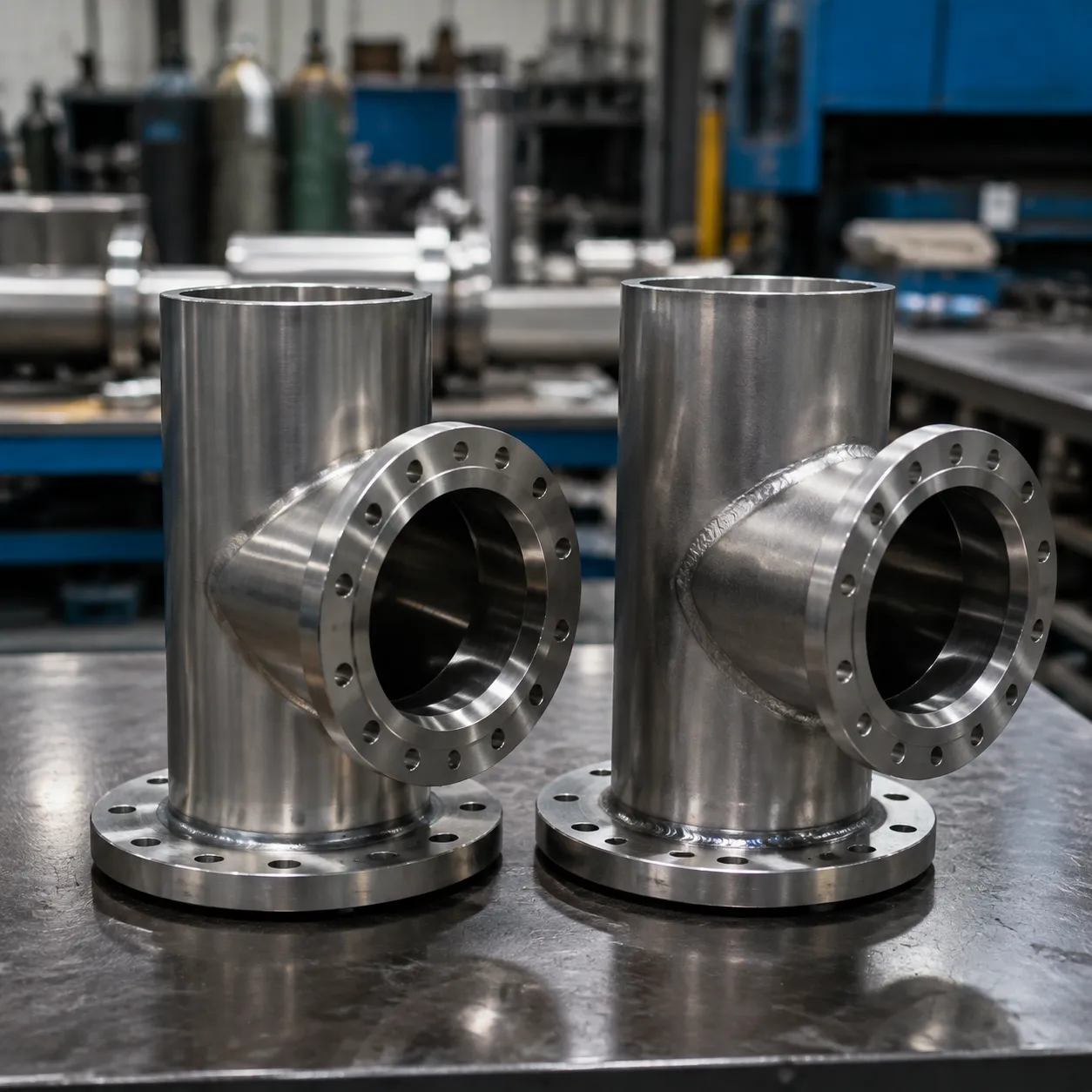
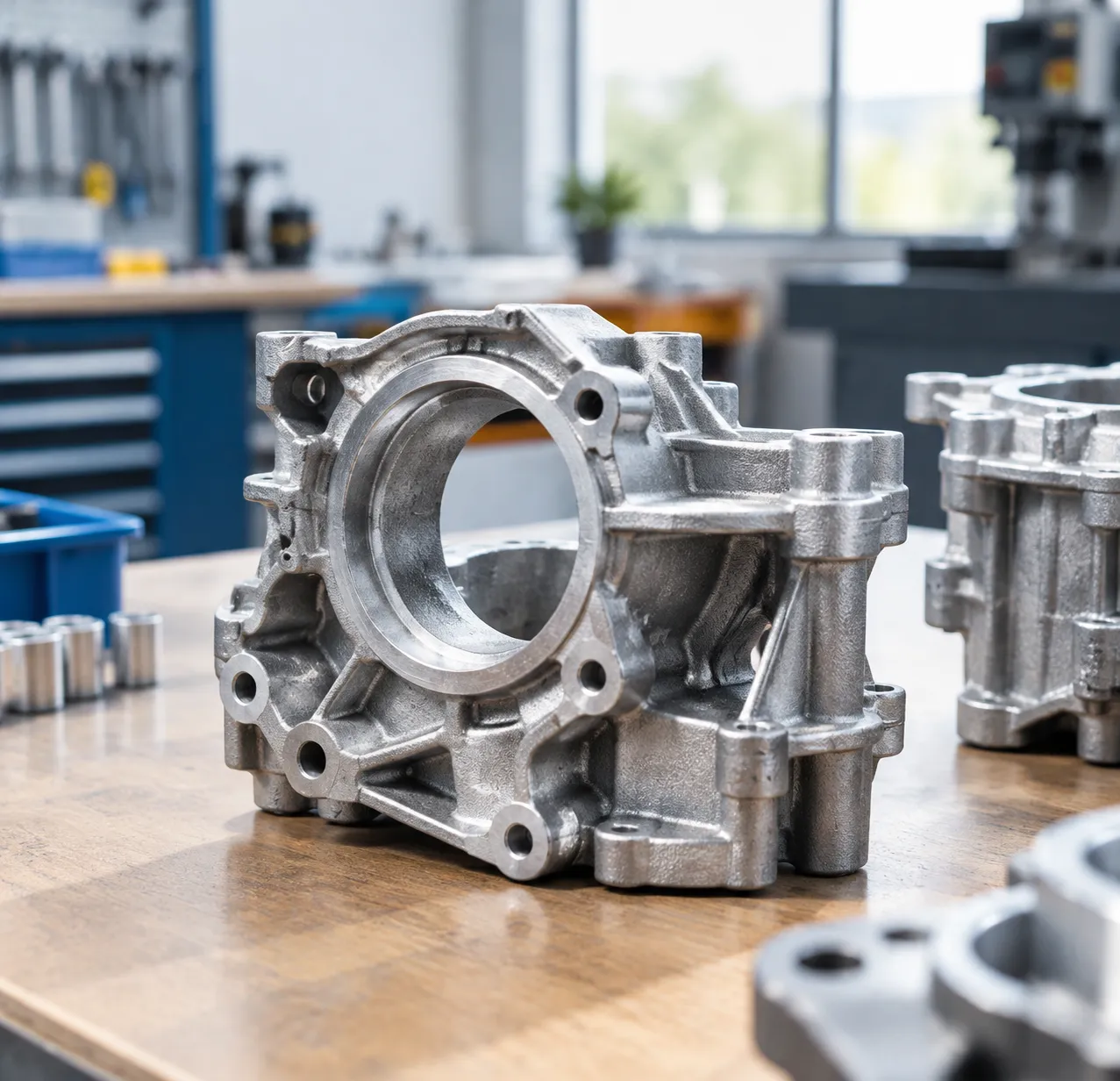
When evaluating what is the difference between 316 and 304 stainless steel from a manufacturing standpoint, we focus heavily on molten metal behavior, machining parameters, and weld integrity. Both belong to the austenitic family, but their chemical variations create noticeable operational differences on the shop floor.
Investment Casting Alloy Selection & Mold Behavior
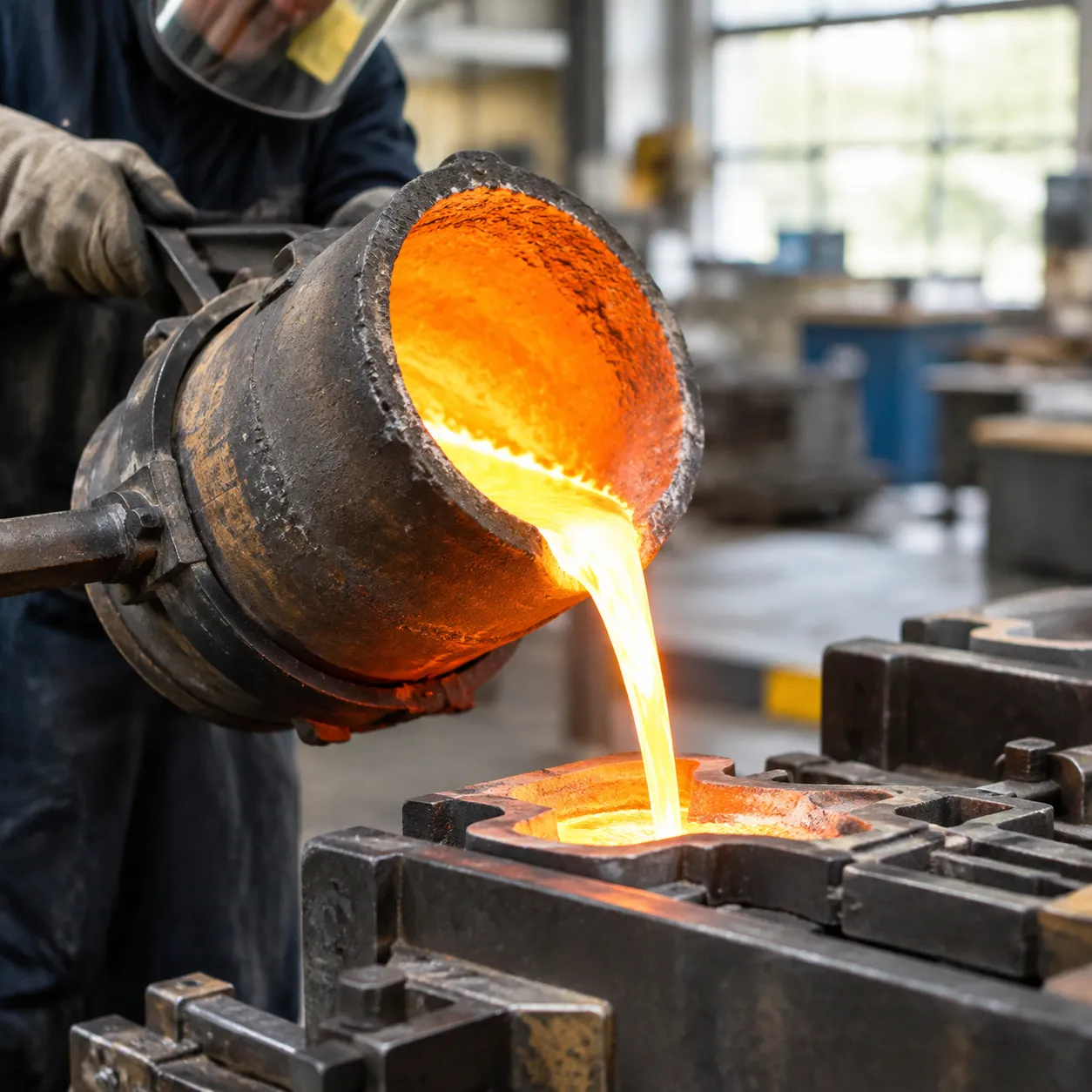
Both grades perform exceptionally well in precision investment casting, though subtle physical variations affect pouring parameters:
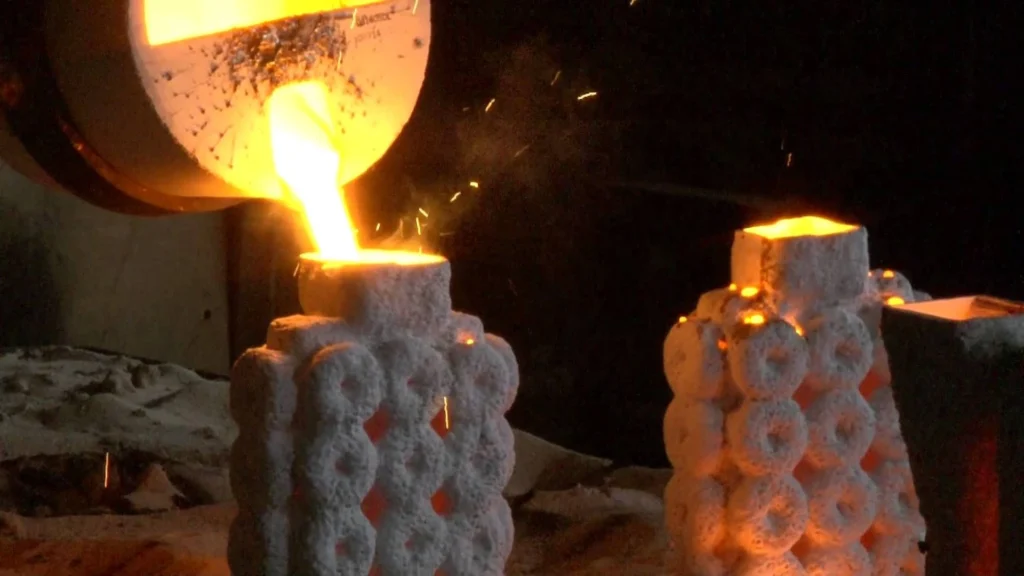
- Fluidity & Flow: Grade 304 offers slightly higher fluidity in its liquid state. The molybdenum content in 316 marginally increases molten viscosity, requiring tight pour temperature control during ceramic shell filling.
- Shrinkage Rates: Both alloys exhibit a linear shrinkage rate of roughly 2.0% (volumetric shrinkage ~2.5%), allowing us to utilize similar shrinkage allowances for wax injection tooling.
- Surface Finish: Both yield smooth surface finishes down to 3.2 µm Ra. When choosing production methods, evaluating shell molding vs sand casting helps determine whether standard ceramic investment casting or shell molding best suits your component geometry and output targets.
Machinability & Work Hardening Metrics
Austenitic stainless steels work-harden rapidly under cutting tools. The core 304 316 stainless steel difference in machining comes down to tool wear and feed speeds:
| Fabrication Parameter | 304 Stainless Steel | 316 Stainless Steel |
|---|---|---|
| Machinability Rating | ~45% (AISI B1112 baseline) | ~36% (AISI B1112 baseline) |
| Cutting Speed | 80–110 SFM (Carbide tooling) | 65–90 SFM (Carbide tooling) |
| Tool Wear Impact | Moderate edge breakdown | ~15% faster flank wear due to Mo-induced hardness |
| Feed Requirements | Heavy feeds to cut under work-hardened zone | Heavier, positive feeds to prevent tool glazing |
Weldability & Heat-Affected Zone (HAZ) Risks
We weld both 304 and 316 using standard fusion welding processes (TIG, MIG, resistance welding) without pre-heating, but thermal exposure introduces specific metallurgical risks:
- Intergranular Corrosion: Exposure to temperatures between 425°C and 860°C triggers chromium carbide precipitation along grain boundaries in the Heat-Affected Zone (HAZ), leaving adjacent regions vulnerable to localized corrosion.
- Post-Weld Heat Treatment (PWHT): Standard 304 and 316 require full solution annealing (1010°C to 1120°C followed by water quenching) to re-dissolve carbides if welded assemblies operate in harsh chemical environments.
- Low-Carbon L-Grades: Selecting 304L or 316L (carbon capped at ≤0.03%) prevents carbide precipitation during welding, eliminating the need for post-weld heat treatment in most structural and process piping applications.
Sector-Specific Applications: What Is the Difference Between 316 and 304 Stainless Steel?
When evaluating what is the difference between 316 and 304 stainless steel for specific industrial environments, application parameters dictate alloy selection. 304 remains the industry standard for general-purpose environments, whereas 316 excels in chemically aggressive environments.
304 Stainless Steel Applications
304 stainless steel serves as our primary alloy for standard applications where high structural strength and moderate corrosion resistance are required without heavy salt or acid exposure.
- Food & Beverage Processing Equipment: Meets strict food-grade metal specs for daily washdowns and processing without pitting under mild organic food acids.
- Architectural Trim & Enclosures: Works best for interior cladding, decorative fixtures, and structural framing shielded from severe coastal air.
- Automotive Exhaust Components: Provides high oxidation resistance for manifold and exhaust piping operating under moderate thermal cycles.
- Standard Pressure Vessels: Offers high ductility and weldability for non-corrosive industrial chemical storage tanks and fluid lines.
316 Stainless Steel Applications
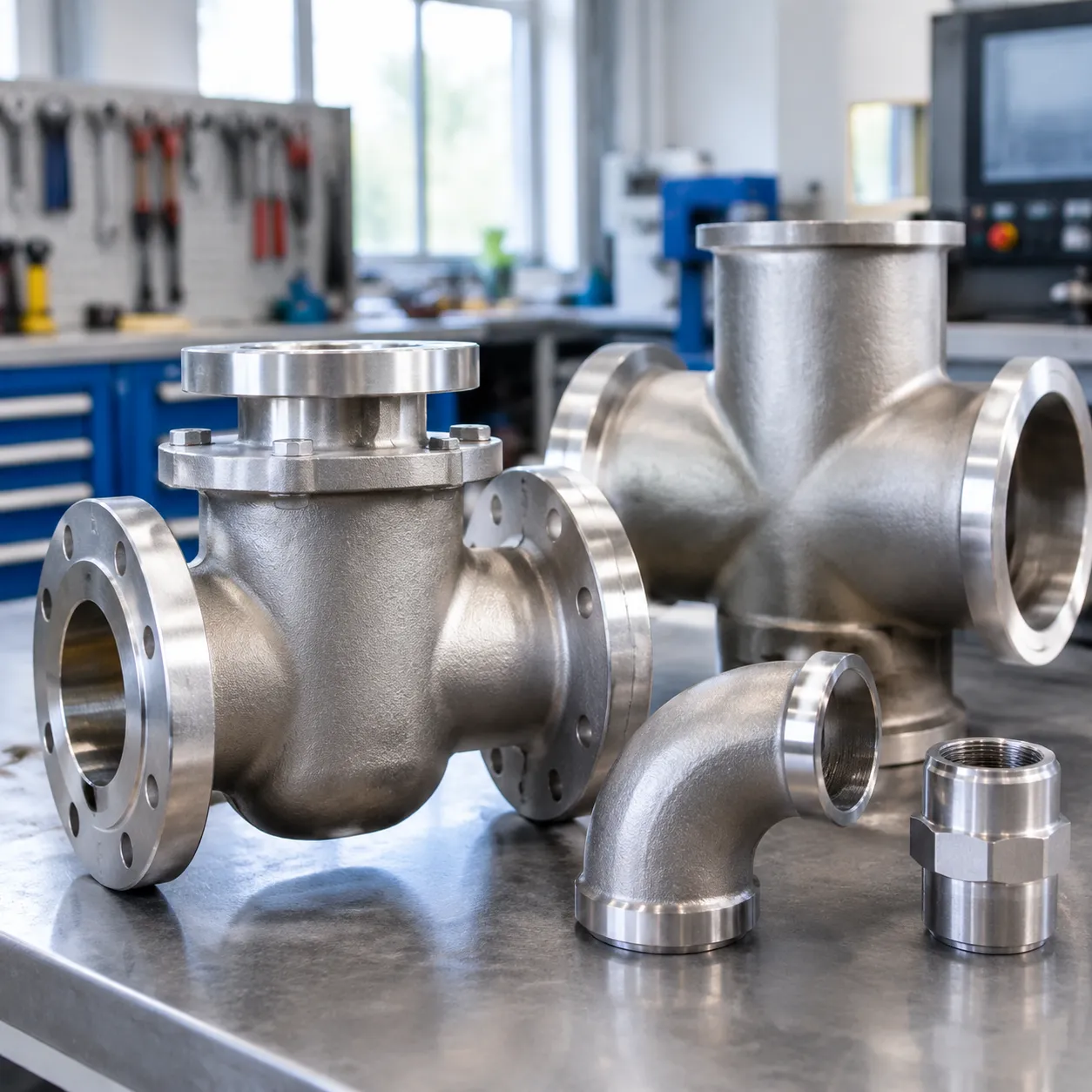
We recommend upgrading to 316 marine-grade stainless steel whenever parts operate in high-chloride, acidic, or sterile environments. Through our production of cast stainless steel custom alloys and grades, we regularly pour 316 parts designed for tough environmental hazards.
- Marine Hardware: Essential for propellers, deck fittings, and subsea valves exposed to continuous salt spray and ocean immersion.
- Pharmaceutical & Medical Instruments: Resists aggressive CIP (Clean-In-Place) chemical sterilization cycles while maintaining low surface roughness for surgical tools and bioreactors.
- Chemical Processing Systems: Prevents localized pitting in heat exchangers, pump housings, and acid delivery pipelines.
- Coastal Infrastructure: Prevents stress corrosion cracking in bridge supports, exterior architectural fasteners, and marine piling hardware.
Selection Criteria Matrix
Use this direct decision matrix to evaluate your environmental factors before finalizing alloy specifications. Engineers can also consult our casting stainless steel guide for buyers and engineers to match alloy traits with specific casting processes.
| Operating Condition | 304 Stainless Steel | 316 Stainless Steel | Selection Verdict |
|---|---|---|---|
| Chloride Exposure | Low (< 100 ppm chlorides) | High (> 100 ppm, seawater, de-icers) | Select 316 for high-salt or marine zones |
| Chemical Exposure | Mild organic acids / washdowns | Sulfuric, phosphoric, & acetic acids | Select 316 for industrial chemical processing |
| Operating Temperature | Up to 870°C (Intermittent) | Up to 870°C (Intermittent) | Both perform similarly under dry heat alone |
| Budget Constraints | Standard baseline cost | 30%–40% material premium | Select 304 unless corrosion risk demands 316 |
Commercial Evaluation: Cost vs. Long-Term Value
When we evaluate what is the difference between 316 and 304 stainless steel from an economic standpoint, we look beyond the initial invoice and focus on lifetime operational performance.
Initial Procurement Costs
Raw material prices directly reflect alloy composition. Grade 316 typically carries a 30% to 40% material price premium over 304.
- Molybdenum & Nickel Volatility: Grade 316 includes 2.0%–3.0% Molybdenum and elevated Nickel content (10%–14% vs. 8%–10.5% in 304). Both elements trade on volatile global commodity exchanges, driving higher raw stock pricing.
- Production Expenses: The added alloy density increases tool wear during machining. Factoring these variables into an investment casting cost and material guide helps us balance raw material surcharges against overall production output.
Total Cost of Ownership (TCO)
Opting for 304 to save on initial procurement often leads to premature failures in aggressive environments. Evaluating the true 304 316 stainless steel difference requires calculating Total Cost of Ownership:
| Commercial Factor | 304 Stainless Steel | 316 Stainless Steel |
|---|---|---|
| Upfront Alloy Price | Baseline lower cost | 30%–40% premium |
| Maintenance Requirements | Frequent in severe/marine exposure | Minimal; high resistance to chloride pitting |
| Downtime Risk | High (risk of localized leaks & corrosion) | Extremely low |
| Service Life (Corrosive Zones) | Short to medium | Extended long-term |
Upfront savings on 304 quickly evaporate if component failure interrupts operations. Upgrading to 316 protects against catastrophic maintenance cycles and costly facility downtime.
Frequently Asked Questions
Understanding what is the difference between 316 and 304 stainless steel helps engineers optimize material selection, prevent premature component failure, and manage procurement budgets effectively. Here are answers to the most common technical inquiries we receive from technical decision-makers.
Distinguishing 304 vs 316 Stainless Steel On-Site
Visually, SAE 304 (18/8 stainless steel) and SAE 316 are completely identical; surface finishes and physical appearances do not reveal elemental composition. To distinguish them on-site without lab destruction, we use two reliable methods:
- Handheld XRF Analyzer (X-ray Fluorescence): Non-destructive spectroscopy instantly measures exact elemental composition, detecting the 2.0%–3.0% molybdenum content in 316 within seconds.
- Chemical Spot Test Kits: A drop of molybdenum-testing reagent (such as acid-based sodium molybdate) turns dark pink or purple on 316 due to the molybdenum reaction, while remaining clear or light yellow on 304.
Saltwater Performance of Marine-Grade 316
While 316 is widely classified as marine-grade stainless steel, it is not completely rust-proof in saltwater. Its elevated molybdenum content significantly boosts its Pitting Resistance Equivalent Number (PREN) compared to 304, shielding it against aggressive chloride pitting corrosion in marine splash zones. However, in stagnant, low-oxygen saltwater environments, 316 can still suffer from crevice corrosion over time. For deeper performance metrics on environmental exposure, review our guide on analyzing stainless steel corrosion resistance.
Investment Casting Tooling Requirements
In automated investment casting production, the wax injection tooling dies are identical for both alloys because 304 and 316 share nearly identical solid shrinkage allowances (approximately 2.0% to 2.2%). However, downstream tool selection differs:
- Post-Cast Machining Tooling: Machining cast 316 requires heavier feed rates, rigid setups, and titanium nitride (TiN) coated carbide inserts. The alloy's nickel and molybdenum content causes faster work-hardening than standard 304 stock.
- Pouring Parameters: Induction melting parameters remain almost identical, though 316 requires tighter slag control to keep molybdenum evenly distributed in the melt.
Upgrading to 316L Low Carbon Grade
We recommend upgrading from standard 316 (UNS S31600) to 316L (UNS S31603) whenever heavy post-casting welding or high-temperature assembly is required. Standard 316 contains up to 0.08% carbon, which precipitates chromium carbides along grain boundaries in the heat-affected zone (HAZ) during welding (between 450°C and 850°C). This localized chromium depletion leads to intergranular corrosion. The low-carbon spec of 316L (≤0.03% C) prevents carbide precipitation, eliminating the need for expensive post-weld heat treatment (PWHT).
304 vs 316 Quick Diagnostic Reference
| Diagnostic / Operational Parameter | 304 Stainless Steel | 316 Stainless Steel |
|---|---|---|
| Molybdenum Content | 0.0% | 2.0% – 3.0% |
| On-Site Chemical Spot Test | No color reaction | Dark pink/purple reaction |
| Saltwater Resistance | Moderate (Risk of chloride pitting) | High (Marine-grade protection) |
| Welding HAZ Consideration | Requires 304L for thick welds | Requires 316L for thick welds |
| Machinability Index | ~45% (B1112 baseline) | ~36% (Higher tool wear) |
 English
  Russian
  German