
2026年9月26日
Learn the steel casting process from mold design and molten metal pouring to cooling finishing and quality inspection
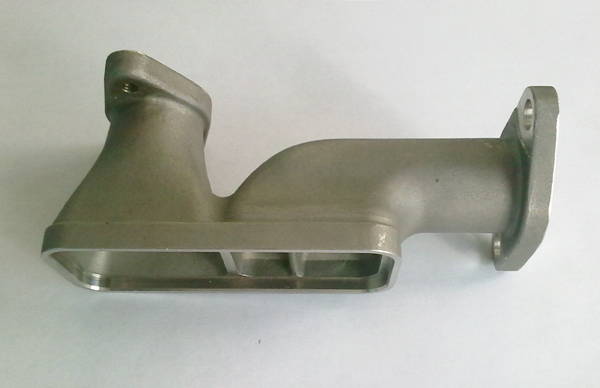
Understanding the Steel Casting Process
The steel casting process transforms liquid metal into complex, high-integrity components with isotropic mechanical properties that forged or fabricated parts struggle to match. By pouring molten metal directly into engineered refractory molds, we eliminate extensive machining cycles and deliver near-net-shape parts engineered for extreme mechanical stress, pressure containment, and severe environments.
Core Principles of Steel Casting Technology
At its core, steel casting relies on controlled thermal transitions, liquid metallurgy, and mold dynamics:
- Melt Control & Metallurgy: We melt base charges and precise alloying elements in electric arc or induction furnaces to hit exact chemical compositions.
- Flow & Filling Dynamics: Gating systems must ensure smooth, non-turbulent mold filling to prevent air entrapment and mold erosion.
- Directional Solidification: Thermal gradients are engineered so the casting solidifies progressively toward strategically placed risers, feeding the shrinkage zone continuously.
How Molten Steel Behaves During Pouring and Solidification
Molten steel presents distinct metallurgical behaviors compared to other ferrous alloys:
- High Melting Point & High Viscosity: Steel melts at elevated temperatures between 1,450°C and 1,600°C (2,642°F–2,912°F). It has lower fluidity than cast iron, demanding tight pouring temperature windows and optimized runner geometry.
- High Volumetric Shrinkage: As molten steel cools from liquid to solid, it exhibits a high volumetric shrinkage rate (typically 4.5% to 7.0%). Without adequate riser volume and thermal insulation, severe shrinkage porosity forms along the thermal centerlines.
- Hot Tearing Sensitivity: Steel has low tensile strength immediately after solidifying. If the mold or core resists natural contraction during cooling, internal tensile stresses cause hot tears. We use collapsibility-optimized sand binders to eliminate mechanical resistance.
Key Steel Grades Used in Casting
Selecting the right cast steel grade balances mechanical performance, wear resistance, machinability, and cost efficiency.
| Steel Category | Common Grades (ASTM / ISO) | Key Material Properties | Primary Industrial Applications |
|---|---|---|---|
| Carbon Steel | ASTM A216 (WCA, WCB, WCC), ASTM A27 | Balanced tensile strength, high ductility, excellent weldability, and cost-effective production. | Pressure vessels, pump housings, general engineering brackets, and structural hubs. |
| Alloy Steel | ASTM A217 (WC6, WC9), 4140, 8630, High-Mn | Exceptional toughness, deep hardenability, and elevated resistance to impact, fatigue, and abrasion. | Earthmoving wear parts, mining equipment, transmission gears, and oilfield crossheads. |
| Stainless Steel | ASTM A351 (CF8, CF8M/316, Duplex CD4MCu) | Superior corrosion resistance, oxidation resistance at high temperatures, and cryogenic toughness. | Chemical processing impellers, marine hardware, LNG valves, and food-grade flow equipment. |
Primary Types of Steel Casting Methods

Choosing the right steel casting process directly impacts component integrity, surface finish, tooling investment, and unit cost. We match specific casting techniques to your exact part geometry, production volume, and mechanical requirements.
Sand Casting Steel for Heavy and Large-Scale Components
Sand casting remains the workhorse method for massive structural steel parts, engine blocks, mining equipment, and heavy pump housings ranging from a few kilograms to over 50 tons.
- How It Works: We pack a refractory sand mixture (silica, bonded with resin or clay) around a reusable pattern, pull the pattern, set internal cores, and pour the molten steel.
- Key Advantages: Lowest initial tooling costs, virtually no size or weight limitations, and extreme flexibility across both carbon and alloy steel grades.
- Modern Upgrades: For complex prototypes or low-volume runs without pattern delays, we integrate 3D-printed sand molds for rapid patternless precision casting to drastically slash lead times.
Investment Casting (Lost Wax) for High-Precision Steel Parts
When your design features thin walls, intricate internal channels, and tight dimensional tolerances, the lost-wax process is the go-to solution.
- How It Works: Wax patterns are injected, assembled onto a tree, and repeatedly dipped in ceramic slurry to form a rigid shell. Once de-waxed and fired, molten steel fills the ceramic cavity.
- Key Advantages: Achieves near-net-shape tolerances (down to ±0.1 mm), eliminates extensive CNC machining, and delivers superior surface finishes (Ra 3.2–6.3 µm).
- Target Applications: Aerospace brackets, medical equipment, turbocharger components, and complex valve bodies via dedicated investment and precision casting services for metal parts.
Centrifugal Steel Casting for Cylindrical and Symmetrical Structures
Centrifugal casting utilizes high-speed mold rotation to produce symmetrical, hollow components with unmatched material density.
- How It Works: Molten steel pours into a spinning cylindrical die (ranging from 300 to 3,000 RPM). Centrifugal force forces the dense molten metal against the outer mold wall while lighter impurities, oxides, and gases migrate inward toward the bore.
- Key Advantages: Uniform, fine-grained structure free of directional shrinkage voids and centerline porosity. The impure inner layer is easily machined away.
- Target Applications: High-pressure pipe spools, hydraulic cylinders, marine propeller shaft sleeves, and heavy-duty bearing rings.
Vacuum and Continuous Casting Methods for High-Integrity Applications
For critical, zero-defect industrial hardware, specialized casting environments eliminate atmospheric contamination and optimize production flow:
- Vacuum Casting (VIM/VAR): Melts and pours alloy steel inside a vacuum chamber. This completely eliminates hydrogen and oxygen uptake, preventing gas porosity, micro-cracking, and oxide inclusions in superalloys and high-grade stainless components.
- Continuous Casting: Molten steel continuously flows through a water-cooled copper mold, solidifying into continuous strands, billets, or slabs. This delivers consistent cross-sectional grain structure, zero mold-junction defects, and maximum material yield for high-volume supply chains.
| Casting Method | Typical Tolerance | Surface Roughness (Ra) | Best Suited For |
|---|---|---|---|
| Sand Casting | ±1.5 mm – ±3.0 mm | 12.5 – 25 µm | Heavy machinery, large structural frames, low-to-medium volumes |
| Investment Casting | ±0.1 mm – ±0.5 mm | 3.2 – 6.3 µm | Complex geometries, thin walls, tight tolerance net-shape parts |
| Centrifugal Casting | ±0.8 mm – ±1.5 mm | 6.3 – 12.5 µm | Seamless tubes, bushings, rings, and hollow cylindrical sections |
| Vacuum Casting | ±0.2 mm – ±0.8 mm | 3.2 – 6.3 µm | High-stress turbine blades, aerospace hardware, clean superalloys |
Step-by-Step Steel Casting Manufacturing Workflow
Executing a reliable steel casting process requires strict metallurgical control at every phase of production. We manage each stage with precise tooling, thermal monitoring, and clean melting practices to deliver structurally sound components ready for demanding service environments.
| Pattern & Core Tooling --> Mold Assembly & Gating Setup | | EAF / Induction Melting --> Degassing & Pouring Control | + | Cooling & Shakeout --> Fettling & Runner Removal
Pattern Making and Core Box Fabrication
Every casting begins with high-precision pattern engineering. We design wood, resin, or aluminum patterns with calculated shrink allowances to compensate for the thermal contraction of molten steel.
- Shrinkage compensation: Steel contracts significantly during cooling (typically 1.5% to 2.5% depending on alloy grade).
- Core box fabrication: High-strength sand cores are molded to form complex internal passages, cavities, and undercut features that standard molds cannot shape directly.
Mold Assembly, Gating Systems, and Riser Calculation
Proper gating and risering design is critical to feeding metal into the mold cavity smoothly and preventing shrinkage defects.
- Riser positioning: Risers act as thermal reservoirs, feeding liquid steel into the thickest sections of the part as it solidifies.
- Gating calculation: Downsprues, runners, and ingates are sized to maintain non-turbulent flow and trap slag before it enters the main cavity.
- Mold closing: For high-integrity parts, our specialized stainless steel sand casting services use chemically bonded sand systems that provide rigid mold strength and dimensional stability during the pour.
| Component | Engineering Purpose | Primary Operational Focus |
|---|---|---|
| Pouring Basin | Regulates metal entry | Reduces velocity and dynamic turbulence |
| Downsprue & Choke | Controls volumetric flow rate | Prevents mold erosion and air aspiration |
| Runner & Ingate | Distributes steel to the cavity | Ensures uniform filling without cold shuts |
| Feeder Riser | Compensates for volumetric shrinkage | Solidifies last to draw porosity out of the casting |
Induction and Electric Arc Furnace Steel Melting
We tailor the melting method to the alloy composition and batch volume:
- Induction furnace steel casting: Best suited for high-alloy, stainless, and specialty steel grades. Electromagnetic stirring guarantees uniform temperature and alloy dispersion.
- Electric arc furnace melting: Ideal for large-tonnage carbon and low-alloy steel castings, delivering rapid melt rates and flexible refining capability.
- Spectrometric analysis: We verify chemical composition directly from melt bath samples before tapping to ensure compliance with material specifications.
Pouring Temperature Control, Degassing, and Inoculation
Controlling liquid steel quality right before casting prevents gas porosity, oxidation, and inclusions.
- Pouring temperature window: Kept within strict tolerances—too high causes mold burn-in and hot tears; too low creates misruns and cold shuts.
- Argon degassing and deoxidation: Purges dissolved hydrogen and nitrogen gases while neutralizing free oxygen.
- Inoculation: Fine grain refiners are introduced to stimulate uniform nucleation and refine the as-cast grain structure.
Cooling, Shakeout, Runner Removal, and Fettling
After pouring, the casting cools under controlled conditions inside the mold until it fully transforms into a solid state.
- Shakeout: Mechanical vibratory shakeout tables break away the sand mold without damaging casting geometry.
- Sprue and riser removal: Oxy-acetylene torches, plasma cutting, or cold-sawing remove the gating system and risers.
- Fettling and shot blasting: Heavy-duty grinding flushes parting lines and core fins, followed by high-velocity steel grit blasting to eliminate surface scale and leave a clean finish.
Post-Casting Heat Treatment and Finishing Operations in the Steel Casting Process
Solidification is only half the journey. As-cast steel parts contain uneven grain structures, internal stress, and rough surfaces. We use targeted thermal cycles, fettling, and CNC machining to bring the mechanical properties and dimensions into final specification.
| Heat Treatment | ---> | Surface Prep & Blast | ---> | CNC Machining | | (Anneal/Q&T/Norm) | | (Fettling/Clean) | | (Tight Tolerances) |
Annealing and Normalizing to Refine Grain Structure
Raw castings often develop coarse dendritic grains during cooling. Thermal processing restores uniform microstructure:
- Full Annealing: We heat the component above its critical temperature ($Ac_3$) and slowly cool it inside the furnace. This softens the metal, increases ductility, and relieves residual stress for easier machining.
- Normalizing: Heating the part and allowing it to air-cool breaks down coarse as-cast structures, producing a refined, uniform pearlite-ferrite matrix that improves yield strength and toughness across the entire casting.
Quenching and Tempering for Maximum Hardness and Tensile Strength
For components subjected to extreme mechanical loads, impact, or abrasive wear, we apply a two-step quench and temper cycle:
- Austenitizing & Quenching: Rapid cooling in water, oil, or forced air transforms the steel into hard, brittle martensite.
- Tempering: Reheating the steel to a controlled sub-critical temperature relieves quenching stress while restoring impact toughness.
This creates balanced quenched and tempered steel parts capable of withstanding severe operational stress without brittle fracture.
Stress Relieving to Prevent Dimensional Distortion
Heavy section changes and rapid cooling induce uneven residual stress. Without correction, parts can warp during machining or in service.
We soak the castings at temperatures between 550°C and 650°C (1,020°F to 1,200°F) and cool them slowly. This equalizes internal stresses while preserving the existing hardness and microstructure.
CNC Precision Machining, Shot Blasting, and Surface Passivation
| Step | Method | Purpose |
|---|---|---|
| Fettling & Cutting | Plasma cutting, torch wash, grinding | Removes gates, risers, and parting line flash. |
| Shot Blasting | High-velocity steel shot / grit blasting | Cleans off baked-on sand, oxides, and surface scale. |
| Precision Machining | Multi-axis CNC milling, turning, boring | Delivers final critical tolerances, flat mating faces, and threaded bores. |
| Passivation / Coating | Acid pickling, passivation, anti-corrosion primer | Restores corrosion-resistant passive oxide layers on stainless grades. |
Integrating advanced precision casting and CNC machining ensures every steel component meets tight dimensional tolerances straight out of final finishing.
Quality Control, Defect Prevention, and Testing Standards in Steel Casting

A reliable steel casting process requires strict quality checkpoints from melt preparation to final packaging. We use real-time process monitoring, non-destructive evaluation, and destructive testing to ensure every cast component meets international structural standards and performs reliably under extreme service conditions.
Root Causes and Fixes for Common Steel Casting Defects
Preventing defects at the mold and melt stage eliminates costly scrap and downstream machining failures.
| Defect Type | Root Cause | Preventive Action & Fix |
|---|---|---|
| Casting Shrinkage Porosity | Inadequate liquid feed metal during solidification volume contraction. | Optimize riser geometry and position using solidification simulation software to enforce directional cooling. |
| Hot Tears (Hot Cracking) | High thermal contraction stresses acting on weak, solidifying dendritic zones. | Improve core collapsibility, lower pouring temperatures, reduce sulfur/phosphorus content, and apply uniform corner radii for effective hot tear defect prevention. |
| Slag & Sand Inclusions | Entrainment of molten slag or erosion of mold sand during turbulent pouring. | Install ceramic foam filters, improve ladle bottom-pour skimming, and increase sand binder strength. When weld repair or cladding is required on critical wear surfaces, utilizing high-grade cobalt welding alloys for high wear and heat resistance restores structural durability. |
| Gas Porosity (Pinholes) | Trapped hydrogen, nitrogen, or mold moisture in the molten steel stream. | Deoxidize the bath thoroughly, implement vacuum degassing, and ensure sand molds are completely baked and dry. |
Non-Destructive Testing (NDT) for Castings
To verify internal soundness without damaging finished parts, we deploy advanced non-destructive testing NDT castings protocols:
- Ultrasonic Testing (UT): High-frequency sound waves identify internal shrinkage, micro-voids, and subsurface planar defects throughout thick-walled sections.
- Radiographic Testing (RT / X-Ray): Generates high-contrast internal imagery to evaluate volumetric flaws, gas pockets, and deep core inclusions against ASTM reference standards.
- Magnetic Particle Testing (MT): Highlights surface and shallow subsurface micro-cracks in ferromagnetic carbon and low-alloy cast steels.
- Liquid Penetrant Testing (PT): Detects surface-breaking defects and micro-porosity in non-magnetic stainless steel and nickel-alloy castings.
Mechanical and Metallurgical Testing
We validate the physical integrity of every heat batch through destructive testing on integrated test coupons:
- Tensile and Yield Testing (ASTM A370): Verifies ultimate tensile strength, yield point, and elongation to guarantee structural load capacity.
- Charpy V-Notch Impact Testing: Measures energy absorption and fracture toughness down to sub-zero temperatures (–40°C to –196°C) for heavy-duty and low-temperature applications.
- Hardness Testing (Brinell & Rockwell): Confirms uniform depth of hardness and proper microstructure transformation following heat treatment.
- Spectrometric & Metallographic Analysis: Verifies exact melt chemistry and evaluates grain size, carbide distribution, and phase balance (e.g., ferrite-austenite ratios in duplex grades).
Precision Dimensional Inspection: CMM and 3D Optical Scanning
Maintaining tight tolerances ensures cast components integrate seamlessly into automated CNC machining centers and final assemblies.
- Coordinate Measuring Machine (CMM): Executes automated touch-probe verification on critical datums, bolt circles, bore alignments, and complex geometric features.
- 3D Optical & Laser Scanning: Captures full-part point clouds to generate color-coded CAD deviation heat maps, pinpointing casting warpage, draft angle variations, and wall thickness shifts across intricate geometries.
Key Industrial Applications for the Steel Casting Process
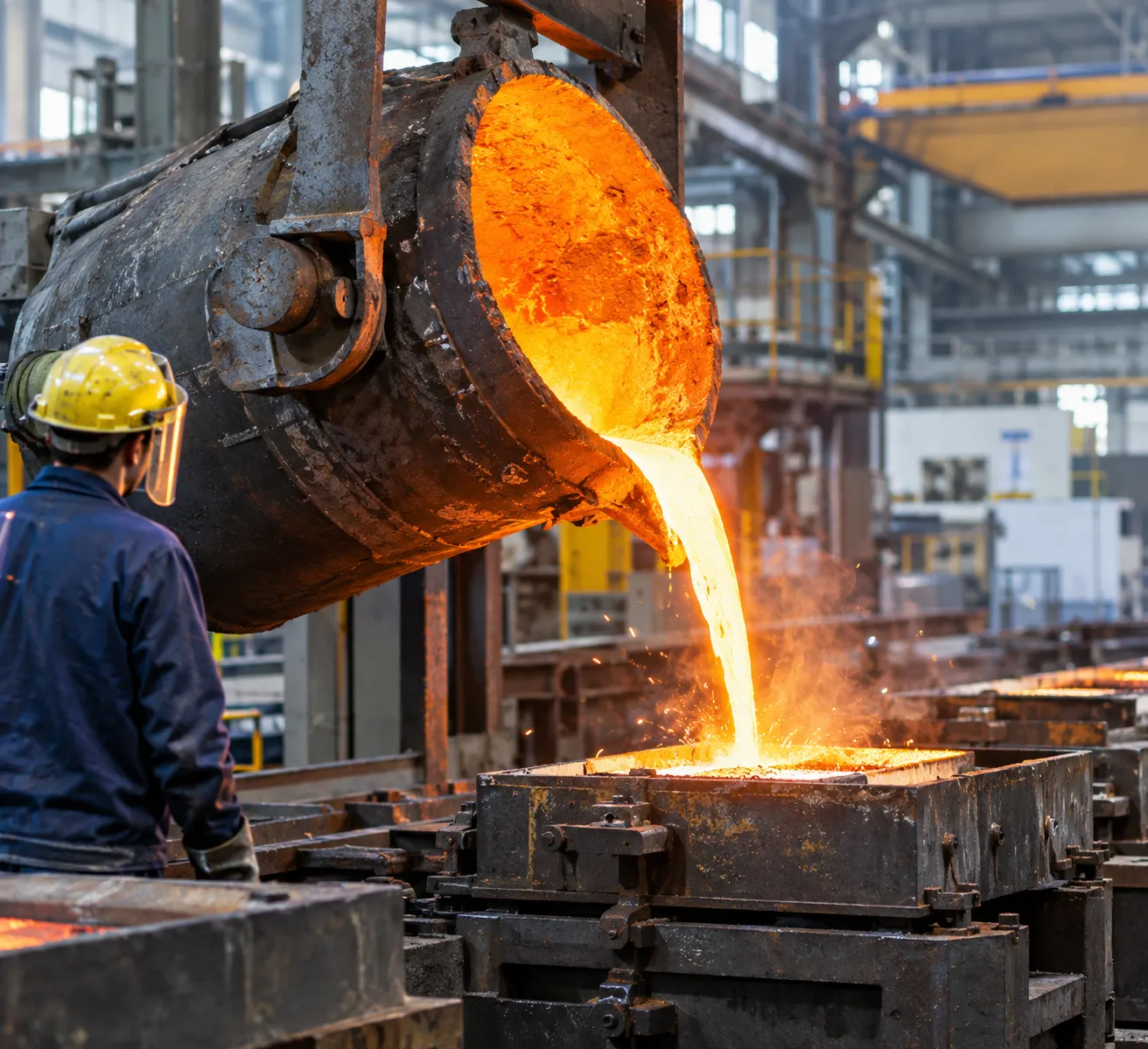
The versatility and mechanical strength of the modern steel casting process make it indispensable across heavy industries. When components must withstand multidirectional loads, extreme pressures, abrasive wear, and thermal shocks, cast steel delivers long-term structural reliability where fabricated or welded alternatives fall short.
Heavy Equipment for Mining, Construction, and Earthmoving
Heavy machinery relies on cast steel to handle brutal impact cycles and severe abrasion. We produce monolithic cast parts that eliminate the stress concentration points typical of welded assemblies. Excavator and Loader Teeth: Cast in high-manganese and low-alloy steels to work-harden under impact. Track Shoes and Sprockets: Built for continuous track drive systems exposed to rocks and abrasive slurry. Crusher Jaws, Cones, and Liners: Designed with high impact toughness to prevent catastrophic cracking during aggregate reduction.
High-Pressure Valves, Pumps, and Oilfield Fittings
Fluid handling systems in the energy sector demand dense, pressure-tight castings with zero subsurface porosity. We utilize refined carbon steel and stainless steel grades to meet stringent pressure-vessel standards: Valve Bodies and Bonnets: Engineered for severe sour gas (H2S), subsea pipelines, and refinery steam lines. Centrifugal Impellers and Pump Casings: Hydro-tested castings engineered for cavitation resistance and smooth flow paths. Wellhead Chokes and Manifolds: Heavy-walled fittings rated for working pressures up to 15,000 psi. For extreme corrosive environments, we also provide specialized nickel casting services for Inconel and Monel components.
Railway Bogies, Couplers, and Rolling Stock Components
Rail infrastructure demands high fatigue strength and dimensional consistency to ensure operational safety across millions of load cycles. Side Frames and Bolsters: Cast structural frames that absorb dynamic track vibration and distribute railcar weight evenly. Automatic Couplers and Knuckles: High-tensile cast steel parts designed to absorb extreme draft and buffing forces. Draft Gear Housings and Center Plates: Wear-resistant components that maintain alignment and prevent premature railcar degradation.
Marine, Aerospace, and Power Generation Structural Hardware
Turbines, maritime propulsion, and flight hardware require defect-free castings capable of enduring rotational stress, marine corrosion, and thermal cycling.
| Industry | Critical Cast Steel Components | Primary Material Grades | Key Performance Requirement |
|---|---|---|---|
| Marine | Rudder horns, stern frames, propeller hubs | Cast Carbon Steel, Austenitic Stainless | Seawater corrosion resistance, high yield strength |
| Aerospace | Engine mounts, landing gear brackets, flap tracks | Precipitation Hardened Stainless Steel | High strength-to-weight ratio, fatigue endurance |
| Power Gen | Steam turbine casings, Francis hydro runners | Chromium-Molybdenum Alloy Steels | High-temperature creep resistance, cavitation durability |
Steel Casting vs. Forging vs. Fabrication: Making the Right Choice

When planning component production, choosing between the steel casting process, forging, and welded fabrication comes down to design complexity, structural load demands, and unit economics. We evaluate these core trade-offs upfront to help you lock in the most reliable, cost-effective manufacturing route.
Casting vs. Forging: Structural Strength, Tooling Costs, and Geometry
The choice between cast steel vs forged steel centers on geometry versus directional strength:
- Geometric Freedom: The steel casting process excels at creating complex internal passages, contoured walls, and undercut features that forging simply cannot produce.
- Tooling Investment: Forging dies require high initial capital and endure extreme wear. Casting patterns and molds cost substantially less upfront, making custom and medium-run parts much more viable.
- Mechanical Properties: Forging aligns directional grain flow for peak impact resistance along a single axis. Casting delivers isotropic properties—uniform strength in all directions—which is ideal for multidirectional load conditions.
Casting vs. Welded Fabrication: Weight Savings and Part Consolidation
Multi-piece weldments often introduce high labor costs, heat-affected zone (HAZ) weaknesses, and inconsistent joint quality. Transitioning to custom castings from an experienced sand casting manufacturer for custom metal parts delivers immediate structural improvements:
- Part Consolidation: We can merge multi-component fabricated assemblies into a single monolithic casting, eliminating assembly labor and joint failure risks.
- Weight Reduction: Casting places metal only where structural stress demands it, removing unnecessary structural plates and heavy weld seams.
- Stress Distribution: Smooth, cast-in transitional radii replace sharp welded corners, drastically reducing localized stress concentrations.
Cost-Benefit Analysis: Volume vs. Lead Time
| Manufacturing Method | Tooling Cost | Geometric Complexity | Lead Time (Prototypes) | Best Fit Production Volume |
|---|---|---|---|---|
| Steel Casting | Moderate | High (Internal cores, curved walls) | 4–8 Weeks | Low to High Volume |
| Forging | High to Very High | Low to Medium (Simple, solid shapes) | 8–14 Weeks | High to Very High Volume |
| Welded Fabrication | Minimal | Medium (Limited by plate/pipe shapes) | 1–3 Weeks | Single Prototype to Very Low Volume |
- Low volume / Rapid prototypes: Welded fabrication works best for fast one-offs where tooling investment cannot be justified.
- Medium to high volume / Complex parts: The steel casting process offers the lowest total cost per part by cutting down machining time, scrap rates, and downstream assembly steps.
- High volume / High-impact simple shapes: Forging remains standard for high-volume items like simple connecting rods, drivetrain gears, and standard shafts.
Frequently Asked Questions (FAQs)
What is the main difference between cast steel and cast iron?
The primary distinction comes down to carbon content and mechanical ductility. Cast steel contains less than 2.0% carbon (typically 0.1% to 0.5%), while cast iron contains 2% to 4% carbon.
| Feature | Cast Steel | Cast Iron |
|---|---|---|
| Carbon Content | < 2.0% | 2.0% – 4.0% |
| Ductility & Toughness | High impact strength, resists shock loads | Brittle, fractures under high tensile shock |
| Weldability | Excellent across most grades | Poor; prone to cracking without preheating |
| Castability | Higher melting point, higher shrinkage | Lower melting point, easy flow, low shrinkage |
Which steel casting method provides the tightest dimensional tolerances?
Investment casting (lost wax) delivers the tightest dimensional accuracy, typically meeting ISO 8062 CT4 to CT6 tolerance grades and surface roughness levels between Ra 3.2 to 6.3 µm. This precision minimizes or completely eliminates downstream secondary machining. When working with an experienced steel casting manufacturer for custom alloy castings, investment casting allows complex geometries, thin-walled sections, and precise near-net-shape profiles to be poured consistently.
How do engineers prevent hot tearing in high-alloy steel castings?
Hot tears occur when solidifying metal contracts while constrained by rigid molds or cores. We prevent hot tearing through specific design and metallurgical controls:
- Improve Mold Collapsibility: Utilize sand binders that break down rapidly as the metal cools to relieve mechanical restraint.
- Optimize Geometry: Generously increase fillet radii at cross-sectional transitions to eliminate localized stress concentrations.
- Control Chemistry: Restrict residual sulfur and phosphorus levels below 0.02% to prevent weak, low-melting-point eutectic films along grain boundaries.
- Thermal Management: Place strategic chills and optimized risers to promote directional solidification and eliminate hot spots.
What certifications and ASTM standards apply to structural steel castings?
Industrial cast steel components must comply with standardized material, mechanical, and testing criteria:
- ASTM A27 / A148: Standard specifications for carbon and high-strength alloy steel castings for structural applications.
- ASTM A216 / A352: Specifications for carbon and low-alloy steel castings suitable for pressure-containing parts, valves, and low-temperature service.
- ASTM A351 / A743: Covers austenitic stainless steel casting grades for corrosion-resistant environments.
- Quality & Inspection Standards: Certified foundries operate under ISO 9001:2015, PED 2014/68/EU for pressure equipment, and enforce NDT compliance via ASTM E446 (radiography) and ASTM E709 (magnetic particle testing).
 English
 Russian
 German