
2026年9月23日
4340 steel casting delivers exceptional strength toughness and wear resistance for demanding industrial components and heavy duty applications
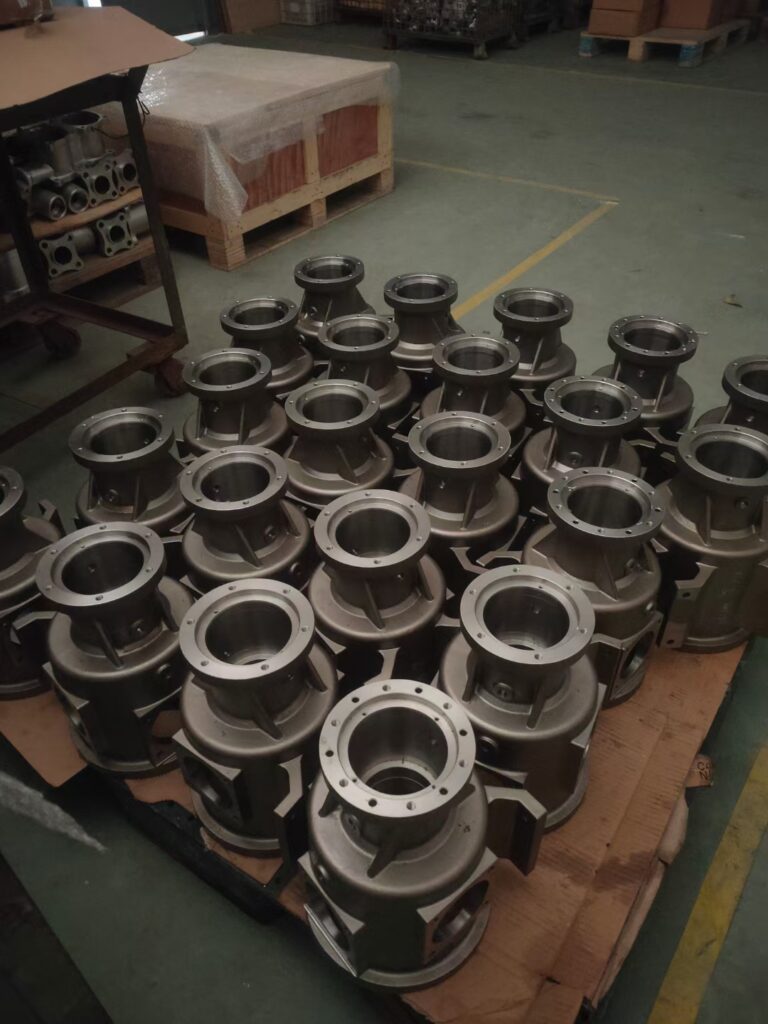
What Is 4340 Steel Casting?
4340 steel casting is a high-performance manufacturing solution utilizing a medium-carbon, low-alloy Nickel-Chromium-Molybdenum (Ni-Cr-Mo) steel. Known under standards such as AISI/SAE 4340 and ASTM A29, this material is engineered for components requiring an exceptional balance of ultra-high tensile strength, fracture toughness, and fatigue resistance.
Through precision investment casting (silica sol process), we produce near-net-shape 4340 components with intricate geometries, reducing raw material waste and subsequent CNC machining operations.
Chemical Composition and Core Alloying Elements (Ni-Cr-Mo)
The balanced chemistry of AISI 4340 cast steel provides superior hardenability and uniform mechanical properties across heavy cross-sections:
| Element | Standard Range (wt. %) | Functional Contribution |
|---|---|---|
| Carbon (C) | 0.38 – 0.43 | Provides high base hardness and tensile strength after heat treatment. |
| Nickel (Ni) | 1.65 – 2.00 | Drastically enhances notch toughness, impact strength, and low-temperature durability. |
| Chromium (Cr) | 0.70 – 0.90 | Increases depth of hardenability, wear resistance, and oxidation resistance. |
| Molybdenum (Mo) | 0.20 – 0.30 | Prevents temper embrittlement, refines grain structure, and boosts high-temperature strength. |
| Manganese (Mn) | 0.60 – 0.80 | Enhances deoxidation, workability, and hardenability. |
| Silicon (Si) | 0.15 – 0.35 | Acts as a deoxidizer and solid solution strengthener. |
Key Metallurgical and Structural Properties
- Exceptional Deep Hardenability: The synergy of nickel, chromium, and molybdenum allows 4340 castings to maintain uniform strength and microstructural consistency from the surface to the core in thick-walled parts.
- High Fracture Toughness & Ductility: Unlike standard high-carbon steels that turn brittle at high hardness levels, 4340 retains remarkable shock resistance and elongation.
- Superior Fatigue Limit: High endurance thresholds make this alloy reliable under dynamic, cyclical, and high-stress operating environments.
- Microstructural Integrity: Controlled melting and precision casting parameters eliminate porosity, yielding a clean, homogeneous grain structure ready for heat treatment.
Why Choose Cast 4340 Over Standard Carbon and Low-Alloy Steels
- Higher Load-Bearing Capacity: Standard carbon steels (such as 1045) and plain alloy grades fail under severe multi-axial stress where 4340 thrives.
- Freedom of Complex Geometries: Investment casting 4340 eliminates the design constraints and heavy tooling costs associated with large forgings while matching critical mechanical thresholds.
- Reduced Section Thickness: The extreme yield strength of quenched and tempered 4340 enables engineers to design lighter, thinner, and more compact structural components without sacrificing safety margins.
- Uniform Core Properties: Where low-alloy steels experience significant drop-offs in hardness toward the center of heavy sections, 4340 delivers consistent through-hardening performance.
Mechanical Properties and Performance Capabilities of 4340 Steel Casting
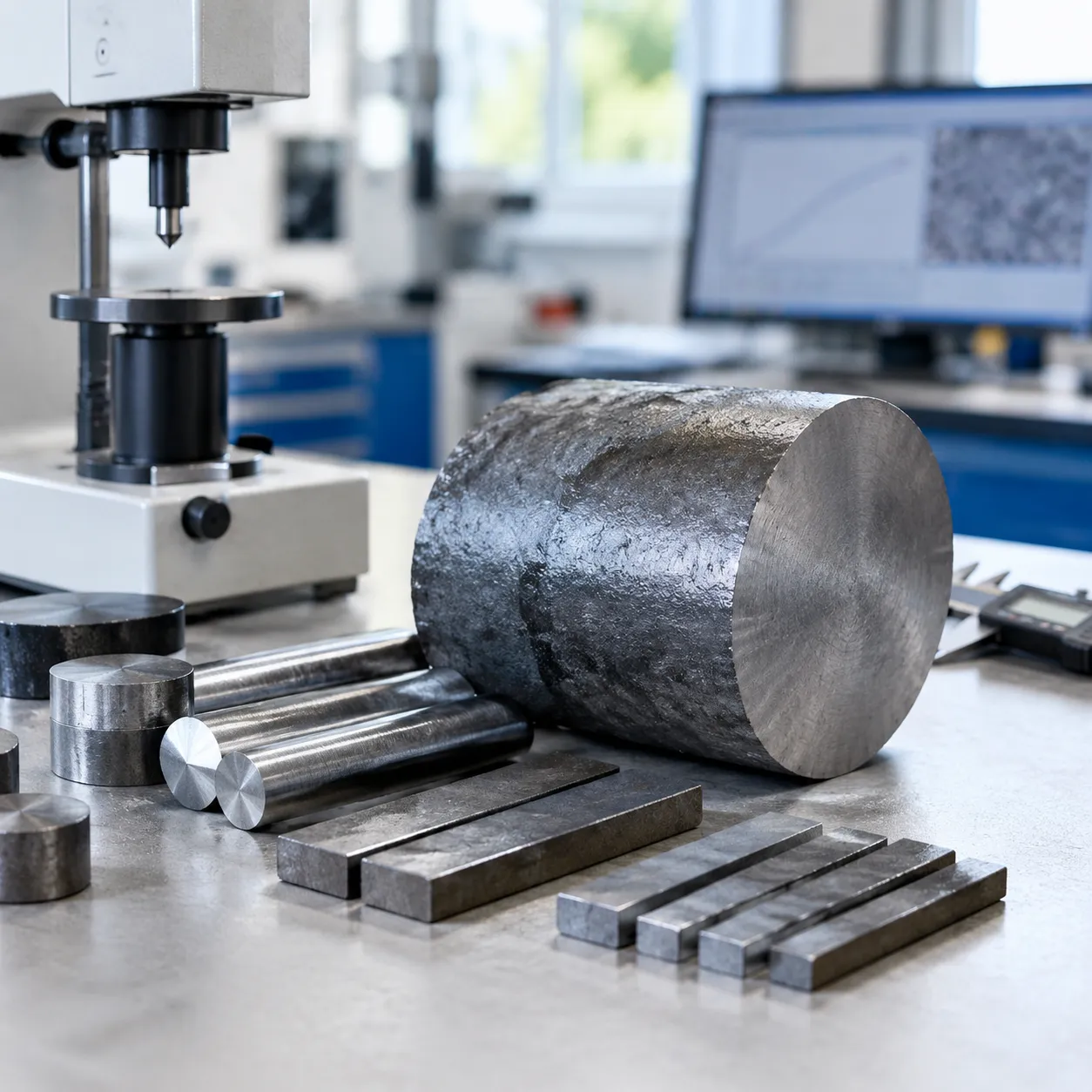
When we cast and heat-treat 4340 alloy steel, we produce components engineered to survive extreme mechanical stress. The combination of nickel, chromium, and molybdenum gives 4340 steel casting parts a rare balance of high static strength, deep hardenability, and shock resistance.
Tensile and Yield Strength Under Heavy Load
In high-stress structural applications, cast 4340 delivers exceptional load-bearing performance. Once properly normalized, quenched, and tempered, our quenched and tempered 4340 castings reliably achieve high tensile and yield ratings that prevent permanent deformation under severe operational loads.
- Ultimate Tensile Strength (UTS): Typically ranges from 900 MPa to over 1,400 MPa (130–200+ ksi), depending on tempering temperature.
- Yield Strength: Readily reaches 750 MPa to 1,250 MPa (110–180 ksi), ensuring dimensional stability under continuous heavy loads.
- High Strength-to-Weight Ratio: Allows for thinner wall sections and lighter component designs without sacrificing structural integrity.
Impact Toughness and Fracture Resistance in Harsh Environments
Unlike standard carbon steels that turn brittle under shock loads or sub-zero temperatures, cast 4340 mechanical properties stand out for superior notch toughness. The nickel content preserves ductility and retards crack propagation, making these castings ideal for high-impact industrial machinery, heavy drilling, and off-road drivetrain components exposed to severe dynamic shocks.
Fatigue Limits and Stress Endurance
Cyclic loading causes premature failure in lesser alloys. Because of its uniform grain structure and clean chemistry control, 4340 provides outstanding fatigue limits. It resists cyclic fatigue, torsional stress, and reverse bending, making it our primary choice for rotating shafts, gears, and high-load connecting links.
Hardness Ranges Across Heat-Treat Conditions
Through targeted thermal processing, we adjust the hardness and ductility profile of every 4340 high tensile strength casting to match exact application requirements:
| Heat Treatment State | Hardness Range (HRC / HB) | Primary Performance Focus |
|---|---|---|
| Annealed / Normalized | 200–240 HB (approx. 15–23 HRC) | Maximum machinability and stress relief before final machining |
| Oil Quenched & Tempered (High Temp ~600°C) | 28–34 HRC | Maximum toughness, high ductility, and extreme shock resistance |
| Oil Quenched & Tempered (Medium Temp ~450°C) | 35–42 HRC | Balanced high tensile strength, wear resistance, and toughness |
| Oil Quenched & Tempered (Low Temp ~200°C–300°C) | 45–52 HRC | Maximum surface hardness, extreme load capacity, and wear resistance |
For projects requiring wear resistance combined with corrosion protection rather than through-hardened alloy toughness, comparing options like 400 series stainless steel grades helps determine whether alloy steel or martensitic stainless fits the operational environment best. Through strict melt controls and precise thermal cycles, we ensure our 4340 castings meet your exact mechanical property specifications every time.
Primary Casting Methods for 4340 Alloy Steel
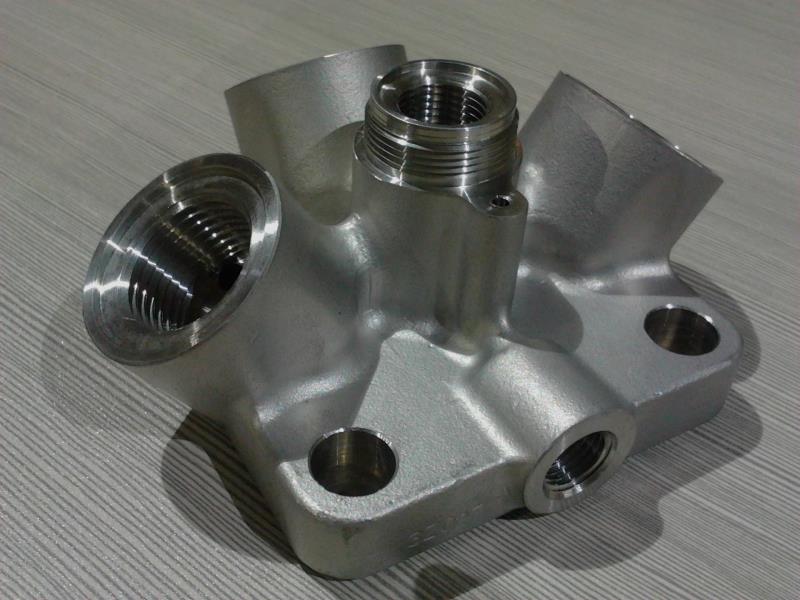
Selecting the right casting method for 4340 steel casting depends on part geometry, required dimensional accuracy, production volume, and mechanical stress profiles. We utilize three core casting processes to produce reliable, high-integrity 4340 components.
Investment Casting (Lost Wax)
For intricate, near-net-shape components, our investment and precision casting services utilize the silica sol process. This approach eliminates extensive CNC machining, reduces scrap, and captures fine design details with exceptional repeatability.
- Best for: Complex brackets, aerospace fittings, gear housings, and thin-walled parts.
- Key Advantages: Superior surface finish, tight dimensional tolerances, and minimal draft angle requirements.
Sand Casting
Sand casting is our go-to solution for large, heavy-duty 4340 alloy structural parts where section thickness and mass take priority over net-shape precision.
- Best for: Heavy equipment frames, massive mining tools, and large machine bases.
- Key Advantages: Low tooling start-up costs, suitability for low-to-medium volumes, and the capacity to cast sections weighing several tons.
Centrifugal Casting
We use centrifugal casting to produce symmetric, cylindrical parts. The high rotational force during pouring pushes impurities toward the inner bore, resulting in a dense, defect-free outer structure with uniform mechanical properties.
- Best for: Heavy-wall sleeves, hydraulic cylinder barrels, bushings, and high-load rollers.
- Key Advantages: High structural density, excellent radial grain structure, and freedom from gas porosity.
Process Tolerance and Surface Finish Comparison
| Casting Method | Typical Dimensional Tolerance | Surface Roughness (Ra) | Optimal Batch Size | Primary Advantage |
|---|---|---|---|---|
| Investment Casting | ISO 8062 CT4 – CT6 (±0.1 mm to ±0.5 mm) | 3.2 – 6.3 µm (125 – 250 µin) | Medium to High | Near-net shape, minimal machining |
| Sand Casting | ISO 8062 CT10 – CT12 (±1.5 mm to ±3.0 mm) | 12.5 – 25 µm (500 – 1000 µin) | Low to Medium | Low tooling cost, large part capacity |
| Centrifugal Casting | ISO 8062 CT7 – CT9 (±0.8 mm to ±1.5 mm) | 6.3 – 12.5 µm (250 – 500 µin) | Low to High | High density for cylindrical shapes |
Heat Treatment Guidelines for 4340 Castings
Heat treatment is where 4340 steel casting unlocks its full mechanical potential. As-cast 4340 exhibits a coarse microstructure; we use precise thermal processing to refine grain size, relieve casting stresses, and achieve targeted tensile and impact specifications.
Annealing and Normalizing to Optimize Microstructure
- Normalizing: Heating to 870°C–900°C followed by still-air cooling homogenizes the cast dendritic structure, refines grain boundaries, and prepares the matrix for uniform hardening.
- Full Annealing: Heating to 800°C–840°C with controlled furnace cooling softens the casting to approximately 200–220 HBW, maximizing tool life during heavy rough machining.
Quenching and Tempering (Q&T) for Balanced Strength
To achieve high structural integrity, we perform oil quenching from 830°C–860°C followed immediately by tempering: High-Strength Tempering (400°C–500°C): Yields high tensile strength (up to 1,400 MPa) and elevated yield points for high-stress structural parts. High-Toughness Tempering (550°C–650°C): Prioritizes impact energy and fracture resistance in heavy-load or sub-zero operating environments. Result: Quenched and tempered 4340 castings deliver an optimal balance of fatigue resistance, yield strength, and ductility.
Through-Hardening Capabilities and Depth
Due to the synergistic balance of nickel, chromium, and molybdenum, 4340 functions as a premier through hardening alloy steel. Unlike standard carbon grades that only harden near the surface, 4340 investment castings achieve consistent cross-sectional hardness and core toughness in thick sections up to 100 mm (4 inches).
Surface Hardening Alternatives: Nitriding and Induction
When an application demands extreme abrasion resistance while preserving core shock absorption, we utilize selective surface treatments: Gas or Plasma Nitriding: Imparts a wear-resistant case (55–60 HRC) at low temperatures (500°C–530°C), eliminating the distortion risks of high-heat cycles. Induction Hardening: Rapidly hardens critical wear faces, gear teeth, or bearing journals while keeping the underlying casting core tough and ductile.
Machining, Welding, and Quality Testing for 4340 Castings
Manufacturing high-integrity parts from 4340 alloy steel requires strict process controls across post-casting operations. Because 4340 responds heavily to thermal changes, machining setups, welding cycles, and non-destructive evaluations must follow rigorous engineering parameters.
Tooling and Machining Guidelines: Annealed vs. Hardened State
The machinability of 4340 casting depends directly on its heat-treated condition:
- Annealed or Normalized State: In the softer, annealed condition (typically below 250 HBW), 4340 machines smoothly. We utilize standard coated carbide tooling with moderate surface cutting speeds (90–120 m/min) and consistent chip loads to prevent edge buildup.
- Quenched and Tempered (Hardened) State: When machining pre-hardened 4340 castings (32–45 HRC), high rigidity is essential to minimize deflection. We drop cutting speeds (30–60 m/min), employ rigid tool holders, and use high-performance CBN (Cubic Boron Nitride) or specialized PVD-coated carbide inserts with continuous coolant delivery to maintain dimensional tolerances.
Our in-house capabilities integrate advanced precision casting and CNC machining to deliver tight-tolerance, net-shape components directly to your production line.
Welding Guidelines and Post-Weld Heat Treatment (PWHT)
Because 4340 contains significant levels of carbon, nickel, chromium, and molybdenum, it has high hardenability and is prone to hydrogen-induced cracking if welded improperly.
- Strict Preheating: Never weld a 4340 steel casting cold. We apply uniform preheating between 200°C and 315°C (400°F to 600°F) to slow the cooling rate in the heat-affected zone (HAZ).
- Consumables: Use matching or slightly under-matched low-hydrogen filler electrodes (such as AWS E11018-M) stored in dry conditions to eliminate moisture pickup.
- Mandatory PWHT: Immediately following welding, parts must undergo post-weld stress relief or a full quench-and-temper cycle. This eliminates residual stress peaks and prevents brittle martensite formation in the HAZ.
Non-Destructive Testing (NDT) and Quality Inspection
To guarantee zero internal defects in critical structural castings, we enforce strict testing protocols:
| Inspection Method | Target Defect Type | Industry Standard |
|---|---|---|
| Magnetic Particle Inspection (MPI) | Surface and near-surface microcracks, seams | ASTM E709 / ASTM E1444 |
| Ultrasonic Testing (UT) | Deep internal voids, inclusions, and laminations | ASTM A609 |
| Radiographic Testing (RT) | Volumetric shrinkage, gas porosity, and core shifts | ASTM E94 / ASTM E192 |
| Spectrometer Analysis | Chemical composition verification (Ni-Cr-Mo balance) | ASTM A29 / ISO 4957 |
| CMM Coordinate Measurement | Final critical dimensions and GD&T geometric tolerances | ISO 1101 / CT4–CT6 |
Surface Finishing and Corrosion Protection
While 4340 delivers high strength and impact resistance, it remains an alloy steel that requires surface protection in corrosive environments. We provide multiple finishing options tailored to your field requirements:
- Mechanical Finishing: Automated shot blasting and abrasive grit blasting for consistent surface profiles and stress equalization.
- Chemical Conversion: Manganese or zinc phosphating and black oxide finishes for baseline corrosion resistance and lubricant retention.
- Protective Coatings & Plating: Passivation, cadmium or zinc-nickel plating, and specialized thermal spray coatings to protect high-wear components exposed to offshore, chemical, or mining conditions.
Key Industrial Applications for 4340 Cast Steel
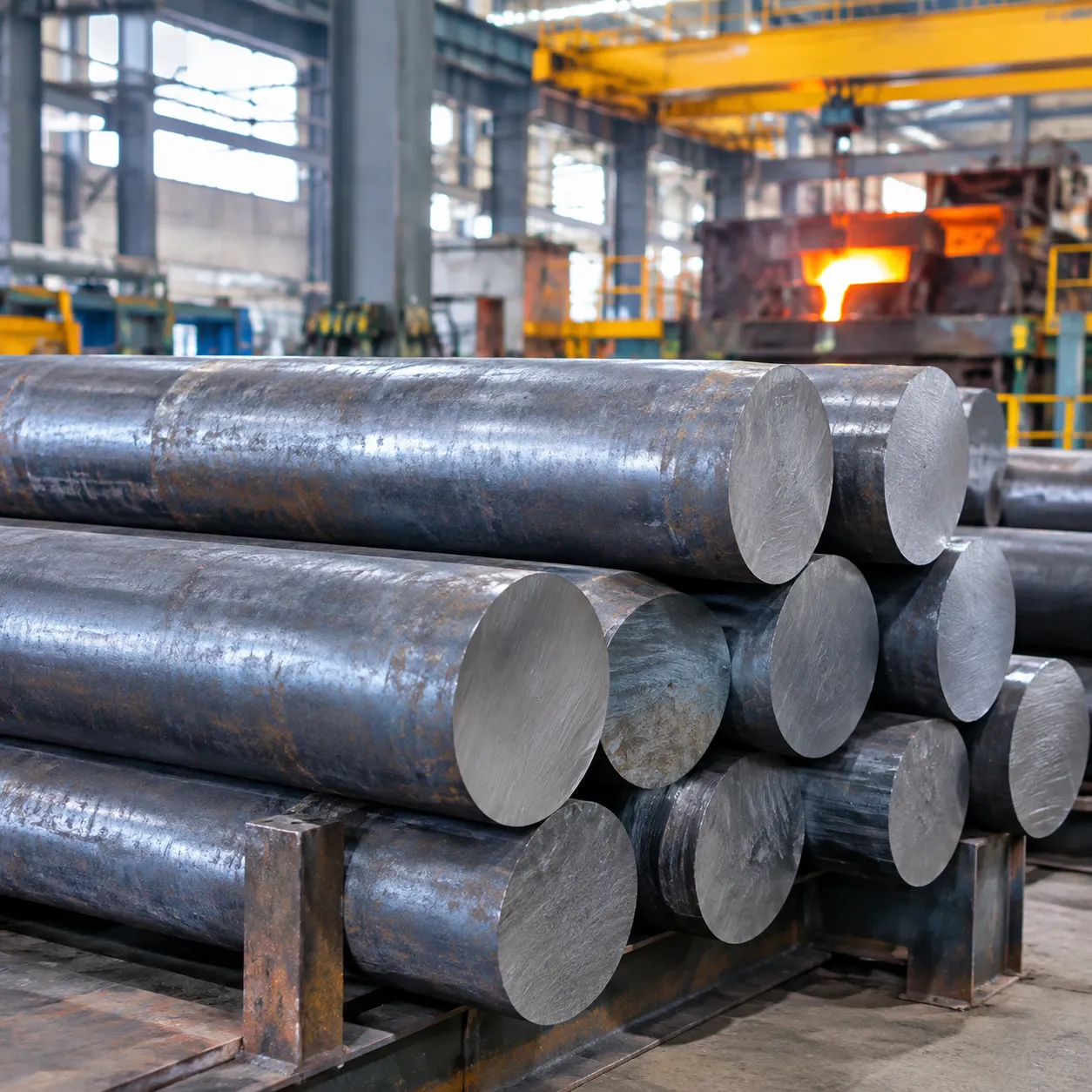
When standard carbon steels fail under extreme stress, our 4340 steel casting solutions step in to provide the required fracture resistance and deep hardenability. We cast and machine this Nickel-Chromium-Molybdenum alloy to meet critical demands across high-load global industries.
Aerospace Structural Components, Landing Gear Parts, and Fittings
In airframe and defense hardware, components must handle violent dynamic shocks without adding unnecessary bulk. We cast complex structural brackets, bellcranks, and landing gear attachments using precise lost-wax methods. Alongside our titanium investment casting for aerospace and medical parts, our aerospace-grade 4340 steel castings provide unmatched core toughness for structural fittings exposed to severe torsional stresses.
- Landing gear hinges and pivot brackets
- Hydraulic actuator housings and cylinders
- High-stress flight-control linkages
Automotive, Racing, and Drivetrain Components
Performance racing and heavy commercial vehicles generate intense cyclic torque. Our 4340 alloy steel investment casting process delivers near-net-shape drivetrain parts that resist fatigue failure under continuous high-RPM loads.
- Heavy-duty crankshafts and connecting rods
- Drive hubs, transmission yokes, and transfer case gears
- Suspension uprights and steering knuckles
Oil, Gas, and Energy Downhole Tools and Pressure Fittings
Drilling and extraction operations subject metal to punishing torsion, high vibration, and pressure spikes. Through-hardened 4340 castings maintain mechanical integrity deep downhole where component replacement is costly and hazardous.
- Downhole drilling jars and reamer bodies
- High-pressure valve bodies, manifolds, and flow iron
- Wellhead slip components and blowout preventer (BOP) structural elements
Heavy Construction, Mining, and High-Impact Industrial Machinery
Earthmoving, mining, and heavy excavation machinery demand components that will not shatter under sudden impact loads. We cast and heat-treat 4340 components to maximize wear resistance and core strength simultaneously.
- Rock crusher arms, toggle plates, and hammer pivots
- Excavator boom links and heavy-duty bucket pins
- Hydraulic breaker front heads and drive pinions
4340 Steel Casting vs. Alternative Alloys
Selecting the right alloy and production method depends on cross-sectional thickness, impact requirements, and total manufacturing costs. Here is how a 4340 steel casting compares against standard engineering alloys and forging methods.
4340 vs. 4140 Steel Casting: Deep Hardenability and Shock Resistance
- 4140 Steel: A dependable chromium-molybdenum alloy suitable for medium-stress parts. However, its hardenability drops off significantly in thicker sections (above 3.5 inches / 90 mm).
- 4340 Steel: The nickel content (1.65–2.00%) gives 4340 superior deep hardenability and fracture toughness. It maintains high tensile strength and impact resistance across heavy cross-sections where 4140 would soften at the core.
- Selection Rule: Choose 4140 for standard structural components with moderate thickness; specify 4340 when shock loads are severe and cross-sections are heavy.
4340 vs. 8620 Casting: Through-Hardening vs. Case-Hardening
- 8620 Steel: A low-carbon alloy designed specifically for carburizing. It produces a hard, wear-resistant outer case over a softer, ductile core—ideal for ring gears, cams, and pinions.
- 4340 Steel: A medium-carbon, through hardening alloy steel that achieves uniform mechanical strength and high yield values across the entire part matrix after quenching and tempering.
- Selection Rule: Choose 8620 for localized surface wear resistance; choose 4340 when the core must withstand high continuous torsional, tensile, and bending fatigue.
Cast 4340 vs. Forged 4340: Tooling Costs and Geometry Freedom
- Forged 4340: Provides directional grain flow that maximizes strength along specific stress axes, but tooling dies are expensive and geometries are strictly limited to simpler profiles with high machining stock.
- Cast 4340: Provides uniform, isotropic mechanical properties with no directional grain weakness. It allows for complex internal channels, undercut profiles, and near-net-shape geometry. Evaluating the advantages and disadvantages of lost wax casting demonstrates how precision casting dramatically slashes secondary machining time and material waste compared to forgings.
| Alloy / Form | Primary Strengthening Mechanism | Deep Section Hardenability | Geometry Complexity | Typical Best Use |
|---|---|---|---|---|
| Cast 4340 | Through-Hardened (Q&T) | Exceptional | High (Near-Net-Shape) | Heavy-duty shafts, structural brackets, high-stress housings |
| Cast 4140 | Through-Hardened (Q&T) | Moderate | High | Medium-load brackets, industrial levers, small gears |
| Cast 8620 | Case-Hardened (Carburized) | Low (Core stays soft) | High | Wear rings, bushings, low-stress gear teeth |
| Forged 4340 | Through-Hardened (Q&T) | Exceptional | Low to Moderate | High-volume simple shafts, aerospace landing cylinders |
Frequently Asked Questions About 4340 Steel Casting
Can you weld 4340 steel castings safely without cracking?
Yes, but it requires strict thermal management due to the alloy's high hardenability. Because 4340 contains significant carbon, nickel, chromium, and molybdenum, rapid cooling creates brittle martensite that leads to cold cracking. To weld safely: Preheat the component thoroughly between 400°F and 600°F (200°C–315°C). Maintain interpass temperature within the same range throughout the welding process. Perform Post-Weld Heat Treatment (PWHT) immediately, such as stress relieving or a full quench and temper cycle, to restore structural ductility.
What hardness (HRC) can cast 4340 steel achieve after quenching?
Directly after oil quenching, 4340 steel casting components typically achieve an as-quenched hardness of 55 to 60 HRC. In practical production, we temper the parts down to a targeted working range of 28 to 40 HRC (or higher depending on engineering requirements). This tempering process balances extreme tensile strength with essential impact toughness and fatigue resistance.
How does cast 4340 hold up in cryogenic or low-temperature environments?
Cast 4340 performs exceptionally well under sub-zero conditions compared to standard carbon and low-alloy steels. The high nickel content (~1.65% to 2.00%) stabilizes the matrix, preserving fracture toughness and ductile behavior down to low temperatures. This makes quenched and tempered 4340 castings a reliable choice for aerospace structural hardware, arctic oilfield fittings, and cryogenic pressure tools.
Which casting method offers the best cost-efficiency for custom 4340 parts?
The right process depends on geometry, part weight, and production volume: Silica Sol Investment Casting: The most cost-efficient method for complex, near-net-shape components. It achieves tight dimensional tolerances (ISO 8062 CT4–CT6) and excellent surface finish, drastically minimizing expensive CNC machining costs. Sand Casting: Best suited for large-scale, heavy structural castings where tooling simplicity and raw bulk matter more than fine surface detail.
As a dedicated steel casting manufacturer for custom alloy castings, we optimize mold design, chemistry, and heat treatment to give you the most cost-effective production route for your custom 4340 components.
 English
  Russian
  German