
2026年11月9日
Dewaxing Autoclave Selection Guide covering capacity temperature pressure safety features and key buying considerations for reliable performance

Understanding Dewaxing Autoclave Fundamentals
Selecting the proper dewaxing autoclave is one of the most critical decisions in establishing a reliable precision casting operation. We design and evaluate these systems to ensure maximum shell integrity, rapid processing, and consistent production output.
What Is a Dewaxing Autoclave?
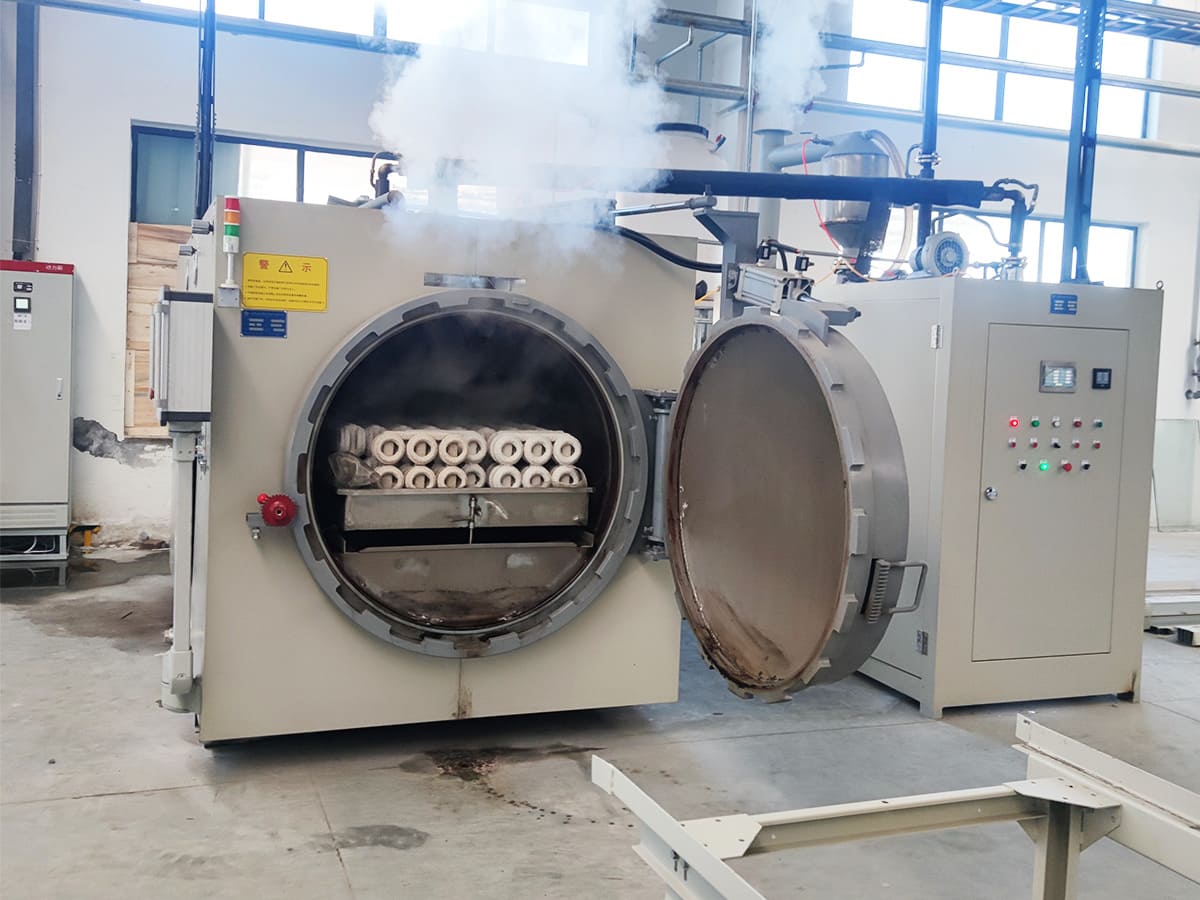
A dewaxing autoclave is a specialized autoclave pressure vessel engineered to evacuate pattern wax from ceramic shells during the lost wax casting process. Unlike standard thermal ovens, an autoclave utilizes pressurized steam to rapidly melt and drain wax before thermal expansion can damage the fragile ceramic mold. It serves as an indispensable piece of investment casting equipment for high-specification foundries worldwide.
Role of Steam and Pressure in Wax Removal
The physics of wax pattern dewaxing require a fine balance between heat transfer and surface pressurization:
- Rapid Pressurization: Injecting saturated steam at high pressure raises vessel temperature in seconds. This flash-melts the boundary layer of wax adjacent to the shell wall immediately.
- Preventing Shell Cracking: Wax expands significantly when heated. Rapid steam pressurization ensures the outer wax layer melts and vents before the interior core expands, eliminating internal hydraulic pressure that leads to cracked molds.
- Efficient Wax Drainage: High-pressure steam drives the liquefied wax swiftly through bottom drainage pathways and into dedicated wax recovery systems, preserving wax quality for potential recycling.
Key Applications in Investment Casting
Modern lost wax casting machinery must adapt to a variety of industrial demands. Our dewaxing autoclaves support key production sectors, including:
- Aerospace and Defense: Processing complex turbine blade molds and structural components requiring zero shell failure.
- Automotive and Power Generation: Handling dense batches of turbochargers, pump impellers, and valve bodies.
- Medical and Precision Hardware: Clean, residue-free dewaxing for surgical tools, implants, and high-tolerance industrial hardware.
Core Technical Specifications to Evaluate: Dewaxing Autoclave Selection Guide
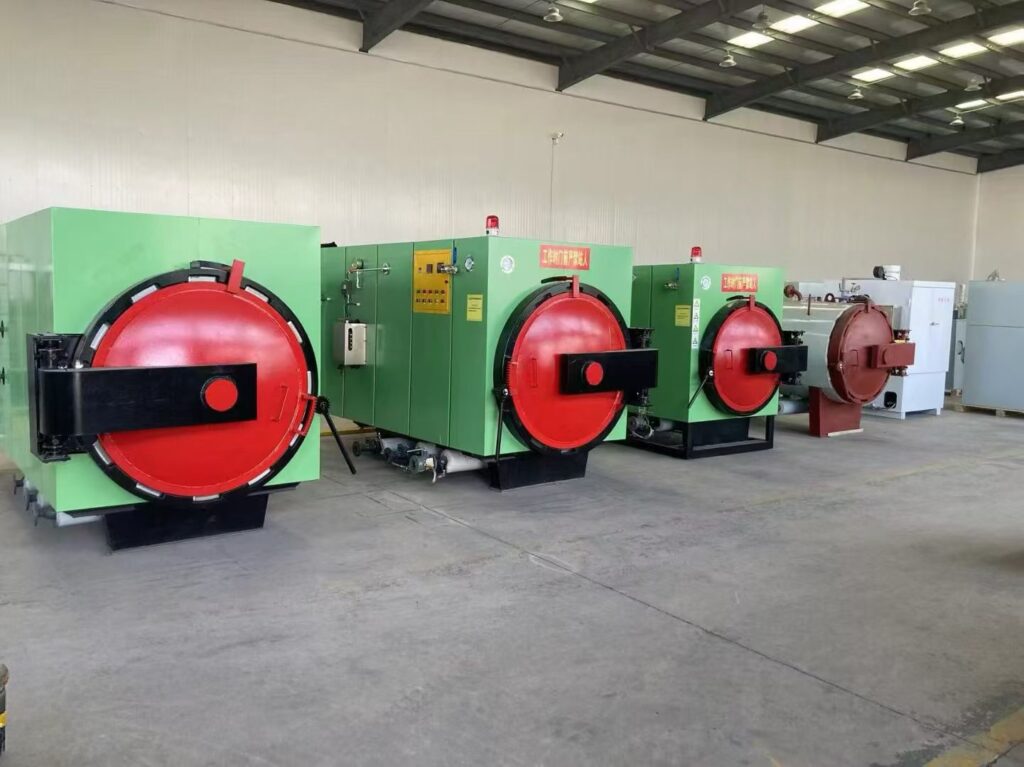
Choosing the right autoclave pressure vessel comes down to matching thermal dynamics and structural capacity to your foundry throughput. We evaluate core parameters to prevent common investment casting bottlenecks such as shell cracking and uneven wax elimination.
Pressure Ratings and Vessel Capacity
In the industrial dewaxing process, pressurization speed is just as critical as maximum pressure. Slow pressure buildup causes pattern wax to expand before the shell surface melts, leading to cracked ceramic shells.
- Operating Pressure: Look for working pressures rated between 8 to 10 bar (115 to 145 psi) to ensure immediate wax face melting.
- Pressurization Rate: The vessel must achieve full operating pressure within 4 to 10 seconds using a dedicated steam accumulator.
- Working Volume: Measure your largest tree diameter and height. Usable basket volume should accommodate your maximum mold batch without crowding the vessel walls or blocking steam injection paths.
Heating Systems: Steam vs. Electric vs. Gas-Fired
The steam delivery method dictates cycle speed, energy efficiency, and operational footprint:
| Heating Method | Pressurization Speed | Operational Efficiency | Best Application |
|---|---|---|---|
| Direct Steam (External Accumulator) | Ultra-fast (under 5 seconds) | High thermal storage efficiency | High-volume lost wax casting machinery |
| Integral Electric Boiler | Moderate (requires pre-charging) | Lower footprint, higher utility cost | Low-to-medium batch foundries |
| External Gas-Fired Generator | Fast (dependent on accumulator) | Lower fuel costs at scale | Continuous industrial dewaxing setups |
Temperature Control Precision and Uniformity
Effective wax pattern dewaxing requires uniform, saturated steam distribution across the entire chamber.
- Uniform Distribution: Strategic multi-port steam manifolds prevent localized hot or cold zones that compromise delicate ceramic molds.
- Thermal Accuracy: Precision sensors must regulate chamber temperatures within ±1.5°C (±2.7°F) during the soak phase to guarantee clean burn-out without degrading reusable wax.
Material Compatibility: Stainless Steel vs. Carbon Steel
Autoclave interiors constantly battle steam condensation and corrosive wax acids. Material selection directly determines machine lifespan and contamination risk:
- Carbon Steel Vessels: Lower upfront cost, but susceptible to internal scaling, oxidation, and corrosion. Rust flakes can contaminate recovered wax and clog drain ports.
- Stainless Steel Vessels: Fabricating the inner shell or contact surfaces with corrosion-resistant austenitic stainless steel prevents chamber pitting, resists chemical degradation, and preserves wax purity for recycling. Heavy-duty internal hardware made from cast stainless steel further minimizes long-term wear on door hinges, track guides, and drain grates.
Safety Features and Compliance Standards in Dewaxing Autoclaves
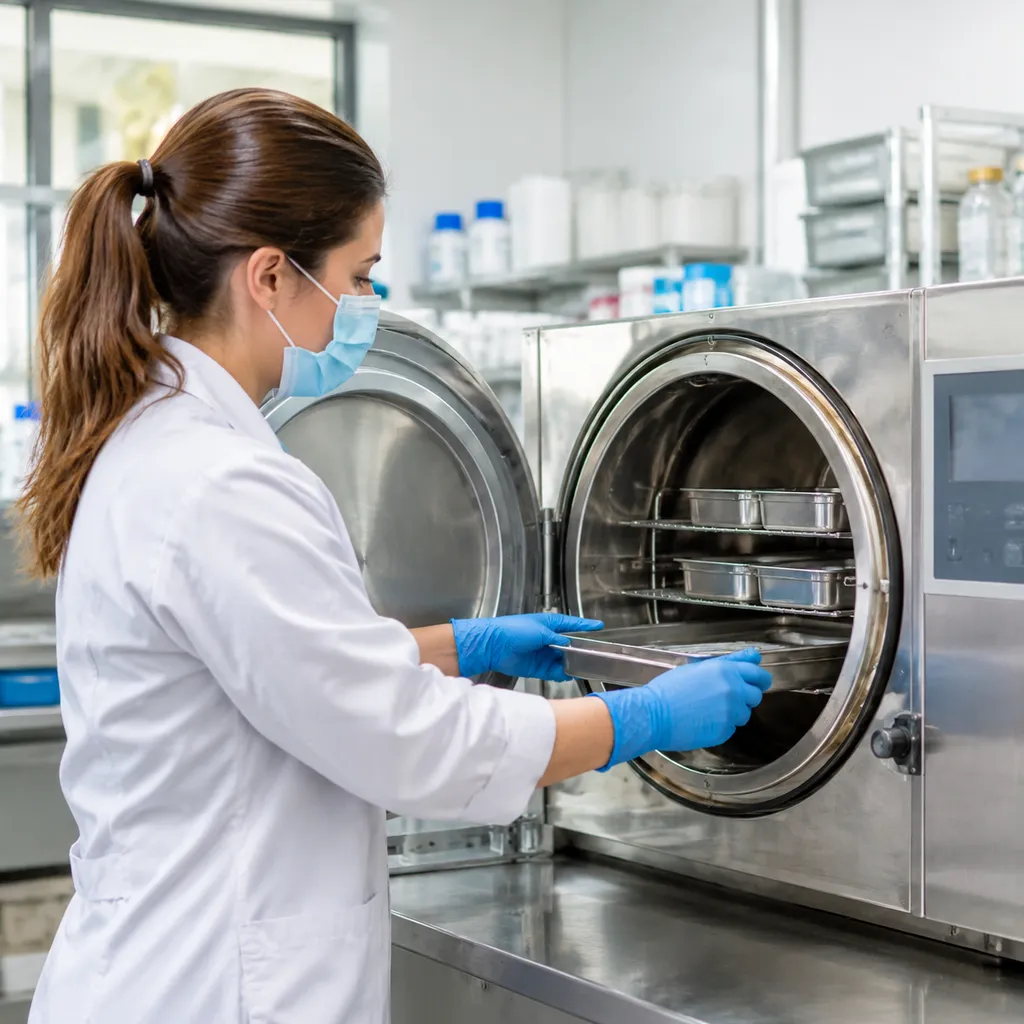
When we build and specify equipment for investment casting, safety comes before everything else. High-pressure steam inside an industrial vessel carries real risks if critical fail-safes are missing. Any complete Dewaxing Autoclave Selection Guide must prioritize certified construction, pressure management, and redundant operator protection systems. Evaluating these systems early prevents operational hazards and ensures full regulatory compliance across international markets.
ASME Boiler and Pressure Vessel Code Requirements
We manufacture our pressure shells strictly aligned with the ASME Boiler and Pressure Vessel Code (BPVC Section VIII, Division 1). This standard ensures:
- Certified Materials: Tested high-grade steels capable of withstanding continuous cyclic fatigue from rapid pressurization.
- Weld Integrity: 100% radiographic or ultrasonic non-destructive testing on critical seam welds.
- Hydrostatic Proof Testing: Every vessel undergoes pressure validation at levels well above standard working pressure before installation.
Meeting these benchmarks guarantees long-term vessel stability and simplifies local compliance approvals for your foundry.
Pressure Relief Valve Systems
Redundant pressure relief valves (PRVs) serve as the primary defense against unexpected pressure spikes. We equip each autoclave with dual, high-capacity relief valves calibrated to exhaust excess steam automatically. If line pressure exceeds standard thresholds, the valves open instantly to purge steam safely away from personnel through dedicated exhaust channels.
Safety Interlocks and Door Locking Mechanisms
Door operation presents the highest mechanical risk during daily cycles. To safeguard operators, we incorporate multi-tiered mechanical and pneumatic safety interlocks:
- Zero-Pressure Door Interlocks: A mechanical pin physically locks the door actuation mechanism whenever residual pressure remains inside the chamber.
- Pneumatic Ring Seals: The door will not initiate a steam cycle until the sealing ring is fully engaged and verified by digital sensors.
- Fail-Safe Latching: Secondary safety catches prevent the door from swinging open even under minor trace pressure.
Reviewing operational protections alongside our dewaxing autoclave safety and capacity benchmarks helps streamline both equipment sizing and risk management plans.
Emergency Shutdown Procedures
In critical situations, seconds count. Our control architecture includes hardwired, push-button Emergency Stop (E-Stop) switches at both the loading zone and the main control panel. Triggering an emergency shutdown initiates an automated, fail-safe sequence:
- Immediate Steam Isolation: Automated intake valves shut off the primary steam supply instantly.
- Rapid Venting: High-flow dump valves activate to bleed chamber pressure rapidly through filtered exhaust ports.
- Power Cutoff: Auxiliaries and heating elements de-energize without disengaging the safety monitoring sensors.
Essential Autoclave Safety Checklist
| Safety Feature | Core Function | Standard Specification |
|---|---|---|
| Vessel Design Code | Structural integrity under cyclic steam stress | ASME Section VIII, Div 1 / CE PED certified |
| Relief Valves (Dual) | Overpressure mitigation | Redundant spring-loaded PRVs set to max design pressure |
| Safety Interlock Pins | Physical prevention of door opening under pressure | Mechanical drop-pin coupled with pressure sensors |
| Emergency Steam Dump | Instant pressure release during critical faults | High-temperature, pneumatic fail-open exhaust valve |
| Door Perimeter Shielding | Operator deflection barrier | Heavy-gauge deflection shroud around the door seal |
Selecting the Right Size and Capacity
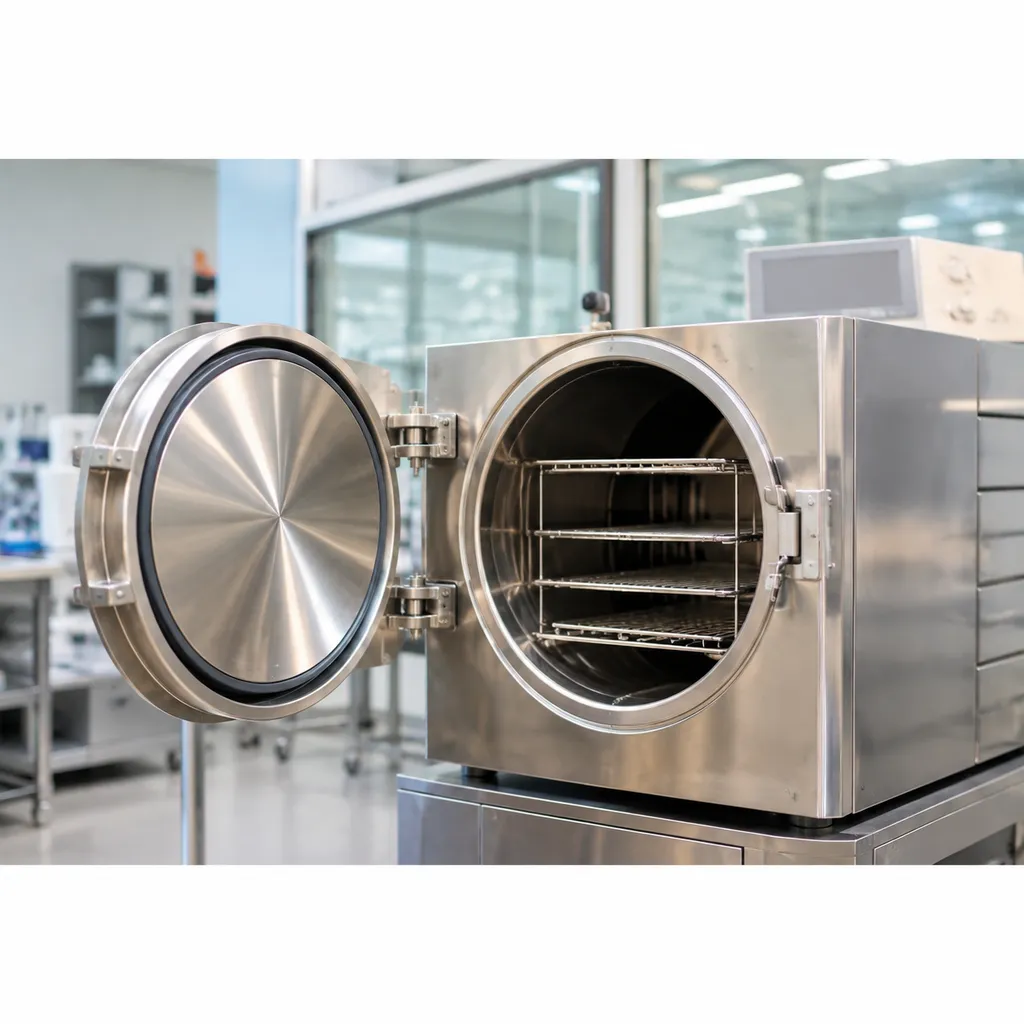
Choosing the right dimensions for an autoclave pressure vessel dictates your foundry's daily output and operational flow. In this section of our Dewaxing Autoclave Selection Guide, we break down how to properly size your equipment to prevent bottlenecking your casting line.
Matching Throughput Requirements with Vessel Volume
To avoid overpaying for unused capacity or stalling production, calculate your shell tree volume against usable basket dimensions.
- Tree Geometry: Measure your tallest wax assembly and widest cluster diameter, adding at least 15% clearance for steam circulation.
- Hourly Throughput: Determine how many clusters your shell room produces per hour. If your shell line uses a high-volume setup like a precision casting solution with silica sol process, align autoclave basket volume to handle those specific batch intervals smoothly.
- Steam Distribution: Excessively packed vessels prevent instant steam penetration, causing shell cracking and uneven wax removal.
| Production Scale | Target Vessel Diameter | Typical Usable Volume | Best Suited For |
|---|---|---|---|
| Low / Pilot | 800 mm – 1,000 mm | Up to 0.8 m³ | R&D, small hardware, jewelry |
| Medium Foundries | 1,200 mm – 1,500 mm | 1.2 m³ – 2.5 m³ | General commercial castings |
| Heavy Industrial | 1,600 mm – 2,000 mm+ | 3.0 m³ – 6.0 m³+ | Large structural & aerospace parts |
Calculating Floor Space and Facility Layout Needs
The footprint of your industrial dewaxing process goes beyond the vessel shell. We always advise mapping out your shop floor with full operational clearances in mind:
- Door Clearance: Allow adequate swing space for manual swing doors or vertical clearance for automated hydraulic lift mechanisms.
- Loading Logistics: Plan space for rail systems, transfer carts, or overhead hoists to move loaded carts directly into the chamber.
- Utility Access: Ensure dedicated space behind and beside the unit for boiler piping, wax collection reservoirs, and maintenance access to steam valves.
Batch vs. Continuous Processing Considerations
While true continuous dewaxing is rare due to the need to hold high steam pressure, staged batch processing dictates your cycle timing.
- Single-Chamber Batch: The standard choice for lost wax casting machinery. We load a rack, run the pressurization and exhaust cycle, unload, and repeat. Best for mixed product lines and tight quality control.
- Dual-Vessel Staggered Systems: Utilizing two autoclaves running off a shared steam accumulator provides near-continuous workflow. While one vessel runs a dwell cycle, the second is loaded, maximizing boiler efficiency and stabilizing plant throughput.
Dewaxing Autoclave Selection Guide: Operational Efficiency and Automation
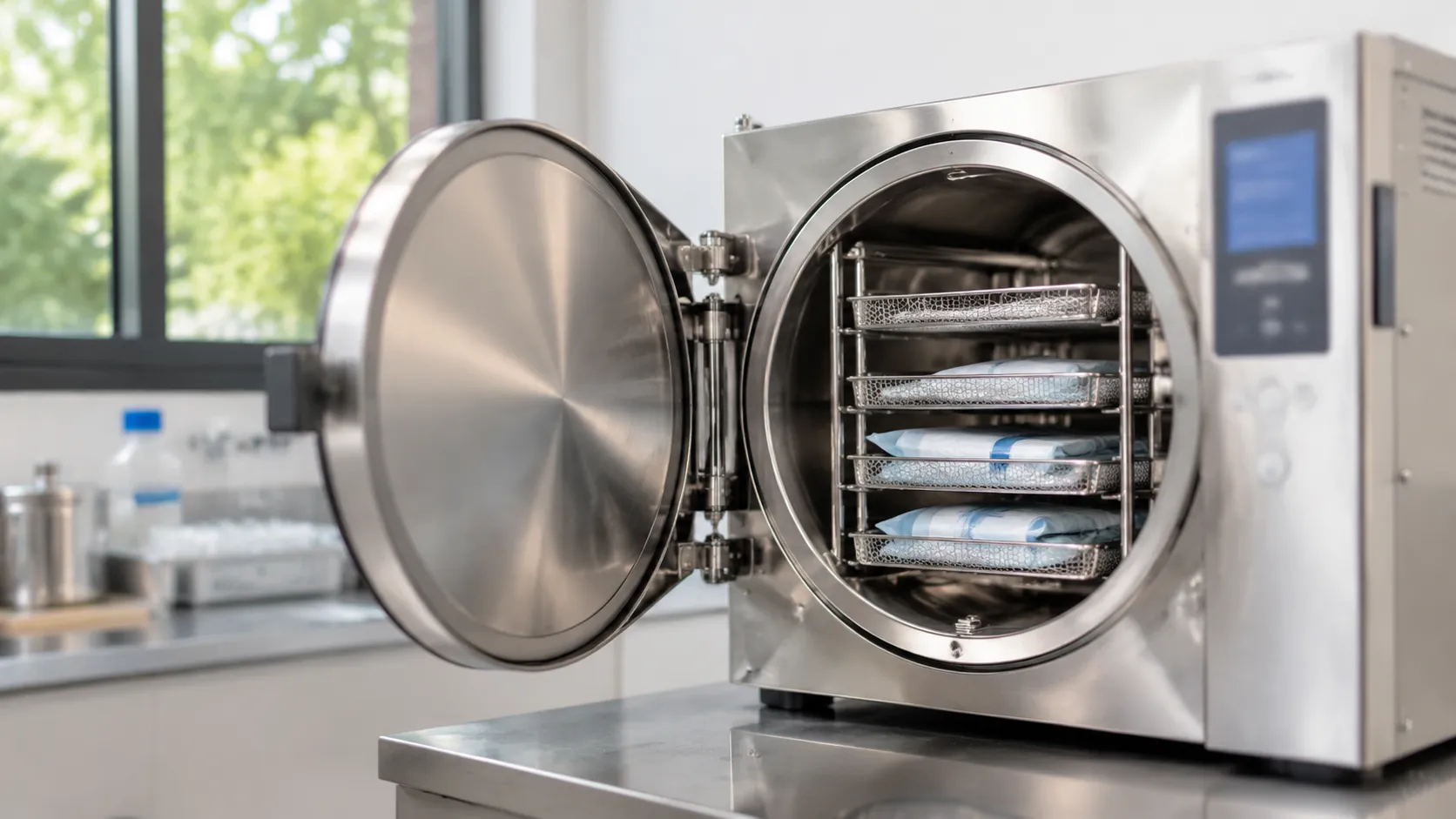
When we configure autoclave systems for modern casting lines, automation and thermal efficiency directly dictate daily operating margins. A properly automated setup removes human error, stabilizes batch cycle times, and keeps utility consumption under tight control.
Programmable Logic Controllers (PLC) for Cycle Repeatability
Modern lost wax casting machinery requires strict cycle consistency to protect delicate ceramic shells. We equip our pressure systems with industrial PLCs and touchscreen human-machine interfaces (HMI) to store multi-recipe programs.
- One-touch recipe recall: Operators select recipes based on pattern size, wax type, and mold load.
- Precise pressure ramps: Automated control of fast-fill valves pressurizes the vessel within seconds to prevent shell cracking.
- Traceable cycle data: Every batch logs steam temperature, ramp speed, soak time, and exhaust rate for total quality control.
Energy-Saving Features and Insulation Quality
Steam generation accounts for a major portion of operational overhead. Efficient thermal management keeps energy costs manageable:
| Feature | Design Standard | Operational Benefit |
|---|---|---|
| Vessel Insulation | Multi-layer ceramic fiber or high-density rockwool cladding | Prevents surface heat loss, maintaining stable internal temperatures. |
| Steam Accumulation | Dedicated rapid-discharge accumulator tanks | Eliminates boiler strain and delivers instant pressure on demand. |
| Wax Recovery Systems | Automated bottom-drain valves with thermal jackets | Delivers clean wax discharge and maximizes reusable wax yields. |
Integration with Existing Production Workflows
An efficient dewaxing autoclave does not operate in isolation. It bridges the gap between drying rooms and burnout furnaces. When designing high-throughput operations—such as those detailed in our aluminum alloy casting guide for die, sand, and investment setups—we ensure loading carts, rail heights, and pneumatic door clearances align with your plant layout to eliminate handling bottlenecks.
Maintenance Diagnostic Tools
Unplanned downtime stops the entire foundry floor. Modern control units integrate proactive diagnostics to catch equipment issues early:
- Pneumatic and valve monitoring: The system tracks actuation response times to detect leaking seals or sticking valves before cycle failures happen.
- Automated safety sensor checks: Limit switches and door-locking pins run self-tests before cycle initiation.
- Filter and trap alerts: Digital differential pressure transmitters flag blocked steam traps and exhaust lines, keeping cycle exhaust times within target thresholds.
Evaluating Manufacturer Support and Lifecycle Costs
When investing in industrial machinery for investment and precision casting services for metal parts, the upfront price is only one component of the value equation. To maintain long-term profitability, you must evaluate the support ecosystem provided by the manufacturer. A reliable partner ensures that your dewaxing autoclave remains operational with minimal disruption to your production schedule.
Key Factors for Long-Term Value
- Warranty and Technical Support: Look for comprehensive coverage that includes both parts and labor. Rapid response times from technical teams are crucial if a system fault occurs.
- Spare Parts Availability: Prioritize manufacturers with a robust supply chain for critical wear items like door seals, valve seats, and steam traps.
- Preventative Maintenance: Establish a schedule that accounts for periodic inspections to avoid unexpected downtime.
- Total Cost of Ownership (TCO): Calculate the cumulative cost of energy consumption, routine maintenance, and potential productivity loss.
Lifecycle Cost Comparison Matrix
| Consideration | Impact on Operations | Maintenance Strategy |
|---|---|---|
| Warranty Terms | High | Review coverage length |
| Spare Parts Supply | Critical | Stock core components |
| Scheduled Downtime | Moderate | Align with production gaps |
| Energy Efficiency | High | Monitor steam consumption |
Selecting a provider that emphasizes transparent maintenance requirements and long-term technical availability is essential for optimizing your casting production efficiency. High-quality support significantly reduces the TCO and prevents the hidden costs associated with extended operational halts.
Frequently Asked Questions (FAQs)
How do I determine the right pressure cycle for my wax model?
The key to choosing the correct cycle lies in your ceramic shell's thermal expansion limit and the melting profile of the pattern wax. To avoid shell cracking, steam must penetrate and pressurize the vessel almost instantly.
- Pressurization Rate: You need a steep ramp—typically reaching full operating pressure (around 8 to 10 bar) within 4 to 8 seconds.
- Soak Time: Dwell periods generally range from 10 to 15 minutes, depending on the load volume and cluster density.
- Exhaust Curve: Rapid depressurization prevents boiled wax from re-entering the shell pores.
For operations processing fragile shell assemblies, using an engineered steam dewaxing autoclave for fast wax removal ensures the fast pressure buildup needed to collapse the outer wax layer before thermal expansion can crack the mold.
What is the typical lifespan of a professional dewaxing autoclave?
With routine care, a heavy-duty industrial dewaxing autoclave easily lasts 15 to 25 years. Because these units are certified pressure vessels, long-term durability depends on three main maintenance items:
- Door Gaskets: Replace every 6 to 12 months based on shift frequency.
- Vessel Wall Thickness Tests: Perform annual ultrasonic thickness checks to monitor corrosion from steam and wax condensate.
- Valves and Interlocks: Inspect pressure relief valves and pneumatic locks every 6 months to maintain ASME compliance.
Can one autoclave handle different types of casting wax?
Yes. Modern investment casting equipment easily accommodates filled, unfilled, straight, and microcrystalline waxes. The difference comes down to cycle customization. We rely on programmable PLC systems where you store dedicated recipes for each wax formulation:
| Wax Type | Pressure Ramp | Dwell Time Target | Exhaust Dynamic |
|---|---|---|---|
| Filled Pattern Wax | Rapid (< 6 sec) | Medium (10–12 min) | Fast Exhaust |
| Virgin / Unfilled Wax | Standard (< 8 sec) | Short (8–10 min) | Controlled Exhaust |
| High-Temp Specialty | Rapid (< 5 sec) | Long (12–16 min) | Fast Exhaust + Purge |
Configuring precise setpoints ensures high wax recovery rates without residual buildup, regardless of the diverse dewaxing autoclave applications run across your production floor.
What safety protocols are non-negotiable during operation?
Operating a high-pressure steam vessel requires zero compromise on safety routines. Every standard operating procedure must enforce these checkpoints:
- Triple-Lock Door Verification: Never start a steam injection cycle without verifying that mechanical pins, pneumatic locks, and limit switches are fully engaged.
- Zero-Pressure Chamber Interlock: The door closure must mechanically block opening whenever residual pressure exceeds 0.1 bar.
- Automatic Condensate Drainage: Keep the wax drainage lines clear of blockages before each run to prevent trapped-pressure hazards.
- Emergency Venting Verification: Test blow-down manual valves and safety pop valves on an established weekly schedule.
 English
 Russian
 German