
2026年11月9日
Learn how to improve ceramic shell strength and consistency with proven materials methods and process control tips
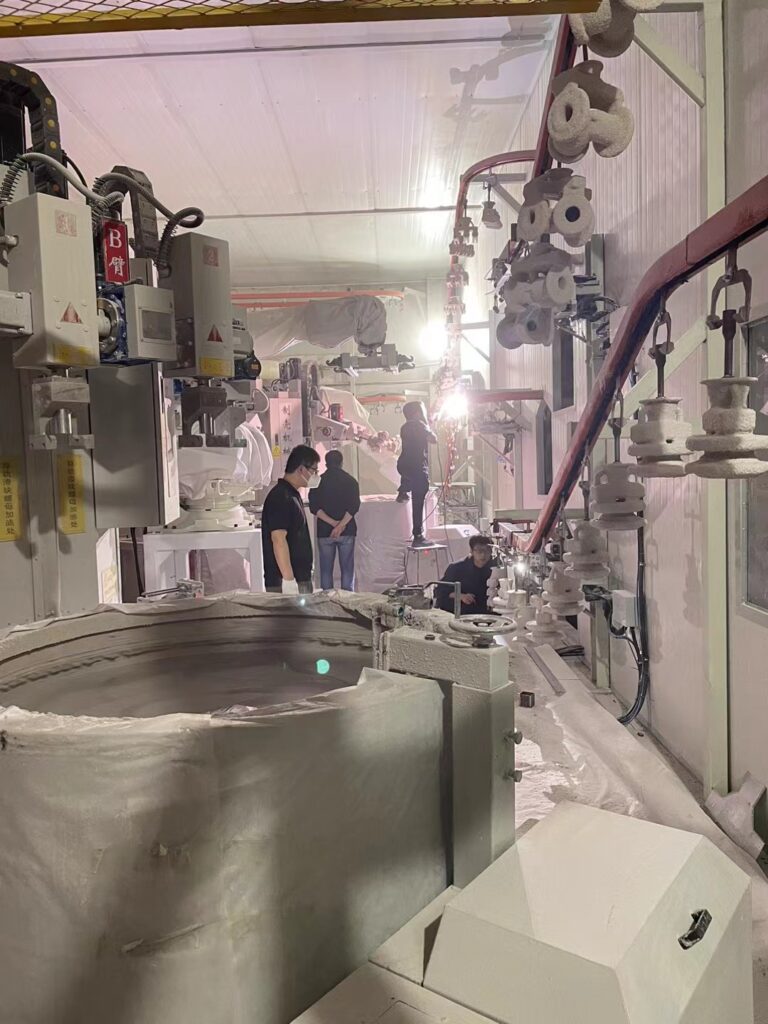
Vastpe™ Automated Ceramic Shell Building System: Precision Solutions for High-Strength, Defect-Free Investment Casting Shells
Achieving superior ceramic shell integrity is the foundation of high-quality investment casting. The Vastpe™ Automated Ceramic Shell Building System is engineered to address the critical challenges of industrial shell construction by eliminating the inconsistencies inherent in manual processes. Our primary engineering objective is to provide a standardized, repeatable environment that maximizes the structural performance of every mold.
By integrating advanced automation into the shelling sequence, we enable foundries to achieve stringent production metrics, including:
- Optimized Modulus of Rupture (MOR): Enhancing both green and fired strength to withstand the thermal and mechanical stresses of modern casting processes.
- Dimensional Repeatability: Maintaining consistent wall-thickness distribution across complex geometries through precise, programmable motion.
- Micro-Structural Uniformity: Ensuring uniform coating application to prevent common defects such as shell cracking, delamination, and surface inclusions.
Our systems focus on the technical mastery of slurry rheology, drainage dynamics, and environmental stability, providing the reliability required to produce defect-free investment casting shells at scale.
Technical Anatomy of the Vastpe System
Our custom automated assembly systems with precision robotics and vision inspection form the backbone of a reliable investment casting process. By integrating high-precision motion control with advanced materials management, we ensure that every ceramic shell meets rigorous structural standards.
Core Robotic and Slurry Components
| Feature | Engineering Capability |
|---|---|
| Multi-Axis Robot | Consistent dipping angles and repeatable withdrawal speeds. |
| Slurry Management | Automated agitation and real-time viscosity monitoring. |
| Stuccoing Module | Dual-station configuration for optimized grain distribution. |
| Fluidized Bed | Controlled air distribution to prevent stucco bridging. |
Precision Mechanical Protocols
- Multi-Axis Dipping: We utilize high-payload, multi-axis robots to standardize the immersion and drainage of complex patterns. By controlling the exact angle and speed of withdrawal, we eliminate the variability inherent in manual shell dipping.
- Intelligent Slurry Conditioning: Our tanks feature integrated agitation protocols that maintain consistent refractory solids loading and pH levels. This prevents binder degradation and ensures that the ceramic slurry remains in optimal condition for high-strength shell build-up.
- Stucco Application Mechanics: The system employs both rainfall sanding and fluidized bed technology. This modular approach allows for precise control over the application of various refractory grains, ensuring full coverage without damaging the delicate prime coat or causing trapped air pockets.
How to Improve Ceramic Shell Strength and Consistency: Solving Core Mechanical Failures
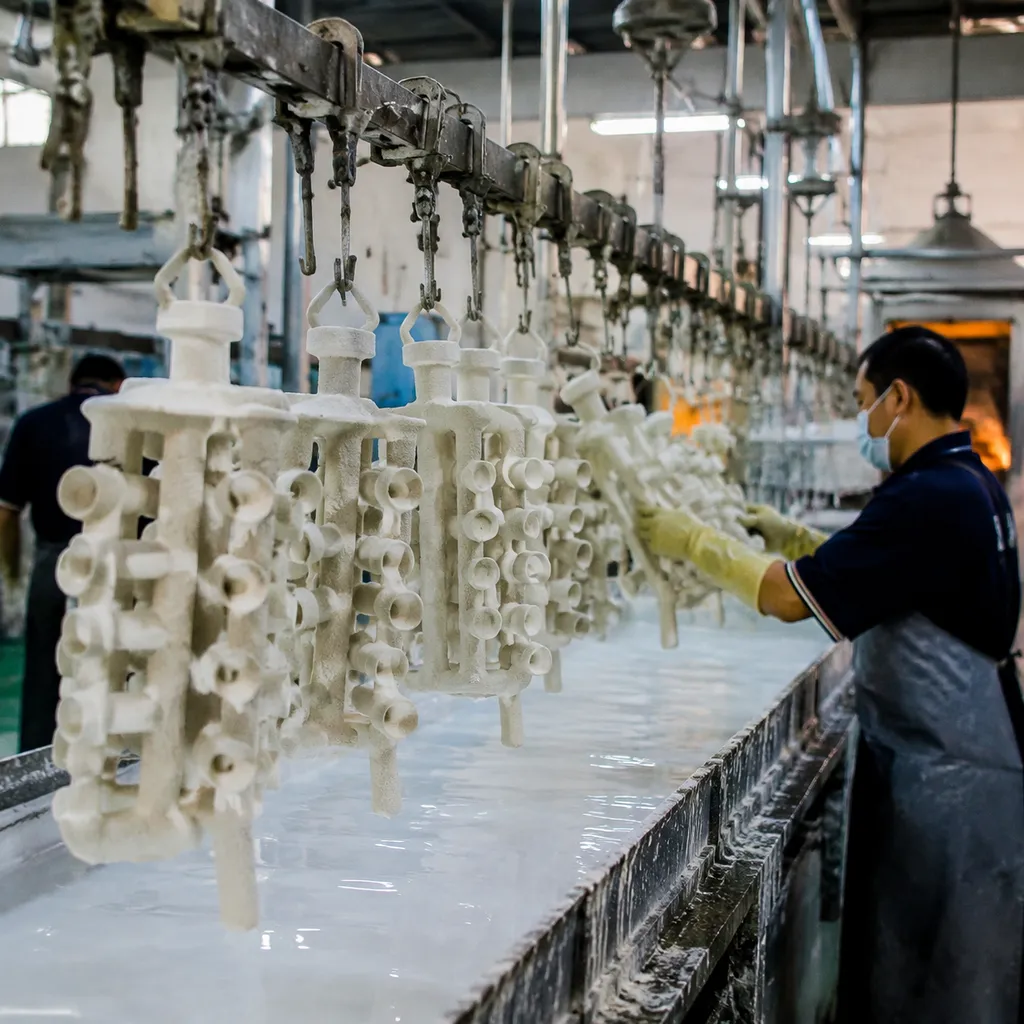
Achieving high-integrity castings requires total control over shell build mechanics. To eliminate shell cracking, mold distortion, and metal breakout, we target three core engineering variables: load-bearing rupture strength, fluid drainage dynamics, and inter-coat bonding reliability.
Maximizing Green and Fired Modulus of Rupture (MOR)
Maintaining high green and fired Modulus of Rupture (MOR) ensures the mold withstands mechanical stresses during autoclave dewaxing and the thermal load of molten alloy pours.
- Colloidal Silica Binder Management: We lock in the binder-to-refractory ratio, closely tracking pH and specific gravity to prevent premature binder gelation or weak particle bonding.
- Graded Refractory Packing: Transitioning seamlessly from ultra-fine primary flours to coarser backup stuccos maximizes packing density, directly boosting mechanical load resistance.
- Thermal Shock Resistance: Maintaining optimal fired MOR prevents brittle failure during burnout while preserving the required permeability for air evacuation. Leveraging these structural controls is essential to realize the true advantage of investment casting over green sand casting in tight-tolerance applications.
Wall-Thickness Repeatability via Controlled Drainage
Inconsistent shell thickness creates uneven cooling rates, localized thermal stresses, and premature shell fractures. We achieve wall-thickness uniformity across deep pockets and complex radii through systematic motion control:
- Multi-Axis Manipulation: Programmable dipping angles and continuous rotational draining prevent slurry pooling in cavities and sharp re-entrant angles.
- Controlled Run-off Velocity: Regulating part withdrawal speeds eliminates thin run-off edges and maintains a uniform prime-coat envelope across entire wax trees.
- Slurry Viscosity Stabilization: Constant-speed agitation and temperature management keep rheological behavior stable, ensuring every layer deposits at a predictable millimetric thickness.
Shell Delamination Prevention and Shrinkage Stress Control
Inter-coat delamination occurs when succeeding coats fail to form a continuous mechanical and chemical interlock. We stop shear-plane separation and drying cracks using structured drying cycles:
- Eliminating Inter-Coat Moisture Spikes: We monitor drying rooms with controlled relative humidity (45–55%), constant temperature (20–25°C), and laminar airflow to prevent under-dried moisture traps between layers.
- Avoiding Over-Drying: Over-drying prime coats strips residual moisture required for wet-out by the secondary coat, creating dry boundaries. We regulate intermediate dry cycles to maintain the critical bond interface.
- Uniform Shrinkage Relief: Step-graded stucco grain sizes relieve mechanical stress concentrations between the expanding wax pattern and curing ceramic layers, stopping micro-fractures before dewaxing.
Engineering Specifications: How to Improve Ceramic Shell Strength and Consistency
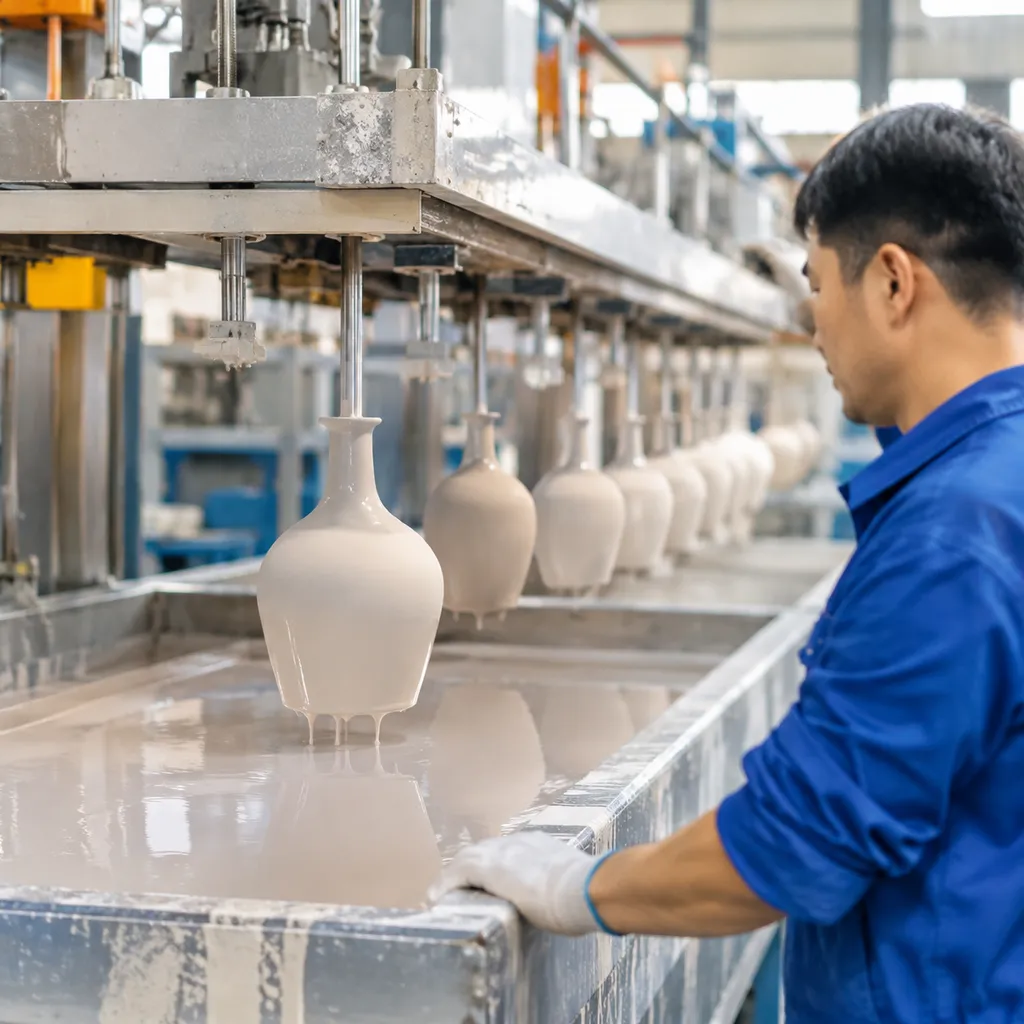
To guarantee repeatable shell wall thickness and prevent structural failures during dewaxing, we engineer our equipment to maintain tight mechanical and rheological tolerances. Controlling mechanical motion, bath temperature, and sand deposition directly dictates green strength and fired Modulus of Rupture (MOR).
Payload Capacities and Robot Kinematics
Our robotic shell-building cells use rigid 6-axis articulation to handle complex tree assemblies without vibration or mechanical deflection. Smooth axis interpolation prevents wax distortion and maintains an exact dipping angle across every pass.
- Payload Range: 50 kg to 500 kg (handling light precision clusters to heavy structural turbine assemblies).
- Positional Repeatability: ±0.05 mm for zero variation in drain trajectories.
- Axis Rotation Speed: Programmable from 1 to 30 RPM during slurry immersion and draining cycles.
- Kinematic Envelope: Up to 3.1 m radial reach for full coverage over deep recesses and blind cores.
Slurry Tank Dynamics and Rheology Control
Maintaining uniform slurry viscosity requires active shear management and temperature stability. Our slurry tanks eliminate dead zones and prevent colloidal silica agglomeration through continuous mixing.
| Specification Parameter | Standard Configuration | Heavy-Industrial Setup |
|---|---|---|
| Tank Volume Capacity | 300 L to 800 L | 1,200 L to 3,000 L |
| Agitator Drive Type | Variable Frequency Drive (VFD) | Dual-Impeller Continuous Drive |
| Rotational Mixing Speed | 15 – 60 RPM (low-shear continuous) | 10 – 85 RPM (programmable zones) |
| Viscosity Stability Range | ±0.5 Zahn #4 seconds | ±0.5 Zahn #4 seconds |
| Temperature Regulation | Dual-jacket water cooling (±1°C) | Closed-loop chilled jacket (±0.5°C) |
Refractory Stucco Grain Compatibility
Our systems seamlessly integrate with both fine prime grains and coarse backup materials. By deploying an advanced sand coating machine with adjustable sand flow, we eliminate particle starvation, sand clumping, and shell bridging across varied refractory grades:
- Zircon Sand & Flour: 80–120 mesh for prime-coat surface detail and thermal resistance.
- Fused Silica: 30–50 mesh and 50–100 mesh for high thermal shock survival and easy knockout.
- Mullite & Aluminosilicate: 16–30 mesh for high-build structural backup layers.
- Application Flexibility: Direct integration with both atmospheric rainfall sanders and low-pressure fluidized beds for maximum grain adhesion and optimal shell density.
Casting Applications: How to Improve Ceramic Shell Strength and Consistency Across Critical Sectors
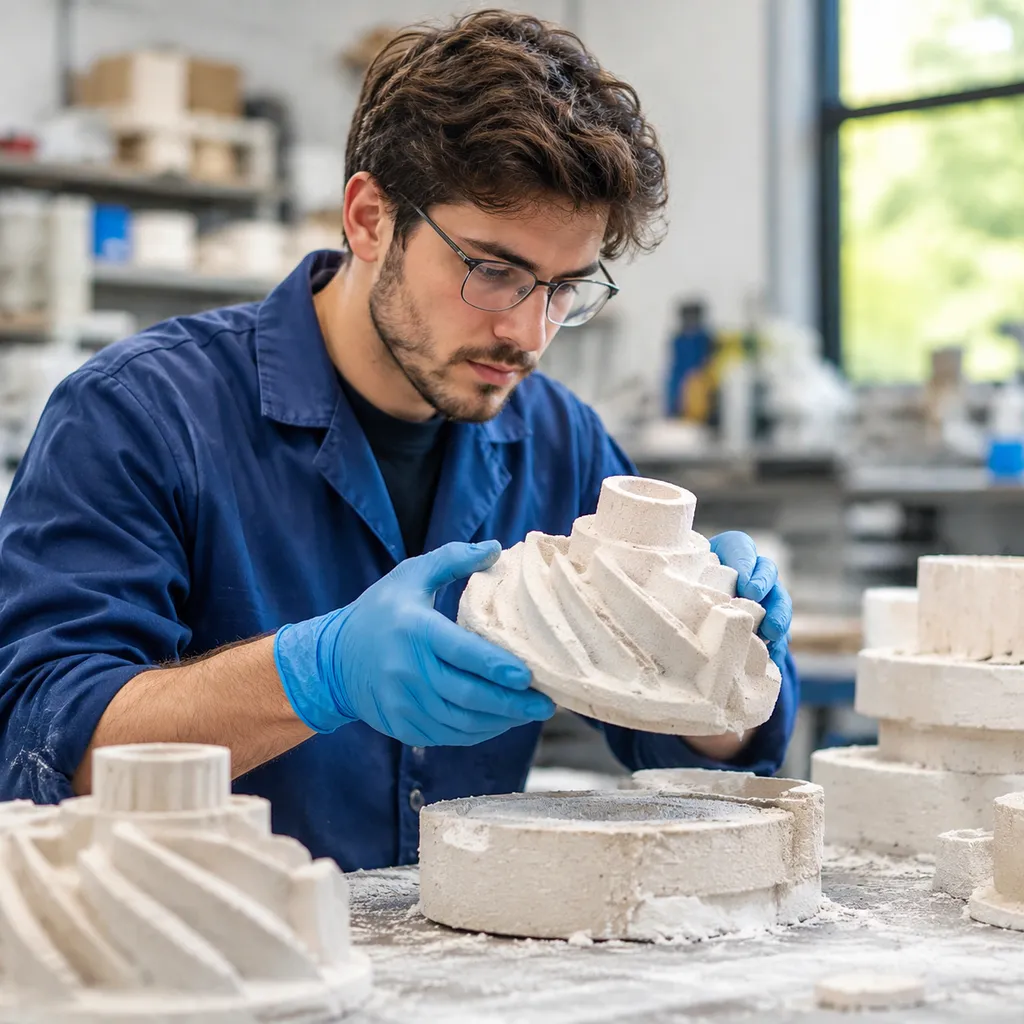
Different alloys and part geometries demand tailored shell behavior. Whether handling high thermal stress in superalloys or maintaining rapid cycle times for commercial hardware, we align shell building mechanics directly to the application's metallurgy and geometry.
Aerospace and Industrial Gas Turbine Blades
Turbine components feature intricate serpentine cores, thin trailing edges, and single-crystal or directionally solidified superalloys. Key Challenge: Thermal mechanical fatigue and core shift during pour. Our Solution: We calibrate slurry penetration and refractory stucco application to ensure thin-wall shell thickness uniformity without bridging cooling passages. Our advanced aerospace casting solutions for high-precision components deliver high fired shell permeability and thermal shock resistance, preventing mold cracking during rapid vacuum casting.
Medical Implant Precision Standards
Orthopedic implants, including femoral knees and hip stems made from cobalt-chrome and titanium alloys, require near-zero surface inclusions and strict dimensional repeatability. Key Challenge: Surface pitting and primary coat spalling. Our Solution: We maintain ultra-stable slurry viscosity control and bubble-free prime dips to guarantee blemish-free finishes. Shells reliably meet rigorous casting quality standards for reliable metal parts, eliminating non-metallic inclusions and maintaining micrometer-level gate profiles.
High-Volume Automotive Production
Turbocharger wheels, rocker arms, and exhaust hardware demand high throughput and low unit costs. Key Challenge: Extended drying bottle-necks and dewaxing failures. Our Solution: We optimize colloidal silica binder systems and rapid intermediate drying cycles. High green strength investment casting parameters allow fast handling and aggressive autoclave dewaxing crack resistance, driving down cycle times while avoiding shell delamination.
Industrial Valve and Pump Integrity
Heavy-section industrial valves, impellers, and pressure-retaining casings subject ceramic molds to massive ferrostatic pressures. Key Challenge: Ceramic mold breakout prevention and mold wall deflection. Our Solution: We build robust backup coats using alternating fluidized bed stuccoing and rainfall sander passes. This maximizes the fired Modulus of Rupture (MOR) and ensures structural integrity against heavy liquid metal heads without bulging or leaking.
Comparative Performance and ROI
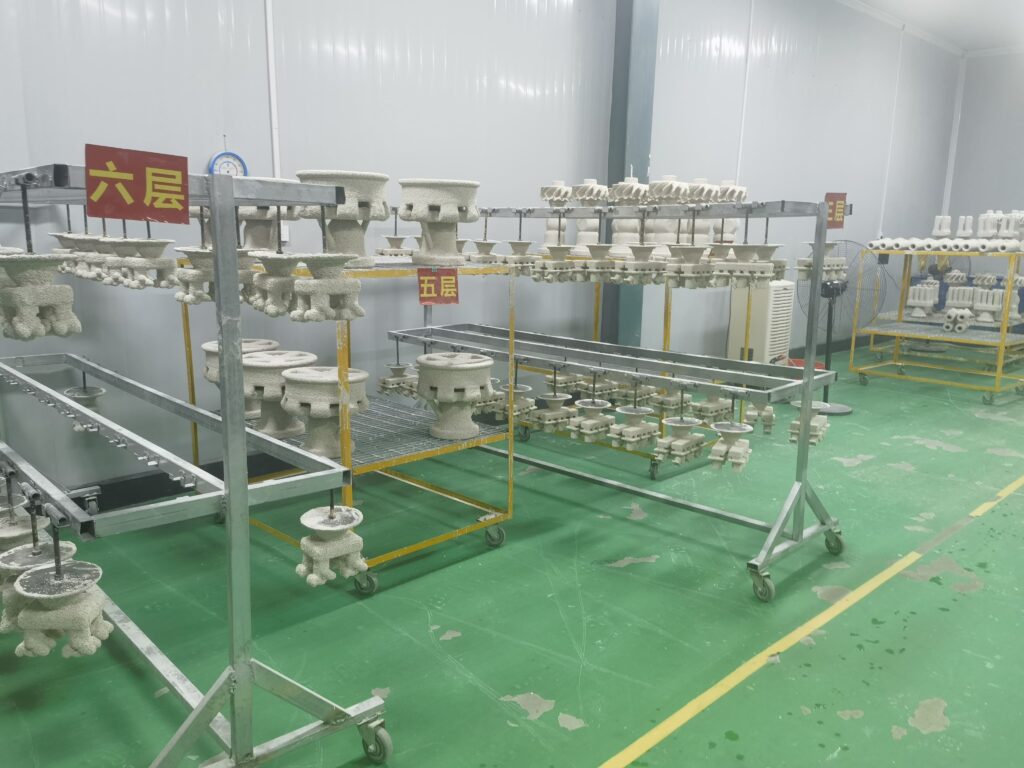
Transitioning from manual labor to an automated shell building system directly impacts the bottom line by stabilizing mechanical output. When evaluating the advantages and disadvantages of lost wax casting, foundries often find that manual dipping introduces human fatigue, leading to inconsistent shell thickness and variable shell strength.
By replacing manual processes with robotic precision, we consistently achieve higher Modulus of Rupture (MOR) values and predictable permeability curves. Our data demonstrates that automation provides the following competitive advantages:
- Scrap Rate Reduction: Eliminating human error prevents shell delamination and cracking, significantly lowering defect rates in high-complexity parts.
- Process Efficiency: Robotic systems maintain uniform withdrawal speeds and drainage angles, ensuring a consistent coating weight that manual operators simply cannot replicate over long shifts.
- Mechanical Benchmarks: Automated shells exhibit superior structural integrity, evidenced by tighter statistical process control (SPC) data across large production batches.
- Operational ROI: The reduction in material waste, combined with higher yields of defect-free castings, typically results in a rapid return on investment for high-volume production facilities.
Through these mechanical improvements, we enable foundries to push the boundaries of geometry and tolerance while maintaining a lean, high-output production cycle.
System Configurations and Modular Upgrades for Improved Ceramic Shell Strength
We offer flexible system configurations designed to scale with your production demands while maintaining the high standards required for casting stainless steel components. Our modular architecture ensures that every foundry, from small-scale R&D labs to high-volume production facilities, can achieve consistent shell quality.
Scalable Solutions
- ShellMaster Compact: Engineered for research and development environments, this unit provides a controlled, automated workspace perfect for process validation and small-batch prototyping without sacrificing precision.
- ShellMaster Pro: Designed for high-output foundries, this configuration maximizes throughput and ensures uniform shell thickness across complex part geometries through advanced multi-axis robotic control.
Modular Add-ons for Enhanced Consistency
To further optimize your shell-making performance, we offer integrated upgrades that provide real-time process oversight: Intelligent Slurry Management: Automated systems that monitor and maintain precise viscosity, temperature, and pH levels to ensure consistent ceramic slurry rheology. Inspection Vision Systems: High-resolution optical sensors that perform real-time shell inspection, identifying potential defects before the mold proceeds to the next stage of the investment casting process.
These modular components allow you to build a custom shelling cell that addresses specific production bottlenecks, ensuring every shell meets the necessary green strength and permeability targets.
Quality Compliance and Long-Term System Maintenance
Maintaining equipment reliability is essential when learning how to improve ceramic shell strength and consistency across high-volume production cycles. Mechanical wear, slurry buildup, and axis drift directly cause uneven slurry draining and weak shell walls. We design our automated shell-building cells to strictly adhere to international manufacturing standards while offering continuous self-monitoring to prevent unplanned downtime.
ISO and CE Machinery Standards
Every shell-building system complies with stringent industrial guidelines to ensure workplace safety and dimensional repeatability: CE Compliance: Full adherence to machinery directives, integrated emergency stops, light curtains, and interlocked safety enclosures. ISO Quality Frameworks: Mechanical components and structural frameworks are built to ISO-certified manufacturing standards to withstand continuous 24/7 foundry duty. Process Repeatability: Standardized multi-axis motion ensures dipping angles and drain speeds stay within micro-tolerances, preventing wall-thickness discrepancies that lead to shell cracking during pouring for high-spec cast stainless steel casting services.
Foundry-Grade Environmental Protection
Foundry shell rooms represent harsh operating environments filled with abrasive dust, high ambient humidity, and chemical vapors. We protect core drive components through dedicated engineering safeguards: Sealed Drive Housings: IP65-rated enclosures shield robotic servomotors, wiring harnesses, and gear reducers from airborne refractory stucco and colloidal silica vapors. Corrosion-Resistant Contact Surfaces: Slurry tanks, mixers, and rainfall sander hoppers utilize heavy-gauge stainless steel to prevent rust contamination and slurry degradation. Abrasive Wear Protection: Hardened seals on rotating shafts keep out fine fused silica and zircon dust, preventing premature bearing failure.
Predictive Maintenance and Remote Diagnostics
Preventing process drift is critical to keeping Modulus of Rupture (MOR) numbers stable from batch to batch. Our control architectures incorporate continuous monitoring: Vibration and Thermal Logging: Integrated sensors monitor motor temperatures and mechanical vibration on all motion axes to detect bearing wear before it translates into uneven dipping agitation. Slurry Tank Agitator Telemetry: Torque monitoring alerts operators if slurry solids settle or binder viscosity increases unexpectedly. Remote Diagnostic Support: Network-connected PLC architectures allow our engineers to troubleshoot software alerts, inspect axis calibration parameters, and deploy control updates without halting production lines.
FAQs: How to Improve Ceramic Shell Strength and Consistency
How do we control slurry viscosity fluctuations across long runs?
We eliminate viscosity drift by controlling environmental evaporation and slurry agitation continuously. Maintaining a stable liquid-to-solid ratio requires sealed, temperature-regulated tanks and real-time monitoring of Zahn cup flow times. Paired with our energy-saving slurry mixer for silica sol shell coating, our systems keep colloidal silica binders thoroughly homogenized without introducing air bubbles or causing premature binder shear degradation.
How are robot dipping paths customized for complex core geometries?
We program multi-axis robotic articulators to navigate internal passages, deep blind holes, and complex undercuts with repeatable precision. Dynamic drain angles: Continuous rotation prevents slurry pooling in re-entrant angles. Controlled withdrawal rates: Uniform boundary layer adhesion ensures target wall-thickness repeatability. Targeted sand presentation: Alternating between fluidized bed mechanics and rainfall sanders eliminates stucco bridging in restricted features.
How do we guarantee green strength for rapid autoclave dewaxing?
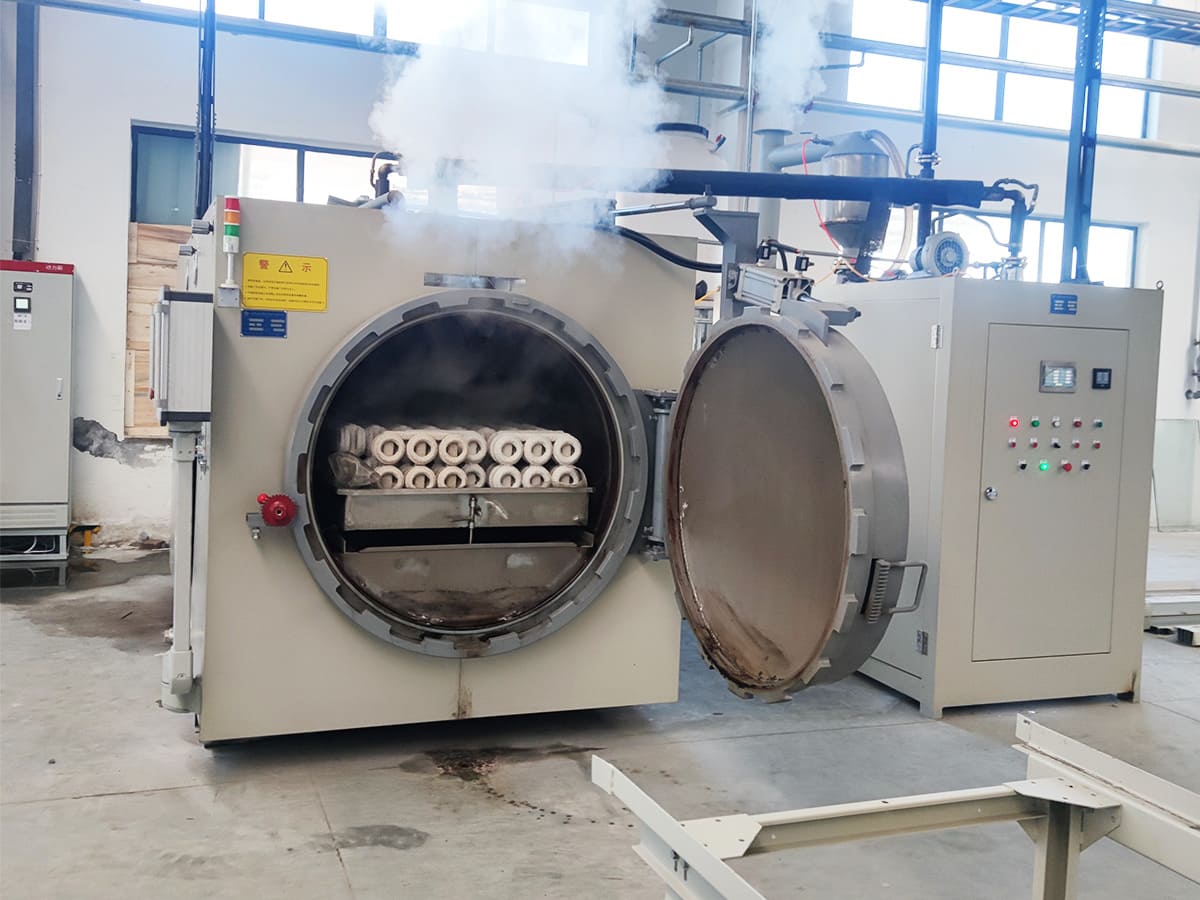
Green strength investment casting depends on complete inter-coat moisture elimination and mechanical interlocking between the refractory stucco and binder matrix. We monitor weight loss to prevent trapped moisture before firing. To achieve high autoclave dewaxing crack resistance, the shell must achieve a green Modulus of Rupture (MOR) sufficient to counter wax expansion forces when transferred into a steam dewaxing autoclave for fast wax removal.
Are our systems compatible with common binder formulations?
Yes. Our dipping cells and conditioning units work with standard water-based colloidal silica, modified fast-dry silica sols, and ethyl silicate systems. We calibrate pump mechanics and tank surfaces to handle standard primary flours (like zircon) and backup slurries (such as fused silica or mullite) without chemical contamination or binder destabilization.
What are the standard integration schedules for existing foundries?
We design modular robotic cells to fit within existing plant layouts with minimal disruption: Engineering and layout review: 2 to 3 weeks for CAD trajectory mapping and footprint optimization. Cell manufacturing and testing: Factory acceptance testing (FAT) conducted before dispatch. On-site commissioning: Full mechanical anchor, dry-run programming, and slurry trial validation completed within 7 to 10 working days.
Consultation and Technical Support for Shell Building Optimization
To achieve consistent results in investment casting, our engineering team provides comprehensive support tailored to your production facility. We specialize in optimizing your shell-building workflow, from initial design to full-scale implementation.
Technical Support Services
| Service Type | Focus Area |
|---|---|
| Layout Simulations | Maximizing floor space and material flow efficiency |
| Trajectory Analysis | CAD-based dipping path optimization for complex parts |
| Slurry Integration | Balancing chemistry and rheology for shell strength |
Getting Started with Your Custom Solution
We utilize your specific CAD models to run trajectory simulations, ensuring that every dip cycle provides uniform coverage and minimizes defect risks. By analyzing your geometry in a virtual environment, we prevent issues like slurry pooling or uneven stucco application before they occur on the shop floor.
Our team is ready to assist those looking for investment and precision casting services for metal parts by performing detailed slurry integration audits. Contact our technical department to discuss how to improve ceramic shell strength and consistency through customized equipment setups and process benchmarking.
 English
 Russian
 German