
2026年9月16日
Explore high strength martensitic stainless steel with excellent hardness corrosion resistance and reliable performance for demanding applications
What is Martensitic Stainless Steel?
Martensitic stainless steel is a specialized class of heat treatable stainless steel engineered for applications demanding high mechanical strength, elevated hardness, and reliable wear resistance alongside moderate corrosion protection. Unlike standard austenitic alloys, these alloys undergo a direct phase transformation through thermal processing, making them the primary choice for heavy-duty tooling, shafting, valve components, and industrial cutlery.
Metallurgical Structure: BCT Lattice Transformation
- Phase Transformation: The material shifts from an austenitic face-centered cubic (FCC) structure at elevated austenitizing temperatures (980°C to 1050°C) to a hard Body-Centered Tetragonal (BCT) martensitic lattice upon rapid quenching in oil or air.
- Diffusionless Shear: Carbon atoms remain trapped within the iron matrix during cooling, inducing severe lattice distortion that provides extreme mechanical strength and hardness prior to tempering.
Chemical Baseline & Alloying Principles
- Chromium Content (11.5% to 18%): Delivers the baseline passive chromium-oxide ($Cr_2O_3$) film required for basic corrosion resistance in steam, mild chemicals, and atmospheric conditions.
- Controlled Carbon Content (0.10% to 1.20%): Dictates final hardness potential; higher carbon content promotes strong carbide formation ($M_{23}C_6$, $M_7C_3$) for superior abrasion resistance.
- Secondary Elements: Controlled additions of molybdenum (up to 1.0%) enhance pitting resistance, while nickel (up to 2.5%) optimizes impact toughness in high-strength grades.
Core Engineering Characteristics
- High Hardness Post-Heat Treatment: Yields controllable hardness levels ranging from 40 HRC to over 60 HRC through precise quenching and tempering cycles.
- Inherent Ferromagnetism: Fully magnetic stainless steel in both annealed and quenched-and-tempered (+QT) delivery states due to its ferritic/martensitic matrix.
- Optimized Mechanical Strength: Delivers exceptional yield and tensile values exceeding 800–1500 MPa, outperforming austenitic grades in dynamic load-bearing environments.
- Moderate Corrosion Resistance: Provides targeted resistance to fresh water, steam, petroleum products, and mild acids, optimized when parts are polished and hardened.
Comprehensive Grade Matrix & Chemical Composition of Martensitic Stainless Steel
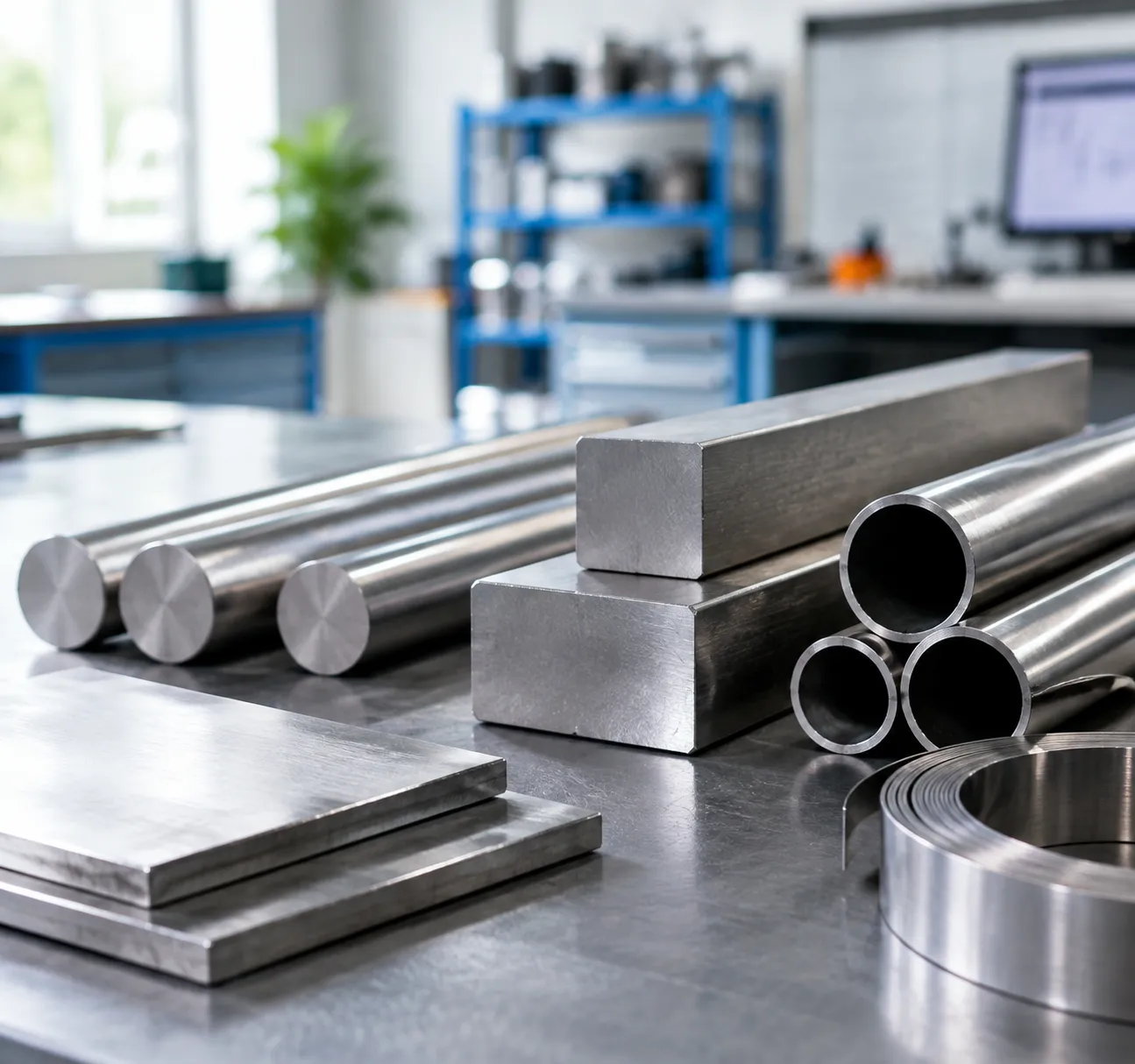
We manufacture and supply a full range of hardenable 400 series stainless steel grades designed to meet precise mechanical strength, wear resistance, and corrosion requirements.
Core Martensitic Steel Grades
- AISI 410 (UNS S41000 / 1.4006): The general-purpose baseline alloy. Provides solid corrosion resistance against mild atmospheres, steam, and mild chemicals when heat treated.
- AISI 416 (UNS S41600 / 1.4005): A free-machining variant formulated with controlled sulfur additions (0.15–0.35%) to maximize high-speed CNC turning, threading, and automatic screw machine throughput.
- AISI 420 (UNS S42000 / 1.4021 / 1.4028): Features elevated carbon content to achieve higher surface hardness (up to 50–55 HRC). A premier stainless steel blade material used extensively for surgical cutlery, pump shafts, and wear rings.
- AISI 431 (UNS S43100 / 1.4057): Engineered with 1.25% to 2.50% nickel. Offers superior impact toughness, high tensile strength, and enhanced marine corrosion resistance compared to standard 12% Cr grades.
- AISI 440A / 440B / 440C (UNS S44004 / 1.4125): Premium high-carbon martensitic alloys. AISI 440C reaches peak hardness levels of 58–62 HRC, providing maximum edge retention and abrasive wear resistance in ball bearings, valve components, and industrial shear knives.
Chemical Composition Matrix (wt%)
| Grade | UNS | DIN / EN | C (%) | Cr (%) | Ni (%) | Mo (%) | Other Elements |
|---|---|---|---|---|---|---|---|
| AISI 410 | S41000 | 1.4006 | 0.08–0.15 | 11.50–13.50 | ≤ 0.75 | — | Mn ≤ 1.00, Si ≤ 1.00 |
| AISI 416 | S41600 | 1.4005 | 0.09–0.15 | 12.00–14.00 | — | ≤ 0.60 | S: 0.15–0.35, P ≤ 0.06 |
| AISI 420 | S42000 | 1.4021 | 0.16–0.25 | 12.00–14.00 | — | — | Mn ≤ 1.00, Si ≤ 1.00 |
| AISI 420C | S42000 | 1.4028 | 0.26–0.35 | 12.00–14.00 | — | — | Mn ≤ 1.00, Si ≤ 1.00 |
| AISI 431 | S43100 | 1.4057 | 0.12–0.20 | 15.00–17.00 | 1.25–2.50 | — | Mn ≤ 1.00, Si ≤ 1.00 |
| AISI 440C | S44004 | 1.4125 | 0.95–1.20 | 16.00–18.00 | — | ≤ 0.75 | Mn ≤ 1.00, Si ≤ 1.00 |
Mechanical Properties: Annealed vs. Quenched & Tempered (+QT)
Reviewing these stainless steel strength grades and comparisons highlights how tailored thermal processing transforms soft, ductile annealed stock into structural, high-load components:
| Grade | Condition | Yield Strength $R_{p0.2}$ (MPa) | Tensile Strength $R_m$ (MPa) | Elongation $A_5$ (%) | Hardness (HBW / HRC) | Charpy V-Notch (20 °C, J) |
|---|---|---|---|---|---|---|
| AISI 410 | Annealed (+A) | ≥ 205 | 450–600 | ≥ 20 | ≤ 200 HBW | — |
| Quenched & Tempered (+QT650) | ≥ 450 | 650–850 | ≥ 15 | 200–260 HBW | ≥ 35 J | |
| AISI 416 | Annealed (+A) | ≥ 240 | 480–650 | ≥ 16 | ≤ 210 HBW | — |
| Quenched & Tempered (+QT) | ≥ 450 | 650–820 | ≥ 14 | 205–255 HBW | ≥ 25 J | |
| AISI 420 | Annealed (+A) | ≥ 225 | 500–700 | ≥ 15 | ≤ 225 HBW | — |
| Hardened & Low Tempered | ≥ 1100 | 1400–1750 | ≥ 7 | 48–54 HRC | ≥ 12 J | |
| AISI 431 | Annealed (+A) | — | ≤ 950 | — | ≤ 295 HBW | — |
| Quenched & Tempered (+QT800) | ≥ 600 | 800–1000 | ≥ 14 | 240–300 HBW | ≥ 40 J | |
| AISI 440C | Annealed (+A) | ≥ 270 | 600–750 | ≥ 10 | ≤ 269 HBW | — |
| Hardened & Stress Relieved | ≥ 1800 | 1950–2200 | ≥ 2 | 58–62 HRC | ≤ 8 J |
Heat Treatment, Machinability & Fabrication of Martensitic Stainless Steel
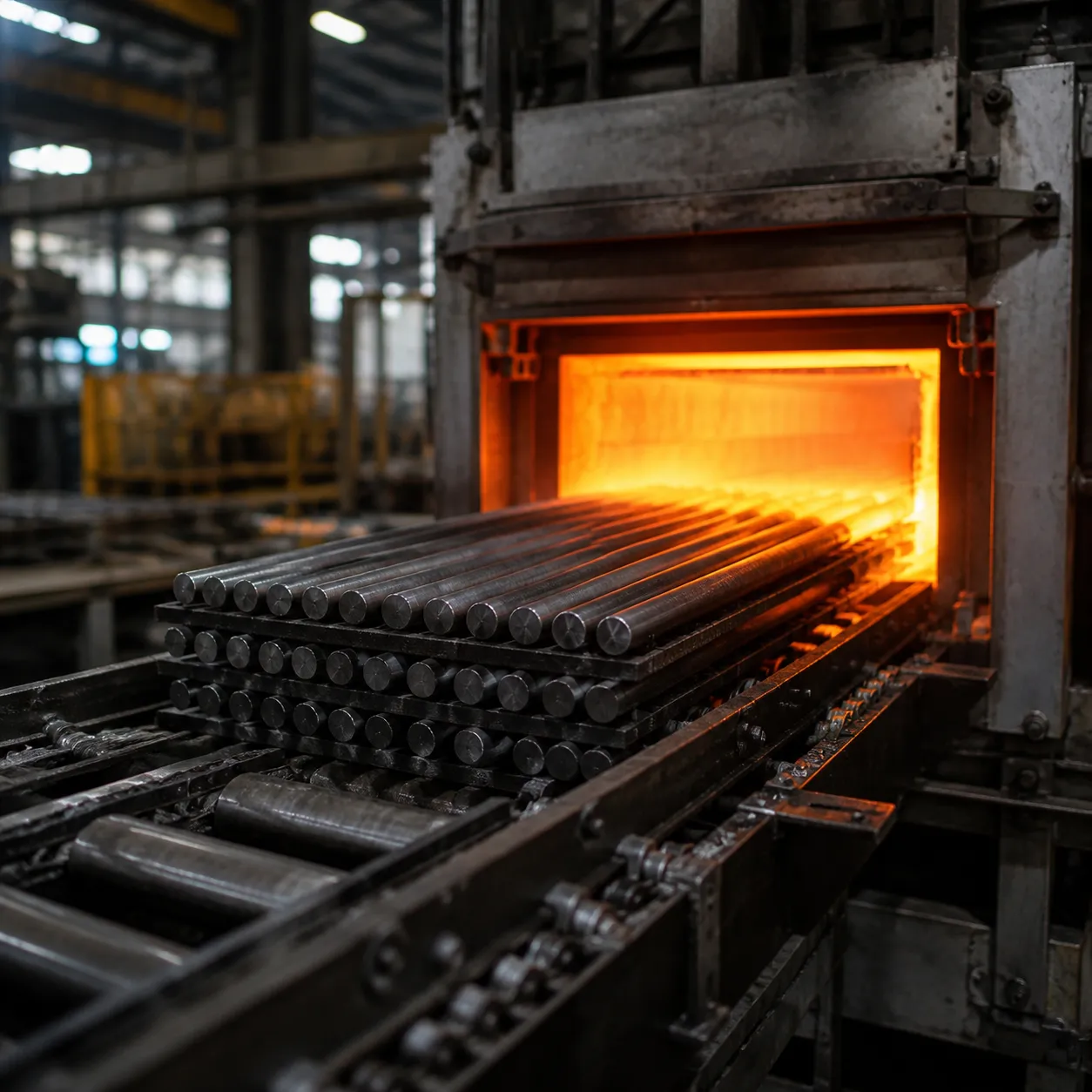
We process and fabricate martensitic stainless steel to meet strict mechanical specifications. Because this alloy class relies on carbon-martensite phase transformations, thermal processing directly dictates its final hardness, yield strength, and structural integrity.
Austenitizing & Quenching Dynamics
Transforming the soft annealed ferritic matrix into high-strength body-centered tetragonal (BCT) martensite requires precise temperature control.
- Austenitizing Range: We heat the steel to 980°C–1065°C (1800°F–1950°F) depending on carbon and chromium levels (e.g., lower range for AISI 410, upper range for AISI 440C). This completely dissolves chromium carbides into the gamma-iron matrix.
- Cooling Media: We use agitated oil quenching for heavy cross-sections and high-carbon grades (AISI 420/440C) to ensure a complete transformation to martensite. For thin cross-sections and lower-carbon grades (AISI 410), forced air cooling or inert gas quenching in vacuum furnaces minimizes dimensional distortion and thermal shock.
Tempering Protocols & Avoiding Embrittlement
As-quenched martensite is extremely brittle and contains high residual stresses. We temper all quenched and tempered stainless steel immediately after cooling to room temperature.
- Low-Temperature Tempering (150°C–250°C / 300°F–480°F): Relieves quenching stress while preserving maximum hardness (50–60 HRC) and wear resistance for cutting blades, surgical instruments, and bearings.
- High-Temperature Tempering (600°C–750°C / 1110°F–1380°F): Yields high tensile strength combined with high impact toughness and elongation for drive shafts, fasteners, and valve stems.
- Temper Embrittlement Zone (400°C–550°C / 750°F–1020°F): We strictly avoid tempering in this window. Thermal exposure here precipitates intergranular chromium carbides, causing severe loss of Charpy V-notch impact toughness and degradation of corrosion resistance.
| Grade | Austenitizing Temp (°C) | Quenching Medium | Tempering Range (°C) | Achievable Hardness |
|---|---|---|---|---|
| AISI 410 | 950 – 1010 | Oil / Air | 600 – 700 (Toughness) | 28 – 35 HRC |
| AISI 420 | 980 – 1040 | Oil | 180 – 250 (Cutting) | 50 – 54 HRC |
| AISI 431 | 1000 – 1050 | Oil / Air | 600 – 680 (Toughness) | 36 – 44 HRC |
| AISI 440C | 1010 – 1070 | Oil / Pressurized Gas | 150 – 200 (Wear) | 58 – 62 HRC |
Machining & Formability Protocols
Machining performance depends entirely on the delivery state of the martensitic stainless steel grade:
- Annealed Condition (+A): We perform rough turning, milling, and drilling while the material is soft-annealed (<230 HBW). We utilize rigid setups, positive rake carbide tooling, and sulfurized neat cutting oils to prevent chip buildup. Free-machining variants like AISI 416 deliver up to 85% machinability ratings relative to standard carbon steels.
- Hardened State Grinding (>50 HRC): When machining hardened martensitic grades, we switch to precision grinding. We use vitrified cubic boron nitride (CBN) or white aluminum oxide wheels with continuous high-pressure flood coolant to eliminate local overheating, micro-cracking, and surface softening.
- Deep Drawing & Cold Heading: Limited compared to austenitic grades. Severe cold-forming operations require intermediate subcritical annealing at 650°C–750°C.
Welding Considerations & Crack Prevention
Due to its extreme hardenability, welding heat treatable stainless steel presents a significant risk of cold cracking (hydrogen-induced cracking) in the heat-affected zone (HAZ).
- Preheating (200°C–300°C / 390°F–570°F): Mandatory across all sections. Preheating slows the cooling rate through the martensite transformation range ($M_s$ to $M_f$), preventing brittle martensite formation in the weld boundary.
- Interpass Control: Maintain interpass temperatures matching the preheat range throughout the entire welding sequence.
- Post-Weld Heat Treatment (PWHT): Immediately upon completing the weld, we execute a post-weld stress relief or subcritical anneal at 650°C–720°C (1200°F–1330°F). This tempers the hard HAZ microstructure and eliminates residual stresses before cooling to ambient temperatures.
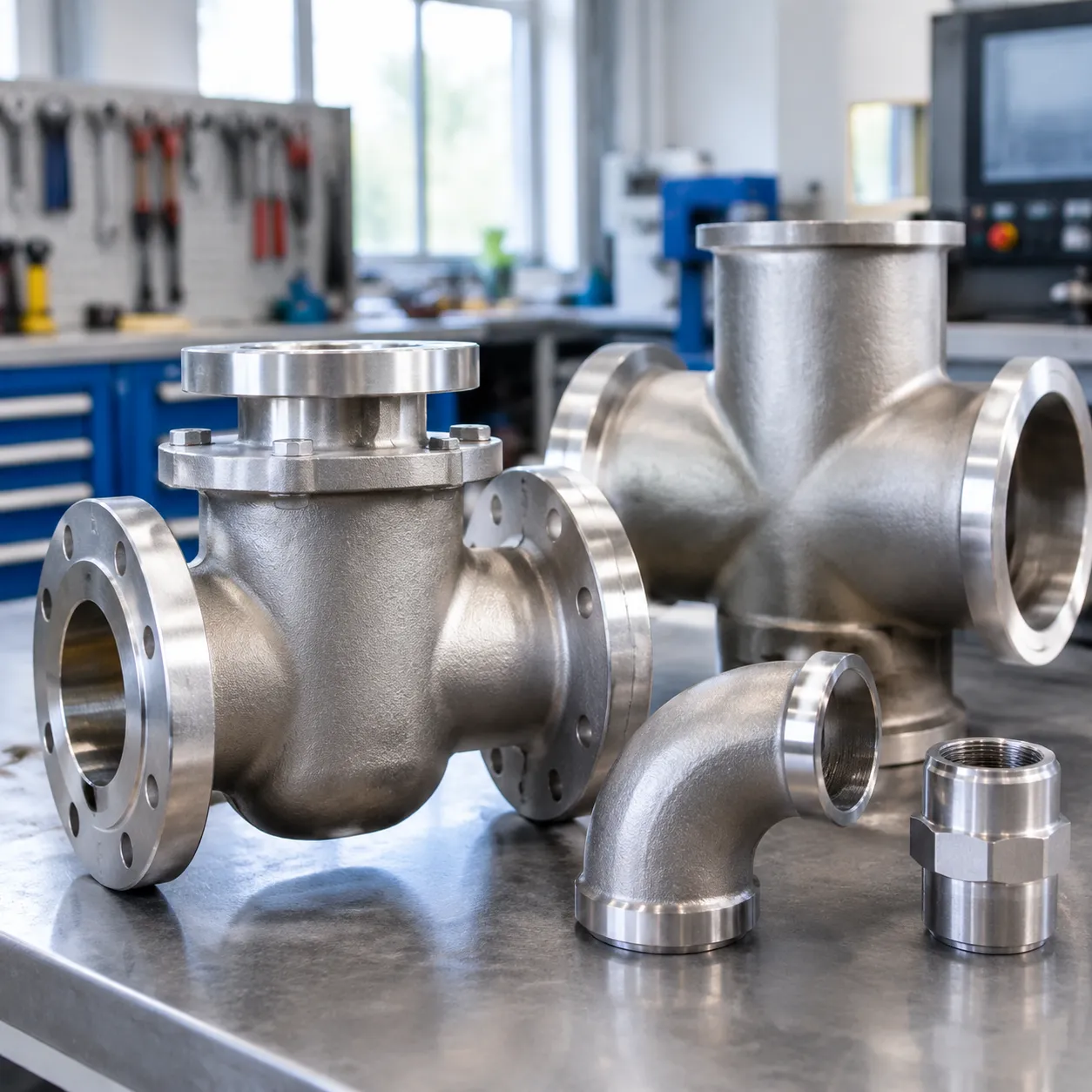
- For cast components requiring custom structural weldments or weld repair, reviewing our casting stainless steel guide offers in-depth parameters for microstructure stabilization and defect-free metallurgical bonding.
Product Supply Scope & Delivery Conditions for Martensitic Stainless Steel
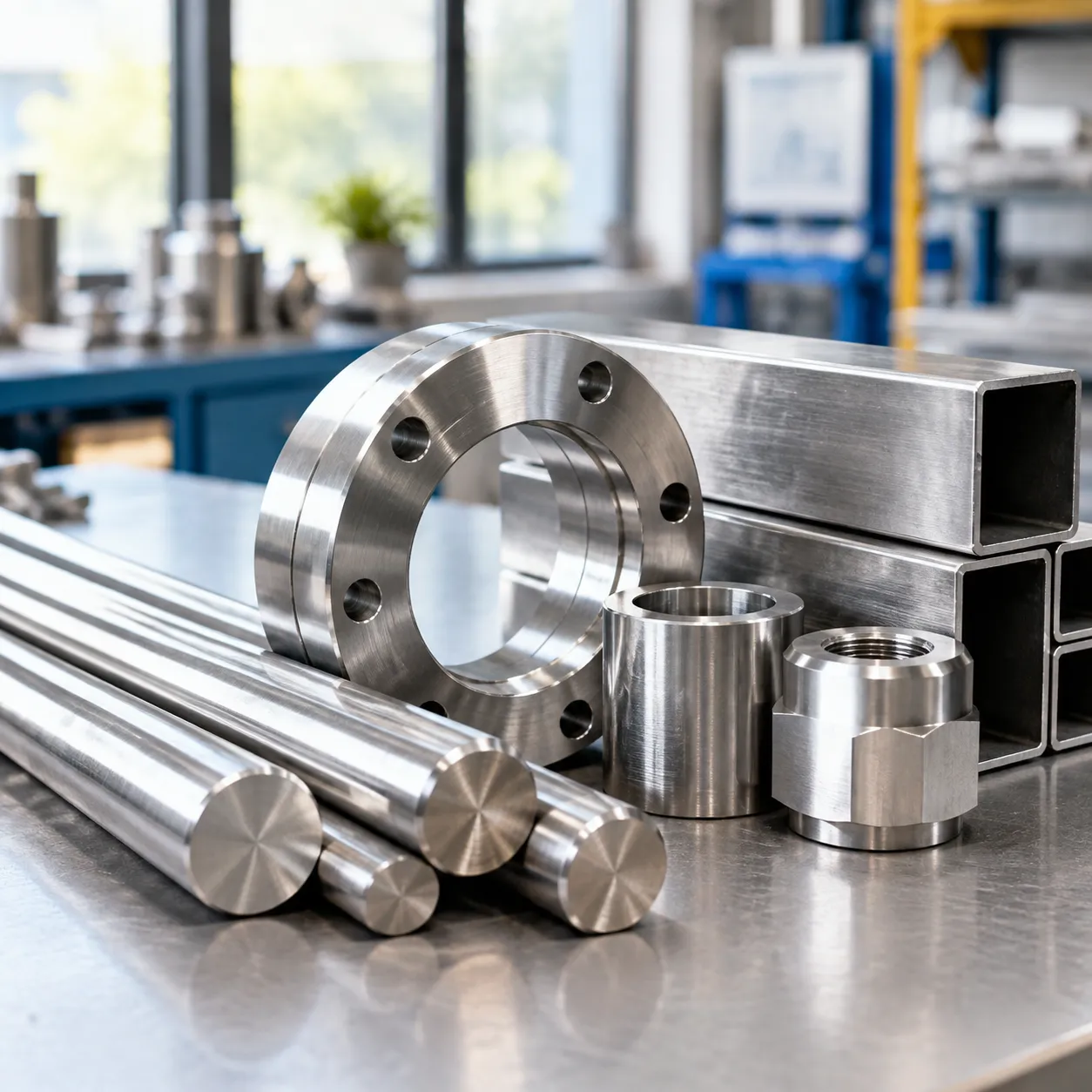
We maintain an extensive, mill-direct inventory of martensitic stainless steel to meet fast-turnaround machining, forging, and stamping requirements globally. Whether you need standard bar stock for CNC turning or tailored semi-finished stock, we supply certified materials prepared to exact dimensional tolerances.
Available Product Forms & Dimensions
- Cold Drawn & Centerless Ground Round Bars: Precision ground from Ø 2 mm to Ø 65 mm with tight tolerances (ISO h7, h8, h9, h11), delivering ready-to-machine high-strength stainless steel bar products for Swiss lathe and automatic screw operations.
- Hot Rolled & Forged Bars: Ranging from Ø 20 mm to Ø 500 mm, fully ultrasonic-tested to eliminate core porosity and center-line segregation.
- Flat Products & Precision Strips: Cold-rolled and hot-rolled coils, precision slit strips, and sheets from 0.10 mm to 12.0 mm thickness for valve diaphragms, surgical cutting tools, and industrial knives.
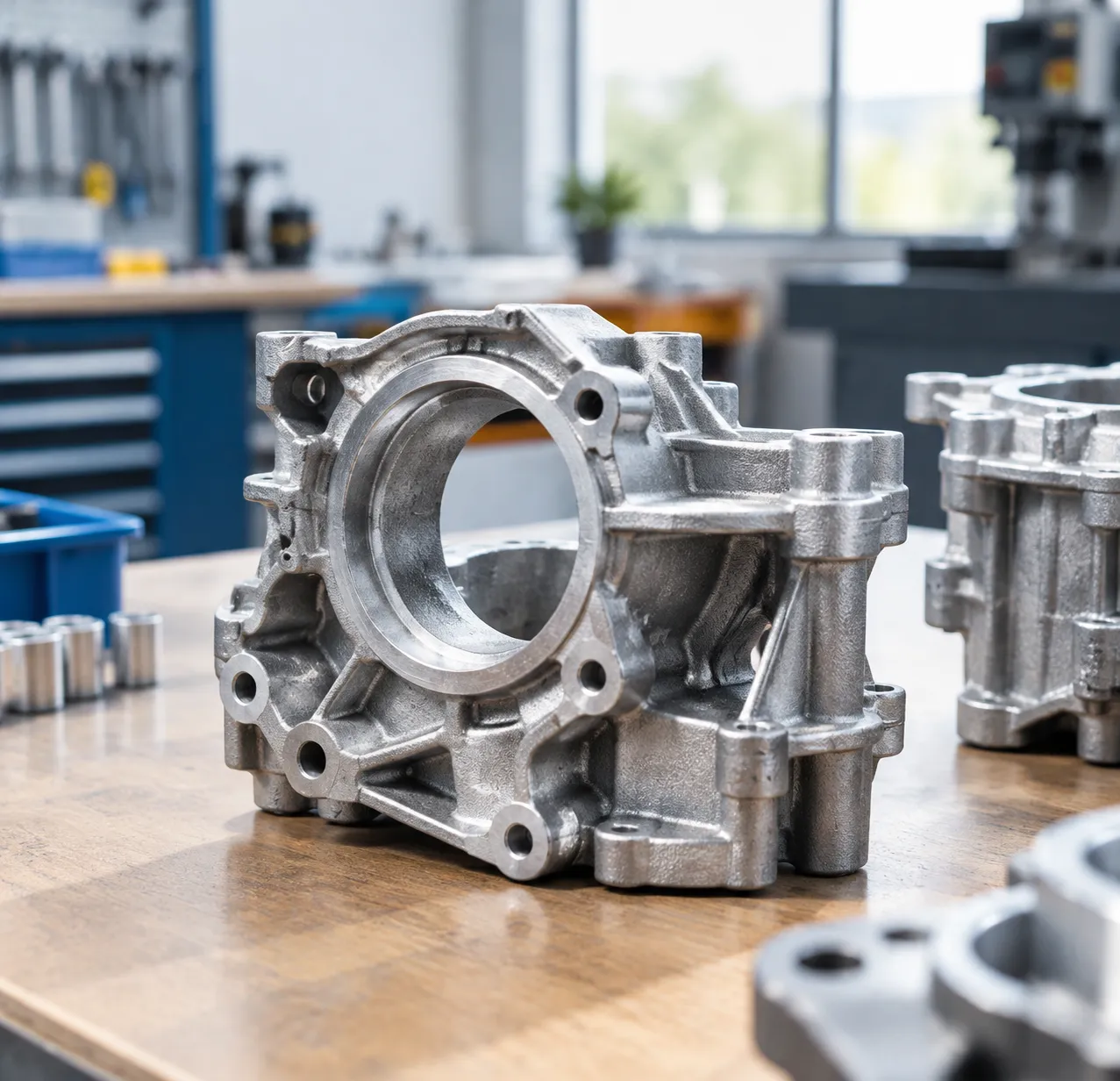
- Custom Open-Die Forgings: Tailored step shafts, forged discs, forged rings, and custom blocks. For near-net-shape components that exceed traditional bar dimensions, we also support parts engineered via cast stainless steel custom casting alloys and grades.
Surface Finishes
| Surface Finish | Description | Typical Application |
|---|---|---|
| Black (As-Rolled / As-Forged) | Heavy oxide layer intact; mill descaled | Heavy machining, open-die re-forging |
| Peeled / Rough Machined | Surface defects and decarburization layer removed | General machining and shaft turning |
| Bright Turned & Polished | Smooth, mirror-like finish with zero scale | Precision shafts, pump components |
| Centerless Ground | High-precision diameter control (h7–h9) | High-speed automated CNC lathe feeding |
Delivery States & Heat Treatment Conditions
We deliver martensitic stainless steel in specific heat-treated conditions configured for your downstream manufacturing:
- Soft Annealed (+A): Optimized for low hardness (typically < 220 HBW for AISI 410/420; < 255 HBW for 440C) to ensure minimum tool wear during milling, broaching, and deep drawing.
- Quenched & Tempered (+QT): Pre-hardened and tempered to specified mechanical properties (e.g., QT650, QT750, QT800, QT900 per EN 10088-3 / ASTM A276) for direct component use without post-machining heat treatment.
- Normalized (+N): Uniform grain structure relief to ensure structural homogeneity prior to specialized customer-side hardening.
Engineered Applications of Martensitic Stainless Steel Across Key Industries
We supply high-performance martensitic stainless steel grades designed to withstand extreme mechanical loads, abrasive wear, and moderate corrosive environments where conventional austenitic grades fall short.
Aerospace & Defense
High-yield strength and fracture toughness make heat-treated martensitic alloys essential for flight-critical hardware: Actuator components & structural pins: Machined from quenched and tempered 431 and 410 bar stock to resist cyclic fatigue. Specialized fasteners: High-tensile shear bolts and threaded fasteners providing consistent pre-loads under vibration. Turbine components: High-temperature turbine discs and stator vanes produced via precision machining and custom investment and precision casting services for metal parts.
Oil, Gas & Power Generation
Power generation and downhole drilling operations require materials that resist mechanical erosion and pressurized media: Valve stems & choke trims: Hardened AISI 410 and 420 grades engineered to prevent galling under high-pressure shut-off cycles. High-pressure pump shafts: Ground 410 stainless steel round bar materials delivering maximum torsional rigidity. Turbine blades & hydraulic pistons: Dynamic components requiring high fatigue thresholds and resistance to cavitation erosion.
Medical & Dental Instrumentation
Surgical tooling demands clean metallurgical processing, edge sharpness, and corrosion resistance against sterilization protocols: Surgical scalpels & blades: Manufactured from 440C high carbon stainless steel to achieve extreme edge sharpness (up to 58–60 HRC). Dental forceps & probes: Built from tempered AISI 420 for optimal spring tension and yield strength. Orthopaedic reamers & drill bits: High-hardness wear-resistant stainless steel tooling designed for precision cutting without deformation.
Industrial Cutting & Food Processing
Continuous processing lines require cutting elements that hold edges without contaminating food products or chipping: Shear blades & slitter knives: Heavy-duty guillotine and rotary shear blades cutting plastics, foils, and metals. Pelletizer dies & granulator blades: Cryogenically treated martensitic alloys preventing premature abrasive wear. Commercial food knives: High-grade cutting discs, mincer plates, and chopper blades resistant to organic food acids and high-wear cycles.
Automotive Engineering
High mechanical loads and compact spatial constraints rely on the structural stability of hardened martensitic alloys: Performance brake discs: High-friction, warp-resistant 410/420 brake rotors engineered for uniform heat dissipation. Fuel injection system parts: Ultra-precise solenoid valve cores, plungers, and injectors operating under high hydraulic pressures. High-stress drivetrain pins: Case-hardened or through-hardened pivot pins delivering zero-backlash reliability in transmission assemblies.
Quality Assurance & Testing Standards for Martensitic Stainless Steel
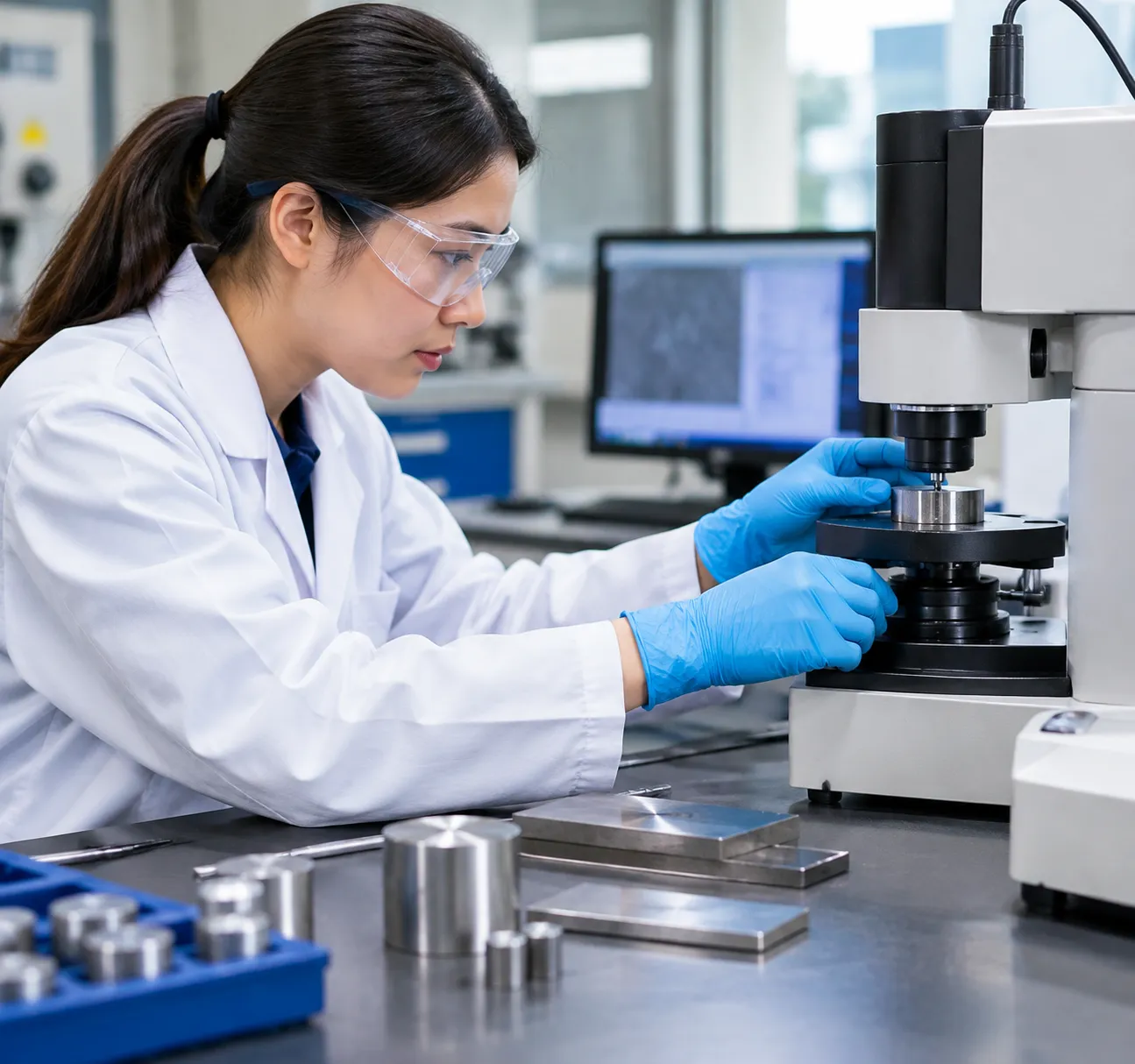
We enforce strict quality control at every stage of production to guarantee that every batch of martensitic stainless steel meets exact international standards and critical engineering criteria. From melt chemistry to final surface verification, our testing processes eliminate material defects, ensure uniform hardness, and deliver consistent mechanical reliability.
Chemical Composition Verification
- Optical Emission Spectrometry (OES): We verify every heat lot via stationary and portable OES analyzers to confirm tight control over carbon, chromium, nickel, and trace element thresholds.
- Gas Analysis: Interstitial elements (oxygen, nitrogen, and hydrogen) are measured using inert gas fusion to prevent core embrittlement.
Non-Destructive Testing (NDT)
- Ultrasonic Testing (UT): Standard testing per EN 10228-3 (Class 3/4) and SEP 1921 (Group 3, Class D/d, E/e) guarantees zero internal voids, inclusions, or core shrinkage cracks.
- Magnetic Particle Testing (MT): Surface and near-surface defects are detected using wet fluorescent MT per ASTM E1444 and EN ISO 9934 to verify crack-free material post-quenching.
- Dimensional & Surface Inspection: Precision laser gauging and Eddy Current testing to secure tight diameter tolerances and detect sub-surface flaws, matching the rigorous integrity benchmarks highlighted in our forging and casting comparison.
Mechanical & Hardness Testing
- Tensile & Yield Testing: Verified per ASTM A370 and EN ISO 6892-1 to evaluate yield strength, ultimate tensile strength, elongation, and reduction of area.
- Charpy V-Notch Impact Testing: Executed according to EN ISO 148-1 and ASTM E23 at ambient and sub-zero temperatures to ensure notch toughness after heat treatment.
- Hardness Mapping: Core-to-surface Rockwell C (HRC) and Brinell (HBW) testing confirms uniform through-hardening and correct tempering conditions.
Inspection Standards & Certification Matrix
| Inspection Category | Testing Method / Standard | Key Acceptance Criteria / Parameters |
|---|---|---|
| Chemical Analysis | ASTM E415 / EN 10276 (OES) | Full compliance with ASTM A276, DIN EN 10088-3 |
| Ultrasonic Inspection | SEP 1921 / EN 10228-3 | Level D/d, Class 3/4 defect-free matrix |
| Magnetic Particle | ASTM E1444 / EN ISO 9934 | Zero linear surface indications / cold cracks |
| Mechanical Strength | ASTM A370 / ISO 6892-1 | Certified yield, tensile, and elongation values |
| Hardness Mapping | ASTM E18 (HRC) / ASTM E10 (HBW) | Verified across cross-section per order specs |
| Microstructure | ASTM E45 / ASTM E112 | Controlled grain size, inclusion rating per spec |
Compliance Documentation & Traceability
- EN 10204 3.1 & 3.2 Certification: Every shipment includes fully traceable Mill Test Certificates (MTC) detailing complete chemical heat analysis, mechanical values, heat treatment charts, and NDT results.
- Sour Service Compliance: Selected heat-treated grades are certified to NACE MR0175 / ISO 15156 for oil and gas sulfide stress cracking (SSC) resistance.
Frequently Asked Questions (FAQ) About Martensitic Stainless Steel
Is Martensitic Stainless Steel Magnetic?
Yes, all martensitic stainless steel grades are fully magnetic in all heat-treated conditions, including annealed, quenched, and tempered states.
Unlike non-magnetic austenitic alloys, martensitic grades form a Body-Centered Tetragonal (BCT) or Body-Centered Cubic (BCC) crystal lattice upon cooling. This molecular structure enables strong magnetic domain alignment, making magnetic stainless steel grades like AISI 410 and AISI 420 ideal for applications requiring magnetic latching, sorting, or sensor triggers.
What Is the Difference Between Martensitic, Austenitic, and Ferritic Stainless Steel?
The key differentiator across stainless steel families is their crystal structure, which dictates mechanical strength, hardness, and thermal response.
| Property / Feature | Martensitic Stainless Steel | Austenitic Stainless Steel | Ferritic Stainless Steel |
|---|---|---|---|
| Crystal Lattice | Body-Centered Tetragonal (BCT) | Face-Centered Cubic (FCC) | Body-Centered Cubic (BCC) |
| Heat Treatable? | Yes (Quench & Temper) | No (Work-hardening only) | No (Annealing only) |
| Magnetic State | Strongly Magnetic | Non-Magnetic | Strongly Magnetic |
| Hardness Range | 40 to 62 HRC | 70 to 95 HRB | 75 to 95 HRB |
| Corrosion Resistance | Moderate to High | Very High | Moderate |
| Typical Reference | AISI 410, 420, 440C | Austenitic stainless steel types and uses (304, 316) | AISI 430, 409 |
Can Martensitic Stainless Steel Be Welded Without Cracking?
Yes, but it requires strict thermal management. Due to their high carbon content and high hardenability, untempered weld zones form brittle martensite susceptible to hydrogen-induced cold cracking.
To achieve sound welds without cracking, follow these parameters: Preheating: Maintain a preheat temperature between 200°C and 300°C (400°F–575°F) to slow cooling rates and minimize residual stress. Filler Metal Selection: Use matching martensitic fillers (e.g., ER410) if uniform post-weld heat treatment and mechanical properties are required. Alternatively, use austenitic fillers like AWS ER309L or ER312 to absorb transformation stresses in non-hardened assemblies. Immediate PWHT: Perform Post-Weld Heat Treatment (subcritical annealing at 650°C–750°C) immediately after welding, before the joint cools below 100°C, to temper the brittle heat-affected zone (HAZ).
Which Grade Should Be Chosen: AISI 410, 420, or 440C?
Selection depends on the trade-off between machinability, required hardness, and wear resistance:
[AISI 410] -------------------> [AISI 420] -------------------> [AISI 440C] Toughness & Ductility Balanced Edge Retention Maximum Hardness & Wear (~40–45 HRC) (~50–54 HRC) (58–62 HRC)
- Select AISI 410 (1.4006): Best for high-load structural shafts, fasteners, valve seats, and turbine components requiring moderate hardness, superior impact toughness, and good machinability.
- Select AISI 420 (1.4021 / 1.4028): Best for cutlery, surgical scalpels, plastic injection molds, and hydraulic pump pistons requiring sharp edge retention, high polishability, and moderate wear resistance.
- Select AISI 440C (1.4125): Best for ball bearings, high-wear nozzles, industrial slitter blades, and valve check balls requiring extreme surface hardness (up to 60+ HRC) and high abrasion resistance.
How Does Tempering Temperature Affect Corrosion Resistance?
Tempering directly alters the microstructure and free chromium availability in quenched and tempered stainless steel:
- Low-Temperature Tempering (150°C–350°C): Retains maximum hardness and optimal corrosion resistance. Carbon forms fine transition carbides without depleting matrix chromium.
- Sensitization / Embrittlement Zone (400°C–550°C): Avoid this range. Chromium carbides ($Cr_{23}C_6$) precipitate heavily at grain boundaries, causing severe local chromium depletion, reduced pitting resistance, and temper embrittlement (drop in Charpy impact toughness).
- High-Temperature Tempering (550°C–700°C): Sacrifices peak hardness in exchange for high yield strength, maximum toughness, and recovered general corrosion resistance as chromium rediffuses across the matrix.
 English
  Russian
  German