
2026年8月24日
Casting alloy guide comparing aluminum zinc stainless steel and superalloys with properties costs and casting selection tips
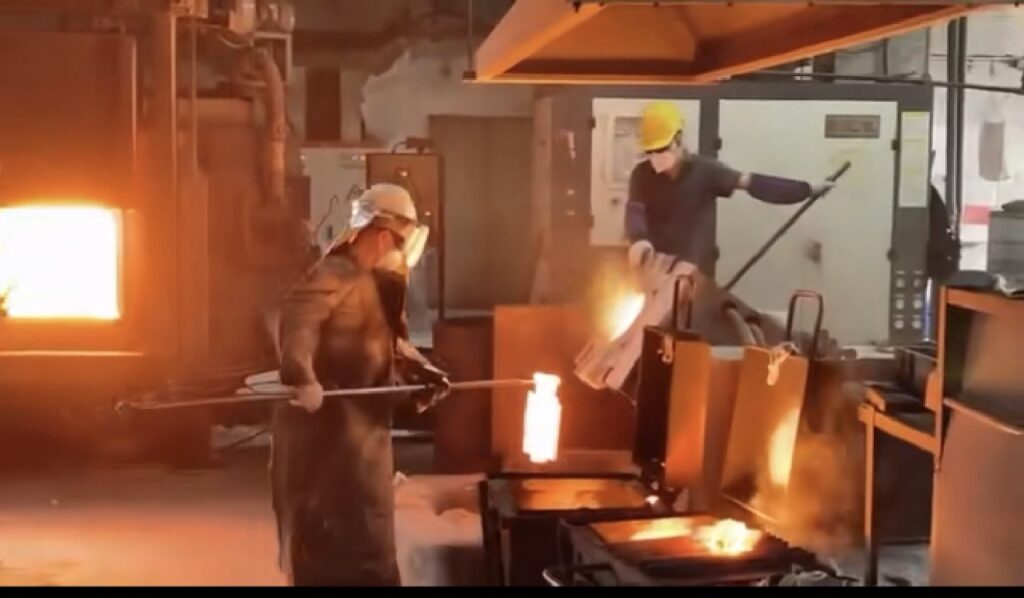
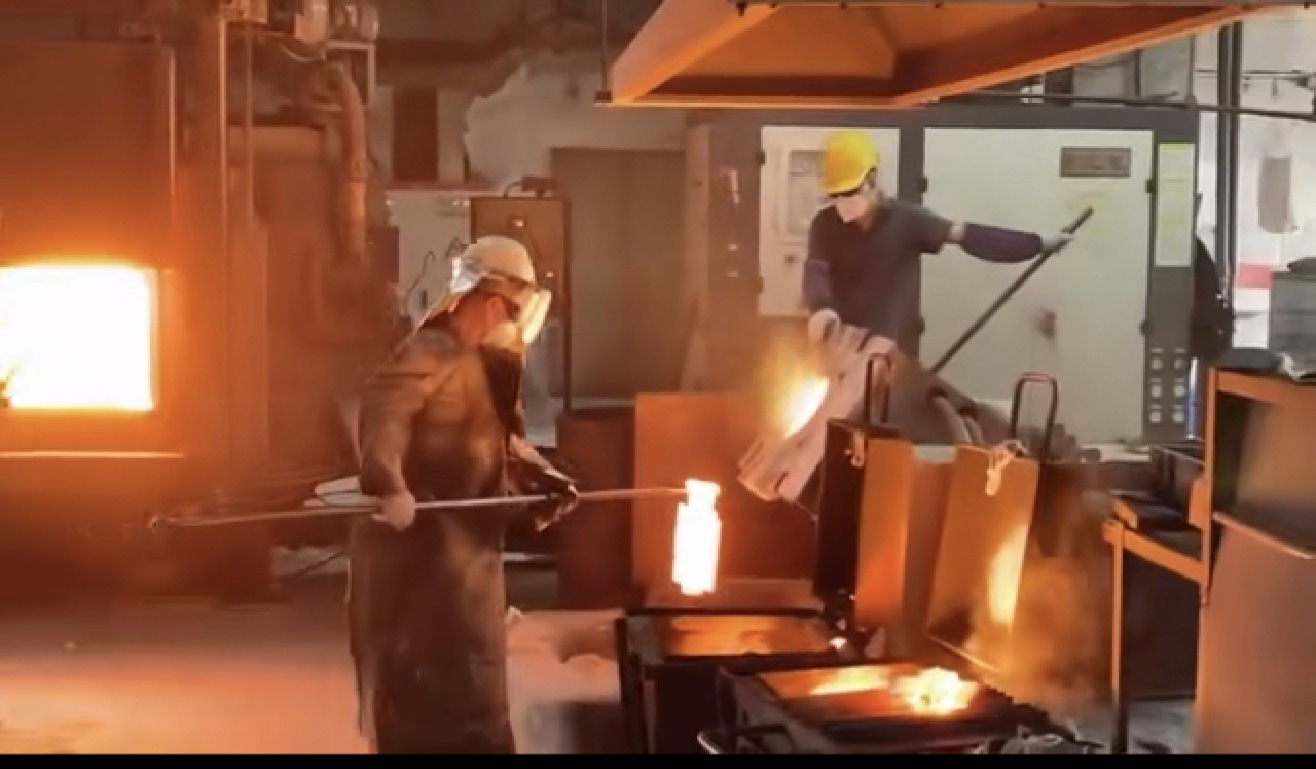
Industrial Casting Alloys & Metallurgical Overview
Selecting the right casting alloy requires a direct alignment between metallurgical composition and foundry performance. We manufacture and process high-grade ferrous and non-ferrous casting alloys engineered for high-stress industrial applications worldwide.
Ferrous vs. Non-Ferrous Casting Alloys
| Alloy Classification | Common Grades | Key Mechanical Traits | Primary Target Applications |
|---|---|---|---|
| Ferrous Alloys | Stainless steel casting grades (316L, 17-4PH), Carbon Steel (WCB), Tool Steel (H13) | Tensile strength casting metal: 450–1100 MPa High impact toughness, structural rigidity | Industrial valves, pumps, heavy machinery components |
| Non-Ferrous Alloys | Die casting aluminum alloys (A380, A356), Zamak zinc alloys, Nickel superalloys (Inconel 718) | Tensile strength casting metal: 150–1400 MPa Superior corrosion resistance, optimized mass density | Aerospace turbine blades, e-mobility housings, precision hardware |
Core Performance Parameters
Every casting alloy displays distinct physical behavior during liquid-to-solid phase transformation. We evaluate five core metallurgical parameters to guarantee defect-free foundry production:
- Molten Metal Fluidity: Dictates how smoothly liquid metal fills thin-wall mold cavities before freezing, preventing cold shuts and incomplete fills.
- Solidification Range: The temperature gap between liquidus and solidus states. Narrow solidification ranges minimize micro-porosity and improve overall material density.
- Thermal Expansion & Solidification Shrinkage Rate: Measures volume contraction during cooling, directly dictating exact tooling pattern allowances and dimensional control.
- Hot Tearing Susceptibility: Indicates alloy vulnerability to stress-induced cracking while cooling through the critical freezing zone.
- Corrosion & Thermal Fatigue Resistance: Determines long-term structural integrity under high-temperature thermal cycling, environmental oxidation, and chemical exposure.
Alloy Selection by Casting Process
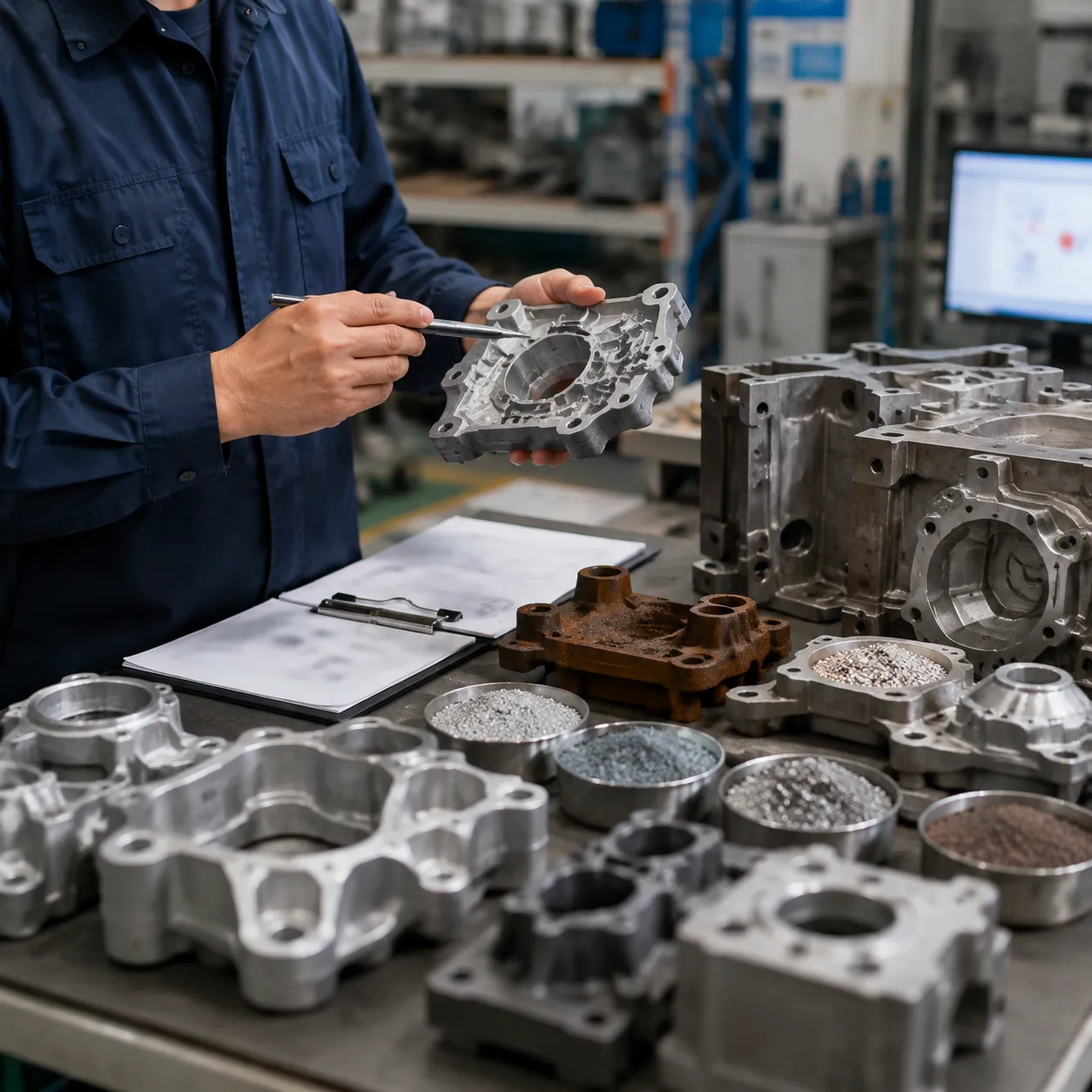
Matching the right casting alloy to your foundry process dictates part geometry, tooling longevity, and unit cost. We balance molten metal fluidity and mechanical targets across three primary production routes.
Investment Casting Materials
- Nickel Superalloys (Inconel 718/625): Handles extreme thermal fatigue and oxidation in severe environments.
- Cobalt-Chrome Alloys: High wear resistance for heavy-duty industrial components and biomedical devices.
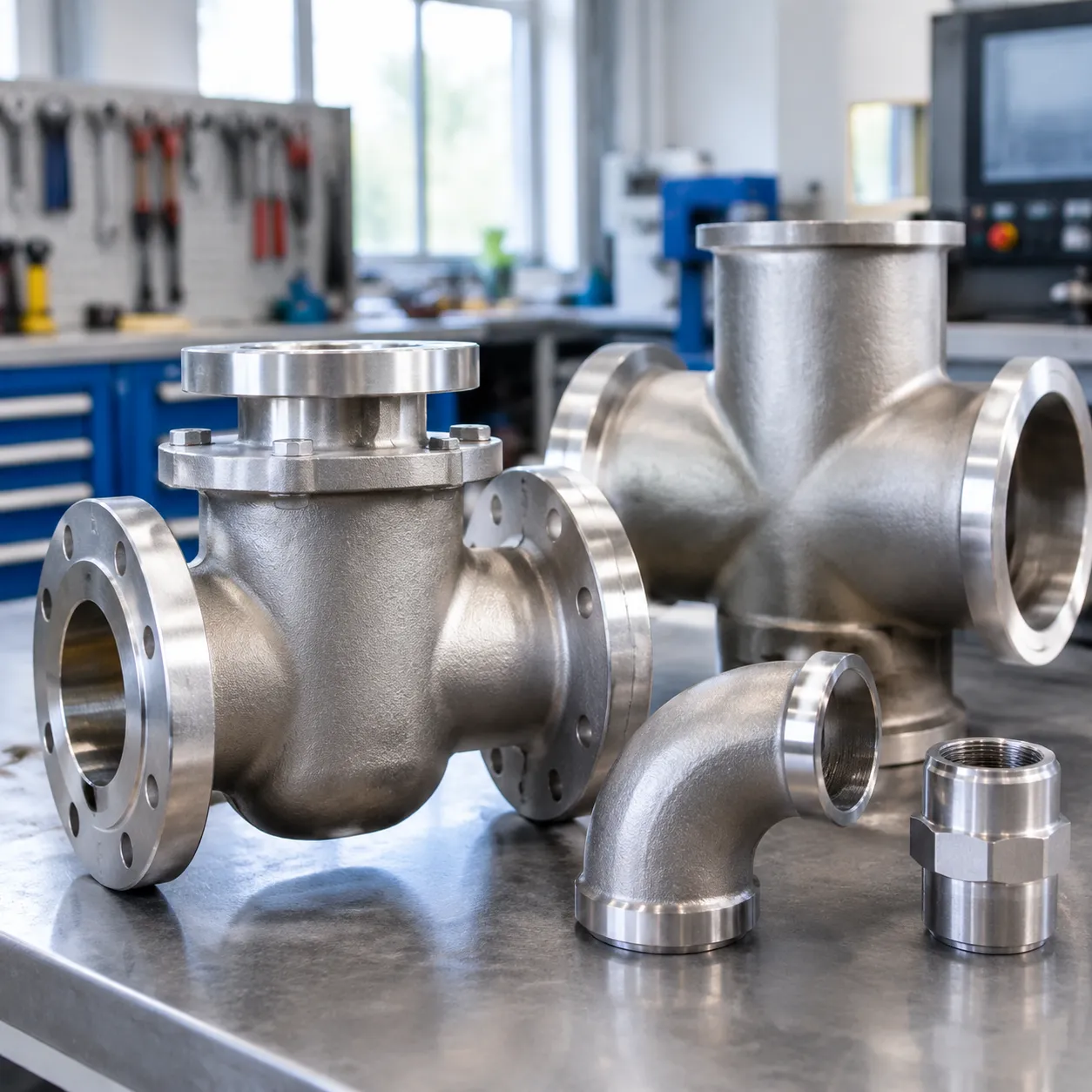
- Stainless Steels (300/400 Series): Superior corrosion resistance and net-shape precision; explore our custom stainless steel casting alloys and grades for complete mechanical specs.
Die Casting Alloys
- Die Casting Aluminum Alloys (A380, A360): Optimized for thin-wall stability, lightweight structural integrity, and fast cycle times.
- Zamak Zinc Alloys & ZA-8: Deliver tight dimensional tolerances, high impact strength, and rapid solidification rates.
- Read our comprehensive aluminum alloy casting guide for die, sand, and investment processes to compare yield strength and pressure-tightness variables.
Permanent Mold Casting Metal & Sand Grades
- Heavy-Duty Cast Iron: Gray and ductile iron grades engineered for high vibration damping and compressive strength.
- Structural Aluminum (A356): Heat-treatable to T6 temper for high tensile strength structural frames and housings.
- Cast Brass & Bronze: Strong wear resistance and fluid containment for hydraulic fittings and pump impellers.
Process vs. Alloy Selection Matrix
| Process | Recommended Casting Alloy | Primary Advantage | Typical Applications |
|---|---|---|---|
| Investment Casting | Inconel, 316L, Co-Cr | Intricate geometry & fine surface finish | Aerospace, medical, turbine blades |
| Die Casting | A380 Aluminum, Zamak 3, ZA-8 | High cycle speed & thin-wall stability | Automotive housings, consumer electronics |
| Sand / Permanent Mold | A356-T6, Ductile Iron, Brass | Heavy section thickness & structural yield | Heavy machinery bases, valves, structural arms |
Integrated Production Equipment Synergy (Vastpcc Infrastructure)
We integrate precision machinery with strict process controls to ensure defect-free results across every casting alloy we process.
High-Precision Wax Pattern Molding
- Dimensional Precision: We produce high-accuracy wax patterns with core component processing tolerances of ≤ 5 µm. Utilizing our automatic wax injection machines, we secure tight dimensional stability at the initial stage, minimizing downstream machining requirements for complex components.
Automated Shell Coating Consistency
- Ceramic Shell Uniformity: Consistent mold wall thickness is critical to resist thermal shock and prevent deformation during high-temperature pours. We utilize automated shell coating systems to maintain precise slurry viscosity and robotic dipping parameters. This process ensures exceptional ceramic shell mold casting integrity, especially when pouring high-melt-temperature superalloys.
Clean Pattern Elimination
- Inclusion Minimization: Trapped organic residue degrades metallurgical quality during metal pouring. Our Vastpcc High-Pressure Dewaxing Autoclaves ensure complete pattern removal, delivering a clean dewaxing pattern assembly that eliminates carbon inclusion defects and protects overall casting alloy purity.
International Standards for Casting Alloy Specifications
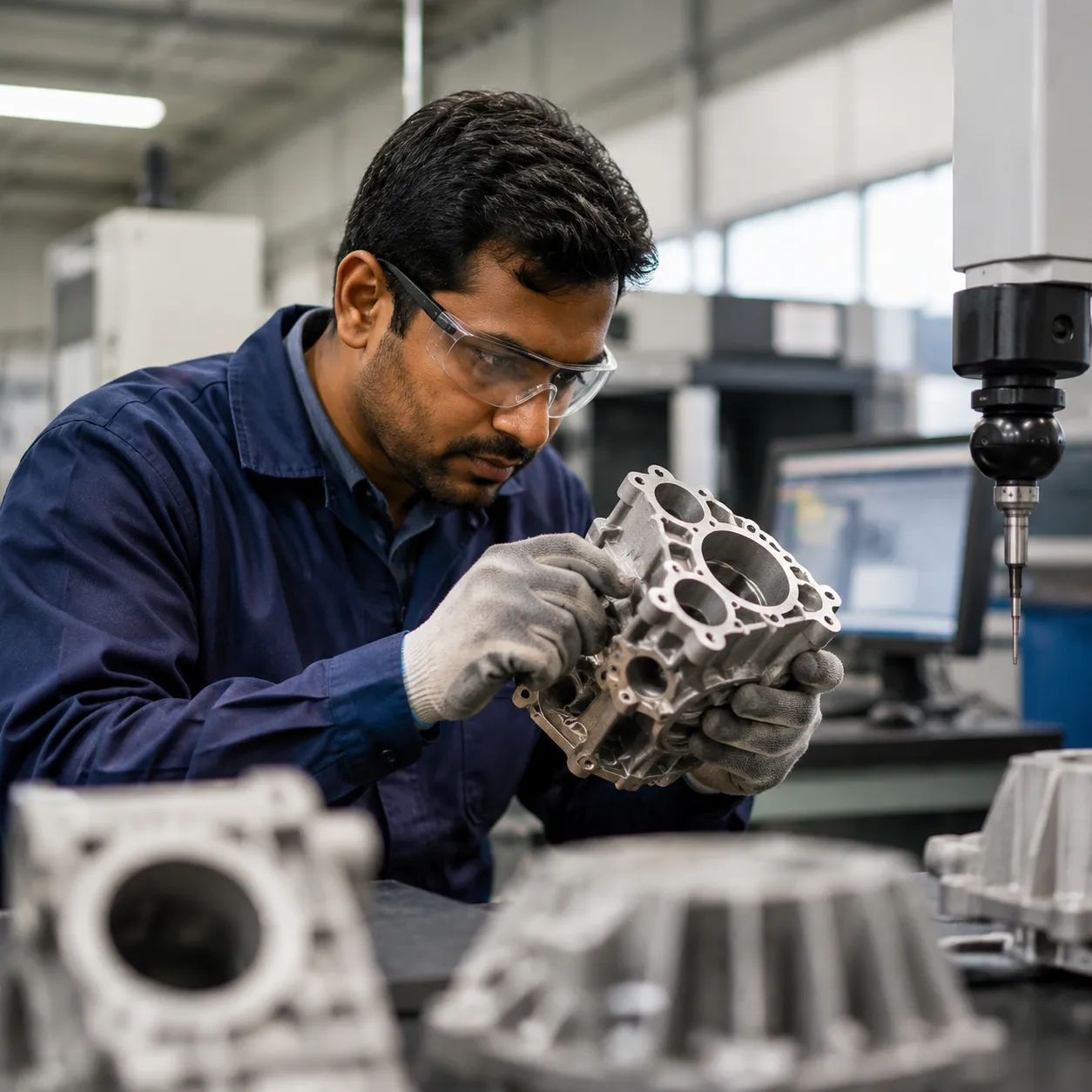
Matching international designations guarantees mechanical parity and elemental consistency across global supply chains. We cross-reference every casting alloy across major standards—including ASTM, ISO 9001, DIN, SAE, and JIS frameworks—to simplify global sourcing and material validation.
Cross-Reference Mapping Across Global Frameworks
| Alloy Category | Material Grade | ASTM Designation | DIN / EN Standard | JIS Standard | Key Property Focus |
|---|---|---|---|---|---|
| Aluminum Alloy | A356.0 | ASTM B108 | EN AC-42200 (AlSi7Mg0.6) | JIS H5202 AC4C | High strength & structural ductility |
| Stainless Steel | 316L / CF3M | ASTM A743 Grade CF3M | 1.4409 (G-X2CrNiMo19-11-2) | JIS G5121 SCS14A | Superior pitting & corrosion resistance |
| Zinc Alloy | Zamak 3 | ASTM B240 AG40A | Z410 (ZnAl4Cu) | JIS H5301 ZDC2 | High fluidity & thin-wall stability |
| Nickel Superalloy | Inconel 718 | ASTM B637 / UNS N07718 | 2.4668 (NiCr19Fe19Nb5Mo3) | JIS G4902 NCF 718 | Extreme thermal creep resistance |
Evaluating exact A356 aluminum alloy specifications and properties against global cross-reference charts ensures precise equivalent performance across all manufacturing regions.
Rigorous Quality Verification & NDT Protocols
To maintain high tensile strength and structural integrity in every alloy casting, our quality control protocols integrate full trace chemical verification with advanced non-destructive testing (NDT):
- Spectrometric Chemical Validation: Optical Emission Spectroscopy (OES) inspects melt heats in real time to verify precise elemental composition before pouring.
- X-Ray Defect Inspection: Industrial X-ray radiography scans interior geometry to detect microporosity, gas voids, and slag inclusions.
- Non-Destructive Testing (NDT): Ultrasonic testing (UT) and liquid penetrant inspection (LPI) identify subsurface discontinuities and fine surface cracking.
- Mechanical Properties Verification: Tensile testing, hardness checks, and impact testing guarantee compliance with ISO 9001 standards and customer engineering drawings.
Sector-Specific Casting Alloy Applications
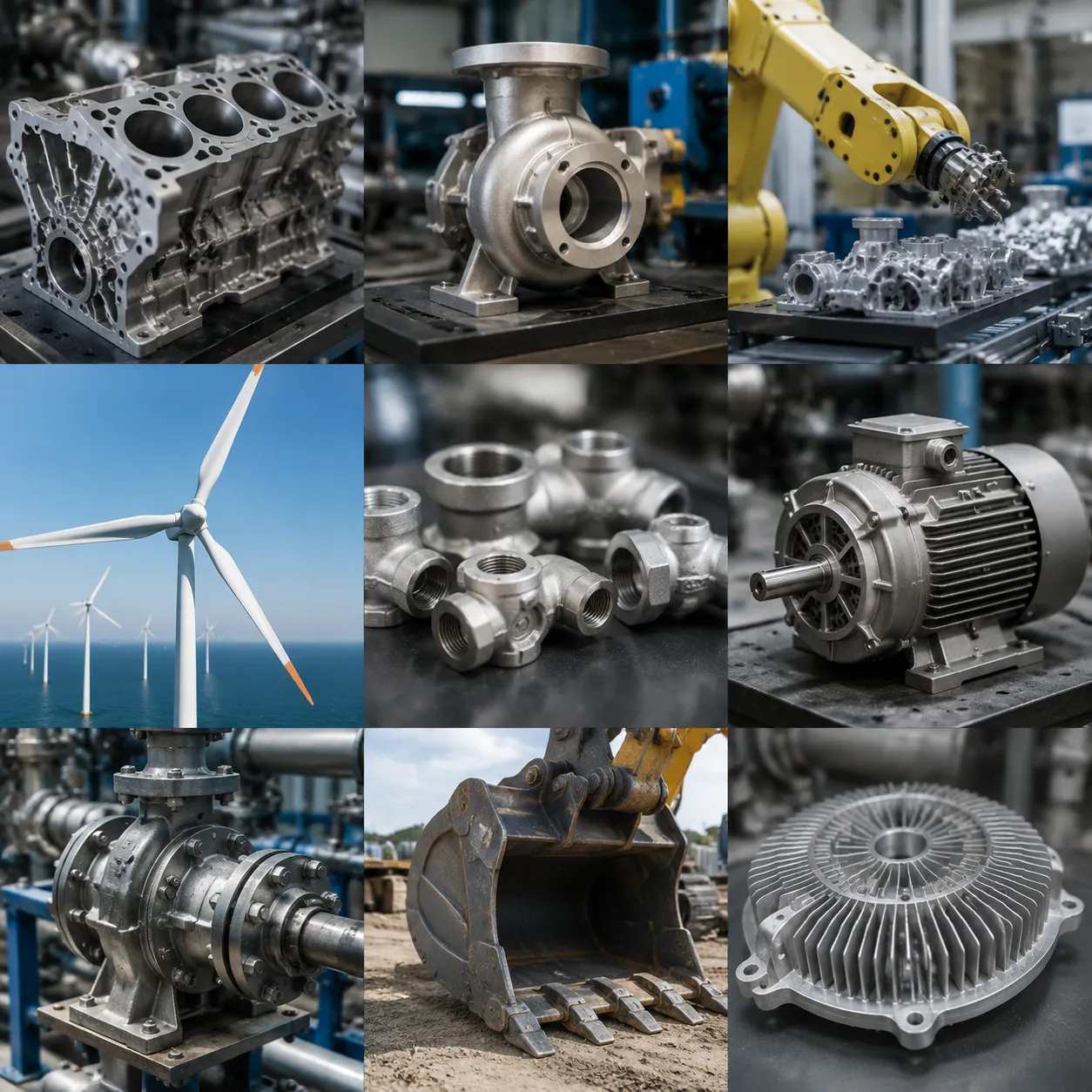
Every industry demands specific mechanical properties and thermal stability from a casting alloy. We engineer material compositions and foundry processes to match strict performance requirements across critical global sectors.
Aerospace & Defense
High-performance flight components require extreme creep strength and resistance to thermal degradation under operating stress.
- Primary Alloys: Inconel 718, Inconel 625, Cobalt-Chrome.
- Target Components: Turbine blades, combustor liners, and airframe structural nodes.
- Performance Benchmark: Our high-temperature nickel superalloy investment casting maintains mechanical integrity above 1000°C while resisting severe hot oxidation.
Automotive & E-Mobility
Electric vehicle architectures and modern powertrains rely on high-fluidity non-ferrous alloys to reduce vehicle weight and maximize range.
- Primary Alloys: A380, A356, AlSi10Mg, Zamak 3.
- Target Components: EV battery enclosures, electric drive housings, structural subframes, and engine blocks.
- Performance Benchmark: Aluminum-silicon formulations deliver superior strength-to-weight ratios, tight thin-wall stability, and rapid heat dissipation.
Medical & Precision Machinery
Medical devices and high-precision equipment demand strict biocompatibility, wear resistance, and micron-level accuracy.
- Primary Alloys: 316L Stainless Steel, 17-4 PH, Ti-6Al-4V.
- Target Components: Surgical instruments, orthopedic implants, and precision pump housings.
- Performance Benchmark: Specialized stainless steel casting grades offer high corrosion resistance and smooth surface finishes suitable for standard passivation procedures.
Custom Formulation & Technical RFQ Support
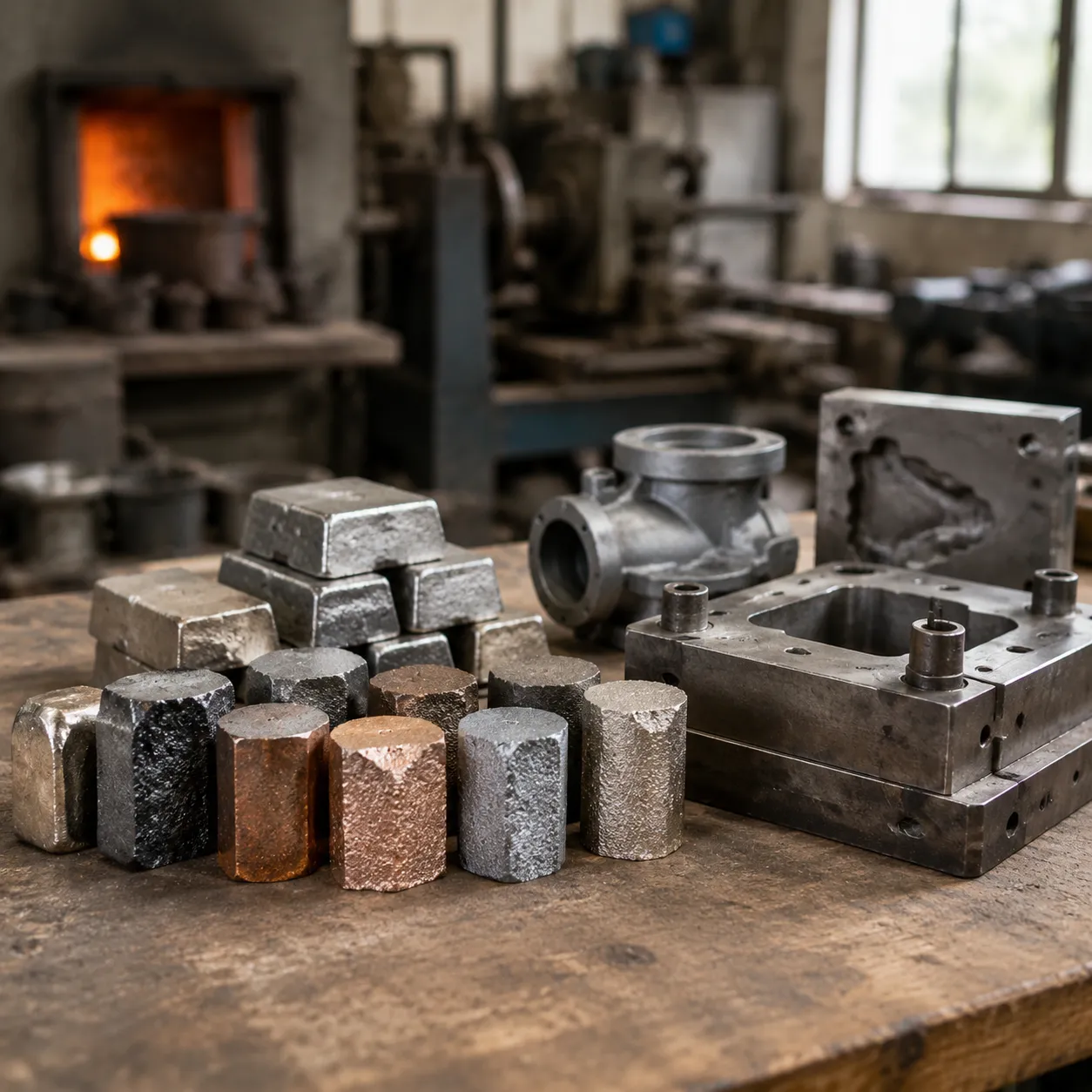
We deliver direct engineering support to help you choose the precise casting alloy, calculate exact mold shrinkage, and design production-ready foundry tooling. From custom chemistry formulations to complex geometry optimization, our metallurgists bridge the gap between initial design and full-scale production.
Engineering Assistance & Tooling Setup
We evaluate your technical RFQ requirements to eliminate defects before metal ever hits the mold. If your application demands tailored mechanical properties, we develop custom alloy castings engineered to meet your exact stress, corrosion, and thermal constraints.
| Technical Service | Engineering Parameter | Key Outcome |
|---|---|---|
| Alloy Selection | Mechanical load, thermal exposure, corrosion resistance | Exact casting alloy match for performance and cost |
| Shrinkage Calculations | Volumetric alloy contraction, solidus-liquidus delta | Precise pattern scale factors (0.5% – 2.5%) |
| Foundry Tooling Setup | Gating/riser layout, draft angles, thermal dissipation | Porosity-free fills and optimized tool lifespan |
| RFQ Technical Review | DFM feedback, wall-thickness analysis, tolerances | Production-ready quotation within 24–48 hours |
Fast-Track RFQ Submission Requirements
To ensure rapid evaluation and accurate mold shrinkage modeling, include the following specs in your engineering inquiry:
- 3D CAD & 2D Drawings: STEP/IGES files specifying critical dimensions and machining allowances.
- Operating Environment: Peak working temperatures, mechanical load requirements, and corrosive media exposure.
- Production Volume: Prototype quantities versus annual high-volume production runs.
- Quality & NDT Standards: Required X-ray, surface penetrant, or tensile strength testing protocols.
Frequently Asked Questions
How do I select the right casting alloy for high-temperature applications?
We evaluate three primary criteria when matching a casting alloy to high-heat operating environments: peak continuous temperature, thermal fatigue resistance, and oxidation exposure.
- Under 400°C: Heat-treated aluminum alloys or structural ductile irons perform reliably for structural components.
- 400°C to 650°C: Austenitic stainless steel casting grades provide strong oxidation resistance and baseline mechanical strength.
- Above 650°C: We recommend nickel superalloys or specialized cobalt-based casting for heat, wear, and corrosion resistance to prevent thermal creep and structural degradation during prolonged exposure.
What are the major differences in properties between ferrous and non-ferrous casting alloys?
Ferrous and non-ferrous casting alloys exhibit distinct mechanical, thermal, and processing characteristics that dictate their manufacturing fit.
| Performance Metric | Ferrous Casting Alloys | Non-Ferrous Casting Alloys |
|---|---|---|
| Density & Weight | High (7.2 – 7.8 g/cm³) | Low to Medium (2.7 – 8.9 g/cm³) |
| Melt Temperature | High (1,150°C – 1,550°C) | Low to Moderate (380°C – 1,080°C) |
| Molten Metal Fluidity | Moderate; requires high superheat | High; enables complex, thin-wall geometries |
| Tensile Strength | Exceptional high-load capacity | Moderate to high (optimized strength-to-weight) |
| Corrosion Resistance | Requires specific stainless grades or coatings | Inherently high across most Al, Cu, and Zn grades |
How does cooling rate directly affect casting alloy solidification shrinkage and defect rates?
Cooling rate dictates the solidification microstructure, grain size, and final defect profile of any casting alloy.
- Rapid Cooling (Die Casting / Chills): Promotes a fine-grain structure, boosting the tensile strength casting metal yield. However, excessive thermal shocks can build up internal stress and trigger hot tearing if thermal contraction is constrained.
- Slow Cooling (Sand Casting / Insulated Molds): Extends molten metal fluidity window, aiding mold filling in heavy sections. However, extended cooling yields a higher solidification shrinkage rate, leading to coarse grain structures, micro-porosity, and sink marks.
- Controlled Thermal Gradient: We design custom mold chilling systems and riser placements to enforce directional solidification, preventing internal porosity and shrinkage defects.
 English
  Russian
  German