
2026年10月3日
Explore the foundry casting process including key techniques materials and quality steps for reliable metal casting results
Core Steps in the Foundry Casting Process
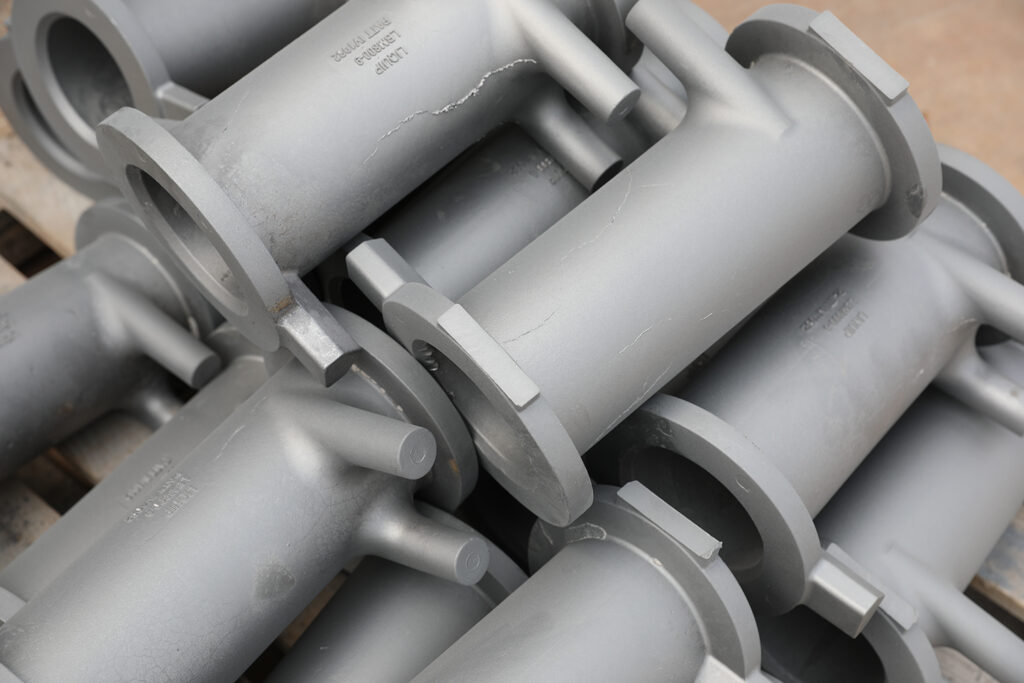
The foundry casting process transforms raw metal into functional, complex engineering components through thermal and mechanical processing. Executing a successful pour requires strict control over tooling geometry, thermal balances, melt chemistry, and solidification dynamics.
+-------------------------------------------------------------------------------------------------+ | FOUNDRY CASTING WORKFLOW | +-------------------------------------------------------------------------------------------------+ | [ Pattern & Core ] --> [ Mold Preparation ] --> [ Melting & Metallurgy ] | | CAD Tooling Design Sand / Resin / Die Spectrometric Testing | | | | | | | v | | | | [ Shakeout & Cleaning ] <-- [ Cooling & Solidification ] <-- [ Controlled Pouring ] | | Mold Breakdown Thermal Curve Control Gating & Riser Dynamics | +-------------------------------------------------------------------------------------------------+
Patternmaking and Core Design for Complex Geometries
Every casting starts with precise tooling design to shape the outer profile and internal cavities of the final part.
- Shrinkage and Draft Allowances: Patterns incorporate precise dimensional compensations for liquid-to-solid metal contraction and tapered draft angles for clean mold release.
- Core Assembly: High-strength sand cores define internal passages, undercuts, and hollow geometry, secured inside the mold using core prints and chaplets.
- Tooling Materials: Patterns are machined from wood, polyurethane tooling board, aluminum, or steel depending on production volume and dimensional tolerance requirements.
Mold Preparation: Green Sand, Resin Sand, or Metal Dies
Mold stability dictates external surface finish and dimensional accuracy. Foundries select molding media based on part complexity, batch size, and material grade:
- Green Sand Molding: A mixture of silica sand, bentonite clay, and water compacted around the pattern. Highly cost-effective for medium to high-volume production runs.
- Resin (No-Bake) Sand Molding: Chemically bonded sand that hardens at room temperature. Delivers higher mold rigidity, superior dimensional stability, and crisp detail for heavy or intricate components.
- Permanent Metal Dies: Machined tool-steel dies used for repeatable, high-speed casting of non-ferrous alloys with tight tolerances.
Metal Charge Preparation, Melting, and Metallurgical Testing
Raw materials—including foundry returns, clean scrap, and master alloys—are charged into induction, electric arc, or cupola furnaces.
| Processing Stage | Critical Quality Control Action |
|---|---|
| Charge Preparation | Verifying charge purity, dry state, and scrap ratios to prevent gas uptake |
| Melt Temperature Control | Continuous pyrometric monitoring to hit exact tapping target ranges |
| Melt Treatment | Degassing, fluxing, and deslagging to strip dissolved hydrogen and oxides |
| In-Furnace Chemistry Analysis | Optical Emission Spectrometry (OES) testing prior to tapping |
Controlled Pouring and Gating System Dynamics
Transferring molten metal from the ladle to the mold requires an engineered gating and riser design to manage fluid mechanics.
- Optimized Gating Ratios: Downsprue, runner, and ingate dimensions are calculated to reduce metal entry velocity, preventing turbulent flow and air entrainment.
- Riser Feeding: Strategically positioned open or blind risers provide a reservoir of liquid metal to feed thick sections, preventing internal shrinkage voids.
- Filters and Traps: Ceramic foam filters trap residual dross and non-metallic inclusions before the melt reaches the cavity.
Cooling, Solidification Rates, and Shakeout Operations
Once poured, the casting undergoes a controlled phase transformation from liquid to solid.
- Solidification Management: Section thickness determines local metal solidification rates. Foundries apply external chills or insulating sleeves to induce directional solidification toward the risers.
- Cooling Curves: Parts remain in the mold until the alloy drops below critical transformation temperatures, minimizing internal stresses and distortion.
- Shakeout: Vibratory conveyors, rotary drums, or mechanical knock-out grids separate the solidified metal part from the surrounding sand mold and core material for downstream cleaning.
Major Types of Industrial Foundry Casting Methods
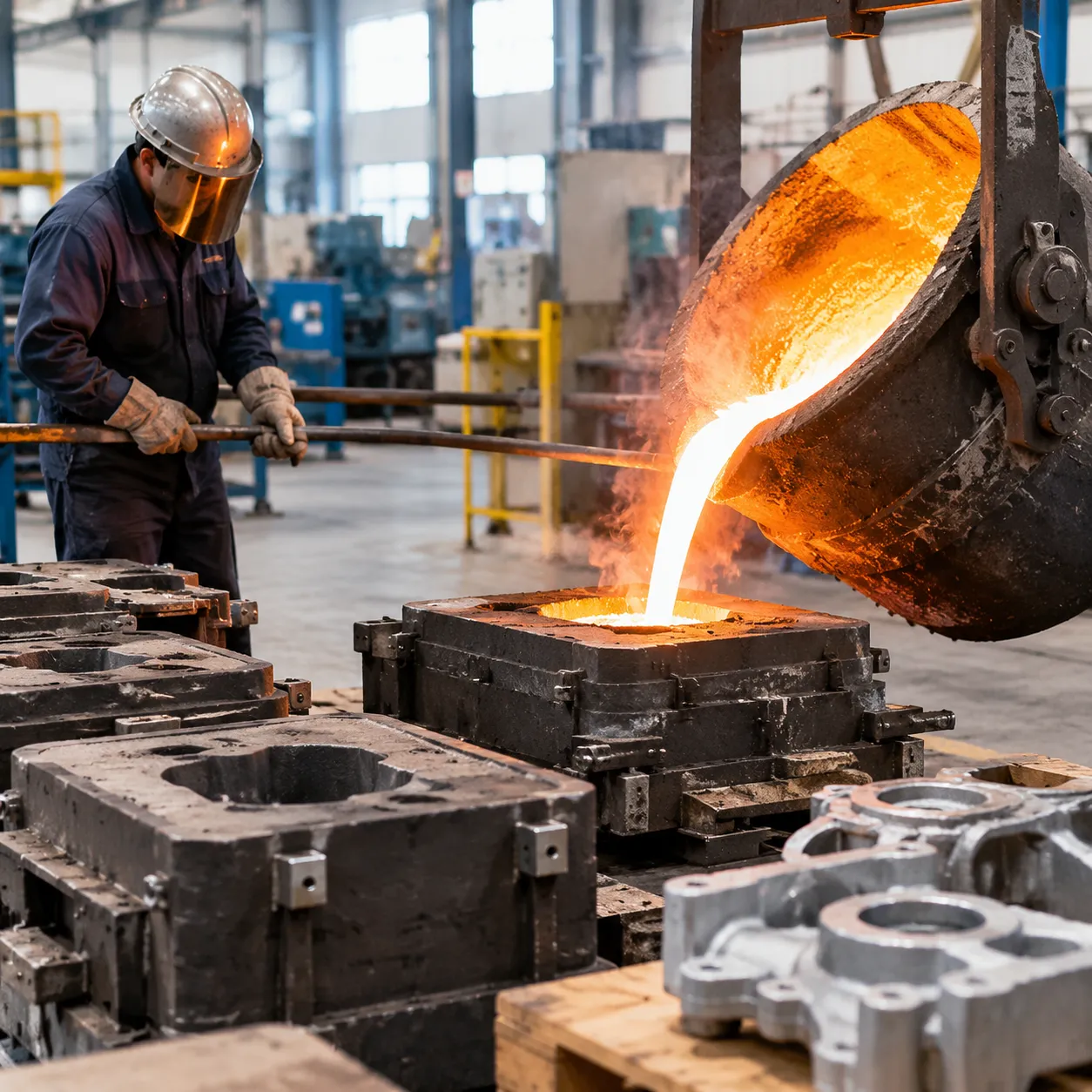
Choosing the right foundry casting process depends directly on your production volume, geometry complexity, and target tolerances. We utilize several standard industrial casting methods to meet specific engineering requirements across global manufacturing sectors.
Sand Casting for Large Structural Parts
- Best for: Heavy equipment housings, engine blocks, machine beds, and structural brackets.
- Key advantages: Low initial tooling cost, flexible mold modifications, and the ability to pour parts weighing from a few pounds to several tons.
- Process overview: Uses compacted green sand or chemically bonded resin sand around a reusable pattern. It handles both ferrous and non-ferrous metals effectively.
Die Casting for High-Volume, Tight-Tolerance Parts
- Best for: Automotive enclosures, consumer electronics housings, and high-volume hardware.
- Key advantages: Rapid cycle times, exceptional dimensional accuracy, and smooth as-cast surface finishes.
- Process overview: Forces molten metal under high pressure into reusable steel dies. It is standard practice in any modern die casting foundry working primarily with aluminum, zinc, and magnesium alloys.
Investment Casting (Lost Wax) for Complex Geometries
- Best for: Turbine blades, valve bodies, medical instruments, and intricate aerospace hardware.
- Key advantages: Near-net-shape accuracy, razor-thin walls, and minimal finish-machining requirements.
- Process overview: We coat disposable wax assemblies in a ceramic refractory shell, melt out the wax, and pour molten metal into the hollow ceramic cavity to create high-quality investment casting parts.
Centrifugal Casting for Tubular and Symmetrical Shapes
- Best for: Pipes, cylinder liners, bushings, and industrial rings.
- Key advantages: High mechanical density, structural soundness, and low defect rates.
- Process overview: Molten metal pours into a rapidly spinning mold. Centrifugal force pushes the dense metal to the outer walls while lighter impurities migrate to the bore, making removal during machining straightforward.
Permanent Mold Casting for Consistent Non-Ferrous Output
- Best for: Engine pistons, fluid fittings, and medium-to-high-run light alloy components.
- Key advantages: Faster cooling rates than sand casting, yielding finer grain structures, superior tensile strength, and reliable repeatability.
- Process overview: Utilizes gravity to pour non-ferrous alloys into preheated, reusable steel or iron molds, serving as a core solution within our foundry aluminum casting services.
| Casting Method | Typical Tolerance | Surface Finish (Ra) | Best Production Volume |
|---|---|---|---|
| Sand Casting | ±0.030" – ±0.060" | 250 – 500 µin | Low to Medium |
| Die Casting | ±0.002" – ±0.010" | 32 – 63 µin | High (10,000+ pcs) |
| Investment Casting | ±0.005" – ±0.015" | 63 – 125 µin | Low to High |
| Centrifugal Casting | ±0.010" – ±0.030" | 125 – 250 µin | Medium to High |
| Permanent Mold | ±0.010" – ±0.020" | 125 – 200 µin | Medium to High |
Material Selection in Foundry Metal Casting
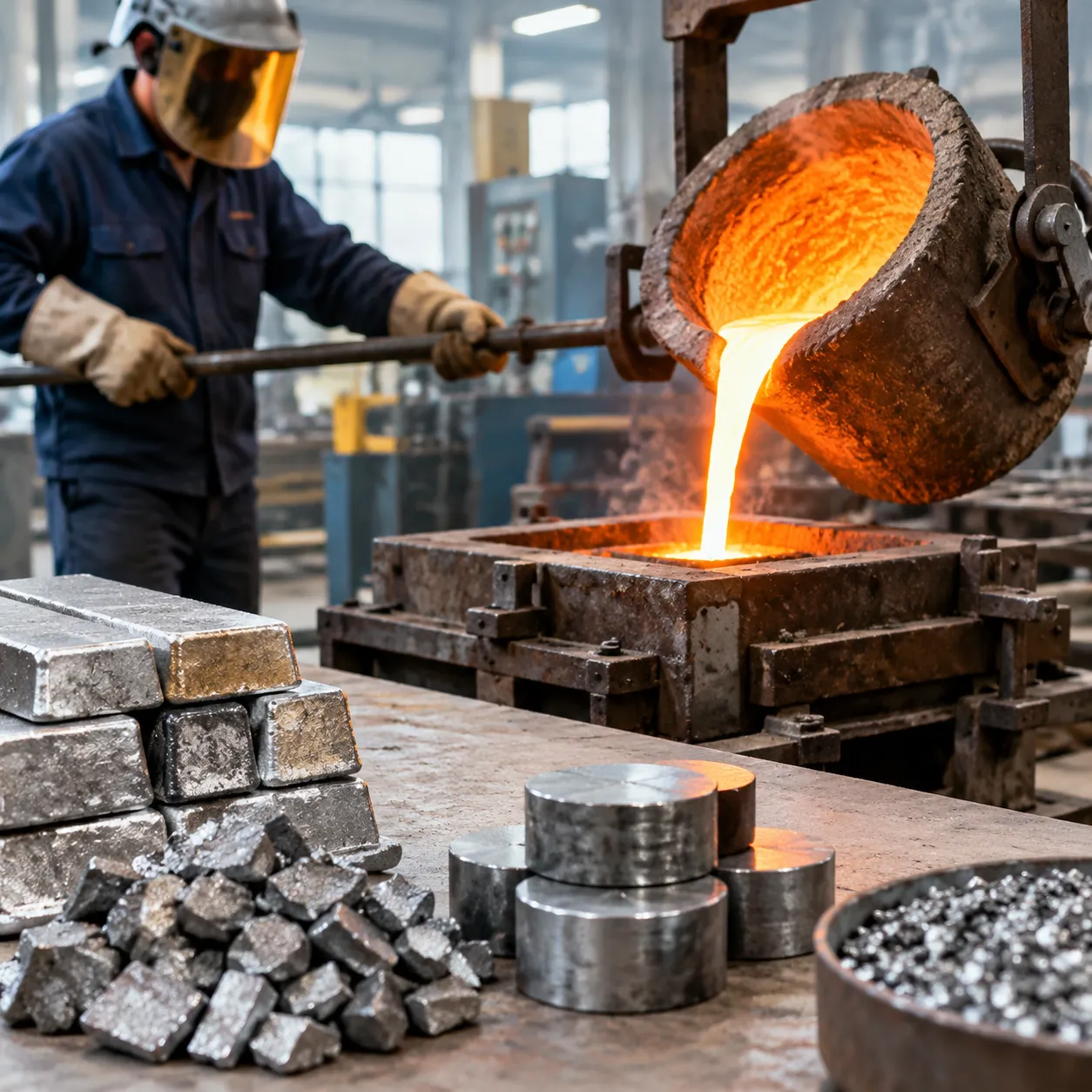
Choosing the right alloy determines how well your component performs under mechanical load, extreme temperatures, and corrosive environments. In our foundry operations, we balance metallurgy, fluid characteristics, and mechanical targets to match the right metal grade to your exact operating conditions.
Ferrous Casting Alloys
Ferrous materials deliver superior strength, wear resistance, and structural integrity for demanding structural parts.
- Gray Iron: Excellent machinability and vibration damping; ideal for engine blocks, machine bases, and pump housings.
- Ductile Iron: Offers high tensile strength and impact resistance due to nodular graphite structures; perfect for automotive knuckles, crankshafts, and heavy-duty brackets.
- Carbon and Alloy Steel: Delivers high toughness and weldability for structural frames, pressure equipment, and heavy industrial machinery.
- Stainless Steel: Selected for extreme corrosion and heat resistance. Explore our cast stainless steel custom casting alloys and grades to match specific chemical and mechanical standards.
Non-Ferrous Casting Alloys
Non-ferrous alloys provide lightweight construction, superior electrical conductivity, and natural corrosion protection.
- Aluminum Alloys: Lightweight with high strength-to-weight ratios; review our aluminum alloy casting guide for optimal process pairing across sand, die, and investment casting.
- Brass & Bronze: Outstanding wear resistance and low friction for bushings, marine hardware, and fluid valves.
- Zinc & Magnesium: Excellent for thin-walled, high-precision structural housings requiring tight tolerances and fast cycle times.
Key Factors for Matching Metal Grades
| Property Requirement | Recommended Metal Family | Common Application |
|---|---|---|
| High Damping & Compressive Strength | Class 30 / Class 40 Gray Iron | Machine tool beds, housings |
| Impact & Fatigue Resistance | 65-45-12 / 80-55-06 Ductile Iron | Suspension arms, heavy hubs |
| Corrosion & Chemical Resistance | 300/400 Series Stainless Steel, Bronze | Marine fittings, chemical valves |
| Lightweight Structural Performance | A356 / A380 Aluminum Alloys | Aerospace brackets, auto frames |
| Wear & Abrasion Resistance | High-Chrome White Iron, Alloy Steels | Mining teeth, crushing liners |
When engineering your part for the foundry casting process, we evaluate four core factors:
- Mechanical Stress Limits: Tensile, yield, and elongation requirements under static and dynamic loading.
- Operating Environment: Exposure to salt spray, aggressive acids, or operating temperatures above 500°C.
- Castability and Shrinkage: How easily the molten alloy fills complex molds without producing hot tears or shrinkage porosity.
- Post-Casting Machinability: Tool wear rates and cycle times required during secondary CNC operations.
Post-Casting Finishing and Secondary Operations
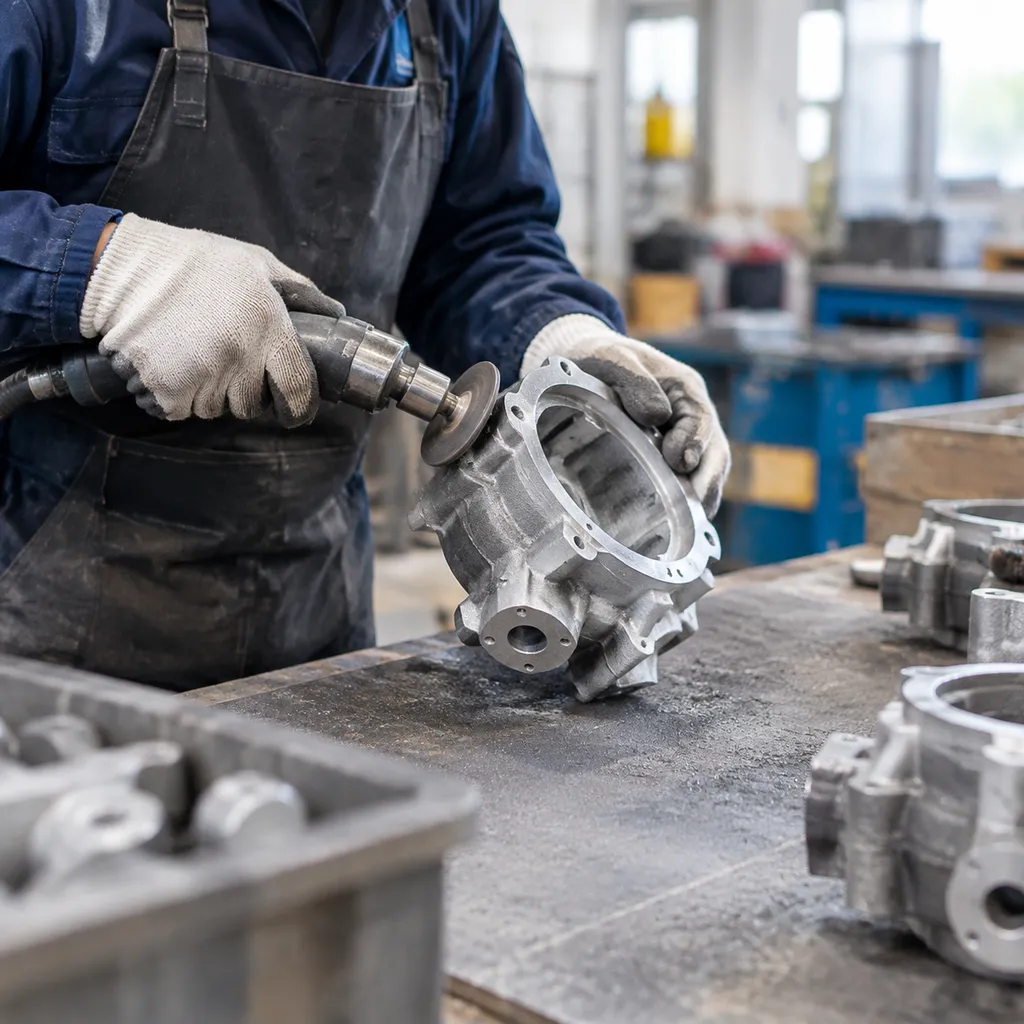
Once the metal solidifies and cools, the raw part leaves the mold, but it is rarely ready for assembly. We use a series of post-casting operations to clean, strengthen, and dimensionally refine each component to meet strict engineering standards.
Fettling, Degating, and Surface Shot Blasting
Raw castings come out of the mold with extra metal structures attached. We clean and prep the surface through standard mechanical steps:
- Degating and Riser Removal: We cut off the gating systems, sprues, and risers using plasma torches, abrasive cutoff saws, or hydraulic wedging.
- Fettling and Grinding: Operators grind down parting lines, flash, and residual gate stubs to achieve the baseline profile.
- Shot Blasting: High-velocity steel shot or grit removes remaining molding sand, scale, and oxide layers, creating a uniform, clean matte surface.
Thermal Post-Processing and Stress-Relief Heat Treatment
Cooling creates internal stresses and alters the crystal structure of the metal. We apply targeted thermal treatments to stabilize the microstructure and hit the required hardness and ductility levels:
| Heat Treatment | Primary Objective | Common Alloys |
|---|---|---|
| Stress Relieving | Eliminates residual casting stresses before machining | Cast iron, alloy steels |
| Annealing | Softens the metal and improves machinability | Carbon steels, ductile iron |
| Normalizing | Refines grain structure for uniform mechanical strength | Structural cast steels |
| Quench & Temper | Maximizes tensile strength and wear resistance | High-alloy steels |
| T6 Solution & Aging | Increases tensile yield strength significantly | Cast aluminum alloys |
Secondary Precision CNC Machining and Surface Coating
Foundry casting delivers near-net-shape components, but tight-tolerance mating surfaces, threaded holes, and bearing seats require further refinement. We integrate precision casting and CNC machining to achieve exact dimensional tolerances down to the micron level.
Following machining, we apply protective and aesthetic surface finishes depending on the end-use environment: E-coating and Powder Coating: Delivers heavy-duty corrosion protection and impact resistance for industrial housings. Anodizing: Common for aluminum castings to enhance surface hardness and wear resistance. Plating and Passivation: Applied to non-ferrous and stainless components for chemical resistance and clean cosmetic appearance.
Quality Control and Defect Prevention in the Foundry Casting Process
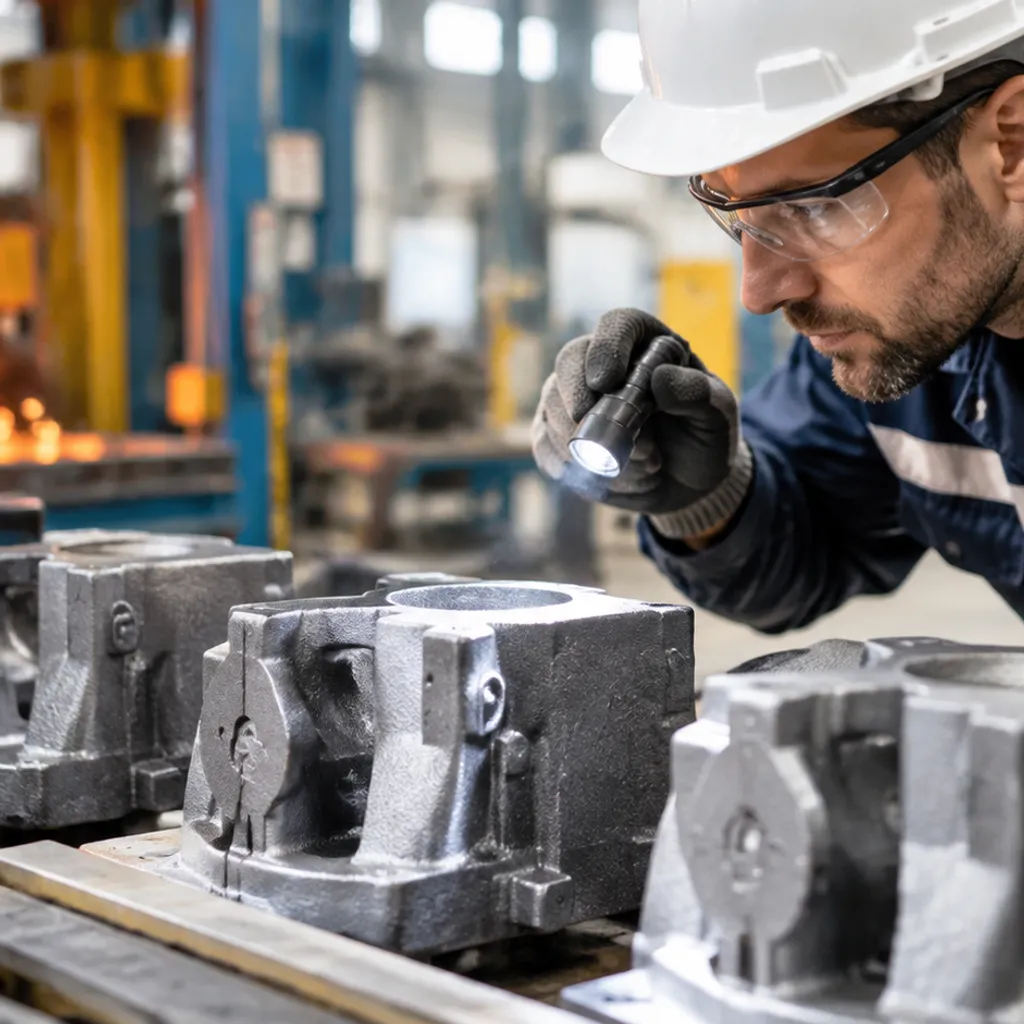
Maintaining strict quality standards during the foundry casting process requires catching structural and surface flaws before parts ever reach shipping. Controlling metal chemistry, pouring temperatures, and mold integrity allows foundries to systematically identify and eliminate common casting defects at their root cause.
Identifying Typical Defects and Practical Solutions
- Gas Porosity: Tiny rounded voids caused by trapped air, gas, or moisture in the mold. We eliminate this by degassing molten alloys thoroughly, baking cores properly, and adding adequate mold vents.
- Shrinkage Cavities: Internal voids formed as the metal solidifies and contracts unevenly. Optimizing the gating system, adding insulating sleeves, and placing chill plates direct directional solidification toward the risers.
- Cold Shuts and Misruns: Visible seams or incomplete fills caused by molten metal freezing before completely filling the mold cavity. Increasing pouring speed, elevating melt temperatures, or adjusting wall thicknesses resolves flow restrictions.
- Non-Metallic Inclusions: Slag, dross, or loose molding sand trapped inside the casting. Using ceramic foam filters in the runner and maintaining clean ladles prevents foreign material from entering the mold.
| Defect Type | Root Cause | Primary Remedy |
|---|---|---|
| Porosity | Trapped gas / high moisture | Enhanced degassing and permeability venting |
| Shrinkage | Uneven thermal contraction | Optimized riser placement and chills |
| Cold Shut | Low pour temp / sluggish flow | Adjusted gating dynamics and higher fill rates |
| Inclusions | Slag or broken sand particles | Ceramic filtration and clean melt handling |
Non-Destructive Testing (NDT) and Metallurgical Inspection
Thorough testing ensures every component meets international mechanical and dimensional standards:
- X-Ray Radiography and CT Scanning: Detects hidden internal porosity, subsurface cracks, and core shifts without damaging the component.
- Magnetic Particle and Dye Penetrant Testing: Pinpoints microscopic surface cracks, cold shuts, and seams along critical stress points.
- Spectrometric and Metallurgical Analysis: Verifies exact alloy compositions, grain structures, and nodularity in ductile iron and aluminum grades.
- Coordinate Measuring Machine (CMM) Inspection: Verifies critical dimensional tolerances, particularly for complex aluminum investment casting components that demand tight geometric precision.
Optimizing Mold Flow and Thermal Management
Minimizing foundry scrap rates starts with digital casting simulation and strict floor control. Modeling molten metal flow and cooling curves prior to pattern tooling helps balance fluid velocity, prevent air entrapment, and reduce turbulence. Combining real-time temperature tracking at the furnace with standardized mold cooling cycles guarantees repeatable mechanical properties and low rejection rates across production runs.
Frequently Asked Questions About the Foundry Casting Process
What is the most cost-effective casting method for low-volume production?
For prototypes and low-to-medium production runs (from a single piece up to a few hundred units), sand casting remains the most economical choice. Sand molds and simple pattern tooling (made from wood, resin, or aluminum) require significantly lower upfront capital compared to high-pressure die casting tooling. Partnering with an experienced sand casting manufacturer for custom metal parts helps you avoid steep initial tooling investments while keeping lead times short.
How does sand casting compare to investment casting in surface finish and tolerance?
The choice between sand and investment casting depends heavily on your required dimensional accuracy and surface quality:
- Surface Finish: Sand casting yields a rougher surface profile (typically 200–500 RMS), whereas investment casting achieves smooth, near-net-shape surfaces (typically 60–125 RMS).
- Dimensional Tolerance: Investment casting holds much tighter tolerances (often within ±0.005 in/in), drastically reducing the need for post-cast CNC machining. To understand the exact limits of fine-detail casting, check out the metal investment casting process tolerances and materials guide.
- Geometry Complexity: Sand casting handles heavier, simpler sections, while investment casting excels at complex, thin-walled, and undercut geometries.
What metal alloys offer the best fluid flow during the pouring stage?
High-silicon aluminum alloys (such as A356 and A380) and gray cast iron offer the best fluidity during molten metal pouring: Aluminum-Silicon Alloys: Silicon expands slightly upon cooling, lowers the melting temperature, and allows the metal to fill thin wall sections without premature freezing. Gray Cast Iron: The eutectic composition creates high fluidity at pouring temperatures, making it ideal for large, intricate structural frames and engine blocks. Zinc Alloys: Provide exceptional flow characteristics at lower melting points, making them standard for fine-detail die casting.
How do tooling and pattern costs impact total part pricing?
Tooling and patternmaking represent the primary upfront fixed cost in any foundry project. Evaluating total part pricing requires balancing initial tooling against total volume:
- Low Tooling / Higher Piece Cost (Sand Casting): Inexpensive patterns reduce startup risk for short runs, though parts may require more secondary cleanup.
- High Tooling / Lower Piece Cost (Die Casting & Permanent Mold): Hardened steel dies carry high upfront manufacturing costs, but they yield thousands of uniform parts with minimal cycle time, driving the per-unit cost down at volume.
- Amortization Strategy: Spreading tooling investments over expected multi-year production volumes ensures the most accurate unit cost estimation.
 English
 Russian
 German